

Plot Summary
Prologue
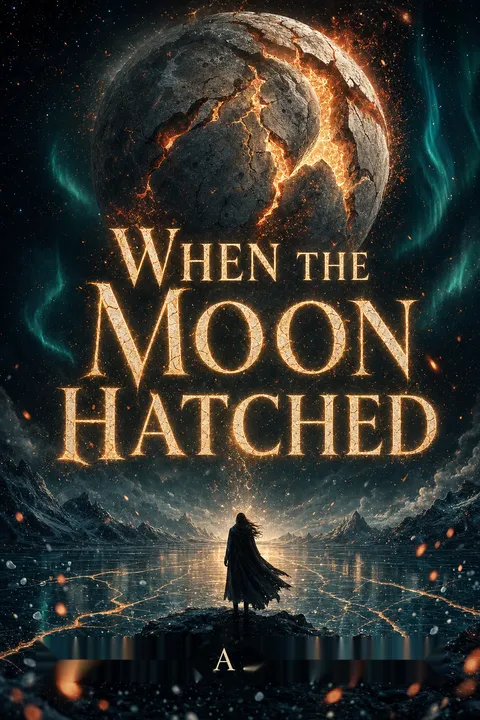
Five Creators shaped the world: Bulder sculpted the ground, Rayne wept oceans, Clode hurled winds, Ignos blazed fire — but Caelis, God of Aether, remained invisible, aching to be noticed. When dragons died and rose as stone moons, Caelis's yearning gravity began ripping them from the sky.
Eight devastating moonfalls later, the other four Creators trapped Caelis inside a tiny ebony crystal — the Aether Stone — set within a diadem that fuses to its guardian's skull. A fae warrior's bloodline was blessed with power enough to contain him indefinitely. For over five million phases, the moons held steady. Then, for the first time since the Aether Stone was forged, another moon fell — and a story cracked open along its fault lines.
The Singer and the Shadow
Raeve1 enters the Hungry Hollow — an elite underground club in Gore, capital of The Fade — wearing a red veil and a fake identity. She's an Elding Blade for the rebel Fíur du Ath, here to lure Lord Tarik Relaken6 — no, an elemental who runs child fighting pits in the Undercity. On a cramped staircase, she nearly collides with a cloaked male whose smoky, buttery scent stops her breath.
He reaches for her veil; she seizes his wrist. Neither yields. He watches from the shadows all night as she sings beside a pregnant musician named Levvi, her voice reducing the room to wet eyes and greed. Tarik takes notice. So does the stranger. Raeve1 came to snag one predator and hooked two.
A Hand for Fifty-Seven Children
She lures Tarik up the wall's upper levels, lets him slam her against the stone — then uses Clode's suffocating air-song to collapse his lungs, stomps a nullifying iron pin through his boot, and carves letters into his chest. R for rapist. C-A for child abuser. She severs his hand because his palm-print unlocks fifty-seven caged children in the Undercity, then drops it down a rubbish chute to fellow Ath members below.
The cloaked stranger finds her afterward near the body and calls the dead man a monster — not her. She decides not to kill him, an unusual mercy. Back home, she eases off her iron ring, the only thing silencing the elemental songs she hides behind a null's clipped ear.
The Serpent's Blood Leash
Raeve's1 handler Sereme5 summons her to a purple-draped office above a supply shop. Sereme5 holds a runed vial containing Raeve's1 blood — a bind offered as mercy when Raeve1 was found dying in the Undercity years ago.
One scratch of Sereme's5 nail down the vial's groove sends filleting pain through Raeve's1 ribs and spine. Sereme5 orders her to lie low: bounty hunter Rekk Zharos6 has arrived in Gore, hired by The Crown to crush their rebellion. Raeve1 wants to eliminate Rekk,6 assassinate the King, protect the Ath's people.
Sereme5 refuses every request and docks Raeve's1 bloodstone reserves for funding the children's rescue. Raeve1 realizes the rebel leader values elemental conscripts over the nulls starving underground — and that her leash has no give.
Essi's Last Warmth
Raeve1 wakes to find Essi4 — her young companion, a brilliant Runi inventor she rescued from the Undercity — coiled on the couch with hands pressed over a stab wound leaking blood through her fingers. Essi4 didn't seek a healer.
She came home so Raeve1 wouldn't think she'd been abandoned, the way Essi's4 parents once vanished into the mines. Raeve1 tells her she loves her — words she has never spoken aloud — and holds her as the warmth drains away. Before silence settles, Essi4 asks to be given to fire, not cold.
Raeve1 finds a blade inscribed with Rekk Zharos's6 name: a lure. Rekk6 killed Essi4 to draw Raeve1 into the open. Hands shaking, Raeve1 sets their home ablaze, sends her parchment lark Nee back to its unknown sender, and descends into the Undercity.
Black Eyes, Bared Teeth
Grief detonates something frozen beneath Raeve's1 ribs. Her consciousness sinks, replaced by The Other9 — a savage entity with black, glitter-kissed eyes who prowls the Undercity on a blood hunt.
The Other9 rips off Raeve's iron ring, sings Clode's suffocating tune to collapse soldiers' lungs, splits the ground with a single word of Bulder's language, and flings blades through the dark with lethal precision. Twenty-five soldiers fall. When Rekk Zharos6 finally traps her in a fire-ringed cage, she bites off his finger and spits the tip at him.
An iron pin to the shoulder nullifies her songs. Rekk6 wraps her in his whip. Raeve1 wakes shackled in a cell — back flayed to ribbons by his iron-tipped lash — sentenced for trial before the Guild of Nobles.
A King Kneels in Filth
Kaan Vaegor2 — King of The Burn, disguised as a Runi and secretly in Gore — enters Raeve's1 cell after snapping her lock with his bare fist. He's the cloaked male from the Hungry Hollow, drawn back by a voice and scent that haunted him for days. He opens a weald of Sabersythe dragonflame, and the firelight illuminates old, mended rune-scars on Raeve's1 forehead invisible to ordinary light.
His hands tremble. She looks exactly like Elluin — a woman whose death shattered him over a century ago. A Truthtune in the opposite cell confirms Raeve1 genuinely doesn't recognize him. She threatens him with an iron dagger. He barely breathes. Guards arrive to escort her to trial, and the ground trembles beneath his barely contained fury.
Rygun Swallows the Stake
At trial, Raeve1 corrects her kill count upward, insults the Chancellor's anatomy, and pleads guilty to everything. The vote between execution methods ties — until Kaan,2 hidden among commoners, casts the deciding ballot for dragons, positioning his Sabersythe for rescue.
Bound to a stake in the open coliseum, Raeve1 watches Moltenmaws circle. The Fade's Queen unexpectedly summons wind to scatter them — a public act of defiance. Then the sky blackens. Rygun drops from the clouds, so massive he eclipses the arena.
Something erupts from beneath Raeve's1 frozen interior: an involuntary song in a language she doesn't recognize. The Sabersythe pauses, tips his horned face — then bites her off the stake, wood and all. She loses consciousness inside his mouth.
Soup, Laughter, and Moons
Raeve1 wakes in sand, retching Sabersythe saliva, to find Kaan2 standing over her — the cloaked stranger from Gore, now revealed as the Burn King. He flies her on Rygun to his dead mother's mountain retreat: a crooked stone dwelling with lopsided windows and vegetable beds gone to seed.
He cooks root vegetable soup, but with her wrists bound, she can't grip the spoon. Refusing to ask for help, she shoves her face straight into the bowl. The absurdity breaks them both into real, chest-shaking laughter that surprises her more than anything since her capture.
Later, she glimpses Kaan's2 bare back: an entire constellation of moons tattooed across the dark expanse, including the small, wonky one she's loved since she first looked south from Gore's wall.
Herded to a Battle Ring
Raeve1 escapes through the bedroom window during a thunderstorm, scales a cliff, and is swept away by a flash flood. Warriors fish her from the river — then the Fate Herder materializes.
A massive silver feline of legend, it physically blocks every attempt she makes to reach the water, shouldering her toward the Johkull Clan's settlement built inside a fallen dragon's ribcage. Their blind seer declares Raeve1 the Kholu — the foretold one whose offspring will tether moons to the sky.
Two warriors fight to the death for the right to bind with her. The larger victor, Hock, kneels to offer his pendant. Raeve1 headbutts him, shatters his nose, and demands to fight for herself. She battles through poisoned venom and mace blows until Hock cracks her skull unconscious.
A Handprint on Hae's Perch
Rygun drops from the sky and the ground begins to shake. Kaan2 leaps into the crater, stalks toward the ring, and demands the trial be voided. When Hock challenges him, Kaan2 falls to his knees before Raeve,1 bows until his tattooed back is bared, and offers his málmr — a carved pendant of a Sabersythe and Moonplume embracing.
The gesture declares her his greater: if Kaan2 falls, no one can challenge her choices. A bloodied Raeve1 presses her palm against the wonky moon inked between his shoulder blades. He rises, selects a toothed blade, and saws through Hock's throat in grinding increments, dropping the severed head at her feet. She loops his málmr over her neck and passes out. Kaan2 lifts her and carries her toward Rygun.
No Coliseums in Dhomm
Raeve1 wakes in the Imperial Stronghold of Dhomm — a city of bouldered buildings and inky blooms overlooking a turquoise bay. Kaan's2 fierce sister Veya3 confronts her with hostility, warning she'll break Raeve1 if Raeve1 hurts Kaan2 again. The word again haunts. Pyrok,7 a red-haired member of Kaan's2 court, escorts her through streets where nulls attend school, younglings play freely, and nobody feeds folk to dragons.
At The Curly Quill, a blind Mindweft shopkeeper named Vruhn reads Raeve's1 thoughts unbidden and weeps, telling her she's missing something profound within the icy depths of her mind. Raeve1 refuses to let him dig further and leaves shaken — the first cracks forming in her certainty that all Vaegor kings are tyrants.
One Hundred Twenty-Three Phases
Kaan2 leads Raeve1 down an endless frozen staircase beneath his private suite to a cavern where Bulder hums a cradling song into the stone. Within glowing walls carved with Moonplumes sits a massive silver moon — Slátra, pieced back together from thousands of scattered shards over more than a century.
He tells Raeve1 this dragon cradled a woman's body as it soared skyward and solidified. That the woman was Elluin — identical to Raeve.1 That she hatched from this tombstone like a dragon from its egg.
Raeve1 approaches the fossilized beast and feels the hollow where Slátra's claw once cupped something small — a space that fits her body exactly. Terror floods her chest. She denies everything, storms up the stairs, and resolves to leave Dhomm immediately.
Elluin's Kitchen, Raeve's Hands
Drawn by inexplicable compulsion to Dhomm's western point, Raeve1 pushes through vines into a hidden cliff dwelling. Inside she finds stone carvings, twin mugs, a pallet — then is struck by a vision so vivid it buckles her knees: herself naked and laughing with Kaan,2 their bodies intertwined on this very bed.
She collapses among scattered feathers, gasping, forced to accept that this forgotten place belonged to them in a life she cannot remember. Rather than flee, she stays.
Over weeks, she repairs chairs, sews curtains, forages berries and melons, and begins journaling for the first time — each quiet domestic act an excavation of the woman she used to be. She keeps trying to leave to hunt Rekk Zharos.6 She keeps returning with towels instead.
A Tick Kills the Sabersythe
At The Great Flurrt festival — the aurora multiplied into thousands of dancing ribbons, dragons spiraling through the sky — Raeve1 wins a fortune at Skripi off arrogant nobles, then faces Kaan2 across the game table. If he wins: three truthful answers.
If she wins: one night pretending they're the couple from the dwelling, plus a wish she plans to spend on erasing him from her memory. She plays the smox — a shapeshifting wildcard — as a tick, turning his unbeatable Sabersythe into a rabid, doomed beast.
His shard darkens. They dance afterward, and a sudden rainstorm overwhelms her: she hears Rayne's weeping song for the first time, sobbing uncontrollably. Kaan2 wraps around her from behind and hums her calming melody — one she's carried since before memory began.
No More White Flags
After their night together in the dwelling — tender, devastating, raw — Raeve1 tries to return Kaan's málmr and leave. He refuses it. She plans to visit the Mindweft to have Kaan2 erased from her mind, but he has already moved Vruhn to a safe house. He tells her bluntly: Elluin bound with another male. That someone out there needs Raeve1 more than either of them do.
That she must face her past or spend eternity running from it. He gives her a satchel of bloodstone, kisses her temple in a swift, searing press, and lets her go — not because he wants to, but because caging her would destroy what little trust she's built. His parting words: chase death, but come back to him.
Blistered Wings, Unbroken Bond
Shade emissaries arrive in Dhomm, among them Rekk Zharos6 riding a sun-blistered Moonplume named Líri — wings shredded, skin bubbled, eyes masked. Raeve1 sees the tortured dragon and is slammed by a vision: herself aboard a Moltenmaw, watching a blistered Moonplume bobbing through burning daylight, its luminous eyes fading to gray. The memory cleaves her chest.
Kaan2 prevents her from attacking Rekk6 on Burn soil. Instead, she descends to Líri's hutch, presses her palm against the dragon's icy snout, and speaks soothing words in the southern tongue — a language she didn't know she knew. Something settles inside Raeve1 like a key sliding home. She vows no one will hurt Líri again and tells Kaan2 that Rekk6 took someone she loved.
Fire Lark's Final Song
At the Velvet Snog inn in Bothaim — neutral territory — Raeve1 sets her trap. The Other9 takes the wheel when Rekk6 reaches for what he thinks is a hired companion. Instead: iron pins through his thigh, daggers in the fire, razors in the door handle. The Other9 uses Clode to seal his lungs, then whispers Ignos's flame to a stoking iron and draws burning lines across his chest — precisely mimicking every welt he seared into Líri's hide.
She tells him she heard every one of the Moonplume's screams and understood them. She uses his own metal spurs to gouge matching holes into his body, then finishes with the whip he once used to flay Raeve's1 back to ribbons. Vengeance for Essi.4 For Líri. For herself.
The Diary Beneath the Deathbed
Kaan's2 sister Veya3 infiltrates Arithia's palace disguised as a servant, using an appearance-altering bangle. She narrowly survives an encounter with Tyroth15 — the cruel King of The Shade — and reaches the royal sleepsuite where Elluin died giving birth. Beneath the obsidian pallet, angled toward Haedeon's wonky moon visible through the balcony, Veya3 finds a leather diary.
Its final entries reveal everything: Kaan's2 father Ostern blackmailed Elluin into leaving Kaan2 by threatening to kill him and Veya.3 Elluin carried Kaan's2 child — not Tyroth's15 — to Arithia and pretended to conceive on her wedding night. Princess Kyzari,8 raised as Tyroth's15 heir, is Kaan's2 daughter. The diary is a lit fuse beneath three kingdoms, and Veya3 holds the match.
Epilogue
Deep within an underground warren, the Scavenger King Arkyn13 — a secret, unacknowledged half-brother of the Vaegor kings — studies his captive, Princess Kyzari,8 through the bars of her cell. He wants the bronze throne and intends to use her as leverage against Kaan.2 When he forces her to sign a blank parchment folded into a lark, Kyzari8 hides a warning in the curls of her signature.
But another lark arrives at her cell unbidden — a small, wobbly one with a torn wing and a blood splotch on its tail, nudging between the bars to land in her cupped palm. It's Nee, the parchment lark Raeve1 once loved and released. The message on its belly carries a three-word promise that someone, somewhere, is coming.
Analysis
When the Moon Hatched operates on a paradox mirroring its own cosmology: the same force that holds things together — love, memory, identity — is the force that brings them crashing down. Caelis's aether, the invisible space between things, rips moons from the sky; Raeve's1 love for others gets them killed. The novel argues that containing dangerous things — Caelis in his stone, Raeve1 in her ice, Elluin in her silence — creates pressures that inevitably detonate.
Parker constructs identity as geological rather than psychological. Raeve's frozen lake is not merely a metaphor for repression but a literal terrain she navigates, with shore levels that rise and fall as truths surface. Elluin didn't simply die and return — she shattered like a falling moon and was painstakingly reconstructed. The parallel between Kaan2 rebuilding Slátra shard by shard and Raeve1 slowly restoring the hidden dwelling is the novel's most elegant structural rhyme: both are acts of devotion performed in solitude, without guarantee of reward.
The book interrogates chosen-one mythology through Raeve's1 violent rejection of the Kholu prophecy. She refuses not from disbelief but because accepting means submitting her body to another's purpose — and she has spent every remembered moment being instrumentalized. Sereme's5 blood leash, the Scavenger King's fighting pits, the Tookah Trial: every institution converts her personhood into a tool. Kaan's2 radical act is not saving her life but giving her choices. His removal of every shackle — physical and emotional — represents a form of love the novel posits as revolutionary: wanting someone free more than wanting them near.
The diary entries function as reverse archaeology. As readers unearth Elluin's past, Raeve1 simultaneously buries present traumas in the same internal lake. Past and present run in opposite directions, converging only when external pressure — Slátra's tomb, the dwelling, Líri's suffering — forces the ice to crack. The novel suggests that healing is not the absence of pain but the willingness to let it thaw.
Review Summary
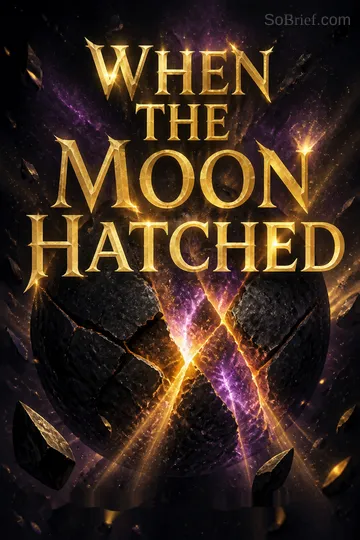
When the Moon Hatched has received mixed reviews. Many praise its unique world-building, complex characters, and slow-burn romance. Fans appreciate the intricate magic system, dragons, and Sarah A. Parker's poetic writing style. However, critics find the prose pretentious, the plot convoluted, and the 700+ page length excessive. Some readers struggle with the extensive world-building and glossary, while others enjoy the challenge. The book polarizes readers, with some hailing it as a masterpiece and others finding it disappointing and difficult to follow.
People Also Read
Characters
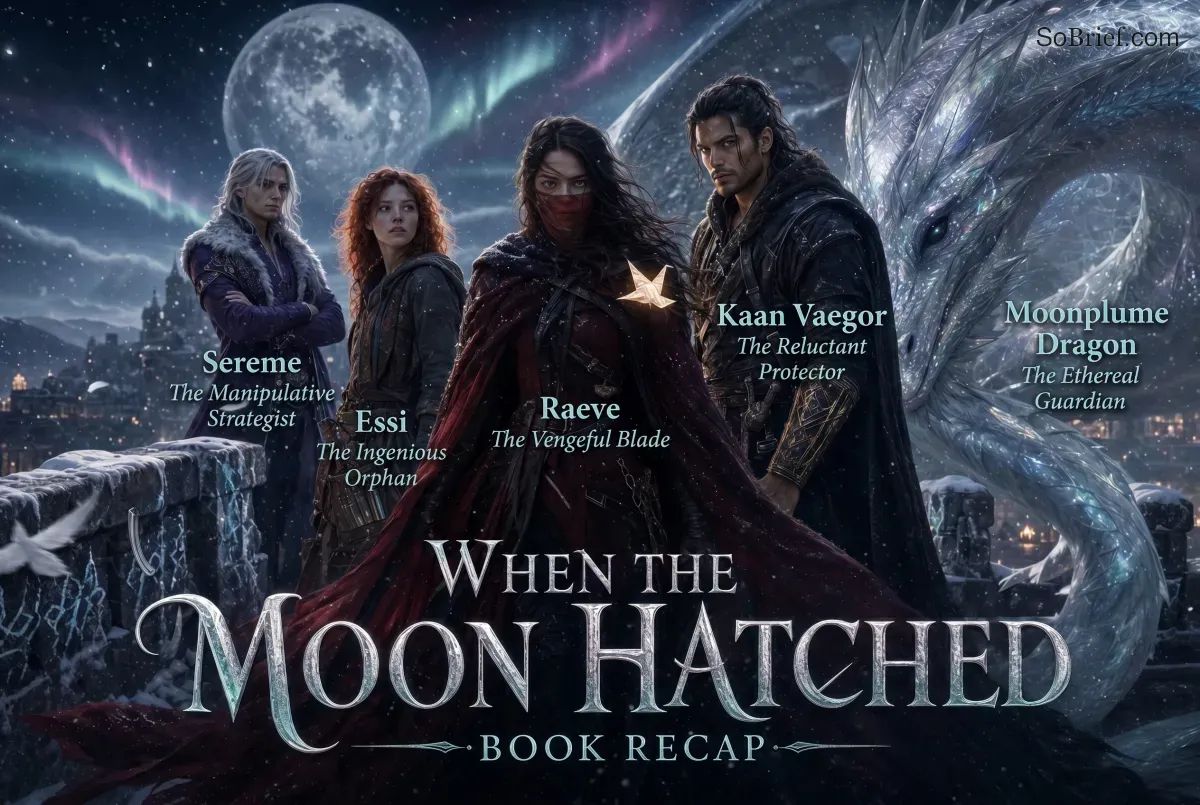
Raeve
Blade-wielding, ice-hearted assassinShe wears an iron ring to silence the elemental songs she secretly hears and hides behind a null's clipped ear in a kingdom that conscripts the gifted. An assassin for the rebel Fíur du Ath, she kills with surgical precision and buries every emotion in a frozen internal lake within her psyche. Beneath the calloused exterior lies a woman who draws moons on her ceiling, feeds her wages to the starving, and once cradled a wounded parchment lark like it was made of glass. Her defining paradox: simultaneous capacity for breathtaking violence and devastating tenderness—a duality she refuses to examine, terrified the soft center makes her breakable. She doesn't remember who she was before waking in a cage twenty-three phases ago, and she fights ferociously to keep it that way.
Kaan Vaegor
Scarred king, unbreakable devotionKing of The Burn, eldest son of the late King Ostern, raised from age nine in a warrior clan after his father deemed him unworthy for hearing only two elemental songs. Every scar on his body maps a lifetime of violence—from clan training to patricide. He killed his father after discovering an unforgivable crime, then spent over a century haunted by a loss he could never fully speak of. He governs with fierce fairness, feeds his folk before himself, and plays a string instrument alone in dust-covered rooms. His psychology is built on a fault line: immense physical power held in check by equally immense emotional vulnerability. He loves with the recklessness of someone who has already survived the worst possible loss and would endure it again without hesitation.
Veya Vaegor
Kaan's fiercely loyal sisterThe youngest Vaegor sibling, a combat instructor who gave herself to the Creators to avoid arranged marriage, freeing herself from the political machinations that entrapped her brothers. Her psychological architecture is built on the rubble of paternal rejection—King Ostern told her he regretted her existence, and every sharp word she wields traces back to that original wound. She compensates with physical mastery and an emotional armor so polished it reflects everything away. Yet she's the first to leap into danger for family, the first to notice when someone she loves is breaking. Her relationship with Kaan2 is the novel's most understated bond—two siblings who raised each other in the ruins of a father who failed them both.
Essi
Raeve's brilliant young inventorA young redhead Raeve1 rescued from the Undercity, she possesses a spectacular mind for runes and invention—crafting diamond tooth-caps, invisible barriers, and iron pins from scavenged materials. She and Raeve1 maintain a carefully distant bond, pretending not to worry about each other while quietly ensuring the other is fed and safe. She represents everything Raeve1 is terrified to hold: vulnerable, precious, irreplaceable.
Sereme
Raeve's manipulative handlerA high-ranking member of the Fíur du Ath who holds Raeve's1 blood in a runed vial, able to inflict pain remotely. She cloaks control as mercy, having offered Raeve1 a choice between death and servitude when she found her surrounded by mulched bodies in the Undercity. Strategic and cold, she prioritizes political progress over individual lives, viewing Raeve1 as an indispensable weapon rather than a person worth protecting.
Rekk Zharos
Sadistic bounty hunterA lean, smoke-wreathed predator employed by The Crown to hunt rebels. He wields fire and ground songs, carries an iron-tipped whip, and rides a Moonplume he treats with systematic cruelty—gouging spurs into her hide and flying her through sunlight that blisters her skin. He kills strategically, targeting loved ones to lure his true quarry, viewing collateral damage as professional resourcefulness rather than moral failure.
Pyrok
Kaan's charming court idlerA red-haired, heavily pierced member of Kaan's2 court whose primary talents appear to be drinking Molten Mead and losing at Skripi. Beneath the charismatic laziness lives quiet loyalty and surprising perceptiveness—he notices things others miss and offers friendship without demanding reciprocity. His casual warmth provides Raeve1 her first experience of easy, uncomplicated companionship.
Kyzari Vaegor
The Aether Stone's burdened heirPrincess of The Shade, burdened with the Aether Stone since birth. The diadem drains her life force while amplifying her ability to hear the Creators—including Caelis, the god imprisoned within the stone. She's wasting away, chewed nails and hollow cheeks betraying a secret love for the trapped entity she wants desperately to free, a desire that puts her at odds with every political power in the world.
The Other
Raeve's savage inner entityA feral presence living beneath Raeve's frozen internal lake, emerging when grief or rage overwhelms Raeve's1 consciousness. She has black, glittery eyes and speaks the elemental songs with terrifying fluency—including Ignos, which Raeve1 cannot tolerate. She kills with primal efficiency and views pain as armor, treating Raeve's1 body with a strange, protective reverence while wielding it as a devastating weapon.
Ruse
Rebel shopkeeper, quiet allyOwner of The Curly Quill in Gore, housing Raeve's1 bloodstone reserves behind a runed curtain. He operates as both merchant and discreet rebel intermediary, tolerating Sereme's5 proximity with remarkable patience.
Wrook
Imprisoned woetoe, hopeful diggerA small, furry woetoe jailed for stealing, who scratches futilely at his cell floor. His earnest friendship offers Raeve1 unexpected warmth during her darkest imprisonment.
Agni
The Burn's gifted healerA talented Runi Fleshthread with Dragonsight who can see layered residue of old runes on skin. She heals with exhaustive devotion, fainting from the effort of mending Líri's massive wing tears.
Arkyn
The Scavenger KingA secret, unacknowledged half-brother of the three Vaegor kings who rules an underground kingdom of scavenged treasures. He covets the bronze throne and harbors old grudges connecting him to more characters than anyone suspects.
Grihm
Kaan's silent second-in-commandA pale-haired warrior whose scarred body and near-muteness speak to a violent past. Kaan's2 most trusted companion, communicating through gestures and rare, gravelly sentences.
Tyroth Vaegor
Cruel King of The ShadeOne of the three Vaegor brothers. Cold and controlling, he rules a kingdom that was never rightfully his and treats those beneath him as possessions rather than people.
Plot Devices
The Aether Stone
Contains an imprisoned godA small black crystal set within a silver diadem that fuses to its guardian's skull, housing Caelis, God of Aether—trapped by the other four Creators to prevent moonfalls. The diadem suckles life force from its host, weakening them while granting the ability to hear all five elemental songs. Passed down the Neván family line for millions of phases, it became both sacred duty and slow-acting death sentence. The stone drives multiple plot threads: Kyzari's8 forbidden love for Caelis, the political importance of the Neván bloodline, and the question of what happens if the god inside is freed. It embodies the cruel bargain between power and sacrifice—the crown that consumes the one who wears it.
Raeve's Frozen Internal Lake
Emotional burial ground withinRaeve's1 primary coping mechanism: a vast frozen lake within her psyche where she drowns painful memories, attachments, and emotions by tying them to stones and dropping them through holes in the ice. Something luminous lives beneath the surface, chasing discarded parcels and occasionally spitting them back with amplified force. This internal geography serves as both armor and prison—it keeps Raeve1 functional but prevents genuine connection. When emotions are forced upward by Kaan's2 presence or Líri's suffering, the ice cracks and the water level drops, exposing obsidian shore stones she doesn't recognize. The lake represents the cost of survival through emotional avoidance: effective indefinitely, until the ice runs out of room.
Kaan's Málmr
Carved declaration of loveA hand-carved pendant depicting a Sabersythe and a silver Moonplume locked in an embrace, hung on a braided leather cord. In Boltanic Plains tradition, offering a málmr is a courtship declaration—accepting one signals intent to build a life together. Kaan2 traveled to the deadly Sabersythe spawning grounds and survived stealing a scale from the Great Silver Sabersythe to craft the pendant's pale half. It first appears as his necklace, is offered to Raeve1 during the Tookah Trial to save her life, gets returned, then arrives again at The Great Flurrt. The málmr is the physical vessel of Kaan's2 devotion—patient, persistent, unable to be destroyed by Raeve's1 rejections or the passage of a hundred phases.
Nee the Parchment Lark
A love note that chose its readerA small, damaged parchment lark bearing three words meant for someone Raeve1 never identified. Nee came unbidden, fought against wind currents to return after being released, and nested in Raeve's1 palm each night—a fragile companion who nudged and nuzzled with reckless devotion. After Essi's4 death, Raeve1 altered Nee's message and activated the return fold, sending her back to the original intended recipient. Nee's journey across the story—from Raeve's1 comfort object through skies and storms—ultimately connects two women across distance, time, and fractured identity, suggesting their fates are braided together in ways neither yet understands.
The Iron Ring
Song-silencing disguiseA simple iron band Raeve1 wears to nullify her ability to hear the four elemental songs. Iron's nullifying properties make it essential for any elemental hiding their gifts—particularly in The Fade, where detection means forced military conscription. The ring lets Raeve1 pass as a null but cuts her off from power she desperately needs in crisis. Removing it floods her with overwhelming sound. When she eventually discards her iron cuff in Dhomm, she permanently opens herself to Rayne's song—and discovers the rain makes her cry with a grief she didn't know she carried. The ring represents the paradox of safety through self-diminishment: protection that costs precisely the strength it was designed to preserve.
FAQ
Synopsis & Basic Details
What is When the Moon Hatched about?
- A World of Dragons and Gods: The story is set in a world shaped by five elemental gods and populated by humans and dragons, divided into three distinct kingdoms: The Burn, The Fade, and The Shade.
- A Quest for Power and Revenge: The narrative follows Raeve, a skilled assassin with a hidden past, as she navigates a world of political intrigue, personal vendettas, and the search for her true identity.
- A Journey of Self-Discovery: Raeve's journey is marked by her struggle against a tyrannical king, her connection to elemental powers, and her complex relationships with those around her, leading to self-discovery and transformation.
Why should I read When the Moon Hatched?
- Unique World-Building: The novel offers a richly detailed world with its own unique mythology, creatures, and cultures, creating an immersive reading experience.
- Complex Characters: The story features morally gray characters with hidden motivations and complex emotional landscapes, making for a compelling and thought-provoking narrative.
- Intriguing Blend of Genres: The book seamlessly blends elements of fantasy, romance, and action, appealing to a wide range of readers who enjoy stories with depth and excitement.
What is the background of When the Moon Hatched?
- Mythological Creation: The world was created by five elemental gods: Caelis (Aether), Bulder (Ground), Rayne (Water), Clode (Air), and Ignos (Fire), each shaping the world with their unique powers and songs.
- Dragon-Dominated Skies: Dragons, powerful and diverse, inhabit different regions of the world, with Sabersythes in The Burn, Moltenmaws in The Fade, and Moonplumes in The Shade, each with unique characteristics and nesting grounds.
- Political and Social Strife: The three kingdoms are ruled by the Vaegor brothers, with The Fade under a tyrannical king, creating a world of political tension, social injustice, and a constant struggle for power.
What are the most memorable quotes in When the Moon Hatched?
- "You sing like a Creator.": This quote, spoken to Raeve, highlights her exceptional talent and the power she wields, despite being considered a null.
- "I came here to lure one monster, and ended up snagging two.": This quote encapsulates Raeve's complex situation, where her mission to capture one enemy leads to unexpected entanglements with multiple powerful figures.
- "You chose to live. Sure, it's no longer on your terms, but at least you're breathing.": This quote, spoken by Sereme, reveals the harsh realities of survival in this world and the compromises characters must make.
What writing style, narrative choices, and literary techniques does Sarah A. Parker use?
- Vivid Imagery and Sensory Detail: Parker employs rich descriptions that engage the reader's senses, bringing the world and its characters to life with vivid imagery and sensory detail.
- Non-Linear Storytelling: The narrative uses flashbacks and shifts in perspective to gradually reveal the characters' backstories and motivations, creating a sense of mystery and intrigue.
- Symbolism and Metaphor: The author uses recurring symbols and metaphors, such as the moons, the elemental songs, and the color red, to enhance the story's themes and add layers of meaning.
Hidden Details & Subtle Connections
What are some minor details that add significant meaning?
- The clipped ear of nulls: The clipped ear, a seemingly minor detail, signifies a null's inability to hear elemental songs, highlighting the social hierarchy and discrimination within the kingdoms.
- The color of elemental beads: The different colors of elemental beads (red for Ignos, blue for Rayne, clear for Clode, and brown for Bulder) reveal a character's connection to a specific elemental power, adding depth to their identity and abilities.
- The descriptions of the nesting grounds: The detailed descriptions of the dragon nesting grounds (Bhoggith, Gondragh, and Netheryn) not only establish the unique environments of each kingdom but also foreshadow the distinct characteristics of the dragons that inhabit them.
What are some subtle foreshadowing and callbacks?
- The "Ballad of the Fallen Moon": The song, which Raeve performs, foreshadows the tragic fates of the dragons and the themes of loss and sacrifice that permeate the story.
- The mention of the Aether Stone's origin: The story of Caelis's capture and the creation of the Aether Stone foreshadows the stone's significance and the burden it places on the Neván family line.
- The description of the velvet troggs: The description of the velvet troggs, who consume memories from trash, foreshadows the importance of memory and the past in the story, as well as the way that memories can be twisted and used.
What are some unexpected character connections?
- The Vaegor brothers' shared history: The complex relationships between the Vaegor brothers (Kaan, Cadok, and Tyroth) reveal a shared history of rivalry and conflict, adding layers to their individual motivations and actions.
- The connection between Raeve and the Neván family: The revelation that Raeve is a descendant of the Neván family, entrusted with the Aether Stone, creates an unexpected link between her and the royal family of The Shade.
- The bond between Raeve and Essi: The deep bond between Raeve and Essi, despite their different backgrounds, highlights the importance of friendship and loyalty in a world of betrayal and violence.
Who are the most significant supporting characters?
- Sereme: As a high-ranking member of the Fíur du Ath, Sereme plays a crucial role in guiding Raeve's actions and shaping the rebellion against The Crown, though her methods are often questionable.
- Ruse: The owner of The Curly Quill, Ruse provides Raeve with resources and information, acting as a confidante and a link to the world outside her assassin life.
- Grihm: As King Kaan's second-in-command, Grihm's loyalty and strength make him a significant figure in The Burn, and his actions often influence the course of events.
Psychological, Emotional, & Relational Analysis
What are some unspoken motivations of the characters?
- Kaan's desire for connection: Despite his stoic exterior, Kaan's actions reveal a deep-seated desire for connection and understanding, particularly with Raeve, stemming from his past losses and loneliness.
- Sereme's need for control: Sereme's manipulative behavior and strict adherence to the Fíur du Ath's rules stem from a deep-seated need for control, driven by her own past traumas and a desire to maintain order.
- Tyroth's fear of vulnerability: Tyroth's cruelty and possessiveness toward his daughter, Kyzari, are rooted in a fear of vulnerability and a desire to control those around him, stemming from his own past losses and insecurities.
What psychological complexities do the characters exhibit?
- Raeve's internal conflict: Raeve struggles with her desire for revenge and her growing capacity for empathy and love, creating a complex internal conflict that drives her actions and decisions.
- Kaan's struggle with his past: Kaan's past traumas and losses, particularly the death of Elluin, shape his actions and motivations, leading to a complex internal struggle between his desire for connection and his fear of vulnerability.
- Tyroth's descent into madness: Tyroth's grief and paranoia over the loss of his wife and daughter lead to a descent into madness, making him a dangerous and unpredictable force in the story.
What are the major emotional turning points?
- Essi's death: Essi's tragic death serves as a major emotional turning point for Raeve, fueling her desire for revenge and forcing her to confront her own mortality and vulnerability.
- Raeve's encounter with the Aether Stone: Raeve's encounter with the Aether Stone and her ability to hear Caelis's voice forces her to confront her own identity and her connection to the elemental world.
- Kaan's confession of love: Kaan's confession of love for Raeve, despite his stoic exterior, marks a significant emotional turning point, revealing his vulnerability and his deep-seated desire for connection.
How do relationship dynamics evolve?
- Raeve and Kaan's evolving bond: The relationship between Raeve and Kaan evolves from one of distrust and conflict to one of mutual respect, understanding, and a deep, passionate connection, despite their different backgrounds and motivations.
- The complex relationship between the Vaegor brothers: The relationship between the Vaegor brothers (Kaan, Cadok, and Tyroth) is marked by rivalry, betrayal, and a shared history of loss and trauma, creating a complex dynamic that shapes their individual actions and decisions.
- The shifting dynamics within the Fíur du Ath: The dynamics within the Fíur du Ath shift as Raeve's actions and decisions challenge the group's established rules and hierarchies, leading to internal conflicts and power struggles.
Interpretation & Debate
Which parts of the story remain ambiguous or open-ended?
- The true nature of the Creators: The true nature and motivations of the five Creators remain ambiguous, leaving the reader to question their role in the world and their influence on the characters' lives.
- The extent of Caelis's influence: The extent of Caelis's influence on the world and the characters' actions remains unclear, leaving the reader to wonder about the true nature of free will and destiny.
- The future of the kingdoms: The future of the three kingdoms and the potential for lasting peace remains open-ended, leaving the reader to ponder the long-term consequences of the characters' actions and decisions.
What are some debatable, controversial scenes or moments in When the Moon Hatched?
- Raeve's methods of revenge: Raeve's brutal methods of revenge, particularly her treatment of Tarik Relaken, raise questions about the morality of her actions and the extent to which violence can be justified.
- Kaan's treatment of Raeve: Kaan's possessiveness and control over Raeve, despite his genuine feelings for her, raise questions about the nature of their relationship and the power dynamics at play.
- The role of the Tri-Council: The Tri-Council's intervention in the affairs of the kingdoms and their decision to bind Kyzari to Tyroth raise questions about their authority and their true motivations.
When the Moon Hatched Ending Explained: How It Ends & What It Means
- Raeve's choice to leave: Raeve's decision to leave Kaan and Dhomm, despite their deep connection, highlights her commitment to her own path and her desire to avoid the pain of loss and attachment.
- Kaan's acceptance of Raeve's decision: Kaan's acceptance of Raeve's decision, despite his own feelings, underscores his respect for her autonomy and his understanding of her need for independence.
- The ambiguous future: The ending leaves the reader with a sense of uncertainty about the future of the characters and the world, highlighting the ongoing struggle for power, justice, and self-discovery.
Moonfall Series Series
About the Author
Other books by Sarah A. Parker

Download PDF
Download EPUB
.epub digital book format is ideal for reading ebooks on phones, tablets, and e-readers.








































