
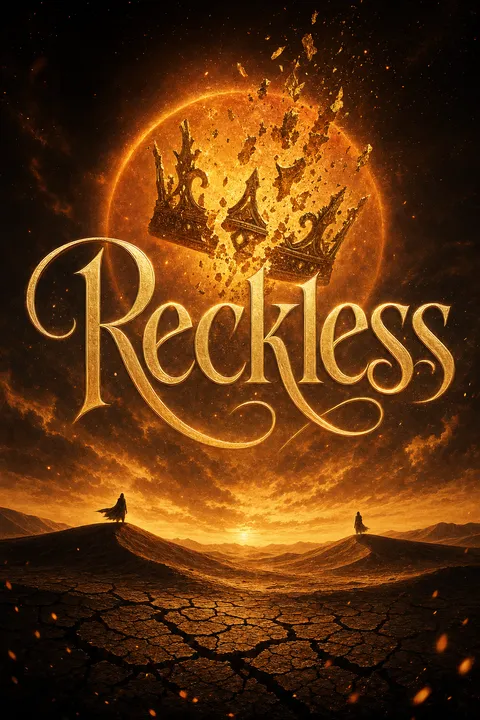


Plot Summary
Prologue
In the small hours of the sleeping palace, Kai2 walks empty corridors to the kitchen, where Gail the cook12 has baked a single sticky bun. He carries it into the gardens, to a willow tree, and strikes a match in place of a candle. Then he wishes a happy birthday to someone he only calls A.
He is a prince who became the Enforcer, a boy who became a monster, and he has just left his brother Kitt's3 study, where the newly crowned king handed him his first mission: to hunt down the girl1 who killed their father.17 For one stolen morning, he lets himself simply grieve.
The opening establishes Kai as a man split between titles and tenderness. The candlelit ritual for a secret someone signals a buried wound that will later reframe his cruelty as damage rather than nature. Roberts front-loads the novel's central tension: duty demands he pursue the girl, while private grief marks him as more human than his reputation allows. The sticky bun, the willow, the mother-figure cook all root the assassin in domestic warmth, priming readers to distrust the villain framing. It is a study in compartmentalized selfhood, where a person performs monstrousness by day and mourns by moonlight, and where love and obligation are already at war.
The Enforcer Burns Her Home
Three days after driving a blade through Ilya's tyrant king,17 Paedyn Gray1 creeps back to her childhood home, now the abandoned Resistance headquarters, to gather weapons before fleeing the kingdom.
The dead king's17 final cruelty still festers: he told her that Kai,2 the prince turned Enforcer, murdered her father years earlier. When Kai2 and his Imperials smash through the door, she scrambles up the chimney to hide. He searches the rooms, murmuring that he still hasn't found the courage to end her, then sets the house ablaze.
She escapes across the rooftops while he hurls a knife that opens her thigh. Wounded and betrayed, she resolves to cross the Scorches desert to Dor, a city where being Ordinary carries no death sentence, and swears she will not hesitate again.
The inciting return home literalizes a theme of poisoned inheritance: the only house Paedyn owns is a war room, and even that must burn. Kai's confession to an empty room, that he lacks the courage to kill her, exposes the gap between the Enforcer's function and the man's will. Roberts weaponizes fire as both erasure and cleansing, severing Paedyn from her past to force forward motion. The king's parting revelation seeds the enemies-to-lovers engine with maximum charge, converting attraction into obligation to hate. Survival here is stubbornness as identity, a refusal to grant her oppressors the tidy death they scripted for her.
Flight Across the Scorches
Before leaving Loot, Paedyn1 knifes an Imperial in an alley and flees, too haunted to bury him. From a rooftop she watches Kai2 gently gather the corpse to bury it for her, a tenderness that quietly erodes her hatred. She stumbles into the desert carrying her father's journal and the vest her dead friend Adena16 sewed, surviving days of thirst, scorpions, and delirium by talking to the sand.
Collapsing at Dor's edge, she wakes cradled in a stranger's arms and snaps his wrist before realizing he is only a young guard carrying her to safety. He recognizes her silver hair from bounty posters offering twenty thousand silvers, dead or alive, and attacks. She kills him with his own blade, gagging at a third death staining her hands.
The desert functions as a crucible stripping Paedyn to raw endurance and unraveling mind. Her running monologue to the sand dramatizes isolation's toll, loneliness thick enough to hallucinate companionship. Kai's off-page act of burial, witnessed but unacknowledged, becomes a recurring grammar of the novel: he keeps performing decency for her sake even as duty casts him as predator. The guard's death crystallizes Paedyn's deepening trauma around blood and killing, distinguishing her from a hardened assassin. She kills to live, and each life taken costs her a piece of self. The bounty poster reframes her as commodity, hunted not for who she is but what she is worth.
Shadow Meets Flame
In Dor, Paedyn1 buries her hair beneath a scarf and joins Rafael's10 illegal cage-fights as the undefeated masked champion Shadow,1 earning coin to build a new life. Kai,2 nearly powerless without Elites to draw abilities from, hunts the city and is led to the fighting cellar by Abigail,11 a child he once secretly spared from execution.
Calling himself Flame,2 he challenges Shadow1 and chases her onto a rooftop, where she presses her father's dagger to his throat. They strike a bargain, that she fights him and goes free if she wins, and end up kissing in the dark, loathing curdling into want. Back in the ring, Kai2 tears off her scarf, spilling silver hair before the coin-hungry crowd and forcing her to depend on his protection just to leave alive.
The Shadow persona lets Paedyn taste equality, a body judged by skill rather than blood, which is why Kai's exposure of her hair feels like violation. The Flame-and-Shadow pairing names their codependence: light and darkness defined by each other's presence. Their first kiss, framed as proof of hatred, inaugurates the novel's central self-deception, where desire masquerades as its opposite. Kai's manipulation, needing her to need him, reveals the Enforcer's transactional instincts even as feeling overrides them. Abigail's cameo pays off the prologue's hint of a man who quietly sabotages his own cruelty, banishing children he was ordered to kill and thus authoring a small resistance inside himself.
Property of the Enforcer
To cow the mob, Kai2 announces the Silver Savior1 is his property and that any Elite's wrath will fall on whoever touches her, and they slip out together. In an alley Paedyn1 flips him and, blade to his ribs, spits the truth: five years ago he ran a sword through her father in their home. Kai2 freezes, slowly recognizing that the defenseless man of his very first Enforcer mission was her father.
Imperials interrupt and she runs, only to be cornered again. At a shabby inn he cleans and binds her reopened thigh, confessing he was fourteen, given no name or reason, and vomited afterward. His unexpected gentleness makes her hatred harder to hold, and they share a narrow bed, wary, unwilling, and unable to look away.
This is the hinge from vengeance toward complicity. The father revelation, long known to Paedyn and newly devastating to Kai, redistributes guilt: both are children of a system that turned them into instruments. Kai's account of blind obedience at fourteen reframes murder as coerced trauma, refusing easy villainy while denying easy absolution. The wound-tending scene inverts their power dynamic, the assassin kneeling to mend what he tore, care becoming a language they cannot yet speak aloud. Roberts uses the shared bed as enforced intimacy, the plot manufacturing proximity so that attraction must be actively resisted rather than avoided, sharpening every restrained gesture into confession.
Resistance Rescue and the Mixes
On the trek back toward Ilya, Kai2 binds Paedyn1 and they argue Ilya's history and the supposed disease that makes Ordinaries weaken Elite powers. Their camp is ambushed by red-fletched arrows belonging to Paedyn's1 surviving Resistance friends: lanky, warm Lenny,5 fierce Leena,6 and archer Finn,7 who signs every arrow with an F.
They capture Kai2 and lead everyone to a crumbling Dor building where Lenny's mother Meredith8 shelters Mixes, half-Elite children like fire-breathing little Luna,9 hidden because Ilya would execute them and Dor fears their uncontrolled power.
Meredith8 proposes trading the Enforcer2 for Paedyn's1 freedom, since Kitt3 needs his right hand. Kai2 privately knows the plan is doomed, because near any true Elite his borrowed abilities make him lethal again.
The Mixes give ideological flesh to the abstract fear driving Ilya's cruelty. If Ordinaries and Elites already blend into children who breathe fire from fingertips, the doctrine of purity is not prophecy but propaganda, foreshadowing the journal's later revelation. Meredith's refuge models chosen family and radical hospitality against a kingdom built on exclusion. The Resistance friends restore Paedyn's world and stakes beyond romance, reminding readers she is a leader whose people died. Roberts also complicates the rescue: freeing Paedyn means caging Kai, so liberation for one is captivity for the other, and the trade plan's fragility quietly promises betrayal.
The Brother King Unravels
In Ilya, the newly crowned Kitt3 rots inside his dead father's17 study, dumping meals out the window and scribbling bitter pages about the girl1 who killed the old king17 and the brother2 he fears may love her more than duty. His cousin Andy,14 a fix-it Handy, and young Jax13 try to coax him out, but he refuses.
Then Calum,4 the soft-spoken blond Mind Reader who once helped found the Resistance and now advises the crown, arrives with a small velvet box and a radical proposal. Invoking the late king's17 motto, that a great ruler must be brave, benevolent, and brutal, Calum4 argues Kitt3 must sacrifice the man he was for the king he must become. Grief-hollowed and starving for his dead father's17 approval, Kitt3 begins to consider the unthinkable.
Kitt's arc anatomizes how grief curdles into authoritarian performance. Denied love in life, he chases a corpse's approval, letting his father rule from the grave through internalized cruelty. The dumped meals literalize a man refusing nourishment, physical and emotional. Calum functions as a whisperer whose Resistance past and palace present make his counsel ambiguous, guidance that could be salvation or manipulation. The three-B motto exposes how virtue rhetoric launders brutality, benevolence rebranded as sacrifice. Roberts builds dramatic irony: readers watch a decent young man being coached into a decision the lovers cannot yet see coming, transforming domestic tenderness with Gail and Jax into the last flickers of who Kitt was.
Betrayed to the Sewer Prison
Rafael's10 greed shatters the trade. His men drug the camp and cage Kai2 and Paedyn1 together underground, planning to sell both to Ilya, their friends nowhere to be found. When guards prepare to flush the sewer beneath the cells, the pair saw their ropes on a jagged stone, break a guard's nose, and drop into the tunnel as water rises.
The passage dead-ends and freezing water climbs to their throats. Certain they will drown, Kai2 confesses he regrets nothing between them, and they kiss like a final prayer. Then Paedyn1 finds a hidden grate. Kai2 shoves her through and sinks. Refusing to let him die, she dives back into the flood, drags his limp body up, and pounds his chest until he coughs and breathes.
The near-drowning strips both characters to instinct, where honesty becomes possible only under a death sentence. Kai's confession functions as deathbed truth, safe because he believes there is no tomorrow to answer for it. Paedyn's rescue is the argument the whole novel makes: she cannot abandon him because she has decided too many people have already died in her arms. The sewer, filth and flushing water, offers a grotesque baptism, the pair reborn from the drowning that was meant to erase them. Rafael's betrayal reasserts the mercenary world outside their bubble, where affection is worthless and bodies are inventory to be sold.
Chained Together Through Dor
On the alley cobbles Kai2 clamps a three-foot chain between their ankles, coldly ensuring his mission cannot slip away again, and Paedyn1 seethes at being used. She goes silent, then negotiates her way through the city at his side. To hide the shackle she steals a skirt; to dodge the innkeeper and bounty hunters they masquerade as lovers, Kai2 trailing kisses along her throat in an alley and pulling her onto his lap at a gambling table in a smoky gentleman's club.
Every touch is excused by a single word passed between them: pretend. He wins the card game, pockets their coins, and steers her toward the Sanctuary of Souls. With each performance, the line between staged desire and the real thing neither will name grows thinner.
The chain externalizes their psychological binding, forcing the enemies-to-lovers proximity into a literal three-foot leash of enforced intimacy. Kai's coldness after the sewer confession dramatizes emotional whiplash, retreat after exposure, a self-protective reflex mirrored in Paedyn. The lovers-in-disguise gambit exploits performance as permission: the word pretend gives both characters plausible deniability to want what they want. Roberts stages desire in public spaces, the alley and the club, where survival requires convincing intimacy, so acting becomes indistinguishable from feeling. The card game underscores Kai's control and cunning even in a foreign, powerless environment, competence as the currency he trades for the security his abilities cannot provide here.
The Sister Named Ava
Crossing the haunted, bandit-ridden Sanctuary of Souls, Kai2 finally explains the ritual Paedyn1 once glimpsed: the thumb he kissed at a ball, the willow tree he guards each year. He had a secret sister, Ava, a frail Crawler hidden from the kingdom on the late king's17 orders because a sickly royal shamed him.
Kai2 taught himself to braid hair and kiss her thumbs, pretending he was lending her his strength, and she died at four, buried beneath the palace willow. He tells Paedyn1 she reminds him of who Ava might have grown into: bold, formidable, powerful without any ability at all. Dragged out of him during a firelit dance where he lifts her onto his boots, the confession dissolves yet another wall between captor and captive.
Ava recontextualizes the prologue and every thumb-kiss, transforming a romantic gesture into inherited grief passed to a new recipient. Kai's ritual of pretending to lend strength reveals a lifelong pattern of loving the vulnerable in secret, defiance against a father who equated frailty with disgrace. By naming Paedyn as Ava's imagined future, he reframes Ordinariness as a kind of strength, undermining the ideology he was built to enforce. The firelit dance, with Paedyn on his boots, echoes how her own father danced for her, layering two griefs into one motion. Intimacy here is confession, the sharing of a buried self that the palace demanded stay invisible even in death.
The Grove in the Rain
Climbing after a glinting discarded bow, Paedyn1 discovers a hidden grove behind the stones: a sparkling pool ringed by drooping trees, a sanctuary the ancient dead once celebrated rather than feared. They wade in, Kai2 teaching the girl who never learned to swim,1 until a storm cracks overhead.
Holding her in the deepening water, he begs to breathe her in, and they kiss under pelting rain, this time driven by pure longing rather than hatred or panic. Afterward they lie in wet grass with fingers laced while he calls her his proof of paradise. For a few stolen hours there are no titles, no Enforcer, no criminal, only two people willing to sink together, pretending the world beyond the grove cannot reclaim them.
The grove is the novel's pastoral heart, a green pocket where the Sanctuary's death-name reverts to its older meaning of celebration and rest. Water recurs as the medium of their truest exchanges, but here it nurtures rather than drowns, converting the sewer's terror into tenderness. The swimming lesson extends Kai's role as teacher, dancing, riding, swimming, each skill a way of holding her without possessing her. The rain fulfills an earlier almost-kiss, closing a loop of denied desire. Roberts lets pretend soften from alibi into shared fantasy, a mutually agreed suspension of reality that both know is temporary, which is precisely what lends the idyll its ache.
The Journal's Buried Truths
That night, soaked and freezing, they burn pages of her father's Healer journal to start a fire and stumble onto his private diary. The entries detonate two truths. First, the disease that supposedly makes Ordinaries weaken Elite powers is a fabrication: the old king17 bribed every Healer to preach it, murdering Ordinaries only to stop them from diluting Elite bloodlines.
Kai,2 who justified years of killing by that lie, realizes he butchered innocents. Second, Paedyn1 was left on the Healer's doorstep as an infant after his wife died in childbirth, meaning the man who raised her was not her blood. Reeling, she grieves a stolen origin while Kai2 insists chosen love outweighs blood, and vows to carry the journal to Kitt.3
The double revelation reorganizes the entire moral universe. The manufactured disease exposes bigotry as engineered policy, fear sold to a populace to justify genocide and isolation, a sharp allegory of how power invents scapegoats to consolidate itself. For Kai, this collapses the scaffolding of self-forgiveness, leaving a killer without a cause. For Paedyn, the adoption wound targets her last certainty, that she at least belonged to one person by blood. Kai's counter, that chosen love is realer than lineage, reframes family as decision rather than genetics, a theme echoed in Meredith's refuge and his bond with Jax. Burning the father's work to survive the cold literalizes consuming the past to keep living.
Blood on Silver Hair
A twig snaps and bandits attack, an arrow tearing through Kai's2 shoulder. Snatching up the bow, Paedyn1 steps into the road with lethal calm and drops seven men with seven arrows, even batting one shaft out of the air, enraged that anyone dared wound him. When it ends, the killing crashes down on her.
Later, bandaging his back in a cave, her braid drags through his blood, and the sight and smell shatter her, reviving the horror that has haunted her since she held dying loved ones. Unable to bear crimson in her hair, she begs Kai2 to cut it off with her father's dagger. He does, gently, then kisses her thumb to wipe away each falling tear, teaching her at last to let herself be cared for.
Paedyn's icy efficiency in combat reveals how thoroughly she protects Kai, love expressed as violence toward anyone who threatens him. Yet the aftermath insists that killing, even justified, corrodes her, refusing the fantasy of the consequence-free warrior. The bloodied braid becomes a somatic trigger, trauma stored in the body's revulsion. Cutting the hair with her father's blade is ritual shedding, severing the weight of accumulated grief and the silver that made her a hunted symbol. Kai borrowing his sister's thumb-kiss to dry her tears fuses his two loves into one gesture of tenderness, and marks Paedyn's turning point from armored self-reliance toward the vulnerability of being tended.
The Brand and the Confession
Reaching a blazing field of poppies near the castle, they weave flower crowns and dance, and Kai2 glimpses a scar hidden at her collarbone. She fights him rather than reveal it, but finally shows the letter the old king17 carved above her heart before she killed him: O, for Ordinary, a wound she concealed out of shame.
Kai2 names it proof of her strength and earns back the right to speak her first name. Stripped of every mask, he confesses he could not stop himself from falling in love with her, that out here he is powerless and entirely hers. She forgives him for her father; he forgives her for his. Then he pries off her ankle cuff, determined to set her free before Ilya can claim her.
The brand is the old king's final act of dehumanization, reducing a person to a category etched in flesh, and Kai's reframing of it as testimony to survival completes their mutual project of turning scars into strength. Reclaiming her name signals restored intimacy after the punishment of its withdrawal. The confession lands where powerlessness becomes liberating: away from Ilya, Kai is stripped of borrowed abilities and titles, and only in that emptiness can he offer an authentic self. Mutual forgiveness for the fathers closes the vengeance plot, replacing an eye-for-an-eye logic with shared understanding. Freeing her ankle is the truest gift, choosing her freedom over his duty, however briefly.
The King's Bride
Before Paedyn1 can flee, Kai2 senses two Flash Imperials speeding toward them, and escape becomes impossible. They resume their masks, and he flicks her nose one last time, a hidden confession of love, before dragging her, chained and shackled, through jeering streets to the palace. In the throne room, half-naked and bloodied, Kai2 kneels her before Kitt.3
The hollow-eyed, crowned king forces Paedyn1 to confess her crimes to the assembled court, then stuns everyone. He will not execute her. Opening Calum's4 velvet box to reveal a ring, Kitt3 declares that the Silver Savior,1 the murderer of his father,17 will become his bride. Kai,2 standing helpless among the nobles, is left to watch the woman he loves promised in marriage to his own brother.3
The climactic reversal converts anticipated death into a subtler doom: political marriage as containment. Kitt's plan, seeded by Calum and the three-B motto, transforms an enemy into an instrument of legitimacy and control, brutality disguised as mercy. For Paedyn, survival arrives shaped like a new cage, sovereignty over her body surrendered to statecraft. For Kai, the punishment is exquisite, forced by duty to deliver his beloved to his brother and then witness the betrothal in silence. Roberts detonates the romance's central taboo, placing the love triangle inside a fraternal bond and a throne, so that private feeling collides head-on with dynastic power, leaving every relationship suspended over a precipice.
Epilogue
In the crowded throne room, Kai2 reels under his brother's3 command, unable to breathe. Marriage will bind Paedyn1 to Kitt3 forever, and duty will force Kai2 to watch, to keep hunting her if she runs, to love her only from a distance. He wasted so long trying to hate her, and now fears he will not have enough time to love her.
He retreats into the crowd rather than collapse at her side, masking every feeling, vowing to smother all of them but the one that belongs to her. He remembers them not as enemies or traitors, but as two people dancing beneath the stars, her feet atop his. The beast, he tells himself bitterly, does not get the beauty.
The epilogue closes the frame the prologue opened, returning to Kai's interior voice of private grief, only now the mourned beloved is living and lost in a crueler way than death. His self-designation as beast recasts the villain framing as internalized worthlessness, a man conditioned to believe he cannot deserve tenderness. The imagined dance crystallizes the novel's emotional thesis, that their truest selves existed in stolen, powerless moments away from titles. By ending on suspension rather than resolution, Roberts leaves duty triumphant and desire thwarted, weaponizing the cliffhanger to dramatize how systems of power survive precisely by forcing individuals to enforce their own heartbreak.
Analysis
Reckless is a road-trip romance stretched taut over a political parable, using the enemies-to-lovers chase between an Ordinary rebel and the assassin prince2 ordered to retrieve her to interrogate how power manufactures the fears that justify its cruelty. The novel's central revelation, that the disease supposedly making Ordinaries dangerous is a bribed fiction, exposes bigotry as engineered policy rather than natural fact, a pointed allegory of scapegoating, propaganda, and the isolationist hoarding of privilege. Around this sits a sustained meditation on complicity: Paedyn1 and Kai2 are both children weaponized by a tyrant,17 each carrying the other's father's blood, so vengeance dissolves into mutual recognition that the true architect of their grief was the crown that shaped them. Roberts repeatedly stages authenticity in conditions of powerlessness. Kai,2 whose ability parasitically borrows from Elites, becomes most himself in the desert and the grove where no power exists, suggesting that identity forged by domination is a mask, and that being stripped bare is the precondition for love. The word pretend structures the romance as a negotiation with self-deception, a rehearsal of intimacy that becomes indistinguishable from the real thing, dramatizing how people protect themselves from feeling by narrating it as performance. Trauma is rendered somatically and honestly: Paedyn's1 revulsion at blood, her claustrophobia, her belief that loving people kills them, refuse the fantasy of the consequence-free warrior. Chosen family recurs as counter-doctrine, from Meredith's8 refuge of Mixes to Kai's2 insistence that raised love outweighs blood, arguing that belonging is decided, not inherited. Kitt's3 parallel descent shows grief curdling into authoritarian performance, a decent man chasing a dead father's approval until he enacts the very brutality that broke him. The closing betrothal weaponizes marriage as containment, leaving desire defeated by duty and staging the cliffhanger as proof that oppressive systems endure by forcing individuals to enforce their own heartbreak.
Review Summary
Reckless received mixed reviews, with ratings ranging from 1 to 5 stars. Many readers praised the romantic development between Kai and Paedyn, enjoying their banter and emotional scenes. However, some criticized the lack of plot progression and repetitive dialogue. The book was described as character-focused rather than advancing the overall story. The ending generated strong reactions, with some readers excited for the next installment while others found it disappointing. Overall, opinions varied widely on whether the book lived up to expectations set by its predecessor.
People Also Read





Characters
Paedyn Gray
Ordinary posing as PsychicAn orphan raised in the slums of Ilya and trained by her Healer father to masquerade as a mind-reading Psychic by rapidly reading people's tells. Ordinary in a kingdom that worships inherited powers, she survives on thievery, sarcasm, and defiance. Fiercely self-reliant, she deflects vulnerability with threats and wit, yet carries deep guilt over the deaths of those she loved, especially her father and her best friend Adena16. Claustrophobia and a horror of blood mark her trauma. Driven by survival, a hunger for belonging, and a longing for a unified kingdom where powerless people may simply live, she fears loving anyone because everyone she loves seems to die. Beneath the armor lies a person desperate to be truly seen and stay.
Kai Azer
Prince and royal EnforcerPrince of Ilya and the crown's weaponized assassin, whose parasitic ability borrows the powers of Elites around him, leaving him nearly helpless where none exist. Shaped by an abusive father17 into a monster of many masks, he obeys orders while secretly sabotaging cruelty, sparing condemned children and burying the dead. Cocky, wry, and gentle in private, he hides a grief that predates the story. Torn between fierce loyalty to his brother-king3 and forbidden feeling for the girl he is ordered to hunt1, he wrestles with a lifetime of coerced violence and the dawning question of who he is without a cause to justify it. Tenderness, for him, is a quiet rebellion against everything he was built to be.
Kitt Azer
Newly crowned grieving kingKai's2 older half-brother, kind by temperament but newly burdened with a crown after their father's17 murder. Once the warmer of the two, he spirals into isolation, dumping meals from his study window and pouring bitter thoughts onto parchment. Desperate for the approval of a father who never gave it17, he is dangerously open to counsel and haunted by his own tender feelings for the girl1 who killed the king17. His descent tests whether grief will remake him in his father's17 brutal image.
Calum
Soft-spoken royal adviserA blond Mind Reader who once helped found the Resistance by scouring minds for hidden Ordinaries, now installed as counsel to King Kitt3. Persuasive and deliberate, he speaks softly enough that everyone leans in to listen. His guidance steadies the grieving king, but his true motives remain shaded, making his velvet-box proposal as unsettling as it is influential.
Lenny
Loyal Resistance friendA lanky, warm-hearted Resistance member with a Hyper ability, who nicknames Paedyn1 Princess and lightens the darkest moments with humor. Devoted to his mother's8 cause and to Paedyn1, he once swore to protect his prince2, making his role in capturing Kai2 deeply conflicted. His faith that Paedyn1 can survive anything reads as both compliment and quiet burden.
Leena
Fierce crossbow markswomanA small, formidable Resistance survivor with long black hair and a loaded crossbow rarely far from hand. Quick-tempered, especially with Finn7, she is fiercely loyal to Paedyn1 and emotionally moved by Meredith's8 shelter for the powerless. Her ferocity masks genuine tenderness for the found family the uprising left scattered.
Finn
Signature-marking archerA Resistance archer with auburn-glinting brown hair who crafts distinctive red-fletched arrows and carves an F into each shaft so no one else claims them. Sardonic and proud of his handiwork, he bickers constantly with Leena6. His arrows become the calling card that announces the rescue and reunites Paedyn1 with her surviving allies.
Meredith
Guardian of hidden MixesLenny's5 red-haired mother, a Crawler who runs a crumbling refuge in Dor for Mixes, half-Elite children too weak to pass as Elite and too feared to live openly. Warm, unafraid, and pragmatic, she embodies chosen family and quiet resistance to a kingdom that would kill the children she protects.
Luna
Fire-fingered Mix childA small girl rescued from Ilya's slums, descended from a long line of Mixes, whose diluted Blazer ability lets her breathe flame only from her fingertips. Lenny's5 beloved little dragon, she is living proof that Ordinary and Elite blood already mingle, undercutting the kingdom's doctrine of purity.
Rafael
Greedy cage-fight ringmasterThe slick, gray-streaked operator who runs Dor's illegal cage-fighting and gambling from a hidden cellar. Charismatic and corrupt, he warms to Paedyn's1 spirit while never losing sight of profit. His bottomless greed makes him unpredictable, willing to exploit anyone whose face carries a bounty.
Abigail
Red-haired child thiefA fiery young girl Kai2 once secretly banished rather than execute, now surviving as a pickpocket in Dor with his old engraved knife. Bold and eager to master thievery, she unknowingly leads Kai2 to Paedyn1, embodying the small mercies that soften the Enforcer's2 reputation.
Gail
Palace cook and mother figureThe warm, blunt palace cook who raised Kai2 and Kitt3 with hugs, scoldings, and sticky buns. She keeps a yearly vigil of baking for a lost loved one and worries openly for both brothers, offering the maternal love the queen15 could not, and the honest questions no one else dares ask the king3.
Jax
Young adopted brotherA gangly, good-natured boy taken in by the royal family after his parents drowned, treated as a brother by Kai2 and Kitt3. His easy affection and visits to the dying queen15 offer Kitt3 fleeting glimpses of the carefree life the crown has stolen.
Andy
Cousin and castle fixerKai2 and Kitt's3 wine-haired cousin, a Handy who repairs and builds around the castle despite a shifting ability. Tool belt slung at her hip, she uses a pretend broken window as an excuse to check on the isolated king3, blending bluntness with genuine concern.
The Queen
Dying, grieving motherKai's2 ailing mother, wasting away in the west tower, undone by grief for the late king17 she came to love against expectation. Distant to Kitt3 for years, she finally reaches toward him with apology and memory, revealing the human tenderness buried beneath a cold royal marriage.
Adena
Beloved lost friendPaedyn's1 cherished friend from before the story, who sewed the olive vest Paedyn1 now wears as a promise kept. Though gone, she remains a guiding memory, the sun in Paedyn's1 darkness and the wound that made blood unbearable.
The Former King
Dead tyrant fatherIlya's late ruler, an abusive father who forged Kai2 into the Enforcer and engineered the lie that Ordinaries carry a power-weakening disease. Cruel, power-hungry, and image-obsessed, he casts a long shadow over both sons even in death.
Plot Devices
The Ankle Chain
Binds captor to captiveA three-foot length of chain with a cuff at each end, which Kai2 clamps between his ankle and Paedyn's1 to guarantee his mission cannot slip away. It literalizes the couple's psychological tether, forcing constant proximity that turns hostility into unavoidable intimacy. The chain complicates ordinary tasks, climbing, sleeping, walking through crowds, requiring cooperation and physical closeness that erodes their defenses. It also drives the disguise scenes, since hiding it demands stolen skirts and lovers' pretenses. Repeatedly it drags one down when the other stumbles, a running metaphor that neither can fall without pulling the other with them. Its eventual removal becomes an act of love, choosing freedom over possession, marking a decisive shift in Kai's2 loyalties.
The Father's Journal
Reveals a lie and an originA worn Healer's notebook Paedyn1 salvages from her burning home, at first only recipes and patient notes, later revealed to hide a private diary. Used as tinder in a rainstorm, it forces the couple to read entries that overturn everything they believe. The diary documents that the Elite-weakening disease is a fabrication the old king17 paid Healers to spread, exposing years of killings as bigoted policy rather than protection. It also reveals that Paedyn1 was left on the Healer's doorstep as an infant, unraveling her sense of blood and belonging. The journal converts a personal keepsake into a political weapon Kai2 vows to bring before Kitt3, and reframes both protagonists' entire moral histories.
The Word Pretend
License for forbidden feelingA single recurring word the couple passes between them to authorize intimacy without accountability. When they kiss, dance, or pose as lovers, one murmurs pretend, granting both plausible deniability that the affection means anything. It begins as strategy, blending in, surviving, and gradually becomes a shared fantasy in which titles, duty, and history are suspended. The refrain lets two people who are supposed to be enemies rehearse a relationship they cannot openly claim, and its recurrence tracks their emotional arc: each invocation less convincing, until the pretense is admitted as the truest thing between them. Its final reversals, when pretending is refused, signal the collapse of self-deception and the cost of the reality that awaits them.
Silver Hair and Shadow
Identity, disguise, and exposurePaedyn's1 distinctive silver hair marks her as the wanted Silver Savior across every kingdom, making concealment a matter of survival. Scarves, hats, and a masked cage-fighting persona named Shadow let her hide in plain sight and reclaim a life where being Ordinary is unremarkable. The hair repeatedly threatens to betray her, gleaming in moonlight or slipping from a scarf, and its dramatic exposure in the fighting ring forces her to depend on Kai2. Throughout, hair functions as a symbol of accumulated identity and grief, so that its final cutting becomes a ritual shedding of trauma and the hunted self, a deliberate act of choosing who she will be next.
The Velvet Ring Box
Turns mercy into controlA small velvet case Calum4 places on Kitt's3 desk, which the grieving king carries in his pocket like a talisman of the decision he keeps almost making. Fingering it steadies him and convinces him he holds control of his kingdom's future. Framed by the late king's17 motto of bravery, benevolence, and brutality, the box represents a political solution disguised as sacrifice. Its contents remain withheld until the throne room, where opening it converts an expected execution into a betrothal, weaponizing marriage as containment of a dangerous enemy and legitimation of a shaky reign. The device fuses the domestic and the dynastic, making a wedding ring the instrument of both mercy and imprisonment.
FAQ
Synopsis & Basic Details
What is Reckless about?
- Enforcer and Thief Entwined: Reckless continues the story of Paedyn Gray, an Ordinary posing as a Psychic, and Kai Azer, the Enforcer tasked with capturing her, as they navigate a world of political intrigue, personal betrayals, and forbidden desires.
- Flight and Pursuit: After the events of Powerless, Paedyn is on the run, and Kai is ordered to bring her back, leading to a dangerous game of cat and mouse across the kingdom and beyond.
- Unraveling Secrets: The story delves deeper into the mysteries surrounding the Elite powers, the origins of the Plague, and the true nature of the ruling family, forcing Paedyn and Kai to question everything they thought they knew.
Why should I read Reckless?
- Complex Characters: The novel offers a deep dive into the minds of its protagonists, exploring their motivations, fears, and desires, making them relatable and compelling.
- Intriguing World-Building: The world of Ilya is richly detailed, with a complex social hierarchy, unique power dynamics, and a history steeped in mystery and intrigue, offering a captivating reading experience.
- Emotional Rollercoaster: Reckless is a story that will keep you on the edge of your seat, with plenty of action, suspense, romance, and heartbreak, guaranteeing an emotionally satisfying read.
What is the background of Reckless?
- Post-Plague Society: The story is set in a kingdom shaped by a devastating plague that granted special abilities to some, creating a stark divide between the Elite and the Ordinary.
- Elite Power Dynamics: The Elites hold all the power, leading to oppression and inequality, which fuels the Resistance movement seeking to overthrow the established order.
- Geographical Isolation: Ilya's isolation from other kingdoms has fostered a unique culture and societal structure, contributing to the tensions and conflicts within the story.
What are the most memorable quotes in Reckless?
- Kai's Internal Conflict: "Maybe when I rid myself of you, I'll find my courage. So I'm giving you a head start." This quote highlights Kai's internal struggle between his duty and his feelings for Paedyn.
- Paedyn's Determination: "I've survived too much to die by desert." This quote encapsulates Paedyn's resilience and unwavering will to survive against all odds.
- Kai's Confession: "She would have buried you if she weren't so busy running from me, you know. So the least I can do is bury you for her." This quote reveals Kai's understanding of Paedyn's character and his willingness to act on her behalf, even when she is his enemy.
What writing style, narrative choices, and literary techniques does Lauren Roberts use?
- Dual POV: The story is told from the alternating perspectives of Paedyn and Kai, providing insight into their thoughts, feelings, and motivations, and creating a dynamic and engaging reading experience.
- Fast-Paced Plot: The plot moves quickly, with plenty of action, suspense, and plot twists, keeping the reader on the edge of their seat and eager to turn the page.
- Descriptive Language: Roberts uses vivid and descriptive language to bring the world of Ilya to life, creating a rich and immersive reading experience.
Hidden Details & Subtle Connections
What are some minor details that add significant meaning?
- The Sticky Bun: Gail's annual sticky bun for A's birthday highlights Kai's enduring love and grief, contrasting with his Enforcer persona and his brother's detachment.
- The Silver Ring: Paedyn's silver ring, a memento from her father, symbolizes her connection to her past and her determination to honor his memory, even as she faces an uncertain future.
- The O for Ordinary Brand: The brand above Paedyn's heart serves as a constant reminder of her social status and the prejudice she faces, fueling her desire to fight for equality.
What are some subtle foreshadowing and callbacks?
- The Knife in the Wall: Kai yanking Paedyn's knife from the wall foreshadows their continued connection and the inevitable confrontation between them, echoing their earlier encounters.
- The Whispers Forest: References to the Whispers Forest, where Kai saved Paedyn in Powerless, serve as a callback to their shared history and the bond that once existed between them.
- The Desert Mirage: Paedyn's hallucination of water in the desert mirrors her earlier experiences in the Trials, highlighting her resilience and determination to survive against all odds.
What are some unexpected character connections?
- Kai and Abigail: Kai's past act of banishing Abigail and her family comes full circle when he encounters her again in Dor, highlighting the consequences of his actions and the interconnectedness of their lives.
- Paedyn and Meredith: Paedyn finding refuge with Meredith and the partial Elites in Dor reveals a hidden community of outcasts, united by their shared experiences of oppression and discrimination.
- Kai and Paedyn's Fathers: The revelation that Kai killed Paedyn's father adds a layer of complexity to their relationship, forcing them to confront the past and their roles in each other's lives.
Who are the most significant supporting characters?
- Gail: As a maternal figure to Kai, Gail provides emotional support and a sense of normalcy, reminding him of his humanity amidst the chaos of his life as the Enforcer.
- Lenny, Leena, and Finn: These Resistance members offer Paedyn friendship, loyalty, and a sense of belonging, helping her to navigate the challenges she faces and fight for a better future.
- Calum: As a trusted advisor to Kitt, Calum wields significant influence over the king's decisions, shaping the future of Ilya and impacting the lives of Paedyn and Kai.
Psychological, Emotional, & Relational Analysis
What are some unspoken motivations of the characters?
- Kai's Guilt: Kai is driven by a deep sense of guilt over his past actions as the Enforcer and his role in the oppressive regime, motivating him to protect Paedyn and seek redemption.
- Paedyn's Self-Worth: Paedyn struggles with feelings of inadequacy and self-doubt due to her Ordinary status, fueling her determination to prove herself and make a difference in the world.
- Kitt's Grief: Kitt's grief over his father's death and his feelings for Paedyn drive his erratic behavior and questionable decisions, highlighting the psychological toll of power and loss.
What psychological complexities do the characters exhibit?
- Kai's Duality: Kai struggles with his dual identity as a prince and the Enforcer, torn between his duty to the crown and his personal desires, leading to internal conflict and emotional turmoil.
- Paedyn's Trauma: Paedyn grapples with the trauma of her father's death and the violence she has experienced, leading to feelings of guilt, anger, and a fear of intimacy.
- Kitt's Instability: Kitt exhibits signs of psychological instability due to grief, guilt, and the pressures of leadership, making him unpredictable and potentially dangerous.
What are the major emotional turning points?
- Kai's Dream: Kai's nightmare about Paedyn covered in blood forces him to confront his feelings for her and the potential consequences of his actions, leading to a shift in his perspective.
- Paedyn's Discovery: Paedyn's discovery of her father's journal and the truth about her origins shatters her sense of identity and forces her to re-evaluate her past and future.
- The Rooftop Kiss: The kiss between Kai and Paedyn on the rooftop is a major emotional turning point, blurring the lines between hatred and desire and complicating their already complex relationship.
How do relationship dynamics evolve?
- Kai and Paedyn: Their relationship evolves from animosity and distrust to a complex mix of attraction, resentment, and reluctant cooperation, blurring the lines between enemy and ally.
- Kai and Kitt: The brothers' relationship is strained by grief, power, and their shared feelings for Paedyn, leading to tension and mistrust.
- Paedyn and the Resistance: Paedyn's relationship with the Resistance evolves from a sense of duty and obligation to a deep connection with her fellow rebels, highlighting the importance of community and solidarity.
Interpretation & Debate
Which parts of the story remain ambiguous or open-ended?
- Kitt's True Intentions: Kitt's proposal to Paedyn leaves his true motivations ambiguous, raising questions about whether he genuinely cares for her or is simply using her for political gain.
- The Future of Ilya: The ending leaves the future of Ilya uncertain, with questions about whether the kingdom will embrace change or remain trapped in its oppressive past.
- The Nature of Elite Powers: The origins and limitations of Elite powers remain somewhat ambiguous, leaving room for further exploration in future installments.
What are some debatable, controversial scenes or moments in Reckless?
- Kai's Actions as Enforcer: Kai's past actions as the Enforcer, including his role in the oppressive regime and the death of Paedyn's father, raise questions about his redemption and whether he can truly be forgiven.
- Paedyn's Violence: Paedyn's willingness to use violence, including killing the king and other Imperials, raises questions about the morality of her actions and whether the ends justify the means.
- The Relationship's Power Dynamics: The power dynamics between Kai and Paedyn, with Kai as the Enforcer and Paedyn as his prisoner, raise concerns about consent and whether their relationship can ever be truly equal.
Reckless Ending Explained: How It Ends & What It Means
- Kitt's Proposal: Kitt's unexpected proposal to Paedyn at the end of Reckless serves as a cliffhanger, leaving readers questioning his true motives and the future of their relationship.
- Power Dynamics Shift: The proposal shifts the power dynamics between Paedyn and Kai, as Paedyn is now positioned to potentially influence the future of Ilya from within the royal family.
- Uncertain Future: The ending leaves the future of Paedyn, Kai, and Ilya uncertain, setting the stage for further conflict, betrayal, and romance in future installments.
The Powerless Trilogy Series

About the Author
Other books by Lauren Roberts



Download PDF
Download EPUB
.epub digital book format is ideal for reading ebooks on phones, tablets, and e-readers.








































