
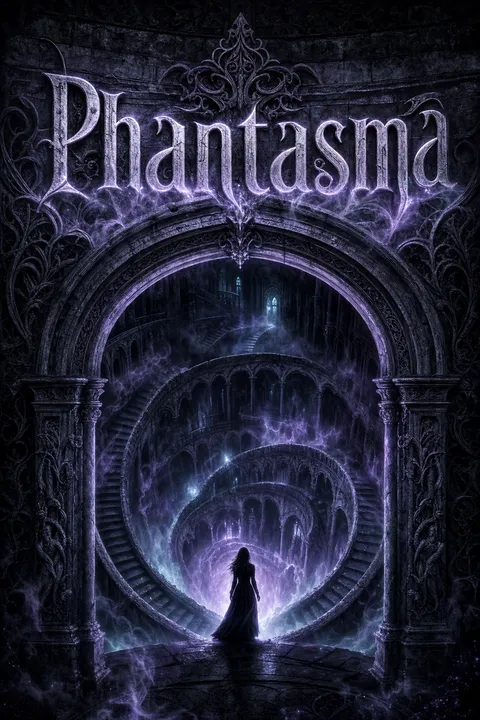


Plot Summary
Prologue
A Devil with a wicked mouth and a voice like warmed bourbon presses a trembling woman for her decision, tracing a finger down her throat, his lips a breath from her racing pulse. She accuses him of tricking her. He only laughs.
Adrenaline surges through her, and though she cannot form an answer, every event that carried her to this moment sears itself into her memory with merciless clarity. The scene withholds names, stakes, and outcome, offering only the electric intimacy of a bargain about to be struck between a mortal and something far older and darker than she understands.
The frame opens in medias res, dangling the novel's central seduction and decision before rewinding to origins. By refusing names, it primes readers to read the entire book as an approach toward this charged threshold, transforming the plot into dramatic irony: we know a reckoning waits. The sensory palette (bourbon, pulse, adrenaline) fuses fear with desire, announcing the book's thesis that danger and attraction share a nervous system. Calling the man simply the Devil while granting him tenderness destabilizes the villain category early. The woman's paralysis, unable to answer yet vividly remembering, mirrors the obsessive mind the novel explores, where recollection floods faster than resolution can arrive.
The Midnight Inheritance
Ophelia Grimm1 wakes in the small hours to find her mother, the celebrated New Orleans necromancer Tessie,10 dead on the living room floor. A crackle of expiring magic warns her the power will vanish unless she claims it before midnight.
Slicing her arm, lighting seven black candles, she completes the ritual she has rehearsed her whole life. Fire floods her bones, her eyes bleach to the ghostly Grimm Blue, and suddenly she can see the dead drifting through the manor.
The heart-shaped locket she fastens at her throat begins, impossibly, to pulse like a second heartbeat. Her younger sister Genevieve3 watches, apprehensive. All the while the Shadow Voice, the intrusive presence that has haunted Ophelia's1 mind since childhood, demands she tap and count.
The inciting ritual literalizes inheritance as both gift and imprisonment. Ophelia does not desire power so much as she cannot bear to be the Grimm who breaks the line, exposing perfectionism rooted less in ambition than in dread of failing dead expectations. The locket's heartbeat introduces the book's governing riddle while symbolizing a self bound to others' rhythms. Smith threads obsessive-compulsive experience directly into the magic system: counting and tapping are survival rituals, not quirks. Grief here is preempted by duty, and Ophelia's refusal to cry signals a woman who converts sorrow into obligation, a defense mechanism the entire narrative will slowly, painfully dismantle.
Debt and a Sister's Flight
Bankers arrive at Grimm Manor with ruinous news: Tessie10 secretly mortgaged the estate, leaving thirty-five thousand dollars of debt and a foreclosure that ends in demolition within a month. Two repayment checks bear signatures Ophelia1 recognizes as her mother's handwriting badly forged, and she deduces Genevieve3 did it.
In a filthy alley the sisters erupt at each other, Genevieve3 urging escape and travel, Ophelia1 refusing to abandon the family name. Genevieve3 storms off.
By morning she is gone, leaving a farewell letter and a hidden diary crammed with clippings about Phantasma, the traveling Devil's Manor, and a scrawled instruction to find someone named Gabriel.11 Certain her impulsive sister3 has entered the lethal competition, Ophelia1 packs her bags to follow.
The financial crisis reframes the Grimm legacy as a gilded trap, its prestige hollowed by hidden rot, much like Ophelia's curated self-image. The forged checks establish Genevieve as a keeper of secrets and a protector who acts rather than confides, inverting the sisters' assumed roles. Their alley fight weaponizes love: Ophelia's controlling caretaking reads as contempt, Genevieve's optimism as recklessness. The diary functions as a portal object, converting private grief into quest. Notably, Ophelia's whole motivation is relational rather than acquisitive: she braves Hell not for the prize but to retrieve a sister, positioning familial loyalty as the moral engine beneath the romance to come.
The Voice at the Gates
Walking home after dusk, Ophelia1 breaks her mother's first rule and peers into the fog where the old cathedral should stand. A presence she cannot see,2 radiating a warm, magnetic static, speaks to her, amused and teasing, calling her angel. He warns that a house of Devils is no place for her and tells her to go home.
As she retreats, he leaves a cryptic gift of a riddle: a heart and a key would set him free, though she should hope they never meet again. Only as the veil lifts does she recognize the towering black Gothic estate rising from the mist as Phantasma itself, the competition from the newspapers. His words lodge in her mind like a splinter she cannot pull loose.
The disembodied meeting stages attraction as pure resonance, stripped of face and body, so that connection precedes appearance and cannot be dismissed as lust. His paradoxical warning, wanting her gone yet drawing her closer, encodes the doomed logic of forbidden love that structures the book. The heart-and-key riddle is planted long before its payoff, a model of narrative fair play. Ophelia's inability to obey her mother's rule about not looking into the dark dramatizes her deeper hunger: after a life sequestered by duty and compulsion, being seen by something in the dark is intoxicating precisely because it makes her heart race the way fantasy novels promised.
Paying with Fear
Resolved to find Genevieve,3 Ophelia1 joins the competition at its final call. A glittering, top-hatted Devil named Jasper5 lays out the terms: nine nightly trials patterned on the Circles of Hell, a single winner who claims an omnipotent Devil's Grant, and one cardinal rule, that falling in love inside Phantasma invites ruin. The price of entry is her greatest fear.
Smoke-like claws rifle through her memories and haul out the one terror she keeps most deeply buried, something even she flinches from naming. Jasper5 marvels that he has never seen a mind so crowded with dread and promises it will make her ordeal especially entertaining for the watching Devils. She gives her full name, Ophelia Marie Grimm,1 and crosses the threshold.
Surrendering one's greatest fear as admission price is a brilliant externalization of exposure therapy's opposite: the house will weaponize what she most avoids. For a protagonist whose illness manufactures catastrophic intrusive images, the transaction is uniquely cruel, since her mind already overflows with fears. Naming, throughout the book, carries power, and her refusal earlier contrasted with her surrender now marks commitment. Jasper's delight frames spectatorship and cruelty as entertainment, indicting the reader's own appetite for the trials ahead. The scene converts psychological interiority into plot machinery: what haunts her privately will soon hunt her publicly, collapsing the boundary between symptom and monster.
The Phantom's Bargain
Beyond the doors, Ophelia1 endures trapped corridors and a clawing Ghoul before reencountering the voice from the gates, now visible as Blackwell,2 a rare and infuriatingly handsome Phantom who claims no memory of their first meeting. He confesses he is bound to Phantasma, his past eaten away by holes in his mind, and is desperate to find the anchor that tethers him.
Astonished that she summoned impossible doorways and glimpsed the Whispering Gate, he proposes a blood bargain: he will erase her haunts and shepherd her through the trials if she hunts for his key. Fail, and a decade of her lifespan transfers to him. She refuses, wavers, then cuts her palm against his and seals the oath.
The bargain fuses the romance and quest plots into a single binding contract, ensuring every intimacy carries transactional stakes. Blackwell's amnesia makes him a man estranged from himself, a mirror for Ophelia's estrangement from her own mind, and it renders their attraction eerily fated, since he was drawn to her before he could remember why. The decade-of-life price literalizes the emotional truth that loving costs time and self. Her hesitation, then surrender, repeats her core pattern: she resists risk, then leaps when connection is offered. Smith frames consent and agency carefully here, a motif the book returns to insistently through every touch and every trial.
Level One: The Sightless Maze
The first trial, Limbo, robs every sense but sight and drops Ophelia1 into a labyrinth of closing stone walls. She scorches trail markers with sparks of raw magic and races the crushing corridors, discovering at the maze's heart a sleeping Hellhound that guards the only exit. When the vicious contestant Cade6 and his hanger-on Beau13 selfishly yank open the trapdoor and flee, the beast wakes and turns on the stragglers.
Rather than abandon a floundering younger contestant named Leon,8 Ophelia1 blasts the hound's eyes with her power and hauls him to freedom, her locket warming as if to approve her compassion. She escapes, but the near-fatal detour teaches her that here, kindness is a liability.
The sensory-deprivation maze externalizes disorientation and loss of control, states intimately familiar to a mind that cannot trust its own thoughts. Cade's betrayal introduces the human predators who prove deadlier than the supernatural ones, sharpening the novel's cynicism about self-preservation. Ophelia's choice to save Leon, against every survival calculus, establishes her moral spine and the recurring tension between the softness she is told will kill her and the ferocity she is learning. The locket's warmth as approval suggests an external conscience, hinting the object is more than heirloom. The trial's cruelty, forcing survivors to escape at each other's expense, previews Phantasma's true design: engineering complicity in harm.
Level Two: Bloodlust's Mirror
Level Two, Lust, hurls Ophelia1 into a masked orgy where a poisoned drink locks her into bloodlust and a slow death unless she breaks the spell. A creature wearing Blackwell's2 exact face rescues her, then coaxes her toward a kiss that would trap her forever. She catches the wrongness: her locket lies dead against her skin, and the endearment on his lips is not one Blackwell2 uses.
Shattering the fraud, she summons the real Blackwell,2 who helps her find the trapdoor hidden beneath one of the beds. They escape, but the encounter wrecks her, forcing her to doubt her own perceptions, the very torment her illness inflicts daily. Blackwell2 steadies her, vowing he would always stop the instant she asked.
The imposter trial is the book's most pointed dramatization of obsessive doubt: Ophelia must distrust a reality that looks and feels genuine, weaponizing the exact uncertainty that defines her condition. That she detects the fraud through the locket and a mismatched pet name affirms that intimacy leaves fingerprints no illusion can forge. The scene interrogates consent within simulation, extending the novel's ethics of touch. Blackwell's reassurance reframes safety not as the absence of danger but as reliable respect for a no. Lust as a Circle becomes, cleverly, less about desire than about the terror of not knowing whether what you want is real.
Bodies and a Buried Name
Escaping an acid-flooded hidden passage, Blackwell2 tears away Ophelia's1 disintegrating dress to spare her skin, and the tension coiling between them snaps into their first feverish encounter on the floor of a concealed chamber. In the aftermath she topples a candelabra and reads words gouged into the oak: Gabriel11 Forever, a name savagely scratched out above it.
The find ties Genevieve's3 mysterious Gabriel11 directly to the manor's walls. Between searches for Blackwell's2 anchor, Ophelia1 learns Phantasma's inner workings: its shifting haunts, its bored Devils, its wagering pools on who will die. The romance she swore to resist deepens with every shared danger, even as the competition's forbidden rule about love hangs over them like a blade.
Consummation staged atop a paternal inscription fuses eros and inheritance, insisting Ophelia cannot escape her origins even in ecstasy. The scratched-out name seeds the mystery of her parents while foreshadowing love turned to resentment. Smith uses physical intimacy as characterization: Ophelia, long convinced she was broken or undesirable, discovers her body is a site of agency and pleasure rather than shame. The revelation that Devils bet on the contestants recasts the trials as gladiatorial theater, deepening the critique of spectatorship begun with Jasper. The forbidden-love rule, restated, converts the reader's rooting interest into dread, since every tender beat accrues a debt the narrative promises to collect.
Level Three: Cages Over Fire
Level Three, Greed, dangles each contestant in a gilded cage above a boiling sea of lava. To ascend, Ophelia1 must climb the cliffside barehanded and clamp golden weights onto her chain, but every foot she gains sends others plunging toward the fire. Unable to enter the trial in body, Blackwell2 guides her by disembodied voice while her palms shred and blister against scalding metal and rock.
When a weight she releases kills someone below, the Shadow Voice seizes the moment, driving her to pound her knuckles bloody in penance. She reaches the cliff's edge alive. Afterward Blackwell2 heals her and, for the first time, gently presses her about the punishing voice she guards so ferociously.
Greed as a zero-sum ascent literalizes survival's moral cost: to rise is to condemn. Ophelia's guilt-driven self-harm, triggered by an unintended death, shows how her illness converts moral pain into compulsion, punishment as ritual. Blackwell's role as guiding voice deepens the intimacy of dependence; he cannot save her body, only steady her mind, which becomes the more meaningful rescue. His tender inquiry into the Shadow Voice marks a shift from lover to witness, someone who treats her condition without flinching or fixing. The trial's design implicates the winner in murder by mechanism, reinforcing Phantasma's project of manufacturing guilt and eroding the contestants' sense of innocence.
A Father Named Gabriel
Blackwell2 barters three years of his own memories to Jasper5 for the contestant logs and trains Ophelia1 to aim her magic and command her Specter-like vanishing. The malevolent Devil Sinclair4 corners her, goading Blackwell2 into a brawl, then directs her to a specific page.
There she finds two damning entries: Gabriel White,11 her father, a rare Specter who once took Blackwell's2 bargain and lost, and Tessie Grimm,10 her mother, also a former contestant. Blackwell2 admits he suspected her bloodline from the start. Sinclair's4 agenda emerges: he wants Ophelia1 to forfeit so Blackwell2 remains trapped forever, revenge for a freedom the Phantom2 once cost him during their shared, bitter history in this place.
The ledger transforms Ophelia's quest into an excavation of self: she is not a random entrant but the product of Phantasma itself. Learning her father was a Specter reframes her uncanny vanishing as inheritance, not aberration, offering the belonging she has always lacked. Blackwell trading memory for information poignantly literalizes love as self-erasure, giving away pieces of a self already fragmentary. Sinclair emerges as a true antagonist whose motive is not chaos but grievance, making him legible and dangerous. The revelation that both parents competed here converts the manor from obstacle into origin story, and hints that Ophelia's presence is less accident than long-arranged design.
Level Four: The Pendulum Board
Level Four, Gluttony, collars the contestants and pins them to a grid stalked by swinging saw-pendulums, punishing every greedy grab for gold with new blades. Cade6 betrays the group again, hauling levers that summon hail, flooding water, and dragging shackles onto everyone but himself.
Steered by Blackwell's2 directions and her own invisibility, Ophelia1 threads the deadly squares. When Eric, convinced she is a Demon, hunts her across the board, she backs into a pendulum's arc and lets him lunge into the blade. Her first deliberate kill drenches her in blood. She claims the exit key and staggers out, numb with guilt but one level closer to reaching Genevieve.3
Gluttony reimagined as collective punishment for individual excess sharpens the book's ethic: greed harms the group, not just the greedy. Ophelia's kill differs from her earlier accidental death; it is chosen, self-defensive, and it stains her without breaking her, charting her hardening. Her invisibility, her father's gift, becomes a survival tool, integrating heritage with agency. Cade's escalating villainy externalizes the human cruelty the trials cultivate, making him a foil whose selfishness clarifies Ophelia's costlier morality. The scene tests the novel's recurring question of whether a soft heart can survive, showing Ophelia growing teeth while still grieving each life the growing takes from her.
Level Five: Wrath and a Ballroom Trap
Before the trial, Sinclair4 ensnares Ophelia1 in an illusory golden ballroom, spinning her through an unending waltz until Blackwell2 drags her bodily through a wall, splintering the spell and barely saving her from disqualification. Level Five, Wrath, then forces the survivors to turn on one another, since only some can advance.
When Cade6 throttles Edna15 to coerce a forfeit, Ophelia1 refuses to watch her die, vanishes, and beats him back until Edna15 surrenders and is whisked to safety. Afterward jealousy scalds her as Sinclair4 and the Devil Rayea9 taunt her about Blackwell's2 past liaisons, planting doubt that the Phantom's2 affection is anything more than a distraction he has offered many times before.
The ballroom illusion externalizes Ophelia's private fantasy of ordinary romance and beauty, then reveals it as a cage, arguing that the life she once craved would have trapped her. Sinclair's tactic, seduction by wish-fulfillment, is more insidious than any monster. Wrath as a trial forces her to confront the anger she has long suppressed beneath dutiful control, channeling it into protection rather than cruelty when she saves Edna. The jealousy the Devils cultivate targets her deepest insecurity, that she is unlovable and easily replaced, weaponizing intimacy just as the manor weaponizes fear. Her rage becomes, paradoxically, an instrument of mercy rather than destruction.
Her Mother's Warning and the Rift
Jasper5 delivers the intelligence Blackwell2 paid for with memories: Ophelia's1 parents fell in love inside Phantasma and were cursed, her mother10 growing coldly indifferent while her father11 spiraled into obsession. Tessie10 later bargained with a Devil to erase Gabriel's11 memory of his family so she could flee, but the curse corroded the spell until he began to remember.
Reeling, Ophelia1 accidentally summons the Whispering Gate and reaches her dead mother,10 who urges her to forge her own legacy and, above all, to stay far from Blackwell.2 Shaken, Blackwell2 insists they become nothing but business partners. Stung, Ophelia1 lets Sinclair4 kiss her to prove it meant nothing, only proving that Blackwell's2 touch means everything.
The parents' curse supplies the tragic template Ophelia fears she is doomed to repeat, giving the forbidden-love rule flesh and family history. The mother reunion is emotionally pivotal: Tessie's admission that she was too hard on her daughter releases years of accumulated pressure, offering the validation Ophelia never received in life. Yet the same mother forbids the love now sustaining her, framing generational protection as inadvertent harm. Blackwell's retreat into detachment is a defense against loss, and Ophelia's retaliatory kiss with Sinclair is a self-sabotaging experiment in numbness that backfires, clarifying feeling through absence. The section dramatizes how fear of repeating history can itself become the trap.
Level Six: The Blood Truths
Level Six, Deceit, seats the dwindling contestants around a table where their pricked blood conjures statements they must judge true or false, a wrong answer dropping a stone pillar to pulp them. Baker dies misjudging Cade's6 claim about a fatal car crash, and Beau13 follows him into the grave.
The blood forces open the fragile secret between gentle Luci7 and Leon:8 she loves him, and he does not love her in return. Devastated and struck by Phantasma's love-curse, Luci7 forfeits, her skin now burning Leon8 at the slightest touch. Ophelia1 survives on instinct and the locket's quiet guidance, exiting into a manor that grows crueler and darker as the finale nears.
Deceit as a trial where truth kills inverts expectation: honesty, not lying, becomes lethal, indicting a world that punishes vulnerability. Luci's curse is the tragic proof of the rule Ophelia keeps testing, a cautionary mirror held to her own concealed love for Blackwell. The forced confession that Leon does not love Luci back is the crueler wound, showing the manor mining not just secrets but asymmetries of feeling. Baker and Beau's deaths, by misreading Cade, underline how the trials monetize distrust. Ophelia's survival by instinct and locket marks her growing attunement to the object's guidance, tightening the noose of foreshadowing around its true nature.
Level Seven: The Shadow Made Flesh
Level Seven, Violence, throws Ophelia1 into single combat against Cade6 after she frees the reticent Charlotte.14 When Cade6 rips the locket from her neck her heart nearly stops, until she snatches it back, then kills him with her magic and absorbs his life force as the Shadow Voice exults.
Exiting into a decaying, shadow-drenched manor, she confronts the Shadow Voice given corporeal form, which insists she unleashed it by killing. It flays her chest and sets a room ablaze. Screaming for Blackwell,2 she finally understands the horror is her greatest fear made real, the terror of harming herself under the voice's command. Blackwell2 tears through the flames and reaches her the instant before it lands its final blow.
The locket's near-fatal removal makes literal what the story has implied: her heartbeat is bound to the object. Killing Cade completes her transformation from soft-hearted rescuer to survivor who feels the pull of her own darkness, the Shadow Voice reframed as intimate rather than alien. The revelation that the whole ordeal was her paid entry fear, self-harm under compulsion, retroactively organizes the novel's OCD themes into a single confrontation. Crucially, she does not defeat the voice by proving she needs no one; she defeats it by calling for help, dismantling the toxic belief that self-reliance is the only strength and reframing outside support as an act of courage.
Genevieve Found
Recovering, Ophelia1 is finally reunited with Genevieve,3 who unburdens years of hidden truths: she tracked their father11 and the family curse for years, learned of the debt, forged the checks, and discovered Tessie10 had secretly bought a warded second home before dying.
Genevieve3 also confesses she is a Specter, concealing her power since childhood to guard her freedom from their mother's10 control. The sisters mend the distance that opened between them, each apologizing, vowing never to drift apart again.
Ophelia1 admits her feelings for Blackwell2 have grown perilously deep. Together with the Phantom,2 the three of them hunt fruitlessly for his anchor, and as the final levels loom, Ophelia1 persuades Genevieve3 to forfeit rather than risk the deadliest trials.
The reunion pays off the quest's emotional debt and reframes the entire competition as an act of mutual sacrifice, since each sister entered for the other. Genevieve's confessions reveal that the secrecy Ophelia experienced as abandonment was actually protection, correcting her self-pitying narrative. Genevieve's hidden Specter power mirrors Ophelia's concealed inner voice, suggesting both sisters learned to hide essential selves under a controlling mother. Their reconciliation models repair without erasure of hurt. Ophelia convincing Genevieve to forfeit is an act of love inverted from her earlier controlling caretaking: this time she releases rather than clings, evidence of genuine growth, and it clears the board for her solitary reckoning ahead.
Level Eight: The False Sisters
With Genevieve3 safely out, Level Eight, Fraud, confronts Ophelia1 with two identical Genevieves,3 one authentic and one lethal imposter, where choosing wrong would kill her real sister3 outside the manor.
Reconstructing the timeline, Ophelia1 realizes with sickening clarity that this exact trial killed her mother:10 her father Gabriel,11 in his failed second attempt, guessed wrong, and Tessie's10 heart stopped far away, disguised as an ordinary heart attack.
Fighting down panic with Blackwell2 counting her breaths, Ophelia1 poses a question no memory of her own could answer, then correctly names both figures as frauds and dissolves them. Freed and furious, she resolves to summon Phantasma's hidden creator and demand the truth about everything face to face.
Fraud as a trial about discerning the real beloved from a perfect counterfeit crystallizes the novel's obsession with epistemic doubt, but now with mortal stakes for someone she loves. The revelation that this level murdered her mother recontextualizes the entire book: Tessie's death, the inciting event, was Phantasma reaching across distance, making the manor the hidden author of Ophelia's whole journey. Her solution, asking what she herself could not know, is intellectually elegant and thematically resonant, since the manor mirrors the mind and can only reflect what is already inside. Her pivot from survival to confrontation marks the emergence of agency: she stops enduring the game and starts demanding answers.
The Prince Behind the Phantom
Summoning the creator's door and speaking a name, Salemaestrus,2 Ophelia1 steps through, and Blackwell2 reveals his buried truth: he is the Prince of the Devils, sentenced by his father to run Phantasma with erased memory as punishment for once loving a mortal his father then killed. Ophelia1 grasps at last that the heart and key are her own enchanted locket, bound to her heartbeat.
Giving it to him frees him, but triggers Phantasma's love-curse upon her, which nearly stops her heart. Salem2 restores a working heart as her prize, and to break the curse she agrees to become his permanent tether, binding her immortal lifespan to his forever. Phantasma crumbles, and she chooses, at last, the Devil she rescued.2
The revelation reframes the disembodied stranger, the Phantom lover, and the antagonistic creator as one fractured being, making Ophelia's fated pull a recognition of a soul severed from itself, echoing her own divided mind. The locket resolving as both heart and key delivers the riddle's payoff with symbolic precision: her literal heart was the answer all along, love as the only untethering force. Her final bargain, trading eternal autonomy to break a curse and keep him, reprises the book's consent ethics at the ultimate scale, freely chosen rather than coerced. The climax insists that the antidote to inherited, forbidden love is not avoidance but sacrificial, clear-eyed commitment.
Epilogue
Weeks later, Ophelia1 walks a lighter New Orleans where the cathedral has reclaimed Phantasma's vanished ground and Devils no longer stalk the streets after dark. Grimm Manor stands dusted and reimagined, and she plans a new legacy: a refuge helping paranormal people avoid ruinous bargains rather than merely tending corpses.
Salem,2 freed and fully powered, lives with her and Genevieve,3 spoiling them, settling the manor's debt, and gleefully joining Genevieve's3 teasing. The dormant locket still rests at her throat, its origins unsolved. Immortal, at peace with the Shadow Voice she will never fully silence, Ophelia1 embraces the future she chose and the Devil she pulled out of his own Hell.2
The resolution converts inheritance from burden to authorship: Ophelia redefines the Grimm legacy on her own terms, honoring her mother's dying wish to build something new. The lighter city externalizes her internal thaw, the lifting of a private darkness rendered civic. Crucially, peace does not mean cure; she coexists with the Shadow Voice rather than defeating it, the book's most honest statement about living with obsessive-compulsive disorder, that management, not eradication, is the victory. Domestic warmth between Salem and Genevieve reintegrates the romance into family rather than isolating it. The still-mysterious locket leaves a deliberate thread loose, gesturing beyond this volume while affirming that some inheritances remain unknowable.
Analysis
Phantasma weds gothic romance to a survival-game structure, but its true subject is living inside a mind that turns against itself. Smith externalizes obsessive-compulsive disorder as the Shadow Voice, a presence that manufactures catastrophe and extracts compulsive rituals, then builds an entire haunted competition that literalizes intrusive thought: a manor that weaponizes fear, forces distrust of one's own perceptions, and mines guilt from every choice. The trials, patterned on the Circles of Hell, function less as spectacle than as a psychic obstacle course, culminating in the revelation that the house mirrors the mind and can only reflect what the contestant already carries. Ophelia's1 arc reframes strength: her defining victory is not silencing the voice or proving self-sufficiency, but calling for help and accepting it, dismantling the toxic belief that needing others is weakness. The book's recurring emphasis on consent, bargains freely given, a lover who vows to stop the instant she asks, insists that agency survives even in Hell. The romance interrogates inherited patterns: warned she will repeat her cursed parents, Ophelia1 learns that fear of repetition is its own trap, and that the antidote to doomed, forbidden love is not avoidance but sacrificial, clear-eyed commitment. Sisterhood provides the moral spine, with Ophelia1 braving damnation for Genevieve3 and discovering that the secrecy she read as abandonment was protection. Guilt, self-harm, grief, and perfectionism are rendered with unusual candor for the genre, and the ending refuses a tidy cure: peace means coexistence with the voice, not eradication. Legacy, finally, is reclaimed as authorship rather than obligation. The novel argues that a soft heart need not be fatal, that it can grow teeth without losing tenderness, and that choosing love, even at eternal cost, can be an act of self-possession rather than surrender.
Review Summary
Phantasma received mixed reviews, with ratings ranging from 1 to 5 stars. Many readers enjoyed the gothic atmosphere, spooky vibes, and romance between the main characters Ophelia and Blackwell. The trials based on the nine circles of hell were praised for their uniqueness. However, some criticized the insta-love romance, underdeveloped characters, and rushed ending. The OCD representation was generally well-received. While some found it an entertaining and addictive read, others felt it lacked depth and originality. Overall, it seems to be a divisive book that appeals to certain readers but disappoints others.
People Also Read

Characters
Ophelia Grimm
Dutiful necromancer heirThe elder Grimm daughter, newly powered and reluctantly bound to her family's necromancy business. Ophelia lives at war with the Shadow Voice, an intrusive inner presence that dictates compulsive tapping and counting, and with a perfectionism rooted in the terror of failing everyone who expects greatness of her. Sheltered her whole life inside Grimm Manor, she is fluent in death but a novice at living, craving the danger and romance she read about while cloistered. Driven by fierce love for her sister, she enters Phantasma to rescue Genevieve3 rather than to win. Sharp-tongued, self-doubting, and quietly brave, she gradually learns to distinguish her true self from the voice that torments her, discovering that accepting help is not weakness but courage.
Blackwell
Enigmatic trapped phantomA rare and unusually solid Phantom bound to Phantasma, marked by moonlight-white hair, jewel-green eyes, and a maddening habit of answering questions with riddles. Blackwell suffers gaping holes in his memory, unable to recall anything before the manor, and offers chosen contestants blood bargains in exchange for hunting the anchor that might free him. Charming, arrogant, and lonelier than he admits, he masks centuries of isolation behind wit and seduction. His pull toward Ophelia1 feels fated and inexplicable, a recognition he cannot name. Beneath the teasing lies a fierce protectiveness and a capacity for tenderness that surprises even him, complicated by the competition's forbidden rule against love and by secrets his own broken mind keeps from him.
Genevieve Grimm
Impulsive younger sisterOphelia's1 vivacious, foul-mouthed younger sister, socially fluent where Ophelia1 is cloistered, and secretly harboring years of hidden research and abilities. Genevieve resented having the family's magic forced into every corner of their childhood and carved out a life of friends and freedom apart from Grimm Manor. Beneath her flippant bravado runs deep loyalty and a protective instinct that drives reckless, self-sacrificing choices. Her secrets, about the debt, their father11, and her own nature, are kept not from mistrust but from a desire to shield Ophelia1. Warm, nosy, and irrepressibly bold, she is the emotional anchor Ophelia1 would brave Hell itself to recover.
Sinclair
Vengeful scheming devilA dangerously handsome Devil with cat-slit maroon eyes and a velvet, mocking voice, indebted to Phantasma rather than employed there. Sinclair nurses a bitter grievance tied to Blackwell2 and works relentlessly to keep the Phantom2 trapped, pressuring Ophelia1 to forfeit through illusions, seduction, and threats. Charismatic and cruel, he plays at humanity to lower defenses, but his loyalty was once given and betrayed, lending his malice a wounded, personal edge.
Jasper
Glib gatekeeping devilThe glittering, top-hatted Devil who admits contestants and hosts a level, distinguished by a third golden eye hidden beneath his hat. Jasper is a shameless gossip who trades in information and favors, amused by mortal folly and willing to deal when the price suits him. Neither ally nor enemy, he operates by self-interest, offering Ophelia1 crucial intelligence at a cost that shapes the story.
Cade
Ruthless cruel contestantA tall, sneering contestant driven to Phantasma by a family ultimatum, Cade embodies pure self-preservation. He brands Ophelia1 a Demon, turns other contestants against her, and repeatedly sabotages the group to save himself. Violent, bigoted, and cunning, he becomes Ophelia's1 most persistent human threat, a foil whose remorseless selfishness clarifies the cost of her own harder choices.
Luci
Kind haunted contestantLucinda, called Luci, is a gentle, sleep-deprived contestant and Cade's6 estranged cousin, drawn into Phantasma by family financial ruin. A former friend of Genevieve's3, she recognizes Ophelia1 and offers rare kindness in a place that punishes it. Soft-hearted and quietly resilient, she carries a tender secret and hides an unexplained shimmering wound, embodying the vulnerability the manor preys upon.
Leon
Gentle earnest contestantA lean, hazel-eyed young contestant Ophelia1 saves in the first trial. Kind and conflict-averse, Leon forms a fragile bond with Luci7 and repeatedly tries to steer the group away from cruelty, though the manor tests his courage against his fears.
Rayea
Alluring taunting devilA striking, silk-clad Devil who hosts a trial and shares a physical past with Blackwell2. Rayea delights in provoking mortals, dangling jealousy before Ophelia1 to unsettle her and destabilize her bond with the Phantom2.
Tessie Grimm
Late demanding motherThe renowned New Orleans necromancer whose sudden death launches the story. Tessie was eccentric, exacting, and warm without being tender, holding Ophelia1 to impossible standards while sheltering her fiercely. Her hidden past and buried secrets ripple through every trial, and her memory governs Ophelia's1 sense of duty and guilt.
Gabriel White
Absent Specter fatherOphelia's1 father, a rare Specter and former Phantasma contestant she never knew. A name in a diary and a ledger, Gabriel represents the paternal mystery and the inherited abilities that shape both sisters, his history entangled with the manor's darkest workings.
Poe
Ghostly white catA fluffy ghost cat with unsettlingly human eyes who trails Ophelia1 through the manor, leading her into passages and traps. Attached to Blackwell2, Poe is more knowing than any cat should be, an amused and enigmatic companion throughout the trials.
Beau
Cade's cowardly followerCade's6 freckled henchman, weak-willed and easily led, who parrots his cruelty and prioritizes his own survival. The sheep to Cade's6 wolf, Beau contributes to the group's betrayals without the spine to lead them.
Charlotte
Blunt private contestantA wine-haired, septum-pierced contestant who keeps entirely to herself and voices sharp irritation at everyone's drama. Quietly capable, Charlotte survives by minding her own business and speaking up only when it counts.
Edna
Grieving sibling contestantA contestant competing to resurrect her drowned younger brother Michael, sister to Mason. Edna's desperation and the mercy shown her by Ophelia1 mark one of the trials' rare humane moments amid the carnage.
Plot Devices
The Shadow Voice
Intrusive tormenting inner presenceA lifelong presence in Ophelia's1 mind that issues catastrophic ultimatums and demands compulsive rituals, tapping in threes, knocking, counting, to avert imagined disasters. It embodies obsessive-compulsive disorder within the fantasy frame, insisting people will die or the manor will fall unless she obeys, and taunting her with violent, shameful thoughts. Throughout the trials it grows bolder, feeding on stress and guilt, blurring the line between symptom and supernatural threat. Its persistence forces the novel's central psychological question: whether Ophelia1 is defined by the darkness in her head or by how she treats the world despite it. Rather than being conquered, it must be lived with, making it the book's most honest and resonant device.
The heart-shaped locket
Guiding heirloom with a heartbeatA gilded, damask-patterned locket passed down through generations of Grimm women, engraved with the words follow your heart and sealed shut against opening. After Ophelia1 claims her magic it begins to pulse in time with her own heartbeat, warming to signal approval or danger and steering her toward hidden doors and choices. Her mother10 insists it must never be removed. Throughout the trials it functions as an external conscience and truth-detector, exposing an imposter and reacting to peril, its steady rhythm a physical link between Ophelia1 and the world around her. Its origin and deeper purpose remain a mystery that drives both the search for Blackwell's2 anchor and the story's climactic revelation.
The blood bargain
Binding magical partnership contractAn unbreakable oath sealed with mingled blood, offered by Blackwell2 to a chosen contestant each competition. In exchange for guidance through the trials and the clearing of stray haunts, the mortal must hunt for his anchor, and failure forfeits a decade of their lifespan to him, which sustains his power. The bargain fuses romance and quest into a single binding stake, ensuring every act of intimacy carries transactional weight and every rescue deepens dependence. It also embodies the novel's insistent ethics of consent, since bargains cannot be forced, only freely given, and it establishes the escalating price of connection that the climax ultimately transforms into an eternal, chosen commitment.
The nine levels
Escalating Circles of Hell trialsPhantasma's competition unfolds across nine nightly trials, each themed on a Circle of Hell, Limbo, Lust, Greed, Gluttony, Wrath, Deceit, Violence, Fraud, and the final Treachery. Each level begins with a riddle-clue, offers a last chance to forfeit or bargain with a hosting Devil, and punishes the contestants' vices while forcing complicity in one another's deaths. The structure paces the novel's escalation, converting abstract sins into concrete death-traps and steadily thinning the cast. As Ophelia1 advances, the levels increasingly mine intimacy, memory, and fear rather than mere physical danger, mirroring her inner landscape until the manor itself becomes a reflection of the mind that must navigate it.
The Whispering Gate
Portal across the veilA summonable passage on the Other Side, accessible only to non-corporeal beings, Devils, and, uniquely, Ophelia1, whose necromancer and Specter nature straddles life and death. Falling through its endless darkness immerses her in overlapping whispered conversations across linear planes. It can only be reached when someone on the far side pulls strongly enough to speak with her, enabling a devastating reunion that reorients her grief, her sense of self, and her understanding of the family secrets driving the plot. The gate demonstrates Ophelia's1 extraordinary, half-inherited abilities and provides the novel's most emotionally charged bridge between the living and the dead.
FAQ
Synopsis & Basic Details
What is Phantasma about?
- Dark fantasy romance: Phantasma is a dark fantasy romance novel centered around Ophelia Grimm, a young woman who inherits her family's necromantic powers and is drawn into a deadly competition within a mysterious manor.
- Deadly competition: The story follows Ophelia as she navigates treacherous trials, confronts her inner demons, and grapples with a forbidden love, all while trying to find her missing sister.
- Exploration of power: The novel explores themes of power, sacrifice, and the blurred lines between good and evil, set against a backdrop of Gothic aesthetics and paranormal intrigue.
Why should I read Phantasma?
- Unique blend of genres: Phantasma offers a compelling mix of dark fantasy, romance, and horror, appealing to readers who enjoy complex characters and morally gray situations.
- Intriguing plot twists: The story is filled with unexpected twists and turns, keeping readers engaged and invested in Ophelia's journey and the mysteries of Phantasma.
- Exploration of complex themes: The novel delves into themes of family legacy, mental health, and the nature of love, providing a thought-provoking and emotionally resonant reading experience.
What is the background of Phantasma?
- Necromantic family legacy: The story is set in a world where necromancy is a known practice, and Ophelia comes from a long line of powerful necromancers, giving the story a rich history and lore.
- Gothic New Orleans setting: The novel is set in a fictionalized version of New Orleans, with its unique blend of cultures, history, and paranormal elements, creating a haunting and atmospheric backdrop.
- Devil's Manor competition: The central plot revolves around Phantasma, a mysterious manor that hosts a deadly competition, drawing in contestants from all walks of life, each with their own motivations and secrets.
What are the most memorable quotes in Phantasma?
- "What a phantasmagoria the mind is and meeting-place of dissemblables!": This quote from Virginia Woolf, used as an epigraph, sets the tone for the novel, highlighting the complex and often contradictory nature of the human mind, a key theme in Ophelia's journey.
- "If the dark looks at you, you never look back.": This rule, taught to Ophelia by her mother, emphasizes the dangers of the paranormal world and the importance of self-preservation, a recurring theme in the story.
- "A heart and a key would set me free.": This cryptic phrase, spoken by Blackwell, becomes a driving force in the plot, hinting at the mystery surrounding his past and the nature of his tether to Phantasma.
What writing style, narrative choices, and literary techniques does Kaylie Smith use?
- First-person perspective: The story is told from Ophelia's point of view, allowing readers to intimately experience her thoughts, emotions, and struggles, creating a strong connection with the protagonist.
- Descriptive and atmospheric prose: Smith uses vivid language and sensory details to create a rich and immersive reading experience, bringing the Gothic setting and paranormal elements to life.
- Foreshadowing and symbolism: The author employs subtle foreshadowing and recurring symbols, such as the locket and the color red, to add layers of meaning and enhance the thematic depth of the story.
Hidden Details & Subtle Connections
What are some minor details that add significant meaning?
- Ophelia's compulsions: Her obsessive-compulsive tendencies, such as tapping and counting, are not just quirks but a manifestation of her inner turmoil and a way to cope with the intrusive thoughts from the Shadow Voice, highlighting her mental health struggles.
- The pulsing locket: The locket's heartbeat, initially a sign of her connection to her family's magic, later becomes a guide, leading her to Blackwell and revealing the truth about her father's past.
- The color red: The recurring use of the color red, in the roses, her dress, and the blood, symbolizes both danger and passion, reflecting the complex nature of her journey and her relationship with Blackwell.
What are some subtle foreshadowing and callbacks?
- The Devil's initial offer: The Devil's smooth voice and the way he trails his finger down Ophelia's throat in the prologue foreshadows the sensual and dangerous nature of her relationship with Blackwell.
- The Whispering Gate: The mention of the Whispering Gate early in the story foreshadows Ophelia's ability to access the Other Side and her connection to the paranormal, which becomes crucial later in the plot.
- The phrase "Follow your heart": The inscription on the back of the locket, "Follow your heart," is a recurring motif that guides Ophelia's decisions, even when they lead her down dangerous paths.
What are some unexpected character connections?
- Blackwell and Ophelia's father: The revelation that Blackwell knew Ophelia's father, Gabriel White, and that Gabriel was a previous contestant in Phantasma, adds a layer of complexity to their relationship and highlights the interconnectedness of their fates.
- Luci and Genevieve's friendship: The fact that Genevieve had a close group of friends, including Luci, that Ophelia was unaware of, reveals a hidden aspect of Genevieve's life and adds depth to their sisterly bond.
- Sinclair and Blackwell's history: The reveal that Sinclair and Blackwell have a shared history and that Sinclair is actively working against Blackwell adds a layer of intrigue and danger to the story.
Who are the most significant supporting characters?
- Poe: The ghostly cat, Poe, acts as a guide and companion to both Ophelia and Blackwell, often appearing at crucial moments and adding a touch of whimsy to the dark atmosphere.
- Jasper: The Devil, Jasper, serves as a source of information and a foil to Blackwell, providing insights into the workings of Phantasma and adding a layer of complexity to the story's power dynamics.
- Rayea: The Devil, Rayea, is a figure of temptation and a reminder of the dangers of desire, her interactions with Blackwell and Ophelia highlighting the complex nature of their relationship.
Psychological, Emotional, & Relational Analysis
What are some unspoken motivations of the characters?
- Blackwell's desire for freedom: Beyond his stated goal of finding the key, Blackwell's actions are driven by a deep-seated desire to escape his eternal imprisonment and reclaim his lost identity, making him a complex and sympathetic character.
- Genevieve's need for independence: Genevieve's decision to enter Phantasma is not just about finding her father but also about asserting her independence and proving her own strength, highlighting her desire to break free from her sister's shadow.
- Ophelia's fear of failure: Ophelia's actions are often driven by a fear of failing her family's legacy and a deep-seated need to prove her worth, making her vulnerable to manipulation and self-doubt.
What psychological complexities do the characters exhibit?
- Ophelia's OCD and anxiety: Ophelia's struggles with OCD and anxiety are not just plot devices but integral to her character, highlighting the challenges of living with mental health issues and the impact of trauma on her psyche.
- Blackwell's fragmented memories: Blackwell's fragmented memories and the constant struggle to remember his past create a sense of vulnerability and make him a more complex and relatable character.
- Genevieve's hidden insecurities: Despite her outward confidence, Genevieve's actions reveal a deep-seated insecurity about her place in the family and a desire to prove her own worth, highlighting the complexities of sibling relationships.
What are the major emotional turning points?
- Ophelia's acceptance of her magic: The moment Ophelia accepts her magic and uses it to protect herself and others marks a turning point in her journey, as she begins to embrace her identity and find strength in her abilities.
- Blackwell's confession of love: Blackwell's confession of love for Ophelia, despite his knowledge of the curse, marks a turning point in their relationship, as they both acknowledge the depth of their feelings and the risks they are willing to take.
- Ophelia's decision to sacrifice herself: Ophelia's decision to sacrifice her heart to free Blackwell is a powerful emotional turning point, highlighting her selflessness and the depth of her love for him.
How do relationship dynamics evolve?
- Ophelia and Blackwell's bond: Their relationship evolves from a strategic alliance to a deep and passionate love, as they navigate the trials and confront their inner demons, highlighting the transformative power of love.
- Ophelia and Genevieve's sisterhood: The sisters' relationship evolves from a strained and unspoken farewell to a deep and unbreakable bond, as they confront their past and find a path to healing and reconciliation.
- Ophelia and the Shadow Voice: Ophelia's relationship with the Shadow Voice evolves from a constant struggle to a complex understanding, as she learns to control her intrusive thoughts and find strength in her own mind.
Interpretation & Debate
Which parts of the story remain ambiguous or open-ended?
- The nature of the curse: The exact nature of the curse placed on those who fall in love within Phantasma remains somewhat ambiguous, leaving readers to ponder the true extent of its power and its impact on the characters.
- The origin of the locket: The origin of the locket and its connection to the King of the Devils remains a mystery, leaving readers to speculate about its true purpose and the forces at play within the story.
- The future of Phantasma: The fate of Phantasma and its impact on the world remains open-ended, leaving readers to wonder about the long-term consequences of its destruction and the future of the paranormal world.
What are some debatable, controversial scenes or moments in Phantasma?
- Ophelia's relationship with Blackwell: The power dynamics and moral implications of Ophelia's relationship with Blackwell, a Devil, are open to interpretation, raising questions about the nature of love and the boundaries of consent.
- Ophelia's use of violence: Ophelia's increasing use of violence, particularly in the later trials, raises questions about the impact of her experiences on her morality and the extent to which she is willing to go to survive.
- The nature of the Shadow Voice: The nature of the Shadow Voice and its influence on Ophelia's actions is open to debate, raising questions about the nature of mental illness and the extent to which it can be controlled.
Phantasma Ending Explained: How It Ends & What It Means
- Ophelia's sacrifice: Ophelia's decision to sacrifice her heart to free Blackwell is a powerful act of love and selflessness, highlighting the transformative power of human connection and the willingness to give everything for another.
- Blackwell's freedom: Blackwell's release from Phantasma is a bittersweet victory, as he is finally free from his eternal imprisonment but must now face a future without Ophelia, highlighting the complexities of love and loss.
- An eternal bond: Despite the separation, Ophelia and Blackwell's souls remain intertwined, bound by a new bargain that transcends the boundaries of life and death, suggesting that their love will endure beyond the confines of Phantasma.
Wicked Games Series Series
Download PDF
Download EPUB
.epub digital book format is ideal for reading ebooks on phones, tablets, and e-readers.








































