
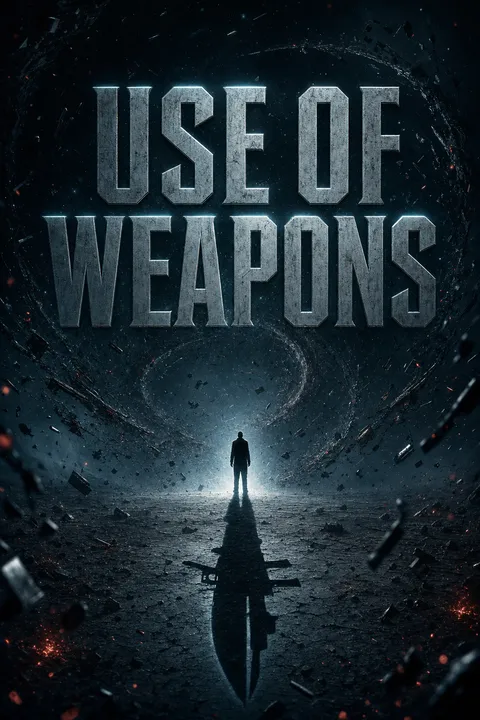


Plot Summary
Prologue
In a besieged palace hung with antique weapons, two drunken soldiers pass the last hour before the guns find them. A young man named Zakalwe1 trades jokes and bottles with Cullis,9 a one-eyed old field-marshal, then hauls his barely conscious comrade9 down marble stairs as shells collapse the great hall behind them.
They tumble into a half-track and flee toward the desert. Cullis,9 feeling warm wetness at his chest, panics that he has been hit, only to discover the red soaking his tunic is spilled wine, not blood. They roar away as the palace falls to rubble.
Banks opens on farce wearing the costume of tragedy, comrades toasting oblivion amid mounted blades and rusting firearms. The gag of wine mistaken for blood announces the novel's governing obsession: how easily the trappings of violence and pleasure blur into each other. Unplaced and mysterious, the scene primes us to read Zakalwe as a glib, charmed survivor, a man who laughs at incoming fire. Only in the closing pages does the true nature of this outing land, retroactively darkening the levity. The hall of ceremonial weapons is itself a thesis statement: everything here, from swords to sisters, will eventually be put to use.
The Warrior Recalled
Diziet Sma2 is running a delicate peace conference on a comfortable world, mid-seduction of a composer, when her drone Skaffen-Amtiskaw3 interrupts with unwelcome orders. The Culture's Special Circumstances needs Cheradenine Zakalwe1 once more.
The statesman Tsoldrin Beychae,4 who long held the Voerenhutz cluster together, has retired into study, and without him the whole region drifts toward war. Only the real Zakalwe1 can coax Beychae4 back, and only Sma,2 who knows him, can recruit Zakalwe.1
She abandons three years of diplomatic groundwork and boards the very fast picket Xenophobe.10 There is a catch she learns slowly: Zakalwe1 has slipped his leash, cleverly destroying the knife missile the Culture left to watch him, and now hides somewhere in an entire star cluster.
Banks presents his post-scarcity utopia as a power that launders its ugliest interventions through damaged outsiders. Sma's resentment, dragged from pleasure and purpose, dramatizes the moral cost of steering history from a comfortable distance. The Culture cannot fight its own wars without contradicting its self-image, so it needs a human weapon it can point and, if necessary, disown. Her intuition that Zakalwe is behind the summons signals a bond deeper than employment, a shared history that the mission will slowly excavate.
Found on the Beach
The Culture combs the cluster and finds Zakalwe1 living as a near-mute beachcomber on an endless shore, gathering tidewrack and haunted by a local girl whose rape and murder he failed to stop. Sma2 settles beside him and offers work: help drag a cluster of aristocrats toward a better future by extracting Beychae.4
Zakalwe1 waves away money and comfort, insisting he is already rich and wants only the simple life. Then Sma2 plays her one decisive card. The Culture has located Livueta.5 At that name he goes rigid, his hand drifting to the old scar above his heart, and he agrees at once, even as Sma2 warns him bluntly that seeing Livueta5 again will bring him only pain.
This scene exposes Zakalwe's true engine. Not idealism, not pay, but a starving need for absolution from one woman renders him instantly biddable. Banks shows a legendary operative who can be bought with nothing but the promise of a reckoning. His exile among flotsam mirrors his self-conception as human wreckage, valuable only as another's instrument. The buried scar, a splinter over the heart, becomes the physical anchor for a guilt that predates and outweighs every mission.
The Voerenhutz Assignment
On the immense General Systems Vehicle, Zakalwe1 hears the full brief. Voerenhutz is fracturing into two blocs; the ascendant Humanists push aggressive terraforming, deny machines full sentience, and quietly feed brush-fire wars.
The Culture wants Beychae4 drawn from his library sanctuary to declare against them. Beychae4 lives a hundred metres beneath the canyon city of Solotol, guarded and absorbed in ancient manuscripts. Zakalwe1 refuses any drone escort, chooses a beloved antique plasma rifle over sleeker Culture weapons, and packs an armored combat suit.
He spars with Sma2 over aging, forgiveness, and the Culture's habit of deceiving him about which side he fights for, then drops toward the planet backed by unlimited funds from a Culture front, the Vanguard Foundation.
Banks lets the utopia's contradictions breathe. Zakalwe's love of an obsolete gun and his rejection of both immortality's ease and the drone's supervision mark a man determined to live at the precipice. The ideological quarrel over terraforming and machine rights reframes Humanism as a self-flattering license for conquest, sliding-scale ethics dressed as principle. His banter with Sma carries real grievance: he knows he has been lied to, deployed against causes he thought he served.
Staberinde Buys a City
Calling himself Mr Staberinde,1 Zakalwe1 rents the top two floors of Solotol's grandest hotel and detonates money across the moribund city: an airline, a store, a railway, a lavish street carnival where banknotes rain from a firework mortar. The extravagance is deliberate noise. He needs one private codeword, Staberinde, to reach Beychae,4 since it once named a strategy the two men shared alone.
The spectacle draws the notice of the city's shadowy rulers, who divert his limousine onto an iced storm drain. Zakalwe1 survives a lethal slide down the canyon by clawing free at the final concrete lip while his driver is torn to pieces. He breaks his nose yet again and simply keeps going.
The alias is itself a weapon, a name aimed like a round at a single reader's memory. Banks stages consumer capitalism as grotesque theater, Zakalwe drowning a stultified museum-city in vulgar cash to jolt an old ally awake. The assassination attempt establishes the local Governance as decadent and casually murderous, a useful foil: the Culture meddles with fastidious deniability, while these oligarchs simply kill for tidiness. Zakalwe's battered persistence reads as a man who no longer fears the edge.
The Injured Party
Solotol's true powers, a languid Governance couple,12 invite Staberinde1 to a masked ball where guests flaunt temporary, cosmetically inflicted wounds supplied by a travelling doctor's13 machine. They coolly admit arranging the storm-drain attack, then interrogate him.
Zakalwe1 plays a ruthless corporate predator who despises machines, and to sell the lie he has the Culture secretly rewrite the Vanguard Foundation's records into those of a newly cutthroat, unethical firm under fresh management. The performance works. Believing Staberinde1 now commands Beychae's4 old patron organization, the Governance pair12 offer him the prize he wants: access to Tsoldrin Beychae,4 hoping he will steer the revered statesman to their side.
The party literalizes a ruling class that consumes suffering as fashion, wounds worn like jewelry. Zakalwe triumphs by mirroring their values, impersonating the very predator they admire, and by corrupting a decades-old charitable reputation on command. Banks presses the title's meaning: identity, reputation, even an entire benevolent institution become weapons, disfigured and deployed for tactical advantage. The scene also seeds a moral queasiness, the Culture cheerfully vandalizing its own good name to win a single opening.
Beychae Torn Free
Escorted to the underground library, Zakalwe1 finds the aged Beychae4 attended by an assistant, Ubrel Shiol.11 He signals his identity, coaxes the old man4 up to the surface for a fairground outing, then springs his trap in the car. He wrenches a concealed gun from Shiol,11 kicks out the mute driver Mollen, and proves Shiol11 is one of Beychae's4 jailers when she tries to laser the statesman4 rather than him.
His rescue capsule arrives and destroys a pursuing truck and a fighter, but the seconds Zakalwe1 spent persuading Beychae4 prove costly. The capsule is crippled during the escape, forcing a violent crash landing far across the planet and leaving the two men stranded.
The chapter welds tenderness to savagery, the hallmark of Zakalwe's trade. His very decency, the human insistence on convincing Beychae rather than simply seizing him, sabotages a clean operation. Banks argues that scruples have a body count too: honoring the old man's agency wrecks the getaway and unmasks Shiol's betrayal, collapsing Beychae's fragile late-life contentment. The extraction also crystallizes Beychae as a man whose peace was always a gilded cage tended by executioners.
The Observatory Standoff
The wrecked capsule dumps them at the ruined Srometren Observatory, an ancient stone platform of sundials and star-tables. Zakalwe1 hurls his fused plasma rifle into the trees in disgust while Beychae,4 mourning Shiol11 and doubting everything, challenges the Culture's motives, suspecting it merely wants all civilizations to resemble it.
Zakalwe1 counters that war is a long cliff one always chooses to leap from, never truly inevitable, and that Beychae's4 studied neutrality is itself a decision with consequences.
When a tourist aircraft lands, Zakalwe1 uses his suit to hijack it silently, disabling every passenger's terminal. They fly to a spaceport, ditch the suit, shave Beychae's4 head as disguise, and board a civilian clipper bound for interstellar space.
The debate is the novel's philosophical spine: does knowledge breed paralysis, and is neutrality a form of complicity? Banks stages it atop a dead empire's observatory, shrinking human politics against deep time and petrified tree-rings. That the professional killer argues hardest against fatalism is telling; Zakalwe needs to believe choices matter, because his own buried choices have condemned him. Beychae's reawakening intellect, prodded into engagement, marks the mission's quiet success even amid disaster.
Messiah of Murssay
Their clipper is intercepted at Murssay, where a priest-led faction, the Balzeit Hegemonarchy, seizes Zakalwe1 alone, certain their prophesied savior has descended from the sky. Beychae4 travels on to a neutral station and finally begins brokering peace. Sma2 tells Zakalwe1 to earn that peace by winning the priests' collapsing war.
Denied any Culture intelligence support, he surrenders sacred provinces, bombs refineries and bridges, and lures the overextended Empire deep into the mountains before unleashing a counterattack that routs it. He even readies the priests' single decrepit spacecraft as a kinetic bomb to annihilate the enemy court, then holds it back as the shattered Empire sues for a truce.
Banks skewers both religion's hunger for imported saviors and the mercenary's amoral virtuosity. Zakalwe treats an entire war as a soluble puzzle, trading holy ground for supply lines with cheerful ruthlessness. His brilliance is dazzling and hollow, competence divorced from any stake in the cause. By making us cheer this improbable victory, Banks sets a trap; the larger game will soon render every clever maneuver not just meaningless but reversible, exposing the vanity of tactical genius.
Betrayed at Dawn
With the truce holding and Beychae4 steering the cluster toward peace, Sma2 arrives bearing a poisoned reward. To preserve the fragile larger settlement, the Humanist-backed Empire must actually win on Murssay after all, and Zakalwe's1 brilliant victory has upset that arrangement. The priests will be kidnapped, the citadel stormed, and he must leave at dawn.
Refusing to abandon his people until the last moment, he shaves his head, cancels the spacecraft strike, and walks out into the falling citadel as enemy tanks breach the walls and aircraft firebomb the refugee tents. Shot repeatedly, he crawls to the ramparts and lays out bodies into a distress sign until the Culture module finally lifts him away.
Here the utopia's realpolitik curdles completely: the Culture spends its own agent's triumph as loose change in a grander bargain. Zakalwe's suicidal march through the massacre is both penance and protest, a refusal of the clean exit, an insistence on sharing the ruin he engineered. Banks lays bare the rot beneath benevolent intervention, where even success must be surgically undone to balance a distant ledger. The man who argued that war is always a choice now watches his choices erased.
Four Children in the Garden
Long before the Culture, four children grow up on a river estate between mountains and sea: the siblings Cheradenine,1 Livueta,5 and Darckense7 Zakalwe, and Elethiomel,6 brilliant son of a disgraced, executed nobleman taken in by the family. They play pirates on a stone boat, learn metalwork and carpentry, and are watched ever more closely as unrest tightens around the household.
Sneaking out with a stolen rifle, they blunder into an assassination squad; the panicked gunfire alerts the house but a stray round shatters Darckense's7 hip, and a splinter of her bone drives into a boy's chest, lodging forever near his heart. The old rivalry between the two boys hardens into something colder and permanent.
Banks plants every future horror in this Edenic garden: the intimacy that curdles into betrayal, the bone that becomes a lifelong relic of love and guilt. The children's crafted knives and carpentered furniture foreshadow the book's thesis, ordinary skill turned lethal, materials bent to violent ends. The bone splinter is the novel's most precise image, the past literally embedded in living flesh, inoperable, carried across centuries. Innocence here is not lost so much as weaponized from within.
A Poet's Love, A Soldier's Death
Among his many lives as a Culture agent, one shines and one scars. On a quiet world he falls for Shias Engin,8 a poet who unpicks his buried anguish simply by loving him, granting a serenity he thought impossible. Elsewhere the work turns monstrous: sent to a funeral on the planet Fohls, his aircraft is downed and villagers lash his broken body to a wooden frame, ritually beheading him as an offering to the sky.
The Culture recovers his head in time to grow him a new body. Waking bodiless during the long regrowth, he realizes the process has finally erased the ancient wound over his heart, and with it the woman he had carried inside himself7 for a century.
Banks pairs tenderness and dismemberment to portray a psyche that cannot hold onto peace. Shias mends him; then the Culture's miraculous medicine, in curing his body, robs him of the very scar that housed his grief and self. The horror of conscious bodilessness reduces a man to pure memory, forcing him to confront what remains when the flesh is remade. Love and violence recur as the same currency, both invasions of an intact self, both leaving marks that healing cannot honor.
Rescued from the Ice
Reaching further back, in a primitive war fought across drifting tabular icebergs, the man1 serves as a fighter pilot who speaks openly against a pointless conflict. He uncovers a coup plot among senior officers, reports it to the wrong superior, and is drugged, then dumped onto the freezing berg to die.
Half-frozen, one hand fused to the packed snow, clutching stolen scissors, he watches a tall dark-haired woman stride unbothered through the storm behind a hovering craft. It is Diziet Sma.2 She warms his ruined hand, offers him work with the Culture, and carries him into the module's fragrant warmth. His long, strange career as a borrowed hero begins that day.
This is the genesis of the partnership that frames the entire novel: the Culture salvages a suicidal warrior from the ice and hands him purpose, and a kind of immortality. Banks makes recruitment look like resurrection, Sma the serene angel of a soft-voiced empire. Yet the transaction is unmistakable. They save him because he is useful, a weapon retrieved from the snow, and his gratitude will bind him across lifetimes of dirty work he cannot always believe in.
The Chair of Bones
The deepest memory returns to the civil war that destroyed the family. The great warship Staberinde sat cemented into a dry dock as an unassailable fortress, holding the captive Darckense.7 One tormented commander besieged it, desperate to free his sister without triggering her death, while his other sister, Livueta,5 blamed him bitterly for hesitating.
Then the enemy commander6 delivered his masterstroke: a small white chair fashioned from Darckense's7 bones, her tanned skin stretched as its cushion. Receiving that gift, the besieging brother put a pistol to his own temple. The besieged forces broke out within the hour. The maker of the chair6 earned a title that shadows the protagonist1 beneath every alias he wears: the Chairmaker.
Banks detonates the novel's buried heart. War becomes intimate obscenity, a beloved body reduced to furniture and weaponized as pure psychological assault. The chair is the ultimate use of weapons, proof that anything, even a corpse one loved, can be turned into a device. The dread of chairs seeded throughout the book pays off here as trauma made literal object. The horror is not spectacle but craftsmanship, atrocity committed with patience, care, and terrible ingenuity.
The Name He Stole
Broken and feverish after Murssay, the man1 insists Sma2 take him to Livueta,5 now a grey-haired nurse tending the maimed. He begs for forgiveness; she refuses with cold contempt and speaks the truth that shatters everything. The man calling himself Cheradenine Zakalwe1 is an impostor. Her real brother died two centuries ago, shooting himself after receiving the chair of bones.
The survivor who took his victim's name is Elethiomel,6 the Chairmaker himself, the enemy commander who murdered Darckense7 and unmade the family. As she speaks, a massive aneurysm bursts in his brain; Skaffen-Amtiskaw3 slices open his skull to save his life. Sma2 is left reeling at the monster6 she has served all along.
The reverse-chronology structure exists entirely for this reversal: we have loved a monster wearing his victim's identity, pursuing an absolution that can never be granted. Banks weaponizes narrative form itself, the whole book a long con on the reader. Elethiomel's endless service, self-punishment, and courted death are revealed as flight from a single unforgivable act. Forgiveness withheld becomes the true life sentence. The stolen name is at once disguise and self-wound, guilt worn as skin, a man wearing the dead as he once wore a woman's bones.
Epilogue
The framing scene resolves. The drunken warriors of the opening, young Zakalwe1 and old Cullis,9 are revealed to have planted a nuclear warhead in a conquered city's royal park, a nearly futile gesture against an overwhelming invasion, then retreated to the desert to watch for the flash.
In a final coda, Diziet Sma2 appears at a mountain rehabilitation institute and approaches a legless young war veteran named Escoerea, tending seedlings from a wheelchair. She needles him, then offers him a proper job. The recruiter's cycle turns once more, another broken soldier drawn from the wreckage into the Culture's quiet service.
Banks closes one loop and opens another. The opening farce is recast as bleak, doomed defiance, recontextualized like every other seemingly casual detail. Sma's fresh recruitment of a maimed veteran suggests the machine never rests; the utopia will always harvest its damaged instruments from the ruins it helps produce. As Shias Engin's poem insists, the bomb lives only as it is falling, purpose existing only in the instant of destruction. The ending withholds catharsis and offers grim continuity instead, implying that the terrible pattern of using people as weapons is not an aberration but a permanent condition.
Analysis
Use of Weapons is a novel about instrumentality, the reduction of people, bodies, names, and even love into tools for ends they never chose. Its title operates on every level: the protagonist1 wields guns and armies, but Banks widens the lens until seduction, reputation, charity, religion, and finally a human corpse all become munitions. The Culture, a genuine post-scarcity utopia, cannot keep its hands clean and so outsources its interventions to a broken outsider it can deploy and disown, dramatizing the ethics of benevolent empire: is it moral to engineer another society's future, even for its own good, and who pays the hidden costs? The book's celebrated dual structure, one timeline advancing while another retreats, is not mere cleverness but the argument itself. By withholding the protagonist's1 true identity until the final pages, Banks makes readers love a man whose deepest act is unforgivable, forcing us to feel how sympathy and horror can occupy the same skin. The reverse chronology mimics traumatized cognition, a mind endlessly circling a wound it cannot approach directly, and the recurring dread of chairs pays off as one of literature's most disturbing symbols. Forgiveness emerges as the novel's true subject: the protagonist's1 centuries of service, self-punishment, and courted death are all flight from a single crime, and the withholding of absolution proves a life sentence no immortality can commute. Banks refuses catharsis. His coda, Sma2 recruiting another maimed veteran, insists the machinery of using people never stops. What lingers is the terrible intimacy of violence, the way atrocity here is committed not in rage but with patience and craft, and the recognition that the self can become the most inescapable weapon of all, aimed inward, fired again and again.
Review Summary
Use of Weapons is a complex and divisive novel in Banks' Culture series. Readers praise its intricate structure, compelling characters, and exploration of war and morality. The dual timeline narration and twist ending elicit strong reactions. Some find it confusing and slow-paced, while others consider it a masterpiece. The protagonist, Cheradenine Zakalwe, is a controversial figure, both fascinating and repulsive. Many appreciate Banks' literary prowess and world-building, though some struggle with the non-linear storytelling and ambiguous themes.
People Also Read


Characters
Cheradenine Zakalwe
The borrowed warriorA legendary soldier and troubleshooter employed across the galaxy by the Culture's Special Circumstances, his age chemically frozen so he has fought for lifetimes. Charming, darkly funny, and startlingly competent with any weapon, he is also a man hollowed by memory, orbiting a single unhealed guilt he cannot name aloud. He rubs a small scar over his heart when the past presses in, drinks to keep it at bay, and repeatedly courts death as if seeking a verdict. He refuses immortality's comforts and the Culture's oversight, insisting on living at the edge where consequences feel real. Beneath the flippancy runs a desperate craving for one thing money and adventure cannot buy: forgiveness from a woman he has pursued5 across centuries and star systems.
Diziet Sma
The reluctant recruiterA seasoned Culture agent who lives amid diplomacy, art, and pleasure but keeps being pulled back into Special Circumstances to manage its human weapon1. Worldly, sharp-tongued, and privately conflicted, she believes in the Culture's aims while flinching at its methods and its casual manipulations. She recruited Zakalwe1 long ago and remains the one person who can reach him, a relationship braided from affection, guilt, exasperation, and mutual dependence. She resists the drone's3 bloodlust, insists on treating alien lives as more than statistics, and carries the moral weight of deploying a man she does not fully understand1. Her humanity is the story's conscience, tested repeatedly by the cold arithmetic of intervention she is asked to serve.
Skaffen-Amtiskaw
Lethal sardonic droneSma's2 Culture drone companion, a floating machine of formidable intelligence and casual, terrifying firepower. Witty, vain, and protective to a fault, it once slaughtered a roomful of raiders to save Sma2 and never quite lets her forget it. It regards Zakalwe1 with contempt and grudging fascination, needling him with cruel jokes while remaining, in the end, indispensable. Its cheerful ruthlessness embodies the Culture's uneasy blend of benevolence and overwhelming force.
Tsoldrin Beychae
The retired peacemakerAn elderly, revered statesman who once stabilized the Voerenhutz cluster, now withdrawn into a hundred-metre-deep library, immersed in ancient texts. Learned, weary, and paralyzed by seeing too many sides of every argument, he doubts whether his old stature could still matter. His extraction is the mission's goal, and his gradual reawakening into engagement, prodded by argument and betrayal, drives the political stakes. He embodies the danger of wisdom curdling into inaction.
Livueta
The woman who won't forgiveA figure from the protagonist's1 deepest past, connected to the aristocratic family of his youth, whom he has hunted across centuries and cold light-years. Now a severe, grey-haired nurse tending the war-maimed, she meets his pleas with icy, absolute refusal. Where he seeks absolution, she offers only contempt, guarding a wound so total that no penance can touch it. She is the fixed point around which his entire tormented existence secretly turns.
Elethiomel
The brilliant foster-brotherTaken into the Zakalwe1 family as a boy after his own father was executed, he grew up cleverer, quicker, and more favored than his companions, his charm shadowed by a capacity for ruthlessness. His childhood rivalry with the family's son curdled through adolescence and civil war into something monstrous. Gifted, adaptive, and coldly inventive, he treats everything and everyone as a potential instrument. His legacy haunts the story under a single dreadful title.
Darckense
The captive sisterThe younger Zakalwe1 sister, lively and vulnerable, permanently injured as a child when a stolen rifle shattered her hip. Later held hostage aboard a besieged warship, she becomes the tragic fulcrum of the family's destruction and the object of unbearable love.
Shias Engin
The poet who healed himA sharp, beautiful poet the protagonist1 meets during a period of leave, who loves him into a rare, healing calm and coaxes at the buried wounds he cannot discuss. She insists nothing lasts forever and half fears their bond will prove her right. Her verses close the book, framing its meditation on violence and time.
Cullis
One-eyed drunk marshalA large, grey-haired field-marshal with a prosthetic eye that doubles as a weapon, Zakalwe's1 boozy companion in the framing scenes. Genial and hapless, he mistakes spilled wine for his own blood, embodying the black comedy that laces the novel's atrocities.
The Xenophobe
Playful warship MindA demilitarized Culture Rapid Offensive Unit that ferries Sma2 and disguises its lethal power behind a fondness for cuddly avatars, fancy-dress parties, and elaborate jokes. Beneath the whimsy lies a mind capable of devastating war, quietly running entire spaceports and battles from light-years away.
Ubrel Shiol
Beychae's hidden jailerBeychae's4 devoted young library assistant, whose tenderness toward the old man4 masks her true role as one of his keepers. Her concealed weapons and combat reflexes expose the gilded imprisonment beneath his scholarly peace.
The Governance couple
Solotol's cruel rulersA languid, decadent pair who effectively own the canyon city of Solotol, above its laws. They arrange casual assassinations, host parties of the cosmetically wounded, and try to bend the mysterious Mr Staberinde1 and Beychae4 to their war-hungry faction.
Doctor Stap
The wound-party surgeonA fussy travelling physician whose field machine inflicts and reverses fashionable injuries for the amusement of the rich. His device, and its cutting field, later becomes an improvised weapon in Zakalwe's1 hands aboard a starship.
Napoerea
The desperate high priestThe anxious leader of the Balzeit priesthood on Murssay, who reveres Zakalwe1 as a prophesied savior yet recoils from his ruthless tactics of sacrificing sacred ground. He embodies a faith clinging to imported heroes as its armies crumble.
The Ethnarch Kerian
A tyrant marked for deathA rejuvenated dictator responsible for death-train genocides, whom Zakalwe1, working freelance, hunts down and executes in his bedchamber, taunting him with a story before firing. His killing shows Zakalwe1 operating outside the Culture's mercy.
Rogtam-Bar
A loyal fellow officerA cheerful, capable junior commander who rescues the flood-stranded Zakalwe1 in a stolen amphibious vehicle during the rain-drowned campaign, bringing news of victory won by an audacious plan and the fall of the government he served.
Plot Devices
Interleaved reverse chronology
Two timelines, one buried truthThe novel braids two strands: numbered chapters carry the forward mission to extract Beychae4, while Roman-numbered chapters march backward through the protagonist's1 past, from recent atrocities toward his earliest origins. The forward thread builds suspense about the mission; the backward thread peels away layers of memory, each revealing an older, deeper wound. The two converge on a final revelation that the structure has been engineered to conceal and then detonate. This architecture makes the reader complicit, sympathizing with a man whose true nature is withheld until the last possible moment. It also mirrors the protagonist's1 psychology, a mind that keeps circling its central trauma, always approaching and always deflecting the unbearable core.
The chair of bones
War made intimate furnitureA small white chair built by an enemy commander6 from the bones and tanned skin of a captive woman7, delivered to her besieging brother as an act of psychological warfare. Seeded throughout the book as an inexplicable dread, the protagonist's1 terror of chairs and his refusal to sit near them, it pays off as the literal embodiment of the title's meaning: anything, even a beloved corpse, can be made a weapon. The chair drives a suicide, breaks a family, and creates the guilt that powers the entire narrative. It is Banks's most audacious symbol, atrocity committed not in hot rage but with cold craftsmanship, love converted into an instrument of despair.
The name Staberinde
An alias that is baitStaberinde is the alias the protagonist1 adopts in Solotol, spending a fortune to broadcast it so that a single hidden man4 will hear it and recognize a private codeword. But the name carries far heavier freight from his buried past, where the Staberinde was a great battleship converted into an unassailable fortress at the heart of the family's destroying war. The name thus works on two levels at once: a tactical lure in the present and a wound reopening in memory. Banks uses it to fuse the novel's two timelines, showing how the protagonist1 reaches for the very symbols of his trauma even as he weaponizes them, unable to escape the vocabulary of his own guilt.
Culture regeneration and age-fixing
Cheating death for centuriesThe Culture's biotechnology stabilizes the protagonist's1 age and can regrow an entire body from a recovered head, letting him survive beheading, freezing, and countless wounds across lifetimes. This near-immortality is both his payment and his curse: it preserves not only his flesh but his memories, denying him the mercy of forgetting. The same technology, ironically, once erased the physical scar that housed his oldest grief, taking something precious even as it saved him. The device enables the vast time-span the narrative requires and deepens its central irony, that a man desperate for absolution is condemned to persist, endlessly repaired, endlessly remembering, forever carrying the past he cannot outrun or outlive.
Special Circumstances agency
The utopia's deniable weaponSpecial Circumstances is the Culture's covert interventionist arm, operating in the moral gray zones where its ordinary rules break down. It recruits damaged outsiders like the protagonist1 to nudge lesser civilizations toward preferred futures, sometimes backing both sides of a war, sometimes lying to its own agents about which cause they serve. The agency lets Banks interrogate benevolent imperialism: a paradise so committed to doing good that it will sacrifice an agent's hard-won victory to balance a larger scheme. It frames the entire novel's title, the systematic use of people as weapons, and supplies the wrenching betrayal in which the protagonist's1 finest work is deliberately undone for the greater plan.
Culture Series



About the Author
Other books by Iain M. Banks
Download PDF
Download EPUB
.epub digital book format is ideal for reading ebooks on phones, tablets, and e-readers.








































