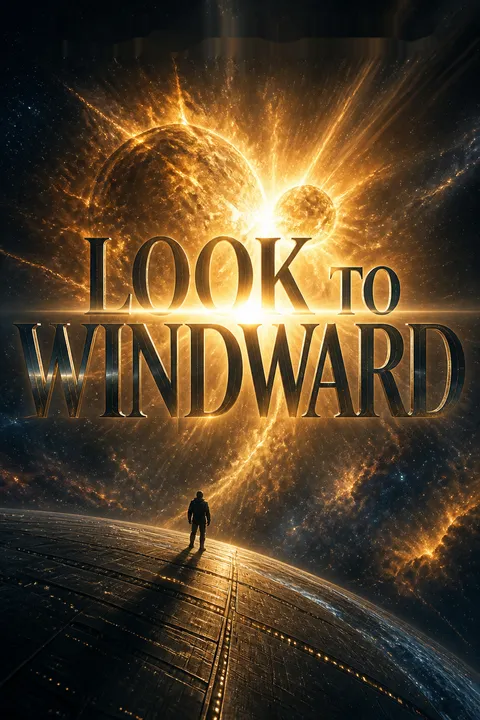

Plot Summary
War's Last Embrace
The novel opens in the ruins of war, where Major Quilan and his beloved Worosei are trapped in a crater, surrounded by devastation and the relentless advance of enemy forces. As explosions and lightning illuminate the night, Quilan is pinned beneath a wrecked land destroyer, unable to escape. Worosei, refusing to abandon him, stays until the last possible moment, sharing a final, desperate kiss before fleeing to safety. Quilan urges her to live for both of them, a promise that will haunt her. This harrowing scene sets the emotional tone for the novel, establishing themes of loss, duty, and the indelible scars left by conflict. The trauma of this night will shape Quilan's journey, driving him toward a mission that is as much about personal redemption as it is about vengeance.
Light of Ancient Mistakes
On Masaq' Orbital, the inhabitants gather to witness the arrival of light from a centuries-old supernova, a cosmic echo of the Idiran-Culture War's most destructive battle. The event is both a spectacle and a somber commemoration, as the nova's light reminds everyone of the billions lost in the war. Kabe Ischloear, a Homomdan ambassador, reflects on the Culture's peculiar relationship with mortality, fashion, and memory. The ceremony is marked by music and silence, with composer Mahrai Ziller's words—"Tonight you dance by the light of ancient mistakes"—resonating through the crowd. The nova's arrival is a moment of collective mourning and introspection, underscoring the Culture's struggle to reconcile its utopian ideals with the violent legacy of its past.
The Composer's Exile
Mahrai Ziller, a Chelgrian composer and political dissident, lives in exile on Masaq', estranged from his homeworld after denouncing its caste system. Ziller's presence is both a trophy and a challenge to the Culture, which prides itself on tolerance but is unsettled by his bitterness. When news arrives that a Chelgrian envoy is coming—possibly to persuade Ziller to return—he reacts with cynicism and dread. Ziller's art is shaped by his hatred for his own people's history, yet he is also a symbol of hope for reconciliation. His interactions with Kabe and the drone Tersono reveal the complexities of identity, belonging, and the burdens of being both celebrated and outcast. Ziller's refusal to return home becomes a focal point for the novel's exploration of forgiveness and the possibility of change.
Ghosts in the Machine
Major Quilan, haunted by the loss of Worosei, is recruited for a secret mission by Chelgrian authorities. He is implanted with the personality construct of Admiral-General Hadesh Huyler, a military strategist resurrected from digital storage. Their consciousnesses share Quilan's body, creating a tense partnership. The mission's true purpose is hidden even from Quilan, his memories suppressed for security. As they travel through the wreckage of war and the bureaucracy of peace, Quilan's grief and Huyler's pragmatism collide. The process of resurrection—both technological and emotional—raises questions about identity, agency, and the cost of survival. The ghosts of the past are not easily laid to rest, and the mission becomes a crucible for both men's unresolved pain.
The Ambassador's Arrival
Quilan arrives on Masaq' Orbital under the guise of a diplomatic envoy, tasked with persuading Ziller to return to Chel. He is greeted by a cast of Culture citizens—humans, drones, and the ever-watchful Hub Mind—each with their own agendas. The Culture's hospitality is both genuine and performative, masking a deep unease about the Chelgrian's true intentions. Kabe is assigned as Quilan's guide, and the two form a tentative bond. The arrival of the envoy stirs old wounds and new suspicions, as the Culture's openness is tested by the presence of an outsider carrying the weight of his civilization's trauma. The stage is set for a confrontation between past and present, individual and collective guilt.
Cheating Death, Seeking Meaning
The Culture's citizens grapple with the meaning of life and death in a society where mortality is optional and suffering is rare. Kabe observes the wing-fliers—humans who risk permanent death for the thrill of flight, calling themselves "Disposables." Their defiance of backup technology is both a rejection of the Culture's safety net and a search for authenticity. Ziller, too, is fascinated and repelled by the Culture's relationship with risk, artifice, and reality. The conversations between Kabe, Ziller, and others reveal a civilization struggling to find meaning in abundance, where even despair can be recreational. The tension between safety and significance, between utopia and ennui, is a recurring motif, shaping the choices of both natives and exiles.
The Journey to Masaq'
Quilan's journey to Masaq' is marked by a series of ship transfers, each vessel reflecting the Culture's ambivalence toward outsiders and its own history. The ships' names—Nuisance Value, Resistance Is Character-Forming—are ironic reminders of the Culture's self-awareness and its capacity for both kindness and carelessness. Quilan and Huyler navigate the rituals of hospitality, the scrutiny of their hosts, and the ever-present possibility of betrayal. Along the way, Quilan's suppressed memories begin to resurface, revealing the true nature of his mission. The journey is both literal and psychological, a movement toward a reckoning with the past and the responsibilities of the present.
The Weight of Remorse
The Culture and Chelgrians alike are burdened by the consequences of their actions. Quilan's grief for Worosei is mirrored by the Hub Mind's remorse for its role in the destruction of Orbitals during the Idiran War. Both seek solace in ritual—Quilan in monastic retreat, the Hub in commemorative ceremonies—but neither finds true peace. The Chelgrian-Puen, the Sublimed ancestors, demand a blood price for the souls lost in the Caste War, setting the stage for a cycle of mistake and atonement. The novel interrogates the limits of forgiveness, the persistence of trauma, and the ways in which individuals and societies attempt to balance the scales of justice and memory.
The Airspheres' Secret
In the Oskendari airsphere, Uagen Zlepe, a Culture scholar, uncovers a dying behemothaur and a Culture Special Circumstances agent who warns of a plot to destroy Masaq' Orbital. The airspheres, ancient and enigmatic, are a nexus of galactic intrigue, their inhabitants and guardians operating on timescales and motives beyond human comprehension. Uagen's desperate attempt to escape and warn the Culture is a race against time and the limitations of communication. The airspheres' secret is both a literal plot device and a metaphor for the unknowable depths of history, power, and the consequences of meddling in the affairs of others.
The Plot Unfolds
Quilan's training in the airsphere reveals the true nature of his mission: to assassinate the Hub Mind of Masaq' using a device hidden within his Soulkeeper. The act is framed as both revenge and necessity, a means to release Chelgrian souls from limbo. Quilan's memories are manipulated, his agency compromised by the presence of Huyler, who is revealed to be a double agent. The plot's complexity reflects the novel's central concern with the ethics of intervention, the dangers of righteous violence, and the ease with which good intentions can lead to atrocity. The lines between victim and perpetrator, justice and revenge, blur as the mission approaches its climax.
The Twin Novae's Shadow
As the light from the second nova approaches, Masaq' prepares for a grand concert—Ziller's symphony, Expiring Light—meant to mark the end of mourning and the hope for renewal. The event is a convergence of art, memory, and politics, with the fate of billions hanging in the balance. Ziller's reluctance to attend, Quilan's internal struggle, and the Culture's elaborate preparations create a sense of mounting tension. The shadow of the Twin Novae—symbols of both destruction and the possibility of redemption—looms over the characters, forcing them to confront the costs of their choices and the limits of their control.
The Hub's Burden
The Hub Mind, once a warship called Lasting Damage, reveals its own history of violence and regret. Its decision to allow Quilan's plot to unfold is both a trap for the true conspirators and an act of self-sacrifice. The Mind's perspective offers a unique insight into the responsibilities of power, the loneliness of command, and the impossibility of absolution. Its willingness to die alongside Quilan is a final gesture of empathy and solidarity, a recognition that even gods are not immune to sorrow. The Hub's burden is the burden of memory, of having witnessed and caused suffering on a scale beyond comprehension.
The Assassin's Dilemma
As the concert begins, Quilan faces the ultimate test of his will and conscience. The presence of Huyler, revealed as a Culture agent, ensures that the mission will proceed regardless of Quilan's personal doubts. The dilemma is not whether to act, but whether to accept responsibility for an act that has been engineered by forces beyond his control. The narrative explores the tension between fate and free will, the seduction of martyrdom, and the possibility of redemption through self-awareness. Quilan's final moments are marked by a sense of inevitability and a longing for release.
The Concert of Reckoning
The performance of Expiring Light is both a celebration and a requiem, its music and accompanying light show echoing the violence and beauty of the past. The audience, both present and remote, is swept up in a collective experience that blurs the boundaries between reality and illusion, memory and prophecy. As the symphony reaches its climax and the nova's light fills the sky, Quilan collapses, his mission thwarted by the Hub's intervention. The concert becomes a moment of catharsis and closure, a testament to the power of art to both commemorate and transcend suffering.
A Certain Loss of Control
In the wake of the failed assassination, the consequences ripple outward. The true conspirators are hunted down, and the Culture's response is measured but decisive. The survivors—Kabe, Ziller, Huyler—reflect on the events, their own roles, and the meaning of survival in a world where memory is both a blessing and a curse. The loss of control experienced by individuals and societies alike is both a source of anxiety and an opportunity for growth. The novel ends with a sense of ambiguity, as the characters grapple with the knowledge that the cycle of mistake and atonement is never truly complete.
Closure and Consequence
The aftermath of the plot sees the Culture's agents exacting retribution on those responsible, while the Chelgrians are left to reckon with the moral and spiritual costs of their actions. The Sublimed ancestors' demand for a blood price is revealed as both a cultural construct and a tragic necessity, perpetuating a cycle of violence that no one can escape. The survivors are left to pick up the pieces, their lives forever altered by the events they have witnessed and the choices they have made. Closure is elusive, and the consequences of the past linger in the present.
Epilogue: Sorrow and Survival
In the aftermath, Huyler—now a Culture citizen—reflects on the events and his own transformation. The Culture's capacity for adaptation, forgiveness, and self-critique is both its greatest strength and its most profound vulnerability. Ziller and Kabe continue their uneasy friendship, while the memory of Quilan and the Hub Mind lingers as a cautionary tale. The novel ends with a meditation on the nature of survival, the inevitability of sorrow, and the possibility of finding meaning in the ruins of ancient mistakes.
Analysis
Look to Windward is a profound meditation on the costs of war, the burdens of memory, and the search for meaning in a universe shaped by both tragedy and hope. Through its intricate narrative structure and psychologically rich characters, the novel interrogates the ethics of intervention, the dangers of righteous violence, and the limits of forgiveness. The interplay between human and artificial intelligence, between individual trauma and collective responsibility, creates a tapestry of moral ambiguity and emotional resonance. Banks uses the devices of suppressed memory, dual consciousness, and parallel narratives to explore the ways in which societies and individuals attempt to balance the scales of justice, often at great personal and communal cost. The recurring motif of the Twin Novae—symbols of both destruction and the possibility of renewal—anchors the novel's exploration of the cyclical nature of mistake and atonement. Ultimately, Look to Windward suggests that survival is not merely a matter of endurance, but of adaptation, empathy, and the willingness to confront the past without succumbing to despair. The novel's ending, with its focus on sorrow, survival, and the persistence of hope, offers a nuanced and deeply human vision of what it means to live—and to look to windward—in the aftermath of ancient mistakes.
Review Summary
Look to Windward is widely praised as one of the finest entries in Banks' Culture series, earning an average of 4.23/5. Reviewers consistently highlight its profound exploration of war's aftermath, grief, loss, and redemption. The richly imagined Masaq' Orbital, complex alien characters, and philosophical depth draw particular admiration. Many note the slow-building first half rewards patient readers with an emotionally devastating conclusion. Some criticism targets pacing issues and accessibility for newcomers, though most agree the powerful ending justifies the journey.
People Also Read




Characters
Major Tibilo Quilan
Quilan is a Chelgrian major whose life is defined by loss—most painfully, the death of his wife, Worosei, in the chaos of war. His grief is both a wound and a driving force, making him susceptible to the mission that will define his fate. Implanted with the personality of Admiral Huyler, Quilan becomes both agent and pawn, his memories manipulated and his agency compromised. His journey is one of gradual revelation, as suppressed memories and moral dilemmas surface. Quilan's psychological arc is a study in trauma, duty, and the search for meaning in the aftermath of catastrophe. His final act—accepting death alongside the Hub Mind—reflects both resignation and a longing for release from the burdens of memory and guilt.
Mahrai Ziller
Ziller is a Chelgrian who has renounced his caste and homeland, living in self-imposed exile on Masaq'. His music is both a celebration and an indictment, shaped by his hatred for the injustices of his own people and his ambivalence toward the Culture's utopia. Ziller's psychological complexity lies in his simultaneous pride and shame, his need for both recognition and isolation. He is a trophy for the Culture, yet refuses to be co-opted, resisting both the overtures of his homeland and the expectations of his hosts. Ziller's refusal to return home, and his eventual participation in the concert, encapsulate the novel's themes of forgiveness, identity, and the possibility of change.
Kabe Ischloear
Kabe is a Homomdan ambassador whose role is to interpret the Culture for his own people and vice versa. His perspective is that of the outsider, both fascinated and unsettled by the Culture's contradictions. Kabe's empathy and curiosity make him a bridge between worlds, but also leave him vulnerable to the emotional currents of those around him. He is both confidant and conscience for Ziller, Quilan, and others, offering insight and comfort but never easy answers. Kabe's psychological journey is one of adaptation, as he learns to navigate the complexities of a society where meaning is always in flux.
Hadesh Huyler
Huyler is an admiral-general whose personality is resurrected to guide Quilan on his mission. Initially a voice of military discipline and skepticism, Huyler is gradually revealed to be a Culture agent, his loyalties and identity shaped by exposure to both societies. His presence in Quilan's mind is both a comfort and a threat, embodying the tension between agency and control. Huyler's arc is one of transformation, as he moves from cynicism to empathy, ultimately choosing to protect rather than destroy. His survival at the novel's end is both a reward and a burden, as he must live with the consequences of his choices.
E. H. Tersono
Tersono is a Culture drone who serves as both host and handler for the Chelgrian envoy. Its porcelain and lumenstone body reflects its antiquarian sensibilities, while its aura field reveals a spectrum of emotions. Tersono is both a representative of Contact and a symbol of the Culture's capacity for both kindness and calculation. Its interactions with Ziller, Kabe, and Quilan are marked by a blend of sincerity and strategic ambiguity. Tersono's psychological depth lies in its ability to navigate the fine line between empathy and manipulation, always serving the greater good as defined by the Culture.
Masaq' Hub Mind
The Hub Mind is the consciousness at the heart of Masaq' Orbital, once a warship called Lasting Damage. Its history is marked by violence, sacrifice, and an unending quest for redemption. The Mind's perspective is both godlike and deeply human, shaped by memories of destruction and a longing for forgiveness. Its decision to allow Quilan's plot to unfold is both a trap for its enemies and an act of self-sacrifice. The Mind's psychological arc is a meditation on the responsibilities of power, the loneliness of command, and the impossibility of absolution. Its final act—dying alongside Quilan—is a gesture of empathy and solidarity, a recognition that even gods are not immune to sorrow.
Worosei
Worosei is Quilan's wife, whose death in the opening chapter haunts the entire narrative. She is both a memory and a promise, the embodiment of all that Quilan has lost and all that he seeks to reclaim. Her presence is felt in dreams, flashbacks, and the lingering sense of unfinished business. Worosei's psychological significance lies in her role as both muse and martyr, a reminder of the costs of war and the impossibility of returning to innocence.
Estodien Visquile
Visquile is the Estodien who orchestrates Quilan's mission, embodying the Chelgrian-Puen's demand for vengeance and balance. His faith is both a source of strength and a justification for atrocity, as he frames the assassination of the Hub Mind as a necessary act of justice. Visquile's psychological complexity lies in his ability to rationalize violence, his manipulation of Quilan's grief, and his ultimate fate as a victim of the Culture's retribution.
Uagen Zlepe
Uagen is a Culture scholar studying the airspheres, whose discovery of the assassination plot sets in motion the chain of events that will shape the novel's climax. His journey is one of curiosity, terror, and resilience, as he navigates the mysteries of the airspheres and the dangers of galactic politics. Uagen's psychological arc is a testament to the power of knowledge and the limits of agency in a universe where even the best intentions can lead to disaster.
Chomba Lassils
Chomba is a young human girl who befriends Kabe and Quilan, offering a perspective unclouded by the traumas of the past. Her curiosity and openness serve as a counterpoint to the cynicism and sorrow of the adults around her. Chomba's psychological significance lies in her embodiment of hope, renewal, and the possibility of a future unburdened by ancient mistakes.
Plot Devices
Suppressed Memory and Dual Consciousness
The novel employs the device of suppressed memory to create suspense and ambiguity around Quilan's mission. By implanting Huyler's personality and erasing key memories, the narrative blurs the line between agency and manipulation, forcing both character and reader to question the reliability of perception and intention. The dual consciousness within Quilan's mind serves as both a source of conflict and a means of exposition, allowing for internal debate and the gradual revelation of hidden truths.
Parallel Narratives and Thematic Echoes
The story unfolds through interwoven narratives—Quilan's mission, Ziller's exile, Kabe's observations, Uagen's discovery—each reflecting and refracting the novel's central themes. The use of parallel arcs allows for a rich exploration of guilt, forgiveness, and the search for meaning. The recurring motif of the Twin Novae, both as historical event and present spectacle, serves as a structural anchor, linking past and present, individual and collective experience.
Foreshadowing and Symbolism
The arrival of the nova's light, the performance of Ziller's symphony, and the commemorative rituals on Masaq' all serve as foreshadowing devices, signaling the approach of catastrophe and the possibility of redemption. The use of music, light, and cosmic imagery imbues the narrative with a sense of grandeur and inevitability, while also highlighting the fragility of meaning in a universe shaped by both chance and design.
Artificial Intelligence as Moral Agent
The Hub Mind's role as both observer and participant allows for a nuanced exploration of the responsibilities and vulnerabilities of artificial intelligence. The Mind's confession, its willingness to die, and its manipulation of events challenge the reader to consider the nature of agency, the possibility of empathy, and the costs of omniscience. The Mind's actions are both plot device and philosophical inquiry, raising questions about the nature of justice, the burden of memory, and the potential for atonement.
The Cycle of Mistake and Atonement
The novel's structure and imagery emphasize the cyclical nature of history, the persistence of ancient mistakes, and the difficulty of achieving true closure. The characters' attempts to balance the scales—through vengeance, art, or self-sacrifice—are both necessary and ultimately insufficient, reflecting the novel's skepticism about the possibility of redemption. The ending's ambiguity, with its focus on survival, adaptation, and the persistence of sorrow, reinforces the idea that the search for meaning is ongoing and unfinished.
Culture Series



About the Author

Download PDF
Download EPUB
.epub digital book format is ideal for reading ebooks on phones, tablets, and e-readers.








































