


Plot Summary
Prologue
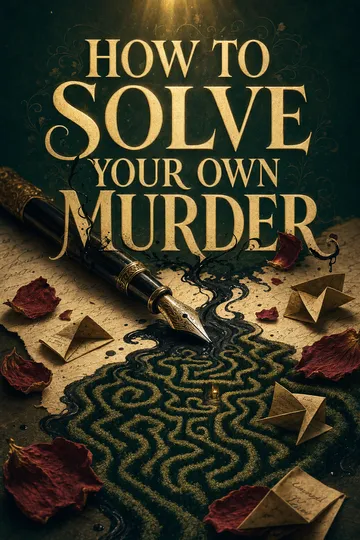
At a 1965 country fair, sixteen-year-old Frances Adams2 sits before a young fortune-teller who predicts dry bones, a betraying bird, a slow demise that begins when she holds a queen in her palm, and daughters as the key to justice. Her friends Emily Sparrow5 and Rose Forrester6 laugh it off, and Emily5 buys three silver bird necklaces as a joke about which bird might betray them.
Frances2 scribbles every word into a notebook. The prophecy plants a seed that will govern her entire life. The narrator hints that within a year the trio will fracture: one girl will vanish, and it will not be Frances.2 All that remains of her will be a bird necklace stapled to a thin missing persons file.
The prologue installs the engine of the entire novel: a superstition that becomes self-fulfilling. Perrin frames prophecy as both curse and agency, since Frances chooses to organize her life around words a bored teenager improvised. The bird necklaces literalize paranoia, distributing suspicion so widely that betrayal becomes inevitable. Emily's joke, that Frances could betray herself, foreshadows how obsession corrodes trust. The ominous narratorial voice promising a disappearance creates dramatic irony, teaching readers to read every subsequent detail as potential evidence. Psychologically, it captures how adolescent hierarchies (the beautiful, the striking, the observant) curdle into rivalry, and how a single sentence can rewrite a personality into permanent vigilance.
The Great Aunt's Strange Summons
Annie Adams,1 twenty-five, recently made redundant and secretly writing murder mysteries, lives rent-free in her painter mother Laura's10 crumbling Chelsea house. A letter arrives from Frances's2 solicitor7 requesting Annie's1 presence in Dorset to discuss inheriting the estate.
The family assumes a clerical error, since Laura,10 the only daughter in the bloodline, has always been the designated heir. Laura10 reveals the truth: Frances2 lives by a childhood fortune and has decided Annie1 is now the correct daughter of the prophecy.
The date deliberately clashes with Laura's10 career-reviving Tate exhibition, ensuring she cannot attend. Frances,2 it turns out, changed her mind shortly after Annie1 shipped a batch of old trunks from the basement to the eccentric aunt neither of them has ever met.2
The opening establishes Annie as a woman defined by unfinished things: an unedited manuscript, a stalled career, a mother who withholds. Perrin contrasts London anonymity with the pull of roots, and money that arrives like fate. The inheritance is less financial windfall than psychological invitation, a stranger reaching from the countryside to claim Annie as kindred. The deliberate scheduling conflict signals Frances as a calculating puppeteer even in absentia. Crucially, the shipped trunks are seeded here as an innocent errand, a Chekhovian detail whose horror will detonate later. The chapter dramatizes how families curate ignorance, and how being chosen can feel simultaneously flattering and like a trap.
A Body Behind the Desk
Annie1 travels to picturesque Castle Knoll and is driven to Gravesdown Hall by Oliver Gordon,8 the solicitor's7 polished grandson. She meets icy Elva Gravesdown,9 who announces that Frances2 cut Laura10 from the will and intends to evict them.
When no one answers the door, the group lets themselves in and discovers Frances2 collapsed in the library, her palms punctured and bleeding, white roses scattered around her. Elva9 calls only for paramedics, insisting it was natural causes, and begins tearing notes from Frances's2 floor-to-ceiling murder board in a hidden antechamber.
Annie,1 prone to fainting at blood, learns the aunt she never met2 spent sixty years documenting suspects, including a second board devoted to a vanished girl named Emily Sparrow.5
The reveal weaponizes irony: a woman who prophesied her own murder dies exactly as feared, and no one wants to believe it. Elva's instinct to sanitize the scene introduces the theme of self-interested denial that lets crimes hide in plain sight. The murder board renders Frances's paranoia as art and pathology, a life spent cataloguing neighbors by their sins. Annie's squeamishness humanizes her while raising the stakes: an amateur emotionally unfit for gore is pulled toward exactly that. The punctured palms, echoing the fortune's queen-in-hand line, fuse superstition with physical evidence, teaching readers that in this book symbolism and clues are indistinguishable.
Needles Hidden in Roses
Returning to lock the house, Annie1 pockets Frances's2 green diary from the desk, then notices something wrong with a crude bouquet: tiny metal needles have been threaded through every rose thorn. She carries the flowers to Detective Rowan Crane3 at the sleepy police station, where a bitter receptionist recounts Frances's2 history of false alarms.
Handling the stems, Annie1 develops a rash and faints; Crane3 rushes her to Dr. Esi Owusu,13 who identifies hemlock in the arrangement, harmless by touch but lethal in the blood. Annie1 theorizes the needles were meant to cut Frances's2 hands and poison her, and learns Frances2 arranged the village's church flowers weekly, and once had an unspoken past with a vicar named John.17
Perrin transforms a genteel hobby into a murder mechanism, exploiting the cozy-mystery contrast between English quaintness and buried menace. The needled roses embody premeditation disguised as thoughtfulness, a gift that only a killer intimate with Frances could deploy. Crane enters as the professional foil to Annie's instinct-driven sleuthing, immediately establishing the tension between institutional authority and amateur obsession. Annie's fainting is characterological irony: the murder-mystery devotee cannot stomach the reality she craves to understand. The hemlock detail rewards attentive readers while misdirecting them, since the poison is a red herring. Dr. Owusu's compassion introduces the novel's counter-theme: that believing a paranoid woman can be an act of grace.
The Diary Opens on 1966
Interwoven diary entries reconstruct the summer that made Frances.2 She, Emily,5 and Rose6 sneak onto the Gravesdown estate with boyfriends John17 and Walt,7 where a spooky ten-year-old, Saxon,4 spies on them before his young guardian, Rutherford Gravesdown, called Ford,11 materializes from the woods.
Ford,11 a bored aristocrat who treats people like chess pieces, is oddly charmed by Frances's2 refusal to play his games. Over tea he hands her a queen and recites his favorite maxim: play without a plan and you will probably lose. Frances2 realizes her friends have been visiting Ford11 for weeks without her, and that Emily5 hoped to seduce him. Her fortune's queen-in-hand line clicks into terrifying place.
The dual timeline lets Perrin write a coming-of-age tragedy inside a whodunit. Ford embodies aristocratic predation as intellectual sport, seduction disguised as strategy, and his chess philosophy becomes the book's structural motto. Frances's appeal to him lies precisely in her unwillingness to be moved, which paradoxically makes her the most moveable. The teenage social ecosystem, with its borrowed clothes and imitations, dramatizes identity theft as adolescent warfare, especially Emily's uncanny mimicry of Frances. The moment the queen touches Frances's palm collapses prophecy into lived experience, showing how belief manufactures its own evidence. Perrin suggests that Frances's lifelong paranoia was seeded not only by a fortune but by real betrayal.
Solve Her Murder to Inherit
At the formal will reading, Walter Gordon7 reveals Frances's2 scheme: her entire estate, forty million pounds plus the Chelsea house and Gravesdown lands, goes to whoever solves her murder within one week. Annie1 and Saxon4 are rival contestants, their findings verified by Crane,3 with Walt7 holding final say. If they fail, Oliver's8 firm, Jessop Fields, sells everything off, and the fortune goes to the Crown.
Crane3 then delivers the autopsy result: the hemlock never entered her blood. Frances2 died of a heart attack triggered by a massive injection of iron, a nearly untraceable killing. Saxon,4 playing fair or feigning it, tells Annie1 the only local source for horse-dose iron is the vet clinic on Archie Foyle's14 farm.
Frances's posthumous game is her masterstroke: she forces the village that dismissed her to take murder seriously, converting her death into a referendum on her sanity. The competition structure externalizes the book's meta-awareness, making Annie both detective and heir, sleuth and stakes. The iron-injection reveal elegantly overturns the hemlock theory, punishing lazy conclusions and modeling the novel's insistence that evidence deceives. Everyone's motives become financial simultaneously, seeding suspicion across the cast. Saxon's offered tip is ambiguous generosity, immediately teaching Annie that alliance and manipulation look identical. The clause disqualifying anyone imprisoned quietly loads the gun for later betrayals. Frances weaponizes greed to compel truth-telling from an entire community.
Emily's Secret Pregnancy
The diary reveals Emily5 is pregnant. During a rain-soaked confrontation at an abandoned farmhouse, Saxon4 exposes the secret, Walt7 strikes Emily5 in fury, and Frances,2 clutching a revolver from her stolen coat pocket, accidentally fires into the wall.
Emily5 coolly announces her plan: she will give the baby to Frances's2 desperate brother Peter and his wife Tansy,20 hide her pregnancy at Ford's11 Chelsea house, and lie to her controlling mother about secretarial school. John,17 Frances's2 boyfriend, is the father, though Emily5 had also slept with Ford.11 Frances,2 wounded by betrayal yet unable to abandon a lifelong friend, agrees to help, even as she suspects Emily5 intends to use the baby to trap the wealthy lord.11
Perrin excavates the era's brutal machinery around unwed pregnancy, showing how Emily converts biological vulnerability into leverage. Emily emerges as a tragic strategist, molded by a cruel, appearance-obsessed mother into someone who can only love through manipulation. Her obsession with Frances, imitating her clothes, phrases, and boyfriend, reads as a starved craving for the belonging Frances possesses. Walt's violence foreshadows a temperament that will haunt suspicion. The accidental gunshot plants the eventual murder weapon with devastating economy. Frances's compulsive forgiveness, her inability to sustain hatred, becomes both her moral beauty and the flaw that entangles her fatally in Emily's fate, a generosity that others will exploit for decades.
The Skeleton in the Trunk
Exploring the mansion's boot room, Annie1 recognizes a battered trunk she shipped from the Chelsea basement, crushed and split open. Inside, beneath a wool coat with distinctive leaping-stag buttons, lies a skeletal hand and a revolver. Screaming, Annie1 is caught by Crane;3 Saxon4 coolly identifies a female gunshot victim, decades dead.
It is Emily Sparrow,5 whose body sat in Annie's1 childhood basement her entire life. Forensics later confirm the identity and match the revolver from the diary. Annie1 realizes Frances2 only made her the heir after receiving these trunks, discovering Emily's body,5 and recognizing that the granddaughter had unknowingly delivered justice to her door, fulfilling the prophecy's dry bones and daughters lines at once.
This is the hinge where the two timelines fuse into one crime. The reveal is grotesquely intimate: Annie grew up playing feet from a murdered woman, collapsing the distance between cozy fiction and lived horror she claims to write about. Perrin literalizes the past's refusal to stay buried, and reframes Annie's innocent errand as fate's instrument. The stag-button coat, established in the diary, pays off as an identity marker that will indict the true killer. Frances's decision to hide rather than report the body deepens her mystery, suggesting she was protecting someone or solving something. The prophecy's dry bones ceases to be metaphor, and Annie inherits not just wealth but a grandmother's grief.
Poison Traced, Enemies Multiply
Annie1 visits Foyle Farm14 and finds the white roses from the murder bouquet growing there, plus Miyuki's vet clinic, which reported a break-in that included stolen iron injections. She discovers Archie's14 polytunnels are packed with marijuana, a business Frances2 tried to shut down, giving Jessop Fields ammunition to blackmail him.
She witnesses paramedic Joe Leroy12 attacking Oliver8 for pressuring his elderly mother, Rose,6 to sell her beloved hotel. Back at the hall, a yellowed, typewritten threat appears under Annie's1 pillow, promising to put her bones in a box, language lifted straight from the anonymous notes teenage Frances2 recorded in 1966. The threats feel less like a warning to Annie1 than a relic surfacing from the old crime.
Perrin widens the aperture from single suspect to poisoned ecosystem, revealing that everyone in Castle Knoll guards a shameful secret. The village becomes a body where every organ is diseased, validating Frances's belief that hidden rot kills. The recurring threats collapse time again, implying that solving Frances's death requires solving Emily's. Archie's weed and Joe's rage sketch motives while functioning as misdirection, the classic cozy strategy of overstocking suspects. The murder weapon's provenance, iron from a clinic anyone could rob, deliberately frustrates easy solutions. Annie's growing sense of being watched dramatizes the contagion of Frances's paranoia, the way investigating murder makes murderers appear in every shadow.
The Blood Annie Never Knew
Piecing together the diary and files, Annie1 realizes Peter and Tansy20 adopted Emily's baby,5 meaning her own mother Laura10 is Emily Sparrow's5 biological daughter. Frances's2 filing cabinets, she discovers, are organized alphabetically by secret, from arson to infidelity.
Investigating the Crane family file, Annie1 confronts the detective,3 who explains Frances2 never broke his parents' marriage: his father19 is gay, and Laura10 was his lifelong confidante, not his affair. Frances,2 once wrong, dropped the matter. Annie1 later visits the village church and meets vicar John Oxley,17 Emily's5 teenage lover, who confirms he is Laura's10 real father. Warm and gentle, he reveals he met Frances2 weekly for coffee for years, quietly loving her.
The revelation reframes the mystery as Annie's origin story, transforming a stranger's cold case into her own genealogy. Perrin uses the secret-sorted archive to critique Frances's reductive view of people as sums of their sins, while conceding its investigative power. The Crane subplot models correction: even meticulous evidence can produce false conclusions, a thesis statement the novel keeps testing. John Oxley offers Annie the tender, uncomplicated family belonging she never had, softening the book's darkness with grace. That Frances secretly nurtured a decades-long friendship with the man she once lost complicates her image from paranoid recluse to a woman capable of steadfast, private devotion beneath the obsession.
Saxon in the Wardrobe
Using the fortune's own words as a rotary combination, Annie1 and Crane3 crack Frances's2 locked drawer, finding surveillance photos of Saxon4 passing stolen medical drugs to paramedic Magda16 for illegal resale.
When Annie1 retreats to her ransacked room, Saxon4 steps out of her wardrobe, insisting he did not kill Frances2 and proposing they split the inheritance. He accuses lawyer Walter Gordon7 of defrauding Frances2 through inflated legal fees, presenting bank printouts, and argues Walt,7 connected to both the old and new deaths, is the murderer.
Annie1 plays along while recognizing Saxon4 is manipulating her, likely maneuvering to have her arrested during a planned drug sting so his prison-clause disqualification could be sidestepped and he would inherit.
Saxon crystallizes as the novel's most slippery figure, a man whose childhood as a watchful, information-hoarding boy hardened into adult gamesmanship. His wardrobe ambush weaponizes the very surveillance Frances practiced, and his alliance offer is chess dressed as camaraderie. Perrin dramatizes the paranoia of competition: Annie must accept help she cannot trust, mirroring Frances's lifelong dilemma. The fortune functioning literally as a passcode is a delicious formal joke, proving the prophecy structured Frances down to her locks. Walt's alleged fraud introduces a plausible false solution, and Annie's decision to feign gullibility while plotting a counter-move shows her graduating from swept-along amateur to deliberate strategist wielding Ford's maxim herself.
The Clue in the Clothes
Reading the diary's ending alongside Rose's6 gifted photo album, Annie1 spots the discrepancy that Frances2 finally caught. The stag-button coat that shrouded Emily's body5 belonged to Frances,2 but on the day Emily5 disappeared, Rose6 was wearing Frances's2 borrowed winter clothes as a disguise so Frances2 could sneak away.
Bill Leroy, Ford's11 chauffeur and Rose's future husband,6 drove Rose,6 not Ford,11 to Chelsea that afternoon. Annie1 deduces that Rose6 murdered Emily5 out of possessive devotion to Frances2 and hid the body in the basement. Emily5 had returned only to retrieve her forgotten typewriter. This means Frances's2 killer, protecting Rose,6 must be someone bound to her, and Annie's1 attention turns toward Rose's6 devoted son.12
The solution to the sixty-year-old cold case turns on the book's most persistent motif: borrowed clothing as displaced identity. Perrin rewards the attentive reader who tracked who wore what, converting a coming-of-age detail about teenage envy into forensic proof. Rose emerges as the true bird that betrayed, her friendship a jealous obsession that mirrored and rivaled Emily's fixation on Frances. The irony is exquisite: Frances spent sixty years mourning a friend murdered by their other best friend. Annie's deduction demonstrates that emotional literacy, understanding the psychology of belonging and rivalry, cracks the case that physical evidence alone could not. The past crime and present crime lock into a single chain of devotion turned deadly.
The Ambulance Trap
Annie1 stages a sting, letting Saxon4 believe she will steal Magda's16 drug stash while secretly recording and having Dr. Owusu13 spread word that she has solved the murder. She switches phones under Saxon's4 nose, and Jenny15 stands ready to alert police. But when Annie1 calls for drugs, paramedic Joe Leroy12 arrives instead of Magda.16
Inside the ambulance he confesses: he killed Frances2 to free his mother Rose6 from a lifetime enslaved to Frances's2 obsession with Emily.5 He sent the needled bouquet knowing Frances2 would panic, sabotaged her car battery to strand her, and used Elva9 to deliver the flowers. Then he pins Annie1 down and tries to inject her with a lethal overdose.
The climax fuses both mysteries into one confrontation, with Joe as the human endpoint of Rose's decades of resentment, killing to purchase his mother's peace. Perrin exposes the perverse logic of protective violence, love metastasized into murder, echoing Rose's own 1966 rationale. The ambulance, a vehicle of rescue, becomes a coffin, and Annie's needle phobia transforms from comic flaw into visceral terror. Her recklessness, chasing a confession without physical proof, nearly kills her, dramatizing the cost of amateur heroism the novel has flirted with throughout. Elva's unwitting role and the battery sabotage reward earlier seeded clues. The scene indicts a village-wide pattern: everyone protecting someone, and the innocent paying.
The Right Daughter Inherits
Walt,7 Beth,18 and Crane3 burst in and drag Annie1 free before the overdose lands; Joe12 and Magda16 are arrested. Recovering at Gravesdown Hall, Annie1 explains the entire chain: Rose6 killed Emily5 in 1966, and Joe12 killed Frances2 to end Rose's6 obsession. Walt7 confirms Annie1 has officially solved the murder and inherits the whole estate, sparing the Chelsea house and Foyle Farm14 from Jessop Fields.
Annie1 learns Walt7 had quietly funneled money to Laura10 after Frances2 cut her off, his gesture of loyalty to Emily's5 family. Grieving an aunt she knew only in death,2 Annie1 places the chess queen at the center of the board and vows a proper village farewell for both Frances2 and Emily.5
Resolution braids justice with mourning, insisting that solving a murder does not dissolve its grief. Annie's victory is bittersweet: she gains a fortune and loses the companion she found only in a dead woman's diary. Walt's secret generosity redeems the falsely accused suspect, reinforcing the novel's warning against evidence-driven certainty. By protecting the farm and house, Annie rejects the extractive logic of Jessop Fields, choosing continuity and community over profit. Placing the queen on the board consciously answers the prophecy, transforming Frances's curse into a completed design. Annie becomes the right daughter not by bloodline but by fulfilling Frances's deepest wish: to be believed, taken seriously, and finally understood.
Epilogue
Weeks later, Annie1 hosts an October funeral drawing the whole village, with Jenny15 recreating Frances's2 study as a memorial artwork honoring both Frances2 and Emily.5 Oliver8 confesses he planted the old threatening notes, torn between intimidating and helping Annie,1 and admits he was fired and secretly relieved.
Rose,6 declared unfit to stand trial, offers no remorse when Annie1 visits, only insisting Emily5 had to be stopped. Annie1 will testify against Joe.12 She gifts the Rolls-Royce to the Foyles, reconciles with her mother,10 and embraces John Oxley17 as family. Choosing to stay in Castle Knoll, Annie1 opens one of Frances's2 blank leather notebooks and begins recording her own unfolding story.
The epilogue converts inheritance into identity, as Annie claims not just Frances's money but her habit of witnessing life through the written word. Rose's unrepentance denies the comfort of closure, honoring the novel's realism about violence: understanding a crime does not soften its cruelty. Oliver's confession humanizes the antagonist-adjacent figure, reframing menace as cowardice and craving escape. By memorializing Emily alongside Frances, Annie finally grants the erased grandmother the dignity the village withheld. The chosen rural belonging resolves Annie's rootlessness from chapter one. The blank notebook mirrors Frances's diary, suggesting stories inherit forward, and that authorship, paying close attention and refusing to let people be forgotten, is the truest form of justice.
Analysis
Perrin's debut is a cozy mystery that quietly interrogates its own genre. By making Annie1 both an aspiring murder-mystery writer and the investigator, the novel foregrounds the moral gap between puzzle and grief: Annie1 repeatedly learns that murder is not a locked-room game but a selfish, irreversible act, and that solving it does not dissolve the outrage it leaves behind. The dual timeline is the book's masterstroke, transforming a whodunit into a decades-spanning tragedy about female friendship curdled by envy, class, and thwarted love. Emily,5 Frances,2 and Rose6 form a triangle in which the desire to belong becomes indistinguishable from the desire to possess, and possession from destruction. The prophecy operates as a study in self-fulfilling belief: Frances's2 conviction that she will be murdered organizes her into the paranoid archivist whose secret-hoarding manufactures the very enemies she fears, a psychological loop the novel treats with unusual seriousness. The secret-sorted filing cabinets literalize a worldview that reduces people to their sins, and the plot pointedly corrects that reductiveness through the Crane3 subplot, insisting that even airtight evidence can indict the innocent. Perrin also explores inheritance in every sense, money, trauma, temperament, and lineage, culminating in Annie1 discovering that she has inherited not just a fortune but a murdered grandmother's story and her habit of witnessing. The village functions as a diseased body where everyone protects someone, and protective love proves the most dangerous motive of all, mirrored across two generations. Ultimately the book argues that justice is less about punishment than about attention: refusing to let a dismissed woman, or an erased girl, be forgotten. Annie's1 closing act, opening a blank notebook to write her own life, reframes authorship itself as the truest inheritance and the final vindication of Frances Adams.2
Review Summary
How to Solve Your Own Murder receives mixed reviews, with praise for its intriguing premise and atmospheric English village setting. Readers appreciate the dual timeline narrative and the mystery's complexity. However, some find the large cast of characters confusing and the plot overly convoluted. The protagonist, Annie, garners mixed reactions, with some enjoying her determination while others find her underwhelming. Overall, the book is described as a cozy mystery with potential, though it may not fully live up to comparisons with Agatha Christie or Knives Out.
People Also Read



Characters
Annie Adams
Aspiring mystery-writer heirTwenty-five, recently redundant, and quietly convinced her unedited novel is terrible, Annie is a Londoner with pale skin, blond curls, and a wardrobe of Victorian-ghost dresses. Raised by an unconventional artist mother10, she craves the stable family she glimpsed at her best friend Jenny's15 house. She loves murder mysteries yet faints at blood, a contradiction that both hobbles and humanizes her. Summoned to inherit from an aunt she never met2, Annie proves observant, empathetic, and dangerously persistent, more attuned to the psychology of belonging and envy than to forensics. Her arc is one of self-authorization: from a woman who defers to others and packs away her feelings to someone who claims a story, a lineage, and a home as unmistakably her own.
Frances Adams
Prophecy-haunted great auntReclusive, wealthy, and legendary for eccentricity, Frances built her entire adult life around a teenage fortune predicting her murder. As a sixteen-year-old she was striking, red-gold-haired, sharply self-aware, and hopelessly loyal, unable to sustain hatred even toward those who wronged her. That generosity entangled her fatally in a friend's5 schemes. Over sixty years she transformed into a suspicious archivist, cataloguing neighbors by their secrets and phoning police over shadows, alienating a village that dismissed her as mad. Beneath the paranoia lived a devoted, grieving woman who never stopped searching for her vanished friend5 and quietly loved a man she lost17. Present mainly through her diary, Frances is the novel's absent center, a mind Annie1 comes to know intimately only in death.
Detective Rowan Crane
Steady local detectiveEarly thirties, dark-haired, and neatly bearded, Crane projects quiet authority with a casual, slightly rumpled edge. He liked Frances2 despite her constant false alarms and grandfather's grudges against her. Assigned to a case Frances2 deliberately sabotaged by pitting amateurs against him, he must protect civilians while conducting a real investigation and enduring their meddling. Candid to a fault, allergic to lies, and always seemingly five steps ahead, he becomes Annie's1 reluctant sounding board and gentle protector. His disarming calm is itself a technique, one Annie1 both resents and comes to trust. Beneath professionalism lies loyalty to family and village, and a growing, understated warmth toward Annie1 that neither quite names.
Saxon Gravesdown
Rival heir and coronerSilver-haired, elegant, and disarmingly reasonable, Saxon is Frances's2 late husband's nephew, raised on the estate and now a coroner. As a strange, watchful ten-year-old he collected secrets and spied on trespassers, an unsettling precocity that hardened into adult gamesmanship. He appreciates elegant schemes, quotes his uncle's11 chess maxims, and appears to compete fairly while relentlessly maneuvering. Charming one moment and clinically cold the next, he treats the inheritance contest as an intellectual puzzle and Annie1 as an opponent to outplay. His slipperiness keeps both Annie1 and the reader perpetually uncertain whether he is ally, manipulator, or something worse, embodying the novel's theme that help and manipulation can wear identical faces.
Emily Sparrow
The vanished friendGolden-haired, magnetic, and theatrical, Emily was the third of the teenage trio, raised by a cruel, appearance-obsessed mother who taught her that beauty was her only currency. She invents the best games and the darkest ones, weaponizing charm and manipulation to grasp at love she was never given. Her uncanny mimicry of Frances2, borrowing clothes, phrases, and even a boyfriend17, reveals an obsession rooted in envy of Frances's2 belonging. Reckless enough to bring a revolver to a party and bold enough to try trapping a millionaire11, Emily is nonetheless a tragic figure whose life is cut short and whose disappearance defines everyone around her for sixty years.
Rose Forrester Leroy
Frances's grieving best friendThe dark-bobbed third friend, now an aging hotel owner and widow of chauffeur Bill Leroy. Fiercely, possessively devoted to Frances2, Rose clings to old photo albums and burns with the intensity of someone whose brightest days lie decades behind her. Emotionally volatile, she swings from tender nostalgia to sudden anger, especially at reminders of Laura10. Her lifelong friendship with Frances2 carries a jealous undertow that shapes the story's deepest wounds.
Walter Gordon
Weary family solicitorFrances's2 elderly solicitor, executor, and one of her few lifelong friends, Walt is rumpled, nervous, and forever mopping his brow with a pocket square. As teenage Walt he was a reckless troublemaker with a violent temper who later reinvented himself through the law. Trusted by Frances2 with the final word on her deadly contest, he carries old guilt and quiet loyalties that run deeper than his fussy exterior suggests.
Oliver Gordon
Ambitious property developerWalt's7 magazine-handsome grandson, a Jessop Fields property developer who stands to profit if the contestants fail. Polished, entitled, and perpetually harassed by his boss, he hides a secret nerdy streak and a deep unhappiness with his job. His cutting remarks mask cowardice and indecision, and he circles the investigation trying to intimidate and assist Annie1 in equal, confused measure.
Elva Gravesdown
Grasping social climberSaxon's4 wife, silvery and ageless, all cream Chanel and clipped condescension. A one-woman performance of entitlement, she treats herself as an extension of Saxon's4 claim to the estate, speculates loudly about the will, and cannot resist meddling with evidence. Beneath the haughty theatrics lies petty acquisitiveness and self-protective instinct.
Laura Adams
Annie's artist motherA once-famous painter enjoying a career revival, Laura is bohemian, emotionally guarded, and prone to design rampages in her crumbling Chelsea house. She hides whole compartments of her past from Annie1 and rarely serves as a lifeline, yet loves her daughter1 in her own oblique way. Her connection to Castle Knoll and Frances2 runs deeper than she admits.
Rutherford 'Ford' Gravesdown
Manipulative young lordThe wealthy, handsome aristocrat of the 1966 diary, orphaned into title and guardianship young. A self-described society rake who treats people as chess pieces, he is drawn to Frances2 precisely because she refuses to play. Charismatic, dangerous, and lonely, he oscillates between calculated menace and genuine, disarming vulnerability.
Joe Leroy
Devoted local paramedicRose's6 son, a lean, weathered paramedic in his late forties who once knew Laura10. Gentle-mannered and fiercely protective of his mother6, he moves easily through the village's medical world. His devotion to Rose6 is the emotional engine of much that unfolds around Frances's2 death.
Dr. Esi Owusu
Compassionate village doctorCastle Knoll's perceptive GP, who alone kept believing Frances's2 poisoning fears and once saved her niece's1 life because of that vigilance. Ethical and warm, she performs Frances's2 autopsy per a private arrangement and repeatedly tries to keep the reckless Annie1 safe.
Archie Foyle
Chatty estate gardenerThe leathery, storytelling gardener whose family farm was swallowed by the Gravesdown estate. He sculpts the hedges he adores, tends the roses, and runs a quiet, illegal side business Frances2 kept threatening to shut down. Talkative and evasive by turns, he guards secrets behind grandfatherly charm.
Jenny
Annie's loyal best friendAnnie's1 best friend since childhood, a stylish Harrods window designer with impeccable taste and boundless enthusiasm. She plays eager long-distance Dr. Watson, brainstorming suspects and motives by phone, and provides Annie1 emotional ballast, comic relief, and crucial logistical backup at the climax.
Magda
Purple-haired paramedic dealerA blunt, rule-bending paramedic with dark-purple-dyed hair who runs an illicit prescription-drug sideline through her ambulance under the guise of minor-injury calls.
John Oxley
Gentle village vicarNow a kindly white-haired vicar, John was Frances's2 teenage boyfriend, eloquent and conflicted, who fathered a child10 amid the fateful summer's betrayals. He shared decades of quiet coffee mornings with Frances2 and offers Annie1 a tender, unexpected sense of family.
Beth Foyle
Vintage-loving estate cookArchie's14 striking granddaughter, dressed in 1930s clothes, who cooks and drives for Frances2, runs the village deli, and holds keys to the house. Warm, contained, and anxious about her family's uncertain future.
Reggie Crane
Nosy taxi-driving exRowan's3 father, a gray, cigarette-scented taxi driver who once dated Laura10 as a teenager before Frances2 interfered. Blunt and gossipy, he carries old resentment toward the Gravesdown family.
Peter and Tansy
Adoptive grandparentsFrances's2 older brother and his wife, a desperate, childless couple who longed for a baby and quietly built their happiness around the daughter they raised10 as their own.
Plot Devices
The Fortune-Teller's Prophecy
Structuring curse and cipherA cryptic 1965 fortune, dry bones, a queen held in the palm, a betraying bird, daughters as key to justice, murder, becomes the organizing principle of Frances's2 entire life and the novel's architecture. Each line seemingly comes true across decades, and Frances2 ticks them off like a checklist. Perrin uses it as both thematic spine and literal clue: the prophecy dictates Frances's2 obsessions, her will, her choice of heir, and even doubles as the combination to her most secret locked drawer. It blurs superstition and evidence so thoroughly that readers cannot dismiss any line as mere theatrics, and its self-fulfilling logic drives the tragedy that belief itself manufactures the fate it fears.
The Castle Knoll Files Diary
Dual-timeline evidence engineFrances's2 green leather diary, begun in 1966, narrates the summer of Emily's5 disappearance in interleaved chapters. It functions as a second protagonist's voice, letting readers investigate the cold case alongside Annie1 while experiencing a coming-of-age tragedy in real time. The diary seeds nearly every clue that matters, the stolen coat, the revolver, borrowed clothing, Rose's6 disguise, while also humanizing a woman known otherwise only as an eccentric corpse2. Perrin weaponizes its selective omissions and Frances's2 biases so the diary both illuminates and misleads. Its recovery, loss to police custody, and eventual return control the pacing of Annie's1 revelations, making the act of reading itself a plot mechanism.
The Solve-My-Murder Will
Contest that forces investigationFrances's2 will bequeaths her entire fortune to whoever solves her murder within one week, verified by Detective Crane3, with Walt7 holding final judgment and a clause disqualifying anyone imprisoned. Failure triggers the estate's sale to property developers. This posthumous game converts private grief into public reckoning, compelling a dismissive village to take Frances2 seriously at last. Structurally it makes Annie1 simultaneously detective and prize, generates rivalry with Saxon4, and loads motive onto every character. The prison clause and verification requirement engineer later betrayals and traps. It is Frances's2 final chess move, orchestrating truth-telling and self-vindication from beyond the grave through the irresistible leverage of greed.
The Needled Hemlock Bouquet
Misdirecting murder mechanismA deliberately ugly arrangement of white roses with tiny metal needles threaded through each thorn, mixed with hemlock, arrives among Frances's2 flowers. It appears to be the murder weapon, designed to cut and poison her paranoid hands, and sends Annie1 down an elaborate poisoning theory. Perrin uses it as a sophisticated red herring: the hemlock never enters the blood, and the real cause of death lies elsewhere. Yet the bouquet is not innocent, its true purpose is to exploit Frances's2 fear and manipulate her behavior, tying the killer intimately to knowledge of her psychology. The roses' farm origin also expands the suspect web while concealing the sender's identity.
Borrowed Clothes and the Stag-Button Coat
Identity-swap clue threadThroughout the diary, clothing circulates as an emblem of envy and stolen identity: Emily5 perpetually borrows Frances's2 coats, combs, and skirts, mimicking her to unsettling degrees. The wool coat with distinctive leaping-stag buttons becomes the crucial physical evidence linking past to present. Perrin plants the motif as adolescent psychology, then detonates it as forensics when the same coat shrouds a body and a photo album reveals who actually wore Frances's2 clothes on the fatal day. The device rewards attentive readers, demonstrating that the case hinges not on fingerprints but on understanding rivalry, disguise, and belonging, and that the deepest clues were hidden inside the coming-of-age story all along.
FAQ
Synopsis & Basic Details
What is How to Solve Your Own Murder about?
- Ominous Fortune, Deadly Game: In 1965, a fortune-teller predicts Frances Adams will be murdered. Decades later, Frances dies, leaving her estate to whoever solves her murder, setting off a competition filled with secrets and betrayals.
- Family Secrets, Modern Mystery: Annie Adams, Frances's great-niece, inherits the challenge, navigating a web of family history, small-town intrigue, and a cast of characters with hidden motives.
- Past and Present Collide: Annie must unravel a decades-old mystery surrounding the disappearance of Frances's friend, Emily Sparrow, to uncover the truth behind her great aunt's death.
Why should I read How to Solve Your Own Murder?
- Intriguing Mystery, Compelling Characters: The novel offers a captivating blend of suspense, family drama, and small-town secrets, with a cast of well-developed characters and unexpected twists.
- Dual Timeline, Rich History: The dual timeline, spanning from 1965 to the present day, provides a rich historical backdrop and explores the lasting impact of past events on the present.
- Thematic Depth, Emotional Resonance: The story delves into themes of fate, obsession, betrayal, and the search for justice, offering a thought-provoking and emotionally resonant reading experience.
What is the background of How to Solve Your Own Murder?
- 1960s Cultural Context: The novel is rooted in the cultural context of the 1960s, with references to fashion, music, and social attitudes that shape the characters and their relationships.
- Small-Town Dynamics: The setting of Castle Knoll, a sleepy English village, plays a crucial role in the story, highlighting the close-knit community, hidden secrets, and long-standing rivalries that fuel the mystery.
- Fortune-Telling and Superstition: The element of fortune-telling and superstition adds a layer of intrigue and suspense, reflecting a cultural fascination with the unknown and the power of belief.
What are the most memorable quotes in How to Solve Your Own Murder?
- "Your future contains dry bones.": This opening line of Frances's fortune sets the tone for the entire novel, foreshadowing her obsession with death and the dark events that will unfold.
- "But daughters are the key to justice, find the right one and keep her close.": This line from the fortune dictates Frances's relationships and ultimately leads to Annie's involvement in solving her murder.
- "You can play without a plan, but you'll probably lose.": This chess analogy, repeated throughout the story, highlights the importance of strategy and foresight in both games and life, and underscores the calculated nature of the characters' actions.
What writing style, narrative choices, and literary techniques does Kristen Perrin use?
- Dual Timeline Narrative: Perrin skillfully weaves together two timelines, creating suspense and revealing connections between the past and present. This technique allows for a gradual unveiling of secrets and a deeper understanding of the characters' motivations.
- First-Person Perspective: The story is told from Annie's point of view, providing an intimate and engaging perspective on the events as they unfold. This allows the reader to experience the mystery alongside Annie, sharing her doubts, fears, and discoveries.
- Foreshadowing and Symbolism: Perrin employs subtle foreshadowing and recurring symbols, such as the bird necklaces and the fortune itself, to create a sense of unease and hint at future events. This adds layers of meaning and encourages readers to pay close attention to details.
Hidden Details & Subtle Connections
What are some minor details that add significant meaning?
- The Green Leather Notebook: The diary's physical description, especially its color, links to themes of envy and hidden truths, as green is often associated with jealousy and secrets.
- The State of the Chelsea House: The house's "romantic" disrepair symbolizes the decaying secrets and unresolved issues within the family, hinting at the hidden darkness beneath the surface.
- The Names of the Solicitors: The name "Gordon, Owens, and Martlock" subtly suggests the power dynamics at play, with the firm representing the interests of the wealthy Gravesdown family.
What are some subtle foreshadowing and callbacks?
- Emily's Imitation of Frances: Emily's deliberate copying of Frances's style foreshadows her deeper envy and desire to possess Frances's life, ultimately leading to betrayal and tragedy.
- The Broken Fence: The weak spot in the fence on the Gravesdown estate, used for sneaking onto the property, foreshadows the characters' willingness to cross boundaries and engage in illicit activities.
- The Significance of the River Dimber: The river's presence as a place of both recreation and potential danger foreshadows its role as the final resting place of Emily, linking the idyllic setting to the dark events of the past.
What are some unexpected character connections?
- Joe Leroy and Laura Adams's Past: The revelation that Joe and Laura had a "thing" in their teens adds a layer of complexity to their relationship and suggests a deeper connection between the Adams and Leroy families.
- Saxon's Connection to Harrow: Saxon attending Harrow with Oliver highlights their shared privileged background and hints at a potential alliance or rivalry between them.
- Archie Foyle and Rose's History: Rose's past relationship with Archie Foyle, the "bad boy" weed supplier, reveals a hidden side to her character and connects her to the darker elements of Castle Knoll society.
Who are the most significant supporting characters?
- Walter Gordon: As the family solicitor and a long-time friend of Frances, Walter holds a wealth of knowledge about the Gravesdown family history and the secrets of Castle Knoll. His role as executor of the will and his close relationship with Frances make him a key player in the investigation.
- Beth Takaga-Foyle: As Archie's granddaughter and the owner of Crumbwell's Deli, Beth provides a connection to the local community and a source of information about the town's gossip and history. Her culinary skills and her relationship with Miyuki also add layers to her character.
- Detective Rowan Crane: While technically an investigator, Crane's personal connection to the case and his growing relationship with Annie make him a significant supporting character. His knowledge of the town and his commitment to justice play a crucial role in solving the mystery.
Psychological, Emotional, & Relational Analysis
What are some unspoken motivations of the characters?
- Frances's Fear of Abandonment: Frances's obsession with her fortune and her need to control her fate stem from a deep-seated fear of abandonment, rooted in her early experiences and the loss of Emily.
- Saxon's Desire for Validation: Saxon's manipulative behavior and his need to prove himself stem from a desire for validation and recognition, fueled by his difficult childhood and his position as a "taken-in" nephew.
- Elva's Insecurity and Social Climbing: Elva's relentless pursuit of social status and her desire to control the Gravesdown estate stem from deep-seated insecurities and a need to prove her worth.
What psychological complexities do the characters exhibit?
- Frances's Paranoia and Control: Frances's paranoia and need to control her fate are a manifestation of her anxiety and fear of the unknown, leading her to create elaborate systems of surveillance and prediction.
- Saxon's Detachment and Manipulation: Saxon's detachment and manipulative behavior are a defense mechanism against his own emotional pain and a way to exert power over others.
- Rose's Guilt and Obsession: Rose's guilt over Emily's death and her subsequent obsession with Frances are a manifestation of her unresolved trauma and her need to atone for her past actions.
What are the major emotional turning points?
- Annie's Discovery of Emily's Body: This discovery forces Annie to confront the reality of Frances's murder and the dark secrets of her family's past, transforming her from a curious observer into an active participant in the investigation.
- The Reading of the Will: The revelation of Frances's inheritance challenge creates a sense of urgency and competition, forcing the characters to confront their own desires and motivations.
- Annie's Near-Death Experience: Joe's attempt to murder Annie in the ambulance forces her to confront her own mortality and the true danger she is in, solidifying her resolve to solve the mystery and bring the killer to justice.
How do relationship dynamics evolve?
- Annie and Detective Crane: Their relationship evolves from suspicion and mistrust to a grudging respect and a tentative alliance, as they work together to uncover the truth.
- Annie and Saxon: Their relationship is characterized by manipulation and deception, as they both try to outwit each other in the quest for the inheritance.
- Frances and Her Friends: The novel explores the complexities of female friendship, highlighting the bonds of loyalty, jealousy, and betrayal that can shape relationships over time.
Interpretation & Debate
Which parts of the story remain ambiguous or open-ended?
- The Extent of Ford's Knowledge: The novel leaves open the question of how much Ford knew about Rose's actions and whether he was complicit in covering up Emily's murder.
- The True Nature of Emily's Character: Emily's motivations and her true feelings toward Frances remain ambiguous, leaving the reader to wonder whether she was a victim, a manipulator, or a combination of both.
- The Future of Castle Knoll: The novel ends with Annie inheriting the estate, but the future of Castle Knoll and its residents remains uncertain, leaving the reader to imagine what changes and challenges lie ahead.
What are some debatable, controversial scenes or moments in How to Solve Your Own Murder?
- Rose's Murder of Emily: The act of Rose killing Emily is a controversial moment, raising questions about the nature of justice, the limits of loyalty, and the consequences of violence.
- The Romance Between Frances and Ford: The relationship between Frances and Ford is a complex and potentially problematic one, given the power dynamics at play and the age difference between them.
- The Inheritance Challenge Itself: Frances's decision to leave her estate to whoever solves her murder is a controversial one, raising ethical questions about the use of wealth and the manipulation of others.
How to Solve Your Own Murder Ending Explained: How It Ends & What It Means
- Joe's Motive: Protecting Rose: Joe's confession reveals that he killed Frances to protect his mother, Rose, from her obsession with Emily and the potential consequences of her past actions.
- Annie Inherits, Justice Served: Annie's success in solving the murder allows her to inherit the estate and preserve its legacy, bringing a sense of closure to the story and fulfilling the prophecy of the "right daughter."
- Legacy of the Past, Hope for the Future: The ending highlights the lasting impact of past events on the present, but also offers a glimmer of hope for the future, as Annie embraces her new role and seeks to create a better future for Castle Knoll.
Castle Knoll Files Series
Download PDF
Download EPUB
.epub digital book format is ideal for reading ebooks on phones, tablets, and e-readers.








































