


Plot Summary
Diver on the Trestle Bridge
Josh,1 drifting under an old train trestle while fishing on Nine Fingers Lake, spots a tall stranger2 climbing onto the rails, flicking pebbles, then diving a hundred feet with his shoes still on. When the head never surfaces, Josh,1 a trained lifeguard, plunges in and hauls the choking man toward shore.
Instead of gratitude he gets snarled at to back off, then watches the stranger perch back on the bridge and light a cigarette. Josh1 warns that a train is due; the stranger refuses to move. When Josh1 climbs up to save him again, the stranger claps his back and shoves him off the bridge, knocking Josh1 out against his boat, before jumping in to pull him free once more.
The opening inverts the rescue fantasy: the savior becomes the victim, and the drowning man is the one courting death. James stages the meet-cute as a near-murder, encoding the whole novel's dynamic, that loving Ezra will mean being knocked down and dragged under before being pulled back up. Josh's compulsion to save (the lifeguard reflex, the turtle-in-the-road instinct) collides with Ezra's suicidal contempt. The bridge, suspended between two states, water and air, life and death, becomes the book's governing image. Crucially, the reader does not yet know why a beautiful boy wants to die, which seeds the central mystery of buried trauma.
The Boy in the Kitchen
Josh1 limps home concussed and finds his mother4 flustered: his new stepbrother2 has arrived early from Richmond. Stepping into the kitchen, Josh1 locks eyes with the same lake-eyed diver, now introduced as Ezra Masters,2 an all-state quarterback recruited to play for Fairplay High. Neither admits what happened at the water.
Upstairs Ezra2 needles Josh1 over a tuxedo wedding photo, accuses him of staring, and lands a cruel line about God hating gay men. He blackmails Josh1 into silence about the bridge, threatening his toothbrush and his sleep. Josh1 realizes he will share a bathroom, a hallway, and a school with a gorgeous, hostile boy who nearly killed them both, and invites Ezra2 to a party mostly to prove Fairplay is his turf.
The forbidden-proximity engine of the stepbrother romance clicks into place: intimacy is now mandatory, escape impossible. Ezra's homophobic jab is a diagnostic tell, not a belief, projection dressed as cruelty, and Josh, still closeted in an evangelical small town, reads it as threat rather than confession. The scene establishes the domestic surveillance state of shared walls that will make secrecy both thrilling and unbearable. Naming matters here too: Ezra insists on distance while Josh's mother forces family intimacy, and the collision of chosen names and imposed roles (stepbrother, DG, angel) begins its long negotiation of who these boys will let themselves be.
Do Gooder Meets His Plague
At a classmate's pool party Ezra2 charms Josh's1 whole circle, floats on the forbidden whale raft, and interrupts Josh1 mid-almost-kiss with Arnie,11 a visiting college boy, in a bathroom. He has already learned from a drunk girl that Josh1 might be gay and dangles it over him.
Over the following weeks Ezra2 perches on the roof outside Josh's1 window, smoking at 2 a.m., blowing smoke through the glass, waking him deliberately. Josh,1 dubbed DG for Do Gooder, keeps trying to be decent while privately cataloguing every angle of Ezra's2 face and the twitch of his fingers as he drifts to sleep. He cannot decide whether the new quarterback is a bully, a bigot, or a boy quietly falling apart.
This section maps the sadistic courtship that James is bold enough to sit inside. Ezra's provocations are simultaneously attacks and invitations, a boy who can only approach through friction because tenderness terrifies him. The roof, a liminal perch above the safe interior, becomes his confessional and his stage. Josh's fixation on Ezra's hands and beauty betrays desire curdling under resentment, the enemies-to-lovers current already running hot. The cigarette smoke pushed through the window is intimacy disguised as intrusion: Ezra literally cannot leave Josh alone, and the mystery of his damage (the twitching fingers, the sleeplessness) begins accruing evidence the reader files away.
Hands in the Dark
After Ezra2 fishhooks his finger at Josh's father's3 dock and lets Josh1 gently cut it free, an unexpected tenderness flickers. But Ezra2 keeps jolting awake screaming from nightmares.
When Josh1 climbs out to check on him, Ezra2 flicks his nipple, discovers Josh's1 erection, and mockingly strokes him through his boxers until Josh1 punches him. That night Ezra2 swallows a fistful of hidden pills, then vomits them back up.
A pattern hardens: Ezra2 wakes crying, Josh1 comforts him, and Ezra2 retaliates by getting Josh1 off with rough hands and blowjobs while insisting he is not gay, spitting slurs, and banishing him afterward. Josh1 hates himself for wanting it, and slowly grasps that Ezra2 weaponizes pleasure precisely so neither of them can call it love.
Here the book earns its dark-romance label. The nightly ritual is a trauma reenactment: Ezra can only receive comfort if he immediately converts it into domination, controlling the terms so that connection cannot become vulnerability. His suicide attempt, swallowed and purged in secret, reveals the stakes beneath the games. James threads a difficult needle, rendering coercive-feeling encounters through Josh's genuine (if conflicted) desire, so the power imbalance reads as damage rather than villainy. The slurs Ezra flings are self-directed shrapnel. Pleasure becomes punishment, the only language a boy raised to hate his own body can speak to another boy he wants.
The Shower Seizure
The bridge concussion reawakens Josh's1 childhood epilepsy. After another humiliating late-night encounter, Josh1 showers alone and seizes, biting his tongue and going limp on the tub floor. Ezra,2 hearing the choking, climbs in, cradles his head, and, swallowing his own panic, gets him breathing.
He phones Suzanne,4 monitors Josh1 all night with a pulse oximeter, tucks him into his own bed, and refuses to leave his side. The next morning Josh1 wakes wrapped in Ezra's2 arm, softer than he has ever seen him. Ezra2 buys donuts and a cherry Icee, remembers Josh's1 exact burger order, and drives him to a Birmingham MRI. The verdict: no clear cause, no driving for six months, and a watchful wait.
The role reversal is the hinge of the first half. Forced by crisis to abandon his armor, Ezra reveals a fierce, competent caretaking instinct, the flip side of a boy who was never cared for himself. Illness dismantles the sadistic game because Josh is now genuinely fragile, and cruelty has no purchase on real helplessness. The Icee and remembered burger, small acts of attention, do more romantic work than any grand gesture. Meanwhile Josh's epilepsy externalizes the novel's theme of bodies that betray their owners and dependencies that steal autonomy, foreshadowing Ezra's own coming loss of control over his mind.
Hot and Cold in Birmingham
At the Birmingham hospital Ezra2 vanishes from the waiting room, physically unable to sit inside, and returns hours later pretending he simply fetched food, then freezes Josh1 out on the drive home. He whipsaws between devouring Josh1 in parking lots and insisting the whole affair is a meaningless game he intends to end.
When Ezra2 overheats dangerously at football practice, having swallowed the wrong pill after a nightmare, Josh1 nurses him through the fever and discovers eight prescription bottles hidden inside the box spring. Half-delirious, Ezra2 lets slip that he is terrified of hospitals, was once a patient somewhere, and begs Josh1 never to leave him in one. Josh1 understands someone hurt this boy badly, but cannot yet ask how.
Ezra's flight from the hospital is the reader's clearest clue yet that his terror is medical-institutional, not merely emotional. The push-pull intensifies because proximity to real feeling triggers his instinct to sabotage: he ends things precisely when they matter most. The hidden pharmacy in the box spring literalizes a self buried and pharmaceutically managed. James withholds the full backstory with discipline, letting dread accumulate through Ezra's fragmentary pleas. Josh's response, protective rage aimed at an unknown abuser, defines his role: not to fix Ezra but to refuse to abandon him, the exact thing Ezra most fears and most needs.
The Cemetery Wall Kiss
Josh1 walks Ezra2 to an overgrown cemetery overlook. Straddling a brick wall, Ezra2 traces shapes on Josh's1 back, writes their initials, and Josh1 admits he loves his hands. When Ezra2 abruptly bolts between the tombstones, Josh1 chases him, and Ezra2 kisses him hard, confessing he had known one more touch would break his resolve.
In the grass behind a crypt they trade first blowjobs, Ezra2 pushing a finger into Josh,1 both of them wrecked and laughing. Afterward Ezra2 finally admits it out loud: he is gay, the Cara romance was staged, and the cruelty was a closeted boy's armor. Josh,1 who has hidden himself his entire life in conservative Fairplay, feels truly seen for the first time.
The genre's central catharsis arrives at a graveyard, love blooming atop death, a deliberate rhyme with the trestle bridge. Ezra's flight and Josh's pursuit literalize the emotional choreography of the whole book: Ezra runs from what he wants, Josh refuses to let him. The confession dismantles the armor, and cruelty is retroactively legible as self-protection. For Josh, whose closet is enforced by community and church, being desired openly is revolutionary. James frames the first fully consensual, joyful intimacy as the moment the sadistic game finally dissolves into mutual play, tenderness winning the negotiation that touch had been conducting all along.
The Point of Beginning
Through the fall the two become a covert couple, trading blowjobs in cars, kissing in school bathrooms, sleeping curled together nightly. Ezra's2 nightmares quiet when Josh1 holds him. On the ruined grounds of the old Isabella mansion, beside a mossy oak the natives once called the point of beginning, Ezra2 confesses he jumped off the trestle on purpose the day they met, and Josh1 vows never to let go.
They lose their virginities to each other, Ezra2 guiding Josh,1 and whisper their first I love yous. Ezra2 becomes Fairplay's undefeated quarterback with scouts from Alabama, Auburn, and Stanford circling, yet what he treasures is holding Josh1 while cartoons play and their parents sleep below.
This is the golden interlude every tragedy requires, love rendered domestic and small: gum wrappers, cartoons, a boy learning to eat again because someone finally wants him to. Ezra's confession about the bridge reframes the entire opening, transforming a hostile stranger into a boy who chose Josh's rescue as his last living act. The mansion, a mansion built for love and left to decay, is a mordant symbol of impermanence hovering over their happiness. James lets the reader luxuriate here precisely to sharpen the coming loss, and Ezra's indifference to football glory underscores that the only tether keeping him alive is Josh.
Caught on the Couch
Growing bold, the boys fall asleep tangled together in their underwear on the family couch. Suzanne4 and Carl3 come home early and find them. Terrified for Ezra,2 Josh1 blurts that he is gay before Ezra2 even wakes. To their astonishment, Carl3 responds with warmth and jokes about grandkids, and Suzanne4 with teary acceptance; both men are embraced rather than cast out.
Ezra,2 who braced to be thrown into the street, sprints outside and weeps in the yard until Carl3 wraps them both in a blanket and tells his son he is proud. For a handful of golden days it seems the boys have miraculously escaped the fate Ezra2 dreads most: a family that refuses to love him as he is.
James stages the accepting-parent fantasy as genuine grace, then lets its fragility ache. Carl and Suzanne model the unconditional love Ezra has never known, which is exactly why it undoes him, acceptance is more destabilizing than rejection because it exposes everything he was denied. The scene also quietly plants the mechanism of catastrophe: Carl now knows Ezra is gay, and in a family that communicates, that knowledge will travel. The blanket in the yard, Carl physically enclosing both boys, is the book's tenderest image of chosen family, and its warmth is precisely what makes the imminent intrusion of Ezra's biological mother so devastating.
Gone Before Morning
Over Thanksgiving Ezra2 turns quiet and clinging, sleeping badly, watching Josh1 as if memorizing him. He ignores repeated calls from his mother,5 who has learned from Carl3 that her son is gay and happy. After one last night wrapped around Josh,1 Ezra2 slips out before dawn, drives back to Richmond, and sends Carl3 a bloodless text claiming he wants to finish senior year with his mom.
He takes almost nothing except the crocheted football pillow Josh1 made him. Josh1 calls and calls, leaving frantic, breaking voicemails, but the phone stays dark. What Josh1 cannot know is that Ezra's mother5 has threatened to expose a buried secret unless he returns for treatment designed to erase his desires.
The betrayal that isn't one: Ezra vanishes not from indifference but from coercion, sacrificing his own happiness to protect a secret and appease a zealot. James builds the departure from dramatic irony, the reader watching Ezra's tenderness sharpen into farewell while Josh reads only warmth. The stolen pillow is the tell that love persists beneath the abandonment. The mother emerges as the true antagonist, weaponizing faith and shame, and the manuscript's structural gamble, ripping the couple apart at the midpoint, converts a romance into a study of what abandonment does to two very differently wounded people.
Drinking to Not Drown
Convinced Ezra2 never loved him, Josh1 unravels. He wrecks his car, forfeits a soccer scholarship to a drug-testing school, and lands at Auburn, where he drinks daily and buys street Xanax to sleep. Drunk in an Atlanta club, he lets a famous influencer, Dom Bryant,14 blow him but stops it short, still hollowed by Ezra.2
One night he mixes too much and overdoses in his apartment; his best friend Jenna,6 certain he is dying, calls the ambulance that saves him. Josh1 keeps chasing the numbness, chewing the last of Ezra's2 abandoned cigarettes just to prove the love had been real, insisting to himself that his grief is nothing beside whatever Ezra2 survived.
Josh's collapse is the mirror image of Ezra's earlier self-destruction, the caretaker now the one drowning, with no one climbing out to reach him. James refuses to let the golden boy be untouchable: privilege and a loving home do not immunize against heartbreak's chemistry. Dom Bryant functions as both temptation and mercy, a stranger who protects rather than exploits the drunk younger man, quietly rebuking the predators the book will later indict. Josh's insistence that his pain is smaller than Ezra's is both empathy and a dangerous minimizing, a self-erasure that nearly kills him. Jenna's ambulance call is love as intervention.
The Name on His Arm
Back with his mother,5 Ezra2 submits to repeated electroconvulsive therapy to satisfy her, scrawling MILLER on his arm before each session, betting he will not forget. But he wakes one day with no memory of Fairplay at all, only an off-kilter infinity symbol tattooed on his chest and a name he cannot place. It takes months to even learn he has a stepbrother named Miller.1
Now the starting quarterback at Alabama, physically thriving yet emotionally embalmed, he begins secretly watching Josh's1 Snapchat and Instagram for hours, gripped by a clawing, nameless ache. He feels he has misplaced something essential, dreams of arms holding him in a room with a cello, and cannot understand why a freckled stranger1 consumes him.
The novel's most audacious device: trauma treatment that literally amputates love. ECT-induced amnesia turns the abandonment into a double loss, Ezra grieves without knowing what he grieves. The clawing sensation is the body remembering what the mind cannot, a somatic haunting that dramatizes how deeply attachment lodges beneath cognition. His compulsive social-media surveillance recasts stalking as a soul groping toward its missing half. The infinity tattoo and marker name are talismans of a self trying to smuggle information past its own erasure. James renders the horror of a mother who would rather delete her son's memory and desire than accept them.
The Pilgrimage to the Pastor
Spiraling after glimpsing Josh1 with another man, Ezra2 swallows an entire bottle of Xanax, and weeks later boards a cross-country bus to the home of a newly out megachurch pastor, Luke McDowell,7 and his husband Vance Rayne.8
In their kitchen Ezra2 finally speaks it aloud: his mother5 sent him to Alton, a wilderness conversion camp that turned into a converted prison where a man named Paul9 drugged campers, staged assaults, and, when Ezra2 defied him, locked him in a red-lit closet for over a month, starving and shocking him until he nearly died, then tried to rape him, until Ezra2 strangled Paul9 into a stroke. Luke,7 himself a survivor of such abuse, listens without flinching and connects Ezra2 to a trauma therapist.15
This is the abyss the whole novel has been circling, and James finally names it: conversion therapy as torture, sanctified by faith and family. The confession's power lies in Ezra narrating atrocity in flat, glib self-protection, the dissociative armor of someone who has never been allowed to grieve. Luke, a survivor turned pastor, embodies the book's redemptive thesis that religion can heal what it wounded. The red closet, hell staged by design, is the literal source of every nightmare, every hospital terror, every twitching finger. Crucially, Ezra frames survival as guilt (Paul's stroke), the abused convinced he is the monster.
Found on the Stairs
After leading Alabama to victory on Auburn's home field, Ezra2 finally has his old phone restored, hears Josh's1 year-old voicemails begging him to come back, and understands the love was shatteringly real. Racing to a fraternity house, he tears a drunk creep off Josh1 on a staircase and confronts him.
Ezra2 confesses he remembers nothing of their romance but has been obsessed with Josh1 all along. At Josh's1 apartment he tells the entire Alton story through tears, certain he is too broken to be wanted. Josh,1 who nearly drank himself to death grieving this exact boy, holds him instead, insisting he loves Ezra2 whether or not the memories ever return. They agree to begin again from zero.
The reunion reverses the reunion trope: there is no shared past to fall back into, only a leap of faith. Josh must love a version of Ezra who does not remember loving him, and Ezra must trust evidence of a self he cannot access. The restored voicemails are the proof that collapses Ezra's fear of having imagined everything, external verification of interior truth. The staircase rescue neatly inverts the bridge, Ezra now the one pulling Josh from danger. James argues that love is not memory but recognition, that Ezra found Josh again through blind compulsion means the bond outlived the brain that held it.
Bubble Yum and a Blue Icee
The boys rebuild fast, shuttling between campuses, trading confessions, burying Josh's1 street pills under a pine. At Christmas they drive to Fairplay, but nerves stall Ezra2 at a lakeside motel, where sipping a blue Icee ambushes him: a tidal wave of returned memory crashes back at once, the bridge, the roof, the cello, the cemetery, all of Josh.1
Shaken but whole, he joins the family Christmas, where Carl3 embraces him again and Suzanne4 beams over their love. Josh1 secretly arranges to transfer to Alabama and gives matching Crimson Tide gifts. Meanwhile Luke7 reveals his charity has accessed Alton's cameras and built a lawsuit to shut it down, one Ezra2 chooses to join with his own name.
Memory returns not through effort but through sensation, the Icee, the gum, proof that James's sensory motifs were always the true archive of love, stored in the body below the reach of electroshock. The return is agony and gift at once: Ezra regains the guilt of how he abandoned Josh alongside the joy of remembering him. Family Christmas restores the chosen-family sanctuary lost at the midpoint. The lawsuit converts private trauma into collective justice, Ezra transmuting victimhood into agency by adding his name, the first move from surviving toward advocacy that the book will complete in its coda.
The Broken Ankle Bowl
At the Rose Bowl in Pasadena, Ezra2 shatters his ankle on a late-game sack and, strapped to a stretcher before eighty thousand fans, bellows for Miller.1 Josh1 dives over the stadium railing, sprints past referees, and reaches him. In the emergency room Ezra2 panics at the white coats and curtains, reliving Alton, thrashing until sedated and begging Josh1 not to leave him there.
Josh1 climbs into the hospital bed and holds him through surgery and recovery, the exact presence Ezra2 never had during his darkest years. Luke7 and Vance8 fly them home on a private plane stocked with roses and a blue Icee. Ezra2 finally weeps in realization: he was never the strong one, it was always having Josh1 beside him.
The climax fuses the two men's deepest wounds, Josh's helplessness and Ezra's institutional terror, into a single scene of redemption. Where no one came for Ezra at Alton or the psych ward, Josh now vaults every barrier to reach him, literally leaping the boundary that separates spectator from beloved. The hospital, site of Ezra's original erasure, becomes the place he is finally held through the fear. His breakthrough, that his celebrated toughness was never his own but a function of being loved, reframes strength as relational rather than solitary. James lands the thesis: healing is not self-sufficiency but the presence of someone who refuses to leave.
Epilogue
On Valentine's Day the boys come out publicly in a New York Times profile tied to an exposé on conversion therapy, Ezra's2 name attached to the lawsuit that shutters Alton. Josh1 transfers to Alabama, becomes Ezra's2 live-in partner, and studies to be a psychiatric nurse.
That summer, with Luke's7 charity now owning the emptied camp, Josh1 drives their RV back to Alton. Together they enter the red-lit closet and lie on its floor, Josh1 finally holding Ezra2 in the place where no one ever came for him. Ezra2 plans a survivors' program, a razed camp rebuilt for joy, a ring. Their journals close on peace, warmth, and infinity.
The coda completes the movement from private wound to public reckoning. Coming out in the Times weaponizes visibility against the shame that nearly killed Ezra, and joining the lawsuit turns him from victim to advocate. The return to Alton is the novel's ritual exorcism: Josh lying in the closet holding Ezra literally supplies the presence history denied, rewriting the memory by co-authoring a new one on the same floor. James proposes that trauma is not erased but overwritten through witnessed love. Josh's pivot to psychiatric nursing and the plan to rebuild the camp for joy transform suffering into vocation, and the infinity symbol, once a tattoo smuggling love past amnesia, becomes a vow.
Analysis
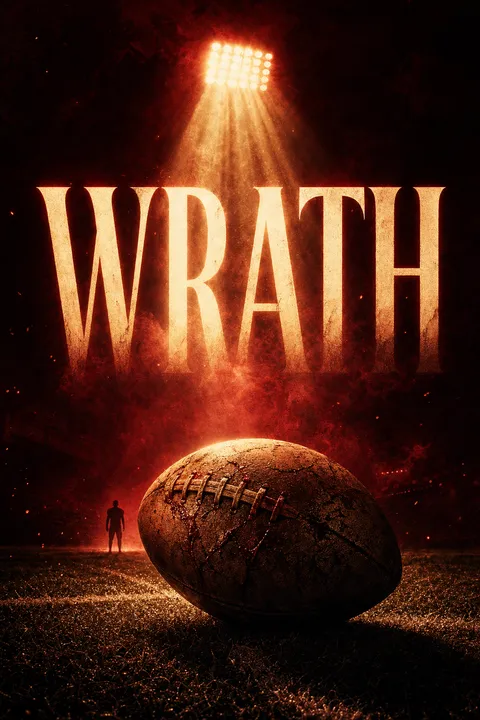
Wrath repurposes the stepbrother and enemies-to-lovers frameworks as a vehicle for a serious study of trauma, and the football-quarter structure (First Quarter through Double Overtime) frames a game whose real stakes are survival. James's central provocation is that Ezra's2 early cruelty, the slurs, the coerced-feeling sexual games, is not villainy but the grammar of a boy taught to hate his own body, converting every tender approach into domination so he never has to be vulnerable. The book's darkest material, conversion therapy staged as literal imprisonment and torture, is withheld with real discipline, dread accumulating through twitching fingers, hidden pills, and hospital terror until the abyss is finally named. The most audacious move is the amnesia engine: electroshock meant to erase desire instead deletes love itself, and the novel argues, through Icees and gum and soap, that attachment lives in the body beneath cognition, incorruptible where the mind is not. Structurally, ripping the couple apart at the midpoint transforms a romance into parallel case studies of abandonment: Ezra2 dissociates and self-erases, Josh1 dissolves into addiction, and each nearly dies alone. Recovery, when it comes, is explicitly relational. Ezra's2 climactic epiphany, that his celebrated toughness was never solitary strength but the effect of being loved, reframes healing as presence rather than self-sufficiency, the answer to a lifetime of no one coming when he screamed. The coda pushes further, converting private wound into public reckoning: coming out, a lawsuit, a razed camp rebuilt for joy. James is not subtle, but the emotional logic is coherent and humane. The takeaway is that shame, especially shame enforced by family and faith, is the true antagonist, and that being witnessed, held, and refused-to-be-abandoned is what overwrites, if never erases, the worst that has been done to us.
Review Summary
Wrath by Ella James is a 712-page M/M stepbrother romance that divides readers. Fans praise the emotionally devastating story of Ezra and Miller's journey through bullying, forbidden love, trauma, and redemption, calling it a masterpiece with powerful character development and incredible chemistry. Critics argue the book is too long, repetitive, and overstuffed with unnecessary scenes, particularly in the middle sections. Most agree the novel tackles heavy themes like conversion therapy and abuse with care, though the excessive length and smut-heavy portions frustrate some. The ending polarizes readers regarding closure.
People Also Read




Characters
Josh Miller
Closeted small-town golden boyNicknamed DG for Do Gooder, Josh is a Fairplay lifer: soccer player, cellist, marching-band drummer, Eagle Scout, former lifeguard, and secretly gay in an evangelical town where coming out feels impossible. Warm, self-deprecating, and compulsively kind, he is the boy who circles back for turtles crossing the road. His governing belief, that nice guys finish last, wars with a caretaking instinct he cannot switch off. He longs to escape Fairplay and finally live openly. Beneath the easygoing surface runs a deep well of loyalty and a hunger to be chosen. His empathy is both his gift and his vulnerability, capable of soothing a broken boy or of nearly erasing himself in grief when that boy2 vanishes.
Ezra Masters
Haunted quarterback prodigyBorn Christopher, going by Ezra, he arrives from Richmond as a striking, lanky all-state quarterback with a model's sharp face and a cruelty that masks catastrophic damage. Sardonic, closeted, self-destructive, and suicidal, he approaches intimacy only through friction, converting tenderness into domination so he never has to be vulnerable. He is a voracious reader, secretly gentle, and desperate beneath his armor for one thing: someone to hold him, to tether him to a life that has mostly hurt. Shame, terror of his zealot mother5, and a buried history of abuse drive his volatility. His arc bends from weaponized self-hatred toward the fragile, hard-won belief that he deserves to live, to be loved, and to heal.
Carl
Ezra's warm-hearted fatherJosh's1 laid-back Methodist stepfather and Ezra's2 biological dad, a slow-drawling, joke-cracking Alabama man who lost close contact with his son after divorce. Generous and unconditionally accepting, he models the fatherly love Ezra2 never had. His easy warmth and refusal to judge become a quiet anchor for both boys, and his eagerness to reconnect with his son carries an ache of missed years.
Suzanne Miller
Josh's devoted motherJosh's1 affectionate, slightly henpecking Christian mother who runs a gift shop and dotes on both boys, making beds, cooking feasts, and buying thoughtful gifts. Perceptive and loving, she intuited Josh's1 sexuality long before he told her. Her acceptance, though initially shaken, proves genuine, and her fear for Josh1 during his darkest stretches reveals a mother terrified of losing the son she adores.
Ezra's mother
Zealous controlling parentA rigid, religiously extreme woman with full custody of Ezra2 who views her son's sexuality as a sin to be cured. Cold and coercive, she wields threats and shame to force him into treatments meant to erase who he is. She is the novel's true antagonist, a parent whose love is conditional on her son becoming someone he is not, and whose own buried past complicates her cruelty.
Jenna Whatley
Josh's fierce best friendJosh's1 childhood neighbor and closest confidante, sharp-tongued, loyal, and fiercely protective. She knows Josh1 is gay and never wavers. During his college spiral she is the one who recognizes danger and acts, and her blunt affection functions as his moral gravity when he loses his footing.
Luke McDowell
Newly out megachurch pastorA famous, quietly intense pastor recently public about his own sexuality, and himself a survivor of the kind of abuse Ezra2 endured. Steady, thoughtful, and generous, he offers Ezra2 nonjudgmental refuge, connects him to trauma care, and mobilizes his charity toward justice. He becomes an older-brother figure and a model of faith reconciled with self-acceptance.
Vance Rayne
Pastor's warm-hearted husbandLuke's7 foul-mouthed, big-hearted husband and a devoted father to their baby, Eden. Open, funny, and instantly attentive, he reads people effortlessly and folds Ezra2 and Josh1 into their family with practical kindness. His playful irreverence balances Luke's7 quieter gravity, and his own history of hardship makes his care feel earned rather than performed.
Paul
Figure from Ezra's pastA cold, sadistic authority figure from the wilderness program Ezra2 was sent to, whose abuses lie at the root of Ezra's2 nightmares and terror of institutions. He embodies the predatory cruelty the novel indicts.
Riley
Ezra's fellow captiveA very young girl paired with Ezra2 at the camp, whose vulnerability provoked his fierce protectiveness and sharpened his defiance. She resurfaces later as a fellow survivor seeking justice.
Arnie
Josh's near-first-kissA slightly older hometown boy home from college, an EMT-in-training whose flirtation with Josh1 gets interrupted and later fuels Ezra's2 jealousy. A symbol of the openly gay life Josh1 craves but cannot yet claim.
Brennan
Josh's lifelong friendA cheerful, never-met-a-stranger wide receiver and Josh's1 friend since preschool, who welcomes Ezra2 onto the team and into the friend group without suspicion, oblivious to the tension between the stepbrothers.
Marcel
Perceptive teammateA large, warm running back with a weak stomach and a sharp intuition, one of the few who senses something is off between Josh1 and Ezra2. He later plays alongside Ezra2 at Alabama.
Dom Bryant
Kind-hearted influencerA diamond-draped social-media star and e-model Josh1 meets drunk at an Atlanta club. Rather than exploit him, Dom protects the younger man, shelters him, and drives him home, a surprising figure of mentorship amid Josh's1 darkest stretch.
Greeley
Ezra's trauma therapistA nonbinary trauma specialist connected through Luke7, who guides Ezra2 toward grounding techniques, EMDR, and the slow reframing of survival from self-blame toward self-worth. A steady, compassionate presence in Ezra's2 recovery.
Plot Devices
The Trestle Bridge
Site of death and rescueThe hundred-foot train trestle over Nine Fingers Lake is where Ezra2 attempts suicide and Josh1 saves him, the literal and symbolic origin of their bond. Legend says a man once drowned jumping from it, and local teens dare each other to leap toward Snake Island there. The bridge recurs as Josh's1 grieving haunt after Ezra2 leaves and as a private measure of Ezra's2 despair. Suspended between water and air, life and death, it embodies the novel's core tension. James returns to it as a barometer: whenever a character sits on or beneath it, the reader gauges how close to the edge that character has drifted, making it the story's emotional altimeter.
MILLER and the infinity tattoo
Love smuggled past amnesiaBefore each electroshock session Ezra2 scrawls MILLER on his inner arm, betting he will not forget, and permanently tattoos an off-kilter infinity symbol, drawn from Josh's1 own doodle, over his chest. When his memory is erased, these marks are the only evidence that some vital attachment predated the void. They drive the slow-burn reunion: Ezra2 spends months decoding a name he cannot place and an ache he cannot source. The device dramatizes the book's thesis that love lodges deeper than conscious memory, and the infinity sign evolves from a desperate mnemonic into a vow, physically carried through erasure, hospital, and reunion until its meaning is finally reclaimed.
Sensory anchors
Triggers of buried memoryBlue and cherry Icees, Bubble Yum gum, Dial soap, donuts, and the smell of cut grass recur as the couple's private lexicon of affection. After Ezra's2 amnesia, these sensations become the true archive of a love his brain cannot access, storing feeling in the body below cognition. The device pays off spectacularly when a single sip of a blue Icee in a lakeside motel triggers the tidal return of all Ezra's2 lost memories at once. James uses taste and smell as the incorruptible custodians of attachment, arguing that what electroshock cannot reach, the senses have quietly kept safe.
Prescription pills and ECT
Mechanism of control and lossHidden pill bottles in Ezra's2 box spring, street Xanax in Josh's1 bathroom drawer, and court-ordered electroconvulsive therapy thread through the novel as instruments of coercion, numbing, and erasure. Ezra's mother5 uses medication and ECT to try to overwrite his sexuality; the therapy instead deletes his memory of the one person who loved him. Josh1, meanwhile, uses alcohol and counterfeit pills to survive abandonment until they nearly kill him. The device indicts the pathologizing of queerness and dramatizes how chemical control severs people from their own minds and from each other, making the eventual burial of Josh's1 pills a small act of chosen sobriety and healing.
The crocheted football pillow
Token of persistent loveJosh1, secretly able to crochet, finishes a football-shaped pillow his mother4 began and gives it to Ezra2, who mocks it. When Ezra2 flees Fairplay taking almost nothing, the pillow is one of the only things he grabs, an early, silent clue that his abandonment was coercion, not indifference. It resurfaces in his dorm and later travels with him, proof that beneath cruelty and even amnesia, Ezra2 treasured Josh's1 homemade tenderness. The device quietly rebuts Josh's1 belief that the love meant nothing, functioning as material evidence of a heart that kept what it could not consciously keep.

Download PDF
Download EPUB
.epub digital book format is ideal for reading ebooks on phones, tablets, and e-readers.








































