


Plot Summary
Collared in the Ice Palace
After collapsing at the trials' rigged winner ceremony, Selena1 surfaces three days later in Draven Ryat's2 chambers, an iron collar sealed around her throat that saps her strength and blocks her magic. Only a dragon shifter can remove it. Draven,2 half-dressed and coolly amused, informs her she is now his property, existing to be drained.
She vows to kill him. Yet he startles her: draining is the purpose of a life slave, but he tells her he won't. In private there is no audience to perform for. He reminds her that he tried to save her by sabotaging the trials, though he refuses to explain why, leaving her furious, disoriented, and desperate to escape.
The opening weaponizes intimacy against autonomy. Selena's first instinct is not grand defiance but fixating on something small, that Draven changed her clothes, a psychological coping mechanism when reality is too vast to process. The collar literalizes enslavement while Draven's contradictory tenderness introduces the book's central tension: a captor who behaves like a protector. Blackwood establishes the enemies-to-lovers architecture through power asymmetry, where consent and control blur. Selena's hardening heart, a chosen numbness, becomes her armor against hopelessness, revealing a survivor who converts terror into rage because rage feels like agency.
A Corpse and a Cell
Finding the door unlocked when Draven2 leaves for food, Selena1 bolts through the sparkling corridors, ducking guards until she trips over the slit-throated body of the Master of the Treasury and lands palms-deep in his blood. Silver Clan guards seize her, shackling her wrists to the dungeon floor.
Draven2 arrives knowing she is innocent, the victim's throat was cut and she carried nothing to cut it, but toys with leaving her caged to teach obedience. He relents, carries her out, then brutally breaks the arm of the guard who handcuffed her, snarling that she belongs to him. The murders, Selena1 learns, signal the return of the Red Hand, a human rebel the Icehearts order Draven2 to hunt down and deliver alive.
Selena's impulsive flight exposes her flaw: acting before planning, hungry for freedom she squanders through recklessness. The corpse introduces the political thriller undercurrent, the Red Hand, whose shadow will haunt Draven's arc. Draven's savagery toward the guard reframes possessiveness as something feral and territorial, disturbing yet magnetic within the genre's logic. The scene interrogates ownership: Draven punishes a subordinate for touching what is his, yet the violence reads as protective displacement. Blackwood plants the rebellion motif early, giving Selena a cause larger than personal escape and transforming a captivity narrative into insurgency.
The Collar Comes Off
Back in his quarters, Selena1 expects Draven2 to fully drain her as the Icehearts demanded. Instead, after pinning her during a scuffle, he unclasps the iron collar entirely, admitting he cannot bear to see her wear it a moment longer than necessary. He gives her a black cloak clasped at the throat to hide the collar's absence, instructing her to don it whenever servants might see.
Publicly he will claim he keeps her collared to humiliate her; privately she goes free. He insists she doesn't deserve this fate. Confused by his split nature, the ruthless commander and the secret protector, Selena1 resolves to exploit his lapses, using her recovered magic and climbing gear to hunt for the human rebellion in the city below.
The collar's removal is an act of covert rebellion disguised as mercy, establishing the double-life motif that defines Draven. His willingness to risk himself for her comfort signals feeling far exceeding a master's duty, yet his refusal to explain fuels the mystery engine. Psychologically, Selena confronts cognitive dissonance: she needs him to be a villain to justify her hatred, but his kindness destabilizes that binary. The cloak becomes a symbol of performed submission, teaching Selena that survival in this court requires theater, a lesson mirroring her lifelong people-pleasing, now repurposed as strategic deception.
The Carrot and the Rebellion
Scaling the palace wall, Selena1 discovers a sprawling city of aging humans, oppressed servants beneath arrogant dragon shifters. After hurling a flowerpot to save a beaten human, she is chased, hidden, then locked up by a fearful old man who plans to hand her back to Draven.2 His daughter Kath,10 a resistance member, frees her instead.
Selena1 secretly manipulates their trust with her emotion magic and meets the human rebels, including Kath's10 brother Kyler11 and their leader Hector.13 They are planning a heist to gut the Iceheart treasury and cripple the dynasty financially. They need an inside spy. Guilt-ridden but ambitious, Selena1 agrees to return to the palace as their eyes, then warns Hector13 that Draven2 hunts the Red Hand.
Selena's wonder at human aging, proof of lived time, poignantly underscores fae timelessness as a kind of stagnation, and awakens her to how much dragon shifters have concealed. Her covert magical manipulation of Kath introduces her core moral wound: she despises being feared as an emotional puppeteer, yet becomes exactly that when desperate. Blackwood complicates the heroine, refusing clean virtue. The heist gives the narrative a ticking-clock spine and reframes Selena's captivity as opportunity. Her craving to matter, to be more than a lookout, drives her toward dangerous consequence, revealing ambition entangled with a starving need for recognition.
The Broken Ones on Display
Draven2 leads Selena1 to a hidden vantage overlooking a banquet, warning her to stay silent. She sees fellow trial contestants Isera5 and Alistair6 kneeling half-naked beside the Icehearts' table, collared, blindfolded in iron, mouths forced open by metal rings for easy draining. Draven2 explains this is how the dynasty breaks new life slaves, humiliating them until obedience replaces defiance.
Then he delivers the point: this is what he is expected to do to her. To survive, she must convincingly act as though he has already broken her, otherwise the Icehearts will break her themselves, and he cannot stop them. He tells her to hate and fight him in private, but treat him like a god in public.
This scene recasts Draven's earlier cruelty as tactical camouflage protecting Selena from worse cruelty. The spectacle of Isera and Alistair, dehumanized into objects of drainage, exposes the dynasty's sadism as ideology: vengeance for ancient grievances justifying present atrocity. Blackwood explores complicity under coercion, how survival demands performing degradation. Selena's forced silence, biting back a gasp, dramatizes the powerlessness of witnessing. The bargain they strike, private defiance and public submission, formalizes their intimate rebellion, a shared secret that bonds them against the regime while deepening the ethically fraught codependency at the story's heart.
Bred Like Cattle
Sneaking to the kennels, cages too low to stand in, Selena1 finds Isera5 catatonic, Alistair6 bitter and scarred, and unexpectedly Lavendera,7 the tree-magic fae taken because the shifters burned their own homeland.
Lavendera7 reveals the horror underpinning fae life: they are not naturally limited to one child. The dragon shifter doctors secretly sterilize fae mothers after a single birth, concentrating magic into stronger bloodlines to drain and preventing the population from outgrowing the sealed city.
Everything Selena1 was taught about her biology is a lie. Reeling with grief, she recruits Alistair6 to gather treasury intelligence and promises to free them all after the heist, even as Isera5 stares blankly and Lavendera7 spirals into claustrophobic panic.
The kennels convert abstract oppression into visceral atrocity: eugenics disguised as biology, a totalitarian information monopoly weaponized against an entire race. Lavendera's revelation triggers Selena's dawning radicalization, guilt over her own birth having supposedly ruined her parents curdles into systemic understanding. Blackwood examines how oppressors control the oppressed not just through force but through manufactured truth, controlling teachers, doctors, and history. Alistair's hidden depth and scars foreshadow that the fae are not uniformly innocent victims, while Isera's dissociation and Lavendera's fracturing depict trauma's varied faces, from numbness to hypervigilance to rage.
Crawl and Lick His Boots
Summoned to a banquet where Draven2 wears battle armor rather than finery, signaling danger, Selena1 is forced by the Icehearts to prove her submission. Draven2 commands her to kneel, crawl to his feet, and lick his boots while courtiers laugh. She complies, fury and humiliation warring inside her, knowing the act keeps her alive.
Afterward, seething at his clan's table, she extracts that the treasury sits in the northeast of the third floor. Back in their rooms, Draven2 vows to make every laughing courtier grovel and, as revenge on her behalf, kneels before her, the Shadow of Death on his knees, and brings her to release with his mouth, insisting she never suppress her fire.
The boot-licking sequence stages abjection as survival theater, but Blackwood inverts it privately: Draven's voluntary kneeling reclaims Selena's dignity through erotic reciprocity. The power exchange becomes consensual play rather than coercion, distinguishing their private truth from public performance. His refusal to let her make herself small speaks to Selena's deepest hunger, to be seen as enough. Desire here functions as resistance and repair, a reassertion of agency after enforced humiliation. The scene also advances the heist logistics, threading plot through intimacy so the romantic and political arcs remain inseparable rather than decorative.
Seeding a City's Rage
With Draven2 often gone hunting, Selena1 roams taverns using her magic to inflame human anger, courage, and hope into wildfire, turning ordinary workers toward revolt while wrestling guilt over manipulating them without consent.
Draven's2 own brutal interrogations of innocent humans, she realizes, actually serve his aim of destabilizing the city, though she cannot fathom why he encourages injustice. She discovers a hidden emergency door in the treasury corridor leading to an escape tunnel through the mountain, and later locates its far entrance on the eastern slope.
When a woman presses a drawing of the Red Hand into her hand, resembling Hector,13 Selena1 burns it to ash rather than betray the rebellion, choosing the cause over ending human suffering.
Selena's escalating manipulation marks her transformation from reluctant pawn to strategist, ends justifying morally corrosive means. Blackwood refuses to let this feel triumphant; nausea and guilt shadow every push, dramatizing the cost of becoming the feared thing. Burning the drawing crystallizes her hardening: she sacrifices immediate mercy for long-term liberation, a chillingly utilitarian calculus. Draven's cruelty-as-strategy plants a mystery seed, hinting his loyalties are not what they seem. The tunnel and treasury intelligence assemble the heist's physical scaffolding, while the city's rising fury becomes a weapon Selena consciously forges, revealing revolution as an act of emotional engineering.
The Unseelie Stranger's Truths
Following a rumor, Selena1 finds Nysara,12 a glamoured Unseelie fae living in the wealthy quarter, secretly spying for the still-free Unseelie King. Nysara12 agrees to glamour the escapees as dragon shifters so they can flee the city. Then she detonates Selena's1 worldview: the Unseelie Court was never conquered and simply never intervened, and crucially, only a small minority of Seelie ancestors ever enslaved dragons with dragon steel.
The rest were voluntary partners. The entire Seelie race has been punished for millennia for crimes most never committed. Selena,1 taught her whole life that she is inherently evil and must atone, spirals toward a panic attack as the foundations of her identity collapse around her.
Nysara functions as the narrative's revelation engine, dismantling the propaganda that justified an entire people's subjugation. The truth, collective punishment for a minority's sin, reframes the Seelie as victims of a manufactured original guilt, a devastating commentary on inherited shame and historical distortion. Selena's psychological unraveling is the human cost of enlightenment; freedom from lies arrives as trauma, not relief. Blackwood links personal and political: Selena's lifelong self-hatred mirrors her race's engineered self-hatred, both installed by those in power. The panic attack literalizes epistemic collapse, the body registering what the mind cannot yet integrate.
Why He Always Finds Her
After four Purple Clan dragon shifters corner and nearly kill Selena1 in a tavern, Draven2 materializes and slaughters them all, then flies her home. She demands to know how he keeps finding her in mortal danger. Cornered, he finally confesses: she is his mate. Through the bond he feels her strongest emotion, the pure terror of imminent death, which guides him to her.
Selena,1 who prizes free will above all, shatters. She screams that she doesn't want to be his mate, horrified that even her feelings might be dictated by fate rather than choice. She realizes his attempts to save her from the trials may have been mere instinct, not genuine care, cracking something fragile inside her.
The mate bond, a genre staple, is deployed here as tragedy rather than wish-fulfillment. For Selena, whose entire life has been governed by others, fated love reads as one more theft of autonomy. Blackwood cleverly weaponizes romance tropes against the heroine's psychology, transforming destiny into violation. The revelation retroactively poisons every tender moment with doubt: was it him or the bond? This mirrors Selena's magic-induced anxiety, that no one's affection for her is real. The bond thus becomes a mirror of her deepest wound, echoing how everyone around her can never trust their own feelings when she is near.
The Whip on His Wings
On the eastern mountainside, six Purple Clan warriors ambush Draven,2 escalating into a dragon battle that the Icehearts arrive to end, freezing and shattering the attackers with ice flames. Displeased by Draven's2 failures, Bane4 whips his outstretched wings into bloody shreds while Jessina3 promises her turn next time.
Draven2 forbids Selena1 to interfere, and she watches, sick with guilt, knowing her sabotage caused his punishment. Afterward his knees buckle in silent agony.
Refusing to let Rin heal him quickly, since fast healing invites more whipping, he lets Selena1 instead use her magic to block his pain entirely. Kneeling between his legs, she snuffs out his suffering and distracts him with tenderness, her fury at the Icehearts crystallizing into vengeance.
The whipping reveals the dynasty's absolute dominance and the true cost of Draven's service, positioning him as fellow victim rather than mere collaborator. Blackwood inverts the earlier power dynamic: now Selena kneels not in degradation but in healing, her much-maligned emotion magic reframed as a gift of mercy. Her ability to bear his pain behind a mental wall symbolizes hard-won emotional mastery. The scene deepens the paradox that Selena's rebellion, which she believes is righteous, directly wounds the man she is falling for, generating a guilt that will complicate every subsequent choice and foreshadowing the impossible loyalty conflict ahead.
The Heist Was a Trap
During the grand ball where clan leaders must reswear loyalty, the heist launches. Isera5 overhears the Icehearts gloat that their trap worked: the human resistance has been cornered and captured inside the treasury corridors.
Selena1 scales the wall to help and discovers the devastating truth, Lavendera7 engineered the betrayal. She never wore real iron, never was a prisoner. She works for the Icehearts, enforcing the trials by killing cheaters like Maximus and steering the strongest magic users to victory.
She followed Selena1 to Nysara's12 house and overheard everything. Her tree-magic branches now shackle the captured rebels. Yet, with sorrow in her eyes, Lavendera7 releases Selena,1 granting her a head start to flee before the guards close in.
Lavendera's betrayal detonates the trust Selena built, and retroactively reframes the kennel scenes as calculated manipulation, mirroring Selena's own deceptions and implicating her in the same moral gray. Blackwood constructs a hall of mirrors where everyone performs, spies, and lies. Lavendera's flicker of mercy complicates pure villainy, suggesting a coerced pawn rather than a monster, an ambiguity that resists easy judgment. The trap converts the heist's triumphant momentum into catastrophe, the classic midpoint reversal that strips the protagonist of her plan and forces improvisation, raising stakes from theft to survival.
The Red Hand Unmasked
Racing to warn the Red Hand before Draven2 can capture him, Selena1 reaches the treasury, where the masked rebel has slaughtered the guards. She offers to take the fall so the resistance's symbol can survive. When she refuses to relent, the Red Hand rips off his mask: it is Draven.2
He is the Red Hand, and has secretly served the fae resistance for years, even the masked man present the day she first threw a drink in his face. As guards discover his treason, he cuts Selena1 free of her collar. Later he reveals the deepest secret: the Icehearts implanted dragon steel in his forearm and use Lavendera's7 magic to control him, forcing his every servile act. Selena1 carves the steel out, freeing him at last.
The double unmasking is the book's structural keystone, retroactively rewriting every scene. Draven's servility, his cruelty, his refusal to leave, all become the desperate maneuvers of a mind-controlled prisoner. The dragon steel, seeded in the worldbuilding since the trials' mythology, pays off as the ultimate irony: the Shadow of Death is himself enslaved. Blackwood resolves the enemies-to-lovers tension by revealing the enemy was always an ally in disguise, and reframes Selena's misjudgment as the very isolation and distrust the regime engineered. The physical extraction of the steel becomes a literal liberation, her hands, once feared, now the instrument of his freedom.
Rebellion Ignites, A Body Falls
Draven2 frees his clan, revealing the truth to his stunned former friend Galen8 and to Lyra,9 and orders them to flee to their islands. Selena1 magically makes the entire ballroom appear drunk, letting her spirit Isera5 and Alistair6 out, though Isera5 murders two shifters in cold vengeance. As they take flight on dragonback, Selena1 screams across the city that the Red Hand has been captured, triggering the citywide rebellion she has spent weeks stoking.
Nysara12 glamours the fleeing dragons invisible, letting them slip past Jessina3 and Bane.4 But a parting torrent of Jessina's3 ice flames shatters into shards, and one impales Selena's1 spine. Numb below the waist, coughing blood, she slides from Draven's2 back and plummets into the dark sky.
The climax fuses personal liberation with political revolution: Selena's emotional engineering finally detonates the city's fury, proving her once-dismissed magic capable of toppling empires. Yet Blackwood undercuts triumph with brutal cost, the cliffhanger fall punishing hope the instant it blooms. Isera's cold-blooded killing signals trauma metastasizing into something darker, a warning that liberation breeds its own violence. The ending refuses resolution, weaponizing the fated bond established earlier: Draven will feel her death-terror even as she falls beyond reach. It is a masterclass in serialized suspense, closing one enslavement only to open a wound that demands the next book.
Analysis
Blackwood's second Flame and Thorns installment fuses romantasy with a sharp interrogation of how tyranny manufactures consent. The Iceheart Dynasty rules not merely through dragonfire but through epistemic control, owning the schools, doctors, and histories that teach the fae to hate themselves and accept collective guilt for a minority's ancient crime. Selena's1 education across the novel is thus doubly liberating and traumatic: each revealed lie, the sterilization program, the innocent majority, the free Unseelie Court, dismantles her identity even as it radicalizes her. The book argues that the most durable chains are the ones victims are taught to forge themselves, an idea dramatized through the collar, the propaganda, and finally the dragon steel that literalizes hidden bondage. The central romance rejects wish-fulfillment. By rendering the fated mate bond as a violation of free will rather than a gift, Blackwood aligns the love story with the political theme: autonomy is the supreme value, and any force, romantic, magical, or imperial, that overrides choice is suspect. Selena's1 emotion magic makes her complicit in the very manipulation she condemns, refusing clean heroism and asking whether liberation can be ethically achieved through morally compromised means. Her people-pleasing wound, weaponized into strategic deception, charts a psychology of survivors who convert shame into agency. The recurring motif of masks, performed submission, glamours, the Red Hand's disguise, insists that in a police state, everyone lies to live, and truth becomes the rarest currency. The dedication to people-pleasers frames the book as a parable about self-worth divorced from others' approval. Its cliffhanger, hope impaled the instant it blooms, delivers serialized cruelty but also thematic consistency: freedom, here, is never free, and every liberation exposes a deeper wound demanding reckoning.
Review Summary
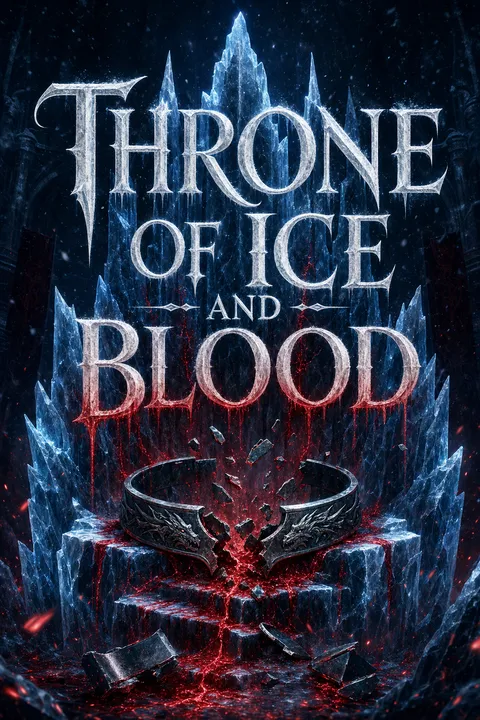
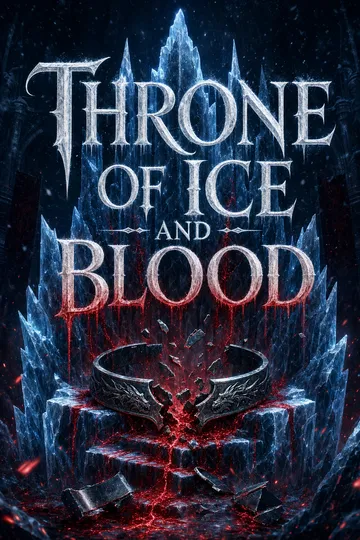
Throne of Ice and Blood received mixed reviews, with an overall rating of 4.23 out of 5. Many readers found it addictive and praised the plot twists, character development, and romance. Draven's character was particularly well-received. However, some criticized Selena's decision-making and repetitive writing. The book's ending was widely considered intense and left readers eager for the next installment. While some felt it improved upon the first book, others found it disappointing. Despite its flaws, many readers remained engaged and excited for the series' continuation.
People Also Read



Characters
Selena
Enslaved fae rebel spyA fae with silver hair and dual-colored turquoise and lavender eyes, Selena wields emotion magic, the power to sense and amplify or dampen feelings, a gift that has made her feared and shunned her whole life. Raised to believe she is inherently evil and must atone, she is a chronic people-pleaser whose sense of worth depends on others' approval, a wound she battles throughout. Sharp-witted, cunning, and physically unremarkable, she wins through strategy rather than strength. Enslaved to Draven2 after rigged trials, she channels her survivor's rage into rebellion, learning to weaponize the very magic she once despised. Her arc traces a painful evolution from apology to ruthlessness, from craving to be liked toward claiming what she wants regardless of judgment.
Draven Ryat
The Shadow of DeathCommander of the Dread Legion and leader of the Black Dragon Clan, Draven is a black-winged dragon shifter with golden eyes, storm and lightning magic, and a reputation for merciless conquest. Publicly he serves the Icehearts as their most feared enforcer; privately he is a labyrinth of contradiction, tender then cruel, protective then commanding. Possessive and domineering in intimacy, he nonetheless treats Selena1 as an equal, challenging her to take up space rather than shrink. He is a master of masks and deception, guarding secrets that reframe his every action. Beneath the ruthless armor lies a man who understands what it means to be hated for something beyond one's control, and who quietly risks everything for causes he cannot openly claim.
Empress Jessina Iceheart
Cruel dragon empressCo-ruler of the Iceheart Dynasty, a silver-winged dragon shifter with pale gray eyes and rare, devastating ice flames capable of freezing and shattering other dragons. Sadistic and coldly intelligent, she delights in humiliation and torture, viewing fae as animals to breed, drain, and punish for ancient grievances. She and her mate4 maintain absolute dominance through psychological cruelty and engineered oppression.
Emperor Bane Iceheart
Cruel dragon emperorCo-ruler beside Jessina3, a black-haired silver dragon with black eyes and the same annihilating ice flames. He craves public spectacle, wishing to torture rebels before crowds to crush hope. Vicious, patient, and strategically brilliant, he wields the whip and the throne with equal relish, personifying the dynasty's appetite for domination and generational vengeance.
Isera
Ice-magic fae captiveA fellow Atonement Trials contestant with long black hair and blue and silver eyes, wielding ice magic. Once cool but secretly warm, she is called the ice lady. Enslaved alongside Selena1, she suffers intense claustrophobia and a devastating grief over her mother's true fate. Her defiance curdles into something colder and more frightening, a vengeance that recognizes no innocents.
Alistair
Fire-magic fae bullyA curly-haired fae with orange and green eyes and rare fire magic. Once the Seelie Court's most notorious bully, he is revealed as a man scarred, literally and emotionally, by both dragon shifters and his own people, who burned him to prove their loyalty to their oppressors. He feels emotions more deeply than his hard exterior suggests, oscillating between rage and despair.
Lavendera
Enigmatic tree-magic faeA strikingly beautiful fae with flowing brown hair, pink and purple eyes, and a scar across her cheek, wielding rare and dangerous tree magic. Reputedly a wild woman from the thorn forest, she appears imprisoned and mentally unraveling, prone to claustrophobic panic and dissociation. Her knowledge of the dynasty's secrets runs unnervingly deep, and her true loyalties remain shrouded in mystery.
Galen
Draven's estranged friendA blond dragon shifter with violet eyes, Draven's2 former best friend and current second-in-command. Openly resentful, he believes Draven2 betrayed their clan by surrendering to the Icehearts, and channels his bitterness into near-treasonous defiance. Loyal to their people, competitive, and quick-tempered, he embodies the clan's collective grief and the mystery of Draven's2 fall.
Lyra
Spirited clan warriorA brown-haired dragon shifter with orange eyes, cheerful, competitive, and mischievous. A member of Draven's2 clan who teases Galen8 and shows Selena1 unexpected empathy, she voices the clan's buried loyalty beneath their resentment.
Kath
Human resistance memberA red-haired human with dark blue eyes, warm, quick-laughing, and brave. A high-ranking member of the human rebellion operating from a thief bar, she recruits Selena1 as an inside spy and coordinates the treasury heist. Resourceful and empathetic, she becomes Selena's1 key link to the human uprising.
Kyler
Kath's cutthroat brotherKath's10 red-haired younger brother, suspicious of outsiders and ruthlessly pragmatic in persuasion. He pushes Selena1 to serve the rebellion by invoking the fae still suffering in the palace, revealing the movement's hard-edged determination.
Nysara
Disguised Unseelie spyAn Unseelie fae with black hair and yellow and violet eyes, living in disguise via powerful glamour magic in the wealthy quarter. Proud, feline, and rude, she spies for the still-free Unseelie King and sabotages the Icehearts. She holds shattering historical truths and the means to smuggle fae out of the city, demanding groveling for her services.
Hector
Human rebellion leaderA tall, muscular, brown-haired human commanding deference from the resistance. Believed to be the movement's leader, his identity and role in the Red Hand mystery become a source of dangerous speculation.
Plot Devices
The Iron Collar
Enslaves and drains magicAn iron collar sealed by dragon shifters around a fae's throat, blocking their magic and sapping strength, removable only by a shifter. It marks life slaves of the Iceheart Dynasty and enables the draining of fae magic that extends shifter lifespans. The collar becomes the story's central symbol of subjugation and the intimate rebellion between Selena1 and Draven2, who secretly removes hers in private while she conceals its absence with a cloak. Iron also appears in manacles and blindfolds used to break captives. Throughout, the presence or absence of the collar tracks Selena's1 shifting freedom, danger, and the trust building between captor and captive.
Emotion Magic
Manipulates feelings covertlySelena's1 rare fae power lets her sense colored sparks of emotion in others' chests, then amplify or diminish them, fear, anger, courage, trust, pain. It requires her eyes to glow and drains her energy, forcing careful budgeting. She uses it to fool guards, win the resistance's trust, block Draven's2 torture pain, and ultimately ignite a citywide uprising by inflaming collective rage. The magic doubles as her deepest wound: feared her whole life as an untrustworthy manipulator, she agonizes over becoming exactly that, unable to know whether anyone's affection is genuine or induced. Blackwood uses it to explore consent, authenticity, and the ethics of influence, making Selena's1 greatest asset also her moral burden.
The Fated Mate Bond
Links two souls involuntarilyA mystical bond, more common among dragon shifters, that fatefully pairs two people and lets one partner sense the other's strongest emotions. Draven2 perceives Selena's1 death-terror through it, which repeatedly guides him to rescue her. For Selena1, who prizes free will after a lifetime of others controlling her, the bond is horrifying rather than romantic, poisoning her feelings with doubt about whether her love is real or dictated by destiny. It parallels her emotion magic, both raise the terror that intimacy might be manufactured rather than chosen. The device drives the romance's central conflict and sets up the story's final, devastating cliffhanger.
Dragon Steel
Enslaves dragon shiftersA shimmering metal that, when channeled with fae magic, allows total mind-control of dragon shifters, the ancient weapon a minority of Seelie ancestors used, the crime for which the whole race was punished. Dragon shifters cannot touch it; only fae can. Its reappearance overturns the worldbuilding: the supposedly all-powerful commander2 who bows to the Icehearts is himself a controlled prisoner, steel embedded in his forearm, forced by a fae channeling magic through it to obey, surrender, and conceal the truth. Its surgical removal by Selena1 becomes the literal liberation that reframes the entire narrative and severs the dynasty's grip on their greatest enforcer.
The Hidden Escape Tunnel
Secret route in and outAn emergency escape tunnel running through the mountain, entered via a concealed door in the third-floor treasury corridor and exiting on the eastern slope behind boulders. Selena1 discovers both ends across separate reconnaissance missions, along with specialized sticky-palmed climbing gloves and shoe covers that let her scale the palace walls undetected, the same gear the elusive Red Hand uses. The tunnel and gear form the practical backbone of the planned treasury heist and the fae escape, threading the espionage plot with concrete geography. They also explain how the Red Hand slips through the fortress, planting a clue whose payoff arrives in the climactic unmasking.
Flame and Thorns Series
About the Author
Other books by Marion Blackwood




Download PDF
Download EPUB
.epub digital book format is ideal for reading ebooks on phones, tablets, and e-readers.








































