
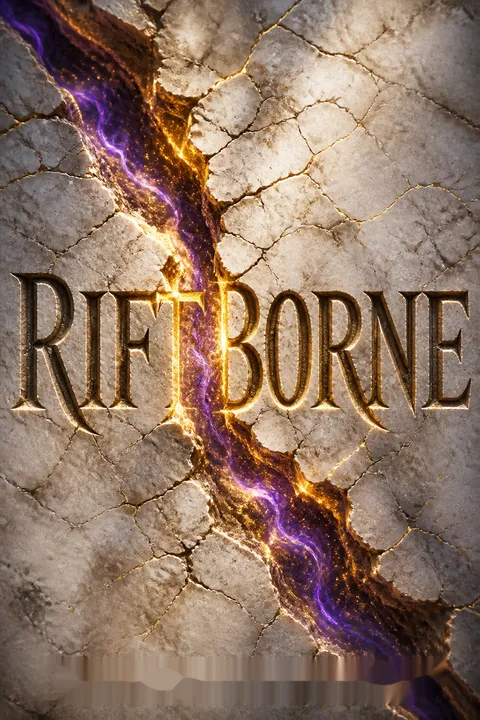


Plot Summary
Prologue
An official decree from Sídhe's archives paints a benevolent history: a great kingdom that generously civilized the eastern island of Riftdremar, only to face a tragic rebellion from radicalized leaders. In the aftermath, Sídhe claims it extended compassion to displaced children, branding them with a symbol of unity — for security, the decree assures.
The sanitized language obscures colonial horror: an entire nation burned to oblivion, its culture erased, its surviving children marked and scattered across the Isle. This decree is the world as Fia Riftborne1 knows it — a kingdom that calls its cruelty kindness, where the branded must perform gratitude for the privilege of breathing its air.
The Grove Erupts
Fia,1 a twenty-three-year-old Riftborne refugee working at an apothecary in Sídhe's capital, volunteers to deliver tonics to an elite celebration in the Grove. She keeps her branded left hand gloved, her white hair and shadowed eyes already marking her as other.
Her best friend Osta3 convinces her to stay for a drink. Wandering into the woods, Fia1 encounters two sisters from her former foster home who mock the drowning deaths of her Riftborne friends — killed years ago when a guard opened a dam's floodgates. Something inside Fia1 detonates.
Force erupts from her hands, stealing the girls' voices, sending blood streaming from their noses. They collapse. Fia1 stands frozen over their bodies until a twig snaps behind her. General Laryk Ashford2 watches from the shadows, twisting a dagger through his fingers — and smiling.
The General's Proposition
The next day, Laryk2 appears at the Apothecary where Fia1 works under Ma,4 her surrogate mother. He pulls Fia1 into the greenhouse for private questioning. His revelation shatters her guilt: the girls survived.
His healers revived them minutes from death, and an alterationist erased their memories. No one knows what Fia1 did — except him. The relief barely registers before his true purpose surfaces. He wants her power for his elite unit, Faction Venom.
He frames it as an offer — training to control her focus — but the threat glints beneath every polished word. If she refuses, the cover-up vanishes and she faces consequences for attacking two daughters of nobility. He leaves her a card with his office address and a deadline: answer by the weekend.
Rain Breaks the Surge
Fia's1 first instinct is to run. She packs mentally, maps escape routes, nearly sells the gold bracelet that is her only possession from Riftdremar. But walking home through Luminaria, a street collision with strangers sends her focus surging — white-hot essence overtaking her vision, her body seconds from detonating on innocent passersby.
Rain shatters the trance. She collapses on the cobblestones, shaking. The truth crashes through her: distance won't neutralize the bomb she carries in her spine. Every crowd, every argument, every spike of emotion could turn lethal.
Running protects no one. If Laryk's2 training offers even a sliver of control, she owes it to Osta,3 to Ma,4 and perhaps to herself. She drags herself home and tells Osta3 she's accepting. Her best friend,3 ever the optimist, has never been more relieved.
The Dam Guard's Last Night
Laryk2 tells Fia1 he has a new training approach, but it's a trap built from her history. At the gym, the blue-eyed guard from the dam — the one who pulled the lever and drowned her friends — stands waiting. Laryk2 names Fia's1 dead friends aloud, then whispers for her to let go.
Rage detonates through her spine. For the first time, she feels it: translucent fibers braiding up her vertebrae, knotting at her skull, flooding her with blinding force. She lifts the guard into the air and wraps her power around his mind.
But she stops. She chooses mercy, reeling the web back into her spine. Laryk2 does not share her restraint. He drives a sword through the guard's heart, calls it her reward, and wipes the blade on his trousers. Fia1 stumbles home with blood staining her white curls.
Fia Dances with the General
Laryk2 leverages Osta's3 career ambitions to drag Fia1 to the Tribute Ball, promising introductions to noble houses. Osta3 designs their gowns — herself in scarlet silk, Fia1 in shimmering silver-white.
At the Imperial Keep, Laryk2 parades Osta3 before aristocratic ladies while Fia1 drinks with his lieutenant, Callum Mercer,7 a married wind-wielder whose warmth catches her off guard. King Sydian13 and Queen Ophelia greet Fia1 by name. During dinner with Faction Venom, Fia1 notices the red-haired Narissa8 — Laryk's2 acid-blooded third-in-command — pressing close to him beneath the table.
Then Laryk2 pulls Fia1 to the dance floor. His arms circle her bare back, his lips brush her ear, and the room collapses into heat and spinning color. Afterward, guards whisper about a crisis at Stormshire. Nearly the entire military deploys west.
Ink in Clear Water
With Laryk2 gone, group training under Mercer7 begins. Fia1 joins five other recruits: Raine,5 a lightning wielder from the Highlands; Briar,10 who bends nature to his will; Baelor,6 a fire wielder and son of the retired general who destroyed Riftdremar; his ally Nazul,9 a shield-maker; and the secretive Draven.11
Before any briefing, each recruit seals a blood oath — a drop of crimson into a personalized vial — binding them from speaking classified intel to outsiders. Then Mercer7 pours ink into clear water.
The black void blooming within the glass, he explains, is what they face: Wraiths — shadow creatures from beyond a tear between worlds, drawn to the Isle's arcanite crystals. They suffocate victims, move at imperceptible speed, and no weapon has killed one. Fia's1 blood runs cold as she grasps that these creatures could reach Luminaria.
The Apothecary Door Closes
Months grind past in a haze of sprints, combat drills, and suffocation training. Mercer7 siphons air from recruits' lungs to simulate Wraith attacks; Fia1 passes out when her focus activates defensively — the only recruit to lose consciousness.
Meanwhile, her relationship with Ma4 fractures beyond repair. Ma4 calls her radicalized, a stranger. Fia1 counters that she was a ticking bomb, that the Guard gave her control. Ma,4 whose twin brother was consumed and killed by the Guard decades ago, cannot accept this. She begins looking for Fia's1 replacement.
Fia1 walks out, breathing smoke and burning ink as parchment disintegrates in Ma's4 furious hands — her employment, and perhaps their bond, reduced to ash. She moves into the Compound and shares a room with Raine,5 her old life now severed completely.
Baelor Kneels
At an illicit outdoor gathering of Guard members, Baelor6 — now demoted to infantry for threatening Laryk2 — launches fire directly at Osta.3 Nazul9 races between them, projecting his shield to absorb the blast. Fia1 confronts Baelor6 alone.
But instead of crushing his mind with brute force, her focus does something unprecedented: it enters his consciousness softly, finding an access point within his thoughts. She realizes she can command him. Through the bond, she orders him to leave.
His body obeys against his will — he kneels, then walks rigidly into the trees. The clearing erupts in cheers as a hundred guards chant for the Riftborne. For the first time in her life, Fia1 feels like a predator rather than prey — and the sensation terrifies her as much as it thrills.
Sealed in Blood
The triumph dies when word arrives that a reconnaissance team — including Val and Gentry, the warm faction members Fia1 befriended at the ball — has been annihilated by Wraiths. No survivors. Mercer7 accelerates training into full combat.
A nighttime simulation follows: illusionists and wind-wielders replicate a Wraith assault inside the Compound's darkness. Fia's1 focus proves useless against fake shadows possessing no minds to grip. Nazul9 saves her by projecting his shield over her body.
The simulation is their final test — they pass. At the induction ceremony, Fia1 presses her dagger to her palm and drops blood into her oath vial for the last time. General Ashford2 steps onto the platform above and announces deployment to the West. They leave at sundown.
The Oath Shatters
Before departing, Fia1 commits her boldest act of defiance. She infiltrates the restricted room where blood oath vials are stored — discovering disturbing details: arcanite crystals feeding inky, blood-coated vines that grip the bottles possessively.
Using mind-control on the emerald-uniformed guard, she steals her own vial and crushes it beneath her boot outside the Apothecary. Inside, she confesses everything to Ma4 — the Grove, the near-murders, why she truly joined the Guard. Ma's4 months of anger dissolve into grief.
When Fia1 describes the Wraiths' suffocation weapon, Ma's4 healer instinct ignites. She combines red algae from the Scarlet Coast with crushed whale bone, producing a potion that suspends the need to breathe for several minutes. She presses the vials into Fia's1 bag as they embrace for what could be the last time.
Inside Laryk's Dream
Laryk2 insists Fia1 travel with him to Emeraal rather than joining her team at Stormshire, refusing to explain why. On horseback through autumn valleys, he reveals his dual focus: reading people's motivations and sensing opponents' moves before they strike.
The caveat — his ability has never worked on Fia,1 making her the one mind he cannot predict. That night in their shared tent, Fia1 slips into Laryk's2 dream and experiences his fantasy of her in vivid, intimate detail. They both jolt awake, staring across the dying fire.
The dream-walking recontextualizes months of nightmares: the dam seen from the guard's perspective, an unknown forge, a plummeting fall — all were invasions of other people's sleeping minds. Her focus is more vast than either imagined. Laryk2 is fascinated. Fia1 is terrified.
The General Surrenders
At Emeraal's fortress, Fia1 is barred from briefings and left to stew in isolation. Watching Narissa8 press close to Laryk2 at dinner ignites something she can no longer suppress. That night, fueled by gin and spite, she descends to a courtyard party and lets a dark-haired Base guard rest his hand on her back.
Laryk2 materializes, and the courtyard falls silent. In his chambers, their argument catches fire — he confesses she has made him an absolute wreck. The fight becomes a collision: his mouth on hers, desperate and possessive, hours tangled in sheets and whispered commands.
Afterward, he admits she was always the weapon he needed — her mind-linked powers the key to capturing a Wraith alive. But the way his arms tighten around her says what strategy cannot contain.
Candles Snuffed at the Ball
The night before the ball, Fia1 dreams of Wraiths streaming past a ruined tower with a crescent-moon window — heading toward Emeraal, not Stormshire. She warns Laryk;2 border patrols report nothing. He dismisses it. But as the King13 raises his chalice at the Emeraal ball, every candle dies at once.
Darkness floods the hall. The Wraiths bypassed Stormshire entirely, targeting Emeraal's arcanite. Fia1 and Laryk2 sprint to the northern lawn where Base Guards shield the crystal spire with walls of fire.
Fia1 swallows Ma's potion, freeing herself from the suffocation weapon. Fighting beside Laryk2 in total darkness, she discovers her mind-sight lets her perceive combatants as glowing orbs through the void. She tracks a Wraith, throws her dagger, and strikes something solid within the shadow.
The Void Made Flesh
Wraiths drive screaming civilians from the fortress, using them as shields. Among the fleeing bodies, Fia1 spots Osta3 in her emerald dress, surrounded by swirling darkness. Something older than training seizes control of Fia's1 body. Her arms shoot outward.
Every shadow in the valley changes direction, streaming into her palms like rivers pouring into a single vessel. The darkness absorbs into her blood and bones, filling every pathway with alien power. For one suspended moment she is the void — then she releases it. Shadows erupt from her fingertips, dispersing the Wraiths across the sky.
She collapses. But before Laryk2 can reach her — before his expression shifts from horror to understanding — dark tendrils coil around her limbs and lift her skyward. Winged beasts carry her into the night. His face shrinks below her, frozen, helpless.
Ink in Her Eyes
Fia1 drifts through consciousness strapped to a massive horse with bat-like wings, a man's rigid torso at her back. Voices argue in accented but recognizable speech: she is a shadow wielder, one of them, belonging to a people called Umbra.
She wakes in a tower in Ravenfell, a city of black spires in the realm of Umbrathia. Her captor enters — Aether,14 raven-haired and golden-eyed, onyx designs inked across his skin, and shadows pooling around his eyes identical to hers. He insists Sídhe has been draining his dying world, that they will do to Umbrathia what they did to Riftdremar.
Fia1 snarls defiance. Then she catches her reflection. Ink swirls within her opalescent irises — dark, undeniable, and unmistakably not of the world she called home. Everything she thought she knew begins to fracture.
Analysis
Riftborne interrogates the architecture of belonging in a world constructed on erasure. Fia's1 dual identity — branded refugee and devastating weapon — mirrors the experience of marginalized communities simultaneously dehumanized and instrumentalized by the systems that oppress them. The Guard doesn't want Riftborne; it wants their power. Laryk's2 recruitment of Fia1 is colonialism in miniature: identify a resource, extract it, rebrand the extraction as salvation.
The novel's most sophisticated tension lies in refusing to let Laryk2 off the hook while also refusing to flatten him into a villain. His manipulation — weaponizing the dam guard, leveraging Osta,3 withholding intelligence — produces genuine harm alongside genuine growth. This creates an unresolvable friction at the romance's core: can a relationship survive when one partner's initial interest was explicitly extractive? The book doesn't answer this so much as acknowledge the question's impossibility, letting desire and distrust coexist rather than pretending one eliminates the other.
The blood oath system functions as a precise critique of institutional secrecy. By preventing soldiers from warning families about an existential threat, the Guard protects its authority at the direct cost of civilian survival. Fia's1 destruction of her vial — the novel's most politically radical act — argues that loyalty to people must supersede loyalty to systems, however well-intentioned those systems claim to be.
The final revelation inverts the entire narrative framework. If Fia1 is Umbra, if the so-called Wraiths are defending a dying world from Sídhe's resource extraction, then the Official Decree's sanitized language about Riftdremar reads not as history but as prophecy — Sídhe has done this before. The branded hand she carries may link her not to one destroyed homeland but to two, positioning her at the precise fault line where empire meets its consequences. The novel's deepest question is whether someone forged between worlds can refuse to choose — or whether the mark on her hand already chose for her.
Review Summary
Riftborne has received mixed reviews, with an average rating of 3.82 out of 5. Praised for its world-building, magic system, and plot twists, many readers enjoyed the slow-burn romance and character development. Critics found the pacing slow and the romance lacking chemistry. The ending was widely lauded as a game-changer, leaving readers eager for the sequel. Comparisons were drawn to popular series like Fourth Wing and Red Queen. Overall, readers found it an engaging debut with potential for growth in future installments.
Characters
Fia Riftborne
Riftborne mind-wielderA Riftborne refugee raised in Sídhe's capital after her homeland's destruction, Fia is defined by paradox: she possesses devastating power she cannot control and an identity she cannot claim. Her white hair, shadowed eyes, and branded hand mark her as permanently other—she has spent twenty-three years making herself small, invisible, safe. Beneath her sharp tongue and reflexive defiance lives someone terrified of becoming the monster others already see. Her psychological architecture is hypervigilance: every crowd a threat, every kindness suspect, every surge of emotion a potential catastrophe. What drives her is not ambition but damage control—protecting the few people she loves from the thing inside her. Her arc traces the agonizing discovery that control and connection are not mutually exclusive, even as her true nature remains elusive.
Laryk Ashford
General of Faction VenomSídhe's youngest commanding officer, Laryk operates through perception—both his magical focus, which reads motivations and anticipates combat, and his practiced charm, deployed like a weapon. Raised by a caretaker rather than cold aristocratic parents, he learned early that vulnerability is liability. His recruitment of Fia1 begins as strategic calculation: her unprecedented power could turn the war. But Fia1 is the one mind his focus cannot read, the one variable his foresight cannot predict, and this blindness becomes its own obsession. Behind insufferable smirks and manipulative tactics lies someone who has compartmentalized love as weakness—until the compartment stops holding. He will kill for her, lie for her, and rearrange the political landscape around her, all while insisting it serves the realm rather than his heart.
Osta
Fia's sunlit best friendFia's1 closest friend and fellow Riftborne, Osta is sunlight where Fia1 is shadow—golden-haired, buoyant, relentlessly optimistic. She navigates Sídhe's prejudice by leaning into charm and talent rather than confrontation, designing gowns that make people forget to check her left hand for a branding. Her perception-based focus makes her brilliant with design, but her emotional acuity is equally sharp—she reads Fia's1 spirals before they begin. What makes Osta compelling is not her optimism but the cost of maintaining it: she lost the same friends, carries the same orphan's grief, yet chose warmth over walls. She functions as Fia's1 conscience, her anchor, and her mirror—reflecting back possibilities Fia1 cannot see for herself. Her career ambitions become a vehicle for proving Riftborne worth in a hostile world.
Maladea (Ma)
Fia's surrogate motherThe apothecary owner who became Fia's1 surrogate mother, Ma carries her own Guard trauma—her twin brother was consumed by military ambition and killed in combat. She recognizes the same pattern beginning in Fia1 and fights it with a ferocity born of grief. Her fire-starting focus mirrors her temperament: controlled warmth that can ignite into devastating honesty. Her love for Fia1 is the immovable force meeting an unstoppable object, and the resulting collision defines the emotional cost of Fia's1 transformation.
Raine Ampere
Lightning-wielding recruitA lightning wielder from the Highlands, Raine is Fia's1 first real friendship outside Osta3—direct, confident, and fiercely loyal. She walks through the Compound with the swagger of someone who knows exactly what she's worth. She normalizes Fia's1 presence among the recruits and serves as the bridge between isolation and belonging. Her casualness about power contrasts sharply with Fia's1 tortured relationship with her own abilities, and her blunt honesty cuts through pretense with surgical precision.
Baelor Soleil
Fire heir turned antagonistSon of the retired General who destroyed Riftdremar, Baelor inherited both his father's fire-wielding focus and his ideological rigidity. He views Riftborne as existential threats deserving extermination and Fia's1 presence in Faction Venom as a personal affront. His nationalism is religious in its fervor—he considers himself a chosen protector of the realm. His bigotry is conviction rather than ignorance, making him more dangerous than any simple bully. He represents the systemic hatred Fia1 must navigate at its most combustible.
Callum Mercer
Venom's steadfast lieutenantLaryk's2 second-in-command and the recruits' primary instructor, Mercer is a wind-wielder who balances military rigor with genuine care. Married to Halloway15, a healer, he models a life integrating duty with love. His calm exterior conceals the trauma of having faced Wraiths firsthand. He serves as a counterweight to Laryk's2 volatility—proof that authority need not be cruel—and his teaching methods, however brutal, are rooted in the desperate arithmetic of keeping his charges alive.
Narissa
Laryk's acid-blooded rivalLaryk's2 third-in-command with an acid-type blood lock focus—drops of her blood melt flesh to bone on contact. Her hostility toward Fia1 extends beyond romantic jealousy: as someone whose family suffered during the Riftdremar conflict, her hatred of Riftborne runs deep. She wields proximity to Laryk2 as both weapon and comfort. Her corrosive blood mirrors the resentment she refuses to release, and she represents the institutional prejudice that Fia1 faces even among those who should be allies.
Nazul Halstead
Shield-maker, torn allyBaelor's6 former companion, Nazul carries a shield focus—a small protective radius around his body—that becomes both literally and metaphorically significant when danger strikes. His shifting loyalties trace the quiet erosion of inherited prejudice through personal connection. His growing closeness with Osta3 represents the possibility that proximity can dissolve the biases ideology alone cannot dismantle.
Briar Glennwood
Nature-wielding gentle soulA nature-controlling recruit from a pacifist family, Briar brings theatrical warmth to Faction Venom. His ability to grow vines and reshape terrain contrasts his gentle personality, making him a reliable friend and morale anchor for the group.
Draven Porter
Quiet paralytic recruitThe quietest recruit in Faction Venom, Draven conceals a paralyzing blood-lock focus he guards closely. His shyness masks a stubborn courage that surfaces only under direct pressure.
Eron
Riftborne delivery manA fellow Riftborne and delivery man, Eron represents the steady, cautious life Fia1 might have led. His shock at seeing her in Guard uniform underscores the magnitude of her transformation.
King Sydian
Sídhe's beloved rulerSídhe's revered monarch, credited with miraculous prosperity. His gentle demeanor and awareness of Fia's1 existence hint at deeper political calculations behind the throne's benevolent facade.
Aether
Golden-eyed Umbra leaderFia's1 captor in Umbrathia, Aether bears shadows around his eyes identical to hers. His claims about Sídhe's exploitation challenge everything Fia1 knows, and his presence rewrites the definition of enemy.
Halloway Mercer
Mercer's healer husbandA healer in Faction Immunity and Callum Mercer's7 husband, Halloway treats Fia1 with warmth and humor, offering a glimpse of domestic kindness within the Guard's rigid hierarchy.
Plot Devices
Riftborne Branding
Mark of colonial subjugationThe twin serpents of Sídhe coiled around the antlers of Riftdremar, permanently inked onto the left hand of every refugee child brought to the Isle after the war. Officially a symbol of unity, the mark functions as a scarlet letter—identifying its bearer as a child of rebellion, a perpetual outsider. Fia1 keeps hers hidden beneath gloves, but the branding operates on multiple levels: a physical reminder of colonial violence, a social weapon triggering discrimination, and a narrative motif tracking Fia's1 relationship with visibility. When she joins the Guard, the mark becomes paradoxical—she simultaneously wears the enemy's emblem on her uniform and their victim's brand on her skin. The branding evolves from a source of shame to a complex badge of dual identity.
Arcanite
Essence crystal Wraiths covetA rare crystal that conducts and stores magical essence—the fundamental energy powering all focuses throughout Sídhe. Massive deposits along the Western border become the central strategic objective once Wraiths are revealed to be drawn to its power. Military leadership fears that losing the arcanite could render all Aossí focuses useless. The crystal appears in multiple contexts: Ma4 uses a piece in her greenhouse experiments, where it mysteriously kills plants rather than enhancing them. At the Compound, Fia1 discovers arcanite in a restricted room where it feeds disturbing blood-covered vines wrapped around blood oath vials. These contradictions—a life-giving crystal that also nurtures something parasitic—hint at deeper secrets about Sídhe's magical infrastructure and the true nature of essence itself.
Blood Oath
Enforced secrecy through blood magicA binding system where recruits provide drops of blood into personalized vials, sealed by enchantments that physically prevent the oath-taker from discussing classified information with outsiders. The vials are collected by an emerald-uniformed guard and stored in a restricted room alongside arcanite and mysterious vines—details that raise unsettling questions about the oath's true mechanism. The device serves as both plot engine and thematic weapon: it keeps the Wraith threat secret from civilians, isolates Fia1 from Ma4 and Osta3, and creates conditions for her most defiant act—infiltrating the vault, mind-controlling a guard, and crushing her own vial to warn Ma4 about the danger approaching from the West.
Fia's Translucent Web
Mind-linked focus manifestationFia's1 focus manifests as translucent fibers originating at the base of her spine, braiding upward through vertebrae to her skull before extending outward to detect, grip, enter, and command other minds. Initially the web responds only to extreme emotional distress, making it dangerous and uncontrollable—a curse rather than a gift. Through training, Fia1 learns to summon it voluntarily: first as a sensory tool detecting minds in darkness, then as a weapon capable of crushing consciousness, and finally as a command interface overriding another person's will. The web's progression mirrors her psychological growth from a power she fears into a tool she wields with intention. Its evolving capabilities—mind-shredding, mind-control, dream-walking, mind-sight—suggest depths neither Fia1 nor Laryk2 fully comprehend.
Ma's Breathing Potion
Anti-suffocation countermeasureA concoction of dried red algae from the Scarlet Coast and crushed whale bone, discovered accidentally when Ma4 inhaled airborne algae particles and found she could hold her breath for an extended period. The potion directly counters the Wraiths' primary weapon—suffocation through air-siphoning—but only exists because Fia1 broke her blood oath and revealed the classified threat. It represents the contribution of ordinary people to an extraordinary war and the catastrophic cost of institutional secrecy: Ma's4 breakthrough could have saved hundreds of Guard lives had the military trusted its citizens with the truth sooner. The potion exists in limited quantities, creating urgent stakes around its distribution.
FAQ
Synopsis & Basic Details
What is Riftborne about?
- A Marked Refugee's Journey: Riftborne follows Fia, a young woman branded as a Riftborne refugee in the kingdom of Sídhe, who grapples with societal prejudice and a terrifying, uncontrollable magical ability she calls her "curse." Her life of cautious secrecy is upended when her power erupts, drawing the attention of General Laryk Ashford, a charismatic and manipulative leader of the Sídhe Guard.
- Forced Alliance & Self-Discovery: Blackmailed into joining General Ashford's elite Faction Venom, Fia is thrust into a world of rigorous military training, political intrigue, and a burgeoning war against shadowy invaders known as Wraiths. As she struggles to master her evolving abilities, Fia uncovers shocking truths about her past, her identity, and the true nature of the conflict, blurring the lines between friend and foe.
- Love, Loyalty, and Destiny: Amidst the escalating war and personal revelations, Fia navigates complex relationships, including a fraught, forbidden romance with General Ashford and enduring friendships that challenge her perceptions of trust and belonging. The story culminates in a dramatic confrontation that shatters Fia's understanding of her world, setting her on a path to confront her destiny as a pivotal figure in a war far larger than she ever imagined.
Why should I read Riftborne?
- Unravel a Deep Mystery: Dive into a narrative where every dream, every subtle interaction, and every historical account holds hidden clues, inviting readers to piece together a complex tapestry of forgotten truths and concealed identities. The story constantly redefines its own reality, keeping you guessing about Fia's true nature and the world's history.
- Experience Intense Character Growth: Witness Fia's transformative journey from a self-loathing, fear-driven outcast to a powerful, self-possessed individual who reclaims her identity and agency. Her internal battles with her "curse" and external struggles against prejudice offer a compelling exploration of trauma, resilience, and self-acceptance.
- Engage with Thought-Provoking Themes: Beyond the thrilling fantasy elements, Riftborne delves into profound themes of colonialism, forced assimilation, the cyclical nature of violence, and the moral ambiguities of war. It challenges conventional notions of good and evil, prompting readers to question authority and the narratives presented by those in power.
What is the background of Riftborne?
- Colonial Past & Lingering Scars: The world of Riftborne is shaped by a recent history of Sídhe's colonial expansion into Riftdremar, which culminated in a devastating rebellion and the destruction of Riftdremar. This conflict, ending 20 years prior, created the "Riftborne"—refugees branded and forced to assimilate into Sídhe society, living under a veneer of civility that barely conceals deep-seated prejudice and resentment.
- Esprithean Pantheon & Essence Magic: The realm is imbued with "Essence," a pervasive magic that empowers both the land and its inhabitants, the Aossí, manifesting as individual "Focuses." Society worships a pantheon of six Esprithe deities (Sibyl, Conleth, Niamh, Ainthe, Eibhlín, Fírinne), each representing a core concept like foresight or justice, influencing the phases of the year and subtly reflecting the story's thematic undercurrents.
- Militarized Society & Hidden Threats: Sídhe maintains a massive, all-encompassing military, the Sídhe Guard, which, despite years of peace, holds immense power and influence, granting nobility and legacy. This seemingly secure society is secretly facing a new, existential threat from "Wraiths"—shadowy, imperceptible invaders from another world, drawn to Sídhe's vital arcanite crystals, setting the stage for a desperate, hidden war.
What are the most memorable quotes in Riftborne?
- "Beauty could be deceptive, and it often was. Vipers, after all, distract with shimmering scales before going in for the kill. The Sídhe Elite were much the same, twice as lethal as they were mesmerizing." (Chapter 1): This quote immediately establishes Fia's cynical worldview and the deceptive nature of Sídhe society, foreshadowing the hidden dangers and manipulations she will face from the seemingly glamorous elite. It encapsulates the theme of appearance versus reality.
- "You're a mouse in a sea of serpents." (Chapter 32): This recurring internal thought, initially a self-deprecating reflection of Fia's vulnerability and outsider status, transforms throughout the narrative. By the end, as her powers evolve, it subtly shifts to question who the real serpent is, hinting at her own predatory potential and the subversion of her perceived weakness.
- "You've been lied to." (Chapter 52): Uttered by Aether, this simple yet profound statement shatters Fia's entire understanding of her world, her history, and her identity. It marks the ultimate thematic reveal of the novel, challenging the reader to re-evaluate all prior assumptions about the Sídhe-Riftdremar conflict and the nature of the Wraiths.
What writing style, narrative choices, and literary techniques does Parker Lennox use?
- First-Person Introspection & Unreliable Narration: The story is told from Fia's deeply personal first-person perspective, immersing readers in her internal turmoil, fears, and evolving perceptions. This narrative choice creates an unreliable reality, especially as Fia's powers blur the lines between dreams, hallucinations, and objective truth, forcing the reader to question what is real alongside her.
- Sensory-Rich Prose & Evocative Imagery: Lennox employs vivid sensory details, particularly in descriptions of magic, environments, and emotional states. Phrases like "humid night air clung to me like a second skin," "crimson tar began to flow from their noses," and "the air crackled with energy" create an immersive and often visceral reading experience, enhancing the fantastical elements and psychological tension.
- Subtle Foreshadowing & Thematic Echoes: The narrative is laced with subtle hints and recurring motifs that gain significance later, such as Laryk's mysterious scar, Ma's arcanite experiment, and Fia's increasingly vivid dreams. These literary devices build suspense and allow for powerful thematic reveals, enriching the reader's understanding upon re-reading.
Hidden Details & Subtle Connections
What are some minor details that add significant meaning?
- Ma's Arcanite Experiment: Ma's seemingly failed attempt to use arcanite to enhance plant growth (Chapter 29), resulting in dead plants, subtly foreshadows the crystal's true nature and its connection to the Umbra's dying world. This contrasts sharply with the "inky vines" thriving around arcanite in the Immunity wing (Chapter 39), hinting at the crystal's dual properties and its role in sustaining both Sídhe's essence and the Umbra's shadow magic.
- Fia's White Hair & Shrouded Eyes: Beyond just making her look "ghoul-like," Fia's unnaturally pale skin, white curls, and perpetually shadowed eyes (Chapter 1) are not merely aesthetic traits but subtle physical manifestations of her latent Umbra heritage. This detail gains profound significance when Aether reveals her true nature as a "shadow wielder" and her eyes literally turn "inky" (Chapter 52), retroactively explaining her lifelong "otherness."
- Laryk's Scar and Wraith Attacks: General Ashford's distinctive, pitch-black scar (Chapter 5) is initially presented as a mysterious combat wound. His later admission that it "felt like a dagger" (Chapter 46) despite Wraiths being shadowy, combined with Fia's observation that the Umbra's architecture is "bladed" and "made up of daggers" (Chapter 51), subtly foreshadows the Wraiths' true physical forms and their capacity for tangible harm, challenging the Sídhe narrative of them as purely insubstantial.
What are some subtle foreshadowing and callbacks?
- The "Mouse in a Sea of Serpents" Motif: Fia's recurring internal thought (e.g., Chapter 19) about being a "mouse in a sea of serpents" initially reflects her vulnerability among the Sídhe elite. This motif subtly foreshadows her transformation from prey to predator, culminating in her realization, "Perhaps I was a predator too" (Chapter 33), as her shadow-wielding abilities emerge, subverting her initial self-perception.
- Fia's Dreams as Prophecy/Memory: Fia's early nightmares, particularly the one about the dam (Chapter 4), are initially presented as trauma. However, the later revelation of her dream-walking ability (Chapter 42) and her ability to enter Laryk's dream, retroactively suggests these "nightmares" were not just psychological but actual glimpses into others' memories or even prophetic visions, hinting at her unique connection to minds and events beyond her own experience.
- The Enclave's Illusionary Nature: The Enclave, with its "illusionists" and "light weavers" creating a "valley covered in luscious grass" (Chapter 27), subtly foreshadows the later revelation of the Wraith's "illusion" of being purely shadowy. It introduces the concept of manipulated perception and hidden realities, preparing the reader for the ultimate twist that the Wraiths' form is also a deceptive illusion.
What are some unexpected character connections?
- Fia and Aether's Shared Umbra Heritage: The most unexpected connection is Fia's true identity as an Umbra, revealed by Aether (Chapter 52). This recontextualizes her unique focus, her physical appearance, and her lifelong sense of "otherness," establishing a deep, ancestral bond with the very "enemy" Sídhe has demonized, challenging the core conflict of the story.
- Ma's Connection to the Wraith Threat: Ma, Fia's surrogate mother and apothecary owner, unexpectedly holds a key to fighting the Wraiths' suffocation ability through her red algae potion (Chapter 40). Her practical, scientific approach to magic, combined with her personal history of loss to the Guard, positions her as an unlikely but crucial ally against the existential threat, bridging the gap between civilian life and military conflict.
- Lord Soleil's Estrangement and Focus: Lord Soleil, Baelor's uncle and Lady Soleil's husband, is revealed to have a unique "bloodhound" focus for "magical signatures" (Chapter 47), making him invaluable against the Wraiths. His estrangement from the Guard due to his brother (Baelor's father) and his anti-war stance creates an unexpected internal conflict within the powerful Soleil family, highlighting the nuanced loyalties and hidden dissent within Sídhe's elite.
Who are the most significant supporting characters?
- Ma (Maladea): The Unsung Innovator: Beyond her maternal role, Ma's scientific curiosity and accidental discovery of the red algae's properties (Chapter 40) provide the only known counter to the Wraiths' suffocation attack. Her practical magic and willingness to defy Guard secrecy for Fia's safety make her a vital, albeit subtle, force against the looming threat, embodying the power of civilian ingenuity.
- Lieutenant Callum Mercer: The Moral Compass: Mercer serves as more than just Laryk's second-in-command; he's the ethical anchor of Faction Venom. His principled stance against Baelor's bigotry (Chapter 22), his compassionate mentorship, and his stable relationship with Halloway (Chapter 31) offer a stark contrast to the Guard's often ruthless nature, providing Fia with a rare example of integrity within the institution.
- Nazul Halstead: The Redeemed Ally: Initially Baelor's silent accomplice and a source of prejudice, Nazul undergoes a significant transformation. His act of saving Osta (Chapter 33) and his subsequent apology to Fia (Chapter 38) reveal a hidden moral compass and a capacity for change, making him an unexpected and valuable ally who challenges Fia's ingrained distrust of Sídhe nobility.
Psychological, Emotional, & Relational Analysis
What are some unspoken motivations of the characters?
- Laryk's Desire for Control and Validation: Beyond his stated ambition, Laryk's relentless pursuit of Fia and his obsession with her "unreadable" focus (Chapter 41) hint at a deeper, unspoken motivation: a need to control what he cannot perceive, and perhaps a desire for a challenge that his "foresight" focus rarely affords him. His possessiveness over Fia stems from this unique inability to predict her, making her a singular conquest.
- Fia's Subconscious Longing for Power: While Fia consciously fears her "curse," her internal narrative often reveals a subconscious pull towards its destructive potential, particularly in moments of extreme anger or vulnerability (e.g., her thoughts about "liquifying" Baelor's mind in Chapter 33). This unspoken motivation is a complex interplay of trauma, self-preservation, and a hidden desire to reclaim agency in a world that has always disempowered her.
- Osta's Pursuit of Sídhe Acceptance: Osta's unwavering optimism and relentless pursuit of a career in Sídhe fashion (Chapter 14) are driven by an unspoken desire for full acceptance and belonging within the society that branded her. Her willingness to overlook prejudice and her initial eagerness for Fia to join the Guard stem from a deep-seated hope that assimilation and success will finally erase the stigma of being Riftborne.
What psychological complexities do the characters exhibit?
- Fia's Trauma-Induced Self-Sabotage: Fia's psychological complexity is rooted in her deep-seated trauma from the Riftdremar Rebellion and the murder of her friends. This manifests as a constant state of fear, self-loathing, and a tendency to isolate herself, believing she is a "monster" (Chapter 3). Her initial resistance to Laryk's training, despite its potential benefits, is a form of self-sabotage, as she's more comfortable with the familiar pain of her curse than the terrifying prospect of hope and change.
- Laryk's Calculated Vulnerability: General Ashford, despite his manipulative and stoic exterior, exhibits moments of surprising vulnerability, particularly in his interactions with Fia (e.g., admitting his "annoying situation" of being unable to be separated from her in Chapter 46). This calculated vulnerability is a complex psychological tool, allowing him to forge deeper connections and exert influence, while simultaneously hinting at a genuine emotional depth beneath his hardened facade.
- Narissa's Vengeance as a Coping Mechanism: Narissa's intense hatred for the Riftborne and her aggressive rivalry with Fia (Chapter 49) are not merely bigotry but a complex psychological response to her own trauma and loss. Her "blood lock" focus, which causes excruciating pain, mirrors her internal pain, suggesting her vengeance is a desperate coping mechanism to process her grief and assert control in a world where she felt powerless.
What are the major emotional turning points?
- Fia's Realization of Uncontrollable Power (Chapter 2): The moment Fia's power erupts at the Grove, nearly killing Bekha and Jordaan, is a major emotional turning point. It shatters her illusion of control and forces her to confront the terrifying reality of her "curse," leading to profound guilt and a desperate search for a solution, ultimately driving her to accept Laryk's proposition.
- Laryk's "Reward" and Fia's Betrayal (Chapter 16): The General's cold-blooded murder of the dam guard, presented as a "reward" for Fia's successful channeling, is a pivotal emotional turning point. It simultaneously validates Fia's power and deeply traumatizes her, cementing her distrust of Laryk's methods and forcing her to reconcile her personal relief with the moral horror of his actions.
- Fia's Absorption of Wraith Shadows (Chapter 50): The climactic moment where Fia instinctively absorbs the Wraiths' shadows to protect Osta is a profound emotional and magical turning point. It marks the full manifestation of her true Umbra focus, transforming her from a mind-wielder to a shadow-wielder, and fundamentally altering her identity and understanding of her place in the war.
How do relationship dynamics evolve?
- Fia and Laryk: From Antagonism to Interdependence: Their relationship begins with intense antagonism, blackmail, and mutual suspicion (Chapters 5-6). It evolves through grudging respect during training (Chapter 13), a shared secret (Chapter 16), and eventually a passionate, forbidden romance (Chapter 45). This dynamic shifts from Laryk's overt manipulation to a complex interdependence, where Fia's unique power becomes essential to his strategy, and his protection becomes vital to her survival, blurring the lines of control.
- Fia and Ma: From Disappointment to Understanding: Initially, Ma is Fia's steadfast protector and surrogate mother, but their relationship becomes strained by Ma's disapproval of Fia joining the Guard (Chapter 21). This dynamic of disappointment and unspoken tension culminates in a raw, emotional confession (Chapter 40) where Fia reveals her past trauma, leading to Ma's understanding, forgiveness, and a renewed bond forged in shared vulnerability and a common purpose against the Wraiths.
- Fia and Osta: Tested Loyalty and Shifting Roles: Fia and Osta's bond is the bedrock of the story, characterized by unwavering loyalty and chosen family. However, their dynamic is tested by Fia's secrets (the blood oath, her true focus) and Osta's sometimes naive optimism (Chapter 14). As Osta finds success and Fia embraces her dangerous path, their roles subtly shift, with Fia becoming more protective and Osta more reliant on Fia's strength, yet their core friendship remains unbreakable.
Interpretation & Debate
Which parts of the story remain ambiguous or open-ended?
- The Full Scope of Fia's Umbra Powers: While Fia discovers her ability to absorb shadows and is identified as a "shadow wielder" (Chapter 50), the precise limits and full potential of her Umbra focus remain largely unexplored by the end. Her dream of "Fiandrial" and the "too soon" message (Chapter 52) suggest a deeper, ancient power yet to be fully understood or awakened, leaving her ultimate capabilities ambiguous.
- Aether's True Intentions and the Umbra's History: Aether claims to have "saved" Fia and paints Sídhe as the true aggressor, but his methods are ruthless, and his full motivations remain somewhat opaque (Chapter 52). The history of Umbrathia and the "tear" between worlds are only partially revealed, leaving open questions about the true nature of the conflict and whether Aether is a savior, a villain, or a morally gray leader fighting for his people's survival.
- The Future of Sídhe and the War: The novel ends with Fia captured and the war escalating, but the ultimate fate of Sídhe, its leadership, and the outcome of the conflict with the Umbra are left entirely open-ended. The possibility of a peaceful resolution, continued war, or a complete societal collapse remains uncertain, setting the stage for future installments in the trilogy.
What are some debatable, controversial scenes or moments in Riftborne?
- General Ashford's "Reward" (Chapter 16): Laryk's cold-
Download PDF
Download EPUB
.epub digital book format is ideal for reading ebooks on phones, tablets, and e-readers.








































