
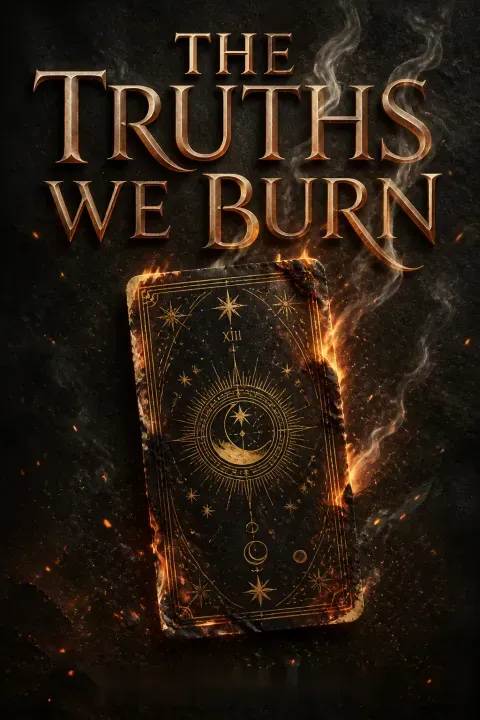


Plot Summary
Prologue
Before the story, a retelling of the fall of Lucifer. God's most beautiful angel did not fall for rebellion but for love. From heaven, Lucifer watched Adam make Lilith lesser, refusing her equality though they were formed from the same earth. When Lilith rebelled and God transformed her into a demon, Lucifer fell like lightning from the heavens.
He fell willingly, carving a throne from Hell's ashes to build a kingdom where Lilith could be more than equal. A place where he would make her his queen. This myth is the template for everything that follows: a boy branded the Antichrist1 by his town and a girl forged from flames,2 bound by a love the righteous will always call unholy.
The Lilith and Lucifer myth reframes the entire narrative as a love story rather than a cautionary tale. By centering the fall on devotion rather than pride, the prologue primes readers to see Rook not as evil but as someone who chose damnation for the sake of another. The parallel between Lilith's rebellion (refusing to be lesser) and Sage's survival (refusing to stay broken) is deliberate. Both were cast out by patriarchal systems. Both found their power in the underworld. The language of queenship and kingdoms establishes that this is not a redemption arc. The characters do not seek heaven. They build their own. The myth also previews the central tension: a love that the self-righteous world condemns as sinful precisely because it is equal.
The Boy Called Devil
At seventeen, Rook Van Doren1 endures his father Theodore's12 beatings the way he always has: without fighting back. Theodore,12 a lawyer who quotes scripture between blows, blames Rook1 for killing his mother in a childhood car accident. He calls his son the devil, the Antichrist.
Rook1 accepts the punishment. He believes he deserves it. Afterward, Alistair5 picks him up, frustrated that Rook1 will not defend himself. They meet Silas3 and Thatcher6 at the Peak, a cliffside sanctuary overlooking Black Sands Cove.
Rosemary,4 Silas's3 girlfriend and the only girl allowed in their orbit, calls Rook1 by his initials and jokes with him. Rook1 lights the bonfire, the flames feeding his pyromania. The four boys, bound by darkness and trauma, share an unspoken understanding. Separately, they are broken. Together, they are chaos.
Rook's psychology operates on a closed loop of trauma and punishment. His father's abuse, dressed in the language of divine justice, has conditioned him to accept pain as atonement. The fire is his sole counterbalance: controlling an unpredictable element grants him power unavailable in his home life. The Hollow Boys function as a found family, each member providing what the others need. Alistair offers protective rage. Thatcher provides clinical precision without judgment. Silas gives quiet solidarity. They are not friends in a conventional sense. They are survivors who recognize that only the damaged can truly comprehend the damaged, and they have made an unspoken oath to be whatever each other requires, no matter how dark.
The Girl Behind the Mask
Sage Donahue,2 cheer captain and Ponderosa Springs' most admired sweetheart, maintains her throne by collecting secrets. She knows Lizzy is secretly attracted to women. She knows Mary relies on unprescribed Adderall to maintain her grades. Her own secrets stay buried.
When the Hollow Boys drop Rosemary4 off at the Donahue house, Sage2 and her friends watch from the window like spectators at a zoo. At Tilly's diner, Sage2 publicly mocks Rosemary4 for associating with Rook1 and his friends. Rook1 steps in and calls Sage2 a sheep who submits to everyone's expectations, a watered-down twin.
The match in his mouth snaps as they exchange barbs about masks and conformity. Sage2 slaps him hard across the face. Rook1 grins at the sting, tells her he cannot wait for the day she comes searching for trouble, then eats the cherry from her milkshake and leaves.
Sage's power is entirely relational and performative. She has no authentic self in public. She curates others' weaknesses as shields, ensuring no one examines her own. Her dynamic with Rosemary reveals the central wound: jealousy of her sister's freedom. Rose chose the dark side because she could afford to. Sage cannot because she is terrified of drowning in the expectations that keep her afloat. Rook sees through her immediately. His sheep insult names the very thing she despises about herself. The slap is the first honest thing Sage has done in years. It is violence, but it is also vulnerability, and Rook recognizes it as such. His grin is not mockery. It is recognition of a kindred spirit.
Flames and Ashes
The Hollow Boys retaliate against Easton Sinclair7 for his insults at the diner. During the homecoming parade, Rook1 constructs Molotov cocktails and shatters them through the windows of Easton's7 Range Rover, engulfing the vehicle in flames. From a hillside, they watch the town panic.
Sage,2 in her cheerleading uniform, stares at the inferno consuming her boyfriend's7 car. Later, walking home alone on a dark road near the woods, Rook1 intercepts her on his motorcycle. She taunts him about being a psychopath who gets off on chaos.
He wraps his hand around her throat with lethal pressure and holds a lit match near her face. He tells her there is no handling him without getting burned. Then he extinguishes the match on his own tongue, mounts his bike, and leaves her trembling. But Sage2 feels something unexpected alongside the fear: freedom.
This encounter crystallizes the dangerous chemistry between Rook and Sage. Her body does not respond to his violence with pure terror. The thrill is mixed with recognition. Rook's self-harm, extinguishing the match on his tongue without flinching, reveals his core drive: he does not merely inflict pain. He absorbs it. He tests Sage, pushing to see if she will break or push back. Her refusal to run marks her as unlike anyone else in Ponderosa Springs. The car fire is a warning to Easton, but Rook's confrontation with Sage carries a different message. He is everything she pretends not to want, and he knows she is pretending.
The Theatre Geek
Wandering the empty school halls, Rook1 follows a voice into the auditorium. Alone on stage in a single spotlight, Sage2 performs a scene from The Crucible with raw, tear-streaked emotion. He watches from the shadows, stunned by how real she looks when she believes no one is watching.
When he applauds, she freezes. Her most guarded secret is her love of theatre and acting. She begs him not to tell anyone, terrified that giving Ponderosa Springs a genuine piece of herself means the town will consume it. Rook1 strikes a deal: his silence in exchange for an explanation.
She tells him that when you give people here your secrets, they blend them up and drink them down, holding you captive forever. He asks what happened to her. She replies that she knows enough to know better. It dawns on him: only someone who has already crawled out of hell can stare into its flames without flinching.
Theatre is the perfect metaphor for Sage's existence. On stage, she channels real emotion through a character, maintaining the safety of a script. Rook's discovery is the first genuine crack in her armor. He does not mock her passion. He studies it. His demand for truth, rather than using the information as blackmail, distinguishes him from everyone else in her life. The Crucible scene she performs, Abigail Williams pleading with a man who loved and rejected her, foreshadows the betrayal to come. Sage's line about knowing better implies a trauma she has not yet named. Rook, who has his own unnamed wound, recognizes a fellow survivor.
A Gilded Cage
At a dinner with the Sinclairs, Sage's2 parents and Stephen Sinclair13 spring a trap. Easton7 gets down on one knee with a diamond ring. Sage2 refuses, horrified. Her father8 follows her outside and reveals the ugly truth: the Donahues are broke.
Stephen Sinclair13 has been financing Frank8 for four years, and the money continues only if Sage2 marries Easton.7 Worse, if she refuses, Frank8 will force Rosemary4 into the arrangement instead. Sage2 knows her gentle sister would never survive that life.
She drives away in tears and ends up at The Graveyard, an illegal racetrack, searching for the only person in Ponderosa Springs who feels real. She finds Rook.1 Through tears, she tells him she needs him to help her take off the mask. She wants anarchy. She wants something violent. She wants all his truths, and she will give him hers.
The engagement is not a proposal but a business transaction. Sage's body and future have been sold without her consent, her agency erased by the men who should protect her. The threat to Rosemary is the lever that makes compliance inevitable. Her flight to Rook is instinctive but logical: he is the only person in her world who is not performing. His chaos is authentic in a way the town's order is not. When she asks him to show her anarchy, she is not seeking destruction for its own sake. She is seeking a space where the scripts she has been forced to memorize no longer apply, where she can be the girl who loves old movies and dreams of Hollywood instead of the girl who smiles for cameras.
Confessions by the Lake
Rook1 takes Sage2 to her family's lake house, intending to burn it down as she originally wanted. She stops him. Instead, they sit on the dock drinking strawberry vodka. Sage2 recounts summers here as a child, her mother's obsession with appearances, and the first time she felt jealous of Rosemary.4
Then she names the deeper wound: a man called Cain,9 a family friend, molested her from age ten to thirteen in this very house. She confesses that her jealousy curdled into self-hatred because instead of wishing the abuse had never happened, she sometimes wished it had happened to Rose4 instead.
Rook1 listens without offering pity. He tells her she was a child and not to compare herself to her parents. They do not burn the house. She says it belongs to them now, her confessional.
The lake house confession inverts the power dynamic. Sage, who controls everyone through secrets, voluntarily gives Rook her most damaging truth. She does this not to manipulate but because he is the first person who asked and seemed capable of hearing the answer without flinching. Her admission about wishing the abuse on Rosemary is perhaps the most psychologically honest moment in the book. Victims of childhood sexual abuse often experience displaced anger and complicated guilt that can look like cruelty. Rook's response is perfect in its simplicity. He offers not comfort but absolution without minimizing her feelings, a recognition that her guilt is a survival mechanism, not a moral failing.
Secret Sins
At a Halloween party, Rook1 finds Sage2 hiding in her home theater room. She is dressed as a nun. He teaches her to smoke weed through shotgunning, their mouths nearly touching as they trade smoke and confessions. She tells him she desperately wants to kiss him but fears they will end tragically.
He replies that he can show her how right they can feel together. She makes him promise it will remain their dirty secret. Then she lowers herself onto him, discovering the four piercings on his cock, and experiences her first real orgasm with a partner.
For the next two months, they meet at the lake house: watching her beloved old films, eating pizza, reading scripts, having sex on every surface. He learns her quirks. She fills his cigarette packs with handwritten notes. He burns a scar onto his chest to match hers, proving her sister's4 theory about soul marks.
The secret relationship functions as a suspension of reality. In the lake house, Sage drops the queen bee persona, and Rook sheds the Antichrist reputation. They are simply two people who found the only other soul in Ponderosa Springs not interested in performing. The sex is significant not for its explicitness but for what it represents: Sage's first experience of genuine desire rather than obligation. With Easton, sex was endurance. With Rook, it is awakening and agency. The scar he gives himself is an act of desperate romanticism. If fate did not mark them as soulmates, he will mark them himself. It is also early evidence of his self-destructive need to literalize emotional pain onto his body.
The Cruelest Act
Rook1 learns about Sage's2 engagement ring from Rosemary4 at lunch. He confronts Sage2 in the theatre. She, under duress from Easton7 who discovered their affair and threatened to destroy Rosemary4 if Sage2 did not end things, performs the cruelest role of her life.
She tells Rook1 he was merely a danger fix before graduation, that Easton7 is her real future, that she just needed to check off some life experience boxes. She laughs at him for falling for it. Rook's1 hope shatters. He tells her she has no heart and leaves. Sage2 immediately vomits from grief.
Rook,1 needing the poison of betrayal physically extracted, goes to Thatcher's6 house. He asks Thatcher6 to make it hurt. Thatcher,6 understanding without requiring explanation, begins cutting into Rook's1 back with surgical precision, beginning a ritual that will continue for months.
This is the book's emotional nadir. Sage weaponizes the very authenticity Rook fell for, using the language of their real connection to make the lie credible. Her cruelty is proportional to her desperation: half-measures would not convince him, and Easton has made it clear that any lingering connection means Rosemary pays the price. Rook's response is equally self-destructive. Rather than questioning whether she might be lying, he defaults to his lifelong pattern: he deserves this pain. Thatcher's role is chilling but consistent with his character. He provides what Rook needs not from sadism but from loyalty, a controlled clinical punishment that prevents Rook from doing something far worse to himself.
What the Waters Took
Rosemary Donahue4 is found dead of an MDMA overdose, but the bruising and scratches on her body tell a different story. Silas,3 who discovered her, is shattered beyond repair. In the aftermath, Sage2 stumbles onto a video on her father's8 computer.
Frank Donahue,8 bound to a chair, is interrogated by Greg West, a professor at Hollow Heights, about money owed to a sex trafficking ring called the Halo. Frank8 is given a choice: die, or sell one of his daughters as settlement. He chooses Rosemary4 without hesitation. Sage2 confronts her father,8 then attempts suicide.
She survives and is institutionalized at Monarch Mental Health Institution. Her father8 spins the narrative: she is the crazy daughter who lost her mind after her twin's accidental death. The Hollow Boys, meanwhile, extract a confession from Greg West before dismembering him and leaving his body as a message.
Rosemary's death is the fulcrum on which the entire novel turns. The revelation that Frank chose which daughter to sacrifice reframes everything: Sage was not the favored child; she was the one deemed strong enough to survive the arranged marriage. Rosemary was the disposable one. Sage's suicide attempt is not merely grief but existential collapse. If her father could so easily discard Rose, the entire architecture of family and protection was fraudulent. The Halo subplot introduces systemic evil beyond personal villainy. The Hollow Boys' revenge is no longer just about Silas's grief. It is about dismantling a machine that devours young women.
Return of the Phoenix
Eight months into her institutionalization, Sage2 receives visitors: her father Frank8 and Cain McKay,9 now an FBI agent. Cain9 was her childhood abuser. The two men offer her a deal. She will be released and enrolled at Hollow Heights University.
In exchange, she must infiltrate the Hollow Boys, gather evidence of their vigilante murders, and feed information to the FBI. If she refuses, she remains locked away indefinitely, or worse, she will be sold into the Halo's network. Sage2 agrees, but only to buy her freedom. Her real plan: help the boys destroy her father,8 then disappear.
She returns to Ponderosa Springs transformed, her long hair roughly chopped short, her wrists scarred from the suicide attempt, her dreams of Hollywood extinguished. In her first class, she locks eyes with Rook.1 His stare is empty of all feeling.
Sage's return is a resurrection but not a triumphant one. The asylum stripped her of everything except the drive for revenge. Her deal with Cain is born of desperation but also calculation: she plays both sides, hoping to leverage the FBI's resources to get close to the boys while secretly aligning with them. The physical transformation (shorn hair, visible scars, weight loss) externalizes her internal devastation. Rook's vacant stare is more painful than hatred would be, because hatred requires emotional investment. Empty eyes mean he has successfully expunged her. Or has convinced himself he has. The phoenix imagery is deliberate. She has burned down to ash. Whether she can rise is the central question of the book's second half.
Drowning and Rescue
Sage,2 Briar,11 and Lyra10 enter the Gauntlet, a violent annual competition between Ponderosa Springs and West Trinity Falls. While capturing the opposing team's flag, Sage2 climbs onto a sign above the wave pool but falls backward into the freezing, ice-chunked water.
The cold paralyzes her instantly. She sinks, thinking of Rosemary4 dying alone. Rook1 dives in fully clothed and drags her to the surface. Afterward, a battered Briar11 is tended by a furious Alistair.5 Silas3 offers Sage2 his hoodie.
When she rejects it and lashes out about his failure to protect Rose,4 Silas3 calls her Rosie.4 Everyone freezes. Rook1 physically inserts himself between them, tosses Sage2 into her car, and tells her she does not get to hurt Silas.3 Alone in the backseat, he tells her she is what is wrong with him, his voice raw.
The near-drowning literalizes Sage's lifelong metaphor. She has always felt herself sinking beneath expectations, trauma, and grief, and no one has ever reached down to pull her up. Rook's rescue is involuntary. His body acts before his hatred can stop it. Silas's slip, calling her Rosie, is the first clear sign that his schizophrenia has deteriorated. He has stopped seeing Sage as herself and started seeing a vessel for his dead girlfriend. Rook's admission that Sage is what is wrong with him is the closest he comes to confessing that he never stopped feeling anything. Hatred and love are not opposites. Indifference is. And Rook Van Doren is anything but indifferent to Sage Donahue.
Holy Ground Burns
Rook1 follows Sage2 to the burned remains of St. Gabriel's church, where she meets Cain.9 Enraged, believing she is snitching to the FBI, Rook1 corners her inside the fire-damaged cathedral.
She reveals the full truth: Easton7 forced her betrayal by threatening Rosemary;4 Cain9 was her childhood abuser; her deal with the FBI was a ruse to secure her release so she could help destroy Frank.8 She tells him he has always had all her truths. Rook,1 overwhelmed by fury and relief and desire, takes her body against the confessional booth.
Afterward, she explains every detail: the arranged marriage, Easton's7 discovery of their affair, the threat to Rose,4 the video of Frank's8 choice. The FBI agents are dirty, connected to the Halo. Rook1 realizes he has spent a year punishing himself for a sacrifice disguised as a betrayal.
The church setting is deliberately blasphemous. Sex on sacred ground, confession twisted into something carnal, is Rook's way of reclaiming a religion that damned him as a child. The truth Sage reveals reframes the entire first half of the book. Her cruelty was not cruelty at all but the ultimate act of love, sacrificing her own happiness and Rook's to protect her sister. The tragedy is that Rosemary died anyway, rendering the sacrifice meaningless. The confessional booth becomes a literal confession: Sage has been carrying sins that were never hers to bear. Rook's response, mixing sex with fury, is not assault. It is him testing whether she is real, whether this truth is as solid as the previous lie seemed.
Hell's Justice
The Hollow Boys abduct Cain9 from his apartment. At The Graveyard, Rook1 chains him to his motorcycle and drags him around the track until his body shreds against the asphalt. He burns Cain's9 tongue with his Zippo and melts the flesh from his face before finishing him.
Afterward, Rook1 melts down Cain's9 FBI badge and forges a golden phoenix necklace for Sage.2 At the Spring Luncheon celebrating Frank's8 reelection, Rook1 makes his first public appearance among Ponderosa Springs' elite. Sage2 stands beside him and publicly chooses him over Easton.7
That night, Rook1 heats a broken Zippo lid and presses his initials into her hip, branding her permanently. She shows him the scars on her wrists from her suicide attempt. He promises to stop hurting himself if she will help him. She agrees.
Cain's death is ritualistic and poetic. Each act of torture maps onto a specific harm he inflicted: the tongue that whispered grooming lies is burned; the body that violated is destroyed. Rook is not merely killing a man. He is performing an exorcism of Sage's childhood demons. The phoenix necklace, forged from a corrupt symbol of authority, becomes an emblem of rebirth. The brand is not ownership in the possessive sense. It is a covenant, a mutual marking. Her scars from the suicide attempt are shown without shame, and his promise to stop self-harming represents the first genuine step toward healing for them both. Pain shared becomes pain transformed.
The Sins of the Father
Silas,3 having secretly replaced his antipsychotic medication with vitamins for weeks, succumbs to a full psychotic episode. His hallucinations convince him that killing Frank8 will resurrect Rosemary.4 He breaks into Frank's8 home and holds him at gunpoint, arguing with voices no one else can hear.
Rook1 and Thatcher6 arrive. Rook1 talks Silas3 down and disarms him just as FBI agent Finn Breck14 appears, holding Thatcher6 at knifepoint. Lyra Abbott,10 who followed them there, stabs Finn14 in the neck without hesitation.
With two bodies to dispose of and the Halo still a threat, Rook1 hands Sage2 his matches. She douses the kitchen in cooking oil and lights the flame. The house burns with Frank8 and Finn14 inside. To the town, it is a tragic accident. Sage2 watches her childhood home collapse into ash.
Silas's psychotic break is the inevitable consequence of untreated schizophrenia compounded by overwhelming grief. His delusion that killing Frank will return Rosemary is heartbreaking precisely because it follows an internal logic within a broken reality. The climax converges all the characters' traumas: Silas's illness, Sage's need for justice, Rook's pyromania, and Lyra's sudden and disquieting capacity for violence. Frank's death by fire, the very element Rook worships, is a full-circle moment. Sage, not Rook, lights the match, reclaiming agency over her father's fate. The act is not simply vengeance. It is a severing of generational poison. The cover-up implicates them all, binding the group together in shared consequence and shared purpose.
Eternal Flame
Silas3 is hospitalized in Portland, his prognosis uncertain but hopeful with proper treatment. Rook1 reads a suicide note Silas3 left behind, in which Silas3 absolves him of all guilt and begs him not to punish himself for any of it.
Rook1 confronts his father Theodore12 and tells him the beatings are over, threatening that his friends will come if Theodore12 ever raises a hand again. At Frank's8 funeral, Sage2 stands with Rook,1 Lyra,10 and Briar.11 She places her flower on Rosemary's4 grave instead of her father's.8
She and Rook1 discuss the future: they will find a way to expose the Halo and rescue the missing girls, even if confession means facing consequences for their own crimes. Sage2 asks to be cremated when she dies so their ashes can mingle. Rook1 agrees, promising that in this life and every one after, he will always be hers.
The resolution refuses neat closure, and that is the point. Silas is alive but not healed. The Halo remains operational. More enemies will come. But Rook and Sage have achieved what the book's mythology promised: they have built a kingdom from the ashes of their former lives. Rook's confrontation with his father is the final severing of his childhood chains. He no longer requires the beatings because Sage has given him an alternative to self-punishment: self-acceptance. The funeral scene is a quiet triumph. Sage, who once lived entirely for appearances, now stands openly with the town's outcasts. She no longer performs grief she does not feel. The ashes metaphor captures the book's central theology: eternal love is not about reaching heaven. It is about choosing to burn together and being content with that choice.
Epilogue
Thatcher Pierson6 visits a cemetery mausoleum, where he finds Lyra Abbott10 kneeling in the mud in yellow rain boots and her ever-present fisherman's hat. He has been unable to stop thinking about her since she killed Finn Breck14 without hesitation, her face showing not shock but relief and something like delight. She is everything he is not: messy, emotional, chaotic.
But her reaction to killing suggests she might be something like him, a made sociopath, created when his serial killer father murdered her mother and left toddler Lyra10 beside the corpse for an entire day. Thatcher6 finds her both fascinating and repulsive. He calls her his dearest phantom and tells her it is time they had a proper chat. Their story is just beginning.
The epilogue twists the narrative into a new configuration. Thatcher, who has been observing Lyra with clinical detachment throughout the book, reveals himself as the predator hiding in plain sight. His interest is not romantic but forensic: he wants to dissect what she is, to determine whether nurture created a mirror of his nature. The revelation that his father murdered her mother ties their histories together with grim inevitability. This is not closure but a door opening onto a darker hallway. The epilogue reframes Lyra's earlier killing of Finn not as desperate loyalty but as something more unsettling, a capacity for violence that matches Thatcher's own. Their dance is just beginning, and it promises to be the series' most disturbing pairing yet.
Analysis
The Truths We Burn operates on a deceptively simple thesis: that love and violence are not opposites but neighboring countries with a porous border. Rook1 and Sage2 do not find healing in gentleness. They find it in mutual recognition of damage. This is the book's most unsettling and most psychologically honest argument. Trauma survivors often cannot be soothed by softness because softness feels like a lie. What feels true is someone who sees the ugliness and does not flinch. The novel's structure mirrors its themes. The first half, set in high school, is about masks: Sage's2 performance of perfection, Rook's1 performance of monstrosity, the town's performance of righteousness. The second half, set after Rosemary's4 murder and Sage's2 institutionalization, is about what happens when the masks are forcibly removed. Neither protagonist wants to be saved. They want to be seen. The Lucifer and Lilith framing myth is not decorative. It reframes damnation as a choice rather than a punishment. Rook1 has been told his entire life that he is the devil.1 Sage2 has been told she must be an angel. Neither label fits, and both are prisons. Their love story proposes an alternative: not redemption, but acceptance. Build a kingdom in hell together rather than beg for admission to a heaven that never wanted you. The book also functions as a sustained critique of institutional rot. Ponderosa Springs is not an anomaly. It is a microcosm. The church, the police, the university, the family, all of the structures that are supposed to protect the vulnerable are instead platforms for predation. The Halo is just the most explicit manifestation of a corruption that permeates everything. The real horror is not the sex trafficking ring. It is that everyone knows something is wrong and no one acts. The Hollow Boys, for all their monstrosity, are the only ones willing to do what the institutions will not: exact consequence. The novel's moral ambiguity is its strongest feature. The protagonists torture and murder, and the narrative does not ask us to condemn them. It asks us to understand why they believe these acts are not merely justified but necessary. In a world where institutions protect predators, the only justice available is the kind you make yourself. This is not a comfortable argument, but it is an honest one, and the book makes it without flinching.
Review Summary
The Truths We Burn received mostly positive reviews, with readers praising the emotional depth, intense angst, and character development. Many found it a significant improvement over the first book in the series. Readers appreciated the enemies-to-lovers-to-enemies-again plot, the chemistry between Rook and Sage, and the exploration of their complex pasts. The dark themes, including pyromania and mental health issues, resonated with fans of dark romance. Some readers noted excessive use of metaphors and analogies, while others found the writing poetic and captivating.
Characters
Rook Van Doren
Pyromaniac antihero, branded the devilPyromaniac who finds his only peace in flames. Branded the Antichrist by Ponderosa Springs since childhood due to a birthmark and a tragic accident that killed his mother, he has accepted his role as the town's monster. His father Theodore12 beats him regularly while quoting scripture, and he endures it because he believes he deserves punishment for causing his mother's death. He channels his self-hatred into chaos, arson, and the loyalty he shares with the three other Hollow Boys. Sage2 is the first person outside that circle to see past the devil mask. His destructive impulses mask a profound capacity for devotion: he would burn the world for the people he loves, and often does. His psychological core is a closed loop of guilt and self-punishment that only Sage's2 love begins to break open.
Sage Donahue
Survivor, actress, phoenix from ashesShe is the twin sister of Rosemary4 and the former queen bee of Ponderosa Springs. She maintains her social position by collecting everyone's secrets while guarding her own: a childhood of sexual abuse by family friend Cain9, a passion for theatre she hides from everyone, and a deep jealousy of her sister's4 freedom. Her mother taught her that image is everything, and she has worn that mask so long she barely remembers the girl underneath. Rook1 is the first person who sees through the performance and demands the truth. Her psychological journey moves from a terror of drowning in others' expectations to a hard-won acceptance of her own darkness. She is not a damsel. She is a survivor who forged herself into something dangerous so she would never be a victim again.
Silas Hawthorne
Schizophrenic mourner, Rosemary's loveHe is one of the Hollow Boys, the boyfriend of Rosemary Donahue4, and the quietest member of the group. He has schizophrenia, managed imperfectly with medication. His parents are loving and supportive, but his illness isolates him from everyone except his friends and Rose4. When Rosemary4 is murdered, he shatters completely. His grief compounds his hallucinations, and he secretly stops taking his medication, believing the voices that promise her return. His relationship with Rook1 is the book's most important platonic bond. Rook1 has appointed himself his protector, monitoring his medication and well-being obsessively. His deterioration drives the revenge plot and tests the limits of what friendship can survive. He is not a burden. He is a person drowning in an illness that no amount of love can cure.
Rosemary Donahue
Murdered twin, catalyst for revengeShe is Sage's2 twin sister and Silas's3 girlfriend. Unlike Sage2, she refused to conform to Ponderosa Springs' expectations. She dated Silas3 openly despite his reputation, befriended the Hollow Boys, pursued her passion for glass sculpture, and loved without reservation. She embodied a freedom Sage2 envied. Her murder by the Halo sex trafficking ring, orchestrated by her own father to settle a debt, is the event that unites all the characters in a shared mission of revenge. Though dead before Act II, her presence haunts every page. Her goodness serves as both inspiration and unbearable grief, the light against which all the darkness is measured.
Alistair Caldwell
Protective leader of the Hollow BoysHe is the de facto leader of the Hollow Boys, driven by an endless reservoir of rage. He comes from a wealthy but broken family: his father had an affair with Easton Sinclair's7 mother. He channels his anger into illegal fighting and controlling everything around him. His relationship with Briar11 is the only thing that softens his edges. He is the strategist of the group, always urging patience and planning over impulse. His loyalty to his friends is absolute, and he has made it clear he would take the fall for any of their crimes. He does not trust Sage2 initially and threatens to kill her if she endangers Briar11. Beneath the fury is a man who fears only one thing: losing the people he loves.
Thatcher Pierson
Psychopathic son of a serial killerHe is the tallest, coldest, and most unnerving of the Hollow Boys. His father Henry is a convicted serial killer who trained him in his methods before being caught. As a result, he feels no empathy and cannot comprehend emotions the way others do, though he has learned to mimic them flawlessly. He provides Rook1 with controlled cutting sessions, using surgical precision to help Rook1 externalize emotional pain. His loyalty is purely intellectual: he does not love his friends, but he has decided they are his, and no one else gets to hurt them. His fascination with Lyra Abbott10, who he suspects may be a 'made' sociopath like him, sets up the next book.
Easton Sinclair
Golden boy, coercive ex-fiancéHe is the quarterback, the town's golden boy, and Sage's2 boyfriend through most of their youth. Beneath the charming exterior, he is controlled by his domineering father Stephen13 and takes out his frustrations on those weaker than him. He expects submission from Sage2 and uses threats against Rosemary4 to force her compliance. When he discovers her affair with Rook1, he demands she destroy Rook1 emotionally and publicly. He represents everything toxic about Ponderosa Springs: entitlement, hypocrisy, and the willingness to crush anyone who threatens his reputation. Rook1 eventually burns half his face off with a motorcycle exhaust, leaving him permanently scarred both physically and in the town's estimation.
Frank Donahue
Corrupt mayor, murderous fatherHe is Sage2 and Rosemary's4 father and the mayor of Ponderosa Springs. Outwardly respectable, he is financially desperate and morally bankrupt. He accepted money from Stephen Sinclair13 in exchange for arranging Sage's2 marriage to Easton7. When he owed money to the Halo sex trafficking ring, he chose Rosemary4 to be sold as settlement rather than face death himself. After Rosemary's4 murder, he institutionalized Sage2 to keep her quiet. He represents the corrupt core of the town: a man who would sell his own daughters to maintain his position and his lifestyle. His death by fire, at his daughter's2 hand, is the book's central act of justice.
Cain McKay
FBI agent, childhood predatorHe was a family friend who molested Sage2 from age ten to thirteen in her own home. He later became an FBI agent and is now involved with the Halo organization, using his badge to protect the trafficking ring. When he visits Sage2 at the psychiatric facility, he offers her freedom in exchange for spying on the Hollow Boys, while also threatening to sell her if she refuses. He calls her 'Pip,' the pet name he used during the abuse. Rook's1 torture and murder of him is the most graphically violent act in the book and serves as a ritualistic purging of Sage's2 childhood trauma.
Lyra Abbott
Bug-obsessed friend, secret killerShe is a socially invisible student at Hollow Heights who collects insects and speaks in unsettling facts. She befriends Sage2 and Briar11, forming the 'Loner Society.' Beneath her odd exterior, she harbors a secret obsession with Thatcher Pierson6, collecting his discarded belongings in a shoebox. When Finn Breck14 holds Thatcher6 at knifepoint, she stabs Finn14 in the neck without hesitation, revealing a capacity for lethal violence that shocks everyone, including herself. Her mother was murdered by Thatcher's6 serial killer father, and toddler she was left beside the body for a day, a trauma that may have shaped her in ways she is only beginning to understand.
Briar Lowell
Alistair's girlfriend, loyal friendShe is a scholarship student from West Trinity Falls, the town on the wrong side of the tracks. She stumbled into the Hollow Boys' world accidentally and became bound to them after witnessing their violence. She is dating Alistair5 and is the only person who can calm his rage. She befriends Sage2 despite Sage's2 former reputation, recognizing a kindred outsider. She is brave, fiercely loyal, and unafraid of the darkness surrounding her boyfriend and his friends. Her relationship with Alistair5 provides the series' first love story and models the possibility of finding genuine connection among the morally compromised.
Theodore Van Doren
Abusive father, hypocritical lawyerHe is Rook's1 father, a respected district attorney who beats his son while quoting Bible verses. He blames Rook1 for the car accident that killed his wife, a death Rook1 internalized as his own fault. His abuse is dressed in religious language, making it both physically and spiritually damaging. He calls Rook1 'the devil' and tells him he should have died instead of his mother. His beatings are the primary source of Rook's1 belief that he deserves punishment. By the end of the book, Rook1 finally confronts him and threatens retaliation if the abuse continues, severing the toxic bond that has defined his entire life.
Stephen Sinclair
Controlling dean, Easton's fatherHe is the dean of Hollow Heights University and Easton's7 domineering father. He financed Frank Donahue's8 mayoral campaign and personal expenses for years in exchange for the arranged marriage between Sage2 and Easton7. He embodies the institutional corruption of Ponderosa Springs: a man who uses money and influence to control everyone around him, including his own son, whom he has molded into a smaller, weaker version of himself.
Finn Breck
Corrupt FBI agent, Halo operativeHe is Cain's9 FBI partner and fellow operative within the Halo organization. He is older, weathered, and more cautious than Cain9. He attempts to arrest the Hollow Boys at Frank's8 house and takes Thatcher6 hostage at knifepoint. Lyra10 kills him with a knife to the neck, and his body is burned alongside Frank's8 in the staged kitchen fire.
Plot Devices
Fire and Pyromania
Rook's compulsion, weapon, and salvationThis is Rook's1 central obsession. He is a pyromaniac who finds peace only in the presence of flames, a compulsion that began in childhood and intensified after watching his mother burn to death in a car crash. Throughout the book, it serves multiple functions: it is his coping mechanism, his weapon of revenge, and ironically, his path to intimacy. He burns Easton's7 car, a church, and eventually Frank's8 house. He teaches Sage2 that it can cleanse the past. The element's dual nature, destruction and warmth, mirrors Rook1 himself. By the end, Sage2 learns to wield it too, lighting the match that destroys her father's8 house and her childhood prison. It is not merely a motif. It is a character in its own right, the force that binds Rook1 and Sage2 together.
The Zippo Lighter Collection
Signature tool, threat, and brandRook's1 Zippo lighter, engraved with his initials RVD, is his constant companion and most intimate tool. He uses it to light cigarettes, matches, and blunts, to threaten Sage2 during their first roadside encounter, to burn her underwear off in the theatre, and ultimately to brand his initials into her hip. The Zippo is an extension of his identity: controlled flame in his palm, always at the ready. When he purposefully burns his favorite Zippo in the church fire after Rosemary's4 death, it represents his grief consuming even his most cherished possessions. The broken lid, heated and pressed into Sage's2 skin, transforms the tool of destruction into a tool of covenant, marking her permanently as his while also symbolizing their mutual choice.
The Phoenix Necklace
Symbol of rebirth from trauma's ashesAfter killing Cain9, Rook1 takes the FBI agent's badge, melts it down, and forges it into a delicate golden phoenix necklace for Sage2. He gives it to her at the Spring Luncheon, telling her it is a reminder that Cain9 will never touch her again and that no one will unless she allows it. The phoenix is the book's central symbol for Sage2. She was destroyed by abuse, institutionalization, and the loss of her sister4, but she rebuilt herself from the ashes. The necklace transforms a symbol of corrupt authority (the badge) into an emblem of survived trauma. It is Rook's1 way of telling her that her past does not define her, her abuser is dead, and she has risen. The necklace appears in the final scenes as a quiet testament to their journey.
The Halo Organization
Sex trafficking ring, systemic evilThe Halo is a sex trafficking network operating out of Ponderosa Springs, connected to the university and local law enforcement. They kidnap young women and sell them, using corrupt officials like Cain McKay9 and Finn Breck14 to cover their tracks. Frank Donahue8 owed them money and paid with his daughter Rosemary's4 life. The organization represents the rot beneath the town's polished surface: professors, police, and politicians all complicit in the systematic abuse of vulnerable women. The Hollow Boys' revenge against Greg West and Frank8 is only the beginning. The Halo remains active at the book's end, with Rook1 and Sage2 vowing to expose it even at the cost of their own freedom. It is the shadow antagonist, the structural evil that the personal revenge only begins to address.
The Matching Collarbone Scars
Self-made soul marks, fated connectionDuring their secret relationship, Rook1 presses a lit blunt into his own skin just above his collarbone, creating a burn scar that matches the childhood scar Sage2 has in the same location. Rosemary4 once told Sage2 that people with scars in matching places are soulmates. Rook1, hearing this, decides to make fate's decision for it. The matching scars become the physical evidence of their bond. Sage2 touches hers for comfort when she is institutionalized, using the memory of Rook1 to survive the asylum. When she returns, Rook1 notices her touching the scar and briefly softens before hardening again. The scars are the book's most intimate physical symbol: not destiny but choice, not accident but deliberate marking. They chose each other, and their bodies carry the proof.
FAQ
Synopsis & Basic Details
What is The Truths We Burn about?
- Dark secrets haunt Ponderosa Springs: The story centers on Sage Donahue, a young woman grappling with the traumatic death of her twin sister, Rosemary, and the shocking discovery that her father was involved in a sex trafficking ring that led to Rosemary's demise.
- A quest for vengeance ignites: Released from a psychiatric ward where she was confined to silence her, Sage returns to her hometown and Hollow Heights University with a dangerous mission: to align herself with the Hollow Boys, a notorious group seeking their own retribution for Rosemary, and dismantle her father's corrupt world.
- Love and betrayal collide: Amidst a backdrop of dark secrets, violence, and manipulation, Sage navigates treacherous relationships, particularly with Rook Van Doren, a Hollow Boy with whom she shares a complicated and painful past, as she seeks justice and confronts her own buried truths.
Why should I read The Truths We Burn?
- Intense emotional depth: The novel delves into the raw psychological impact of trauma, grief, and betrayal, offering a visceral exploration of characters pushed to their limits and forced to confront their darkest impulses.
- Complex, morally gray characters: Readers are drawn into the lives of characters like Sage and Rook, who are deeply flawed and scarred by their pasts, challenging conventional notions of heroes and villains in a small town steeped in corruption.
- Gripping plot with dark romance elements: Beyond the mystery and revenge plot, the story features a tumultuous, high-stakes relationship between Sage and Rook, marked by intense chemistry, unresolved conflict, and a shared understanding of pain that adds a compelling layer of dark romance.
What is the background of The Truths We Burn?
- Small-town corruption exposed: The narrative is set in Ponderosa Springs, a seemingly idyllic town where wealth and reputation mask deep-seated corruption, hypocrisy, and a hidden underbelly of crime, particularly involving a sex trafficking ring known as the Halo.
- Literary and mythological allusions: The story incorporates symbolic references, notably the quote from Dante Alighieri's Inferno ("Abandon all hope, ye who enter here!") and the Lilith/Lucifer myth, framing the characters' struggles within themes of damnation, rebellion, and finding belonging in darkness.
- Exploration of societal masks: The town's obsession with image and reputation serves as a critical backdrop, highlighting how characters like Sage and Rook are forced to wear masks to survive, contrasting the polished exterior with the brutal truths hidden beneath.
What are the most memorable quotes in The Truths We Burn?
- "Abandon all hope, ye who enter here!": This quote, attributed to Dante Alighieri and featured prominently before the story begins, immediately sets a tone of inescapable doom and the idea that entering this world, or perhaps Ponderosa Springs itself, means leaving behind any expectation of salvation or conventional morality.
- "You forged yourself from the flames. Bow to no one.": Dedicated to "the Sage Donahue's of the world," this powerful statement encapsulates Sage's journey of resilience and self-creation through immense suffering, positioning her not as a victim but as a force shaped and strengthened by adversity.
- "My biggest regret is knowing Rosie died alone. We came into the world together and left it separately. I don't want to be alone.": Spoken by Sage at the end of the book, this line poignantly reveals the core of her trauma and motivation – the fear of isolation and the desperate need for connection, highlighting the profound impact of her twin's death on her sense of self and belonging.
What writing style, narrative choices, and literary techniques does Monty Jay use?
- Dual First-Person Perspective: The story alternates between Sage's and Rook's first-person points of view, providing intimate access to their complex internal monologues, conflicting emotions, and subjective experiences, which is crucial for understanding their hidden motivations and psychological states.
- Vivid and Sensory Language: Jay employs descriptive prose, particularly in depicting emotional states, physical pain, and the symbolic use of fire and water, creating a visceral reading experience that immerses the reader in the characters' turmoil. For example, descriptions of fire are often linked to Rook's feelings or actions, while water/drowning metaphors are tied to Sage's panic and sense of being overwhelmed.
- Dark Romance and Psychological Thriller Blend: The narrative seamlessly merges elements of dark romance, focusing on the intense, often volatile connection between damaged protagonists, with the suspense and mystery of a psychological thriller centered on revenge, corruption, and hidden identities.
Hidden Details & Subtle Connections
What are some minor details that add significant meaning?
- Sage's scar and Rook's branding: Sage's scar from a childhood accident (or perhaps something more sinister hinted at with Cain) and Rook's self-inflicted burns become symbolic parallels of their shared experience of being marked by trauma, culminating in Rook branding Sage with his initials, literally marking her as his and transforming her scar into a shared symbol of their bond forged in pain.
- Lyra's bug collection and mother's death: Lyra's seemingly quirky hobby of collecting insects is subtly linked to her trauma; her mother was murdered by Thatcher's father, a serial killer who collected body parts, suggesting Lyra's collection is a way of processing or reclaiming control over the macabre circumstances of her mother's death, mirroring Thatcher's own struggle with his heritage.
- The significance of the Zippo lighter: Rook's Zippo, especially the one with his initials, is more than just a tool for his pyromania; it's a deeply personal object, a source of comfort ("flicking the Zippo through my fingers"), and becomes a symbolic extension of himself, culminating in him melting down Cain's badge to create a phoenix charm for Sage, transforming a symbol of corruption into one of her resilience and their shared future.
What are some subtle foreshadowing and callbacks?
- Early mentions of character quirks: Small details like Alistair's anger issues ("practically bathing in wrath-scented cologne"), Thatcher's cleanliness ("starting fires is a little too messy for the clean freak"), and Silas's quietness ("too busy inside his own head") are introduced early, subtly foreshadowing how these traits will manifest in extreme ways under pressure and grief.
- The "drowning" metaphor for Sage: Sage's recurring internal monologue about feeling like she's drowning, especially when stressed or confronted with trauma ("The drowning is coming. I can feel it."), subtly foreshadows her near-drowning experience during The Gauntlet, where Rook saves her, physically manifesting her psychological struggle and his role as her rescuer.
- Rook's observation of Sage's acting: Rook secretly watching Sage rehearse The Crucible in the empty auditorium ("Calling her a good actress would be an understatement") is a subtle callback to her earlier statement about her life being a performance and foreshadows his later accusation that her feelings for him were just an act, highlighting the central theme of authenticity vs. performance.
What are some unexpected character connections?
- Sage and Cain McKay's hidden history: The revelation that Cain McKay, the corrupt FBI agent involved in the sex ring and her father's accomplice, was the man who molested Sage as a child ("Every night from the age of ten to thirteen") is a shocking and deeply disturbing connection that re-contextualizes Sage's trauma and fuels her personal vengeance against him.
- Lyra Abbott and Thatcher Pierson's shared trauma: Lyra's mother was murdered by Thatcher's serial killer father, creating a dark, unexpected link between them through shared, albeit opposite, experiences of familial trauma and the legacy of Henry Pierson's crimes, hinting at a complex dynamic between them in future stories.
- Stephen Sinclair's connection to Frank Donahue and the Halo: The discovery that Stephen Sinclair, Easton's seemingly respectable father and the dean of Hollow Heights, was financing Frank and involved in the arrangement of Sage's marriage ("We had a deal") reveals a deeper layer of corruption within the town's elite and suggests his potential involvement, or at least knowledge, of the Halo organization.
Who are the most significant supporting characters?
- Silas Hawthorne: As Rosemary's boyfriend and Rook's best friend, Silas is the emotional core driving the Hollow Boys' revenge plot. His grief and subsequent psychotic episode highlight the devastating impact of Rosemary's death and force the group to confront the human cost of their actions, making him pivotal to both the plot and the emotional stakes.
- Thatcher Pierson: Thatcher's unique psychological makeup (lack of empathy, observational skills, connection to his serial killer father) makes him the calculating strategist and the one capable of the most brutal acts (dismembering Greg West, cutting Rook). His detached perspective provides a chilling contrast to the others' emotional motivations and is crucial for executing their plans.
- Briar Lowell and Lyra Abbott: Initially introduced as Sage's new friends, Briar and Lyra become unexpected allies and integral members of the group's inner circle. Their loyalty, willingness to engage in dangerous activities (The Gauntlet, Lyra killing Finn), and emotional support for Sage demonstrate the formation of genuine bonds outside the Hollow Boys' original dynamic.
Psychological, Emotional, & Relational Analysis
What are some unspoken motivations of the characters?
- Rook's need for self-punishment: Beyond the surface-level pyromania and anger, Rook is deeply motivated by guilt over his mother's death, believing he caused it ("I took my mother's life, and I deserve to pay for that"), leading him to seek physical pain and punishment as a form of atonement, which is an unspoken driver behind his reckless behavior and willingness to be hurt by others.
- Sage's desire for authenticity: Despite her carefully constructed "sweetheart" facade, Sage secretly yearns to be seen and accepted for her true, damaged self ("Underneath this blanket, I can take off the mask and be that little girl again"), which is an unspoken motivation behind her initial attraction to Rook, who she perceives as authentically chaotic and unafraid to show his darkness.
- Silas's pursuit of Rose's presence: Silas's actions, particularly his descent into psychosis and belief that killing Frank will bring Rose back ("If I do this, I'll get her back"), are driven by an unspoken, desperate need to feel connected to Rosemary again and alleviate his overwhelming grief, highlighting how his mental illness intertwines with his loss.
What psychological complexities do the characters exhibit?
- Rook's trauma response and attachment: Rook exhibits complex trauma responses, including self-harm (allowing Thatcher to cut him, seeking pain from Alistair/father) and difficulty forming healthy attachments due to past betrayals and loss, making his eventual decision to trust and "keep" Sage a significant psychological shift.
- Sage's dissociative coping mechanisms: Sage's tendency to "drown" or feel detached during panic attacks ("I'm swimming in my head, stars dancing in the corners of my eyes") and her ability to compartmentalize her trauma and emotions ("I've become very good at keeping my inner self hidden") demonstrate dissociative coping mechanisms developed to survive abuse and maintain her public image.
- Silas's grief-induced psychosis: Silas's struggle with schizophrenia is exacerbated by the trauma of finding Rosemary's body, leading to hallucinations and delusions centered around her return and the need for revenge, illustrating the complex interplay between mental illness and unresolved grief.
What are the major emotional turning points?
- Sage's forced engagement: The moment Easton proposes, revealing her parents' deal with Stephen Sinclair and her father's willingness to sacrifice her future for money, is a major emotional turning point for Sage, shattering her remaining illusions about her family and pushing her towards radical action and seeking help from the Hollow Boys.
- Rook discovering Sage's engagement: Rook finding out about Sage's engagement to Easton, particularly her seemingly cold confirmation that he was just a "phase," is a devastating emotional turning point that reinforces his belief that he is unworthy of love and that people he cares about will always betray or leave him, fueling his self-punishment.
- Silas's psychotic episode: Silas's break from reality, culminating in him confronting Frank with a gun and hallucinating conversations with Rose, is a critical emotional turning point for the entire group, forcing them to prioritize his well-being over their revenge and highlighting the severe psychological toll their quest has taken.
How do relationship dynamics evolve?
- Sage and Rook's volatile connection: Their relationship evolves from a secret, intense physical and emotional bond ("our dirty little secret") built on shared vulnerability and perceived authenticity to one shattered by perceived betrayal and mutual hurt, eventually finding a path towards tentative trust and a deeper, more honest connection forged in shared trauma and darkness.
- The Hollow Boys' loyalty tested: The internal dynamics of the Hollow Boys (Rook, Alistair, Thatcher, Silas) are tested by grief, the introduction of Sage, and the increasing danger of their actions, revealing the fierce, albeit sometimes abrasive, loyalty they share and their willingness to protect each other at all costs, even from themselves.
- Sage's unexpected friendships: Sage's relationships with Briar and Lyra evolve from superficial acquaintances to genuine friendships built on shared experiences of trauma and a mutual understanding of being outsiders, providing Sage with a support system she lacked and demonstrating her capacity for authentic connection outside her performative past.
Interpretation & Debate
Which parts of the story remain ambiguous or open-ended?
- The full extent of the Halo organization: While the existence of the sex trafficking ring is central to the plot, the story leaves the full scope of the "Halo" organization, its leadership ("more powerful people in charge"), and the depth of its roots in Ponderosa Springs ambiguous, suggesting a larger, ongoing threat beyond the immediate antagonists.
- Silas's long-term recovery: The ending leaves Silas's mental health journey open-ended. While he is receiving professional help, the narrative acknowledges the unpredictable nature of schizophrenia and the possibility that he could "lose himself to the hallucinations and delusions," leaving his future recovery uncertain.
- The future consequences for the group: Despite eliminating Frank and Finn, the group is aware that the Halo knows they are involved ("They know you. They know your names. Your families, your life.") and that they will be hunted, leaving their long-term safety and the potential legal repercussions for their actions unresolved.
What are some debatable, controversial scenes or moments in The Truths We Burn?
- Rook's physical interactions with Sage: Scenes where Rook physically intimidates or uses force with Sage, such as choking her ("His hand has a goal, and it's not to get me hot—it's to kill"), grabbing her forcefully, or his aggressive language ("On your knees, slut"), are highly debatable and push the boundaries of consent and healthy relationship dynamics within the dark romance genre.
- The morality of the Hollow Boys' revenge: The group's decision to engage in murder and dismemberment (Greg West) and brutal torture (Cain McKay) raises significant moral questions about the nature of justice and whether their actions, while driven by understandable grief and rage, make them as monstrous as the people they are hunting.
- Sage's initial manipulation of Rook: Sage's decision to use Rook to get out of the psychiatric ward and her initial plan to double-cross the feds while pretending to help the Hollow Boys is a controversial moment that highlights her capacity for manipulation, even if driven by desperation, and makes her trustworthiness debatable for both characters and readers.
The Truths We Burn Ending Explained: How It Ends & What It Means
- Revenge achieved, but at a cost: The Hollow Boys, with Sage's help, successfully eliminate Frank Donahue and corrupt FBI agent Finn Breck (killed by Lyra), avenging Rosemary's death and dismantling a piece of the Halo organization. However, this comes at the cost of Silas suffering a severe psychotic episode, requiring hospitalization, highlighting the heavy psychological toll of their actions.
- A love forged in shared darkness: Sage and Rook fully embrace their complex, unconventional relationship, acknowledging their past hurts but choosing to move forward together. Rook brands Sage with a phoenix charm made from Cain's badge, symbolizing her resilience and their permanent bond forged in trauma and rebellion. They decide to face the future, and the remaining threat of the Halo, as a united front.
- Uncertain future and redefined purpose: The ending leaves the future uncertain, with the Halo still a looming threat and the group now marked as targets. However, it also signifies a shift in purpose; having achieved personal revenge, they now consider exposing the larger organization to protect other potential victims, suggesting a potential path towards redemption and using their darkness for a form of justice beyond personal vengeance.
Hollow Boys Series Series

About the Author

Download PDF
Download EPUB
.epub digital book format is ideal for reading ebooks on phones, tablets, and e-readers.








































