

Plot Summary
Prologue
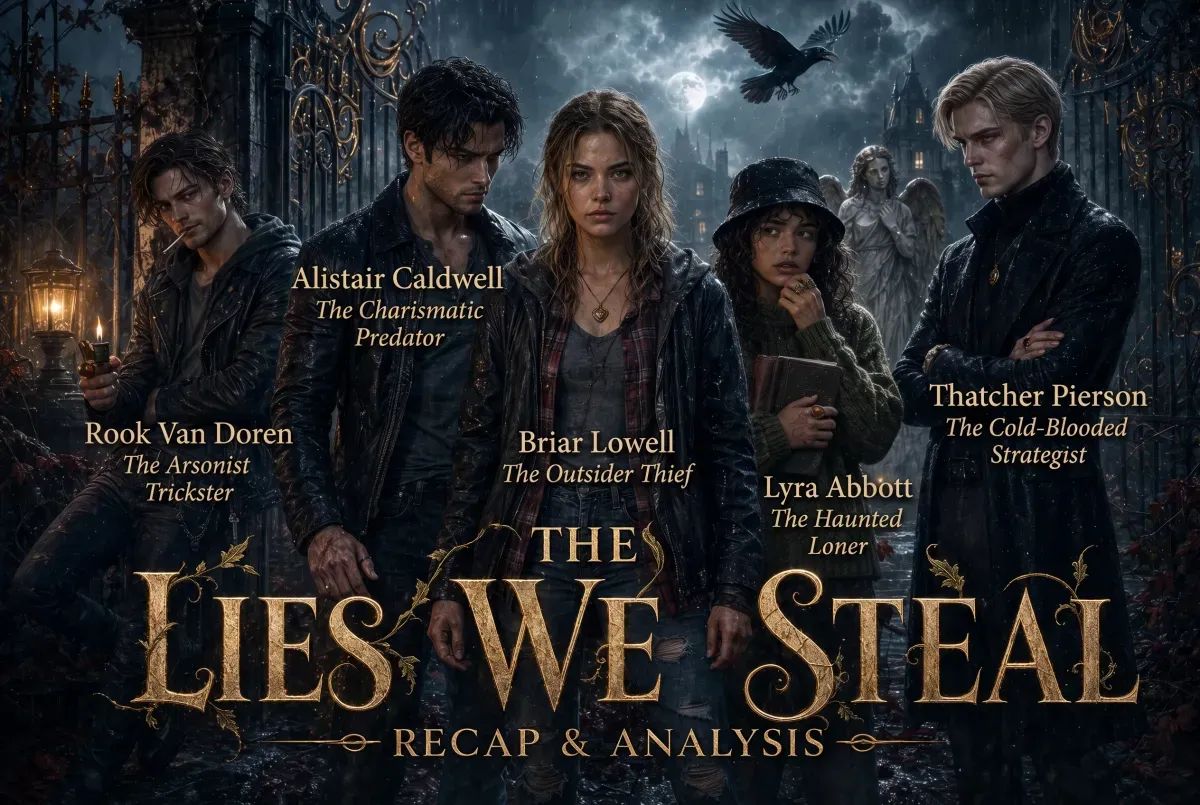
Alistair Caldwell1 empties his rage into a boy's face at The Graveyard, an abandoned racetrack where rich kids buy trouble. Bloodied but unmarked, he drives home to an empty mansion where he is invisible to parents who prize only his golden older brother.7 There his three sworn brothers wait: Rook,4 Thatcher,5 and Silas.6 Rook4 drops a stolen autopsy file on the table.
It belongs to Rosemary Donahue,10 the mayor's11 daughter and Silas's6 girlfriend, ruled an accidental overdose. But the four of them saw her corpse, bruised and clawing, in a trap house. The report hides everything. They swear to postpone their escape from town for a year, hunt her killer, and spill whatever blood revenge demands.
The opening establishes the novel's moral inversion: the ostensible villains are grief-driven avengers, and violence is coded as loyalty rather than cruelty. Alistair's compulsive rage is framed less as pathology than as inheritance, the byproduct of emotional starvation. By foregrounding Rose's falsified autopsy, the author converts a romance premise into a murder mystery, giving the boys a quest that justifies their monstrosity. The pack dynamic (four wounded sons who chose each other as family) becomes the emotional spine. Crucially, the reader is recruited into complicity early, asked to root for torturers because their target is a lie. This primes the dark-romance contract: attraction to danger, sympathy for the damaged.
The Scholarship Girl Arrives
Briar Lowell,2 a Texas pickpocket raised by a career-criminal father now in prison, drives into fog-drenched Ponderosa Springs with her uncle Thomas,9 a biology professor whose pull secured her scholarship to elite Hollow Heights. She carries her pet rat, Ada, and a lifetime of invisibility.
Determined to reinvent herself where no one knows her stained name, she meets her roommate, Lyra Abbott,3 a local orphan obsessed with dead insects and fluent in the town's cruel hierarchy. Lyra3 becomes her first real friend. Briar2 wants a life she can enjoy rather than merely survive, so she drags Lyra3 to a homecoming party, hoping to shed her shadow existence and finally belong somewhere that isn't defined by poverty.
Briar's entrance mirrors Alistair's prologue by inversion: he is trapped by wealth's emptiness, she by poverty's scarcity, both invisible to the people who should love them. The author uses class as the engine of longing. Briar's thievery is reframed as survival craft and paternal bonding, morally laundering her the way the boys' violence was laundered, so the eventual lovers share an ethic. Lyra functions as the reader's guide and Briar's tether to warmth. The Gothic campus (fog, gargoyles, dead languages) signals that reinvention here is fantasy; the town devours outsiders. Her hope is the setup the narrative exists to complicate and darken.
The Boy in the Strobe Light
In the crush of the homecoming party, Briar2 loses Lyra3 and feels the unmistakable prickle of being hunted. Through flashing strobe light she assembles him piece by piece: leather jacket, silver rings, bloodied knuckles, a face too beautiful to be so bitter. Alistair1 stalks closer with each blackout, and instead of fleeing, Briar2 plants her feet, letting curiosity beat terror.
He nearly reaches her before Lyra's3 voice breaks the spell and he vanishes. Alistair,1 who only came to surveil a drug lead, is rattled that she held his gaze. That same night the boys track and burn the trailer of dealer Nate Robbins, extracting the name of the supplier: a Hollow Heights teaching assistant named Chris.
The party scene establishes the central erotic grammar: fear and desire as the same electrical current. Briar's refusal to flee is characterization disguised as attraction; her thief's nervous system reads danger as aliveness. For Alistair, being seen rather than feared is destabilizing, a crack in his armor of invisibility. The author interleaves seduction with atrocity (the trailer burning) to keep the romance tethered to menace, preventing sanitization. The predator/prey metaphor, which the book will interrogate rather than merely indulge, is planted here. Both characters mistake intensity for connection, but the narrative suggests recognition, two invisible people finally being looked at, is the real hook.
Blood for Answers
Working backward from the falsified report, the boys break into the morgue and beat coroner Howard Discil until he confesses he was paid to hide Rose's10 defensive wounds. The truth surfaces: she died of anaphylactic shock from a drug injected into her neck, her body staged as an overdose with pills forced down her throat after death.
The marked ecstasy leads them to dealer Nate, who names TA Chris Crawford as the true chemist and courier. Days later the whole campus watches, electrified, as the four are marched out in handcuffs by police who have no evidence. Rook's4 district attorney father springs them, and Briar,2 watching from the courtyard, receives a slow, mocking wink from Alistair.1
This section fuses the mystery's procedural engine with the town's central rot: everyone can be bought, and the founding families are legally weightless. The interrogations dramatize each boy's specialty (Alistair's brute rage, Thatcher's surgical sadism, Silas's grief-fueled menace), building the pack as a distributed monster. The handcuff parade is pure theater: their power is reputational, fear as currency. Briar's witnessing binds her plot to theirs before she understands the stakes. The wink converts institutional spectacle into private courtship, collapsing the murder investigation and the romance into one weave, so that the reader cannot enjoy one without swallowing the other.
Toeing the Line
Alistair1 strolls uninvited into Briar's2 applied mathematics class and takes the seat beside her, ignoring the professor who dares not discipline a Caldwell.1 When Briar2 mouths off, calling him a spoiled brat punishing his parents, he drags her chair against his, clamps her thigh, and warns that people fear him not for money but because he would kill them.
Their proximity ignites a shame-soaked attraction she despises. Golden boy Easton Sinclair,8 the dean's beloved son, intervenes and helps her leave, planting a rivalry. Meanwhile Alistair,1 unsettled that she stole his ring and rattled his focus, has Silas6 dig up her file, learning she is a thief and fighter, an outsider who does not belong in Ponderosa Springs.
The classroom scene codifies the enemies-to-lovers mechanics: verbal sparring as foreplay, humiliation as intimacy. Briar's class rage (mistaking his wealth for immunity from suffering) is dramatic irony; the reader knows his home is a different kind of poverty. Easton is introduced as the safe alternative, the life Briar consciously wants, precisely so the narrative can dismantle the fantasy of safety. Alistair's need to know his opponent reveals his real driver: control over the unknown, a defense against a childhood of being discarded. The stolen ring, a small theft, becomes the possessive thread that will define his obsession, turning her larceny into their strange courtship.
Snakes in the Woods
Lyra3 leads Briar2 two miles into the coastal woods to a mausoleum she uses for taxidermy, their secret hideout. That night screams draw them up the steps, where they watch the four boys torture a bound, faceless man, dump venomous snakes on him, then slit his throat: the TA, Chris Crawford, who confessed he only planted Rose's body10 for a mystery client.
Fleeing, Briar2 trips and the boys spot them. Alistair1 chases her down, tackles her, pins her, and covers her mouth. The pack debates killing the witnesses, but Alistair1 refuses, extracting a promise of silence instead. The girls bite and elbow free and sprint to campus, leaving the boys certain no one would believe a nobody from Texas anyway.
This is the point of no return, transforming Briar from bystander to hostage of a secret. The author stages the murder with clinical horror to prevent the reader from forgetting what these love interests are. Briar's dissociation, her humanity switching off for survival, echoes the thief's training and links her psychology to theirs. The chase literalizes the predator/prey motif established at the party, but now the stakes are lethal. Alistair sparing her is the first hairline fracture between his self-image as monster and his behavior. Silence becomes the new leash, and complicity, the dark-romance's favorite corrosive, begins binding victim to captor.
Why the Silence Holds
Sick with guilt and paranoia, Briar2 argues they must report the murder, but Lyra3 breaks down and reveals her own history: Thatcher's5 father, Henry Pierson, the Butcher of the Spring, murdered her mother after she tried to report him, and young Lyra3 hid in a closet and watched her decompose. No one can be protected from these families.
Briar2 reluctantly swears silence to shield Lyra.3 Then the boys strike back: a skinned, nailed animal appears on the dorm door and Ada, Briar's2 rat, vanishes, replaced by a bloody note from Alistair1 promising he is coming for what is his. Briar,2 furious rather than broken, refuses to be prey. She stole his ring; she will not lie down.
Lyra's revelation reframes the town's silence as trauma economics rather than cowardice, deepening the world's menace and explaining her loyalty to a place that orphaned her. The scene also complicates Thatcher's monstrosity as generational inheritance, echoing Alistair's nature-versus-nurture anxieties. The dead-rat threat is psychological warfare, Alistair invading Briar's few possessions to prove her defenselessness. Yet the author pivots on Briar's rage: victimhood curdles into defiance, setting up a war of pranks rather than pure terror. This preserves her agency and prevents the romance from collapsing into simple abuse, insisting she is a combatant who chooses the shadows, not merely someone dragged into them.
The Labyrinth and the Pool
At the annual hedge-maze contest, Briar2 finds the golden key just as the boys ambush her with masks, smoke bombs, and carousel music. Alistair,1 gas-masked, pins her and names his price: her fear, her silence, the truth. She headbutts him and escapes into the arms of Dean Sinclair. Refusing to cower, she plants hundreds of cockroaches in Alistair's1 car with a taunting note.
He retaliates by cornering her alone in the darkened campus pool, grinding her to a shaking orgasm against his thigh while demanding the ring back, then dropping her and vanishing. Briar2 surfaces humiliated, aroused, and enraged, forced to admit her traitorous body craves the exact danger her mind knows will destroy the future she came here to build.
These twinned set pieces escalate the war into explicit erotic combat, the book's thesis that Briar's shadow-self was never killed, only buried under Texas shame. Alistair's mantra (fear, silence, truth) reveals his transactional emotional vocabulary; intimacy for him is extraction. The cockroach prank keeps the power dynamic dialectical rather than one-sided, honoring Briar as an adversary worthy of pursuit. The pool scene weaponizes shame: he proves she is no better than he is, that her desire is her own. This is dark romance's core provocation, consent tangled with coercion, and the author leans into the discomfort rather than resolving it, making the attraction feel dangerous and self-implicating.
Crack the Safe or Vanish
Silas's6 hacking clears Briar's2 uncle Thomas:9 teacher Greg West12 secretly swapped badges to hide his lab activity, making Greg12 the man who texted Chris about planting Rose's body.10 Needing into Greg's12 office safe, the boys chloroform Briar,2 tie her in the mausoleum, and reveal Alistair1 has stick-and-poke tattooed his initials onto her finger while she slept.
They give her a choice: crack the safe or she and Thomas9 lose everything. To prove her skill she lifts Thatcher's5 wallet mid-shove. Cornered, branded, and furious, she agrees, telling herself that one job buys her freedom from them forever, unaware that Alistair1 has no intention of ever letting her go.
The tattoo is the possession made permanent, Alistair's answer to her stolen ring and the literalization of his terror of losing anything to his brother. It marks the shift from terrorizing witness to claiming her. The blackmail cynically converts Briar's criminal identity, the thing she fled, into her value here, suggesting the town will only accept her outlaw self, never her aspirational one. Her belief in a clean exit is dramatic irony; the reader knows branding is not transactional. The scene fuses coercion and courtship, the genre's signature, while advancing the mystery: each cleared suspect narrows the hunt and raises the moral stakes of what the boys will find.
The Father's Bargain
At the masquerade All Hallows Eve ball, Alistair1 and Thatcher5 escort Briar2 and Lyra,3 then slip away so Briar2 can crack Greg's12 safe. On a flash drive they find surveillance footage that guts them: Greg12 interrogates Mayor Frank Donahue,11 who borrowed money from a sex-trafficking ring for his campaign. Unable to pay, and offered the choice of handing over a daughter, Frank11 names Rose.10
She was sold, drugged, and killed by accident when she reacted to the ecstasy. The missing student Coraline was another victim. When Greg12 unexpectedly returns, Alistair1 and Briar2 hide in his closet and have sex to survive the terror, escaping only when Rook4 sets a courtyard tree ablaze, triggering the alarm.
The midpoint revelation detonates the mystery's moral core: the grieving mayor Alistair pitied is the architect of Rose's death, a father who priced his child. This reframes the boys' vengeance as arguably just while indicting the entire economy of the town, where even children are collateral. The closet sex, staged against imminent discovery, is the flood made narrative, adrenaline and arousal fused, and it consummates the relationship at the exact moment of maximal danger, marrying the two plotlines physically. Rook's fire as rescue underscores the pack's improvisational loyalty. The horror here is systemic: the villain is not a monster but paternal love defeated by debt.
A Birthday in the Dark
Watching Alistair1 fight undefeated at The Graveyard, Briar2 learns it is his birthday, one he refuses to celebrate because he never wanted to be born. Returning his ring as a truce, she instead pushes him, and he philosophizes that their shared invisibility is not weakness but power in the shadows. Intrigued, she asks him to show her.
She insists they do something for his birthday and they end up in his cold, loveless mansion, in the conservatory his brother7 once stole from him. There they have sex that shifts from combat to tenderness, and for the first time Alistair1 experiences his birthday as something other than a wound. The predator1 and the thief2 begin, dangerously, to fit.
This is the relationship's hinge, moving from coercion to chosen intimacy. The birthday functions as the book's most naked psychology: Alistair's suicidality and self-loathing are rooted in being unwanted, and Briar's insistence on celebrating him is a corrective parenting the narrative frames as healing. The conservatory, a stolen sanctuary, becomes the site of reclamation. By recasting shadow-dwelling as power rather than exile, Alistair offers Briar a philosophy that dignifies both their marginal selves. The sex softening from violence to circles drawn on skin signals the genre's redemptive turn, though the author keeps it fragile, aware that tenderness in this world is always one revelation from rupture.
Just Sex, He Says
After weeks of secret closeness, including a Thanksgiving dinner where Alistair1 steps into normalcy, Briar2 presses him at the carnival for the truth about his plans and demands they report the trafficking evidence to police. He recoils, insisting this is only sex, that he enjoys hurting her, that she should hate him. Wounded, Briar2 walks away to text Lyra.3
A sweet-smelling cloth presses to her face and the world goes black. That same night the boys abduct Greg West,12 drag him to the trap house where Rose10 died, and Silas6 gouges out his eyes and strangles him before they burn the body. Silas6 reveals Rose10 once called Alistair1 the older-brother figure, the protector he never had.
Alistair's cruelty is defensive self-sabotage: he pushes Briar away because he believes he deserves nothing, echoing his brother's taunts and his mother's contempt. The narrative punishes this cowardice immediately by removing her, converting emotional abandonment into literal loss. Greg's execution delivers the mystery's catharsis, Silas as reaper finally acting, while the eye-gouging insists the boys remain horrifying even when righteous. Silas's memory of Rose humanizes Alistair from the outside, revealing that his protector instinct, the thing that saved Briar in the woods, is his truest self. The parallel structure, breakup and murder in one night, marks the transition into the violent third act.
The Brother's Obsession
Lyra3 reaches Rook,4 and Alistair1 realizes with panic he has never felt that Dorian,7 his golden older brother, has taken Briar.2 At the mansion, Dorian7 holds her at gunpoint, ranting that he saw her on her first day, marked her as his, and cannot bear that she chose his spare1 over the original. He was the presence Briar2 always felt watching, not Alistair.1
Alistair1 arrives and tries to talk him down, coldly claiming Briar2 means nothing to protect her. When Dorian7 fires, Silas6 shoots him in the shoulder, and Alistair1 carries a bloodied, terrified Briar2 to safety. Dorian,7 it emerges, has a rare blood disorder, the reason Alistair1 was ever conceived.
The climax weaponizes the novel's foundational wound: sibling rivalry made lethal. Dorian is Alistair's mirror, another son deformed by the family's ranking of children, his entitlement the flip side of Alistair's discard. His obsession retroactively reinterprets the surveillance motif, transferring dread from the hero to the true predator and partially exonerating Alistair. Alistair's protective terror, the first fear he has ever felt for someone else, completes his emotional awakening; the boy who wanted to die now dreads another's death. That Silas, not Alistair, fires keeps Alistair's hands symbolically clean of his brother's blood, preserving a sliver of fraternal ambivalence for the aftermath.
The Heir and the Spare
In the safety of Thatcher's5 guest house, a shaken Alistair1 finally opens the vault of himself. Dorian7 was born with hemophilia; their grandfather, refusing to rest the Caldwell legacy on a fragile heir, had Alistair1 genetically made as a blood-and-organ backup, a spare part, never a son.
That knowledge birthed his lifelong wish to die, until he found Rook,4 Thatcher,5 and Silas,6 family he chose. Briar,2 bruised but unbroken, holds him and tells him she is glad he is alive. Alistair,1 unable to name love, promises her everything he has, all his darkness, forever. She accepts the shadows. Two invisible people, finally seen, choose each other over the world that discarded them both.
The confession is the thematic keystone: Alistair's monstrousness is revealed as the logical output of being valued only as spare parts, dehumanization literalized to the cellular level. His romance with Briar is thus not about being tamed but about being witnessed; her line about being glad he is alive answers the death wish planted in the prologue. The author reframes the entire torment arc as two damaged people testing whether love can survive honesty. Alistair's inability to say the word while offering the substance critiques romantic performativity: action over poetry. Their mutual embrace of the gray area rejects the false binary of good and evil the book has steadily dismantled.
Art on Art
With Christmas break ending, Greg's12 charred body is finally identified and investigators swarm campus, but the boys accept the risk unrepentant, with Silas6 still intent on making Mayor Frank11 pay. Alistair1 brings Briar2 to Spade One, the tattoo shop he apprentices at and has kept secret from everyone, offering her his one truly private world.
He inks the words that bind their shared thief philosophy onto her ribs, gifts her custom Converse stamped with both their names, and lets her clasp a necklace bearing her initial around his throat. Their relationship, forged in terror and blackmail, becomes chosen and mutual. In the tattoo chair and against the mirror, they seal a future built not on safety but on the electric dark they both crave.
The resolution completes the possession motif's transformation: the branding she once resented becomes reciprocal marking, and his hidden sanctuary, Spade One, becomes shared, the inverse of every stolen space in his life. Tattooing, permanence chosen rather than imposed, symbolizes consent replacing coercion. The lingering police investigation refuses tidy closure, honoring the genre's commitment to unfinished menace and the mayor's outstanding debt. Briar's arc lands on integration: she stops splitting her aspirational and outlaw selves, accepting she was born to run with criminals. The lovers do not escape darkness; they domesticate it together, reframing the shadows as a home rather than a hiding place.
Epilogue
Second semester opens with cops interviewing girls about the missing Coraline, and Silas6 still circling the mayor.11 In a Latin class, everyone freezes as a strawberry-blonde girl walks in: Sage Donahue,13 Rose's twin,10 back from the psychiatric facility her father11 hid her in. Rook,4 high and rattled, snaps his match in half.
Her arrival is his private nightmare, not the school's. In his own voice he confesses she was his greatest secret and worst mistake, a girl who once burned his sad memories and became the gasoline for new ones. As she meets his eyes, he vows that tomorrow the birds will sing, and he will set every last one of them on fire.
The epilogue performs classic series architecture, resolving the immediate love story while detonating the next. Sage's return reframes the mystery's unfinished threads (the trafficking ring, the mayor's reckoning) as ongoing, and the sudden pivot to Rook's first-person voice reveals a buried history that recontextualizes his pyromania as trauma with a name. The author seeds a fresh enemies-to-lovers engine with inverted gender dynamics, the golden girl as the tormentor. Rook's fire imagery, previously comic relief, curdles into obsession, promising the same fear-desire alchemy applied to a new pair. It is a cliffhanger of recognition: the flame meets its accelerant, and the pack's story is far from over.
Analysis
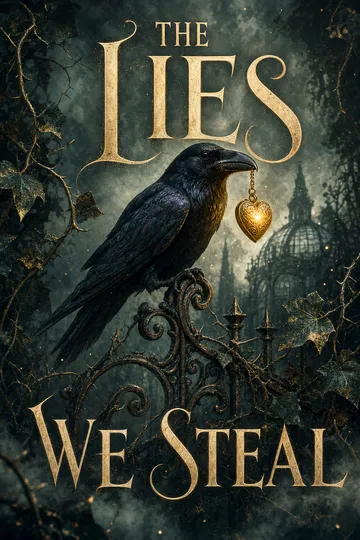
The Lies We Steal is a dark academia romance that runs on moral inversion: its heroes are torturers and its villains wear the town's most respectable faces. Monty Jay builds the book around a single provocation, that fear and desire share a circuit, and stress-tests it through escalating set pieces (party, maze, pool, closet, conservatory). The engine beneath the seduction is class. Briar's2 poverty and Alistair's1 wealth are presented as opposite deprivations that produce the same wound: invisibility. She is unseen because she has nothing; he is unseen because he was conceived as a spare, valued only as replacement parts for a hemophiliac brother.7 Their romance is therefore less about taming a monster than about two discarded people finally being witnessed, which is why the emotional climax is not a kiss but a confession. The novel's most interesting thematic move is its refusal of the good-versus-evil binary its Gothic setting invites. Silence is reframed as trauma economics, monstrosity as generational inheritance (Thatcher,5 Rook,4 Dorian7 all inherit their fathers' damage), and loyalty as the only sacred value in a world where money rewrites autopsies and mayors price their daughters. The trafficking revelation weaponizes this cynicism: the true horror is systemic, a town that commodifies everything, including children. The book is also a genre exercise in consent's gray zones, deliberately uncomfortable, asking readers to interrogate their own complicity in rooting for coercive intimacy. Its weaknesses are the weaknesses of its genre, glamorized violence and a heroine whose desire sometimes overrides self-preservation, but the psychological scaffolding is more deliberate than the surface suggests. The recurring theft motif lands its final argument: everyone steals something (time, safety, silence, hearts), and love here is the one theft both parties consent to.
Review Summary
The Lies We Steal received mixed reviews, with an average rating of 3.63 out of 5. Some readers enjoyed the dark academia and murder mystery elements, praising the intriguing plot and side characters. However, many found the main characters underdeveloped and their relationship rushed. Criticisms included unrealistic dialogue, grammatical errors, and questionable consent issues. While some appreciated the spicy scenes and complex friendships, others felt the book lacked depth and originality. The series potential and side characters generated interest for future installments.
People Also Read
Characters
Alistair Caldwell
Enraged unwanted heirThe de facto leader of the Hollow Boys, an undefeated street fighter whose bottomless anger masks a lifetime of being treated as spare and invisible by parents who worship his older brother7. Heir to the family that founded the town, he despises the wealth attached to his name. Alistair experiences fear, desire, and control as intertwined, feeding on others' terror because it is the only power no one can strip from him. Fiercely, murderously loyal to his three chosen brothers, he would trade his own life for any of theirs. A secret artist and tattoo apprentice, he channels the creativity his family discarded into ink. Beneath the cruelty lives a boy who begged to be loved and, denied it, became the darkness instead.
Briar Lowell
Reinventing thiefA sharp-tongued statistics major from a Texas trailer park, trained by her imprisoned father in pickpocketing, lock-picking, and safe-cracking. Raised loved but poor, she came to Hollow Heights on a scholarship to shed her criminal reputation and build a life she can enjoy rather than merely endure. Briar prefers numbers to people because math has fixed answers; humans do not. Proud, defiant, and allergic to being anyone's victim, she reads danger the way other people read weather. Her tragic flaw and secret strength is that fear excites rather than repels her, a hunger for the shadows she has tried to bury. Beneath the armor she craves belonging, having spent her life invisible everywhere but her own home.
Lyra Abbott
Loyal insect collectorBriar's2 roommate and first true friend, a local orphan and entomology student who collects and preserves dead bugs in a hidden mausoleum. Quiet, brilliant, and largely ignored by the school's wealthy castes, she knows every secret and hierarchy in Ponderosa Springs. Beneath her shy, morbid exterior lives biting humor and a private grief that shapes her insistence on silence and survival. She is fiercely protective of Briar2 and drawn, warily, to the darkness around her.
Rook Van Doren
Grinning arsonistThe most outwardly approachable Hollow Boy, son of the district attorney, marked by a match always resting on his lips and a compulsion to burn things. Behind the jokes and boy-band hair lies a young man abused by his father, who craves physical pain as self-punishment for something he refuses to name. Chaotic and unpredictable, he is nonetheless capable of becoming decent if he ever escaped his family. His flame hides a wound with a name he will not speak.
Thatcher Pierson
Immaculate sadistThe tallest, coldest Hollow Boy, obsessively clean, impeccably dressed in designer suits, and the son of Ponderosa Springs' only serial killer. He wears sophistication as a mask over a soul he believes is dead, delighting in dismemberment and the fear he cultivates. Terrified of disloyalty because the others know what lies beneath his frozen surface, he polices the pack's secrets. His menace is real, his humanity buried but, the others insist, not entirely gone.
Silas Hawthorne
Grieving marksmanHeir to a technology empire, diagnosed with schizophrenia as a child, and nearly mute since the death of his girlfriend Rose10. A crack shot who never misses, he is the still, dangerous center of the pack's grief. Rose10 was the only person who understood him, and losing her hollowed his eyes into something cold. The revenge quest is his war; the others are his soldiers, keeping him alive one task at a time.
Dorian Caldwell
Golden favored brotherAlistair's1 older brother, the family's cherished heir, an award-winning athlete and medical resident who looks like Alistair's1 brighter twin. Charming and beloved in public, he carries the crushing weight of being the successor and a hidden appetite for taking whatever belongs to his younger brother1. His polished surface conceals rot, and the pressure of perfection has bred its own dangerous entitlement and instability.
Easton Sinclair
Charming safe alternativeThe dean's son, star athlete, student body president, and the town's beloved golden boy. Confident and easygoing, he represents the stable, ordinary future Briar2 tells herself she wants. He befriends her and pursues her, but his geniality thins under pressure, revealing that the safe option may be shallower than it appears.
Thomas Reid
Briar's guardian uncleBriar's2 mother's younger brother, a biology professor whose recommendation and connections secured Briar's2 place at Hollow Heights. Socially awkward but kind, he escaped poverty through education and quietly watches over his niece2 as a surrogate parent.
Rosemary Donahue
The murdered girlfriendThe mayor's11 daughter and Silas's6 beloved, whose suspicious death launches the boys' revenge. Warm and unpretentious, she wove herself into the pack like a sister, unbothered by their reputations. Though dead before the story begins, her memory drives every act of violence.
Frank Donahue
Grieving town mayorThe seemingly devoted mayor of Ponderosa Springs, a single father who lost one daughter10 to death and another13 to a psychiatric facility. Publicly pitied and respected, he carries debts and secrets that make his benevolent image increasingly difficult to trust.
Greg West
Suspicious lab teacherA Hollow Heights teacher who secretly swapped ID badges to conceal after-hours activity in the chemistry lab. A key node connecting the drug supply chain to Rose's death10, and a target of the boys' relentless investigation.
Sage Donahue
Returning lost twinRosemary's10 identical twin, a former cheerleader and town sweetheart institutionalized after her sister's death10. Once the golden opposite of Rose's circle, her return unsettles the entire school and reopens buried history.
Plot Devices
The Falsified Autopsy
Mystery-launching documentRosemary Donahue's10 autopsy report, obtained through Rook's4 DA father, rules her death an accidental ecstasy overdose with no signs of trauma. Because the boys personally saw her bruised, clawed corpse, the report's omissions expose a cover-up and become the thread they pull. Each interrogation peels back another layer: injected drug, staged pills, a paid-off coroner, a marked dealer, a courier TA, a badge-swapping teacher, and finally a video. The document functions as the engine of the entire plot, converting a dark campus romance into a revenge procedural. Its lies also establish the novel's governing principle: in Ponderosa Springs, money rewrites truth, and only the founding families can afford to buy silence.
The Stolen Ring
Possessive courtship tokenDuring the woods chase, Briar2 pickpockets Alistair's1 signet ring bearing his initials, keeping it as insurance so that if she is killed, police will know who to blame. The theft enrages Alistair1, who prizes ownership because his family denied him anything of his own. The ring becomes their private currency of power: she holds something he needs, he escalates to reclaim it, and their war of pranks and seductions orbits its return. It literalizes the title's thesis that everyone steals, and it transforms a small larceny into the possessive obsession that drives Alistair's1 pursuit, eventually answered by the far more permanent mark he leaves on her.
The Finger Tattoo
Branding as claimWhile Briar2 is unconscious from chloroform, Alistair1 stick-and-pokes his initials onto her finger, branding her as his before the entire world, including his brother7 and rival Easton8. It answers her theft of his ring with an escalation she cannot remove or return. Initially a violation she tries to cover with makeup, the tattoo tracks the relationship's evolution from coercion toward reciprocity as she stops hiding it and eventually marks him in return. It embodies Alistair's1 terror of losing anything he values and his need to make possession permanent, converting the abstract power struggle into ink on skin that neither can undo.
The Flood
Fear-desire fusion conceptAlistair's1 name for the rush of endorphins the brain releases near death, the tipsy, aroused high that makes terror feel like pleasure. He uses it to explain why Briar2 responds to danger with desire rather than flight, arguing it proves they are the same beneath their different origins. The concept recurs across the pool, the closet, and the tattoo shop, where he deliberately triggers her fight-or-flight to give her a safe overdose of adrenaline. Thematically, it is the book's justification for eroticizing menace, reframing Briar's2 shame at wanting her tormentor as biology and kinship, and articulating the shadow-dwelling philosophy that binds the two invisible protagonists together.
Charon's Obol Coin
Loyalty ritual symbolEach Hollow Boy wears a matching tattoo of a coin bearing a Latin inscription and the image of the ferryman of the dead, based on the myth that a soul needs payment to cross into the afterlife. They mark themselves so they can bribe their way back to one another even in death, a covenant of chosen family. The device crystallizes the novel's central redefinition of family as who you would bleed and die for rather than who shares your blood. It also deepens each boy's psychology, framing their violence as devotion, and gives Briar2 a window into the loyalty that makes Alistair1 both terrifying and, ultimately, capable of love.
FAQ
Synopsis & Basic Details
What is The Lies We Steal about?
- Darkness and Privilege Collide: The novel centers on Alistair Caldwell, a scion of a powerful Ponderosa Springs family, whose violent nature is a product of his upbringing, and Briar Lowell, a newcomer with a past shaped by her father's life of crime. Their paths converge at the elite Hollow Heights University, a place steeped in old money and dark secrets.
- Unraveling a Town's Secrets: Following the suspicious death of Rosemary Donahue, the mayor's daughter and girlfriend of Alistair's friend Silas, Alistair and his friends, known as The Hollow Boys, embark on a brutal quest for revenge, believing her death was not an accidental overdose as reported.
- A Dangerous Game of Cat and Mouse: Briar becomes entangled with The Hollow Boys after witnessing their violent methods, leading to a tense dynamic where she must navigate their dangerous world, confront her own past, and uncover the truth behind Rosemary's death and the town's hidden depravity.
Why should I read The Lies We Steal?
- Intense Psychological Depth: The book delves into the complex trauma and motivations of characters shaped by wealth, neglect, and violence, offering a raw look at how environment can forge personality, particularly in Alistair and The Hollow Boys.
- High-Stakes Mystery & Suspense: Beyond the romance, the narrative is driven by a compelling mystery surrounding a suspicious death and a town's dark underbelly, keeping readers on edge with unexpected twists and morally ambiguous actions.
- Exploring Dark Romance Tropes: It features a morally gray protagonist and a resilient heroine navigating a relationship built on power dynamics, defiance, and a shared understanding of life's darker aspects, appealing to readers who enjoy intense, character-driven dark romance.
What is the background of The Lies We Steal?
- A Town Built on Old Money and Secrets: Ponderosa Springs is depicted as a secluded, elite town founded by powerful families (Caldwell, Van Doren, Hawthorne, Pierson) whose wealth and influence allow them to operate above the law and conceal dark truths.
- Hollow Heights University's Elite Bubble: The university serves as a microcosm of the town's hierarchy, accepting primarily locals or the extremely wealthy, creating an environment where privilege often trumps merit and secrets are fiercely guarded within its ancient, gothic architecture.
- Generational Trauma and Reputation: The narrative is deeply rooted in the concept of inherited reputation and trauma, particularly highlighted by Thatcher's lineage as the son of a serial killer and Alistair's status as the unwanted "spare" heir, showing how family history shapes identity and behavior.
What are the most memorable quotes in The Lies We Steal?
- "We are all thieves, Briar. I just got caught.": This quote, attributed to Briar's father, encapsulates a core theme of the book – the pervasive nature of taking, whether it's physical objects, time, or even intangible things like happiness or fear, setting the stage for Briar's perspective on the world.
- "There is a fine line between brave and stupid, girl. You are fucking toeing it.": Spoken by Alistair to Briar, this line defines their initial dynamic, highlighting his perception of her defiance as either courageous or foolish and establishing his predatory interest in her willingness to challenge him.
- "Family wasn't who you were born with. It was who you'd bleed for.": This quote reflects Alistair's profound loyalty to The Hollow Boys, contrasting his biological family's neglect with the fierce bond he shares with his chosen brothers, a central motivation for his actions throughout the story.
What writing style, narrative choices, and literary techniques does Monty Jay use?
- Dual Perspective Narrative: The story alternates between Alistair's and Briar's first-person perspectives, offering intimate access to their thoughts, motivations, and emotional states, allowing readers to understand their complex internal conflicts and contrasting viewpoints.
- Atmospheric and Sensory Language: Jay employs vivid descriptions, particularly of settings like The Graveyard, Hollow Heights, and the mausoleum, using sensory details (smells of chlorine, smoke, wet earth; sounds of engines, screams, ticking clocks) to create a palpable sense of place and mood, often reflecting the characters' inner turmoil.
- Foreshadowing and Symbolism: Subtle hints and recurring symbols (the ring, tattoos, specific locations, weather patterns like fog and rain) are woven throughout the narrative, foreshadowing future events and adding layers of thematic depth related to control, identity, and the inescapable nature of the past.
Hidden Details & Subtle Connections
What are some minor details that add significant meaning?
- Alistair's Conservatory as Lost Sanctuary: The description of the conservatory as Alistair's only personal space, later taken by Dorian and remodeled, subtly symbolizes his lack of sanctuary and the constant intrusion and theft of his identity by his family, fueling his deep-seated resentment.
- Lyra's Bug Collecting as Coping Mechanism: Lyra's intense interest in entomology and taxidermy, particularly her fascination with dead things and her detailed knowledge of insects, is a subtle manifestation of her trauma from witnessing her mother's murder, providing a sense of control and understanding over death.
- The Specifics of Safe Cracking: Briar's detailed, almost mathematical approach to safe cracking, requiring patience, listening, and calculation rather than brute force, highlights her unique skills and intelligence, contrasting with The Hollow Boys' more direct, violent methods and proving her value beyond their initial assumptions.
What are some subtle foreshadowing and callbacks?
- The Graveyard's Name: The abandoned racetrack being called "The Graveyard" subtly foreshadows the death and violence that will become central to the plot, suggesting it's a place where lives are metaphorically (and later literally) buried.
- Thatcher's Knife Collection: Thatcher's casual display and discussion of his sophisticated knife collection early on foreshadows his later, brutal use of blades during interrogations, hinting at his inherent cruelty and comfort with inflicting pain.
- Rosemary's Gift to Silas: The custom Desert Eagle .50 with Latin inscriptions given to Silas by Rosemary ("Fear no evil. The shadow and valley are yours") is a poignant callback that symbolizes their deep connection and Silas's transformation into a force of vengeance, using the gift to enact retribution for her death.
What are some unexpected character connections?
- Lyra's Mother and Thatcher's Father: The revelation that Lyra's mother was murdered by Thatcher's serial killer father creates a profound, unexpected connection between the two seemingly peripheral characters, explaining Lyra's deep-seated fear of the Pierson family and adding a layer of tragic irony to Thatcher's interest in her.
- Chris Crawford and Dorian Caldwell: The detail that Chris, the drug dealer/TA, was friends with Dorian in high school subtly links the drug operation and Rosemary's death back to Alistair's immediate family circle, hinting at the pervasive corruption and interconnectedness of the town's elite.
- Mayor Donahue's Debt and Greg West: The shocking discovery that Mayor Donahue was indebted to Greg West and chose to sacrifice Rosemary to a sex operation to clear his debt reveals a horrifying connection between the victim's father and the drug supplier, exposing the depths of the town's depravity and the mayor's complicity.
Who are the most significant supporting characters?
- Lyra Abbott: As Briar's roommate and first friend, Lyra provides crucial information about Ponderosa Springs and The Hollow Boys, acts as a moral compass and emotional support for Briar, and becomes an unwitting accomplice, highlighting the pervasive danger.
- Silas Hawthorne: Silas's grief and quest for vengeance over Rosemary's death are the primary catalysts for The Hollow Boys' actions, driving the main plot. His quiet intensity and moments of vulnerability reveal the emotional core beneath the group's violence.
- Thatcher Pierson: Thatcher embodies the cold, calculated cruelty of the group, contrasting with Alistair's hot-blooded rage. His family history and disturbing tendencies add a layer of psychological horror and demonstrate the inherited darkness within the town's elite.
Psychological, Emotional, & Relational Analysis
What are some unspoken motivations of the characters?
- Alistair's Need for Control: Beyond revenge, Alistair's actions are driven by a deep-seated need for control, stemming from his lack of agency and feeling like a "spare" in his own family. This motivates his dominance over others, particularly Briar, as he seeks to assert his power.
- Rook's Pursuit of Pain: Rook's seemingly reckless behavior and willingness to engage in dangerous activities, including sparring with Alistair, are subtly revealed to be a form of self-punishment, a need to feel pain to atone for an unspoken past action related to his father.
- Briar's Desire for Belonging: Despite her tough exterior and self-reliance, Briar's eagerness to make friends, attend parties, and find a place at Hollow Heights reveals an unspoken desire for belonging and acceptance, a stark contrast to her life as an outsider in Texas.
What psychological complexities do the characters exhibit?
- Alistair's Trauma Response: Alistair exhibits traits of complex trauma, manifesting as explosive rage, a craving for inflicting pain, and difficulty forming healthy attachments, all rooted in his emotional neglect and being raised as a disposable "spare" by his family.
- Silas's Grief and Schizophrenia: Silas's diagnosed schizophrenia is exacerbated by the trauma of finding Rosemary's body, leading to periods of muteness and intense focus on vengeance, illustrating how psychological vulnerability can interact with extreme emotional pain.
- Thatcher's Sociopathic Tendencies: Thatcher displays calculated cruelty, lack of empathy, and a fascination with inflicting fear and physical harm, suggesting sociopathic traits potentially influenced by his father's history and his own privileged, detached upbringing.
What are the major emotional turning points?
- Silas Finding Rosemary's Body: This event is the foundational emotional turning point for The Hollow Boys, transforming their youthful delinquency into a focused, violent quest for justice and fundamentally altering Silas's psychological state.
- Briar Witnessing the Murder: Witnessing Chris Crawford's murder is a pivotal moment for Briar, shattering her perception of The Hollow Boys as merely "rich kids with bad attitudes" and forcing her to confront true depravity, triggering her fight-or-flight response and subsequent defiance.
- Alistair's Confession to Briar: Alistair revealing the truth about his birth and family history to Briar marks a significant emotional turning point for him, allowing vulnerability and laying the groundwork for a deeper connection based on shared understanding rather than just power dynamics.
How do relationship dynamics evolve?
- The Hollow Boys' Loyalty Deepens: The shared trauma of Rosemary's death and their collective pursuit of revenge solidifies The Hollow Boys' already fierce loyalty, transforming them from a pack of unruly rich kids into a unit bound by blood and shared secrets, willing to commit murder for each other.
- Briar and Lyra's Bond Strengthens Through Trauma: Briar and Lyra's initial roommate relationship evolves into a deep friendship forged in shared fear and witnessing violence. Lyra's confession about her mother's death creates mutual understanding and reliance, solidifying their "Loner Society" bond.
- Alistair and Briar's Power Struggle to Connection: Their relationship begins as a predatory game of cat and mouse fueled by fear, defiance, and sexual tension. It evolves through shared secrets, forced proximity, and moments of unexpected vulnerability (like the closet scene and Alistair's confession), shifting towards a complex connection based on mutual understanding and acceptance of their darker natures.
Interpretation & Debate
Which parts of the story remain ambiguous or open-ended?
- The Full Extent of the Sex Trafficking Ring: While Greg West is identified as a key player and Mayor Donahue's complicity is revealed, the identity of the "boss" and the full scope of the sex operation remain largely unknown, leaving the larger criminal network unresolved by the end of the book.
- The Future of Sage Donahue: Sage's sudden appearance at the end, coupled with the revelation of her breakdown and institutionalization after Rosemary's death, leaves her future role and potential knowledge about the town's secrets or her sister's death ambiguous.
- The Long-Term Consequences for The Hollow Boys: Despite committing multiple murders and other crimes, The Hollow Boys largely evade immediate legal consequences due to their families' influence. The story leaves open the question of whether they will ever truly face justice or if their power will continue to shield them indefinitely.
What are some debatable, controversial scenes or moments in The Lies We Steal?
- The Torture and Murder Scenes: The graphic depictions of torture (Dr. Discil's fingers, Chris Crawford's eyes) and murder are highly controversial, raising questions about the justification of The Hollow Boys' violence and whether their actions, even in pursuit of revenge, make them irredeemable villains.
- Alistair and Briar's Relationship Dynamics: The nature of Alistair and Briar's relationship, particularly scenes involving intimidation, forced proximity, and sex that occurs under duress or amidst fear (the closet scene), is debatable, prompting discussion about consent, trauma bonding, and whether their connection is truly romantic or rooted in shared darkness and power play.
- The Ending's Moral Implications: The conclusion, where The Hollow Boys largely get away with murder and Alistair and Briar find a form of happiness together despite their actions, is controversial, challenging traditional notions of justice and morality and leaving readers to debate whether the characters achieve redemption or simply escape consequences.
The Lies We Steal Ending Explained: How It Ends & What It Means
- Revenge Achieved, Justice Served (Their Way): The Hollow Boys successfully identify and kill Greg West, the teacher's assistant who facilitated Rosemary's sale and planted her body, achieving their primary goal of avenging Silas's girlfriend. This act, though criminal, provides closure for Silas and the group.
- Exposure of Deeper Corruption: The discovery of the video revealing Mayor Donahue's complicity in selling his daughter exposes the profound moral decay at the heart of Ponderosa Springs' elite, suggesting Rosemary's death was a direct consequence of her father's actions and the town's hidden sex trafficking ring.
- Alistair and Briar's Future in the Shadows: Despite the violence and trauma, Alistair and Briar choose to embrace their connection, finding solace and understanding in their shared experiences and darker natures. Their decision to stay together and operate "in the shadows" signifies their acceptance of who they are and their commitment to each other, suggesting a future where they navigate the world on their own terms, potentially continuing their morally ambiguous path.
Hollow Boys Series Series
About the Author
Download PDF
Download EPUB
.epub digital book format is ideal for reading ebooks on phones, tablets, and e-readers.








































