
Plot Summary
Prologue
In 1471, on a battlefield slick with blood, a woman in a bone-white gown walked out of the tree line. She promised the desperate King Edward the throne, slashed his palm, and sealed the bargain. Across the field, Henry VI dropped dead. Edward was crowned — and died twenty-four hours later.
The woman, Queen Moryen of the Others,5 took the English throne at Eltham Palace. No sword could be raised against her. Immortal and uncrossable, she has ruled for nearly four hundred years. Her subjects kneel on Sundays to make bargains — trading toes, memories, fingers for gifts of beauty, talent, or land. Every deal has its price, and the queen always wins.
The Carriage in the Dark
Ivy Benton1 hasn't slept in eight days. Her older sister Lydia4 vanished without explanation, and the police say she eloped or died — neither of which Ivy1 believes. She sneaks out at midnight to leave Lydia's4 childhood necklace at the base of a tree near Kensington Palace, hoping to trigger the faerie doors she read about as a child in a forbidden storybook.
A guard's shout sends her running. She trips on a loose stone, splits her temple on the curb, and wakes inside a carriage belonging to Prince Emmett,2 the queen's rakish human stepson.
He presses his coat to her bleeding wound and calls her pretty. She throws it back at him. That same night, a constable drags Lydia4 home — filthy, barefoot, hollow-eyed — whispering only that her bargain wasn't worth it before sleeping for three days.
Twenty-Four Signatures in Blood
Three months after Lydia's4 return, the Benton family is drowning. Lydia4 can't remember her bargain or her disappearance. The scandal has destroyed their social standing, and Ivy's mother11 confesses they'll lose the house within a year.
At the Pact Parade, Ivy1 wears her sister's altered gown and borrowed slippers that pinch. Then Queen Mor5 makes a stunning announcement: her son, the fae Prince Bram,3 will select a bride this season. Any girl who enters and isn't chosen must remain unmarried forever.
Where others see catastrophe, Ivy1 sees her only leverage — being a suitor guarantees invitations, restoring her family's place in society. She signs the blood contract first, slashing her palm and scrawling her name in crimson. Bram3 wraps her bleeding hand with his silk handkerchief and heals it with a rush of inhuman warmth.
Boots in the Mud
The queen's first elimination is a maypole dance on the sodden lawn of Kensington Palace. Silk slippers sink into muck within the first rotation, and girls begin toppling. Ivy,1 wearing her sturdy old boots because her family couldn't afford matching slippers, digs her heels into the earth and keeps spinning.
For two hours she circles the pole, lungs screaming, while the crowd places bets. One by one, rivals fall — Sara Middlebrook's slipper catches in a divot from Ivy's1 boot heels.
The final six emerge: Ivy,1 her estranged best friend Greer Trummer,6 wealthy Marion Thorne,8 sharp-tongued Emmy Ito,9 the dark-haired newcomer Faith Fairchild,7 and shy Olive Lisonbee.10 Ivy1 outlasts them all. Queen Mor5 lowers the jeweled May Queen tiara onto her muddy head. In the crowd, Emmett2 watches with white-knuckled fists.
Nothing the Queen Can Give
Alone in the throne room, Ivy1 doesn't ask for shinier hair or a cleverer mind — the typical rose bargains girls make to become more marriageable. She asks Queen Mor5 to undo Lydia's4 forgotten bargain entirely, to return whatever was taken and restore whatever was given.
The queen laughs and says bargains cannot be undone. Ivy1 then asks whether Lydia4 was in the Otherworld during her disappearance. The queen says no — that door has been locked for four hundred years.
It's a blow that demolishes Ivy's1 childhood theory, but the queen's eyes flash with something like sadness as she says it. Ivy1 walks out without making any bargain at all, entering the competition for Bram's3 hand as the only girl with nothing gained and nothing lost from her audience with an immortal.
The Twice-Crowned Theory
Emmett's2 maid Lottie14 sneaks Ivy1 through secret palace tunnels to his bedroom, where he lays his cards out. His father, Prince Consort Edgar,12 married Queen Mor5 not for love but to destroy her from within. The price of legitimizing Emmett2 as a prince was that Edgar12 could never speak to his son again.
For years, Edgar12 hid coded messages in library books, spelling out the wording of Mor's5 original bargain with King Edward. The phrase referring to the sovereign as the one twice crowned was her trick — crowned once in the Otherworld and once in England.
But Ivy1 has already been crowned May Queen. If she's crowned again as Bram's3 bride, the original bargain becomes void and every subsequent bargain collapses. Emmett2 needs Ivy1 to make Bram3 genuinely fall in love with her. Terrified and furious, she agrees.
The Maze Has Teeth
Footmen pour sleeping tinctures down the girls' throats and dump them into a magically altered hedge maze at night. Walls spring from the ground, separating them. Ivy1 beheads a monstrous swan with a conjured sword, solves riddles to escape shrinking chambers, and discovers glass jars labeled with their names — dropping a marble into any jar inflicts searing pain on that girl.
She shatters the marble jar instead. Emmy9 reaches the golden goblet first and wins. Afterward, each girl finds a ranking number on her pillow. Their injuries are real.
Days later, Ivy's1 torn hands become infected when she falls into the Thames during a regatta, and she nearly dies of fever. Emmett2 secretly sits at her bedside through the worst nights, a presence she half-registers through delirium as a strong hand soothing away her dreams.
Dandelions into Tulips
As Ivy1 recovers, her bond with Bram3 deepens through walks, conversations, and small magic — he waves his hand and dandelions burst into pink tulips, conjures gold coins that melt into water. He reveals his backstory: his parents once ruled the Otherworld together, but his mother5 tried to oust his father.
His father locked the portal with iron, then eventually threw Bram3 out, fearing his ambitions. Bram3 slips a pearl ring onto Ivy's1 finger and gifts her a copy of the forbidden faerie book she loved as a child.
At a masquerade ball, Emmett2 arranges a private garden meeting. Bram3 kisses Ivy1 under a moonlit statue. She feels the burn of inevitability rather than desire — because her mind keeps straying to his brother's2 face, his brother's voice, his brother's hands.
Stranded at The Swan
During a hunting trip, Ivy1 sneaks off to visit Eduart,15 an immortal hermit who bargained for eternal life but can never be loved. Emmett2 follows. Eduart15 reveals that dozens of rebellions have failed over four centuries, all ending in execution, and that Emmett's father12 once visited him, regretting his bargain and the years lost with his son.
On the return journey, their horse bolts and a storm strands them at a coaching inn. They share the only room — and eventually the bed. Emmett2 teaches Ivy1 to kiss.
What begins as practice dissolves into something raw and starving. He confesses he's obsessed with her. She confesses she's terrified. But he pulls back: she belongs to his brother.3 They return to camp at dawn, their secret intact only because the hunting party was stranded too.
Marion Smashes the Plates
The queen's second trial forces the girls through rotating stations — sewing samplers embroidered with insults about themselves, playing piano where wrong notes cause bone-deep pain, balancing stacked porcelain plates on their heads while walking. The queen kicks up a rug to trip Ivy.1
When Marion8 can't endure any more, she topples an entire tower of plates and storms out. The other five follow. That night, Queen Mor5 appears at their cottage with a new decree: the girl with the lowest score will have her family stripped of titles and lands, and any further insubordination will be punished with death.
They discover Olive10 secretly completed extra tasks to secure first place. The girls make a pact — whoever wins will use her influence to protect all their families — and seal it with spit-slicked handshakes.
The Revel of Cruel Truths
The queen hosts a faerie-style tea party where every guest except the six suitors is enchanted to speak only unfiltered truth. Ivy's mother11 casually observes she'll lose. Faith's7 father and grandmother hurl cruelties.
But the worst falls on Greer:6 her mother announces to the room that Greer6 was caught in a compromising position with their stable boy, Joseph. Greer6 flees sobbing. The queen slams the door before Ivy1 can follow. Next morning, headlines declare Greer6 dead — her body pulled from the Thames.
The girls are shattered, but Ivy1 investigates and finds Joseph's tools partially missing from the Trummer stables, suggesting the two may have escaped together. This fragile hope is all she has. Emmett2 tells Bram3 about the queen's secret trials, and Bram3 forces his mother5 to end the season early.
Midnight in Emmett's Room
Queen Mor5 summons Ivy1 in the dead of night and declares she hasn't been selected. Believing it's over, Ivy1 runs through the tunnels to Emmett's2 room — expecting it empty, since she'd heard he'd left the palace. He's there.
He tells her he left because he wasn't strong enough to watch her win, then came back because he wasn't strong enough to stay away. He confesses he's obsessed with her, that it will kill him. The tension that's been building since the coaching inn finally ignites — they fall into each other completely.
Afterward, Ivy1 disentangles herself. She still has a role to play. She goes to Bram,3 and with tears that require no acting, convinces him to elope before his mother can stop them. He agrees instantly. He was going to choose her.
The Cruelest Bargain
Packing at home, Ivy1 discovers dozens of Bram's3 face sketched in pastels and charcoal, hidden in Lydia's4 wardrobe — dreams her sister has been having since she returned. Before Ivy1 can process this, footmen drag her back to the palace.
The queen reveals it was all a final test: Ivy1 actually won. Her composure under loss impressed the queen most. But marriage requires a bargain. The queen even asks if Ivy1 would prefer Emmett.2 Ivy1 says no.
She buys a coat she'd commissioned as a gift for Emmett2 and writes him a devastating letter — confessing her love, explaining she must erase him for the sake of his father's12 mission, for Greer,6 for all of England. Then she returns to the throne room and asks Queen Mor5 to remove all memory of Emmett2 from her mind.
The Crown Breaks the World
At the summer solstice wedding, Ivy1 walks down the aisle not recognizing the anguished man standing as best man — the brother2 she can't remember loving. Bram3 places the May Queen tiara on her head and kisses her. Chaos erupts instantly. Ivy's1 mouth fills with blood as her traded molar returns.
Her mother's11 missing pinkie grows back. Footmen crumble to dust — they were immortals bound by the queen's bargains. Across England, every bargain unravels simultaneously. With the return of her tooth comes the flood: Emmett.2
Every stolen kiss, every whispered confession, every touch in the dark. Bram3 laughs as his guards capture Queen Mor5 in iron chains. Prince Consort Edgar12 is stabbed and dies in Emmett's2 arms, whispering that his son has done well. Bram3 reveals the fae can lie — he's still king of the Otherworld.
The Hunting Grounds Reopen
Emmett2 is dragged away in chains. Lydia4 is seized and taken to the Otherworld — where, as her own account reveals, she had been Bram's3 queen before, lured there by the fulfillment of her original bargain, married to him, then traumatized after discovering he used enchanted humans as entertainment at court revels.
She fled and her memory was wiped. Ivy1 and the other girls find Queen Mor5 imprisoned in the Tower, where Mor5 explains that Bram3 staged a coup against her centuries ago and has been posing as a refugee ever since.
His marriage to any crowned girl would void her original bargain — the May Queen theory was incidental. When Ivy1 returns to the palace at dawn, it is filled with fae courtiers in shimmering gowns. Bram3 raises his goblet and introduces his bride. The portal between worlds is open.
Analysis
The Rose Bargain literalizes what marriage markets have always demanded: women must surrender pieces of themselves to be considered worthy. Every girl who kneels before Queen Mor5 trades something concrete — a finger, a memory, the ability to smell flowers — for competitive advantage. The system makes visible what Regency courtship extracted invisibly: authenticity, autonomy, desire. Ivy's1 refusal to bargain reads initially as naivety but reveals itself as the novel's most radical act. In a world where every woman has sacrificed flesh to become more palatable, Ivy1 enters the arena whole — a walking rebuke to a system that insists wholeness is insufficient.
The sister dynamic between Ivy1 and Lydia4 functions as a study in complementary sacrifice. Lydia4 was the perfect one so that Ivy1 could be free; Ivy1 shoulders the family's survival so Lydia4 can crumble. Their mutual resentment is the honest inverse of their mutual love — each can only hate the other because she's built her identity around protecting her. Smith refuses to resolve this neatly, recognizing that sibling devotion at this intensity is both sustaining and suffocating.
The novel's most devastating structural choice is Bram's3 reveal. By constructing him for hundreds of pages as genuinely kind — visiting sick wives, planting flowers for lonely widows, showing Ivy1 magic with boyish delight — Smith earns a betrayal that feels personal to the reader. The claim that the fae cannot lie was never merely a plot twist; it is a thesis about the seductive danger of believing power can be benevolent. Queen Mor,5 the apparent villain, emerges as the complicated figure who closed the portal precisely because she couldn't stomach watching humans tortured for entertainment. The true monster was always the one who smiled widest. Smith argues that cruelty born of boredom, while terrible, is less dangerous than cruelty that wears the mask of love.
Review Summary
People Also Read
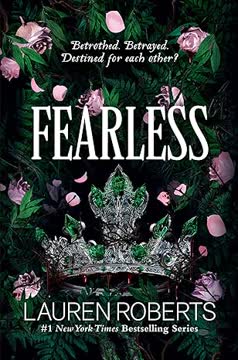
Characters
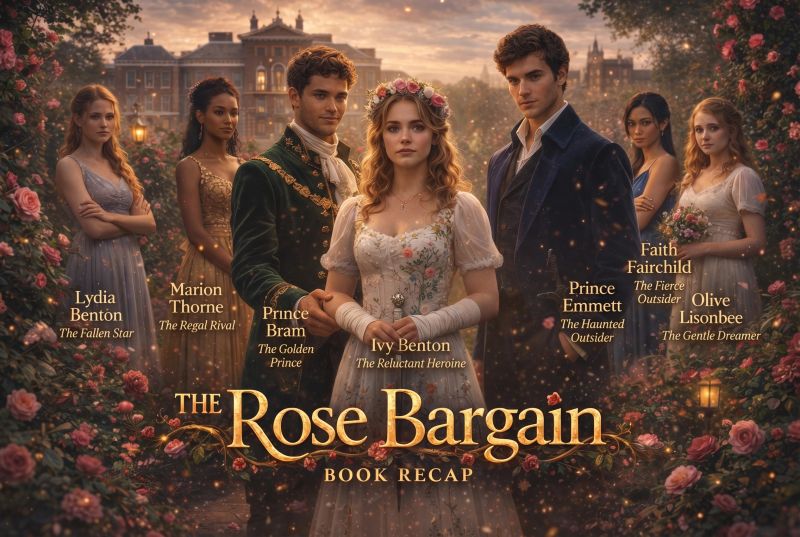
Ivy Benton
The reluctant brideThe second daughter of an impoverished marquess, Ivy was raised in the golden shadow of her older sister4 and never expected to carry the family's future. Obsessed with faeries since childhood, she possesses a stubborn intellect and an aching compulsion to fix things for people she loves—even when they haven't asked. She enters the competition for Bram's3 hand not from romantic ambition but financial desperation, viewing herself as fundamentally unmarketable: too mouthy, too awkward, not beautiful enough. Her self-deprecation masks fierce loyalty and a moral compass both princes recognize before she does. Ivy's central tension is between duty and desire—she will sacrifice anything for her family, including her own heart, which makes her both heroic and heartbreakingly self-destructive.
Emmett De Vere
The rebel princeThe human stepson of Queen Moryen5, Emmett carries the scars of a childhood spent in drafty palace rooms after his father's12 bargain forbade all communication between them. His reputation as a rake is partly strategic misdirection—he's spent years researching how to unseat the queen, fueled by coded messages his father12 hid in library books. Beneath the sardonic wit and bitten lips is a boy who has been starving for love since age eight, who read bedtime stories to horses because he had no one else. He's reckless with his own heart and meticulous about protecting others. His relationship with his brother3 is the warmest thing in his life, which makes his growing feelings for Ivy1 a betrayal he cannot rationalize away.
Bram
The sunlit princeThe fae prince presents himself as sunlight incarnate—warm smiles, easy charm, a single dimple that makes hearts flutter. He arrived at court four years ago claiming to be a teenage refugee from the Otherworld, endearing himself to all of England within weeks. He shows Ivy1 small magic, gifts her forbidden books, and demonstrates kindness to servants and strangers alike. Where Emmett2 is sharp edges and shadows, Bram radiates uncomplicated warmth. He says he wants a wife who is clever, honest, and determined. He appears to genuinely care for his mother5 and his brother2. But Bram moves through the human world with the easy confidence of someone who knows a secret no one else has guessed, and his patience has the quality of a predator who never needs to rush.
Lydia Benton
The sister who vanishedIvy's1 older sister was once the Benton family's shining hope—beautiful, witty, the star of every room. Then she made a bargain she can't remember, refused a marriage everyone expected her to accept, and disappeared for two weeks, returning hollow-eyed and silent. She spends her days in darkened rooms eating exotic fruit with a hunger nothing can sate. Lydia's central wound is the impossible expectation of perfection—she was placed on a pedestal she never asked for and crumbled under its weight. Her relationship with Ivy1 is the emotional spine of the novel: two sisters who love each other so fiercely it functions as both anchor and weapon. Lydia protects Ivy1 by being perfect; Ivy1 protects Lydia by being the one who fights.
Queen Moryen
The immortal faerie queenFor four hundred years, Queen Mor has ruled England with an immortal face and an iron will. She takes human husbands who age and die while she stays young, presides over a bargain system that extracts body parts and memories in exchange for gifts, and tolerates human aristocracy like an indulgent parent handing toys to crying children. Her beauty is described as physically painful to witness. She demands tears, orchestrates cruel trials, and dines on milk and honey while wearing crowns of human teeth. Yet she shows flashes of maternal warmth toward Bram3, moments of sadness about locked doors, and a complexity that resists easy villainy. She is bored—profoundly, eternally bored—and her cruelty carries the exhaustion of someone who has run out of ways to feel anything at all.
Greer Trummer
Ivy's estranged best friendA girl shaped entirely by her controlling, violent mother, Greer dropped Ivy1 at the first whiff of scandal—not from cruelty but from survival instinct. She bargained for a new, beautiful face but can never turn left again. Beneath her social compliance hides a secret love affair with a stable boy named Joseph, the only person who makes her feel real. She represents what happens when love must exist only in shadows.
Faith Fairchild
The ballerina with bladesA former Royal Ballet dancer forced into society by the lord father who abandoned her, Faith is brutally honest and refuses to pretend the competition is friendly. Her bargain lets her detect lies but forbids her from telling them. Her history with Emmett2—not as a true lover but as a fellow grief-survivor—complicates her relationship with everyone. She carries rage like armor over a wounded, motherless heart.
Marion Thorne
The duke's defiant daughterThe wealthiest and most polished of the six, Marion is the daughter of a Ghanaian immigrant who became a duke through his bargain. She signed the blood contract not to win but to lose—contractually freed from ever having to marry. An aspiring writer who traded her happiest memory for talent, she carries secrets about both her bargain and her heart that she guards fiercely behind a perfectly composed smile.
Emmy Ito
The restless middle childSharp-tongued and practical, Emmy dreams of crossing the ocean her great-grandparents sailed to reach England. She never wanted marriage, but her pride wouldn't let her lose the May Queen contest. She wins the maze trial and develops genuine—if complicated—affection for Bram3. She traded the ability to taste sweets for painting talent, considering it a bargain in her favor.
Olive Lisonbee
The sweet-faced strategistTerrified of the dark and prone to tears, Olive bakes constantly and believes in love at first sight with an intensity the others find naive. She traded her fingernails for perfect teeth at her mother's11 urging. But beneath the softness lies surprising cunning—she is the only girl strategic enough to secretly complete extra tasks during the queen's trials when no one is watching.
Lady Benton
The mother who remembers allIvy's1 mother bargained for perfect memory at the cost of her left pinkie. She remembers everyone who has forgotten her, filling journal after journal to empty her too-full mind. Her desperate optimism masks the family's financial collapse.
Prince Consort Edgar
Emmett's silent fatherEmmett's2 father married Queen Mor5 to destroy her from within, sacrificing his ability to ever speak to his son. He communicates through coded messages hidden in library books, driving the rebellion from permanent silence.
Viscountess Bolingbroke
The fearsome chaperoneThe stern, white-haired chaperone assigned to the six suitors. Military in posture and asleep by ten p.m., she is both a formidable obstacle and a conveniently circumventable one.
Lottie
The tunnel-running maidIvy's1 lady's maid at the palace who doubles as Emmett's2 messenger, guiding Ivy1 through secret tunnels with quiet competence and zero judgment.
Eduart
The immortal hermitA soldier from 1471 who bargained for eternal life but can never be loved. He provides crucial historical context about failed rebellions and the queen's centuries of unchallenged rule.
Plot Devices
The Rose Bargain System
Engine of the world's powerThe foundational mechanism of Queen Mor's5 England. Citizens kneel before the queen and trade parts of themselves—toes, fingers, memories, the ability to taste sweets, the capacity to turn left—in exchange for beauty, talent, land, or other gifts. The system functions as social currency among the aristocracy, where debutantes make so-called Rose Bargains to become more marriageable. The bargains are irreversible and subject to the queen's whims—what she takes and gives follows no discernible logic, ensuring her absolute power. For four hundred years, this has been the only form of magic most humans have ever known. The system's destruction is the central goal of Emmett's2 rebellion and becomes the novel's climactic event when every bargain across England unravels simultaneously.
The May Queen Crown
Key to the twice-crowned planA jeweled tiara awarded to the winner of the maypole competition, it becomes the linchpin of Emmett's2 plot. His father's12 decoded messages reveal that the original bargain references the sovereign as the one twice crowned. Ivy1, already crowned May Queen, would be crowned a second time as Bram's3 bride—supposedly voiding the original bargain and collapsing the entire system. The crown also has practical value: Ivy1 considers selling it to save her family's house. Symbolically, it represents how the competition transforms Ivy1 from overlooked second daughter to the most important person in England. The crown's true significance ultimately proves more complex than Emmett's2 theory accounts for, as the real mechanism has deeper roots than anyone in the rebellion understood.
Faeries of the British Isles
Forbidden knowledge, emotional anchorA sage-green fabric-bound book of faerie lore that Ivy1 loved as a child, read aloud by their cook Mrs. Osbourne before Ivy's mother11 had it burned for being illegal. Bram3 later gifts Ivy1 the same edition, connecting her childhood obsession with her adult reality. The book contains stories about faerie doors, revels, and the human bride of the faerie king—tales that carry more weight than Ivy1 initially realizes. It serves as her emotional touchstone, bridging the girl who believed in magic and the woman forced to weaponize it. Its original owner, an immortal hermit15, becomes a crucial source of historical context about centuries of failed rebellions against the queen.
Iron
The fae's hidden weaknessA natural metal that burns fae skin and neutralizes their magic on contact. Queen Mor5 had all mentions of iron scrubbed from human history and all iron weapons melted down after the War of the Roses, ensuring humans would forget their only defense against her kind. Bram3 casually reveals iron's existence to Ivy1 during their courtship, framing it as harmless historical trivia about how his father once defeated his mother5. The metal's scarcity in England—after four centuries of systematic elimination—makes it both precious and symbolic of how thoroughly the fae have controlled human knowledge. Iron ultimately plays a critical role in the novel's climactic power shift.
The Blood Contract
Binds suitors, raises stakesAt the Pact Parade, each girl who wishes to compete for Bram's3 hand must slash her palm, fill a crystal inkwell with her own blood, and sign her name on a massive scroll. The contract stipulates that any girl not chosen will never take another spouse. This device transforms the competition from social maneuvering into existential gamble—particularly devastating for girls whose families depend on advantageous marriages. Ivy1 signs first, recognizing that her family's existing ruin means she has nothing left to lose. The visceral act of cutting oneself to compete for love becomes the novel's defining image: in this world, women must literally bleed for the privilege of being considered.








































