
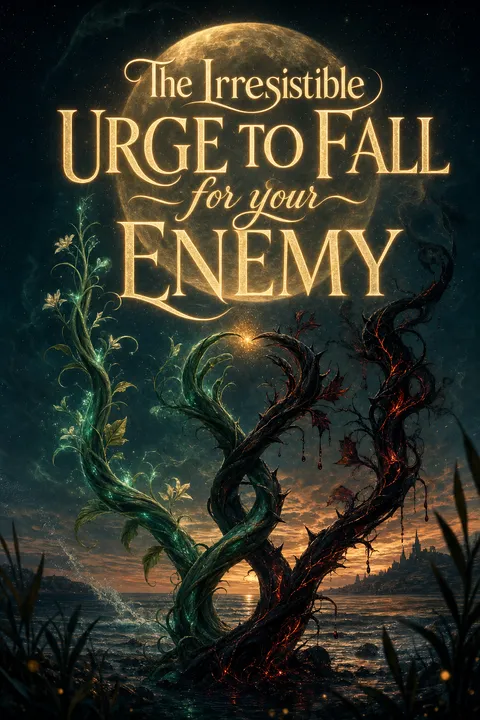


Plot Summary
Assassin Needs His Enemy
Osric Mordaunt,1 an assassin of the Fyren Order, learns from two terrified physickers that his seith system is rotting from a botched neck injury, and that only Aurienne Fairhrim2 of the rival Haelan Order might save him.
For a Fyren, losing seith means death, since his Order culls the weak. He infiltrates the white fortress of Swanstone, slips past its Wardens, and tries bribery, seduction, and threats of kidnap. Aurienne,2 disgusted by his left-palm tacn, refuses outright.
Her ancient mentor Xanthe3 overrides her: the Haelan desperately need money to fight a child-killing plague, and Osric1 dangles twenty million. Ordered to heal her enemy in secret, Aurienne2 links her tacn to his so their familiars can carry messages, sealing a partnership neither wants.
The opening inverts the usual power grammar of enemies-to-lovers: the deadly man is the supplicant, the healer the gatekeeper. Knightley frames need as humiliation, establishing Osric's driving terror not of death but of weakness within a Darwinian brotherhood. Aurienne's refusal is moral hygiene, but Xanthe converts ethics into economics, making healing a transaction stained by dead children. The tacn-link, normally reserved for intimates, becomes a forced intimacy: a bond of convenience that literalizes how commerce can smuggle connection past principle. The comic register (onions, mistaken undertaker) undercuts menace, signaling a book that weaponizes wit to keep tenderness at bay while quietly threading obligation between two people who despise each other.
The Incurable and the Impossible
At a derelict barn near a lonely pub at midnight, Aurienne2 runs diagnostics and delivers a brutal verdict: his cervical fractures pulverized his seith channels, the rot is incurable, and debridement is too late.
Osric1 refuses a slow death and seizes on a rumor from his physickers: a decade ago she dabbled in the Old Ways, studying the Monafyll Stone, a five-century-old lunar calendar carved with healing symbols. She insists it was a naive daydream, unscientific and career-ending.
He demands she test it on him anyway, arguing she has no proof it fails. Cornered by his logic and Xanthe's3 order to give it a genuine try, she agrees, privately intending to let him die. She explains her framework: healing at thin places and in-between times, keyed to the twelve named moons.
This section stages the collision of two epistemologies: Aurienne's evidence-based rigor against Osric's desperate faith. Her science has failed him, so he forces her back toward the folklore she buried to protect her reputation, exposing the vanity beneath her competence. The Monafyll Stone functions as a liminal object, half-artifact, half-myth, embodying the book's thesis that knowledge lives at edges. Crucially, Aurienne consents while intending failure, a moral sleight-of-hand that lets her obey Xanthe, keep the money, and preserve her sense of superiority. The barn, the cold, the manure all deflate any romance, insisting that hope here is undignified. Her cruelty is honesty; his optimism is a survival instinct dressed as delusion.
Moonlight and Marination
Their treatment becomes a farce of moonlit fieldwork. At the Wasdale fairy pool at sunset under the Cusc moon, Aurienne2 presses her tacn to his scarred nape and pours her cool seith into his dying channels. Nothing stirs; dead stays dead. Osric1 begs for a second attempt, and they travel to curative hot springs that turn out to be a brothel, the Randy Unicorn, where they trade insults among naked bathers and she refuses to enter the milky water.
That attempt fails too. A rhythm emerges between her sincere cruelties and his stubborn hope: she warns him to expect mostly error, he sulks, and they part calling each other an abscess with inferior hair and a self-righteous plague. The experiment, she insists, is doomed from the start.
Repetition is the point. By staging two failures back to back, the narrative trains the reader, like Osric, to associate near-misses with disappointment, so later successes land harder. The brothel setting is more than bawdy comedy: it stresses bodies, appetite, and exposure, contrasting Aurienne's armored propriety with a world of frank desire she clinically catalogues rather than feels. Their insults function as courtship-by-negation, a safe channel for attention that neither will name as interest. Knightley uses the picaresque structure, a new absurd locale each attempt, to defer intimacy while accreting familiarity. The failures also deepen Aurienne's private conflict: she wants to succeed intellectually even as she wants him, morally, to die.
The Colander Philologist
Under the Hara moon on the Hedgewitch-haunted South Downs, Osric1 and Aurienne2 climb past insulting invisible crickets and a feral child who vanishes without a trace before yet another healing fails. Osric1 insists the missing key is the untranslated fairy tongue carved on the Monafyll Stone.
They track down Widdershins,10 a disgraced philologist who wears a colander and hunts tadpoles at midnight, whose claims about the Stone once destroyed his academic career. He tells them to leave, then relents and points them to a shed.
There they assemble a plaster cast of the Stone pinned with his preliminary translations: cryptic phrases for each moon, a hare's shinbone, a blackened sun at land's end, running waters, a rainbow. Aurienne,2 energized despite herself, finally has clues to build a real plan.
Widdershins is a cautionary mirror for Aurienne: the scholar who followed intuition past the bounds of the acceptable and lost everything. Her fear of ending up like him, discredited and mad, dramatizes the professional cost of loving both knowledge and a Fyren. The Hedgewitches and vanishing child widen the world's numinous register, insisting that this reality genuinely contains the uncanny the data only gestures toward. The translation shifts the quest from guessing to method, giving Aurienne's scientific temperament something to grip. Comedy again buffers dread, but underneath runs a real argument about intellectual courage: that dismissed knowledge, folk medicine, retracted papers, may hold truths institutions punish rather than pursue.
A Clot and a Bargain
Wardens catch and kill four armed intruders carrying incendiary devices at Swanstone, a break-in far beyond any ordinary thief. Soon after, Osric's1 seith stops flowing entirely, and his panicked deofol12 begs Aurienne2 to Rosefell Hall, his decaying ancestral manor crowded with rescued elderly dogs.
She diagnoses a seith embolus, a clot she can clear where surgeons would only butcher. Before helping, she names a price: he must use his spy skills to discover who sent the intruders.
Mid-examination, a drunk fellow Fyren named Leofric9 blunders in fretting about his lopsided testicles, forcing Aurienne2 to hide in a wardrobe. Afterward she clears the clot, restoring his hellhound tacn to its red glow, and immediately regrets rearming a killer even as their transactional bond tightens into mutual leverage.
The chapter braids intimacy with dread. The Swanstone incursion plants the thriller engine that will eventually eclipse the romance, while the embolus scene reframes their bond: now she can save him repeatedly, and each rescue costs her conscience. Rosefell Hall, opulent yet rotting, externalizes Osric, a beautiful ruin funding beauty with blood. The dogs, named for crimes, reveal a tenderness he cannot admit. Leofric's slapstick intrusion protects the emotional stakes from tipping too soon, but the wardrobe forces shared complicity, a secret laugh. Aurienne's regret at healing him crystallizes the book's central ethical knot: doing good for one can mean loosing harm on many, and care is never morally clean.
The Black Sun Rises
At the remote Muckle Flugga lighthouse under the Blaednes moon, Osric1 first clears out a gang of bandits squatting inside. As the sun sets, a vast murmuration of gannets, a living black sun, engulfs the tower, exactly matching Widdershins'10 cryptic clue.
In that whirling, world-erasing instant, Aurienne2 embraces his neck and floods him with seith, and for a heartbeat reality seems to thin toward the impossible. Yet the diagnostic shows nothing changed.
Drained, her hands splitting open from her Cost, she rests her head on his shoulder while the beam sweeps the dark sea, and something quiet shifts between them. Later, forty of the bandits return in force, and Osric1 slaughters them all armed with only a bootlace, keeping her safe while horrifying her utterly.
This is the hinge where antagonism curdles into longing. The murmuration literalizes the book's poetics of the in-between: a moment neither day nor night, neither earth nor sky, where rules soften. The near-healing teases the reader with metaphysical possibility while withholding payoff, and the failure, paradoxically, produces the tenderest beat yet, exhaustion permitting contact her pride would forbid. Her Cost, hands flaying to bone, makes healing a self-wounding act, an image of love as sacrifice. Then the bootlace massacre reasserts the abyss between them: he is genuinely a monster, and her comfort on his shoulder cannot dissolve the bodies at the lighthouse. Intimacy and revulsion now coexist, irreconcilable and magnetic.
Undercover at the Bunghole
Chasing the intruder trail, Osric1 locates an informant in a squalid London pub called the Bunghole. Over his objections, Aurienne2 insists on coming, disguised as one of Madam Miffle's working girls, so she can interrogate the man herself and avoid another killing.
She endures the pawing of Scrope,14 a repulsive braggart, and coaxes from him one valuable name: Bardolph Wellesley,6 a retainer of the powerful Wessexian queen. When Scrope14 follows her outside to abduct her, Osric1 kills him with a fork and drops the body into a cesspit, reigniting their quarrel about his casual slaughter.
Back at Rosefell, her mentor's3 deofol brokers a fresh bargain: Osric1 will infiltrate Wellesley Keep in exchange for Aurienne's2 continued care of his inevitable next embolus.
Aurienne's undercover gambit is a study in control: she weaponizes performance, enduring degradation to extract intelligence without violence, insisting her methods can outperform his. The scene interrogates consent, disguise, and the labor of women in male spaces, framed by the genuine solidarity of Madam Miffle's protective network. Osric's fork murder detonates their unresolved ethical war, but his motive, she was followed, hints at a possessiveness he disguises as pragmatism. The renewed bargain escalates stakes and mutual dependence: Xanthe now treats Osric as a disposable asset, mirroring how the Fyren treat him, and Aurienne becomes the currency securing his cooperation. Care has become contractual leverage, and both keep pretending that is all it is.
The Healer and Her Guard
Wellesley6 has flooded his keep with floodlights, an anti-Fyren measure leaving Osric1 no shadows to walk. Xanthe3 engineers a Trojan entry: Wellesley6 once begged the Haelan to heal his daughter, so Aurienne2 arrives as the summoned healer with Osric1 disguised as her armored guard, his tacn concealed beneath a skin graft.
The child proves suspiciously healthy. Meanwhile a fresh diagnostic reveals something miraculous: Osric's1 degeneration has, however briefly, stopped. Overwhelmed, he lifts her chapped hand and kisses her knuckles, startling them both into silence.
By night he searches the keep, finding stolen treasures and a half-drowned kitten but nothing connecting Wellesley6 to the Swanstone attack. The real answer, they do not yet know, waits hidden elsewhere within the walls.
The graft hiding his tacn dramatizes the book's fascination with disguise and dual identity: Osric literally wears a Bright Path body, glimpsing the noble knight he might have been. The stalled degeneration finally rewards the Old Ways experiment, converting Aurienne from saboteur to genuine collaborator and destabilizing her certainty that he should die. The hand kiss is the romance's first unmasked gesture, devotion escaping the cover of pretense, and its awkward aftermath registers how unprepared both are for sincerity. The floodlit keep, a fortress built to negate shadow, ironically forecasts the coming crisis: light as paranoia, illumination as weapon. Suspense and yearning tighten in tandem, each feeding the other toward a violent reveal.
Massacre and the Broth
By morning Wellesley6 drops the mask and demands Aurienne2 name the anonymous donor who funded the Haelan's Pox research, the very twenty million Osric1 secretly gave. When she refuses and his men trap them in a floodlit hall, Osric1 sheds his armor and shadow-walks through the only darkness left, their bodies, butchering ten men.
Wellesley6 seizes Aurienne2 with a knife; she pinches his artery to faint him, but he falls wrong, cracks his skull, and dies. Fleeing, they uncork a bottle from his heavily guarded cellar and recognize the chemical reek of virus-preservation broth.
Testing later confirms the horror: Wellesley6 was stockpiling and deliberately spreading the Platt's Pox that has been killing children. He was only a pawn, and his death shoves Wessex toward war with Kent.
The action climax doubles as revelation: the mystery of Swanstone's attackers resolves into something monstrous and systemic. Aurienne's accidental kill shatters her Harm to none identity, collapsing the moral distance she has policed between herself and Osric, she is now, by her own reckoning, a murderer. The Pox broth transforms private tragedy into conspiracy: the plague is manufactured, its child victims engineered, which retroactively justifies her earlier fury at indifferent monarchs. The scene's grotesque violence sits beside forensic discovery, insisting that healing and killing share the same intimate knowledge of the body. Power, the book argues, treats poor children as expendable raw material, and Wellesley's death only widens the war his masters wanted.
A Knife He Never Felt
Selling stolen intelligence, Osric1 learns his warchief Tristane4 has accepted a rule-breaking contract against another Order and dispatched the brute Brythe toward Swanstone, where Aurienne2 lives. Fearing for his healer,2 Osric1 ambushes Brythe at the Publish or Perish and interrogates him, but Brythe spitefully finishes himself off rather than confess.
In the struggle Brythe's blaecblade lodges deep in Osric's1 side; his advanced torpraxia is so numbing he never notices. Bleeding out and delirious, he takes a waystone to Aurienne's parents'13 London home during their fortieth anniversary party.
Posing as her friend Osric Hungwell,1 he charms her relatives, then faints face-first into a pudding. Aurienne2 desperately operates through the night, tearing her own hands raw, and saves the enemy she was ordered to keep alive.
Osric killing his own colleague to protect Aurienne is the story's first irreversible sacrifice, an act he rationalizes as self-interest but that even he cannot fully explain. His numbness to the fatal wound literalizes emotional dissociation: a man so armored he does not register his own dying. The farcical arrival at the party, dying man as charming guest, fuses comedy and mortal stakes, and forces the relationship into a domestic register utterly foreign to both. Aurienne's frantic, self-injuring rescue answers his sacrifice with her own, and her deofol's report reframes her anger as gratitude. The chapter marks the tipping point where transactional care becomes something neither can label without terror.
Rain on the Balcony
Osric1 convalesces for days in Aurienne's2 childhood bedroom, tended by her while her Ingenaut mother Radia13 and botanist father Rosbert13 dote on the mysterious guest they believe is her new suitor.
Forced into closeness, the enemies trade true histories: he confesses he killed his abusive father at fourteen, the night his mother died, and clawed the family fortune back from ruin; she admits she loved once, disastrously, and swore never again.
At the anniversary party, tipsy and barefoot in a champagne gown, Aurienne2 dances with him on the rain-swept balcony to convince a lovelorn suitor she has moved on. Beneath the moon and falling rain they kiss, a pretense that feels like nothing of the sort. She retreats instantly, shaken, while he is left ruined by the memory.
Domesticity does what danger could not: it disarms them. Sharing origin wounds, his made by a father's fists, hers by a buried love, reframes both as products of harm rather than pure archetypes of monster and saint. Radia and Rosbert's tender ordinariness exposes what Aurienne sacrifices for Swanstone and what Osric never had, softening the reader toward the possibility of a life beyond their Orders. The rain-dance kiss operates through the alibi of performance: they can only touch under cover of pretending, the book's recurring device of intimacy smuggled past prohibition. Her immediate flight enacts the compartmentalization she prizes, while his devastation confirms the asymmetry, he now wants what he cannot categorize away.
Death Herself Approaches
Summoned to the Fyren abattoir, Osric1 watches Tristane,4 the deadliest assassin alive, resolve to complete the Swanstone contract herself after Brythe's disappearance. He races to warn Aurienne,2 breaking onto her tower roof only to find new Warden wards sealing every entrance.
Planning her defense together, they piece out the atrocity's logic: someone funded the deliberate Pox to manufacture brain-dead children, and brain-dead shells are precisely how the near-extinct Dreor death-knights are created. Somebody is building an army for war.
Aurienne,2 now trusting him completely, agrees to attempt the Faerwundor at the next full moon despite Osric's1 history of murdering its Druid Seer. As the stars fade over the sea, Osric1 grasps the ruinous truth he can no longer outrun: he has fallen in love with his enemy.
The finale fuses the twin engines, cure quest and conspiracy, into a single dread. Tristane's advance transforms an abstract threat into an imminent hunter, raising the price of every attachment. The Dreor revelation retrofits the entire plague into weaponized grief: children rendered soulless to be reforged as death-knights, a chilling allegory of how war machines consume the powerless as materiel. Against this darkness, the couple's planning marks their evolution from adversaries and clients to genuine partners, trust replacing leverage. Osric's closing epiphany, love at last sight rather than first, names desire as recognition arriving too late and too impossibly. The book ends on the vertigo of a threshold, promising catastrophe and consummation deferred.
Analysis
Knightley's debut disguises a serious argument beneath relentless comedy: that moral categories, so beloved by Aurienne,2 cannot survive contact with real people. The book's structure is a lunar pilgrimage, each full moon a new absurd locale and a new failed healing, and this ritual repetition trains reader and characters alike to distrust hope, so that genuine intimacy arrives sideways, in exhaustion, disguise, or pretense. The central conceit, enemies bound by a tacn-link and a transaction, literalizes how obligation smuggles connection past principle. Healing and killing are framed as twin masteries of the body, and the Cost that flays Aurienne's2 hands makes love inseparable from self-wounding. The novel is fascinated by thresholds and the in-between: dusk, tidal edges, thin places, and the pair themselves, forever at an almost, kissing only under the alibi of performance. Its comedy, scatological, sharp, endlessly bickering, is not decoration but defense, the mechanism by which two guarded, arrogant people avoid naming what they feel. Beneath the froth runs a pointed politics: a plague allowed to ravage poor children because they are not worth funding, then revealed as deliberately engineered to breed an army, indicts power's treatment of the powerless as raw material. Osric's1 backstory (an abused bastard who murdered his father) and Aurienne's2 renounced love complicate the monster-versus-saint binary the book keeps invoking, insisting both are products of harm. The closing epiphany, love at last sight rather than first, reframes desire as recognition arriving too late and impossibly, and the deliberately unresolved ending, Tristane4 advancing, the Dreor army looming, the cure only partly working, positions the romance as a threshold held open. The lesson is that goodness is never clean: saving one can arm the destroyer of many, and to love across enemy lines is to abandon the comfort of clear labels.
Review Summary
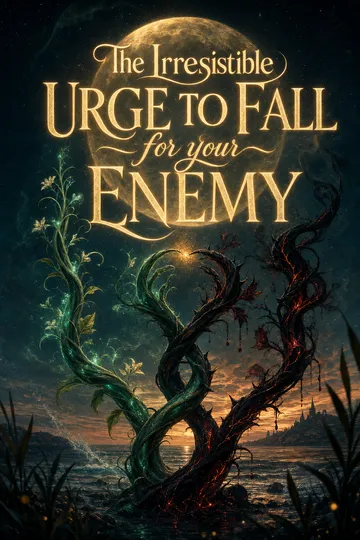
The Irresistible Urge to Fall For Your Enemy receives mixed reviews. Many praise its witty banter, slow-burn enemies-to-lovers romance, and laugh-out-loud humor. Readers enjoy the chemistry between Aurienne, a healer, and Osric, an assassin. However, some criticize the lack of world-building, confusing magic system, and pretentious vocabulary. The book is often described as a romantic comedy in a fantasy setting, with a polarizing writing style. While some readers found it addictive and hilarious, others struggled to connect with the characters or follow the plot.
People Also Read



Characters
Osric Mordaunt
Charming assassin, dyingA member of the Fyren Order of shadow-walking assassins, Osric is vain, quick-witted, immaculately dressed, and lethally skilled, with a body mapped by scars and a temperament that treats murder as craft. Bastard-born and self-made, he clawed his family's title and fortune back after a brutal childhood, and hides genuine aesthetic passion, art, dogs, beauty, behind flippancy. His diagnosis of terminal seith rot strips away his invulnerability and forces him to beg, a posture that both humiliates and humanizes him. Psychologically he is a man who equates need with weakness and love with theft, unable to want without wanting to possess. Beneath the roguish performance runs loneliness and a starved capacity for tenderness he cannot name.
Aurienne Fairhrim
Peerless, prickly healerA Haelan of extraordinary talent, Aurienne is the acknowledged best in her Order at the seith system, and knows it, wearing competence like armor. Precise, controlled, and morally exacting, she lives by her Order's creed of Harm to none and by relentless compartmentalization, keeping feeling filed under labels she can manage. Daughter of an Ingenaut inventor and a botanist13, she chose Swanstone's austere tower over her family's comfort, driven by devotion to knowledge and to sick children. A past love left her wary, swearing off romance, requiring judiciously chosen faults in anyone she might want. Her sincerity, even her cruelty, is a kind of honesty. Forced to heal an enemy1, she discovers her clean categories cannot survive contact with him.
Xanthe
Ancient, ruthless mentorA two-hundred-year-old Haelan Head and Aurienne's2 mentor, Xanthe is a genius healer, storming and profane, who prioritizes her Order's survival over decorum. Pragmatic to the point of ruthlessness, she brokers the deal with Osric1 and repeatedly overrides Aurienne's2 scruples, treating twenty million and a Pox cure as worth swallowing distaste. Her fury at indifferent monarchs reveals deep compassion beneath the opportunism.
Tristane
Legendary Fyren warchiefOsric's1 warchief and the most lethal assassin in the Tiendoms, rumored to have thousands of kills and sometimes called Hel walking among the living. French, geometrically composed, and quietly terrifying, she culls Fyren who develop conscience and enforces the Order's cold philosophy. She accepts a rule-breaking contract against another Order for a vast fee, making her the looming external threat.
Mrs. Parson
Loyal manor stewardOsric's1 stout, capable steward at Rosefell Hall, missing fingers from an old accident, who ran his household since his impoverished childhood and once smuggled food to him and his mother. Fond of him like a tolerant aunt, she conducts investigations, brews memory-erasing teas, and treats kidnapping and body disposal as ordinary chores, revealing her own unhinged loyalty.
Bardolph Wellesley
Scheming Wessexian retainerA rich, powerful retainer of the Wessexian queen, suppository-headed and cold-eyed, who lures Aurienne2 to his floodlit keep under pretense of a sick daughter. Paranoid and desperate to identify the Haelan's anonymous donor, he proves a mid-level piece in a far larger and more sinister design, and a catalyst for war.
Cath
Trauma healer, friendDirector of Trauma and Acute Care at Swanstone, shaven-headed with painted eyebrows, boxing-loving and blunt, engaged to Élodie8. A loyal, perceptive friend who advises Aurienne2 on wound care without prying too far and senses more than Aurienne2 admits.
Élodie
Gentle lead virologistThe Haelan Order's flaxen-haired virologist, dreamy and flower-loving, engaged to Cath7. She leads the Platt's Pox immunization effort, and her breakthrough vaccine candidate offers hope against the outbreak that shadows the whole story.
Leofric
Idiot comic FyrenA fellow assassin with, per Osric1, a single brain cell and a genius for chaos. Perpetually drunk, obsessed with his testicles and nipples, and a self-described sex pest, he blunders into scenes for comic relief while remaining, unnervingly, a genuine killer.
Widdershins
Disgraced folklore philologistA ruined former professor who claimed to translate the fairy-tongue on the Monafyll Stone and lost his career, doctorate, and nipples in a fire. Now living in a burnt cottage, colander on head, hunting tadpoles and reciting etymologies, he supplies the plaster cast and translations that reshape the quest.
Cíele
Aurienne's albino deofolAurienne's2 meticulously rendered albino genet familiar, rendered so precisely it has physical weight and claws. Sardonic and fiercely loyal, it delivers her messages while trading insults with Osric1, an extension of her wit and her guardedness.
Cinder
Osric's shadow-wolf deofolOsric's1 familiar, a wolfish shadow with a floating white grin and golden eyes, alternately obsequious and menacing depending on need. It carries his warnings and messages, mirroring his cunning and his hidden urgency to protect Aurienne2.
Radia and Rosbert
Aurienne's doting parentsAurienne's2 London parents: Radia, a wry Ingenaut inventor who made the family fortune with a tube, and Rosbert, a chatty botanist with a greenhouse. Warm, soft, and blissfully unaware their guest is a Fyren1, they embody the ordinary tenderness Aurienne2 renounced and Osric1 never had.
Scrope
Repulsive pub informantA boorish, well-connected lowlife at the Bunghole, infamous for fouling brothel baths, who lechers over the disguised Aurienne2. In exchange for her feigned attention he supplies the crucial name that cracks the conspiracy open.
Plot Devices
Seith and the tacn
Magic system and identity brandSeith is the story's magical energy, running alongside the nervous system; mastery requires a tacn, a brand seared into the palm that opens one's seith to the world. Bright Path Orders wear it on the right hand, Dusken Paths on the left, so a glance at a palm reveals allegiance. Healers, assassins, engineers, and guardians all manipulate seith differently, and overuse triggers a personal Cost, a physiological penalty like Aurienne's2 flaying hands or Osric's1 white eye. The tacn functions as both weapon and stigma: Osric's1 red hellhound marks him as a killer, and the enforced tacn-link between him and Aurienne2, normally reserved for intimates, physically binds enemies into forced communication.
Seith rot and torpraxia
Ticking-clock terminal diseaseSeith rot is the degenerative, incurable condition slowly killing Osric1 after his cervical injury shattered his seith channels. It advances relentlessly, threatening first his powers, then his nervous and circulatory systems, and produces torpraxia, a creeping numbness in his extremities. The disease is the engine of the entire plot: it forces the enemy alliance, dictates the moonlit treatment schedule, and raises stakes with each fluctuation and blockage. Its numbing effect becomes literal and symbolic, at one point he fails to notice a blade buried in his side. The rot also makes him vulnerable, dependent, and mortal, dismantling the invincibility that defines a Fyren and exposing the frightened man beneath.
The Monafyll Stone
Mythic cure blueprintA five-century-old carved lunar calendar naming twelve full moons and marked with healing iconography and an untranslated fairy tongue. It anchors Aurienne's2 abandoned Old Ways research, the theory that miraculous healing is possible at thin places and in-between times, edges of land, dusk and dawn, tidal shifts, aligned with specific moons. Osric1 forces her to resurrect it, and Widdershins'10 translation supplies clues that guide each monthly attempt: a hare's shinbone, a blackened sun, running waters. The Stone embodies the novel's argument that dismissed, folkloric knowledge may hold truths institutions punish, and it structures the plot as a lunar pilgrimage, one moon and one location at a time.
Deofol familiars
Messengers and character mirrorsDeofol are animal familiars made of seith that manifest in childhood and grow with their summoner, ranging from vague wisps to vividly detailed forms depending on the wielder's control. They travel between linked tacn to carry messages, serving as the story's communication network and much of its comedy, Cíele11 the barbed genet, Cinder12 the shadow-wolf, Xanthe's3 ancient axolotl. Their precision reflects their master's power; Aurienne's2 is so controlled it has weight and claws. Beyond logistics, they externalize personality and permit proxy sparring between characters kept physically apart, and they become instruments of rescue when one deofol races to warn of mortal danger.
The manufactured Pox
Hidden conspiracy and war engineThe Platt's Pox outbreak, killing and brain-damaging impoverished children, initially reads as a funding crisis exploited by Osric's1 bribe. Gradually it reveals itself as deliberate: bottles of virus-preservation broth in Wellesley's6 guarded cellar prove the plague is being cultivated and spread on purpose. The final horror clarifies its aim, brain-dead children are the raw material for creating Dreor death-knights, meaning someone is engineering an army for war by harvesting the powerless. This device escalates the book from a romance-with-a-cure into a political thriller, retroactively charges the couple's every choice with consequence, and delivers its sharpest social critique: institutions treating expendable children as materiel.
FAQ
```markdown
Synopsis & Basic Details
What is The Irresistible Urge to Fall For Your Enemy about?
- A Desperate Assassin's Quest: Osric Mordaunt, a lethal Fyren assassin, faces a terminal magical illness called seith rot, which threatens to strip him of his powers and lead to his execution by his own Order. His only hope lies with Aurienne Fairhrim, a brilliant but haughty Haelan healer from a rival Order, whom he must coerce into helping him.
- An Unlikely Alliance Against a Plague: Aurienne, a principled healer, initially refuses to aid her Order's enemy. However, Osric's substantial bribe of twenty million thrymsas, intended to fund her Order's research into a devastating children's plague (Platt's Pox), forces her hand. This uneasy alliance sets them on a clandestine journey to find a cure for Osric's incurable condition, blending rigorous science with ancient, forgotten healing rituals.
- Unraveling a Dark Conspiracy: As their forced collaboration deepens, Osric and Aurienne uncover a sinister plot: the Platt's Pox epidemic is not natural but a deliberately unleashed weapon of war. Their personal quest for survival transforms into a race against time to expose the powerful figures behind the conspiracy, all while navigating the escalating threats from their own Orders and the undeniable, forbidden attraction growing between them.
Why should I read The Irresistible Urge to Fall For Your Enemy?
- Deeply Layered Enemies-to-Lovers: This novel elevates the classic trope by embedding the conflict not just in personal animosity but in deep-seated, institutionalized hatred between rival magical Orders. Readers will be captivated by the slow, agonizing burn of Osric and Aurienne's relationship, forged in desperation, danger, and unexpected vulnerability, making their eventual connection incredibly earned and impactful.
- Rich World-Building and Unique Magic System: Brigitte Knightley crafts a vivid alternate UK setting with a compelling magic system centered around 'seith' and distinct 'Orders' (Haelan healers, Fyren assassins, Ingenaut engineers, etc.). The story seamlessly blends high fantasy with elements of medical drama and political intrigue, offering a fresh take on magical abilities and their societal implications.
- Intriguing Blend of Science and Folklore: The narrative masterfully intertwines Aurienne's scientific rigor with ancient myths and healing rituals, creating a unique quest for a cure. This intellectual puzzle, combined with a high-stakes conspiracy involving a magical plague, offers both thrilling plot twists and thought-provoking explorations of belief, knowledge, and the human cost of power.
What is the background of The Irresistible Urge to Fall For Your Enemy?
- A Fractured Alternate UK: The story is set in the Tīendoms, ten petty kingdoms vying for control of an archipelago in the North Atlantic, an alternate version of the UK. This political fragmentation and constant skirmishing between kingdoms provide a fertile ground for the mercenary Fyren Order and the apolitical, yet often entangled, Haelan Order.
- A World Governed by Magical Orders: Society is structured around eight powerful Orders, each specializing in a different aspect of 'seith' (magic). These Orders operate under the "Peace Accords," a fragile treaty that forbids direct hostile actions but is constantly tested by political ambition and personal vendettas. The distinction between "Bright Paths" (Haelan, Warden), "Dusken Paths" (Fyren, Dreor), and "Dim Path" (Hedgewitch) defines character allegiances and moral frameworks.
- Technological and Cultural Blend: The setting features a fascinating mix of historical and fantastical elements. While magic (seith) powers advanced contraptions and travel via 'waystones,' everyday life still includes daguerreotypes, gas lamps, and traditional architecture. Cultural references to Old English, Old Norse, and various regional accents (Strathclyde, Dublin) ground the fantastical world in a familiar, yet distinct, British context.
What are the most memorable quotes in The Irresistible Urge to Fall For Your Enemy?
- "I'm going to lose my seith. That is, unfortunately, one of the likely outcomes, sir. I can't lose my seith. You know what I am. You're a member of the Fyren Order, sir. P-perhaps you could envisage an early retirement? Do you know how Fyren are retired? Death.": This early exchange powerfully establishes Osric's desperate situation and the brutal stakes of his existence, immediately highlighting the existential threat of his seith rot and the unforgiving nature of the Fyren Order. It underscores his motivation for seeking Aurienne's help, setting the tone for the entire narrative.
- "You're a shadow-walking coward-for-hire. Yes. Vile. She nevertheless reached her right hand towards Osric. They brushed their tācn together. The wing of the Haelan Order's swan touched the fang of the Fyren Order's hellhound.": This quote encapsulates the core conflict and the forbidden intimacy of their alliance. Aurienne's visceral disgust ("Vile") juxtaposed with the physical act of linking their tācn—a symbolic union of opposing forces—perfectly illustrates their enemies-to-lovers dynamic and the inherent tension in their forced connection.
- "I don't kiss patients. I thought I wasn't a patient. Right. You're just a Point of Leverage. You must make use of me.": This dialogue, spoken just before their first kiss, is a masterclass in denial and simmering desire. It showcases their witty, combative banter while revealing the deep emotional undercurrents. The playful yet loaded exchange about "patient" and "Point of Leverage" highlights their complex, utilitarian-yet-passionate relationship, blurring the lines between their roles and their true feelings.
What writing style, narrative choices, and literary techniques does Brigitte Knightley use?
- Sharp, Witty, and Acerbic Dialogue: Knightley's prose is characterized by its quick-fire, often sarcastic, and highly intelligent dialogue. The banter between Osric and Aurienne is a central feature, serving not only as comic relief but also as a mechanism for character development, revealing their personalities, defenses, and growing connection. This verbal sparring is a key element of the novel's charm and its "slow burn" romance.
- Dual Perspective and Deep Interiority: The narrative alternates between Osric's and Aurienne's third-person limited perspectives, offering readers intimate access to their thoughts, fears, and evolving emotions. This allows for a nuanced exploration of their internal conflicts, contrasting their outward hostility with their private vulnerabilities and burgeoning feelings, enriching the psychological depth of the enemies-to-lovers analysis.
- Rich Sensory Detail and Evocative Imagery: Knightley employs vivid descriptions that immerse the reader in the Tīendoms, from the "frigid arse-end of the Danelaw" to the "pungency of guano" at Muckle Flugga. She uses strong sensory language to create atmosphere, whether it's the "sickly jingle" of the Harmacy bell or the "tender apocalypse" of a kiss, making the world feel tangible and the emotional moments impactful. The literary techniques enhance the reader's experience.
Hidden Details & Subtle Connections
What are some minor details that add significant meaning?
- The Significance of the Hagstone: Aurienne wears a "round stone with a hole in its centre" (hagstone) on a worn leather cord, incongruous with her usual sharp adornments. This seemingly minor detail subtly foreshadows her eventual embrace of the "Old Ways" and folk magic, contrasting her scientific rigor with an inherent connection to ancient, less conventional forms of healing. It hints at a deeper, perhaps inherited, openness to the mystical, despite her outward disdain.
- Mrs. Parson's Missing Fingers: Osric's steward, Mrs. Parson, is noted to be "missing a few fingers on her left hand. An old injury, based on the maturity of the scars, but a traumatic one." This detail, coupled with her fierce loyalty and casual acceptance of violence ("I hope you made him suffer, sir"), subtly suggests a past deeply intertwined with the Fyren Order's brutal world, perhaps even a former life as a Fyren herself or someone who suffered directly from their methods, adding depth to her character and her unwavering support for Osric.
- The Critique Crickets' Commentary: The "minuscule, croaky voice" of the critique crickets, heard only in "thin places," offers unsolicited, often insulting, commentary on Osric and Aurienne. This seemingly whimsical detail serves as a symbolic externalization of their own internal criticisms and insecurities, particularly their self-consciousness about their appearance and actions. Their presence highlights the constant judgment they face, both from themselves and the world, and their shared annoyance at the crickets subtly hints at their growing camaraderie.
What are some subtle foreshadowing and callbacks?
- Osric's "Irresistible" Nature and Aurienne's Resistance: From the very first chapter, Osric is introduced as "Irresistible Bastard," and Aurienne as "Immovable Bitch." This initial characterization is a constant callback throughout the narrative, subtly foreshadowing their eventual, undeniable attraction. Every instance of Aurienne's resistance or Osric's charm plays into this foundational dynamic, making their eventual "fall" feel both inevitable and deeply ironic. This is key to the enemies-to-lovers analysis.
- The "Blackened Sun" and the Gannet Murmuration: Widdershins' cryptic translation for the Blædnes moon, "blackened sun at land's end," initially seems like a nonsensical detail. However, it foreshadows the dramatic scene at Muckle Flugga where the gannet murmuration creates a "Sort sol—black sun" as thousands of birds obscure the sky. This callback transforms a seemingly random detail into a powerful, symbolic moment of convergence, hinting at the profound, if fleeting, magical potential of that specific "thin place."
- The Recurring Motif of "Thin Places" and Thresholds: The concept of "thin places" and "in-between" moments (sunset/dawn, land/sea, living/dead) is introduced early in Aurienne's research. This motif subtly foreshadows the emotional and relational thresholds Osric and Aurienne repeatedly cross. Their physical journeys to these liminal spaces mirror their psychological journey from enemies to something more, constantly existing "on the verge and only ever on the verge," as Osric reflects after their first kiss. This symbolism explained deepens the narrative.
What are some unexpected character connections?
- Radia Fairhrim's Ingenaut Tācn: Aurienne's mother, Radia, is revealed to be an Ingenaut with a tācn of "golden gears." This is an unexpected connection, as Aurienne is a Haelan, and her mother's Order is focused on engineering rather than healing. This detail subtly explains Aurienne's own scientific brilliance and her family's wealth ("made her family's fortune by inventing some sort of tube"), providing a deeper understanding of her background and the intellectual environment she grew up in, contrasting with her chosen path.
- Mrs. Parson's Loyalty and Fyren Connections: Mrs. Parson's unwavering loyalty to Osric, her casual acceptance of his violent profession, and her missing fingers hint at a deeper, unstated connection to the Fyren world. Her ability to gather intelligence through "serving girls and charwomen" and her suggestion of "B for Blackmail, C for Coercion" for Aurienne reveal a pragmatic, ruthless side that aligns more with the Dusken Paths than a typical steward. This suggests she might have been a former Fyren operative or someone deeply embedded in their network, making her more than just a housekeeper.
- Osric's Hidden Compassion for Animals: Despite his ruthless profession, Osric shows unexpected compassion for animals, freeing horses from a carriage he's destroyed and rescuing a kitten from Wellesley Keep. This contrasts sharply with his indifference to human life and hints at a deeper, buried humanity. His naming of his dogs after "what was happening when I found them" (e.g., Rigor Mortis, Arson) adds a layer of dark humor and personal history to this unexpected trait, revealing a softer side beneath the "monster" persona. This detail is crucial for understanding Osric Mordaunt's motivations.
Who are the most significant supporting characters?
- Haelan Xanthe: The Pragmatic Visionary: Xanthe, Aurienne's mentor, is far more than just a wise elder. She is the strategic mind who pushes Aurienne to accept Osric's bribe, recognizing the greater good for the Pox-stricken children. Her "low fury" and willingness to write scathing letters (and consider infecting monarchs with warts) reveal a deep, righteous anger against injustice, making her a moral compass who isn't afraid to bend rules for the sake of saving lives. Her long life ("over two hundred years old") gives her a unique, detached perspective on the Tīendoms' politics and the Orders' rigid principles.
- Mrs. Parson: The Unflappable Enabler: Osric's steward, Mrs. Parson, is a master of logistics and discretion, essential to Osric's clandestine operations. Her ability to procure "beautifully forged thrymsas" and her casual suggestions for "kidnap" and "extortion" highlight her deep complicity and loyalty to Osric, regardless of his moral standing. She acts as a grounding force for Osric's impulsiveness, providing practical solutions and a touch of dry wit, making her indispensable to his survival and schemes. Her missing fingers hint at a past that makes her uniquely suited to her role.
- Cíele: The Sharp-Tongued Confidant: Aurienne's deofol, Cíele, is a white genet with an exceptionally detailed form and a fiercely protective, often sarcastic, personality. Cíele serves as Aurienne's emotional sounding board and a direct link to Osric, often delivering messages with a side of pointed insults. Cíele's ability to observe and report on Osric's actions (like killing Brythe) provides crucial plot information and emotional insight, acting as a surrogate conscience for Aurienne and a mirror to her own conflicted feelings about the Fyren.
Psychological, Emotional, & Relational Analysis
What are some unspoken motivations of the characters?
- Osric's Hidden Desire for Acceptance: Beneath Osric's outward arrogance and self-interest lies a deep-seated, unspoken desire for acceptance and belonging. His confession about his bastardy and his father's abuse ("He gave us beatings along with the thrymsas") reveals a profound wound. His constant need to prove his worth, accumulate wealth, and maintain his "monster" persona stems from this early rejection. His initial attempts to "seduce" Aurienne, however clumsy, hint at a longing for connection beyond mere utility, even if he can't articulate it. This is a key aspect of Osric Mordaunt's motivations.
- Aurienne's Fear of Emotional Entanglement: Aurienne's rigid adherence to scientific principles and her Order's "Harm to none" maxim, coupled with her "low tolerance for Fyren," masks a deep fear of emotional entanglement. Her past heartbreak with Amagris, though briefly mentioned, suggests a vulnerability she fiercely guards. Her constant compartmentalization and insistence on "nothing beyond" a professional relationship with Osric are unspoken attempts to protect herself from repeating past pain, even as her actions (saving him, stealing for him) contradict her words. This is central to Aurienne Fairhrim's psychological complexities.
- Xanthe's Calculated Compassion: Xanthe's decision to push Aurienne into healing Osric, despite the ethical breaches, is driven by a calculated compassion that extends beyond individual patients. Her "seething rage" at the monarchs' apathy towards the Pox-stricken children reveals a deep commitment to systemic change. Her unspoken motivation is to leverage Osric's wealth and skills to protect her Order and the vulnerable, even if it means compromising her own ideals. She sees the bigger picture, making her a morally ambiguous but ultimately benevolent force.
What psychological complexities do the characters exhibit?
- Osric's Mask of Indifference and Self-Loathing: Osric presents a facade of sardonic indifference and ruthless self-interest, but beneath it lies a complex mix of self-loathing and a desperate need for validation. His casual confession of patricide and subsequent terrorizing of his father's lawyer to legitimize his birth ("Killed him later to be safe") reveals a man shaped by extreme trauma and a brutal survival instinct. His internal conflict is evident in his "stress-eating chocolate" and his "guilt and pleasure" during his solitary sexual act, showing a hidden moral compass he actively tries to suppress. This is a deep dive into Osric Mordaunt's psychological complexities.
- Aurienne's Battle Between Logic and Emotion: Aurienne is a paragon of logic and scientific rigor, but her journey forces her to confront the limits of reason. Her "emotional regulation strategies—suppression, compartmentalisation—lost their efficacy" during the Pox outbreak, leading to moments of unexpected tears and vulnerability. Her internal struggle is palpable when she grapples with healing Osric, a "monster," and later, when she experiences "horror and pleasure" during her self-gratification, revealing a deep psychological complexity where her rational mind battles her burgeoning, forbidden emotions. This is key to Aurienne Fairhrim's emotional analysis.
- The Deofols as Externalized Psyches: The deofols, Cíele and Cinder, serve as more than just magical familiars; they are externalized aspects of their masters' psyches. Cinder's "sly, smoky seith" and "manipulative" nature mirror Osric's cunning, while Cíele's "sharp tongue" and "fiercely protective streak" reflect Aurienne's own personality. Their direct, often insulting, commentary on each other's masters ("Ugly boots," "Pube-plait boy") provides a raw, unfiltered glimpse into the protagonists' subconscious thoughts and feelings, highlighting their internal conflicts and the growing, albeit denied, affection.
What are the major emotional turning points?
- Osric's Desperate Plea at the Waystone: After repeated failed healing attempts, Osric, abandoning all dignity, whispers "Please" to Aurienne, begging for another chance. This moment marks a significant emotional turning point, as it shatters his usual facade of arrogance and reveals his profound vulnerability and fear of death. Aurienne's subsequent decision to "give the thing a real go" is a direct response to this raw display, shifting their dynamic from pure coercion to a more empathetic, albeit still reluctant, partnership. This is a crucial emotional turning point for Osric Mordaunt's motivations.
- Aurienne's Guilt Over Wellesley's Death: Aurienne's accidental killing of Lord Wellesley, intended as a non-lethal carotid pinch, is a major emotional turning point that forces her to confront her own capacity for violence. Her subsequent "convulsions of guilt" and the realization that she is "no better than the Fyren" challenge her core Haelan principles of "Harm to none." This act blurs the moral lines she has always held sacred, pushing her closer to Osric's morally ambiguous world and deepening their shared complicity. This is a significant emotional turning point for Aurienne Fairhrim's character development.
- The Kiss in the Rain and Its Aftermath: The kiss on the balcony, initially a "sham" to deceive Aedan, becomes a powerful emotional turning point that irrevocably alters their relationship. Aurienne's "tender apocalypse of his lips on hers" and her subsequent "horror and pleasure" during her self-gratification reveal an undeniable, forbidden attraction. This moment shatters their carefully constructed walls of denial, forcing them to acknowledge the "irresistible urge" that has grown between them, even as they struggle with the "beautiful impossibility" of it all. This is the climax of their enemies-to-lovers dynamic.
How do relationship dynamics evolve?
- From Coercion to Codependence: The relationship between Osric and Aurienne begins with Osric's desperate coercion and Aurienne's disgusted compliance. However, as Osric's condition worsens and Aurienne's Order faces external threats, their dynamic shifts to one of mutual codependence. Osric needs Aurienne's healing, and Aurienne needs Osric's intelligence and protection. This necessity forces them into increasingly intimate and dangerous situations, blurring the lines of their initial roles.
- From Mutual Contempt to Grudging Respect: Initially, their interactions are characterized by sharp insults
Dearly Beloathed Series
Download PDF
Download EPUB
.epub digital book format is ideal for reading ebooks on phones, tablets, and e-readers.








































