
Plot Summary
Dreams and Disappointments
Tom Rigby, a widowed father and frustrated artist, is haunted by recurring dreams of a mysterious house and tangled undergrowth. His life is marked by disappointment—his relationship with Ilona, a make-up artist, is distant and unsatisfying, and his artistic ambitions have been sidelined by the demands of running a successful art supply shop and raising his children. The narrative opens with Tom reflecting on his dissatisfaction, his longing for creative fulfillment, and the emotional distance growing between him and Ilona. The tone is one of quiet yearning, with Tom's internal world colored by regret and a sense of missed opportunities, setting the stage for the unsettling events to come.
The Unexpected Commission
Tom's routine is disrupted when Mrs. Weldon, a stranger, approaches him after seeing his work in a local exhibition. She offers him a lucrative commission: to paint a portrait of Catherine, the great-niece of her employer, Miss Stewart, at Woolvercombe House in Somerset. The offer is so generous that Tom is tempted to abandon his long-awaited holiday with Ilona. Despite initial refusals, circumstances conspire—Ilona cancels their trip, and Mrs. Weldon's persistence, coupled with Tom's own sense of stagnation, leads him to accept. This decision, made in a moment of vulnerability, will draw Tom into a web of secrets and manipulation far beyond his expectations.
Ilona's Absence, Tom's Longing
Ilona's unpredictable work schedule and emotional distance strain her relationship with Tom. Their planned holiday falls apart when Ilona takes a new job abroad, leaving Tom feeling abandoned and questioning the future of their relationship. Tom's longing for intimacy and stability is met with Ilona's fear of commitment and her own unresolved past. Their conversations are fraught with unspoken resentments and unmet needs, highlighting Tom's vulnerability and the emotional void at the heart of his life. This chapter deepens the sense of isolation and sets Tom adrift, making him more susceptible to the strange allure of Woolvercombe House.
The Portrait Offer
With his family away and Ilona gone, Tom is left alone and restless. Mrs. Weldon's commission becomes an irresistible opportunity—a chance to reclaim his identity as an artist and escape the monotony of his daily life. The promise of creative fulfillment and financial reward outweighs his lingering doubts. Tom's journey to Woolvercombe House is filled with anticipation and a sense of possibility, but also an undercurrent of unease. The house, isolated and surrounded by overgrown grounds, feels both inviting and ominous, foreshadowing the psychological and supernatural entanglements that await him.
A Holiday Unravels
Tom arrives at Woolvercombe House, greeted by Mrs. Weldon and a cast of eccentric servants. The house is grand but decaying, filled with secrets and a pervasive sense of something not quite right. Tom meets Catherine, a shy and beautiful young woman, and the enigmatic Miss Stewart, whose grotesque appearance and probing questions unsettle him. The presence of five young women dressed as nuns, sequestered in the grounds, adds to the atmosphere of mystery. Tom's initial excitement gives way to discomfort as he senses that he is being watched and manipulated, and that the house itself is a place of hidden agendas.
Woolvercombe House Arrival
As Tom settles in, he becomes increasingly aware of the odd dynamics within the household. The nuns are secretive and aloof, and the staff—especially Carl and Hathaway—are both helpful and menacing. Miss Stewart's conversations are laced with philosophical musings on fate, family, and the purpose of children, hinting at deeper motives. Tom's work on Catherine's portrait is interrupted by unexplained events: bruises on Catherine's wrist, nighttime screams, and a sense that he is being kept at the house against his will. The boundaries between reality and dream begin to blur, and Tom's sense of agency slips away.
The Eccentric Household
Tom's interactions with Catherine become more intimate, while the household's control over him tightens. His car mysteriously breaks down, preventing him from leaving. Carl offers him a massage that turns disturbingly sexual, leaving Tom feeling violated and confused. Catherine seeks comfort in Tom's room, and their relationship becomes physical, but Tom senses that their passion is being orchestrated by unseen hands. The staff's behavior grows more sinister, and Tom realizes that he is both a guest and a prisoner, his every move anticipated and directed by the household's inscrutable agenda.
Catherine's Suffering
Catherine confides in Tom about Hathaway's abuse, but her story is evasive and incomplete. Tom urges her to speak to Mrs. Weldon, and Hathaway is abruptly dismissed, but the sense of danger remains. Catherine's emotional state is fragile, oscillating between gratitude and fear. Tom's attempts to protect her are undermined by the house's pervasive influence and the complicity of its inhabitants. The portrait progresses, but Tom's sense of accomplishment is overshadowed by the growing realization that he is being used for purposes he cannot yet fathom.
The Nuns' Secret
Tom's curiosity about the nuns leads him to eavesdrop on their conversations, revealing that they are not what they seem. Their behavior is irreverent and worldly, and their presence at Woolvercombe is part of a larger, hidden scheme. Tom discovers a file containing detailed information about his family, including intimate details of his life and character. The realization that he has been thoroughly investigated and selected for reasons beyond his artistic talent fills him with dread. The house's true purpose begins to emerge, but the full extent of its machinations remains obscured.
Seduction and Betrayal
Catherine's seduction of Tom is revealed to be part of a carefully orchestrated plan. After a series of passionate encounters, Tom learns that Catherine was hired to play the role of Miss Stewart's great-niece and to conceive a child with him. The other "nuns" were similarly recruited, and all are pregnant. Tom is devastated by the betrayal, realizing that his desires and vulnerabilities have been exploited for a purpose he cannot yet understand. Catherine, now genuinely afraid, seeks Tom's help to escape, but the damage to their trust is profound.
The Ruined Portrait
As Tom prepares to leave Woolvercombe, he discovers that his portrait of Catherine has been deliberately ruined. The destruction of his work symbolizes the erasure of his agency and the futility of his attempts to assert control over his life. Tom's sense of self is in tatters, and he leaves the house with more questions than answers. The experience has left him traumatized and uncertain, haunted by the knowledge that he was chosen and manipulated for reasons that remain elusive.
The File of Secrets
Back in London, Tom tries to resume his normal life, but the past refuses to let him go. He receives a letter from Ilona, expressing regret and a desire to reconnect, but Tom is emotionally numb. A newspaper article about the death of a young woman with a bird tattoo—one of the "nuns" who tried to escape—confirms the deadly seriousness of the Woolvercombe scheme. Tom's guilt and fear intensify, and he resolves to distance himself from the events, but the sense of unfinished business lingers.
The Desperate Nun
Catherine reappears, heavily pregnant and terrified, seeking Tom's protection. She reveals the full extent of the Woolvercombe plot: she and the other women were impregnated with Tom's sperm, extracted after intercourse and artificially inseminated. The goal was to produce a specific child, but the reason remains unclear. Catherine's fear is palpable—she believes the others have been killed or disappeared, and that her own life is in danger. Tom and his sister Em help Catherine give birth to a daughter, Susanna, and arrange for her to flee to Scotland, but the threat from Woolvercombe persists.
Catherine's Confession
As Catherine recovers, Tom investigates the significance of the detailed genealogical file kept on him at Woolvercombe. He learns that he is a seventh son of a seventh son—a figure of mystical importance in folklore, believed to possess supernatural powers. The realization dawns that the house's true aim was to engineer the birth of another seventh son of a seventh son, using Tom as the progenitor. The other women's pregnancies were insurance; only a male child would suffice. Catherine's daughter is safe, but the fate of the other children—and the purpose behind their creation—remains ominous.
The Flight and Birth
Catherine and her baby escape to Scotland, aided by Tom and Em. Tom is left to grapple with the implications of what has happened, haunted by the knowledge that his child—and possibly others—are being hunted for reasons he only partially understands. The sense of relief at Catherine's safety is tempered by the unresolved threat and the knowledge that the forces behind Woolvercombe are still at large. Tom's life returns to a semblance of normalcy, but the trauma and mystery linger, casting a shadow over his future.
The Seventh Son Mystery
Driven by obsession, Tom researches the legend of the seventh son of a seventh son, discovering its association with magical powers and healing. He realizes that the Woolvercombe scheme was a calculated attempt to create such a child, believing it would possess extraordinary abilities. The meticulous selection of Tom and the elaborate manipulation of events were all in service of this occult goal. The horror of being used as a breeding instrument for a supernatural experiment fills Tom with existential dread, and he fears for the fate of any son born from the scheme.
The Abduction
Just as Tom begins to relax, his young son Simeon is abducted outside his school by agents of Woolvercombe. Tom gives chase, following the kidnappers back to the house in a desperate, fear-fueled pursuit. The journey is fraught with panic and self-recrimination, as Tom realizes that the house's plans are not yet complete. The narrative shifts into a feverish, nightmarish mode as Tom infiltrates the grounds, determined to rescue his son at any cost.
The Tower's Horror
Tom fights his way through the house, confronting Carl, Hathaway, and the other conspirators in a climactic battle. He discovers Simeon in the tower, sedated and prepared for a ritual involving the house's ancient lift—a device imbued with supernatural power. As the lift ascends, Simeon is transformed into an old man, his youth and life force drained to restore another. Tom's horror and grief are overwhelming as he realizes the true nature of the ritual and the depth of the house's evil.
Ilona Unveiled
In the aftermath, Tom discovers that the true architect of the scheme is Ilona, who has assumed the identity of Miss Stewart. The ritual was designed to transfer Simeon's youth to Ilona, granting her renewed life and beauty. Ilona pleads for forgiveness, offering Tom wealth, power, and even more children, but Tom is consumed by rage and loss. The revelation that his lover was the mastermind behind his son's suffering is a final, devastating betrayal.
The Price of Youth
In a desperate act, Tom forces Ilona and Simeon back into the lift, reversing the ritual. Ilona is reduced to a withered corpse, and Simeon is restored to his true self. Tom escapes the collapsing house with his son, leaving behind the ruins of Woolvercombe and the bodies of its conspirators. The cost of youth and immortality is revealed to be monstrous, and Tom is left to reckon with the trauma and loss inflicted by those who sought to manipulate fate.
Escape and Return
Tom returns home with Simeon, traumatized but grateful for his son's survival. The events at Woolvercombe have left indelible scars, and Tom is haunted by the knowledge that others may still seek the power of the seventh son. The narrative closes with Tom embracing the ordinary comforts of family and daily life, but the shadow of the supernatural lingers. The story ends on a note of ambiguity, with Tom's future uncertain and the mysteries of Woolvercombe only partially laid to rest.
Analysis
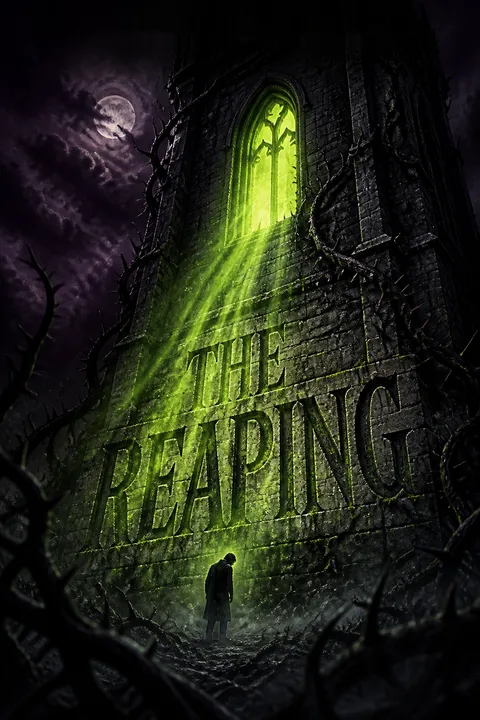
Bernard Taylor's The Reaping is a masterful blend of psychological horror, Gothic atmosphere, and supernatural intrigue, exploring the consequences of human ambition and the terror of being used as an instrument in someone else's quest for power. At its core, the novel interrogates the boundaries between science and superstition, love and manipulation, agency and victimhood. The use of the seventh son folklore as the engine of the plot allows Taylor to examine the lengths to which people will go to escape mortality and achieve transcendence, even at the cost of others' lives. The narrative's slow-burn structure, rich characterization, and subtle misdirection create a sense of mounting dread, while the climactic revelation—that love and trust can be weaponized for monstrous ends—delivers a profound emotional impact. Ultimately, The Reaping is a meditation on the dangers of unchecked desire, the fragility of identity, and the enduring human need for connection and meaning in a world haunted by forces beyond comprehension. The novel's ambiguous ending, with its lingering questions and unresolved trauma, invites readers to reflect on the limits of knowledge and the price of survival in the face of evil.
Review Summary
The Reaping is a slow-burn horror novel that deeply divides readers. Many praise its atmospheric buildup, well-crafted characters, and surprising ending, drawing comparisons to Rosemary's Baby and The Stepford Wives. Taylor's restrained prose and deliberate pacing earn consistent admiration, though some find the story overly slow, predictable, or unsatisfying. The mansion setting and growing sense of dread are widely appreciated, while criticism centers on an underwhelming payoff, unanswered plot questions, and a second half that loses momentum. The Valancourt Books reissue has introduced Taylor's work to an enthusiastic new generation of horror readers.
People Also Read





Characters
Tom Rigby
Tom is a widowed father of four, a talented but frustrated artist who has sacrificed his ambitions for the stability of running an art supply shop. His relationships are marked by longing and disappointment, particularly with Ilona, whose emotional distance mirrors his own sense of isolation. Tom is introspective, sensitive, and deeply paternal, but also vulnerable to manipulation due to his yearning for meaning and connection. Over the course of the story, Tom is drawn into a web of supernatural intrigue, forced to confront his own powerlessness and ultimately compelled to fight for his son's life. His journey is one of psychological disintegration and painful self-discovery, culminating in a hard-won, if ambiguous, redemption.
Ilona / Miss Stewart
Ilona is initially presented as Tom's enigmatic lover, a make-up artist with a mysterious past and a fear of commitment. Her true identity is revealed as Miss Stewart, the ancient matriarch of Woolvercombe House, who orchestrates the entire scheme to restore her youth through occult means. Ilona is intelligent, manipulative, and driven by a desperate desire to escape mortality. Her relationship with Tom is both genuine and exploitative, blending real affection with ruthless self-interest. Psychologically, Ilona embodies the terror of aging and the seductive allure of power, ultimately sacrificing everything for a fleeting return to youth.
Catherine Langham
Catherine is hired to play the role of Miss Stewart's great-niece and to conceive a child with Tom as part of the house's breeding program. Initially complicit, she becomes increasingly fearful and guilt-ridden as the true nature of the scheme emerges. Catherine's vulnerability and longing for connection make her both a tool and a casualty of the house's machinations. Her eventual escape and the birth of her daughter represent a fragile hope, but she remains psychologically scarred by her experiences. Catherine's arc is one of manipulation, awakening, and the struggle for autonomy.
Mrs. Weldon
Mrs. Weldon serves as the house's gatekeeper and recruiter, presenting a warm, maternal exterior that masks her deep involvement in the scheme. She is pragmatic, efficient, and unwaveringly loyal to Miss Stewart/Ilona, carrying out orders with a chilling detachment. Her psychoanalytic profile suggests a capacity for compartmentalization and rationalization, enabling her to participate in acts of cruelty while maintaining a veneer of kindness. Mrs. Weldon's role is that of the trusted lieutenant, essential to the smooth operation of the house's dark enterprise.
Carl
Carl is the house's German-accented manservant, whose outward professionalism conceals a capacity for sexual manipulation and violence. He is both a tool and a symbol of the house's pervasive control, using his skills to undermine Tom's sense of self and enforce the household's will. Carl's psychological makeup is marked by sadism and a lack of empathy, making him a figure of menace and humiliation.
Hathaway
Hathaway is the house's chauffeur and handyman, complicit in the abuse of Catherine and the enforcement of the house's rules. His actions are motivated by loyalty, fear, and a willingness to subordinate his own morality to the demands of the household. Hathaway's eventual fate—blinded and burned in the climactic struggle—reflects the self-destructive consequences of serving evil without question.
Dr. McIntosh
Dr. McIntosh is the house's physician, responsible for the artificial insemination procedures and the medical supervision of the women. He is cold, methodical, and emotionally disengaged, viewing the women as subjects rather than individuals. His role is essential to the scientific plausibility of the scheme, and his lack of empathy underscores the dehumanizing nature of the house's project.
The Nuns
The five young women dressed as nuns are revealed to be ordinary women recruited for the purpose of bearing Tom's children. Their irreverent behavior and eventual disappearance highlight their status as expendable pawns. Psychologically, they represent the collateral damage of the house's pursuit of power, their individuality erased by the roles they are forced to play.
Em
Em is Tom's older sister, who steps in to help raise his children after his wife's death. She is practical, nurturing, and emotionally intelligent, providing stability and counsel throughout Tom's ordeal. Em's presence grounds the narrative in ordinary human decency, offering a counterpoint to the house's manipulations and serving as a source of comfort and guidance.
Simeon
Simeon is Tom's youngest son, whose abduction and transformation into an old man serve as the emotional climax of the story. He embodies innocence, vulnerability, and the stakes of the house's supernatural ambitions. Simeon's restoration at the end represents the possibility of healing, but also the enduring trauma inflicted by those who seek to control fate.
Plot Devices
Gothic Setting and Atmosphere
Woolvercombe House is a classic Gothic setting—grand yet decaying, isolated from the outside world, and filled with secrets. The house's labyrinthine structure, overgrown grounds, and eccentric inhabitants create an atmosphere of claustrophobia and dread. The setting functions as both a physical and psychological trap, mirroring Tom's internal state and foreshadowing the supernatural events to come.
Misdirection and Slow-Burn Suspense
The narrative employs misdirection and a slow accumulation of detail to build suspense. Tom's initial excitement gives way to unease as small, inexplicable events accumulate—lost keys, bruises, nighttime screams. The true nature of the house's scheme is revealed only gradually, keeping both Tom and the reader off-balance and heightening the sense of paranoia and helplessness.
Doppelgänger and Identity
The motif of dual identities—Ilona as Miss Stewart, Catherine as the great-niece, the nuns as ordinary women—underscores the theme of deception and the instability of identity. Characters are not who they appear to be, and their true motives are concealed beneath layers of performance. This device amplifies the psychological tension and the sense of being trapped in a web of lies.
Supernatural Ritual and Folklore
The plot centers on the folklore of the seventh son of a seventh son, believed to possess magical powers. The house's elaborate scheme to engineer the birth of such a child through artificial insemination and ritualistic use of the ancient lift blends scientific plausibility with supernatural horror. The ritual's outcome—youth transferred, life drained—serves as both a literal and symbolic enactment of the price of immortality.
Psychological Manipulation and Gaslighting
Tom is subjected to a campaign of psychological manipulation—his desires, ambitions, and vulnerabilities are exploited to draw him into the house's scheme. The staff's control over his movements, the sexual manipulation by Carl and Catherine, and the destruction of his artwork all serve to erode his sense of self and agency. The narrative structure mirrors this process, with Tom's perspective increasingly unreliable as reality and dream blur.
Foreshadowing and Symbolism
Tom's recurring dreams, the motif of ruined or unfinished art, and the symbolism of the lift and the tower all foreshadow the story's climax. The ruined portrait represents the destruction of identity and the futility of resistance, while the lift embodies the house's supernatural power and the cyclical nature of sacrifice and renewal.

Download PDF
Download EPUB
.epub digital book format is ideal for reading ebooks on phones, tablets, and e-readers.








































