
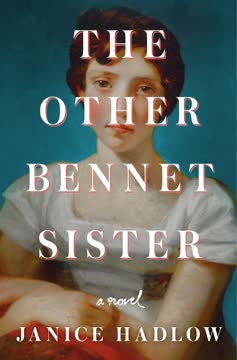

Plot Summary
The Plain Bennet Sister
Four of the five Bennet sisters are beautiful. Mary,1 the middle child, is not. At ten years old, lingering outside the morning room with a sugar bowl, she overhears her mother7 tell her aunt that Mary1 is simply very plain and that she blames Mr Bennet's6 side of the family.
The words land with the force of a blow. Mary1 climbs to her room, drapes a shawl over her mirror, and lets a single tear fall. She does not speak of it to Jane13 or Elizabeth.8 She simply accepts her mother's7 verdict as fact — that without beauty, no lasting happiness is possible.
Her childhood playfulness evaporates. She becomes watchful, solemn, afraid to run or laugh for fear of looking ridiculous. The girl who once raced through gardens with grass-stained knees begins a long retreat into herself.
The Fortress Mary Built
She discovers the piano — the one arena where looks count for nothing. She practices obsessively, gaining technical precision but wringing the joy from music in the process. Elizabeth8 plays with spirit and false notes; Mary1 plays correctly and feels almost nothing.
When her eyesight fails from years of reading in dim light, she defies her mother7 to consult an oculist. Mrs Bennet7 declares spectacles will make her unmarriageable, but Mr Bennet6 overrules his wife. The oculist's son, a shy young man named John Sparrow,12 fits her with lenses and quietly tells her she looks very well in them.
Mary1 retreats to her books — Dr Fordyce, Mrs Macaulay, works of moral philosophy — building an intellectual identity that requires no beauty. She has fashioned a life that asks nothing of the world and receives nothing in return.
Two Dances, Then Retreat
At the Meryton assembly ball — her first — Mary1 wears a gold-and-cream dress Mrs Hill11 helped her choose, the finest garment she has ever owned. After one dance with a schoolboy, John Sparrow12 appears and asks her to stand up with him.
They dance twice, talking easily about books and his ambition to study medicine in London. For the first time, Mary1 feels carefree. Then Charlotte Lucas4 draws her aside with a warning: three dances with the oculist's son will be remarked upon, and Mrs Bennet7 will make a scene.
Mary1 imagines her mother humiliating John12 before the assembly and cannot bear it. She refuses his third invitation, watches his bewildered face, and spends the rest of the evening hidden behind her mother's7 chair. She resolves never again to let her feelings betray her.
Extracts for a Father's Love
Determined to reach her father6 through intellect, Mary1 begins compiling a handmade book of philosophical extracts, copying favorite passages in colored ink onto fine paper purchased with her own allowance. She imagines presenting it to Mr Bennet6 and seeing him look at her with the warmth he reserves exclusively for Elizabeth.8
The project absorbs months of careful labor. But when she tests the waters — mentioning Dr Fordyce in conversation — her father6 dismisses Fordyce as tedious and pompous. The authors she has painstakingly transcribed are, in his estimation, worthless.
Mary1 stores the book in her dressing-table drawer, its dedication page unseen. The door to her father's6 affection remains shut. He will never read her work, never know how desperately she wanted him to see her as she wished to be seen.
Silenced at the Keyboard
At Mr Bingley's Netherfield ball, Mary1 volunteers to play. Her Haydn sonata earns polite applause. Emboldened, she attempts to sing — a decision her piano teacher had explicitly warned against. Her voice is thin, her manner tentative. The audience begins murmuring.
She catches Miss Bingley10 smirking. Then she sees Elizabeth8 direct a meaningful look at their father.6 Mr Bennet6 appears at her side and tells her, with devastating calm, that her performance is at an end, that other ladies should have their turn. He leads her away from the piano.
Miss Bingley10 immediately reclaims the instrument. On a chair in the shadows, Mary1 discovers a glass of strawberries he left without explanation — the closest he will ever come to apologizing. Charlotte4 finds her on the terrace and tries to console her. Mary1 will never perform in public again.
Charlotte Seizes the Parsonage
Mr Collins9 proposes to Elizabeth,8 who refuses him flat. Mary1 has been positioning herself as the rational alternative — sharing Fordyce, playing piano for him, demonstrating their common interests — but Collins9 never notices her.
Charlotte Lucas,4 meanwhile, has been strategically attentive, and within days secures his proposal and accepts. When Charlotte4 confesses to Mary1 on a roadside wall, she offers an explanation that cuts deeper than the loss itself: the difference between them, Charlotte4 says, is not talent or intellect but self-regard.
Mary's1 inability to believe herself worth wanting made it impossible for any man to want her. Charlotte4 cannot apologize — she is too old to be generous, even to a friend. Mary1 watches the rooks wheel above the trees and understands that Longbourn will one day belong to Charlotte Collins.4
The Last Unmarried Bennet
Two years collapse in rapid succession. Lydia elopes with Wickham; Mr Darcy arranges a hasty marriage to save the family. Then Elizabeth8 stuns everyone by accepting Darcy himself, the man she once declared insupportable. Jane13 marries Bingley.
Kitty marries a clergyman. Mrs Bennet7 achieves her life's ambition and retires contentedly to the Bingleys'. Then Mr Bennet6 dies in his sleep without warning, and the house at Longbourn passes to Mr Collins.9
On the day of the funeral, Mary1 takes from her drawer the book of extracts she made for her father,6 holds it against her chest, and weeps without restraint. She will never know the satisfaction of having pleased him. She is the only unmarried Bennet, with no home, no income, and no clear path forward.
The Unwelcome Sister
At the Bingleys', Caroline Bingley10 conducts a campaign of elegant cruelty — mocking Mary's1 clothes, her books, her spectacles. When Mary1 plays a Scottish air on the drawing room piano for the first time since Netherfield, Caroline10 appears at the door and echoes her father's6 devastating words.
Mary1 flees to Pemberley, where at first she and Elizabeth8 recover something of their old ease. But when Mr Darcy returns with his sister Georgiana, Mary1 watches the younger girl effortlessly occupy the place she had hoped might be hers — walking arm in arm with Elizabeth,8 playing piano to enthusiastic praise.
In the drawing room doorway one evening, watching the self-contained family portrait grouped around the keyboard, Mary1 understands with perfect clarity that she does not belong in this house among these beautiful people.
Greek Lessons and a Confession
At Longbourn, now gleaming under Charlotte's4 efficient management, Mary1 retreats to the library. To her surprise, Mr Collins9 joins her there and offers to teach her the Greek alphabet. For weeks they study together, and Collins9 blossoms — patient, genuinely delighted by her progress.
Charlotte's4 displeasure grows visible. Then Collins9 confesses to Mary1 that he wishes he had chosen her, that her company revealed what his marriage lacks. Mary1 is torn between fury at his blindness and deep pity.
She tells him nothing can come of it — but urges him to speak to Charlotte4 as openly as he has spoken to her. She gives up the lessons. Charlotte,4 now warmer toward her husband, tells Mary1 plainly she must leave. Lady Catherine15 visits and tries to install Mary1 as a governess. Mary1 writes instead to her aunt in London.
Gracechurch Street Haven
The Gardiner14 household is unlike any home Mary1 has known. Her uncle14 and aunt5 love each other openly, treat their four children with equal affection, and maintain a warmth that extends to everyone who enters. Mrs Gardiner5 does not fuss or prod but feeds Mary,1 lets her sleep late, and wraps her in unobtrusive care.
Slowly, the Gardiners' steady happiness becomes instructive. Mary1 begins to see that contentment is not bestowed by fortune but cultivated through daily generosity, laughter over petulance, kindness over grievance.
She teaches her nieces piano. She explores the City streets and discovers freedom in anonymity. When she catches herself disparaging her own worth, her aunt5 stops her firmly: the only condition for staying is that Mary1 must try to speak more kindly of herself.
The Green Cotton Recommendation
Elizabeth8 sends money for new clothes — an apology, wrapped in a letter that acknowledges the night she had Mary1 silenced at Netherfield. At Harding and Howell, London's grandest emporium, Mary1 is deliberating between green and blue cotton when a young man appears at their counter.
Tom Hayward,2 a barrister and distant cousin of the Gardiners,14 declares himself an expert judge of cottons and recommends the green with such easy authority that Mary1 cannot decide if he is teasing or serious.
Over tea, he reveals his true passion is poetry — he writes reviews for magazines — and his good humor survives Mary's1 confession that she has read almost none. They agree to exchange books: she will give him Mrs Macaulay's history; he will give her something that may change everything.
Mary Becomes a Living Soul
Tom's2 choice arrives: Wordsworth's Lyrical Ballads, with a note urging her to read with her heart, not her head. Mary1 struggles. Analysis yields nothing. She underlines, annotates, cross-references — and the poems resist every tool of rational inquiry.
Then one night, lying in bed, she abandons her usual approach and simply reads. The breakthrough comes without warning: Tintern Abbey opens itself to her, and she understands at last what it means to surrender to beauty. When she describes the experience to Tom,2 his playfulness vanishes entirely.
She tells him the poem showed her how nature could connect a soul to something higher — that she longed to become what Wordsworth called a living soul. He replies, gravely and sincerely, that no one who speaks with such passion can possibly be a stranger to deep feeling.
Dawn on Westminster Bridge
Tom2 arranges an early morning excursion, dragging a reluctant Mr Gardiner14 along as chaperone. As the sun clears the rooftops, gilding spires and domes, Tom2 reads Wordsworth's Westminster Bridge sonnet in a quiet, unaffected voice while the City lies still beneath them. Mary1 gives herself to the rhythm of the words and feels the world expand.
Afterward, Tom2 tells her privately that she need never fear being dull of soul — that is not her at all. Mr Gardiner,14 moved by the scene and by his wife's long-deferred wish, proposes a family trip to the Lake District. Tom2 will join them. Mary1 carries the copy of Wordsworth's Guide to the Lakes that Tom2 gives her under her pillow at night, touching it now and then to confirm it is real.
Paradise, Then the Uninvited
The landscape overwhelms them all — vast, shimmering Windermere, grey mountains tumbling to the shore. Mary1 and Tom2 are inseparable, walking fells, laughing at their terrible sketches, debating birdsong neither can identify. On a breezy hillside, he calls her by her first name for the first time.
That night, alone in her room overlooking the lake, Mary1 finally admits what she has resisted for weeks: she loves him. Then Mr Ryder3 arrives. Tom's2 charming, wealthy old friend has tracked them down, bringing with him Caroline Bingley10 and the Hursts, cheerfully assuming his presence will enhance everyone's pleasure.
Within days, Tom's2 warmth toward Mary1 cools. He stops seeking her out, avoids her eye at dinner, walks alone. Mary1 is bewildered. She begins to suspect jealousy but cannot understand its source.
The Storm on Scafell
The party attempts to climb Scafell fell for a view of the distant sea. Their guide warns of an approaching storm and urges retreat. Tom2 agrees. But Ryder,3 fired by Wordsworth's praise of mountain storms, wants to stay and witness it.
Mary1 — furious at Tom's2 inexplicable withdrawal, tired of being the voice of caution — sides with Ryder3 against every rational instinct she possesses. They stay too long. The rain hits like a wall. On the miserable, slippery descent, Tom2 takes Mary's1 arm and guides her down without a word of reproach.
She falls; he lifts her up. Mr Gardiner14 sends a rescue party with ponies. Mary1 resolves to confront Tom2 the next morning. But at dawn, he is gone — a brief note to Mrs Gardiner5 citing urgent business. No word to Mary.1 Months of silence follow.
Two Proposals, Both Refused
Back in London, Ryder3 visits often. Mrs Bennet7 arrives and, charmed by his looks and income, campaigns relentlessly for Mary1 to accept him. Ryder3 proposes first in ambiguous terms — suggesting they live together freely in Italy, beyond convention. Mary1 refuses.
He returns the next day and proposes marriage properly, arguing that her steadiness would improve him, that it is almost her duty to accept. Mary1 refuses again. She cannot marry a man she does not love, however rational the case for doing so.
Her mother7 declares Mary1 has thrown away her last chance and washes her hands of her entirely. Mary1 faces what she has long dreaded: the near-certainty of life as a single woman. She writes her refusal in a letter, choosing words over another agonizing interview, and sends it by servant that night.
Caroline's Bitter Gift
Caroline Bingley10 tracks Mary1 to a pastry shop and demands to know if she truly refused Ryder.3 Mary,1 transformed by months of independence and heartbreak, does not cower. She tells Caroline10 the truth: she does not want Ryder,3 she loves Tom Hayward,2 and Caroline10 may do with that information whatever she pleases.
It is the bravest moment of her life. Caroline,10 calculating that removing Mary1 as a rival will clear her own path to Ryder,3 writes to Tom2 and reveals Mary's1 declaration word for word.
She intends only to serve herself. But the letter reaches Tom2 in the Herefordshire countryside, where he has been walking above Tintern Abbey in miserable solitude, trying to decide what to do. He reads Caroline's10 letter and heads immediately for London.
Mary Speaks First
Tom2 stands at the Gracechurch Street drawing room window, thinner, tanned from walking, visibly unhappy. Before he can explain, Mary1 breaks every rule. She tells him she loves him — has loved him for a long time — and would rather risk humiliation than lose him to silence again.
He takes her in his arms and confesses everything: he withdrew because Ryder3 had secretly become Lady Catherine's15 heir, and honor required him not to compete with a richer man for Mary's1 hand. He was wrong. He was proud and foolish and had caused her inexcusable pain.
They will marry as soon as it can be arranged. In her new London house, measuring rooms for bookshelves and a piano, Mary1 tucks into her dress the slip of paper Mr Collins9 once gave her, bearing Aristotle's conviction: our happiness depends on ourselves.
Analysis
Janice Hadlow's novel excavates the interior life of Austen's most dismissed character and finds there a devastating study of what happens when a child is taught she is unworthy of love. Mary Bennet's1 plainness is not her tragedy — her tragedy is that she believes her mother.7 The novel argues that self-contempt is not a personality trait but an injury, one inflicted by the particular cruelty of being judged solely by appearance in a world that offers women no other currency.
The book systematically tests every philosophy available to a Regency woman seeking happiness. Fordyce's rational morality fails because it denies emotion. Charlotte's4 pragmatic marriage fails because it denies love. Ryder's3 Romantic libertinism fails because it denies consequence. Only the synthesis Mary1 achieves through Tom Hayward2 — reason warmed by feeling, discipline informed by passion — proves adequate. Hadlow suggests that Aristotle was right: happiness depends on self-knowledge, but self-knowledge requires the courage to feel as well as to think.
The novel's most radical argument concerns female agency. Mary's1 climactic act — declaring her love before Tom2 can speak — violates every rule of Regency courtship. It is presented not as impropriety but as the logical consequence of a woman who has learned that waiting for others to determine her fate is itself a form of self-harm. The passive virtues her era demands of women — patience, modesty, silence — are reframed as instruments of oppression that keep women from their own happiness.
Hadlow also offers a sophisticated critique of the Austen marriage plot. By centering the sister no one wanted, she reveals what triumphant endings look like from the margins. The Bingleys'13 kindness is impersonal. The Darcys'8 passion is exclusive. Every happy ending generates its own casualties. The Other Bennet Sister insists that happiness is not a lottery some win and others lose, but a practice — one requiring, above all, the belief that you deserve it.
Review Summary
The Other Bennet Sister receives mixed reviews, with many praising its faithful portrayal of Jane Austen's world and Mary Bennet's character development. Readers appreciate the exploration of Mary's inner life and her journey to self-discovery and happiness. Some find the book too long and slow-paced, particularly in the first half. Critics note the author's skill in capturing Austen's tone and style, though some dislike changes to familiar characters. Overall, fans of Pride and Prejudice generally enjoy this fresh perspective on a lesser-known character.
People Also Read
Characters
Mary Bennet
The overlooked middle sisterThe middle Bennet sister, born plain among beauties, who internalizes her mother's7 verdict that without good looks she is worthless. Mary is intelligent, diligent, and deeply feeling—but has spent her life burying those feelings under layers of rationality, believing that thinking more and feeling less will protect her from pain. Her driving wound is not plainness itself but the conviction that she deserves nothing better than plainness affords. She reads voraciously, plays piano with technical precision, and quotes philosophers at dinner—behaviors that isolate her further from a family who values charm over substance. Beneath the pedantry lies a woman starving for affection, recognition, and belonging. Her journey is one of learning that happiness requires not just intellect but the courage to feel and to act upon those feelings.
Tom Hayward
Poetry-loving barristerA young barrister and distant cousin of the Gardiners14, Tom combines professional rigor with a passionate love of Romantic poetry. He is witty, warm, and genuinely kind—but beneath his playful surface lies a diffidence that causes him to underestimate his own worth. His career in law satisfies his precise, analytical mind; his devotion to Wordsworth feeds a capacity for deep emotion he hesitates to express in his personal life. Tom is the rare man who values intellect in a woman and is drawn to Mary1 precisely for the qualities others dismiss. His fatal flaw is an excess of honor—a willingness to sacrifice his own happiness if he believes duty demands it. He mistakes self-denial for nobility and risks losing what matters most through misguided chivalry.
William Ryder
Charming rival, man of feelingTom Hayward's2 old university friend, a charming, handsome young man of independent means who lives by sensation rather than discipline. Ryder follows his inclinations with cheerful abandon, believing rules and conventions obstruct authentic experience. He quotes Wordsworth to justify his philosophy of pleasure, but his passion for poetry has encouraged the very impulsiveness that makes him unreliable. He is genuinely fond of Mary1—admiring her seriousness as a complement to his own lightness—but his affection, while sincere, lacks depth. He proposes not from profound love but from aesthetic appreciation of what she represents. His generosity is real but untested by difficulty. He gravitates toward beauty, comfort, and the path of least resistance, making him Caroline Bingley's10 natural counterpart despite their surface differences.
Charlotte Lucas
Pragmatic friend and foilMary's1 clear-eyed friend who marries Mr Collins9 out of calculated self-interest after warning Mary1 that women without beauty must seize whatever security presents itself. Charlotte is unflinching about the compromises marriage demands but discovers that managing a husband without loving him creates its own particular loneliness. As mistress of Longbourn she transforms both the house and herself into models of polished efficiency, yet her refusal to let her husband near her feelings is both her survival strategy and the source of his quiet despair. Her influence on Mary1 is profound and double-edged.
Mrs Gardiner
Wise aunt, surrogate motherMary's1 maternal aunt, married to Mrs Bennet's7 brother, whose warm London household becomes Mary's1 salvation. Shrewd, kind, and refreshingly direct, she refuses to let Mary1 disparage herself and gently nudges her toward self-respect without hectoring. She serves as the mother Mary1 never had—attentive without smothering, honest without cruelty, generous without conditions. Her happy marriage to Mr Gardiner14 models what a partnership of equals actually looks like and gives Mary1 her first real template for how contentment is cultivated rather than inherited.
Mr Bennet
Detached, sardonic fatherMary's1 witty, detached father who retreats into his library and his favorite daughter Elizabeth8, leaving his other children emotionally unattended. His marriage to a woman he cannot respect has bred cynicism. He teases rather than teaches, mocks rather than mentors. His public silencing of Mary1 at Netherfield—and the wordless strawberries afterward—encapsulate his character: capable of perception and even tenderness but constitutionally unwilling to exert himself, even on behalf of those he has hurt.
Mrs Bennet
Beauty-obsessed, relentless motherMary's1 mother, obsessed with beauty and marriage as the only currencies that matter for women. Her anxiety about the entail drives relentless matchmaking, but her shallow values inflict lasting damage on a daughter who cannot meet her standards. She judges Mary's1 plainness as a personal affront and never conceals her disappointment, creating the wound around which Mary's1 entire identity forms. Her later campaign to marry Mary1 to Ryder3 reveals that even her worst instincts are rooted in genuine if misguided maternal concern.
Elizabeth Bennet
Brilliant, beloved elder sisterMary's1 second sister, whose wit, beauty, and confidence cast the longest shadow over Mary's1 life. Elizabeth's complicity in silencing Mary1 at Netherfield is the deepest familial betrayal. Yet she later sends money for new clothes with a letter acknowledging her cruelty, showing genuine remorse. Elizabeth represents everything Mary1 admires and envies: the ability to be loved effortlessly, to occupy any room as if she belongs in it. Her marriage to Darcy creates a Pemberley that is magnificent but exclusive.
Mr Collins
Pompous heir, lonely husbandThe Bennets' obsequious cousin who will inherit Longbourn. Beneath his pompous manner lies a lonely man desperate for connection, raised by a bitter father who taught him he was worthless. His brief intellectual partnership with Mary1 in the Longbourn library—teaching her Greek, delighting in her progress—reveals unexpected depth. His character demonstrates how loneliness and a poor upbringing can produce foolishness rather than wickedness, and how even the most ridiculous people carry genuine pain.
Caroline Bingley
Persistent, calculating antagonistA proud, bitter woman whose own romantic disappointments—first losing Darcy to Elizabeth8, then pursuing Ryder3—fuel her cruelty toward anyone she perceives as a rival or an inferior. Her weapons are cutting remarks delivered with a polished smile. She torments Mary1 at the Bingleys' house and at every subsequent meeting, but her final act of spite—revealing Mary's1 love for Tom2 in a letter—becomes the catalyst that brings about the very happiness she sought to prevent.
Mrs Hill
Housekeeper, earliest allyThe Longbourn housekeeper who serves as Mary's1 surrogate mother figure in childhood. She arranges Mary's1 hair, borrows rouge from Lydia's drawer for the ball, and offers the novel's gentlest metaphor: a daffodil seems ordinary planted between lilies, but has its own kind of beauty. Her practical wisdom and genuine affection provide Mary's1 only consistent source of warmth before London.
John Sparrow
First connection, lost chanceThe oculist's son who dances with Mary1 at her first ball and represents her earliest taste of genuine connection. His kindness and ambition to study medicine mirror her own intellectual hunger. Mary's1 rejection of him becomes the original sin she spends years regretting.
Jane Bennet
Serene eldest sisterMary's1 beautiful eldest sister whose goodness is so evenly distributed that her kindness, while genuine, carries no special warmth for Mary1 specifically. She offers shelter but not the intimacy Mary1 craves.
Mr Gardiner
Generous, sensible uncleMrs Bennet's7 prosperous, affectionate brother whose happy marriage and successful linen business model a life built on partnership and daily effort rather than inherited advantage or beauty.
Lady Catherine de Bourgh
Imperious, meddling patronessAn imperious noblewoman who attempts to install Mary1 as a governess and whose disinheriting of her own daughter inadvertently enriches Ryder3, creating the complication that nearly separates Mary1 and Tom2.
Plot Devices
Mary's Spectacles
Marker of intellect versus beautyMary's1 spectacles function as a recurring litmus test for every character's values. Mrs Bennet7 fights against them as the death of Mary's1 marriage prospects; Mr Bennet6 overrides his wife to grant them. John Sparrow12 crafts them with care and tells Mary1 she looks well in them. Lydia mocks them as proof of ugliness. In London, Mary1 replaces the heavy country frames with elegant silver ones from Mr Dolland—but keeps the originals in her drawer beside the Greek dictionary. Whether she wears them openly or hides them in her bag at each gathering tracks her fluctuating sense of self-worth. By the novel's end, she puts them on without a second thought, measuring her new house with spectacles perched unashamedly on her nose.
The Gold and Cream Dress
Symbol of daring to hopePurchased with Mary's1 own saved allowance and sewn from a figured muslin shot through with gold thread, this dress represents every tentative step Mary1 takes toward believing she deserves to be seen. Mrs Hill11 helps her choose it for the Meryton ball, where it draws genuine praise from Elizabeth8 and Jane13. Mary1 wears it again to the Netherfield ball, where her humiliation at the piano stains it with painful associations. She hangs it up and refuses to wear it for years, then brings it to London as a relic. The dress tracks Mary's1 relationship with her own worth—worn when she dares to hope, folded away when hope dies, its gold thread still catching candlelight in the dark of her wardrobe.
The Book of Extracts
Failed bid for paternal loveA handmade compilation of philosophical passages Mary1 copies onto fine paper in colored inks, intended as a gift that will prove to Mr Bennet6 she is a mind worth engaging. She buys special pens, an ebony ruler, and a leather-bound book from the Meryton stationer, decorating margins with careful flourishes. The project represents her conviction that intellectual achievement can earn the love that beauty wins effortlessly. When Mr Bennet6 dismisses every author she has chosen as worthless—calling Fordyce tedious and the others pompous—the book becomes a monument to unrequited devotion. Mary1 stores it in her drawer with his name still on the dedication page, carries it through every move, and holds it against her chest on the day of his funeral.
The Greek Dictionary
Talisman of self-determinationA small, battered grammar of ancient Greek that Mr Collins9 gives Mary1 when he begins teaching her the alphabet at Longbourn. Inside its pages, he tucks a slip of paper bearing a line from Aristotle they often discussed together: our happiness depends on ourselves. The dictionary becomes Mary's1 portable reminder that she can shape her own destiny. She carries it from Longbourn to London, stores it in her dressing-table drawer beside her old spectacles, and produces it at key moments of decision. The Aristotle quotation serves as the novel's philosophical spine—first encountered as an intellectual abstraction, gradually absorbed as lived truth, and finally acted upon when Mary1 declares her love.
Wordsworth's Poetry and Guide
Vehicle for emotional awakeningTom Hayward2 gives Mary1 a copy of the Lyrical Ballads, and it becomes the medium through which she discovers she can feel deeply. Tintern Abbey is the specific poem that produces her breakthrough—the moment she stops analyzing and simply surrenders to beauty. The Guide to the Lakes, which Tom2 later gives as a travel companion, doubles as a love token she sleeps with under her pillow. Wordsworth's lines are read aloud at Westminster Bridge and debated on Scafell; his praise of mountain storms becomes the catalyst for the crisis that nearly destroys their relationship. Poetry in this novel is not ornamental but operative—it is the language through which two reserved people learn to speak honestly about their inner lives.
Download PDF
Download EPUB
.epub digital book format is ideal for reading ebooks on phones, tablets, and e-readers.








































