
Key Takeaways
1. The Great Forgetting: Unearthing Austen's Lost Literary Ancestors
Austen read William Shakespeare, John Milton, Daniel Defoe, and Samuel Richardson, all authors I had read. She also read Frances Burney, Ann Radcliffe, Charlotte Lennox, Hannah More, Charlotte Smith, Elizabeth Inchbald, Hester Piozzi, and Maria Edgeworth, all authors I hadn’t.
A startling omission. The author, a rare book dealer and Jane Austen enthusiast, discovered a profound gap in her literary knowledge: a host of influential women writers whom Austen herself admired were entirely absent from her own reading and from mainstream literary discourse. This realization stemmed from a chance encounter with a rare edition of Frances Burney's Evelina, prompting a deeper investigation into Austen's literary influences. The author's initial surprise quickly turned to a stinging awareness of a systemic oversight.
The canon's blind spot. This erasure, termed "the Great Forgetting," highlighted how literary canons, while practical for guiding readers, often reflect the biases of their "authorities." Despite Austen's explicit praise for these women in her own works, critics who shaped the modern understanding of the English novel largely dismissed or ignored them. The author realized she had read many men on Austen's bookshelf but none of the women, exposing a crack in the foundation of her understanding of literary history.
Austen's hidden clues. Austen herself provided hints of this oversight, notably in Northanger Abbey, where she champions novels by women like Burney and Edgeworth against prevailing snobbery. This passage served as a map for the author's quest, revealing that Austen never saw herself as a lone genius but as part of a vibrant female literary tradition. The journey began to uncover why these celebrated authors, once widely read and influential, had vanished from popular memory.
2. Challenging the Canon: Trusting Personal Curiosity Over Authority
The idea of a canon may be practical, but I had been relying upon it too much.
Questioning received wisdom. The author's initial reliance on canonical lists, like Ian Watt's The Rise of the Novel, had inadvertently led her astray, causing her to overlook authors Austen held dear. This experience underscored the need to approach literary history with critical skepticism, rather than blindly accepting the judgments of past "authorities." The author realized that personal curiosity, sparked by a rare book, was a more reliable guide than established academic narratives.
The detective's approach. Embracing her rare book dealer's mindset, the author adopted a "Sherlockian" approach to literary investigation. Her job was to:
- Investigate each book's story and importance.
- Seek evidence for every statement.
- Question assumptions about rarity and influence.
This method allowed her to uncover nuanced truths about authors' legacies that broader surveys often missed, revealing that the "best" books aren't always the canonical ones.
Personalizing the canon. The author's journey became an argument for a more personal and expansive view of literature. She learned that the canon, while useful, is not static or objective; it changes with each generation's values and tastes. By trusting her own reactions to these rediscovered works, she found that books deemed "inferior" by critics could be profoundly meaningful, challenging the notion that literary merit is a fixed, universal standard.
3. Frances Burney: The Pioneering Voice of Emotional Realism
Despite knowing little about Burney herself, I realized that I had long been familiar with her work in its echoes.
A secret literary ambition. Frances Burney, born in 1752, secretly wrote her first novel, Evelina, fearing the "degradation" associated with novel writing for women in the 18th century. Despite burning her early manuscripts, her compulsion to write persisted. This internal conflict, between societal expectations and personal ambition, deeply resonated with the author, highlighting the courage required for women to pursue literary careers in that era.
Evelina's groundbreaking impact. Published anonymously in 1778, Evelina became a sensation, praised for its emotional complexity and vivid portrayal of a young woman navigating London society. It established the "courtship novel" genre, influencing Austen's themes and even lending the phrase "pride and prejudice" to her later work. Burney's ability to capture the heroine's interior world and realistic social dilemmas made her a literary superstar, admired by figures like Samuel Johnson and Jane Austen.
The shifting sands of reputation. Despite her initial acclaim, Burney's reputation as a novelist waned, often overshadowed by Austen in later centuries. Critics, like Thomas Macaulay and Ian Watt, frequently used Burney to highlight Austen's "superiority," effectively demoting her to a mere precursor. The author discovered that Burney's transformation into "Fanny Burney," the diarist, further obscured her significant contributions as a novelist, illustrating how critical narratives can reshape an author's legacy.
4. Ann Radcliffe: Master of Gothic Terror and Atmospheric Power
Radcliffe crafts a terror that is architectural: built slowly, carefully, stone by stone.
A childhood steeped in Gothic. Ann Radcliffe's unique education, growing up surrounded by her uncle's collection of Gothic architecture prints, profoundly shaped her artistic vision. This early exposure to intricate designs and soaring landscapes allowed her to create compelling, atmospheric settings in her novels, making her a master of "architectural terror." Her ability to evoke dread through description was unparalleled, captivating readers and influencing later Romantic poets.
The rise and fall of the Gothic. Radcliffe's The Mysteries of Udolpho (1794) was a literary phenomenon, establishing her as a genius and popularizing the Gothic genre. However, this genre, largely dominated by women and commercially successful, was often dismissed as "inferior" by male tastemakers like William Wordsworth. Radcliffe's use of the "explained supernatural" – resolving terrifying mysteries with rational explanations – also became a point of contention, contributing to her later critical decline.
Rumors and erasure. Radcliffe's retreat from public life after The Italian (1797) led to rumors of her death and, more damagingly, her madness. These unsubstantiated claims, fueled by obscurity and societal anxieties about women writers, further tarnished her legacy. Despite her profound influence on literary giants like Byron, Shelley, and Stoker, and her contemporaries' comparisons to Shakespeare, Radcliffe was systematically removed from the "Great Tradition" of high art, becoming a "representative" of a derided genre rather than a "superior" artist.
5. Charlotte Lennox: The Daring Wit Who Challenged Literary Giants
“What’s won by beauty, must be kept by art.”
A life of necessity and ambition. Born in Gibraltar and orphaned young, Charlotte Lennox (c. 1729–1804) faced constant financial precarity, forcing her to pursue writing as a profession. Her early poem, "The Art of Coquetry," a subversive celebration of feminine wit, showcased her boldness and talent. Unlike many of her peers, Lennox actively sought to make a living by her pen, navigating a male-dominated publishing world with audacious self-reliance.
Challenging Shakespeare and the establishment. Lennox's most celebrated work, The Female Quixote (1752), a witty satire of chivalric romances, directly influenced Austen's Northanger Abbey. However, her iconoclastic Shakespear Illustrated (1753), which dared to critique the Bard's sources, earned her powerful enemies, including Samuel Johnson, who, despite initially supporting her, later omitted her work from his own Shakespearean scholarship. This demonstrated how her boldness, combined with wit, could both open doors and create significant backlash.
The erasure of authorship. The author discovered that Lennox's contributions were often minimized or misattributed. For over 150 years, a key chapter of The Female Quixote was erroneously credited to Samuel Johnson, despite evidence of Lennox's sole authorship. This persistent pattern of attributing women's literary achievements to men, even in the face of documented proof, highlighted the systemic nature of "the Great Forgetting" and the enduring struggle for women writers to receive proper recognition.
6. Hannah More: The Complex Legacy of a Moral Reformer
“I had hoped to see you respectable and good [… ] I bought you Blair’s Sermons and Coelebs in Search of a Wife.”
From playwright to moralist. Hannah More (1745–1833), a brilliant and unusually educated woman, initially found success as a playwright, with her tragedy Percy (1777) being a major hit. However, a broken engagement granted her financial independence, allowing her to pivot towards her true calling: moral and social reform. Disillusioned with London society, she embraced evangelicalism and dedicated her talents to charitable causes, particularly education for the poor and the abolitionist movement.
The didactic phenomenon. More's Coelebs in Search of a Wife (1809), a novel blending courtship with overt moral instruction, became an unprecedented bestseller, selling tens of thousands of copies and making her a fortune. Its massive popularity is credited by some with making the novel a "respectable" literary form. However, its heavy-handed didacticism, which Austen herself disliked, later contributed to its decline from the canon, as literary tastes shifted away from overt moralizing.
A polarizing figure. More's life and work were marked by contradictions. She championed women's education but insisted on separate spheres for men and women, believing in a God-ordained social hierarchy. Her charitable efforts, while extensive, often came with strict moral conditions, as seen in her dispute with the "milkmaid poet" Ann Yearsley. The author's personal struggle with More's sanctimonious judgment, rooted in her own conservative upbringing, revealed how historical figures can evoke complex, unresolved emotions, making her a compelling, if challenging, subject for study.
7. Charlotte Smith: A Poet's Struggle for Autonomy and Influence
“It is my poverty and not my will that has forced me to do it.”
Tragedy and necessity. Charlotte Smith (1749–1806) endured a life of profound hardship, including an abusive, profligate husband who landed them in debtor's prison and left her to raise twelve children alone. Her literary career, particularly her prolific novel writing, was driven by sheer financial necessity rather than artistic inclination. This stark reality profoundly shaped her output, forcing her to prioritize income over her preferred genre, poetry.
Poetic genius and Romantic influence. Despite her circumstances, Smith was an extraordinary poet, whose Elegiac Sonnets (1784) revived the English sonnet and profoundly influenced Romantic poets like Wordsworth and Coleridge. Wordsworth himself acknowledged her as a "lady to whom English verse is under greater obligations than are likely to be either acknowledged or remembered." The author sought out her poetry as a symbol of Smith's unfulfilled artistic potential, recognizing her as a pivotal figure in the development of Romanticism.
Novels of protest. Smith's novels, like Emmeline (1788) and Desmond (1792), served as a platform to critique the unjust legal system of coverture, which stripped married women of their legal existence and control over their property. Her personal struggles with her husband's financial mismanagement and the legal battles over her inheritance infused her fiction with a political edge, making her novels a powerful, if often overlooked, form of protest against women's disempowerment. Austen, who read Smith's novels, incorporated similar themes of marriage and financial precarity into her own work.
8. Elizabeth Inchbald: The Theatrical Genius of Wit and Realism
“No, Sir, it is none of the circumstances you mention, but what I prize far more—I am the authoress of the farce you have just played.”
From stutter to stage. Elizabeth Inchbald (1753–1821), a farmgirl with a stutter, defied societal expectations by running away to London at eighteen to pursue a career as an actress. Despite initial rejections and personal struggles, her relentless dedication to mastering her craft, including memorizing Shakespearean roles and practicing elocution, eventually led her to success on London's most prestigious stages, like Covent Garden. Her journey was a testament to sheer determination.
A playwright's triumph. Inchbald's deep immersion in the theater, from acting to observing audiences, honed her skills in dialogue, pacing, and character development. After years of submitting plays anonymously, her farce The Mogul Tale (1784) became a hit, earning her financial independence and renown as a playwright. Her subsequent comedy, I'll Tell You What (1785), further cemented her reputation, showcasing her sharp wit and ability to craft engaging, realistic narratives.
Influence and moral ambiguity. Inchbald's novel A Simple Story (1791), praised for its wit and vivid characters, profoundly influenced Austen, particularly in its exploration of a strong-willed heroine. However, Inchbald's commitment to conveying a clear moral, often heavy-handed in her later works and revisions (like the second part of A Simple Story), contributed to her decline in popularity as literary tastes shifted. Her play Lovers' Vows, famously staged in Austen's Mansfield Park, highlights the moral dilemmas of seduction and family, demonstrating Inchbald's enduring impact on Austen's thematic concerns.
9. Hester Lynch Thrale Piozzi: The Unapologetic Heart of Georgian Letters
“Miss Owen & Miss Burney asked me if I had never been in Love; with myself, said I, & most passionately. when any Man likes me I never am surprized, for I think how should he help it? when any Man does not like me, I think him a Blockhead, & there’s an End of the matter.”
A life of intellectual brilliance and personal tragedy. Hester Lynch Thrale Piozzi (1741–1821), born into an aristocratic but impoverished Welsh family, was a child prodigy, fluent in multiple languages. Her first marriage to Henry Thrale, a wealthy brewer, was one of convenience, marked by her husband's infidelities and the tragic deaths of eight of her twelve children. Despite immense personal grief and the demands of managing a prominent household, she became a celebrated hostess, known for her wit and "gaiety," entertaining literary giants like Samuel Johnson.
The scandalous second marriage. After Henry Thrale's death, Hester fell deeply in love with Gabriel Mario Piozzi, an Italian musician. This second marriage, defying class, nationality, and religious conventions, sparked outrage among her friends and family, including Samuel Johnson, who famously condemned it. The public backlash, fueled by xenophobia and sexism, led to her ostracization and vicious attacks in the press, yet Piozzi remained defiantly committed to her happiness.
A canonical figure, despite herself. Paradoxically, Piozzi's literary legacy remained strong, largely due to her close association with Samuel Johnson. Her bestsellers, Anecdotes of the Late Samuel Johnson (1786) and Letters to and from the Late Samuel Johnson (1788), cemented her place in literary history, even as critics often minimized her own contributions or attributed her work to Johnson. The author's personal journey revealed how Piozzi's vibrant, unrepentant heart and her groundbreaking works, like British Synonymy and Retrospection, deserve recognition on their own merits, beyond her famous male connections.
10. Maria Edgeworth: The Model Novelist Who Defined a Genre
“I have made up my mind to like no Novels really, but Miss Edgeworth’s, Yours & my own.”
Austen's literary role model. Maria Edgeworth (1768–1849) was one of the most celebrated and successful novelists of her generation, serving as a direct literary model for both Jane Austen and Walter Scott. Austen's audacious act of sending Edgeworth a copy of Emma underscored the younger author's profound admiration. Edgeworth's success provided a blueprint for what a woman novelist could achieve, challenging the author's initial belief that no great women writers preceded Austen.
Pioneering social-reform novels. Edgeworth's early works, like Letters for Literary Ladies (1795) and The Parent's Assistant (1796), showcased her commitment to education and social utility. Her groundbreaking novels, particularly Castle Rackrent (1800) and Tales of Fashionable Life (1809, 1812), blended engaging narratives with practical philosophy, establishing the "social-reform novel" genre. These works, praised for their keen observation and vivid characters, were considered landmarks in the development of the novel form.
The narrowing of a legacy. Despite her widespread acclaim and influence, Edgeworth's canonical status diminished over time, largely due to her categorization as an "Irish novelist." While her depictions of Ireland were celebrated, this regional label, combined with the "didactic" tag, relegated her to a "narrow" niche, in contrast to Austen's "universal" appeal. The author's investigation revealed how critical frameworks can inadvertently diminish an author's broader impact, transforming a literary giant into a mere precursor for later, more canonical figures.
11. The Enduring Power of Literary Dialogue and Influence
The originality I was coming to value in these books was not about being first, but rather about the particular ways in which a writer might make something her own within a larger conversation.
Beyond the "lone genius." The author's journey revealed that literary "genius" is rarely isolated; instead, it thrives in dialogue and influence. Austen, far from being an ex nihilo creator, was deeply engaged with the works of her female predecessors, borrowing themes, plot structures, and even phrases. This interconnectedness challenges the prevailing cultural admiration for the "first edition" or the "lone genius," suggesting that literary value lies in the rich tapestry of shared ideas and evolving forms.
A continuous conversation. The relationships between these women writers were not always about direct imitation or uncritical admiration; they were often complex dialogues. Edgeworth, for instance, was both inspired by and reacted against Inchbald's A Simple Story, refining her own craft in response. This dynamic interplay of influence, where authors build upon, challenge, and transform each other's work, creates a vibrant literary ancestry that enriches our understanding of individual achievements.
The power of shared themes. Across their diverse genres—from Burney's courtship novels to Radcliffe's gothics, Lennox's satires, and Smith's critiques of coverture—these women consistently explored themes of female autonomy, societal expectations, and the complexities of marriage. Their collective engagement with these issues, often in subtly subversive ways, formed a powerful, intergenerational conversation that resonated with Austen and continues to speak to modern readers, demonstrating the enduring relevance of their "lost" works.
12. Reclaiming the Past: The Collector's Role in Shaping the Future Canon
Every generation must, in its turn, scrape off the barnacles of previous generations’ criticism and look at the evidence for themselves.
The collector as curator. The author's personal book collection became more than a hobby; it transformed into an active argument against the "Great Forgetting." By acquiring diverse editions—from rare first printings to humble modern paperbacks—she meticulously gathered evidence of these women's historical reception, their periods of acclaim, and the moments of their erasure. This process demonstrated how individual collecting can contribute to scholarly recovery and popular reassessment.
Internet: breaker of cycles. The digital age, with its vast repositories of public domain texts and online marketplaces, has democratized access to these "forgotten" works. This unprecedented accessibility empowers readers to bypass traditional "canonizers" and discover authors on their own terms, fostering a new "golden age" for literary exploration. The author, initially skeptical of digital resources, found them invaluable in her quest, vastly expanding her ability to research and acquire books.
A call to personal engagement. The author's journey culminated in a profound realization: the canon is not fixed, and personal connection to literature is paramount. She encourages readers to question authority, embrace curiosity, and read "out of love," not duty. By engaging directly with these rediscovered women writers, she found not only literary ancestors but also a deeper understanding of herself, transforming her collection into an "unconventional memoir" and inviting others to join in the ongoing work of literary reclamation.
Review Summary
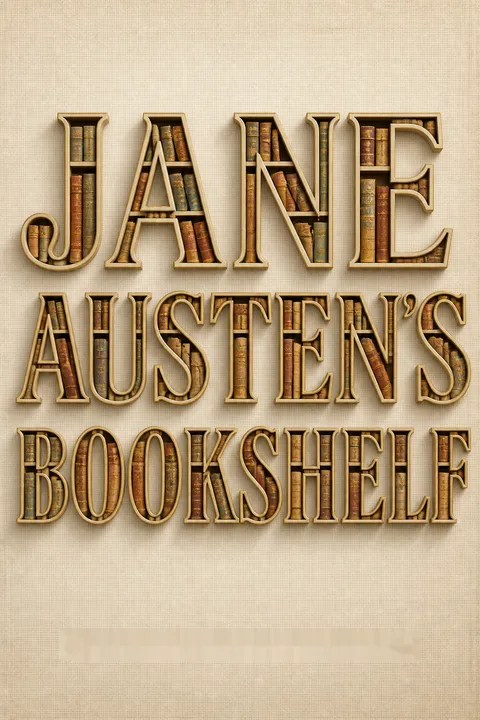
Jane Austen's Bookshelf receives overwhelmingly positive reviews, averaging 4.28/5. Readers praise Romney's blend of literary history, biography, and memoir, celebrating her exploration of forgotten female writers who influenced Austen. Many appreciate the rare book collecting insights and fascinating biographical portraits of authors like Frances Burney and Ann Radcliffe. Critics note the book can feel dense, overly personal, or slow-paced. Nearly all reviewers report expanding their TBR lists significantly. The book is widely recommended for Austen fans, bibliophiles, and anyone interested in women's literary history.
People Also Read





Download PDF
Download EPUB
.epub digital book format is ideal for reading ebooks on phones, tablets, and e-readers.








































