
Plot Summary
Reluctant Retirement in Florida
Augusta Stern, nearing eighty, is pressed into retirement as her hospital modernizes. Her sense of self is rooted deeply in her work as a pharmacist, and she's unsettled by the forced transition to a Florida retirement community. There, everything reminds her of what she's left behind: the camaraderie of colleagues, her purpose, and her ability to heal and be useful. The move also confronts Augusta with her age, and her dignity is bruised by patronizing farewells and the expectation to "enjoy" her twilight years by slowing down. Augusta's discomfort is compounded by the sense that, despite a lifetime of dedication, she is being politely exiled. The soft towels and sunny afternoons provide little comfort; instead, a deep ache of loneliness grows, and she is haunted by unfinished business with her past.
Childhood Among Bottles
Young Augusta's life unfolds above her father's Brooklyn pharmacy, enveloped by glass bottles and the ritual of healing. As a child, she idolizes her father, Solomon, seeing him not just as a dispenser of medicine but as a confidant and secret keeper for the entire neighborhood. The loss of her mother to diabetes, just before insulin becomes available, fractures her worldview; she realizes, painfully, that science and timing dictate who lives. Devastated, Augusta internalizes an urge to master every remedy, believing that with study and precision she can outwit tragedy. Yet, she's also shaped by grief, fueling a relentless need for answers, and a growing skepticism towards fate and the promise of cures.
Reunion with Old Ghosts
Augusta's idyllic vision of anonymous retirement is shattered when Irving Rivkin, her childhood friend and first love, emerges poolside in Florida. Their initial meeting is awkward, laced with stinging humor and the gravity of sixty years apart. Both carry unspoken hurts, their conversation circling losses—lives loved and left behind, marriages gone awry, children never had. Something about Irving's presence is both sweet and excruciating, evoking Augusta's old dreams but also threatening to upend her fragile peace. Each interaction forces Augusta to re-confront the choices and misunderstandings that fractured their bond—a second chance feels both possible and fraught with dangers of disappointment.
Aunt Esther's Arrival
After Augusta's mother's death, Aunt Esther, a formidable old-world healer, moves in. She brings order, wisdom, and a fierce sense of boundaries—turning the household upside down. Esther's skills with herbs and home remedies, and her ability to inspire awe and unease, start to challenge Augusta's strictly scientific worldview. Esther insists that healing has as much to do with faith and words as it does with pills and powders. The kitchen fills again with delicious scents and the mystical air of generational knowledge. For Augusta, Esther is at once mentor, irritant, and the doorway into the ambiguity and power of female wisdom.
Healing, Loss, and Chicken Soup
The legend of Esther's chicken soup spreads after it helps neighborhood children, and soon desperate mothers and the sick seek her aid. Augusta observes as her father bristles at the mingling of folk medicine and pharmacy, worried Esther's meddling will undermine his reputation. Esther's kitchen becomes a sanctuary for secrets and gentle miracles. Even as tensions mount within the family, Augusta learns that healing involves not only science but empathy, storytelling, and timing. In a crisis—when Irving falls ill—it is Esther's hands and whispered words, as much as any doctor's intervention, that bring him back.
The Magic in the Mortar
Esther's midnight rituals—grinding herbs, chanting in forgotten tongues, working by moonlight—become central to Augusta's understanding of healing. Esther claims the real secret in her work is intention and the spiral inscription in her ancient mortar: a pledge to heal those in need. Augusta is at once skeptical and enthralled, sensing that the boundary between magic and medicine is thinner than she realized. She absorbs these lessons hungrily, wondering if one day she will inherit not only her aunt's tools but her strength and grace under the impossible burdens of women's pain.
Missed Chances, New Ties
As Augusta faces the challenge of integrating her aunt's mystical teachings with her pharmacy studies, she witnesses miracles and failures in both family and community: marriages launch, hearts are broken, babies are born after years of longing. Yet not everything can be cured—sometimes words and science both fail. The choices Augusta makes separate her from her father and later from Irving, as misunderstandings and unspoken needs drive them apart. In the Florida present, the echoes of missed proposals and secret betrayals linger, threatening to repeat old hurts unless confronted.
Esther's Remedies Multiply
The women of the community increasingly seek Esther's help for matters mainstream medicine can't or won't solve: infertility, menopause, heartbreak. Each remedy is crafted not merely from herbs but from patient listening, a refusal to dismiss pain as hysteria. Still, Esther draws the line at "love potions"—she warns against tampering with free will, teaching Augusta the grave responsibility that comes with healing arts. Augusta watches, torn between skepticism and awe, as some remedies seem to transform lives, while others—bound by fate or fear—do not. The community, in its pain, becomes the crucible in which Augusta learns the costs of empathy and the edges of her power.
Unfinished Love Stories
The story's center is the romance between Augusta and Irving—two people shaped by parallel pains and ambitions, pulled apart by circumstances, misunderstandings, and the heavy hands of outsiders. Their missed proposal—thwarted by a drunken friend and disastrous timing—and the subsequent spiral of choices each made, ripple through their lives for decades. In Florida, their tentative reconnection is marred by unresolved resentments and the haunting sense that destiny was thwarted not by lack of love, but by a confluence of secrets, pride, and ill-timed confession.
The Love Elixir Mystery
The fabled love elixir, a powder whose recipe is handed down with caution, tempts Augusta at the worst moment: she secretly brews and administers it to Irving, desperate to secure his love. The risks, as Aunt Esther predicted, are real—rather than fostering clarity or union, the potion's unintended effects unravel what remains of their bond, setting off decades of regret and self-doubt. Later, in Florida, Augusta's niece brings her back to her old tools, confronting her with the choice to try again—or finally accept the intrinsic unpredictability of love and healing.
Tests of Courage
Throughout both timelines, Augusta faces literal and metaphorical threats: the violence of organized crime in 1920s Brooklyn, the possibility of loss and failure in her practice, and the emotional complexities of carrying other people's secrets. Her courage is tested in both public ways—standing her ground as a woman in a male profession, refusing to compromise her ethics for dangerous men—and private heartbreaks, as when Esther grows ill and her power to heal falters. As an old woman, these tests reemerge—not with guns or gangsters, but with the challenge of opening herself to love again, risking disappointment all over.
Orphans of Timing
Timing's capriciousness is a leitmotif: Augusta's mother dies just before a cure exists; Irving proposes on the night another couple steals the moment; pregnancies, illnesses, miracles—everything is won or lost by a matter of when, not if. This randomness infuriates and frustrates Augusta, driving her attempts to master her fate and, tragically, causing her to manipulate circumstances only to be boomeranged by unintended consequence. In Florida, she must finally face the reality: some things heal, some things break, and none are governed by perfect formulas.
The Modern Healer
Augusta comes into her own as a pharmacist, merging her father's scientific mastery and Aunt Esther's intuitive, patient-based care. It is only late in life—after losing both her role in the family pharmacy and the living presence of her mentors—that Augusta discovers the truest version of her vocation: a healer who is neither scientist nor witch, but both, wielding the best of two worlds. Her journey mirrors the larger evolution of medicine: the inclusion of empathy, story, and patient agency into what was once only prescription and authority.
Secrets, Scandals, Second Chances
The secrets of Irving's life—his coerced marriage to Lois, the real parentage of his children, the criminal threats that drove him away—finally surface in a raw, cathartic confession. Augusta discovers her niece Jackie orchestrated their reunion, forcing fate's hand. The truth shared at the birthday dinner collapses decades of misunderstanding, restoring not only their bond but a sense that cycles can break if their real histories are faced and forgiven. The accumulation of silence, both protective and destructive, is at last dissolved by words and vulnerability.
The Proposal That Vanished
The pivotal night of Augusta and Irving's lost proposal, buried by time and miscommunication, is finally aired. Through flashbacks and present-day retellings, both come to understand how a single night—marred by stolen whiskey, cross-purpose intentions, and disastrous accidents—became the inflection point separating happiness from loneliness. In confronting this, they realize that the pain of a life unlived, for all its shadows, can give way to a new beginning if they dare to try again.
The Curse of Repeating Patterns
Throughout the novel, generations repeat the mistakes and miracles of those before—women forced to choose between love and ambition; healers risking too much; patients overlooked because of gender or age. Augusta, recognizing herself in Esther, and later in her niece, must make peace with these legacies, striving to claim autonomy and joy unbound by ancestral regret. The Florida chapters become her chance to finally break the curse, granting herself the self-compassion and agency she could not claim at eighteen.
Coming Clean
The climactic birthday dinner forces all remaining secrets into the open—elixirs, affairs, lost children, criminal bargains, and the tangled thread between love and duty. Irving and Augusta learn how many years were lost not to lack of affection but to fear, pride, and crossed wires. The group's laughter, tears, and willingness to be seen as they are, in age and imperfection, allows them to begin again—elderly, but not too late for magic.
At Last, The Truth
Augusta finally relinquishes the guilt she's carried for her failures in her youth—including her inability to save Aunt Esther from death, and for her mistakes through the love elixir. She acknowledges the limits of responsibility, the inevitability of loss, and the preciousness of whatever years remain. With Irving's hand in hers, she feels both humbled by the magnitude of what cannot be controlled, and empowered to reclaim joy.
Powers Passed Down
With Esther's ancient mortar and pestle restored to her, Augusta finds new purpose late in life. She resumes her practice—not only dispensing medication, but listening, empathizing, and offering comfort to those dismissed by younger doctors. Surrounded by a circle of friends and supported by those who see her fully, Augusta becomes the bridge between old-world magic and new-world science, the matriarchal healer in a world that needs her still.
The Last Song in the Kitchen
On her eighty-first birthday, Augusta wakes, makes medicine, and sings to ease her friends' pain. Age, heartbreak, and even death have not ended her power to heal—or her stubborn hope in life's unscripted joys. As she and Irving swim together, promising to brave the next waves side by side, Augusta knows that sometimes the greatest magic is to persist, forgive, and begin again, no matter how many birthdays have passed.
Analysis
**This is a novel about the longing for control in a world governed by unpredictability—about the promise and peril of healing, and the conviction that love, like a potent elixir, cannot be forced or faked. Lynda Cohen Loigman explores the tensions between science and magic, personal ambition and communal responsibility, and the longing for both rational mastery and mystical intervention. Through Augusta's journey, we see a woman wrestling with her own limitations, mourning what could not be saved, and ultimately finding that healing is as much about honesty, forgiveness, and presence as about remedies—herbs or pharmaceuticals. The dual arcs—of Augusta's growth as both healer and lover—underscore the cost of secrets, the necessity of vulnerability, and the late-life possibility of grace and renewal. The enduring lesson: You may not cure every wound, you may never know if the "right words" or powders truly hold power, but you can offer comfort, truth, and bravery, even as the tides of fate bring joy and sorrow in their own time. It is never too late to forgive, to try again, or to believe in a little magic, especially if it is made from love and learned patience. The book reminds us that life—and love—is not a formula, but a daring experiment conducted every day anew.
Review Summary
The Love Elixir of Augusta Stern receives an overall rating of 4.05/5, with most readers praising its dual timelines set in 1920s Brooklyn and 1987 Florida, the charming protagonist Augusta, and her mystical Great Aunt Esther. Fans loved the themes of feminism, second-chance romance, and subtle magical realism. Critics noted the contemporary timeline felt underdeveloped, with elderly characters behaving implausibly like lovesick teenagers, minimal magical realism despite the title's suggestion, and little atmospheric detail distinguishing the 1980s setting. The audiobook narration by Gabra Zackman received widespread praise.
People Also Read









Characters
Augusta "Goldie" Stern
Augusta is a fiercely independent woman whose childhood in her father's pharmacy forges both scientific rigor and compassion. Losing her mother to diabetes instills a deep-seated drive to prevent further loss, but also a rage at fate and injustice. Her need for mastery is both her greatest gift and her wound: she yearns to outmaneuver tragedy but must learn the grace of accepting limits. Through her connection with Aunt Esther, she grapples with the ambiguity of tradition, magic, and science. Her trajectory from embittered orphan to modern healer is marked by guilt, courage, and an eventual, hard-won opening to late-life love. With Irving, she is both stubborn and vulnerable, and her journey is one of forgiving herself and others for what could not be cured.
Irving Rivkin
Irving, first encountered as Augusta's childhood friend and delivery boy, is street-smart and good-hearted, shaped by poverty and fatherlessness. His love for Augusta is sincere, but he is repeatedly foiled by circumstance, ill timing, and later, the manipulations of more powerful figures. Though he loves deeply, he is often rendered passive by the threats of others, especially when forced into a disastrous marriage to protect Augusta and her family. Decades later, he is jovial and thick-skinned, masking longing and guilt under jokes and bravado. His reunion with Augusta is a reckoning with all he lost, and his willingness to confess—at last—signals growth towards humility and honesty.
Esther "Aunt Esther" Stern
Esther is both an antidote to and an irritant for modern rationality. She is the living embodiment of healing traditions, inherited trauma, and the power of words and intention. She comes from a lineage of "witches" (in the world's eyes) who are in truth misunderstood healers. Esther's lessons—her prohibitions against abusing magic, her demand for honesty, her insistence on the importance of permission and intention—are the ethical groundwork of Augusta's own practice. Her death marks the end of an era, but her teachings, tools, and aphorisms underpin the emotional and spiritual resolution of Augusta's story.
Solomon Stern
Augusta's father is the community's pharmacist, proud and methodical. The death of his wife causes a profound depression, but also a clinging to science and tradition. He is both tender with his daughters and blinded by patriarchy and reputation. His fear of old-world "superstition" and criminal interference is matched by a deep, if sometimes hidden, affection for his family and a grudging respect for Esther's power even when it threatens his professional authority.
Bess Stern
Augusta's older sister balances Augusta's drive with warmth and optimism. Bess is more interested in romance and beauty than science, but she is also a practical and loving friend to Augusta. Her own struggles with doubt—particularly around love and marriage—reflect the era's pressures, benefiting from Esther's clarity elixir. As an adult, she serves as Augusta's anchor and later as the mother to Jackie, ensuring the persistence of family in Augusta's life.
Jackie
Augusta's niece, both adoring and assertive, is the unwitting architect of Augusta and Irving's late-life reunion. Jackie represents the next generation: she balances practicality with a subtle understanding of story, pushing Augusta to be brave while respecting her wounds. Jackie's determination to uncover the truth is the spark that allows family secrets to come into the open, and her faith in second chances gives Augusta permission to hope again.
Mitzi Diamond
As both a figure of awe and terror in the old neighborhood, Mitzi shifts from background threat to active antagonist. She embodies the dangers inherent in ambition unchecked by empathy: her ability to move chess pieces puts lives—and happiness—at risk. Her choice to force Irving into marriage with Lois, concealing murder, and manipulating those around her underscores the narrative's warning about the destructive potential of power without conscience.
Lois Diamond
Lois, at the heart of the plot's pivot, is both a victim of her family's machinations and an object of Augusta's envy. Her relationship with Irving is born not of love, but of threat and accident, and her presence is a stand-in for all that Augusta fears about feminine competition, fate, and the limitations placed on women's choices. Her eventual abandonment of Irving and the boys further drives home the theme of love that cannot be forced.
Nathaniel Birnbaum
Nathaniel is both a competitor and ally: his relationship with Augusta and Evie unintentionally derails Irving's proposal, setting many of the novel's tragedies in motion. In Florida, he serves as both a foil and friend, showing that misunderstandings often have no villains—only imperfect people, acting blindly. His forgiveness and rekindled interest in love, with Shirley, are a testament to the value of honesty and new beginnings.
Shirley
As Augusta's first real friend in Florida, Shirley is a source of warmth and candor. She offers practical wisdom, gently nudging Augusta to embrace her new life, and is a mirror of what late-life friendship and loyalty can look like. Shirley's own blossoming late romance is emblematic of the story's hopeful thesis: it is never too late to risk affection again.
Plot Devices
Dual Timelines and Interlaced Memories
The story alternates between Augusta's coming of age in 1920s Brooklyn and her reluctant present-day reinvention in a Florida retirement community. This parallel structure allows experiences, losses, and lessons in one era to reverberate in another—sometimes healing, often wounding anew. The dual timeline accentuates themes of recurring mistakes, the slow work of forgiveness, and the persistence of questions that seem unanswerable until decades pass.
Objects as Talismans
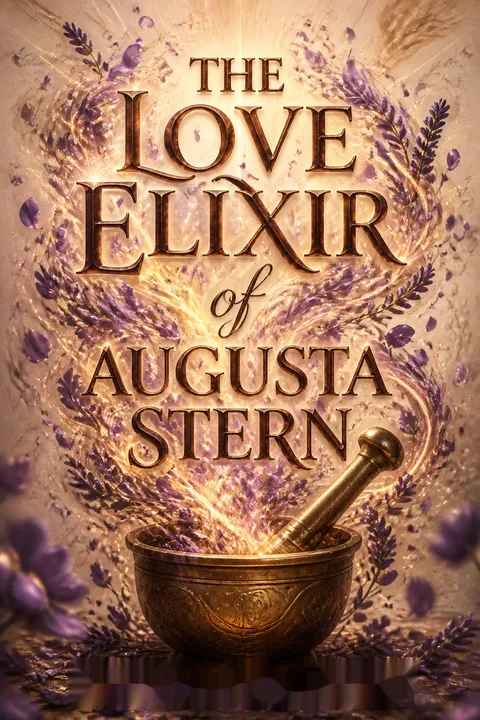
Esther's brass mortar and pestle, the gift necklace, even the bowl of chicken soup, function as more than props: they are vessels of memory, power, and generational magic. The mortar's carved inscription and the muslin-wrapped powders anchor the mystical aspects, serving as both promise and threat. Each object's return or absence reflects a moment of transition, inheritance, or regret: what isn't passed on can't be learned, and what is misused can't easily be recovered.
Mysticism Interwoven With Science
The novel is consciously ambiguous on whether the "magic" in Esther's lineage is supernatural or a metaphor for profound attention and presence. Incantations and preparations at midnight double as acts of radical empathy—a willingness to bear witness and to attempt healing where none is guaranteed. The limitations and dangers of such power are foregrounded: intention matters, and shortcuts or selfish interference (especially regarding love) bring unintended consequences.
Foreshadowing through Loss and Omission
Both Augusta's mother's death and Esther's warnings about the risks of the love elixir foreshadow future losses. The narrative leans into missed warnings, proposing that hubris and impatience—however well-intentioned—often set in motion tragedies that can only be understood in hindsight. The recurring motif of "timing" haunts every page.
Comic Relief and Community as Healing
Despite trauma, the book leans into warmth: the poolside gossip, mah-jongg games, and book clubs at Rallentando Springs inject levity and illustrate the importance of chosen family. These scenes are not mere filler; they are essential to Augusta's journey back to trust, belonging, and her sense of meaning. The final, offbeat party scene, with swapped drinks and mistaken signals, is both catharsis and a demonstration of how community can rescue individuals from loneliness or self-imposed exile.
Download PDF
Download EPUB
.epub digital book format is ideal for reading ebooks on phones, tablets, and e-readers.








































