
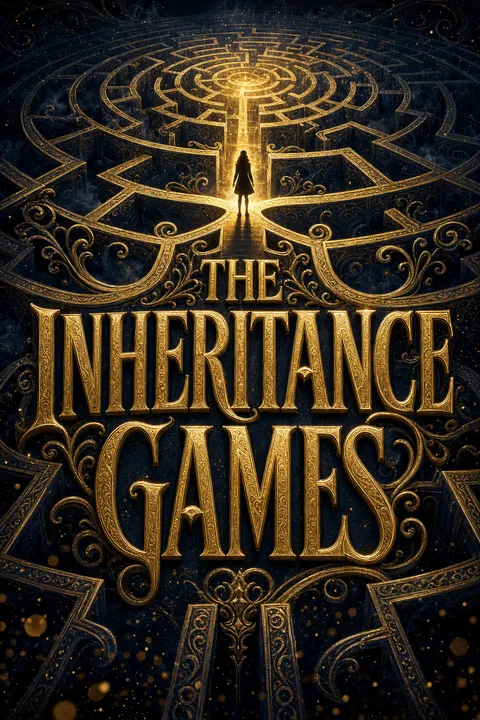


Plot Summary
The Girl Who Lives Practical
Avery Grambs1 measures everything by risk and reward: how little effort earns an A, how much a poker game in the parking lot funds breakfast for Harry,17 the old man she beats at chess each morning. When she aces a physics exam designed to be unbeatable, her principal accuses her of cheating, and she coldly demands to retake it on the spot.
At home, her older half-sister Libby6 lets abusive boyfriend Drake15 move back in, and rather than absorb his cruelty, Avery1 chooses to sleep in her rusted Pontiac. Her only real confidant is Max,16 a distant friend who curses in invented words. Clutching her dead mother's stack of travel postcards, Avery1 survives on the promise that she always lands on her feet.
Barnes establishes Avery as a study in learned scarcity: a girl who has converted survival into arithmetic. Her games with Harry, her poker hustle, her strategic mediocrity all reveal a mind trained to minimize exposure. The recurring motif of the postcards signals suppressed longing beneath pragmatism, dreams she cannot afford to indulge. Living in her car after refusing Drake dramatizes her core value: dignity over comfort. The physics accusation exposes the class contempt shadowing her, the assumption that a poor girl cannot simply be brilliant. This opening quietly plants the psychological hunger, the need to matter, that the inheritance will later weaponize and interrogate.
A Stranger's Impossible Summons
A composed nineteen-year-old in a tailored suit, Grayson Hawthorne,2 waylays Avery1 at school, dismisses her principal with a raised eyebrow, and announces that his late grandfather, Texas billionaire Tobias Hawthorne,13 has named her in his will. Certified letters had been arriving for weeks; Libby6 had assumed they were scams.
Avery1 has never heard of the man and cannot fathom why a stranger worth forty-six billion dollars would include her. Grayson2's arrogance is bottomless, his motives opaque, but the offer is real: first-class flights to Dallas, cars sent, a liaison named Alisa Ortega7 assigned. Curiosity and desperation win. Avery1 and Libby6 fly to Texas, where Alisa7 warns her never to lose her heart to a Hawthorne.
The summons functions as a fairy-tale inversion, the prince arriving not to rescue but to investigate. Grayson embodies inherited power as natural law, a boy for whom the world reflexively rearranges itself. Avery's disbelief is the emotional truth of poverty: good fortune reads as trap, not gift. Barnes seeds the central mystery through omission, Tobias's motive withheld, and Alisa's cryptic warning frames the Hawthornes as beautiful and ruinous. The class collision sharpens here, wealth wielded casually as a lever over a girl who counts singles. The reader, like Avery, is pulled onto train tracks unsure which direction the engine approaches.
Everything to the Stranger
At Hawthorne House, a castle with a hundred secret passages, the will is read aloud. Loyal servants receive fortunes, but Tobias13's daughters, Skye11 and Zara,12 and his four grandsons receive comparative pittances.
Then the lawyer reads the shocking remainder: the entire estate, properties, and fortune pass to Avery Kylie Grambs.1 The family erupts. Skye11 and Zara12 call it fraud and elder abuse; Grayson2 demands it be a mistake. Avery1 herself insists there has been an error.
But the will is ironclad, with any challenger forfeiting their share. Head of security John Oren8 steps between Avery1 and the family, announcing that Tobias13's final request was that he protect her. Overnight, a girl who slept in a car becomes the world's youngest billionaire.
The reading is the inciting detonation, transforming Avery from invisible to hypervisible. Barnes stages inheritance as violence, a dead man reordering the living, and the family's fury is less greed than existential wound: they have been told, publicly, that they did not deserve him. Avery's instinct to reject the money reveals her deepest fear, that wanting something guarantees its loss. Oren's protective pivot introduces the thriller's engine: if she inherited, someone may want her gone. The scene crystallizes the novel's question, why her, which will drive every subsequent puzzle and betrayal toward its anagram-shaped answer.
Live Here or Lose It
Alisa7 explains the single string attached: Avery1 must live in Hawthorne House for one year or the fortune goes to charity, not the family. She cannot legally be removed, and the family cannot benefit from her death. That night Grayson2 appears at Avery1's hotel suite, voice like ice, vowing to uncover whatever con she is running and destroy her to protect his family.
After he leaves, Avery1 finally opens the letter Tobias13 left her. It contains only two words: I'm sorry. Meanwhile Drake15 leaks the story to the press, Libby6 arrives with a black eye, and paparazzi swarm. Avery,1 Libby,6 and Oren8 retreat behind the estate's gates as Avery1 becomes the most hunted headline on earth.
The one-year clause is a golden cage, forcing intimacy between Avery and those she has dispossessed, a pressure cooker of resentment and attraction. Grayson's threat reframes him as antagonist and guardian simultaneously, his ferocity rooted in love, not malice. The two-word letter is a masterstroke of withholding: an apology implies harm or debt, deepening the mystery of connection between a billionaire and a stranger. Drake's leak drags Avery's private wound public, dramatizing celebrity as a kind of exposure violence. Libby's bruise reintroduces the cycle-of-abuse subplot, mirroring Avery's own hunger for safety in a world where every gift carries a hidden cost.
The Girl Is the Puzzle
Locked out of her own house, Avery1 is handed a ring of a hundred ornate keys. Recognizing that most are decorative duplicates, she finds the single working key, watched over an intercom by Jameson,3 the reckless third brother. Inside she meets the Hawthorne unit: eldest Nash,5 a cowboy who insists he never wanted the money; Xander,4 the youngest, who talks in scones and robots; Grayson;2 and Jameson.3
That night Jameson3 steps out of her bedroom fireplace, shows her the letter Tobias13 left him, a string of proverbs, and argues that Avery1 herself is his grandfather's final riddle. Tobias13 raised them on Saturday puzzles and hidden compartments, and Jameson3 is certain the old man chose Avery1 for a reason worth solving.
The keys establish Avery's competence as a code-reader and initiate her into the Hawthorne epistemology, where nothing is what it seems and everything is designed. Jameson's thesis, that Avery is a puzzle rather than a person, is both flattering and dehumanizing, the seductive lie she will spend the novel resisting and craving. The brothers function as a closed system, a bond that marks her as outsider. Barnes uses the fireplace passage to literalize intimacy-as-intrusion: the boundaries of Avery's private space are permeable, mirroring how the family and the mystery will invade her selfhood. The Saturday-game backstory reframes grief as an inherited language of riddles.
The Ghost Named Emily
At elite Heights Country Day, Avery1 is befriended and needled by Thea Calligaris,9 Zara12's niece by marriage, who warns that the Hawthorne brothers destroy what they touch and drops a bombshell: the last girl who spent time in that house died. In science class Avery1's quiet, strikingly beautiful lab partner turns out to be Rebecca Laughlin,10 granddaughter of the estate's housekeepers, whose wallpaper photo reveals a laughing sister with identical eyes.
That sister was Emily, the dead girl. Meanwhile a DNA test ordered by Zara12's husband proves Avery1 is not a Hawthorne, deepening the mystery of why Tobias13 chose her. Avery1 realizes she has walked into a family fractured by a grief no one will name.
Emily enters as absence, a name that guts Grayson and haunts Jameson, structuring the emotional archaeology Avery must excavate. Thea operates as a poisoned oracle, telling truths for cruel purposes, embodying the novel's theme that motive corrupts information. Rebecca's beauty paired with her invisibility mirrors Avery's own history as wallpaper, forging a quiet kinship. The DNA result forecloses the simplest theory, forcing the mystery toward stranger explanations. Barnes braids romance, mystery, and trauma: the love triangle Avery senses forming is shadowed by a prior triangle that ended in death, warning that in Hawthorne House, desire and disaster are the same current.
Tatters, All
Working together, Avery1 and Jameson3 crack the letters. Magnified, Tobias13's self-chosen middle name, Tattersall, splits into tatters all, a man who left his family in ruins. The proverb sign-off, Don't judge, points to don't judge a book by its cover, sending them to the library. There they find a mismatched book jacket hiding a copy of Faust and a square of red acetate film, which decodes to where there's a will, there's a way.
Suspecting a will written in red ink, Avery1 visits the firm's Red Will. Sliding the film across it, the grandsons' middle names stay visible: Westbrook, Davenport, Winchester, Blackwood. She learns Tobias13 disinherited his family twenty years ago, after his son Toby died in a fire, remains never found.
This sequence converts grief into cryptography, revealing Tobias as an architect who encoded rage and design into his own name. The pivot from letters to library to Red Will demonstrates the novel's nested-puzzle structure, each solution birthing a deeper question. The twenty-year-old disinheritance recontextualizes everything: Avery did not displace the family; a long-dead son did. Toby's unrecovered body plants the seed of the ultimate twist. Barnes uses the collaborative decoding to build Avery and Jameson's chemistry as intellectual rather than merely physical, though the danger is that Jameson loves the game more than the girl, a distinction the reader tracks with mounting unease.
Worthy of the World
Summoned to the Hawthorne Foundation, Avery1 finds not Zara12 but Grayson,2 whose photographs line the lobby. He teaches her to think about giving away a hundred million dollars a year, insisting she cannot be worthy of the fortune but must try to be. Their minds click disturbingly well, and attraction flickers between condescension and respect.
He confesses he deferred college to inherit the foundation, which now belongs to her. Studying a hand-drawn estate map, Avery1 decodes two more middle names as locations: the Black Wood and the West Brook. That night she and Jameson3 search the bridge where Tobias13 proposed, rotating a hidden board to reveal a carved infinity symbol, or an eight. The first number in a sequence has been found.
The foundation scenes recast wealth as moral burden rather than fantasy, and Grayson as a tragically dutiful heir whose identity was fused to a legacy now handed to a stranger. His mantra, be worthy, articulates the book's ethical spine: power as obligation, not privilege. Barnes deepens the triangle by making Grayson intellectually magnetic in the same register as Jameson is dangerous, giving Avery two irreconcilable attractions. The bridge clue advances the mechanical plot while its romantic setting, a marriage proposal site, ironizes the loveless competition among the living. The ambiguous symbol, infinity or eight, embodies the novel's play between the eternal and the numerical.
Bark and Bullets
Hunting the Blackwood clue among four hundred trees, Avery1 and Jameson3 find TOBIAS HAWTHORNE II carved in a childlike hand. Then a gunshot explodes the bark beside her, and a second follows as Jameson3 shields her body with his. Oren8 appears, drives off the shooter, and digs a bullet from a tree.
Because the walled estate admits no one without a background check, Oren8 does not treat this as an outside threat. He takes Avery1 not to the house but to Wayback Cottage, revealing he trusts the Laughlins more than the Hawthornes. The comforting lie, that Avery1 was never truly in danger, collapses. Someone inside the gates, family or staff, may want the heiress dead.
The shooting is the point of no return, transforming a treasure hunt into a survival thriller. Barnes withholds the shooter to convert the entire household into suspects, sharpening the paranoia that intimacy breeds danger. Jameson's instinct to shield Avery reads as devotion, though the aftermath will test whether he saw her or the puzzle. The carved name of a supposedly dead uncle, in a child's hand, quietly refuses closure on Toby. Oren's redirection to the cottage dramatizes the collapse of trust: the professional who guaranteed safety now improvises, and Avery's fight-or-flight body registers what her logic resisted, that the fairy tale has teeth.
A Kiss and a Motive
In the cottage bathroom, Jameson3 gently washes blood and dirt from Avery1's face, and shaken by near-death she kisses him. For a moment it feels real, until he murmurs that they are close now, that someone shot them over the tree, and she realizes he is still solving the puzzle, not seeing her.
Afterward Alisa7 admits an oversight: if Avery1 dies, control of the hundred-million-dollar foundation passes to the four brothers, and her fortune could reach her heirs, Libby6 and her absent father. Rebecca10 privately reveals Emily dated Grayson2 and Jameson3 at once, refusing to choose, turning their rivalry into a game. Avery1 decodes the Winchester rifle clue and Grayson2's Davenport desk, gathering the numbers eight, one, one.
The kiss scene is the novel's sharpest emotional cut: Barnes grants Avery a moment of chosen desire, then reveals its hollowness, exposing Jameson's laser focus as a form of abandonment. His inability to hold more than one obsession makes him thrilling and unsafe, a mirror of the grandfather who loved games above people. Alisa's revelation supplies motive to the thriller, monetizing Avery's death and implicating everyone. Rebecca's disclosure retroactively poisons the romance, revealing Emily as a girl who weaponized love, a template Avery fears repeating. The accumulating numbers propel the mystery while the human stakes, who loves whom and why, grow more treacherous.
Dressed as a Dead Girl
Forced into media training and a charity gala, Avery1 survives a staged bait operation in which Drake15 rams their car and is arrested, a rifle in his trunk matching the bullets. Police suspect Libby,6 who is innocent. At the gala Thea9 has cruelly styled Avery1's hair, dress, and emeralds to mimic the dead Emily; Grayson2 drops his glass at the sight.
Later Jameson3 tells Avery1 he broke up with Emily the night she died. Grayson,2 gutted, confesses he took Emily cliff diving at Devil's Gate, where her transplanted heart failed, and that Tobias13 told him the tragedy happened because he failed to put family first. Avery1 realizes both brothers carry a killing guilt.
The gala externalizes Avery's fear of being a substitute, Thea forcing her to literally wear a dead girl's image to wound the brothers. Barnes stages spectacle as cruelty, celebrity styling as psychological warfare. Drake's capture appears to resolve the thriller while the Libby suspicion keeps dread alive, testing Avery's capacity to trust the one person who chose her. The dueling confessions reframe the love triangle as a shared trauma bond: two brothers each believing they killed the same girl, each shaped by Tobias's ruthless creed of family first. The scene fuses romance, mystery, and grief, revealing that the puzzle's true subject is culpability.
Born on the Death Day
With Xander4's guidance, Avery1 takes a helicopter over the Black Wood, where the clearing and tree rings form a zero. The four numbers, eight, one, one, zero, reorder into a date: ten eighteen, October eighteenth. It is Avery1's birthday. It is also the day Emily Laughlin died.
Jameson3 recoils in horror, convinced his grandfather scoured the world for a random person born on that date to hurl a cruel message about Emily, and storms off declaring he is done. Grayson2 too believes the whole elaborate game exists as his penance, Tobias13's way of ensuring he never forgets. Avery,1 feeling reduced to a coincidence, refuses to accept that her name and birthday are the entire answer.
The convergence of Avery's birth and Emily's death is the mystery's cruel fulcrum, seeming to render Avery meaningless, a mere calendar accident. Barnes exploits the reader's investment in Avery's specialness, then threatens to revoke it, dramatizing her lifelong terror of being nobody. Jameson's collapse and Grayson's self-flagellation reveal how thoroughly Tobias engineered guilt into architecture. Yet Avery's refusal to accept the trivial answer is characterological: she needs to matter, and that need drives the narrative past despair. The zero, an absence shaped like completion, perfectly figures the moment, an answer that feels like erasure demanding a deeper reading.
A Very Risky Gamble
Refusing to quit, Avery1 follows further clues, stained glass, a riddle, a rotating window, into tunnels beneath the house to a vault that opens only to her face and all four brothers' handprints. Rebecca10 reveals she saw Skye11 in the tunnels with Drake15 the night of the shooting; the boys' whimsical mother11 engineered the attempt.
Grayson2 wins a number-guessing wager and quietly exiles Skye11 rather than jail her, choosing Avery1's safety over blood. Inside the vault, tiles spelling Avery1's name rearrange into A very risky gamble. Xander4 confesses Tobias,13 knowing he was dying, tasked him with forcing the estranged brothers to play to the end. Envelopes await each of them; Avery1's holds only a single sugar packet.
The climax reveals Tobias as a chessmaster who used a stranger to reunite his broken grandsons, purging poison through a shared quest. The anagram is the novel's thesis made literal: Avery is both accident and design, a name that concealed a wager. Skye's unmasking subverts expectation, the harmless eccentric as would-be murderer, while Grayson's mercy toward her, choosing Avery over family, marks his moral inversion of Tobias's cold creed. Xander's confession recasts the goofy brother as the true operator, complicating every prior interaction. The sugar packet, cryptic and small, refuses grand revelation, insisting the answer lies in Avery's own buried past.
Harry Had a Secret
The sugar packet unlocks a memory: as a small child in a diner, Avery1 met an old man13 who, charmed by her unusual name, asked her to spell it, an anagram lover storing her away. In a hidden desk compartment marked with Tobias13's initials, Avery1 finds a folder of surveillance photos spanning years of her life and her birth certificate.
She was never truly random; Tobias13 had watched her, judged she could play. Then Nan14 shows Avery1 a locket photograph of her long-lost son Toby, and Avery1 reels: the face belongs to Harry,17 the homeless man she played chess with every morning back home. The dead uncle is alive, and her mother's secret about the day she was born looms unanswered.
The resolution restores Avery's significance without erasing the gamble: Tobias chose her deliberately, having studied the resilient girl in the photographs, redeeming her fear of invisibility. The surveillance folder is ambivalent, both violation and validation, the paradox of being finally seen. The Harry revelation detonates the Toby thread seeded chapters earlier, collapsing Avery's old life into the Hawthorne mystery and suggesting her presence was never coincidence but convergence. Her mother's withheld secret about her birth reframes the entire inheritance as personal rather than arbitrary. Barnes closes one puzzle box only to reveal a larger one, transforming resolution into a threshold.
Epilogue
Alone with the letter his grandfather left him, Xander4 studies its terse praise, well done, and remembers Tobias13's promise that when the brothers' game ended, his would begin. Gathering Rebecca10 and Thea9 as reluctant witnesses, he floats the page on water, the one method he had not tried. Invisible ink blooms around the signature, then consumes itself.
Two revelations surface: a Roman numeral, II, and a single command. The message reads: Find Tobias Hawthorne II. The uncle presumed dead for twenty years, whose childlike carving Avery1 discovered on a tree, is the object of a new hunt, and Xander,4 the overlooked youngest, finally has a game of his own to win.
The epilogue transfers narrative agency to Xander, the brother who spent the novel disguising strategy as whimsy, rewarding attentive readers who noticed his manipulations. The self-destroying ink literalizes the Hawthorne ethos: knowledge that erases itself, secrets that survive only in those quick enough to catch them. By naming Toby directly, Barnes converts a resolved backstory into an active quest, ensuring the sequel's engine. Xander's need for witnesses, and his choice of the woman he wants beside the woman he uses as buffer, reveals loneliness beneath his competence. The final imperative reframes the entire inheritance saga as merely the first move in a longer, generational game.
Analysis
The Inheritance Games reads as a Gothic fairy tale rewired for an age of extreme wealth, asking what it means to be chosen and whether being chosen is a gift or a form of use. Barnes stages the classic rags-to-riches fantasy, then interrogates it: Avery1's sudden fortune arrives not as liberation but as surveillance, threat, and existential riddle, the money inseparable from the question of why she deserves it. The novel's engine is epistemological. Nearly every character withholds, decodes, or weaponizes information, and Barnes structures the plot as nested puzzles so that knowledge itself becomes both prize and danger. To solve is to be endangered; to be seen is to be exposed. Beneath the escape-room mechanics runs a serious meditation on inherited trauma and control. Tobias Hawthorne13 governs the living through games engineered before his death, embodying patriarchal power as design, the dead man who scripts his heirs' emotions. His creed, family first, curdles from value into weapon, and the brothers' arcs trace the cost of being raised as instruments of someone else's vision. Grief operates as the story's dark matter: Emily's death and Toby's disappearance shape every relationship, and the mystery is ultimately archaeological, an excavation of buried culpability. The love triangle, often a genre reflex, is here freighted with mortal consequence, warning that in this world desire and destruction share a current. Avery1's psychological journey, from a girl who made herself invisible to survive to one who insists on mattering, gives the puzzle-box its beating heart. The novel's lesson is quietly subversive: worth is not conferred by wealth or even by a billionaire's whim, but claimed through agency, the refusal to be merely the glass ballerina or the knife. Avery1 becomes a player by deciding to be one, converting a gamble into a choice.
Review Summary
The Inheritance Games received mixed reviews, with many praising its fast-paced plot, intriguing puzzles, and engaging characters. Readers enjoyed the mystery surrounding Avery's inheritance and the dynamic between her and the Hawthorne brothers. Some found the romance elements compelling, while others felt they detracted from the main plot. Critics noted similarities to other popular works like Knives Out and The Westing Game. The cliffhanger ending left many eager for the sequel, though some felt unsatisfied with the resolution of certain plot points.
People Also Read
Characters
Avery Grambs
Reluctant billionaire heiressA seventeen-year-old raised in precarity, Avery converts survival into calculated risk assessment, dreaming of actuarial science and a poker player's edge. Guarded, sharp-tongued, and allergic to being pitied, she has spent life as deliberate wallpaper, making only as much trouble as she can afford. Her mother's death left her clutching travel postcards and a hunger she rarely admits: to matter, to be seen as more than a poor girl who got lucky. Thrust into a family that suspects her of fraud and a house riddled with puzzles, she discovers a mind built for their games. Her deepest conflict is trusting that fortune, or affection, will not be snatched away, and learning whether she is a mere pawn or a genuine player in a dead man13's design.
Grayson Hawthorne
Dutiful heir apparentThe second Hawthorne grandson, nineteen, raised to shoulder the family legacy, Grayson wears suits like armor and wields silver-eyed authority as though the world owes him deference. Groomed to inherit the foundation and taught that morality means outcomes and family comes first, he channels crushing responsibility into cold control and an artist's eye behind a camera. He first treats Avery1 as a threat to be exposed, promising to protect his family at any cost. Beneath the arrogance lies a young man drowning in guilt over a past tragedy and terrified of failing those he loves. His arc traces the tension between the ruthless creed his grandfather13 instilled and a tenderness he cannot fully suppress.
Jameson Hawthorne
Reckless puzzle-obsessed brotherThe third grandson, dark-haired and green-eyed, Jameson is a sensation seeker who balances on balconies, races cars at two hundred miles an hour, and treats existence as a game to be won. His grandfather13 called him hungry, forever chasing a nameless something, disappearing into the house's walls since childhood. Charismatic and provocative, he casts Avery1 as his grandfather13's final riddle and pursues the mystery with a single-minded intensity that can eclipse the people around him. His thrill-seeking masks a grief and self-loathing rooted in a loss he cannot forgive himself for. Whether he can ever see Avery1 as a person rather than a puzzle to solve is the ache at the center of his story.
Xander Hawthorne
Youngest, deceptively goofy geniusThe baby of the family, six foot three, biracial, and forever talking about scones and exploding robots, Xander presents as the lovable clown who always lost his grandfather13's Saturday games. A three-time champion builder of Rube Goldberg machines, he describes himself as a person who accomplishes simple things in absurdly complicated ways. His cheerful patter and refusal to hate Avery1 mask a strategic mind and hidden depths, including secrets about money, past romances, and his grandfather13's true intentions. He befriends Avery1 when his brothers cannot, guiding her through the house's labyrinth. Beneath the humor lies a boy who, just once, desperately wants to win something that is truly his own.
Nash Hawthorne
Cowboy eldest brotherThe oldest grandson, a whiskey-voiced Texan who left the family to wander and bartend, Nash insists he never wanted the fortune. He returns on a battered motorcycle with a savior complex, collecting lost souls and putting them to work. Wry, protective, and quietly formidable, he watches over Libby6 and warns Avery1 she is not a player but a piece in the game. He is Alisa7's former fiance, their charged history still smoldering.
Libby
Devoted half-sister guardianSeven years older than Avery1, blue-haired and goth-adjacent, Libby is an eternal optimist and compulsive apology-cupcake baker who took custody of Avery1 out of pure love. A people-pleaser shaped by her own history of being hit, she cycles back toward her abusive ex Drake15 despite knowing better. Sincere, earnest, and generous to a fault, she would give everything to everyone, which makes her both Avery1's anchor and a vulnerability others can exploit.
Alisa Ortega
Ambitious young lawyerAvery1's crisp, white-suited liaison from the firm that served Tobias Hawthorne13, Alisa is fiercely competent and image-obsessed, orchestrating wardrobes, media training, and damage control. She grew up around the Hawthornes and was once engaged to Nash5, a wound she buries beneath professionalism. Loyal to the fortune she now represents, she manages Avery1 like a brand while insisting, not always convincingly, that she has no conflicting allegiances.
John Oren
Loyal head of securityTobias Hawthorne13's longtime bodyguard, reassigned by the will to protect Avery1, Oren is a former-military presence, matter-of-fact and unshakeable, who tracks every threat with dry humor. More loyal to the dead patriarch13's wishes than to Avery1 herself, he becomes her steady shield as the danger escalates, willing to bend rules and stage risks to flush out who wants her dead.
Thea Calligaris
Sharp-tongued schoolmateZara12's niece by marriage and Emily's former best friend, Thea is a hypercompetitive, self-described bisexual perfectionist who befriends Avery1 with weaponized charm. She warns that the Hawthornes destroy everything they touch while pursuing her own agenda of grief and revenge. Vindictive, magnetic, and unafraid of being hated, she uses Avery1 as an instrument to wound the brothers, all while claiming she acts on what Emily would have wanted.
Rebecca Laughlin
Grieving quiet sisterGranddaughter of the estate's housekeepers and Avery1's lab partner, Rebecca is strikingly beautiful yet painfully invisible, having spent her life in the shadow of her radiant older sister. Shy and dutiful, conditioned to keep others happy, she carries suffocating guilt over the past and a secret love. Her hesitant confidences to Avery1 unlock crucial truths about the family's buried tragedy.
Skye Hawthorne
Whimsical, self-absorbed motherMother to all four grandsons by four unnamed men, Skye is flowing fabric, tarot, and astrology, oversharing about lovers and reading strangers' birth charts. Beneath the airy charm lies entitlement and calculation; she considers the fortune her stolen birthright and expects Avery1 to fund her. Her indulgent theatricality conceals a capacity for cold self-interest that proves more dangerous than it first appears.
Zara Hawthorne-Calligaris
Austere foundation directorTobias13's elder daughter, all pencil skirts and pearls, Zara has spent her adult life running the Hawthorne Foundation and expected to inherit control. Controlled and formidable, she publicly frames Avery1 as an elder-abuse scammer while privately maneuvering for influence, offering guidance that always serves her own position. Her resentment is sharpened by a childhood spent losing to her father13's favoritism.
Tobias Hawthorne
Dead puzzle-making patriarchThe forty-six-billion-dollar Texas oil magnate whose death launches the story, Tobias is a ghost who dominates every room. An obsessive lover of anagrams, riddles, and hidden compartments, he trained his grandsons through weekly puzzles and birthday challenges, then engineered a final game from beyond the grave. Brilliant, controlling, and morally ambiguous, he manipulates the living like chess pieces, his true motives hidden inside nested clues.
Nan
Blunt ancient matriarchTobias13's mother-in-law, older than dirt and twice as mean by her own account, Nan wields a cane and gallows humor. Fiercely unsentimental, she guards family history and hints at a violent past of her own.
Drake
Abusive ex-boyfriendLibby6's on-again, off-again boyfriend, a wall-punching manipulator who casts himself as the victim. Vindictive and opportunistic, he leaks Avery1's story to the press and looms as a persistent threat once the Hawthorne money enters the picture.
Max
Avery's distant best friendAvery1's phone-monitored friend who curses in invented substitutions to dodge her strict parents. Loyal, funny, and blunt, Max is Avery1's reality check, though the inheritance's chaos strains the one friendship Avery1 counts on.
Harry
Homeless chess companionA gruff, formidable chess player living in the park where Avery1 competes each morning, whom she treats to breakfast when she wins. Kindly and mysterious, he carries an unexplained past that quietly links him to far larger events.
Plot Devices
The Inheritance Game
Nested riddles drive the plotTobias Hawthorne13 engineered a chain of puzzles that structures the entire novel: decorative keys, letters full of proverbs, a mismatched book jacket, red acetate film, highlighted middle names that double as locations, carved symbols, and hidden compartments. Each solution births a deeper question, training Avery1 and the brothers to read the world as a designed cipher. The device externalizes grief and control, turning a dead man's manipulation into an interactive quest. It also weaponizes intimacy, forcing estranged siblings to collaborate. Barnes uses the escalating game as both mystery engine and character crucible, revealing who each Hawthorne is by how they play, compete, quit, or cheat their way toward the vault at the center.
The Two-Word Letter
Withheld apology fuels mysteryTobias13 leaves Avery1 a letter containing only the words I'm sorry, and this unexplained apology haunts the narrative. It implies a debt, a harm, or a connection between a billionaire and a girl who never met him, and Avery1 repeatedly returns to it, wondering whether he wronged her, knew her mother, or used her. The brevity is the point: it is a black box that generates interpretation, driving Avery1 to solve not just the puzzles but the question of her own significance. Barnes uses the letter as an emotional through-line, a promise of meaning that the climax must ultimately redeem or complicate.
Secret Passages and Tunnels
Architecture hides and threatensHawthorne House is honeycombed with hidden doors, rotating walls, coat-closet mechanisms, and underground tunnels that Tobias13 added obsessively over fifty years. The passages let Jameson3 step into Avery1's bedroom through the fireplace, blurring boundaries between public and private, safe and exposed. They also become sinister once someone shoots at Avery1, because the walled estate should admit no outsiders, making the house itself a suspect. Barnes uses the architecture as a physical manifestation of the family's secrecy: a home built to conceal, where nothing is solid and anyone might be listening on the other side of a wall. The tunnels ultimately route both danger and revelation.
The Attempts on Avery
Death threat raises stakesAfter the will names Avery1, her survival becomes valuable to others: if she dies or leaves before a year, the fortune diverts to charity or her heirs, and control of the foundation passes to the brothers. A rifle shot in the Black Wood and a car ramming on the highway transform the treasure hunt into a thriller, seeding suspicion across the entire household. Oren8's counter-operations, bait and surveillance, escalate the paranoia. The device forces Avery1 to weigh trust against evidence, especially regarding those she loves, and it supplies the mystery's whodunit spine, a question of motive and access that runs parallel to the intellectual puzzle of why she was chosen.
The Anagram Answer
Name reveals the designAt the vault's center, tiles spelling Avery Kylie Grambs1 rearrange into A very risky gamble, the phrase Tobias13 used privately about his final plan. The anagram is the novel's thematic keystone, revealing that Avery1 was chosen because a puzzle-and anagram-loving billionaire13 once met a small girl with an unusual name and never forgot it. The device resolves the central mystery of why her while preserving ambiguity: she is simultaneously accident and deliberate wager, coincidence and design. Barnes plants the machinery early, Avery1's full name programmed into bowling alleys and pinball machines throughout the house, so the payoff feels inevitable in retrospect, a signature Tobias13 flourish hidden in plain sight all along.
FAQ
Synopsis & Basic Details
What is The Inheritance Games about?
- Unexpected Inheritance: A teenage girl, Avery Grambs, is unexpectedly named as the primary heir in a billionaire's will, inheriting his vast fortune and estate.
- Intrigue and Mystery: Avery must navigate the complex dynamics of the disinherited Hawthorne family, who are all vying for answers and potentially, her fortune.
- A Game of Puzzles: The story is filled with riddles, clues, and puzzles left by the deceased billionaire, which Avery must solve to understand why she was chosen.
Why should I read The Inheritance Games?
- Intriguing Mystery: The book offers a compelling mystery with twists and turns that keep readers guessing until the very end.
- Complex Characters: The characters, especially the Hawthorne brothers, are well-developed with their own unique motivations and secrets.
- High-Stakes Drama: The combination of wealth, power, and family drama creates a high-stakes environment that is both thrilling and emotionally engaging.
What is the background of The Inheritance Games?
- Contemporary Setting: The story is set in a modern, affluent world, where wealth and power play a significant role in the characters' lives.
- Family Legacy: The Hawthorne family's history and the secrets surrounding their past are central to the plot, adding layers of complexity to the narrative.
- Psychological Elements: The book delves into the psychological complexities of the characters, exploring their motivations, fears, and desires.
What are the most memorable quotes in The Inheritance Games?
- "I have a secret.": This recurring phrase, a game from Avery's childhood, highlights the theme of hidden truths and the importance of personal secrets.
- "Everything's a game, Avery Grambs. The only thing we get to decide in this life is if we play to win.": This quote from Jameson encapsulates the competitive nature of the Hawthornes and the high-stakes environment Avery finds herself in.
- "You're not a player, kid. You're the glass ballerina—or the knife.": Nash's words to Avery foreshadow her role as a pawn and a potential weapon in the Hawthornes' game.
What writing style, narrative choices, and literary techniques does Jennifer Lynn Barnes use?
- Fast-Paced Narrative: Barnes employs a fast-paced, engaging narrative style that keeps the reader hooked with constant plot twists and cliffhangers.
- Multiple Perspectives: While primarily told from Avery's point of view, the story occasionally shifts to other characters, providing insights into their thoughts and motivations.
- Foreshadowing and Symbolism: The author uses subtle foreshadowing and recurring symbols to create a sense of mystery and build tension throughout the novel.
Hidden Details & Subtle Connections
What are some minor details that add significant meaning?
- Postcards: Avery's collection of postcards from her mother, representing places they planned to visit, symbolizes her longing for a better future and her desire to escape her current circumstances.
- Chess: Avery's chess games with Harry foreshadow her strategic thinking and ability to navigate complex situations, mirroring the games she plays with the Hawthornes.
- The Color Red: The recurring use of the color red, particularly in the Red Will, symbolizes danger, secrets, and the hidden truths that Avery must uncover.
What are some subtle foreshadowing and callbacks?
- The Keys: The seemingly random collection of keys given to Avery foreshadows the complex puzzles and hidden passages within Hawthorne House.
- The Proverb: The proverb "Better the devil you know than the one you don't" in Jameson's letter foreshadows the complex relationship between Avery and the Hawthornes.
- The Compass: Skye's gift of a compass to Grayson foreshadows his need to find his own true north and his struggle with his family's legacy.
What are some unexpected character connections?
- Alisa and Nash: The revelation that Alisa and Nash were once engaged adds a layer of complexity to their interactions and raises questions about their loyalties.
- Rebecca and Emily: The connection between Rebecca and Emily, and their shared history with the Hawthorne brothers, reveals a deeper layer of tragedy and manipulation.
- Xander and Toby: Xander's connection to Toby through their shared love of puzzles and games highlights the influence of the past on the present.
Who are the most significant supporting characters?
- Oren: As Avery's bodyguard, Oren provides a sense of security and stability, but his loyalty to Tobias Hawthorne raises questions about his true motives.
- Alisa: As Avery's lawyer, Alisa is a key figure in navigating the legal and financial complexities of the inheritance, but her past with Nash creates a conflict of interest.
- The Laughlins: The Laughlins, particularly Mrs. Laughlin, provide a glimpse into the history of Hawthorne House and the family's past, while also raising questions about their loyalties.
Psychological, Emotional, & Relational Analysis
What are some unspoken motivations of the characters?
- Grayson's Guilt: Grayson's unspoken guilt over Emily's death drives his need to protect Avery and control the situation, even if it means pushing her away.
- Jameson's Need for Validation: Jameson's unspoken need for validation and his desire to solve the puzzle are driven by his guilt and his need to prove himself to his grandfather.
- Skye's Desire for Control: Skye's unspoken desire for control over her sons and her family's legacy drives her actions, even if it means manipulating those around her.
What psychological complexities do the characters exhibit?
- Avery's Trust Issues: Avery's past experiences have made her wary of trusting others, leading her to question the motives of everyone around her.
- Jameson's Self-Destructive Tendencies: Jameson's self-destructive tendencies and his need for thrills are a result of his guilt and his desire to escape his past.
- Grayson's Need for Control: Grayson's need for control and his inability to express his emotions stem from his desire to protect his family and his fear of repeating past mistakes.
What are the major emotional turning points?
- The Will Reading: The reading of the will is a major emotional turning point, as it shatters the Hawthorne family's expectations and thrusts Avery into a world of wealth and danger.
- The Black Wood Shooting: The shooting in the Black Wood is a major emotional turning point, as it forces Avery to confront the reality of the danger she is in and the lengths people will go to for power.
- Jameson's Confession: Jameson's confession about Emily's death is a major emotional turning point, as it reveals his vulnerability and his deep-seated guilt.
How do relationship dynamics evolve?
- Avery and Jameson: The relationship between Avery and Jameson evolves from a game of wits to a complex connection built on shared secrets and a mutual desire for answers.
- Avery and Grayson: The relationship between Avery and Grayson evolves from suspicion and animosity to a grudging respect and a shared desire to protect their families.
- The Hawthorne Brothers: The relationship between the Hawthorne brothers evolves from rivalry and competition to a newfound sense of unity and understanding.
Interpretation & Debate
Which parts of the story remain ambiguous or open-ended?
- Tobias Hawthorne's True Motives: The true extent of Tobias Hawthorne's motives for choosing Avery and the specific reasons for his actions remain ambiguous, leaving room for interpretation.
- The Nature of the Game: The exact nature of the game that Tobias Hawthorne set in motion and the ultimate purpose of the puzzles and clues remain open to debate.
- The Future of the Characters: The future of Avery and the Hawthorne brothers, and their relationships with each other, is left open-ended, allowing for speculation and further exploration in future books.
What are some debatable, controversial scenes or moments in The Inheritance Games?
- The Kiss: The kiss between Avery and Jameson is a controversial moment, as it blurs the lines between their game and their personal feelings, raising questions about their true intentions.
- The Shooting: The shooting in the Black Wood is a controversial moment, as it raises questions about who is truly responsible and the lengths people will go to for power.
- The Reveal of Emily's Death: The reveal of the circumstances surrounding Emily's death is a controversial moment, as it forces the characters to confront their past and their role in her demise.
The Inheritance Games Ending Explained: How It Ends & What It Means
- Avery's Discovery: Avery discovers that her name is an anagram for "A very risky gamble," revealing that Tobias Hawthorne chose her not just for her birthday but for her potential to disrupt the Hawthorne family.
- The Final Clue: The final clue, a sugar packet, leads Avery to realize that Tobias Hawthorne had met her as a child, and that her mother had a connection to him.
- Open Ending: The ending leaves many questions unanswered, setting the stage for future books and leaving the reader to ponder the true nature of the game and the characters' futures.
The Inheritance Games Series
About the Author
Other books by Jennifer Lynn Barnes



Download PDF
Download EPUB
.epub digital book format is ideal for reading ebooks on phones, tablets, and e-readers.








































