
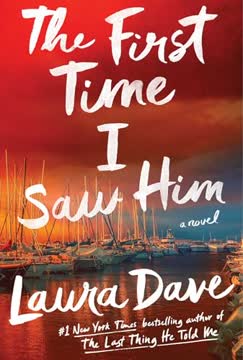

Plot Summary
Prologue
Hannah1 is at the Pacific Design Center in Los Angeles, showcasing her white oak furniture at a First Look exhibition. She's watching for Bailey, her stepdaughter,3 who's bringing a new boyfriend to dinner. Then a man walks in — buzz cut, tattoos, broken nose — nothing like the husband who vanished nearly six years ago. But he's wearing the slim oak wedding ring she made him.
Owen2 bends to help her pick up scattered papers, close enough to touch, close enough to undo her. He whispers that the could-have-been boys still love her — a private phrase no one else would know — and disappears into the crowd. Moments later, Bailey3 arrives from the same direction, smiling, unaware that her father just passed her.
Get Out of the House
The next morning, Hannah1 sits on her Santa Monica balcony when a text from an Australian number tells her to check her pocket. She finds a flash drive in yesterday's jacket. A burly man in a SoCalGas uniform rings her doorbell claiming a gas leak.
A second text orders her to leave immediately. Meanwhile, Bailey's Uncle Charlie10 calls her in a panic — get to Hannah,1 go now. Hannah1 flees to a safe house in Malibu and sees the news: Nicholas Bell,4 Bailey's grandfather3 and former lawyer to a crime syndicate, pronounced dead in Texas.
US Marshal Grady9 warns that the organization's safety deal has collapsed — and that someone identifying himself as Nicholas's4 son-in-law visited his Austin condo last night. If that was Owen,2 and Nicholas4 is dead the same night, the connections look damning.
Two Women Vanish from LA
Hannah1 climbs through her attic, down the back trellis, through a neighbor's yard. She takes a taxi to Malibu, removing and destroying her SIM card en route. She texts Bailey3 a predetermined emergency code that signals everything has changed.
Bailey,3 already moving since Charlie's10 call, drops her cell phone into soapy water and leaves empty-handed except for two keys. The blue key opens her building super's apartment, which connects through to an adjacent lobby no one watching her building would think to monitor.
The red key starts a Jetta hidden in the neighboring garage, registered under Jules's name. Both women rehearsed these routes. Hannah1 chose her house for its trellis. Bailey3 pays extra rent for the super's private exit. None of it was paranoia. All of it was preparation.
Decoding Owen's Photo Albums
At the Malibu safe house, Hannah1 opens Owen's flash drive on an air-gapped laptop. A marine compass appears, then five photo albums with no instructions. Hannah1 realizes these aren't memories but coded messages. The Sausalito album highlights Daniel,14 a pilot and the brother of Owen's2 closest friend.
The honeymoon album points to Paris. Driving north, Hannah1 calls Patty13 — Daniel's14 sister-in-law — who confirms he's the connection she needs. Hannah's1 original escape plan, sailing from Santa Cruz to the Sea of Cortez, gets shelved. Patty13 tells them to reach Napa County Airport by morning.
That night at a pool house in the Santa Cruz mountains, Jules8 calls with intelligence from the Chronicle: Frank's5 oldest children, Quinn6 and Teddy,7 have taken over the organization. Their ascension explains why Nicholas's4 protections collapsed overnight.
Nicholas Shakes the Devil's Hand
Four decades earlier, Nicholas Bell4 was a public defender in Austin with crushing debt and a family to support. After he won a case for a young man who worked for the organization, crime boss Frank Campano Pointe II5 came calling.
Frank5 flew Nicholas4 and his wife Meredith to his compound on Fisher Island — a gated paradise of private ferries and ocean views. Frank's5 wife Jenny turned out to be from their Texas hometown. Their kids played together in the backyard.
Then Frank5 slid a folder across the table revealing the monstrous clients Nicholas4 would represent at the Houston firm that had offered him a legitimate position. The contrast was calculated: work for monsters in suits, or work for me. Nicholas4 shook Frank's5 hand. He wouldn't see the line clearly again for twenty years.
Forty-Two Minutes in Miami
Daniel,14 flying under the guise of a chartered flight, lifts them from Napa in a long-range jet with fake passports. The flight plan reads Paris. Then mid-flight Hannah1 wakes to find they've landed not at Teterboro in New Jersey for the scheduled fuel stop, but in Miami — the organization's home territory.
Hannah's1 hand hovers over Grady's9 number, one digit from summoning federal rescue. But she reads Daniel's14 shaking hand, his nervous eyes — this wasn't his plan either. She orders the doors sealed and no one deplanes.
For forty-two minutes, fuel trucks circle while Hannah1 watches through the window, mapping an escape if the cabin door opens. It never does. They take off again toward Paris. Hannah1 doesn't sleep for the remaining hours across the Atlantic.
The Dead Man Opens the Door
In Paris, Hannah1 leads Bailey3 through a decoy route — entering the grand Hôtel Le Bristol, slipping out a side door, walking to the intimate La Réserve on Avenue Gabriel. Bailey3 spots a bearded man in an army jacket following them; they duck into a children's boutique until he passes.
At La Réserve, Hannah1 climbs the winding staircase to room 202 — the same room from her honeymoon with Owen.2 She knocks. Nicholas4 opens the door. Alive.
He explains that he and Owen2 spent years planning for this moment, that they faked his death using a cooperative coroner at his remote Texas lake house to trigger the organization's move while Nicholas4 could still control the response. Quinn6 and Teddy7 simply moved faster than expected. The bearded man, it turns out, is Nicholas's bodyguard Seth,12 sent to shadow them from the airport.
A Gun and a Handshake in Kona
Five years earlier, Owen2 lived under a false name at a New Zealand vineyard, tending vines by day and mapping the organization by night. He mailed Nicholas4 a letter from Fiji, then left an envelope of evidence in Nicholas's4 hotel room.
Months later, Nicholas4 responded through Bailey's3 Instagram — a family photo Owen2 recognized as an invitation. Owen2 called the Hawaii hotel. Nicholas4 said he loved Bailey3 and Hannah1 more than he hated Owen.2 They met in connecting rooms on the Big Island. Nicholas4 pressed a cocked gun to Owen's2 chest.
Owen2 didn't flinch — if he died, his family would at least be safer. Nicholas4 lowered the weapon. They spent days compiling twenty thousand documents about the organization's crimes. On their last beach walk, Nicholas4 delivered a warning: this can't end with both of them surviving.
Quinn's Order, Kate's Death
Four years before the present, Nicholas4 confronted Frank5 over a birthday dinner. For years he'd dismissed rumors that the organization killed his daughter Kate11 — Owen's2 first wife, Bailey's3 mother — in a hit-and-run. Frank's5 assurances had always been enough.
But Owen's2 reappearance had seeded doubt, and Nicholas4 could finally read what his oldest friend was hiding. Frank5 confessed: Kate11 had been asking questions at the US attorney's office about Nicholas's4 work, raising dangerous flags inside the organization.
Quinn6 — then a young mother whose husband had just been imprisoned because of Owen's2 testimony — authorized men to frighten Kate11 into silence. They killed her instead. Frank5 claimed he didn't know for years, that the responsible lieutenants were already dead. Nicholas4 said they were done and walked away, carrying a grief that had just grown a new, sharper edge.
The Bench Before the Sirens
In Antibes, Bailey3 enters the Picasso Museum and joins the last tour of the day. She's supposed to end up on the bench before Picasso's Ulysses and sirens — the meeting point Owen2 chose. A young man in wire-rim glasses watches her too closely; she hides in a locked bathroom until he'd have surely given up.
She returns to the bench alone. Then someone sits beside her. She knows it's him before she looks — his presence a frequency her body never stopped receiving.
She mentions their all-night session on her eighth-grade Odyssey project, when he drove across town at eleven for poster board and markers. He laughs. She turns. His hair is different, his face leaner, a sadness pooling behind his eyes she's never seen before. But it's him. She takes his hand.
Twenty Minutes on the Cliffside
Hannah1 and Nicholas4 dress formally near the Èze police station and climb the medieval steps to the cliffside hotel where Frank5 celebrates his eightieth. A guard nearly confiscates Hannah's tablet — she bluffs past by calling it a baby monitor.
On the veranda, with Mediterranean views and eighty guests, Nicholas4 locks eyes with Frank5 across the party. They embrace like old friends, but Quinn6 and Teddy7 flank their father like sentinels. Nicholas4 announces the terms: local police are nearby, and if he and Hannah1 don't walk out safely in twenty minutes, documents detailing decades of crimes transmit to federal prosecutors.
The tablet Hannah1 carries shows live surveillance feeds from all six Campano children's homes — every wire transfer, every crime documented. Teddy7 lunges at Nicholas.4 His fist catches Hannah's1 jaw. A guard presses a gun barrel into her ribs.
The Graze That Seals the Deal
Frank5 orders his guards to stand down and takes Nicholas4 alone into a back room. While they're gone, Quinn6 tells Hannah1 at the bar that there is always a cost when you come for this family — and Hannah1 realizes the cost will be Nicholas4 himself.
Inside, Frank5 shoots Nicholas4 deliberately: a graze to the shoulder, drawing blood but not killing. He tends the wound with a first aid kit. Their conversation is strangely tender between two men who've known each other forty-three years, both understanding this is goodbye.
Frank5 can guarantee the permanent safety of Hannah,1 Bailey,3 and Owen,2 but not Nicholas.4 What Hannah1 also grasps — through Quinn's6 words and Nicholas's4 calm — is that Frank5 was part of this plan all along. Owen2 brought the three of them together a year ago. The insurance works because Frank5 enforces it from the inside.
The Docks Lead Home
Hannah1 drives Nicholas4 to Antibes. In a parking garage, decoys dressed like them take the car toward Nice airport while Nicholas4 climbs into a separate car with Seth,12 bound for a farm in Tuscany where his wife and daughter are buried — safe for now, though not forever.
He kisses Hannah's1 forehead and tells her this isn't goodbye. At the marina, she walks the dark docks until she finds the yacht she spent five years learning to sail. Below deck, Bailey3 sleeps curled around a keyboard and scattered music pages. Hannah1 touches her face.
Bailey3 murmurs that she's home. On the top deck, the Mediterranean glowing purple beneath the moon, Owen2 stands behind her. He mentions Bailey's3 plans — lemons on the Amalfi Coast, eventually a vineyard and workshop near Los Alamos. Hannah1 turns toward him.
Analysis
The First Time I Saw Him interrogates the architecture of protection — who builds it, who it costs, and whether safety can ever be more than provisional. Dave constructs a thriller whose central tension isn't whether the family will survive, but what surviving will require them to sacrifice. Every character is defined by a version of the same question: What will you trade to keep your children safe? Nicholas4 trades his freedom and ultimately his security. Owen2 trades six years of his daughter's life. Hannah1 trades normalcy, romantic fulfillment, and peace of mind. Even the novel's antagonist, Quinn,6 acts from the same maternal calculus — stepping into organized crime not from ambition but from the perceived need to protect her fatherless sons.
The novel's most sophisticated move is its treatment of complicity. Nicholas4 is neither villain nor innocent; he's a man who chose a specific corruption to fund a specific love, and the book refuses to let that equation resolve neatly. Frank,5 similarly, is rendered as a genuine friend who also bears responsibility for a murder he didn't order but enabled through decades of institutional violence. Dave suggests that moral clarity is itself a luxury — one available only to people who never faced the particular inflection point of debt, family obligation, and a powerful man's outstretched hand.
The marine compass on Owen's flash drive operates as the novel's governing metaphor: a navigational instrument that maintains its bearing regardless of the vessel's orientation. Hannah1 has spent five years becoming that compass for Bailey3 — steady, reliable, pointing toward safety no matter how the surrounding conditions shift. The book argues that love's highest expression isn't feeling but infrastructure: the trellis you install before you need it, the yacht you learn to pilot, the keys you pay for monthly in case one terrible morning demands them. Forgiveness, in Dave's rendering, isn't absolution but the willingness to keep building the scaffolding that holds your people up — even when the person you're forgiving isn't there to see it.
Review Summary
The First Time I Saw Him continues Hannah, Owen, and Bailey's story immediately after the first novel ends. Reviews praise the fast-paced, action-packed narrative that moves from Los Angeles to Europe as Hannah and Bailey flee danger when Owen reappears after five years. Readers appreciated the multiple POVs, dual timelines, and emotional depth exploring family bonds and forgiveness. Most found it a worthy, thrilling sequel with satisfying closure, though some felt it lacked the emotional resonance of the original. The ensemble cast, particularly Nicholas, received strong praise. Reviewers emphasize reading both books in order for full impact.
People Also Read








Characters
Hannah Hall
Owen's wife, Bailey's protectorAn artisan woodworker and Owen's2 wife, Hannah is the story's emotional and tactical center. She is defined by a fierce operational intelligence that transforms maternal love into strategy—she chose her house for its escape trellis and spent five years learning to pilot a yacht. Every decision she makes orbits one imperative: keeping Bailey3 safe. Yet beneath the preparedness lives a woman who still declines dates because she refuses to stop being someone's wife. Hannah's evolution from outsider in Bailey's3 life to the person Bailey3 trusts most is the novel's emotional spine. She processes fear not through panic but through planning, and grief not through stillness but through movement—always toward whoever needs her next.
Owen Michaels
Fugitive father, Hannah's husbandBailey's3 father and Hannah's1 husband, Owen is a former analyst living under a false identity in New Zealand after turning state's evidence against organized crime associates. He spent nearly six years working a vineyard by day and mapping the organization's vulnerabilities by night, sustained by occasional glimpses of Bailey's3 social media and the memory of his last morning with Hannah1. Owen's intelligence is mathematical and relentless—he hacked surveillance systems across multiple homes and orchestrated a multi-continent operation from the far side of the world. Yet his emotional register is one of profound self-punishment. He wears his wedding ring as both promise and penance, convinced he lost the right to reach for happiness the day he disappeared.
Bailey Michaels
Owen's daughter, aspiring writerOwen's2 twenty-two-year-old daughter, raised by Hannah1 after her father's disappearance. A UCLA music graduate writing an original musical, Bailey carries the particular wound of a child who lost a parent not to death but to silence. She channels that loss into fierce independence masking residual fear. Her relationship with Hannah1 evolved from teenage hostility into something rare: a trust so absolute that when Hannah1 texts a code phrase at eight in the morning, Bailey drowns her phone without hesitation. She craves connection—with her grandfather Nicholas4, with the memory of her father, with the new boyfriend she brings to dinner. She processes grief physically, biting her nails and crying in quick bursts, then gathering herself to keep moving.
Nicholas Bell
Bailey's grandfather, former lawyerBailey's3 maternal grandfather and a former criminal defense attorney who served as consigliere to the organization for decades. Nicholas is shaped by a recurring failure: his inability to protect the women he loves. He lost his daughter Kate11 to violence connected to his professional entanglements, and he has spent every year since trying to atone through Bailey3. His love for his granddaughter is unmitigated and operational—he flies to her hospital bedside, funds her bodyguard, and dedicates himself to ensuring her safety through whatever means necessary. Nicholas carries guilt like a second skeleton, yet his warmth is genuine. He calls Bailey3 weekly, explains New Yorker cartoons just to hear her laugh, and treats Hannah1 as family earned through shared devotion.
Frank Campano Pointe II
Crime boss, Nicholas's oldest friendHead of the crime organization, now eighty and semi-retired in the South of France. Frank presents as a devoted family man—tender with his grandchildren, loyal to old friends—while running an empire spanning decades. His bond with Nicholas4 is the book's most complex relationship: genuine affection coexisting with exploitation, guilt masked by generosity, and a friendship built on mutual complicity that neither man can fully relinquish.
Quinn Campano Pointe
Frank's heir, Owen's nemesisFrank's5 eldest daughter and his successor running the organization. Stanford-educated and a former D1 volleyball player, Quinn stepped into the family business only after Owen's2 testimony imprisoned her husband15, leaving her to raise twin boys alone. Her anger is targeted and strategic, fueled by twenty years of compounding loss. She represents the cyclical nature of institutional violence—a woman who didn't choose this life but has reshaped herself entirely around it.
Teddy Campano Pointe
Frank's volatile eldest sonQuinn's6 brother and co-leader of the organization. Teddy is defined by desperate hunger for his father's5 approval—an approval that perpetually eludes him. Where Quinn6 calculates, Teddy lunges first and strategizes later. He represents inherited power without inherited wisdom, volatile where his father is measured, cruel where Frank5 at least pretends at warmth.
Jules
Hannah's loyal best friendHannah's1 closest friend and a journalist at the San Francisco Chronicle. Resourceful and fiercely loyal, Jules serves as Hannah's1 intelligence pipeline and logistical partner. She purchased the getaway Jetta under her own name, arranged the Santa Cruz safe house through her professor friend, and relays critical information about the organization from untraceable restaurant phones.
Grady Bradford
Trusted US MarshalA US Marshal in the Eastern District of Texas whom Owen2 trusted. He alerts Hannah1 to Nicholas's4 death and warns that the organization's safety deal has collapsed, becoming her first official signal that the crisis is real.
Charlie
Nicholas's son, Bailey's uncleNicholas's4 son and Bailey's3 devoted uncle. A father of twin boys, Charlie sounds the first alarm when the crisis begins, his frantic phone call sending Bailey3 into motion before Hannah1 even reaches her.
Kate
Nicholas's daughter, Bailey's motherNicholas's4 daughter, Owen's2 first wife, and Bailey's3 biological mother. Killed in a hit-and-run years before the story begins, her death is the origin point of every conflict in the novel—the loss that broke Nicholas4, radicalized Owen2, and set the entire chain of consequences into motion.
Seth
Nicholas's longtime bodyguardNicholas's4 bodyguard of over two decades, loyal through imprisonment and beyond. He shadows Hannah1 and Bailey3 in Paris and ultimately serves as Nicholas's4 companion on his final journey.
Patty
Critical go-between to DanielWife of Owen's2 best friend Carl, she runs a Sausalito art gallery and serves as the crucial link connecting Hannah1 to the pilot Daniel14, enabling their escape from California.
Daniel
Pilot who flies them to ParisCarl's brother and a professional pilot who flies Hannah1 and Bailey3 from Napa County Airport to Paris on a private jet, navigating the terrifying Miami diversion with shaking hands and steady nerve.
Wesley
Quinn's imprisoned husbandQuinn's6 husband, a former public defender turned organization lieutenant imprisoned by Owen's2 testimony. His absence is the engine of Quinn's6 vendetta—twenty years of compounding rage directed at the man who took her husband and her sons' father.
Plot Devices
Owen's Flash Drive and Marine Compass
Coded roadmap to safetyOwen2 slipped a flash drive into Hannah's1 jacket at the design center. It contains a marine compass homepage and five photo albums—Sausalito, their honeymoon, baby Bailey3, family, and Hannah's1 work—with no written instructions. Owen2 embedded messages inside photographs only Hannah1 could decode: a photo of a pilot named Daniel14 signals their means of escape; honeymoon photos from La Réserve mark their Paris destination; a Picasso painting located in Antibes pinpoints where Bailey3 will meet Owen2. The compass itself mirrors what Hannah1 learned in sailing school—a navigational tool that points to true north when every other instrument fails. The flash drive transforms Hannah1 from a person being hunted into someone navigating toward a specific destination with purpose.
The Surveillance Tablet
Nuclear leverage against the familyA tablet loaded with live surveillance feeds from all six Campano children's homes, plus decades of organized criminal records cross-referenced by individual culpability. Owen2 spent years hacking into their systems from New Zealand. Nicholas4 compiled and organized the legal documentation from his own archives. Together, the feeds and files constitute an irrefutable threat: if any harm befalls Hannah1, Bailey3, or Owen2, the entire archive transmits automatically to federal prosecutors. The tablet is the negotiating weapon Nicholas4 and Hannah1 carry into Frank's5 birthday party—the leverage that compels the organization to permanently leave their family alone. Its password is the date of Kate's11 death, a detail Frank5 recognizes immediately.
Hannah's Emergency Escape Architecture
Maternal preparedness made tacticalBefore the crisis, Hannah1 constructed layered escape routes for herself and Bailey3. Her house was chosen for its rear trellis. Bailey's3 building super grants access to a private exit connecting to an adjacent building for an extra two hundred dollars monthly. A Jetta registered under Jules's8 name waits in a hidden garage. Burner phones, clean laptops, cash, and a coded text phrase form the communication protocol. Hannah1 also spent five years learning to sail a specific French-manufactured yacht, preparing for a maritime escape to the Sea of Cortez. These aren't paranoid contingencies—they're the architecture of a mother who organized her entire life around one eventuality: the day the protection would fail.
Nicholas's Faked Death
Trigger that starts the endgameNicholas4 and Owen2 orchestrated a false death announcement to provoke the organization's move while Nicholas4 could still control the response. Nicholas4 was found unresponsive at his remote lake house in Texas Hill Country, where a small-town coroner signed the death certificate in exchange for compensation. His will specified no autopsy. His bodyguard Seth12 was the one who discovered him. The deception had to be convincing enough to fool not just the organization but also Hannah1 and Bailey3—their genuine grief serving as proof that the death was real. The timing was calibrated to coincide with Frank's5 birthday celebration in Èze, ensuring all of the Campano family would be gathered in one location for the confrontation.
The Forty-Foot Yacht
Escape vessel turned reunion pointA French-manufactured yacht that Hannah1 spent five years learning to operate at a Los Angeles marina, studying the same make and model her friend Jules's8 contact owns in Santa Cruz. She mastered lines, engines, and thrusters through weekend voyages to Catalina, the Channel Islands, and San Diego. Originally intended as a maritime escape vehicle for her and Bailey3—she planned to sail to the Sea of Cortez if their safety was ever compromised—the boat anchored in Antibes becomes instead their reunion point. Owen2 waits aboard with Bailey3 after the Èze confrontation. The yacht represents both Hannah's1 meticulous preparation for the worst and the vessel that carries the reunited family into whatever comes next.








































