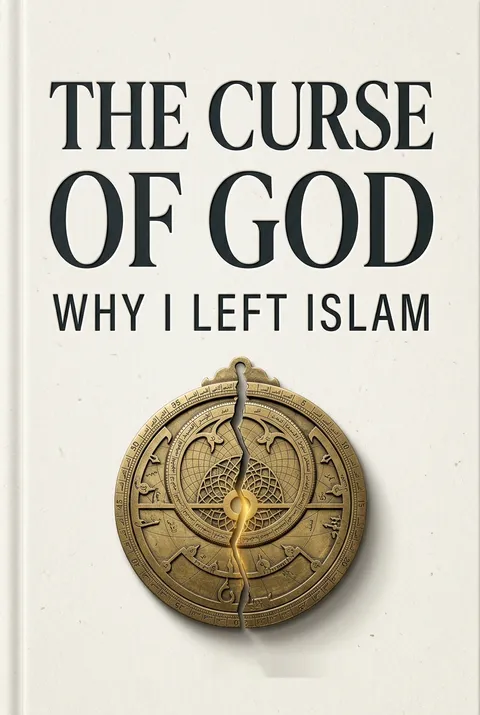

Key Takeaways
1. Embrace Critical Thinking Over Blind Acceptance
Critical sense is more important than common sense as common sense only operates on existing knowledge.
Cultivate an open mind. The author advocates for "method B" thinking, which involves critically questioning arguments, understanding premises, and testing conclusions, rather than blindly accepting or rejecting ideas based on preconceived notions. This approach is crucial for genuine knowledge acquisition and personal growth.
Beyond common sense. While common sense relies on existing knowledge, critical sense pushes boundaries, challenging established beliefs to uncover deeper truths. The historical example of the flat Earth theory illustrates this: common sense dictated a flat world, but critical thinkers, observing phenomena like ships disappearing hull-first or lunar eclipses, deduced a round Earth, eventually making it common sense.
Embrace intellectual evolution. Changing one's mind in light of better evidence and reason is a strength, not a weakness. Unlike rigid religious texts, science thrives on constant revision and improvement. This adaptability is essential for progress, allowing humanity to discard outdated ideas and embrace new understandings.
2. Religion's Flawed Foundation for Morality and Order
Do religious people really think that if there was no imaginary police commissioner up in the skies, everyone on Earth would be raping, murdering, and looting?
Challenging moral claims. The assertion that religion is necessary for ethics or to prevent societal chaos is fundamentally flawed. The author points out that basic moral principles, like avoiding incest, are rooted in scientific understanding of genetic problems, not divine decree. If humanity relied solely on religion for such knowledge, it would have perished long ago.
Secular societies, lower crime. Statistical evidence contradicts the notion that godless societies descend into anarchy. Countries with less religious influence, such as Japan, Norway, and Germany, often exhibit lower crime rates than more religious nations like the United States. This suggests that societal order and morality are better maintained through reason and secular laws than through fear of divine punishment.
Charity beyond faith. Philanthropy is not exclusive to religious individuals. Many prominent atheists, like Bill Gates and Warren Buffet, are among the world's most generous donors, demonstrating that compassion and a desire to alleviate suffering are universal human traits, independent of religious belief. The idea that good deeds require the promise of eternal reward diminishes their inherent value.
3. The Heavy Cost of Religious Dogma
The last few pages do not disprove God but certainly prove that the price we pay for believing in a non-existent or incorrect god (Christian if you’re a Muslim or Hindu if you’re a Jew etc.) is immeasurably large.
Pascal's Wager debunked. The philosophical argument that it's safer to believe in God ("Pascal's Wager") is flawed. It assumes only one correct God among thousands and ignores the immense personal and societal costs of adhering to a potentially false or harmful ideology. The author argues that blind belief can lead to a life filled with unnecessary restrictions and even violence.
The burden of belief. Adopting a religion often means accepting a "baggage" of outdated rules and prohibitions that hinder personal freedom and societal progress. For instance, Islam's historical prohibitions on:
- Music, movies, and images of living creatures
- Discrimination against homosexuals and women
- Practices like stoning adulterers or chopping off hands for theft
These rules, if followed literally, lead to oppressive societies, as exemplified by the Taliban or ISIS.
Personal experience of indoctrination. The author recounts a childhood experience where he was nearly recruited into a jihadi group, Lashkar-e-Taiba, highlighting how easily religious fervor can brainwash individuals, even those with modern education. This illustrates the real-world dangers of unquestioning belief and the potential for religion to fuel political and economic greed under the guise of holy war.
4. The Abrahamic God: Impotent, Evil, or Imaginary
Either God can do nothing to stop catastrophes like this, or he doesn’t care, or he doesn’t exist. Therefore, God is either impotent, evil, or imaginary. Take your pick, and choose wisely.
The "God of the Gaps" fallacy. Theists often attribute unexplained phenomena to God, a "god of the gaps" argument that shrinks as scientific understanding expands. From ancient sea storms to planetary orbits, what was once attributed to divine intervention is now explained by natural laws, rendering previous gods obsolete.
A petty, contradictory deity. The God described in the Quran, and by extension the Abrahamic traditions, is portrayed as a being with human-like flaws:
- Angry and vengeful: Threatening eternal hellfire for disbelief or minor transgressions.
- Misogynistic: Declaring men superior to women, sanctioning wife-beating, and unequal inheritance.
- Genocidal: Destroying entire cities (Sodom) and civilizations (Noah's flood) over perceived moral failings or disbelief, often harming innocent animals in the process.
- Illogical: Creating humans with "free will" yet sealing their hearts against belief, or allowing innocent children to suffer horrific fates while intervening in trivial matters.
The problem of evil. The existence of immense suffering, like the rape and murder of a 7-year-old girl, challenges the notion of an omnipotent, benevolent God. If God has the power to intervene but chooses not to, he is either uncaring or non-existent. The "free will" defense falls apart when God selectively intervenes with miracles, demonstrating a contradictory and arbitrary nature.
5. Muhammad's Character: A Flawed Role Model
Muhammad was no way near ‘good’ by today’s standards, let alone the ‘perfect’ human that Muslims claim.
Violence against critics. Contrary to popular narratives of gentleness, Muhammad systematically eliminated his critics, particularly poets, through assassination. Figures like Al-Nadr, Abu Afak, Asma Bint Marwan, and Kab bin Al-Ashraf were murdered for expressing dissent, demonstrating a ruthless suppression of opposition.
Womanizing and exploitation. Muhammad's personal life, especially after Khadijah's death, reveals a pattern of acquiring numerous wives and concubines, often through conquest or political maneuvering.
- Child marriage: Aisha was married at 6 and consummated at 9.
- Adopted son's wife: Zaynab bint Jahsh was married after Muhammad saw her semi-naked, with a convenient "revelation" legalizing it.
- Sex slaves: Rayhana and Maria Al-Qibtia were taken as concubines after their tribes were massacred, highlighting the practice of sex slavery.
This behavior, if exhibited by a modern leader, would be universally condemned as psychopathic and predatory.
Cult leader tactics. Muhammad fostered a cult of personality, claiming special powers for his bodily fluids (urine, saliva) and demanding unquestioning loyalty. His followers' belief in these "miracles" and their willingness to engage in violence for his cause are hallmarks of cultic behavior, not divine leadership.
6. The Quran's Scientific Inaccuracies and Contradictions
If it was a book written by the all-wise, intelligent being who created billions of galaxies, he would not have written even a single scientifically incorrect verse, let alone tens of them.
Misinterpretations of cosmic origins. Muslim apologists often twist vague Quranic verses to align with modern scientific discoveries, such as the Big Bang. However, the Quran's description of "heavens and Earth meshed together" contradicts the scientific understanding of the early universe, where only energy existed, not formed planets. The "six days" of creation, even if interpreted as billions of years, implies a slow, bored God, contradicting his omnipotence.
Flawed embryology. The Quran's claims about human development are scientifically inaccurate and appear to be plagiarized from earlier Greek physicians like Galen.
- Sperm origin: The Quran states sperm emerges "between the backbone and the ribs," which is anatomically incorrect.
- Sex determination: It claims gender is determined after the embryo becomes a "clinging clot," whereas sex is determined at conception.
- "Clinging clot" fallacy: The embryo is never a blood clot; this misinterpretation likely stems from Galen's description of the early embryo as "filled with blood."
Geocentric and flat Earth views. The Quran contains multiple verses describing the Earth as "spread out," "a bed," or "an expanse," clearly indicating a flat Earth perspective. Furthermore, numerous verses link the sun and moon's "running" or "swimming" in orbit to the occurrence of day and night, reflecting the ancient geocentric model where the sun orbited Earth, not the Milky Way.
7. Questioning the Quran's Authenticity and Consistency
The mere fact that Muslims have decided to abrogate certain verses means these verses were contradictory, and that can’t be a surprise; after all, the Quran was collected from the memories of people, and newly conquered people had also created their own versions of the Quran, so it would have been easy to accidentally include invented verses.
A flawed compilation process. The Quran's claim of being a 100% authentic, uncorrupted word of God is challenged by its historical compilation. After Muhammad's death, verses were gathered from various sources (memorized accounts, writings on bones, leather, etc.) and compiled by individuals like Zayd bin Thabit, relying on human memory and witness verification, making accidental inclusions or omissions highly probable.
Lost and abrogated verses. Evidence suggests the Quran has undergone changes:
- "Satanic Verses": Muhammad allegedly included verses inspired by Satan, later removed, raising questions about divine infallibility.
- "Lost Verses": Aisha claimed a verse about stoning adulterers was lost because a goat ate the paper it was written on, a bizarre explanation for divine text.
- Abrogation (Naskh): The principle of abrogating contradictory verses (where later verses supersede earlier ones) implies inherent inconsistencies in God's word, undermining its claim of perfection.
The problem of interpretation. The Quran's vague language leads to endless interpretations, with scholars disagreeing on fundamental issues like the Earth's shape, evolution, or the killing of apostates. If God is all-wise, why would he create a text so easily misunderstood, leading to division and violence among his followers?
8. "Islamophobia" is a Misleading Term for Rational Fear
The fear of Islam is real, and any sane person should be afraid of it and its teachings.
Distinguishing rational fear from irrational phobia. The term "Islamophobia" implies an irrational fear of Islam. However, the author argues that fearing specific doctrines within Islam—such as the encouragement of wife-beating, the death penalty for apostasy, or the condemnation of homosexuality—is a perfectly rational response to an ideology that promotes violence and discrimination.
Categorizing Muslim populations. To avoid "Muslimophobia" (fear of all Muslims), the author categorizes Muslims into:
- Jihadis: Actively violent, like ISIS or the Taliban.
- Islamists: Believe literally but may not act violently, yet support Sharia law.
- Carefree: The majority, culturally Muslim, ignorant of harsh doctrines, often moderate.
- Seculars: Educated, aware of problems, seeking internal reform or safety.
It is rational to fear the first two categories due to their adherence to violent doctrines, but irrational to fear the latter two, who often contribute positively to society.
The dilemma of Western immigration. Western democracies face a challenge in distinguishing between Muslims who pose a threat and those who are peaceful. Statistics on crime rates among certain refugee populations in Europe, particularly sexual assault, highlight a complex issue that cannot be dismissed as "Islamophobia." While not all Muslims are perpetrators, the correlation raises legitimate concerns that require careful policy, not blanket bans, but also not blind acceptance.
9. Effective Strategies for Debating Muslim Apologists
One of the most shocking things you will learn when debating with a Muslim apologist is that their arguments are centuries old and have been countered for centuries.
Recognizing argument types. Debates with Muslim apologists often revolve around three types of claims:
- Absent of reason: Miracles like Muhammad's flying horse or Jesus' resurrection, which defy physics and common sense.
- With some reason: Justifications for practices like amputation for theft or stoning for adultery, which claim to reduce crime but are morally primitive.
- Unfalsifiable: Claims about God's existence or purpose that cannot be disproven, like "God works in mysterious ways."
The UME technique. Apologists frequently employ the "UME" technique:
- Uneducated: Accusing critics of not having read the Quran.
- Misunderstood: Claiming verses are taken out of context (e.g., violent verses are only for self-defense).
- Evade: Shifting the topic when their arguments fail, often by quoting contradictory verses or irrelevant positive aspects of Islam.
Countering this requires demonstrating thorough knowledge of the Quran, exposing contradictions, and refusing to be sidetracked.
Circular logic and "what-about-ism." Apologists often use circular reasoning (e.g., "God gave you free will, but he also sealed hearts against belief") or "what-about-ism" ("What about violence in the Bible?"). The key is to highlight the logical fallacies and emphasize that two wrongs don't make a right, maintaining focus on the specific claims about Islam.
10. Morality Evolves Through Reason, Not Religious Scripture
Our morality is constantly evolving, and so it should; the moment we stop, we will stagnate, and that will be the beginning of the end of our progress.
The shifting moral zeitgeist. Morality is not static but a dynamic "zeitgeist" that evolves over time through human reason and societal progress. Historical examples like the abolition of slavery, the fight for women's suffrage, and the LGBT rights movement demonstrate humanity's capacity to transcend outdated moral codes, often despite religious resistance.
Religion as an impediment to progress. Religious dogma frequently acts as a barrier to moral evolution. If societies strictly adhered to ancient scriptures, practices like slavery, misogyny, and homophobia would still be widespread. The fact that many religious individuals and societies have moved beyond these practices indicates a quiet rejection of literal interpretations in favor of modern, reasoned morality.
Reason as the source of "ought." While science describes what "is," it is human reason, not religion, that dictates what "ought" to be. Altruism, for instance, is observed in early hominids and even chimpanzees, suggesting it's a survival mechanism, not a divine command. Societies that embrace reason can develop more just and compassionate laws, offering rehabilitation for criminals rather than punitive amputations, and recognizing universal human rights.
People Also Read







Download PDF
Download EPUB
.epub digital book format is ideal for reading ebooks on phones, tablets, and e-readers.








































