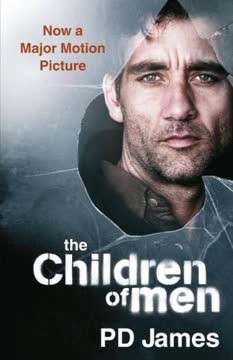
Plot Summary
Omega Year's Last Cry
In 2021, humanity faces extinction: no children have been born for twenty-five years. The last human born, Joseph Ricardo, is killed in a bar brawl, marking the end of hope for the species. Theo Faron, a solitary Oxford historian, reflects on his 50th birthday, the death of Ricardo, and the meaninglessness that pervades society. The world is gripped by ennui, with playgrounds dismantled, children's voices only heard on recordings, and the elderly encouraged to die in state-sanctioned group suicides called Quietus. Theo's diary becomes a defense against despair, as he contemplates the collapse of civilization and the futility of legacy in a world without posterity.
Theo's Bleak Inheritance
Theo recalls his privileged but emotionally distant upbringing, his cousin Xan Lyppiatt's rise to power, and the loss of his own family. Haunted by the accidental death of his daughter Natalie and the subsequent collapse of his marriage, Theo's life is marked by guilt and detachment. His relationship with Xan, now the Warden of England, is strained by their different temperaments and choices. Theo's memories of childhood summers at Woolcombe, his mother's quiet struggles, and his father's slow death from cancer all contribute to his reluctance to take responsibility for others, shaping his solitary existence in a dying world.
The Warden's Shadow
England is ruled by Theo's cousin Xan, the Warden, who maintains order through a Council and a private army. The elderly are encouraged to participate in Quietus, criminals are exiled to the Isle of Man, and immigrants (Sojourners) are used as disposable labor. Society is obsessed with comfort and security, but at the cost of freedom and compassion. Theo, once an adviser to Xan, is now estranged from power. He observes the decay of culture, the rise of the Omegas (the last generation), and the chilling efficiency of the Warden's regime, which promises protection but breeds apathy and quiet terror.
Hope's Quiet Dissidents
Theo is approached by Julian, a mysterious woman from his past, who asks him to meet her dissident group, the Five Fishes. They are united by a desire to challenge the Warden's policies: the Quietus, the treatment of Sojourners, the penal colony, and the erosion of democracy. The group—Julian, her husband Rolf, Miriam the midwife, Luke the priest, and Gascoigne—are ill-equipped but determined. They ask Theo to use his connection to Xan to plead for reform. Theo is skeptical but moved by their conviction, especially Julian's quiet strength and the group's fragile hope.
The Five Fishes
The Five Fishes draft a manifesto demanding an end to the Quietus, fair treatment for Sojourners, closure of the penal colony, and restoration of democracy. They distribute pamphlets and sabotage Quietus ceremonies, risking their lives for a cause most consider futile. Theo, drawn in by Julian's appeal, agrees to witness a Quietus and speak to Xan. The group's unity is tested by personal motives—Rolf's ambition, Miriam's grief, Luke's faith, Gascoigne's loyalty, and Julian's mysterious resolve. Their actions attract the attention of the State Security Police, putting them all in danger.
Witness to Quietus
Theo travels to Southwold to witness a Quietus, where elderly women are drugged, shackled, and drowned at sea. He tries to save one, Hilda, but is beaten and left unconscious on the beach. The horror of the event shakes him, and he realizes the depth of the regime's cruelty. The experience compels him to meet with Xan and the Council, where he pleads for reform. The Council is unmoved, justifying their actions as necessary for order. Theo's sense of impotence grows, but he leaves a message for the Five Fishes: he will help.
Council of Power
At the Council meeting, Theo confronts Xan and his ministers about the Quietus, the penal colony, and the treatment of Sojourners. The Council defends its policies as pragmatic responses to a dying world. Xan, charming but ruthless, reveals the emptiness at the heart of power. Theo's appeals are dismissed, and he is warned to be prudent. The encounter deepens Theo's disillusionment but also his sense of responsibility. He realizes that the regime's stability is built on fear, and that even small acts of dissent are dangerous.
A Dangerous Bargain
Theo meets Julian in the Pitt Rivers Museum and reports on his meeting with Xan. He warns her that the group is in danger, but Julian insists they must continue. The Five Fishes escalate their actions, sabotaging Quietus ceremonies and distributing more pamphlets. The State Security Police begin to close in, and Theo is visited by two officers who question him about the group. He lies to protect them, but knows he is now implicated. The price of involvement is rising, and Theo feels the weight of guilt and fear.
The Secret in the Church
As the group flees the authorities, Miriam reveals to Theo that Julian is pregnant—the first pregnancy in twenty-five years. The group hides in a remote chapel, where Theo feels the child move and is overwhelmed by awe and terror. The revelation changes everything: Julian's pregnancy is both a miracle and a threat. The group debates whether to trust the authorities or continue hiding. Rolf's jealousy and ambition surface, while Miriam and Luke focus on protecting Julian. Theo, now fully committed, becomes their protector and guide.
The Quietus Unveiled
The group flees across the countryside, pursued by the State Security Police. Gascoigne is captured and killed; Luke is murdered by a gang of Omegas. Rolf, devastated by the revelation that he is not the father of Julian's child, betrays the group to Xan. Miriam is murdered while seeking supplies. Theo, Julian, and her newborn son are left alone, hiding in a forest woodshed. The cost of hope is paid in blood, and Theo is haunted by guilt for the deaths that have followed their quest.
A Message and a Choice
In the woodshed, Julian gives birth to a healthy son, with Theo and Miriam's help. The birth is both a moment of joy and a culmination of suffering. Miriam is killed retrieving water, leaving Theo and Julian alone with the child. As the authorities close in, Theo prepares to defend them. Xan arrives, offering safety and power if Theo will help him claim the child for the state. Theo refuses, and in a final confrontation, kills Xan to protect Julian and her son.
The Price of Involvement
With Xan dead, Theo takes the Warden's ring and presents Julian and her child to the Council. The birth of the child is greeted with awe and hope, but also with the knowledge that power and danger remain. Theo promises to protect Julian and her son, refusing the temptations of authority. The story ends with the child's christening, a fragile symbol of renewal in a world still shadowed by loss and uncertainty. Theo's journey from detachment to commitment is complete, and the possibility of a new beginning emerges.
The Fugitive's Road
As fugitives, the group faces hunger, exhaustion, and constant fear. Theo steals a car from an elderly couple, inadvertently causing the woman's death and adding to his burden of guilt. The group's unity frays under pressure, with Rolf's betrayal and the deaths of Gascoigne, Luke, and Miriam. Julian's labor begins as they reach the woodshed, and Theo's love for her deepens. The journey is marked by sacrifice, loss, and the relentless pursuit of hope in the face of despair.
Betrayal and Revelation
Rolf, unable to accept that he is not the father of Julian's child, abandons the group and betrays them to Xan. The authorities close in, and the group's numbers dwindle. Theo's sense of responsibility intensifies as he becomes the sole protector of Julian and her child. The betrayal underscores the dangers of ambition and the fragility of trust. The revelation of the child's true parentage is both a personal and political turning point, shaping the fate of all involved.
The Painted Faces
The group is attacked by a gang of Omegas, the Painted Faces, who kill Luke in a ritualistic frenzy. The violence of the encounter shatters any remaining illusions of safety or innocence. Theo, Miriam, Julian, and Rolf barely escape, but the trauma leaves them scarred. The Painted Faces embody the nihilism and cruelty that have taken root in a world without children. The episode marks the end of the group's innocence and the beginning of their final ordeal.
Birth in the Woods
In the shelter of the woodshed, Julian gives birth to a son, the first child born in a generation. The birth is attended by Theo and Miriam, who risk everything to protect mother and child. The moment is both miraculous and precarious, as the threat of discovery looms. Miriam is killed retrieving water, leaving Theo and Julian alone. The birth represents hope and renewal, but also the immense cost of resistance and the fragility of new life in a hostile world.
The Warden's End
Xan arrives at the woodshed, offering Julian safety in exchange for control of the child. Theo refuses, recognizing the dangers of power and the need to protect Julian's autonomy. In a final confrontation, Theo kills Xan, ending his cousin's rule and claiming responsibility for the future. The act is both a liberation and a burden, as Theo must now navigate the dangers of leadership and the expectations of a world desperate for hope.
A New Beginning
With the Warden dead and the Council in shock, Theo presents Julian and her child as symbols of renewal. The birth is greeted with awe, but the future remains uncertain. Theo promises to protect Julian and her son, refusing the temptations of power. The story ends with the child's christening, a fragile act of faith in a world still haunted by loss. Theo's journey from detachment to commitment is complete, and the possibility of a new beginning—however uncertain—emerges for humanity.
Analysis
A meditation on hope, power, and responsibilityThe Children of Men is a profound exploration of what it means to be human in the face of extinction. P.D. James uses the premise of universal infertility to strip society to its essentials, exposing the dangers of apathy, the seductions of power, and the costs of survival without compassion. The novel interrogates the value of hope when the future seems impossible, challenging readers to consider what is worth fighting for in a world without posterity. Through Theo's journey from detachment to commitment, James suggests that even in the darkest times, the possibility of renewal depends on individual acts of courage, love, and sacrifice. The birth of Julian's child is both a miracle and a challenge—a fragile beginning that demands vigilance, humility, and the willingness to risk everything for the sake of others. The novel's enduring lesson is that the future is never guaranteed, but the refusal to surrender to despair is itself an act of creation.
Review Summary
Reviews of The Children of Men are mixed, averaging 3.67/5. Praise centers on James's elegant prose, compelling dystopian world-building, and thoughtful exploration of humanity's psychological response to extinction. Many readers appreciated the book more upon rereading, particularly as they aged. Common criticisms include a slow-moving plot, an unlikeable protagonist, underdeveloped female characters, and overly dense political exposition. Numerous reviewers note the 2006 film adaptation differs significantly from the novel, with opinions divided on which is superior.
People Also Read

Characters
Theo Faron
Theo is a middle-aged Oxford historian, marked by loss, guilt, and emotional detachment. His accidental killing of his daughter and failed marriage have left him isolated, reluctant to take responsibility for others. As the story unfolds, Theo is drawn into the orbit of the Five Fishes and, especially, Julian. His journey is one from passive observer to active participant, from cynicism to commitment. Theo's psychological arc is defined by his struggle with guilt, his longing for meaning, and his eventual willingness to risk everything for hope and love. His relationship with Xan is complex—part rivalry, part kinship, part moral opposition.
Xan Lyppiatt
Xan is the Warden of England, ruling with charm, intelligence, and ruthless pragmatism. He maintains order through fear, surveillance, and the promise of comfort, but at the cost of freedom and compassion. Xan's relationship with Theo is rooted in childhood intimacy and adult estrangement. He is both a protector and a threat, embodying the seductive dangers of absolute power. Xan's psychological complexity lies in his ability to justify cruelty for the sake of order, his loneliness at the top, and his ultimate inability to relinquish control—even in the face of hope.
Julian
Julian is a young woman marked by resilience, faith, and a mysterious calm. She is the first woman to become pregnant in twenty-five years, making her both a miracle and a target. Julian's motivations are shaped by a deep sense of purpose, a willingness to risk everything for her child, and a refusal to be controlled by power. Her relationships—with Rolf, Luke, Miriam, and especially Theo—are defined by trust, compassion, and a quiet authority. Julian's psychological depth is revealed in her ability to endure suffering, her insistence on dignity, and her capacity for love even in the darkest circumstances.
Rolf
Rolf is Julian's husband and the nominal leader of the Five Fishes. Driven by ambition, resentment, and a desire for recognition, Rolf is both a catalyst for action and a source of conflict. His inability to accept that he is not the father of Julian's child leads to betrayal and tragedy. Rolf's psychological arc is one of frustration, envy, and ultimate self-destruction. His relationship with Julian is marked by possessiveness and disappointment, while his interactions with Theo are colored by rivalry and suspicion.
Miriam
Miriam is a former midwife, older than the others, who brings practical skills and emotional stability to the group. She is motivated by a sense of duty, grief for her lost brother, and a desire to protect Julian and her child. Miriam's psychological strength lies in her resilience, her ability to comfort others, and her willingness to sacrifice herself for the greater good. Her death is a profound loss, underscoring the dangers faced by those who resist tyranny.
Luke
Luke is a former priest whose faith and idealism set him apart. He is motivated by compassion, a longing for justice, and a deep love for Julian. Luke's psychological arc is one of quiet courage and self-sacrifice; he ultimately gives his life to save Julian and the others. His relationship with Julian is marked by unrequited love and spiritual kinship, while his presence in the group provides a moral anchor.
Gascoigne
Gascoigne is the youngest and most innocent member of the Five Fishes, a lorry driver with a simple sense of right and wrong. His loyalty to the group and willingness to take risks make him valuable, but also vulnerable. Gascoigne's psychological simplicity is both his strength and his undoing; he is captured and killed, a victim of the regime's brutality and the group's desperate circumstances.
The Council
The Council—composed of Harriet, Felicia, Martin, and Carl—are Xan's ministers, each representing a facet of the regime's logic: health, law, industry, and security. They are intelligent, pragmatic, and emotionally detached, justifying cruelty as necessary for survival. Their psychological profiles are shaped by a mixture of competence, fear, and moral blindness. They serve as both enablers and victims of Xan's rule, complicit in the system's evils but also trapped by its logic.
The Omegas
The Omegas are the last cohort born before infertility struck. They are beautiful, arrogant, and often violent, embodying both the promise and the despair of a dying world. The Painted Faces, a gang of Omegas, represent the nihilism and cruelty that have flourished in the absence of hope. The Omegas' psychological alienation is a product of their unique status—idolized, feared, and ultimately abandoned by a society with no future.
The State Security Police
The SSP are the regime's secret police, tasked with suppressing dissent and maintaining order. They are efficient, ruthless, and largely anonymous, embodying the impersonal violence of the state. Their psychological makeup is defined by obedience, suspicion, and a willingness to do whatever is necessary to preserve the system. They serve as both instruments and symbols of the regime's power.
Plot Devices
Dystopian Diary Structure
The novel is structured as a combination of Theo's diary entries and third-person narration, creating an intimate, confessional tone. This device allows readers to experience the world's decline through Theo's eyes, blending personal memory with political observation. The diary format emphasizes themes of memory, guilt, and the search for meaning in a world without future. It also serves as a record for a possible posterity, echoing the novel's concern with legacy and the preservation of hope.
Foreshadowing and Symbolism
The novel uses recurring symbols—playgrounds, dolls, kittens, the Warden's ring, the woodshed—to foreshadow key events and underscore themes. The dismantling of playgrounds and the christening of kittens symbolize the loss of innocence and the desperate search for meaning. The Warden's ring represents power and its corrupting influence, while the woodshed becomes a sanctuary for new life. Foreshadowing is used to build tension, hinting at betrayal, violence, and the possibility of renewal.
Political Allegory and Moral Choice
The plot is driven by the tension between order and justice, security and freedom. The regime's policies—Quietus, penal colonies, forced labor—are justified as necessary for survival, but at the cost of compassion and dignity. The Five Fishes' resistance, though seemingly futile, raises questions about the value of dissent and the possibility of change. Theo's journey from detachment to involvement is a moral allegory, exploring the costs and responsibilities of hope in a world on the brink.
The Miracle Child
Julian's pregnancy is the central plot device, transforming the group's struggle from political dissent to a fight for the future of humanity. The child becomes a symbol of hope, a target for power, and a test of character for all involved. The secrecy surrounding the pregnancy, the dangers of discovery, and the final birth in the woodshed drive the narrative's emotional and thematic arc.
Betrayal and Redemption
The plot is shaped by acts of betrayal—Rolf's treachery, the regime's violence—and acts of redemption—Theo's commitment, Miriam's sacrifice, Julian's forgiveness. The tension between self-interest and selflessness is explored through the characters' choices, culminating in Theo's decision to kill Xan and protect Julian and her child. The possibility of redemption, both personal and collective, is left open but uncertain.








































