

Key Takeaways
Protect other people's egos and they'll hand you what you want
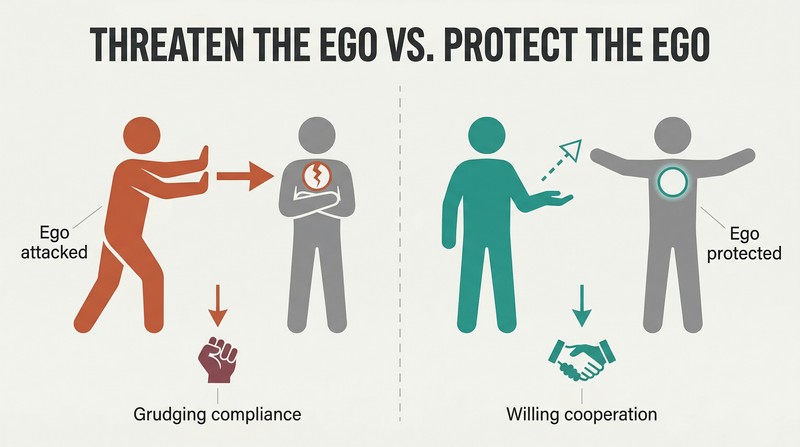
Burg's core promise: you win by making others win. This isn't about being a pushover — it's about understanding that every person you encounter is driven by ego. His father taught him the Talmudic sage Simeon ben Zoma's definition of might: controlling your emotions and turning an enemy into a friend.
At a Toronto loading dock, Burg accidentally insulted a supervisor by asking if he was "one of the drivers." Instead of doubling down, he apologized, used the man's last name throughout, acknowledged the work wasn't his responsibility, and asked for help. The supervisor ended up personally taping boxes, calling the shipping company, and becoming an ally. Throwing weight around might have produced grudging compliance. It would never have produced cooperation or friendship.
All decisions start with emotion — logic just provides the alibi
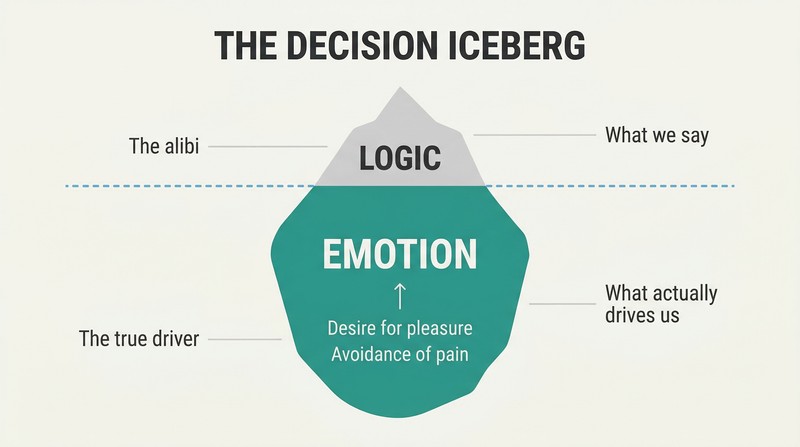
Two drives fuel every decision: the desire for pleasure and the avoidance of pain. Then we rationalize. Burg shares a story from his broke early days: starving after work, he passed a steakhouse and told himself he'd "just look at the menu," then that the protein would fuel harder work, then that the potato skin had vitamins — a cascade of what the book calls "rational lies." He ate the steak.
This matters because you cannot win people over with logic alone. Appeal to how they'll feel — the pleasure of being respected, the pain of embarrassment — and the logical reasons to help you will materialize on their own. Every persuasion technique in this book targets emotion first.
Respond to provocations like medicine, never react like an allergy
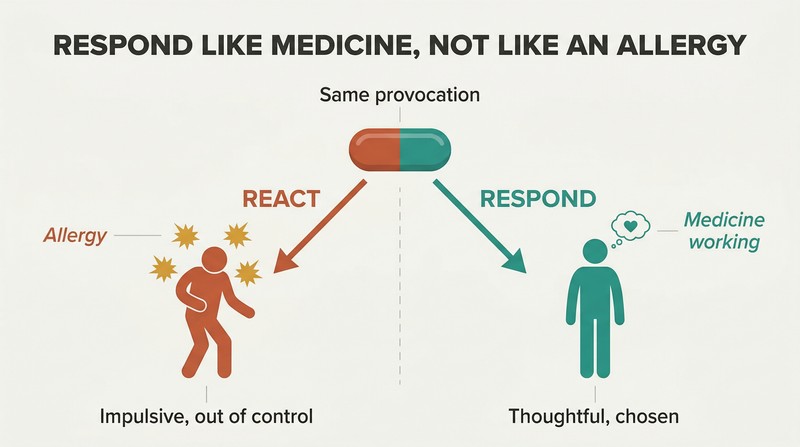
Burg borrows Zig Ziglar's doctor analogy. "You responded well to the medication" is good news. "The medication caused a bad reaction" means trouble. The same split applies to every tense interaction: responding is thoughtful and chosen; reacting is impulsive and destructive.
Stephen Covey's subway story drives this home. A father let his kids run wild on a quiet Sunday car. When Covey confronted him, the man whispered that their mother had died just an hour ago. Covey's irritation transformed instantly into compassion. With practice, you can reach that compassionate response habitually — by imagining what the other person might be going through before you open your mouth.
When stonewalled, combine politeness, patience, and persistence
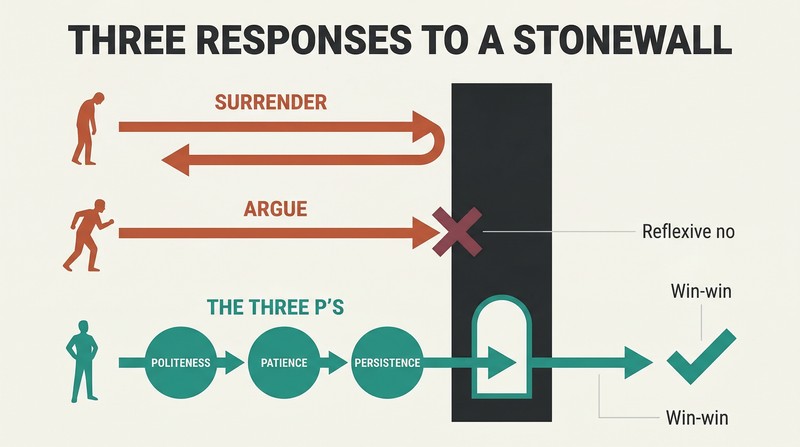
Burg's Three P's are a sequence, not a single tactic. Politeness disarms the person. Patience outlasts their reflexive "no." Persistence signals you aren't going away. At a Toledo arena, an official declared Burg's merchandise table position "non-negotiable" — three separate times. Burg agreed each time, stayed respectful, and kept asking how they could make a "special exception."
Eventually the official revealed his real concern: crowds blocking the entrance before the show. Since Burg's table wouldn't open until after his speech, the problem didn't exist. The official got credit for solving the issue, Burg kept his prime spot, and they had one of their best sales nights ever. Most people either surrender or argue; the Three P's chart a third path.
Give people permission to say no — and they'll say yes
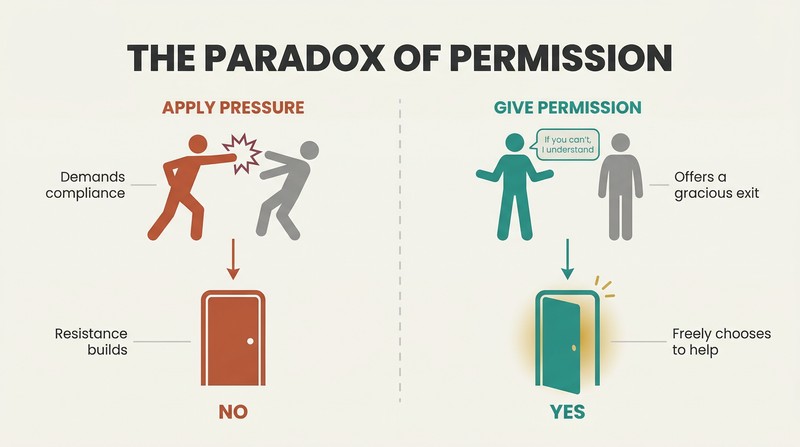
Burg calls these the "eight magic words." After you've been kind, shown respect, and framed your request, this phrase removes all pressure. It subtly challenges the person to prove they can help while offering a gracious exit. The follow-up line: "If you could, I'd certainly appreciate it."
In one story, Burg's friend's airline luggage was stuck due to her own mistake — the airline had zero obligation to deliver it. Burg agreed with the employee's rule, handed the power over entirely, then deployed the eight words. At 3 AM, a delivery van arrived with the luggage personally brought to the guest room. The technique works because willingly giving someone power feels entirely different from them having to fight for it.
Own the blame with 'I messages' so defenses crumble
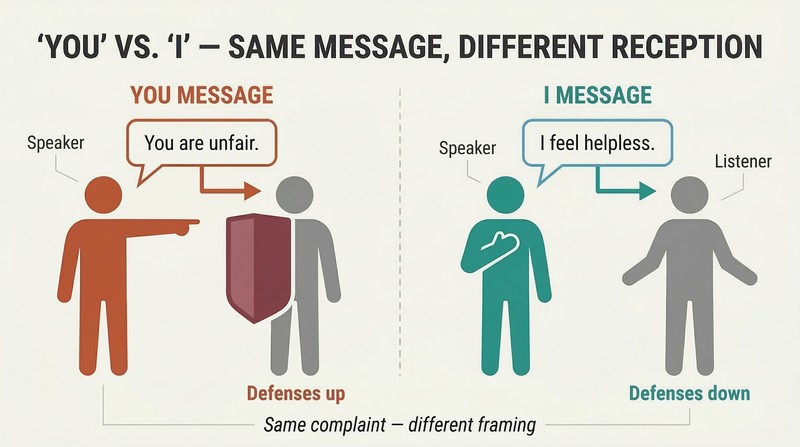
An "I message" reframes blame as feeling. Instead of "You're not showing me respect" (a "you message"), say: "I feel upset. It might just be how I'm taking it, but it feels as though I'm being put down." The complaint lands identically, but without triggering defensive ego protection.
Famed attorney Gerry Spence uses this with judges: rather than "You are unfair," he says "Your Honor, I feel helpless" — then explains his position. Burg applied the same technique with a stubborn bank manager, replacing "Can't you appreciate my loyalty?" with "I really feel that, after years of loyalty, possibly I'm not appreciated as a customer of value." Same message, zero combativeness — and room for the manager to fix the problem.
Imply consequences gently — never issue a direct threat
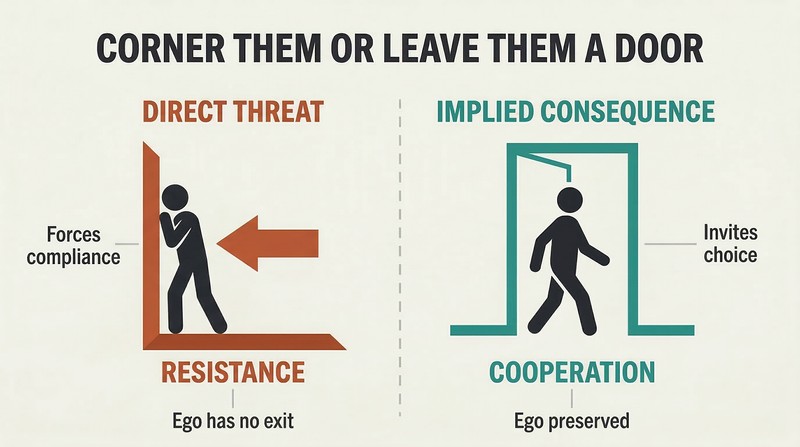
The distinction is ego preservation. Direct threats force people to fight back to save face. An implied threat communicates seriousness while leaving the relationship intact. At an unemployment hearing, Burg represented a friend who'd been railroaded. The judge had reportedly told her to give up. Burg said he was sure the judge "would never do that" and casually mentioned that investigative reporters at the local newspaper don't need to get involved.
The judge corrected the record loudly — right into his tape recorder — and ultimately ruled in Burg's favor. A threat demands compliance and creates an enemy. An implication invites cooperation and preserves dignity. Frame it as information, not ultimatum, and the other person can act without losing face.
Expect the best from people — your attitude will shape their behavior
Expectations are self-fulfilling prophecies. A teacher told her substitute completely fabricated student profiles — who was "smartest," who were "troublemakers." Every kid behaved exactly as predicted, because the substitute's expectations shaped how she treated them, which shaped how they responded.
Burg extends this into a practice he calls edification — deliberately building people up, even for qualities you wish they had. "Jim sure is precise in his reports" is said even when Jim's reports need work. Once people hear their own "press," they start living up to it. The mechanism: when you project confidence in someone, they feel compelled to confirm your belief. Winston Churchill captured it perfectly: the best way to give another a virtue is to impute it to them.
Handwritten thank-you notes create allies no email can match
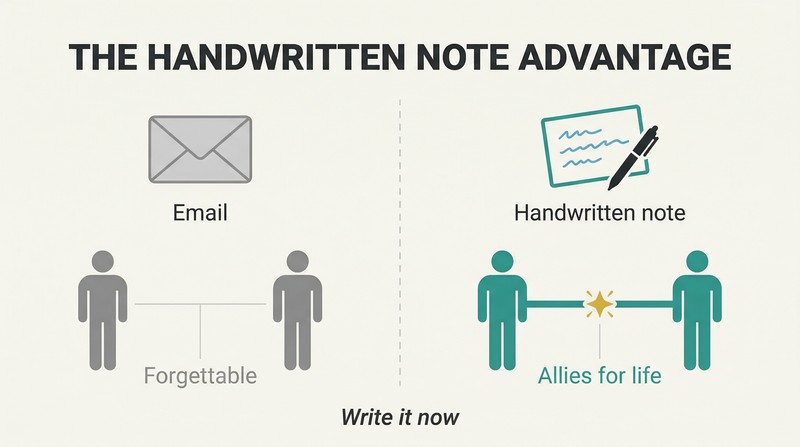
Pen and paper still win. Burg considers handwritten notes his single most powerful networking tool. Send one to the air-conditioning repair person and watch how fast they prioritize your next emergency. Send one to a restaurant's owner and become a VIP. Notes should be short, on quality card stock, written in blue ink, and mailed immediately — ideally arriving the next day.
Burg once turned a tense moment into friendship this way. After being publicly corrected at a convention by an influential member, he sent a simple thank-you note — no mention of the incident. At the next year's convention, the man crossed the room to greet him like an old friend. Burg invokes what he calls the Law of Diminishing Intent: the impulse to write fades fast, so write it now or never.
Tact isn't weakness — it's the strongest language you can speak
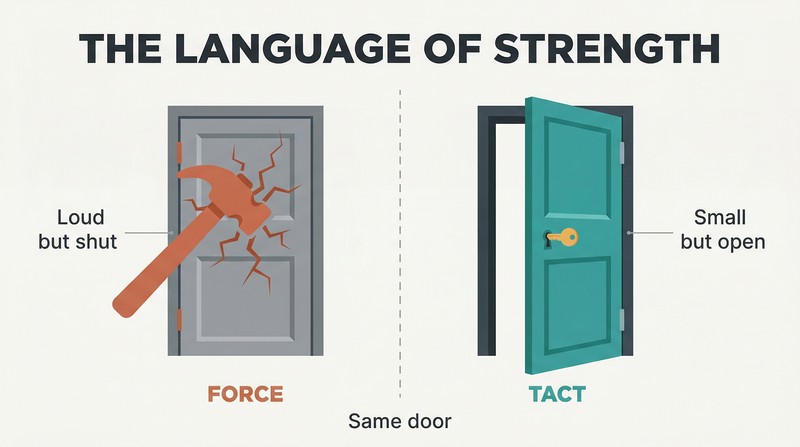
Burg's father calls tact "the language of strength." Real diplomats keep countries from war not through force, but through careful words. Lincoln mastered this: in a famous letter to General Hooker, he praised the man's bravery and ambition before delivering devastating criticism — that Hooker had undermined his predecessor and spoken approvingly of dictatorship. He ended by expressing total confidence in the general's abilities.
Burg's practical prescription: analyze how you speak to others for twenty-one consecutive days, then another twenty-one. By then, diplomatic phrasing becomes habit. The book supplies exact wording for dozens of scenarios — from traffic stops to bank negotiations — but the underlying principle never changes: say what needs saying in a way the other person can actually hear.
Analysis
Burg's 1998 book occupies a productive middle ground in the persuasion literature — more tactical than Carnegie's How to Win Friends and Influence People, more ethically grounded than most negotiation manuals. Where Carnegie offers philosophy and Cialdini offers behavioral science, Burg provides scripts: exact phrases, sequenced tactics, and scenario-by-scenario playbooks for getting what you want while leaving the other person's dignity intact.
The intellectual architecture draws from transactional analysis (Harris's Parent-Adult-Child framework), early NLP rapport techniques, and Carnegie's relationship philosophy, synthesized into what amounts to a field manual rather than a theoretical work. This is both its strength and limitation: extraordinarily actionable, but theoretically thin.
The most sophisticated contribution is the 'implied threat '— the insight that consequences can be communicated while preserving someone's ego. This navigates a tension most interpersonal-skills books ignore: that pure niceness, without backbone, invites exploitation. Burg's solution — implying rather than stating consequences — represents a genuinely nuanced middle path between doormat and bully, anticipating Chris Voss's later work on calibrated questions in Never Split the Difference.
The ego-management framework aligns with self-determination theory's emphasis on autonomy and competence needs. When Burg advises handing power to others or letting them take credit for solutions, he satisfies what Deci and Ryan call the need for autonomy — making compliance feel like choice rather than submission.
A modern critic might note the absence of structural power analysis. Burg's world is one where personal charm can overcome nearly any barrier, which optimistically overstates what individual skill achieves against institutional indifference. Yet for the vast majority of daily interpersonal friction — the defensive clerk, the stubborn bureaucrat, the unhelpful colleague — his methods remain remarkably practical.
The book's enduring contribution is reframing persuasion as service. By centering the other person's dignity rather than your own cleverness, Burg dissolves the ethical tension inherent in influence work. You are not manipulating anyone; you are offering respect — which remains as rare and effective today as when Burg first prescribed it.
Review Summary
The Art of Persuasion receives generally positive reviews, with readers praising its practical advice on communication and persuasion techniques. Many find the book easy to read and apply in daily life, appreciating the author's use of personal anecdotes and real-life examples. Some readers note that the concepts are not entirely new but are presented in an accessible manner. Critics mention repetition and lack of scientific backing. Overall, readers value the book's insights on improving interpersonal skills and achieving win-win outcomes in various situations.
People Also Read









Glossary
Three P's
Polite, patient, persistent sequenceBurg's three-step approach for persuading uncooperative people: begin with genuine politeness to disarm, exercise patience when initially refused, and persist respectfully until the person finds a reason to help. Most critical with people who have no obligation to assist, such as gatekeepers, service workers, or bureaucrats following standard procedure.
I message
Blame-free complaint framingA communication technique where complaints are framed as your own feelings rather than the other person's fault. Instead of 'You're being disrespectful' (a 'you message'), say 'I feel upset—it might be how I'm taking it, but...' Removes the other person's need for defensiveness while still delivering the point clearly. Contrasted with the 'you message,' which triggers ego-based resistance.
Eight magic words
Permission phrase that prompts actionThe specific phrase 'If you can't do it, I'll definitely understand,' deployed after building rapport and making a request. Removes pressure from the other person while subtly challenging them to demonstrate they have the power to help. Often followed by 'If you could, I'd certainly appreciate it.' Must be delivered with genuine humility, not entitlement.
Pre-apology approach
Apologize before they serve youA disarming technique of apologizing in advance for the inconvenience someone is about to deal with on your behalf, before they even begin helping. Example: 'I'm sorry you've got to bother with all this stuff, it must be a real pain in the neck.' Acknowledges the other person's burden and often transforms a resistant attitude instantly by making them feel understood.
Implied threat
Consequences communicated without corneringA persuasion tactic of communicating potential negative consequences without directly stating a threat, thereby preserving the other person's ego and preventing them from feeling cornered. Distinguished from overt threats, which force people into defensive fight-back mode. Example: mentioning that investigative reporters tend to get interested in such matters, rather than threatening to call them directly.
Edification
Building people up deliberatelyThe practice of deliberately praising someone—to others and to themselves—including for qualities or behaviors you wish they would adopt but haven't yet consistently demonstrated. Based on the principle that people tend to live up to the identity others assign them. Once someone hears their positive 'press' repeated, they begin adopting the traits for which they are being edified.
Law of Diminishing Intent
Delay kills follow-through likelihoodBurg's principle that the longer you postpone an action you know you should take, the less likely you are to ever do it. Applied specifically to sending handwritten thank-you notes: the impulse and emotional energy to write one fades rapidly after the triggering event, so acting immediately is essential to making the habit stick.
Feel, Felt, Found
Objection-handling empathy sequenceA sales technique adapted for general persuasion: 'I understand how you feel. Many people have felt the same way. What they found was...' Acknowledges the person's position before redirecting. Burg warns that the exact three words have become so widely taught that their verbatim use can feel like a 'technique,' and recommends natural variations that follow the same empathetic structure.
Third-party explanation
Correct others through self-targeted storiesA method for correcting someone's behavior without direct criticism by telling a story in which you were the one corrected by a knowledgeable third party. The listener absorbs the lesson without feeling personally attacked or judged. Example: instead of telling an employee to update their computer skills, share a story about your own boss once advising you to stay current or risk being replaced.
Negative Yes
Questions where 'no' means 'yes'A questioning technique where a request is phrased so that a 'no' answer achieves the same purpose as a 'yes.' Example: 'Would you be offended if I stopped by to see your home?' When they say 'No,' they have effectively agreed to the visit. Works best when the other person is predisposed to say 'no' automatically regardless of the question.
FAQ
What's "The Art of Persuasion: Winning Without Intimidation" about?
- Core Concept: The book by Bob Burg focuses on mastering the art of persuasion without resorting to intimidation or manipulation. It emphasizes positive persuasion techniques that enhance relationships and achieve desired outcomes.
- Practical Techniques: It provides practical skills, techniques, and attitudes to help readers persuade others effectively in both personal and professional settings.
- Positive Influence: The book highlights the importance of making others feel good about themselves, which in turn makes them more receptive to your ideas and requests.
- Universal Application: The principles discussed are applicable in various aspects of life, from business negotiations to personal relationships.
Why should I read "The Art of Persuasion: Winning Without Intimidation"?
- Improve Communication: The book offers valuable insights into improving communication skills, which are essential in both personal and professional interactions.
- Build Better Relationships: By learning to persuade without intimidation, you can build stronger, more positive relationships with others.
- Achieve Goals: The techniques taught can help you achieve your goals more effectively by gaining the cooperation and support of others.
- Personal Growth: It encourages personal growth by teaching you to understand and respect others' perspectives, leading to more harmonious interactions.
What are the key takeaways of "The Art of Persuasion: Winning Without Intimidation"?
- Positive Persuasion: Persuasion should be positive and benevolent, focusing on mutual benefit rather than manipulation.
- Know, Like, Trust: Building relationships where people know, like, and trust you is crucial for successful persuasion.
- Respond, Don't React: Responding thoughtfully rather than reacting emotionally is key to maintaining control in interactions.
- Tact and Diplomacy: Using tact and diplomacy can help you communicate effectively and avoid conflicts.
How does Bob Burg define persuasion in "The Art of Persuasion: Winning Without Intimidation"?
- Positive Action: Persuasion is about causing others to take positive action through reasoning and inducement.
- Not Manipulation: It is distinct from manipulation, which aims at control rather than cooperation.
- Enhancing Self-Esteem: Effective persuasion enhances the self-esteem of the other party, making them more receptive.
- Skill Development: Persuasion is a skill that can be learned and mastered, much like riding a bicycle or driving a car.
What are the best quotes from "The Art of Persuasion: Winning Without Intimidation" and what do they mean?
- "Winning Without Intimidation": This phrase encapsulates the book's core message of achieving goals through positive influence rather than force.
- "A mighty person is one who can control his emotions and make of an enemy a friend": This quote emphasizes the power of emotional control and the ability to turn adversaries into allies.
- "People do things for their reasons, not for ours": It highlights the importance of understanding others' motivations to persuade them effectively.
- "Tact is the language of strength": This quote underscores the importance of using tact to communicate powerfully and persuasively.
How can I apply the "Know You, Like You, Trust You" principle from "The Art of Persuasion"?
- Build Rapport: Focus on building rapport with others by being genuine and showing interest in their needs and concerns.
- Be Trustworthy: Demonstrate reliability and integrity in your interactions to earn others' trust.
- Foster Liking: Create a positive impression by being likable, approachable, and empathetic.
- Consistency: Consistently apply these principles to strengthen relationships and enhance your persuasive abilities.
What is the "I Message" technique in "The Art of Persuasion"?
- Self-Responsibility: The "I Message" technique involves taking responsibility for your feelings and perceptions rather than blaming others.
- Non-Confrontational: It helps communicate concerns without making the other person defensive, fostering a more open dialogue.
- Example Usage: Instead of saying, "You upset me," you might say, "I feel upset," which focuses on your feelings rather than accusing the other person.
- Conflict Resolution: This technique is effective in resolving conflicts and maintaining positive relationships.
How does Bob Burg suggest dealing with difficult people in "The Art of Persuasion"?
- Respond, Don't React: Choose to respond thoughtfully rather than reacting emotionally to difficult behavior.
- Pre-Apology Approach: Disarm difficult individuals by acknowledging their potential frustrations and apologizing in advance for any inconvenience.
- Empathy: Try to understand the underlying reasons for their behavior and address those concerns with empathy.
- Politeness and Patience: Use politeness, patience, and persistence to navigate challenging interactions effectively.
What is the role of tact in "The Art of Persuasion"?
- Language of Strength: Tact is described as the language of strength, enabling you to communicate effectively without offending others.
- Diplomacy: It involves using diplomacy to convey your message in a way that is well-received and embraced by others.
- Conflict Avoidance: Tact helps avoid conflicts and misunderstandings by ensuring your words are considerate and respectful.
- Building Relationships: By using tact, you can build stronger, more positive relationships with those around you.
How does "The Art of Persuasion" suggest handling negotiations?
- Everything is Negotiable: The book emphasizes that everything is negotiable if approached with the right mindset and techniques.
- Politeness and Respect: Approach negotiations with politeness and respect to create a positive atmosphere for discussion.
- Implied Threats: Use implied threats carefully to communicate seriousness without painting the other person into a corner.
- Win/Win Solutions: Aim for win/win solutions that benefit all parties involved, fostering long-term positive relationships.
What is the "Feel, Felt, Found" technique in "The Art of Persuasion"?
- Empathy: This technique involves empathizing with the other person's feelings by acknowledging them.
- Shared Experience: Share that you or others have felt the same way in the past, creating a sense of shared experience.
- Resolution: Explain what you or others have found as a solution or resolution to the concern, guiding them toward a positive outcome.
- Non-Confrontational: It helps address objections or concerns in a non-confrontational manner, making it easier to persuade.
How can I use humor effectively in persuasion, according to "The Art of Persuasion"?
- Kind Humor: Use kind, non-sarcastic humor to lighten the mood and make interactions more pleasant.
- Self-Deprecation: Self-deprecating humor can disarm others and make you more relatable and approachable.
- Situation-Based: Make light of the situation, if appropriate, to reduce tension and foster cooperation.
- Avoid Forced Humor: Ensure humor is natural and not forced, as forced humor can have the opposite effect and hinder persuasion.
About the Author




Download PDF
Download EPUB
.epub digital book format is ideal for reading ebooks on phones, tablets, and e-readers.








































