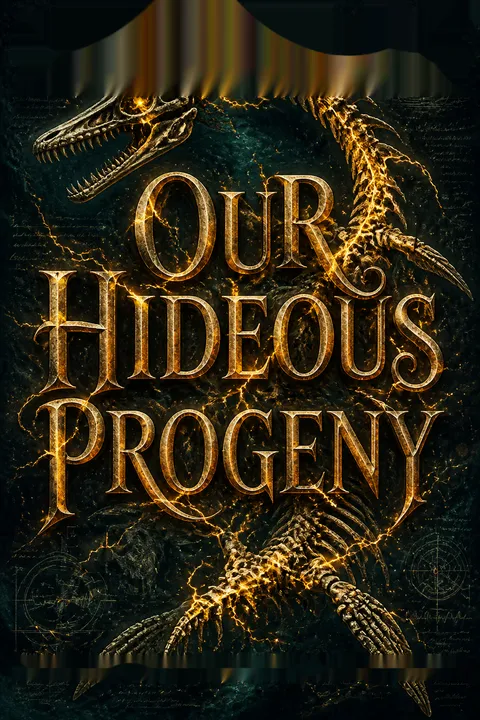
Plot Summary
Mourning and Black-Edged Letters
Mary Sutherland's life is shaped by loss and longing. The story opens with her in a police interview, already hinting at tragedy and reinvention. Flashing back, Mary and her husband Henry receive a black-edged letter announcing the death of Henry's father, forcing them to leave their precarious London life for the cold, oppressive Sutherland family home in Inverness. The journey is heavy with tension—financial strain, marital distance, and the unspoken pain of a lost child. The house is a mausoleum of old resentments, and the arrival of Henry's sister, Maisie, only deepens the sense of unresolved family wounds. The stage is set for secrets to surface and for Mary's own hidden identity to begin its slow, painful emergence.
Inheritance, Secrets, and Siblings
The reading of the will exposes deep fractures: Henry is left almost nothing, while Maisie inherits the estate. Henry's bitterness and shame erupt, revealing his secret gambling debts and the couple's dire financial situation. Mary's anger at Henry's deception is compounded by her own sense of powerlessness as a woman in Victorian society. The siblings' relationship is fraught—Henry resents Maisie's frailty and perceived privilege, while Maisie is haunted by guilt and isolation. Mary, herself an outsider due to her illegitimacy and scientific ambitions, finds herself caught between their old grievances and her own longing for connection and purpose.
Grief's Unforgiving Shadow
Mary's past is marked by abandonment and shame, raised by a cold grandmother after her parents' deaths. Her friendship with the vibrant Catherine Leveaux offers a brief respite, but even this is lost to the tides of time and social expectation. Marriage to Henry is both escape and compromise—he is charming and intelligent, but their union is shadowed by grief for their dead child and the relentless pressures of money and reputation. Mary's scientific work, mostly uncredited, is her only solace. The Sutherland house, with its faded grandeur and oppressive air, becomes a crucible for all their unresolved pain.
Fossils, Friendship, and First Love
Mary's fascination with fossils and the ancient past is rooted in her earliest memories, a passion shared with Catherine. Their friendship is intense, even romantic, but ends in heartbreak when Catherine moves away and Mary's feelings are misunderstood. This early loss shapes Mary's hunger for knowledge and belonging, driving her toward science as both refuge and rebellion. The motif of fossils—remnants of lost worlds—mirrors Mary's own sense of being out of place and time, a living relic in a society that refuses to see her worth.
Scientific Ambition Ignites
Back in London, Mary and Henry struggle to survive on the margins of the scientific community, their ambitions stymied by lack of money and connections. The unveiling of the Crystal Palace dinosaur sculptures becomes a catalyst: Henry is consumed by rivalry with the powerful Professor Owen, while Mary is inspired by the possibilities of bringing the prehistoric to life. When Mary discovers a cache of letters from her great-uncle Victor Frankenstein, describing his creation of life, a wild idea takes hold. Together, Mary and Henry resolve to attempt the impossible: to create a living creature from the bones and flesh of ancient reptiles, and in doing so, claim their place in scientific history.
Society's Barriers and Betrayals
Mary's efforts are constantly undermined by the rigid hierarchies of Victorian science. Women are excluded from societies and denied credit for their work; men like Henry and his friend Clarke wield power through old boys' networks and casual cruelty. Mary's temper and refusal to be silent make her a target, culminating in a disastrous public confrontation with Clarke, who is both a personal and professional adversary. The couple's financial desperation forces them to accept Clarke's help, binding them to a man whose ambition and amorality threaten to destroy everything they have built.
The Frankenstein Legacy Unearthed
Mary's discovery of Victor Frankenstein's letters is both inspiration and warning. The letters detail Victor's creation of life, his horror at what he has done, and the tragic consequences that follow. Mary is both enthralled and terrified—she sees in Victor's story a mirror of her own ambitions and fears. The decision to pursue the experiment is fraught with ethical and emotional peril, but Mary's longing for meaning, legacy, and perhaps redemption for her own losses drives her forward. The stage is set for a new act of creation, one that will test the limits of science, love, and morality.
The Spark of Creation
Mary and Henry, joined reluctantly by Clarke, begin their grisly work. The process is painstaking and macabre: gathering animal parts, experimenting with electricity and chemical "sparks," and wrestling with the practical and philosophical challenges of reanimating dead flesh. The project becomes an all-consuming obsession, straining every relationship. Mary's scientific insight is crucial, but her contributions are minimized by the men around her. The work is haunted by the memory of Victor's warnings and by Mary's own unresolved grief. When at last they succeed in reviving a mouse, and then a monstrous, patchwork plesiosaur, the triumph is shadowed by dread.
Building a Monster
The Creature—part reptile, part mammal, stitched together from the remnants of the ancient world—comes to life in a moment of quiet awe. Mary is overwhelmed by love and terror for her creation, seeing in it both her greatest achievement and her deepest fears. Clarke's ambition grows dangerous; he schemes to claim credit and profit, even plotting to marry Maisie for her inheritance. Henry, increasingly sidelined and resentful, is torn between pride and jealousy. The Creature, meanwhile, is both wondrous and fragile, its body beginning to rot and unravel. The team's unity collapses under the weight of ambition, betrayal, and the monstrous consequences of their experiment.
Rivalries and Reputations
As the Creature's condition worsens, the group is riven by conflict. Clarke's manipulations come to a head—he steals the Creature, burns the laboratory, and flees south, intent on presenting the marvel as his own. Mary, Henry, and Maisie give chase across Britain, desperate to reclaim their creation and their reputations. The pursuit is a race against time, as the Creature's body continues to fail. Along the way, old wounds are reopened, and Mary is forced to confront the cost of her ambition—not just to herself, but to those she loves.
The Creature's Awakening
The final confrontation takes place in a seaside bathhouse, where Clarke has hidden the Creature. In a violent struggle, Mary kills Clarke to save herself and Maisie, and, realizing the Creature cannot survive in captivity or in the heat of the south, she sets it free into the sea. The act is both mercy and loss—a letting go of her monstrous progeny and of the dream that drove her. The Creature's fate is left uncertain, a symbol of both the promise and peril of unchecked ambition.
Collapse, Consequence, and Escape
The aftermath is a blur of police interviews, public scandal, and personal reckoning. Henry is arrested for Clarke's murder but ultimately acquitted; Mary, refusing to return to her old life or name, claims her true identity as Frankenstein. The marriage is over, the scientific dream in ruins, but Mary finds a new sense of self in her friendship with Maisie and in the possibility of a future unbound by the expectations of men. The Creature is gone, but its legacy—like Victor's—haunts her still.
Justice, Forgiveness, and New Beginnings
Mary and Maisie, both changed by their ordeal, choose to leave the past behind. Mary inherits her grandmother's house and, with Maisie, plans a new life—travel, companionship, and perhaps, at last, a measure of peace. The question of forgiveness—of others, of oneself—remains unresolved, but the two women find solace in each other's company. The story ends with Mary casting her scientific journal into the sea, choosing not to repeat the mistakes of the past, but to carry forward the lessons learned.
Monsters, Memory, and Moving On
In the end, Mary embraces her identity as Frankenstein—not as a monster, but as a creator, a survivor, and a woman who has claimed her own story. The novel closes on a note of ambiguity and hope: the past cannot be undone, but it can be understood; monsters can be loved, and even the most hideous progeny can find a place in the world. Mary and Maisie set out together, leaving behind the ruins of old lives and old ambitions, determined to make something new.
Analysis
A modern feminist Frankenstein, interrogating legacy, ambition, and belongingOur Hideous Progeny is a brilliant, emotionally resonant reimagining of Frankenstein, using the lens of Victorian science and society to explore timeless questions of identity, power, and the costs of creation. At its heart is Mary—a woman who refuses to be defined by her losses, her gender, or the limitations imposed by others. The novel is both a love letter to the women erased from history and a cautionary tale about the dangers of unchecked ambition, scientific or personal. It asks: What does it mean to create, to love, to be responsible for what we bring into the world? How do we forgive ourselves and others for the monsters we make? The story's refusal to offer easy answers—its embrace of ambiguity, complexity, and the possibility of hope even in the aftermath of disaster—makes it a powerful meditation on what it means to be human, to be monstrous, and to choose one's own path.
Review Summary
Our Hideous Progeny receives generally positive reviews (3.90/5), praised for its feminist and queer reimagining of Frankenstein, beautiful writing, and rich Victorian atmosphere. Set in the 1850s, it follows Victor Frankenstein's great-niece as she attempts to recreate his experiment using paleontology. Readers consistently celebrate its exploration of gender inequality, feminine rage, and queer identity. The most common criticism across reviews is slow pacing, particularly in the first half. Most consider it an impressive debut with compelling characters and thematic depth.
People Also Read
Characters
Mary Elizabeth Frankenstein
Mary is the heart and mind of the novel—a fiercely intelligent, passionate woman shaped by loss, illegitimacy, and the constraints of Victorian society. Her scientific ambition is both a rebellion against her marginalization and a desperate search for connection and legacy. Mary's relationships—with Henry, Maisie, Catherine, and her own monstrous creation—are marked by longing, disappointment, and flashes of joy. Psychologically, she is driven by a need to prove her worth, to be seen and remembered, and to transform her pain into something lasting. Her journey is one of self-discovery, as she learns to claim her own name, forgive herself, and choose her own future.
Henry Sutherland
Henry is Mary's husband and scientific partner, but also her rival and, at times, antagonist. His charm and intelligence are undermined by impulsiveness, pride, and a deep-seated sense of inadequacy—especially in the shadow of his father and the scientific establishment. Henry's inability to grieve openly, his gambling, and his resentment toward his sister Maisie all point to a man struggling to reconcile his ambitions with his failures. Over the course of the novel, Henry's relationship with Mary deteriorates, as their shared dream becomes a battleground for ego and blame.
Margaret "Maisie" Sutherland
Maisie is Henry's younger sister, a woman marked by chronic illness, familial neglect, and a deep well of loneliness. She is both a victim and a survivor, using wit and small acts of rebellion to carve out a space for herself in a world that expects her to be invisible. Her friendship with Mary is transformative for both women—a source of comfort, understanding, and, perhaps, unspoken love. Maisie's journey is one of self-assertion, as she learns to claim her own desires and to forgive herself for the tragedies she cannot control.
Finlay Clarke
Clarke is both a rival and a mirror for Mary and Henry—a man whose scientific talent is matched only by his willingness to exploit, betray, and destroy. His charm masks a deep amorality; he is driven by envy, entitlement, and a need to dominate. Clarke's relationship with Mary is especially fraught, marked by past trauma and present antagonism. He is the catalyst for the novel's final crisis, and his death is both a moment of justice and a reminder of the dangers of unchecked ambition.
The Creature
The Creature is both a scientific marvel and a symbol of all that is lost, broken, and misunderstood. Its existence raises profound questions about the nature of life, suffering, and responsibility. Mary's love for the Creature is complex—part maternal, part creator's pride, part identification with the monstrous and outcast. The Creature's fate—set free into the sea, its survival uncertain—mirrors Mary's own struggle to find a place in a world that fears what it cannot understand.
Catherine Leveaux
Catherine is Mary's childhood friend and first love, a bright, adventurous spirit who represents both what Mary longs for and what she cannot have. Their relationship is intense and formative, shaping Mary's understanding of love, loss, and the limits imposed by society. Catherine's departure and later reappearance underscore the novel's themes of memory, longing, and the impossibility of returning to the past.
Mr. Jehangir Jamsetjee
Mr. Jamsetjee is Mary's scientific mentor, a Parsi engineer whose own career is stymied by racism and exclusion. He is a figure of wisdom, kindness, and quiet sorrow, offering Mary both guidance and a model of what it means to persist in the face of systemic injustice. His eventual withdrawal from science is a bitter reminder of the costs of ambition and the limits of individual will.
Mrs. Georgianna Jamsetjee
Mrs. Jamsetjee is a calming presence, offering Mary and Maisie a vision of a different kind of life—one shaped by art, friendship, and acceptance. Her own losses and resilience mirror those of the other women in the novel, and her home becomes a refuge in times of crisis.
Mary's Grandmother
Mary's grandmother is both caretaker and jailer, raising Mary in an atmosphere of shame and deprivation. Her refusal to acknowledge Mary's legitimacy or worth is a source of lifelong pain, but also a catalyst for Mary's rebellion and self-assertion. The revelation of her final deception—hiding Mary's true parentage—serves as both a final wound and a liberation.
Professor Owen
Owen is less a character than a force—a representation of the scientific establishment that excludes, belittles, and appropriates the work of outsiders and women. His rivalry with Henry and Mary is both personal and emblematic of the broader struggles faced by those on the margins of power.
Plot Devices
Epistolary Framing and Unreliable Narration
The novel is structured as a retrospective confession, with Mary recounting her story to a police inspector and, by extension, to the reader. This framing device allows for both intimacy and ambiguity—Mary is both a reliable witness to her own pain and an unreliable narrator, prone to self-justification, revision, and omission. The use of letters, journals, and found documents (notably Victor Frankenstein's) deepens the sense of history as something constructed, contested, and always incomplete.
Intertextuality and Allusion
The story is a deliberate echo and reimagining of Mary Shelley's Frankenstein, with Mary's own life and ambitions mirroring those of her great-uncle Victor. The novel is rich with allusions—to Shelley, to the history of science, to the literature and art of the period—creating a layered, self-aware narrative that interrogates its own origins and meanings.
Scientific Process as Narrative Structure
The central plot unfolds as a series of experiments—hypotheses, trials, setbacks, and breakthroughs. The process of creation is both literal (the building of the Creature) and metaphorical (the forging of identity, relationships, and legacy). The failures and unintended consequences of scientific ambition are mirrored in the personal lives of the characters, blurring the line between the laboratory and the world outside.
Gender, Power, and Exclusion
The novel's conflicts are rooted in the rigid gender roles and class hierarchies of Victorian England. Mary's struggle for recognition, Maisie's marginalization, and Clarke's unchecked privilege all reflect the ways in which power is distributed and withheld. The narrative structure itself—Mary's voice, often silenced or sidelined—becomes a commentary on who gets to tell their story and whose stories are believed.
Foreshadowing and Circularity
The story is haunted by echoes—of Victor's tragedy, of Mary's childhood losses, of old wounds that refuse to heal. The motif of fossils, of things buried and unearthed, recurs throughout, as does the sense that history repeats itself in new and monstrous forms. The ending, with Mary and Maisie setting out together, is both a resolution and an opening—a refusal to let the past dictate the future, but an acknowledgment that it can never be fully escaped.
Download PDF
Download EPUB
.epub digital book format is ideal for reading ebooks on phones, tablets, and e-readers.








































