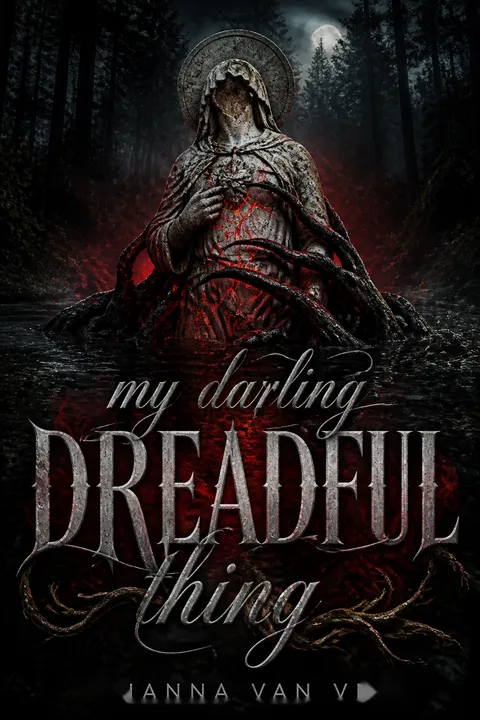

Plot Summary
Séances and Salted Wounds
Roos, a waiflike girl, is forced by her "Mama" to perform séances for grieving clients in postwar Netherlands. The rituals are elaborate frauds, but Roos's suffering is real: she is starved, beaten, and sexualized for profit. Her only solace is Ruth, a spirit she first meets beneath the floorboards, who becomes her constant companion and protector. Ruth's presence is both comfort and curse, feeding on Roos's blood and loneliness. The séances blur the line between performance and possession, and Roos's body becomes a battleground for the desires of the living and the dead. The chapter establishes the gothic atmosphere of exploitation, trauma, and the ambiguous reality of ghosts.
Ruth: Protector or Parasite
Ruth is not a typical ghost—she is a bog body, ancient and mutable, fiercely protective of Roos but also hungry for her pain and blood. Their relationship is symbiotic, bordering on parasitic, and Ruth's possessiveness grows as Roos matures. Roos's isolation deepens as Mama exploits her, and Ruth becomes both shield and shackle. The spirit's presence is tangible, sometimes comforting, sometimes terrifying, and always demanding. Ruth's love is suffocating, her violence a response to threats against Roos. The chapter explores the psychological complexity of their bond, raising questions about agency, survival, and the cost of supernatural protection.
Agnes Arrives, Shadows Stir
Agnes Knoop, a wealthy and enigmatic widow, attends one of Mama's séances. Her presence electrifies Roos, who is captivated by Agnes's beauty and haunted past. Agnes's arrival disrupts the usual order—she sees through the séance's tricks, yet is drawn to Roos's performance. Their connection is immediate, charged with longing and recognition. Agnes's own history is marked by loss, exile, and racial prejudice, and she carries her own spirit companion, Peter Quint. The meeting sets in motion a chain of events that will upend Roos's life, offering the possibility of escape but also awakening new dangers and desires.
Possession and Performance
During the séance, Roos channels not only Ruth but also the personas of the dead, blurring the line between fraud and true possession. Agnes challenges Roos in English, exposing her limitations and vulnerability. The performance becomes intimate and dangerous, culminating in a kiss that leaves Roos shaken and exposed. The aftermath is physical and emotional collapse—Roos faints, is tended to by Agnes, and is left with a sense of shame and longing. The chapter explores the eroticism and violence of possession, the hunger for connection, and the risks of being truly seen.
Hunger, Violence, and Escape
Roos's life with Mama grows increasingly unbearable—she is denied food, beaten, and haunted by memories of abuse. Agnes returns, offering Roos a way out: to become her companion at the Rozentuin estate. Mama, ever mercenary, sells Roos for a sum, confirming Roos's deepest fears about her own worth. The departure is fraught with ambivalence—relief, guilt, and the terror of the unknown. Ruth warns Roos to be wary, sensing other spirits and dangers ahead. The chapter marks a turning point: Roos's escape from one prison into another, more subtle web of secrets and longing.
Agnes's Offer, Mama's Price
Agnes negotiates with Mama, who frames Roos's departure as a sacrifice but is motivated by greed. Roos is objectified, her agency minimized, yet she chooses to leave, driven by hope and desperation. Packing her few belongings, she reflects on her father's absence, Mama's cruelty, and Ruth's warnings. The sale is both liberation and trauma, and Roos's relationship with Ruth is tested as she steps into a new life. The chapter underscores the themes of commodification, maternal betrayal, and the search for belonging.
The Rozentuin's Rot
The Rozentuin estate is beautiful but decaying, filled with secrets and the residue of past traumas. Agnes introduces Roos to the house's routines, its staff, and her ailing sister-in-law, Willemijn. The house is alive with creaks, drafts, and the presence of spirits—both literal and metaphorical. Roos explores the grounds, encountering the family chapel filled with rotting plaster saints, and the graveyard where Agnes's husband, Thomas, is buried. The estate's history of fanaticism, madness, and loss seeps into every corner, mirroring the psychological decay of its inhabitants.
Spirits, Sisters, and Secrets
Roos and Agnes grow closer, sharing stories of their childhood traumas, spirit companions, and the oppressive forces that shaped them. Agnes reveals her mixed-race heritage, her struggles with identity, and her history of institutionalization. Willemijn, bitter and dying, becomes both confidante and antagonist, manipulating Roos and Agnes with her knowledge of family secrets. The relationships among the women are fraught with jealousy, longing, and the legacy of abuse. The spirits—Ruth and Peter—mirror and amplify the emotional dynamics, blurring the line between psychological and supernatural.
The Chapel's Army of Saints
The family chapel, filled with an army of decaying plaster saints, becomes a symbol of the Knoop family's religious fanaticism and psychological instability. The saints, once objects of veneration, now menace the living, their presence a constant reminder of past violence and failed redemption. Willemijn's stories reveal the family's history of suicide, madness, and incest. The saints' slow advance toward the house during the coming siege foreshadows the collapse of boundaries between the living and the dead, faith and delusion, love and destruction.
Love, Madness, and Mirrors
Roos and Agnes's relationship deepens into love, but is shadowed by their respective traumas and the ever-present threat of madness. Their intimacy is both healing and dangerous, as each seeks in the other a cure for loneliness and a mirror for their own wounds. The specter of Agnes's dead husband, Thomas, looms over their happiness, as does the possibility of possession—by spirits, by memories, by the expectations of others. The chapter explores the interplay of sexuality, mental illness, and the gothic tradition of unreliable narration.
The Graveyard Bargain
Willemijn, driven by grief and obsession, convinces Roos to exhume Thomas's body and rebury it in the bog, hoping to resurrect him as a spirit. The act is gruesome, exhausting, and sacrilegious, pushing Roos to the brink of physical and psychological collapse. Ruth aids her, but the cost is high—injury, fever, and the deepening of Roos's sense of guilt and complicity. The exhumation sets in motion a chain of supernatural events that will culminate in violence and loss, as the boundaries between the living and the dead dissolve.
Exhumation and Consequence
The aftermath of the exhumation is marked by illness, suspicion, and the slow encroachment of the supernatural. Thomas's spirit begins to manifest, first as a presence, then as a threat. The household is besieged—windows are locked, food dwindles, and the sense of doom intensifies. Agnes and Roos's love is tested by fear, hunger, and the return of past horrors. Willemijn's death, and the grotesque display of her corpse among the saints, signals the collapse of order and the triumph of the uncanny.
Siege of the Living Dead
The Rozentuin becomes a fortress under siege, with Thomas's vengeful spirit and the army of saints closing in. The women are trapped, starving, and increasingly desperate. Agnes's mental state deteriorates, haunted by guilt and the threat of possession. Ruth and Peter, the spirit companions, are powerless to intervene. The siege is both literal and psychological—a test of endurance, love, and sanity. The chapter builds to a crescendo of violence, as the boundaries between self and other, reality and delusion, are obliterated.
Pills, Glass, and Betrayal
Facing starvation and the threat of supernatural annihilation, Agnes proposes that she and Roos take pills to suppress their ability to see spirits, effectively banishing Ruth and Peter. Roos is torn between her love for Agnes and her bond with Ruth. In a final act of betrayal, Ruth poisons Agnes with ground glass, hoping to bind her as a spirit to Roos. Agnes's death is agonizing, and Roos is left with unbearable guilt, forced to perform the rituals that might bring Agnes back as a spirit. The chapter is a meditation on sacrifice, agency, and the destructive power of love.
Agnes's Death, Ruth's Revenge
Agnes dies, and Roos, in a state of shock and grief, buries her in the bog with Peter's help. Thomas's spirit, having achieved his revenge, releases Roos from his torment. Willemijn's body is buried, and the siege ends, but Roos is left alone, traumatized, and haunted by the consequences of her actions. Ruth, now both beloved and monstrous, remains as Roos's only companion. The chapter explores the aftermath of violence, the persistence of trauma, and the ambiguous nature of survival.
Trial, Testimony, and Truth
Roos is arrested and put on trial for Agnes's death. The narrative shifts between her testimony, the skeptical voice of Dr. Montague, and the legal proceedings. The ambiguity of Roos's guilt—was Agnes killed by glass, pills, or supernatural forces?—is never fully resolved. The trial becomes a gothic spectacle, exposing the limits of reason, the stigma of mental illness, and the impossibility of objective truth. Roos is acquitted, but her freedom is haunted by loss, guilt, and the enduring presence of Ruth.
Waiting for Agnes
In the aftermath, Roos builds a modest life, working as a typist and living alone, accompanied only by Ruth. She waits for Agnes's spirit to return, clinging to the rituals and memories that once bound them. The novel ends on a note of yearning and ambiguity—Roos is neither healed nor destroyed, but suspended in a state of gothic longing, haunted by love, loss, and the possibility of reunion beyond death.
Analysis
A gothic meditation on trauma, love, and the boundaries of realityMy Darling Dreadful Thing is a masterful reimagining of the gothic tradition, blending supernatural horror with psychological realism. At its core, the novel is an exploration of the ways in which trauma shapes identity, relationships, and perception. The spirits—Ruth and Peter—are both literal and metaphorical, embodiments of dissociation, survival, and the longing for connection. The novel interrogates the nature of love, exposing its capacity for both healing and destruction, and challenges the reader to question the boundaries between sanity and madness, truth and delusion. The unreliable narration, fragmented structure, and rich symbolism invite multiple readings, offering no easy answers but instead immersing the reader in a world where the past is never dead, and the dead are never truly gone. The lessons are both personal and universal: that survival often requires compromise and complicity; that love, in its many forms, is both a refuge and a risk; and that the search for belonging is haunted by the ghosts of what we have lost and what we have done. In the end, the novel offers a fragile hope—not of healing or closure, but of endurance, connection, and the possibility of reunion beyond the grave.
Review Summary
My Darling Dreadful Thing is a gothic sapphic horror novel set in post-WWII Netherlands, following Roos Beckman, a medium with a centuries-old spirit companion named Ruth. After being exploited by her abusive "mother," Roos is bought by wealthy widow Agnes Knoop and brought to a decaying estate. The story blends atmospheric horror with romance, exploring themes of trauma, love, and mental illness through dual timelines. Reviews praise the lyrical prose, Poe-inspired gothic atmosphere, and emotional depth, though some criticize pacing issues and underdeveloped plot elements. Most readers found it hauntingly beautiful and compelling.
People Also Read


Characters
Roos Beckman
Roos is the protagonist, a young woman shaped by trauma, exploitation, and supernatural companionship. Raised by a cruel, manipulative "Mama," Roos is forced into fraudulent séances, starved, and abused. Her only solace is Ruth, a spirit who becomes both protector and parasite. Roos's psychological landscape is marked by dissociation, self-harm, and a longing for connection. Her relationship with Agnes offers hope but is fraught with the legacy of abuse and the ever-present threat of madness. Roos is an unreliable narrator, her perceptions colored by trauma and the ambiguous reality of spirits. Her journey is one of survival, guilt, and the search for belonging, culminating in a love that transcends death but never escapes the shadow of loss.
Ruth
Ruth is a bog body spirit, mutable in form and temperament, who attaches herself to Roos in childhood. She is both guardian and jailer, feeding on Roos's blood and pain, and responding with violence to any threat. Ruth's love is absolute, suffocating, and often destructive—she is willing to kill to protect Roos, but also demands loyalty and sacrifice. Psychoanalytically, Ruth represents Roos's dissociated self, a survival mechanism born of trauma, but she is also a fully realized character with her own desires and agency. Ruth's actions drive much of the plot's violence, and her final betrayal—poisoning Agnes—forces Roos to confront the cost of supernatural love.
Agnes Knoop
Agnes is a wealthy, mixed-race widow marked by loss, exile, and the scars of institutionalization. She is intelligent, beautiful, and haunted by her past—her mother's suicide, her father's rejection, and her marriage to the abusive Thomas. Agnes's relationship with Roos is passionate and redemptive, but also shaped by mutual trauma and the specter of madness. She carries her own spirit companion, Peter Quint, and is both drawn to and terrified by the supernatural. Agnes's death is the novel's emotional climax, her love both a source of healing and a catalyst for destruction.
Mama
Mama is Roos's caretaker, a failed artist who exploits Roos for profit through séances and sexualization. She is emotionally and physically abusive, driven by greed and resentment. Mama's relationship with Roos is transactional—she sells her for money, denies her food, and gaslights her about her origins. Psychoanalytically, Mama embodies the gothic archetype of the monstrous mother, a source of both longing and terror. Her death brings no closure, only the persistence of her influence in Roos's psyche.
Willemijn Knoop
Willemijn is Agnes's sister-in-law, ravaged by tuberculosis and bitterness. She is both victim and perpetrator, manipulating Roos and Agnes with her knowledge of family secrets and her own obsessions. Willemijn's relationship with Thomas is incestuous and destructive, and her actions—convincing Roos to exhume Thomas—set in motion the novel's central catastrophe. She is a study in gothic pathology, her suffering both pitiable and monstrous.
Thomas Knoop
Thomas is Agnes's dead husband, whose presence haunts the Rozentuin and the narrative. In life, he was charismatic, abusive, and incestuous; in death, he becomes a malevolent spirit, orchestrating the siege of the living. Thomas embodies the gothic villain—handsome, cruel, and ultimately hollow. His return as a spirit is both a fulfillment of gothic revenge and a commentary on the persistence of trauma.
Peter Quint
Peter is Agnes's spirit companion, named after the ghost in Henry James's The Turn of the Screw. He is older than Ruth, more reserved, and serves as a protector and confidant to Agnes. Peter's presence highlights the parallels between Roos and Agnes, and his actions—helping to bury Agnes in the bog—underscore the novel's themes of loyalty, sacrifice, and the ambiguous boundary between self and other.
Dr. Montague
Dr. Montague is the voice of reason and skepticism, tasked with determining Roos's sanity for her trial. His transcripts provide an external perspective on the events, questioning the reality of spirits and the reliability of Roos's narrative. Montague is both compassionate and limited by the psychiatric paradigms of his time, unable to fully grasp the depth of Roos's experience. He represents the tension between science and the gothic, reason and the supernatural.
Mr. Mesman
Mr. Mesman is a wealthy client who attempts to sexually assault Roos, triggering Ruth's violent intervention. His presence is brief but pivotal, embodying the dangers of male entitlement and the consequences of unchecked desire. Mesman's attack and its aftermath haunt Roos, shaping her relationship with Ruth and her understanding of violence and agency.
The Plaster Saints
The army of plaster saints in the family chapel are not characters in the traditional sense, but their presence is deeply symbolic. They represent the Knoop family's religious mania, the persistence of the past, and the slow encroachment of madness. As they advance toward the house during the siege, they become avatars of the uncanny, blurring the line between idol and monster.
Plot Devices
Unreliable Narration and Fragmented Testimony
The novel employs a dual narrative structure: Roos's first-person account, rich in gothic detail and emotional intensity, is interspersed with Dr. Montague's clinical transcripts. This juxtaposition creates a constant tension between subjective experience and objective reality. Roos's unreliability is both a product of trauma and a deliberate narrative strategy, inviting the reader to question the nature of truth, the reality of spirits, and the boundaries of sanity. The use of case notes, interviews, and legal testimony further fragments the narrative, mirroring the characters' psychological disintegration.
Possession as Metaphor and Mechanism
Possession operates on multiple levels: literal (by spirits), psychological (by trauma), and erotic (by desire). The act of being possessed is described in visceral, often sexual terms, blurring the line between protection and violation. Ruth's invasions of Roos's body are both comforting and terrifying, emblematic of the ways in which love, trauma, and identity are intertwined. The motif of possession extends to the relationships among the living, as characters seek to possess, consume, or be consumed by one another.
Gothic Setting and Symbolism
The Rozentuin estate is a classic gothic setting—grand but decaying, filled with locked rooms, secret passages, and haunted objects. The family chapel, graveyard, and bog are sites of both literal and symbolic burial, where secrets fester and the boundaries between life and death dissolve. The plaster saints, the haunted wardrobe, and the recurring motifs of blood, glass, and rot reinforce the atmosphere of dread and ambiguity.
Ritual, Sacrifice, and Resurrection
The novel is structured around rituals—séances, exhumations, burials, and acts of self-harm—that serve as both plot devices and metaphors for psychological transformation. The act of reburying Thomas in the bog is both a literal and symbolic attempt to resurrect the past, with catastrophic consequences. The rituals of binding spirits, feeding them blood, and performing acts of violence are expressions of longing, guilt, and the desire for redemption.
Foreshadowing and Circularity
The narrative is rich in foreshadowing—early references to bog bodies, the dangers of hunger, and the threat of possession all anticipate later events. The structure is circular, with the ending echoing the beginning: Roos, once again alone, waits for a spirit to return, haunted by love and loss. The persistence of trauma, the recurrence of violence, and the ambiguity of closure are central to the novel's gothic sensibility.
Download PDF
Download EPUB
.epub digital book format is ideal for reading ebooks on phones, tablets, and e-readers.








































