
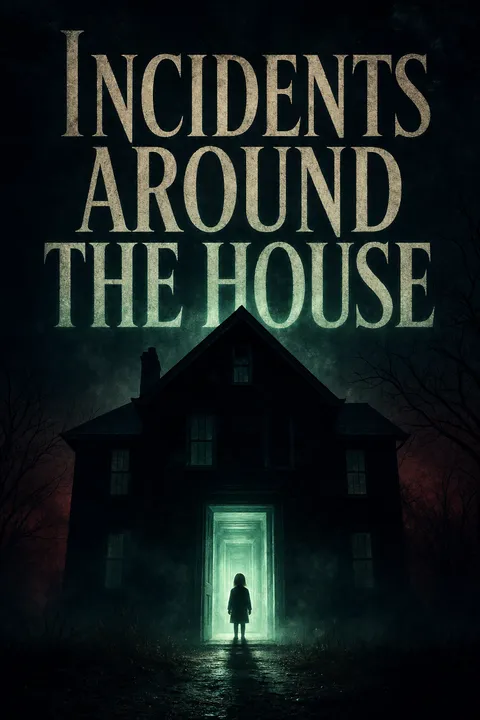


Plot Summary
The Friend in the Closet
Every night after her parents leave, a tall woman Bela1 calls Other Mommy4 climbs out of the bedroom closet and settles at the foot of the bed. Once this figure combed Bela's1 hair and covered her ears during frightening movies, a companion in a house where the lonely child has almost no friends. Lately she wants only one thing, repeated like a pulse: permission to go into Bela's heart.
Bela1 keeps refusing, sensing the request resembles the improper touching she was warned about at school. The woman's arms carry dark hair, her eyes sometimes sit sideways on her face, and she insists that friends give and take. Years ago her parents laughed off the name. The asking has never stopped.
Malerman opens by weaponizing the intimacy of childhood imaginary friends. Other Mommy is introduced not as an intruder but as a beloved, which is precisely the horror: predation disguised as companionship. The repeated request maps onto grooming language, and Bela's instinct that it resembles forbidden touching signals a child's body-knowledge outrunning her comprehension. The domestic ordinariness, oatmeal and bedtime, makes the uncanny sharper. Loneliness is the vulnerability the entity exploits; Bela's lack of friends is the door left ajar. The child narrator's flat acceptance of the impossible forces readers to supply the dread she cannot name, establishing an ironic gap that will widen throughout.
Mommy Smells Like Someone Else
Bela1 notices her mother, Ursula,2 returning late in her brown leather coat smelling of another person, murmuring drunken apologies about risking the family. Downstairs the parents chase romance through easy comedies while, upstairs, the closet woman4 drifts closer, no longer content to stay hidden.
During a bedside monologue Ursula2 confesses to cheating, believing her daughter asleep. Meanwhile her father, Russ,3 whom Bela1 calls Daddo,3 keeps catching a foul, gas-station-bathroom stink he cannot trace.
Bela1 labors to keep both secrets sealed, steering Daddo3 from the bathroom and blocking the entity4 from ever addressing her parents. Two hauntings now share the house: a marriage quietly rotting and a presence learning to leave its closet, each circling a girl whose only wish is that everyone keep laughing.
The novel's central rhyme surfaces here: infidelity and possession are twin invasions of the home, both concerning who is allowed inside. Ursula's confession, spoken to a supposedly sleeping child, mirrors Other Mommy's whispered requests, blurring mother and monster before the plot literalizes it. Bela becomes an unwilling keeper of adult secrets, a role reversal that intensifies her isolation. The recurring stench functions as the return of the repressed, a rot the father half-detects but cannot locate, just as he cannot detect the fracture in his marriage. Malerman builds dread through domestic mundanity, the open floor plan meaning nothing can be truly hidden, yet everything is.
Backward Down the Slide
At Chaps Park, Bela1 needles her playmate Deb11 with hypotheticals about a woman who lives in a closet until Deb,11 cornered in the wooden playhouse, suddenly echoes the entity's4 exact question. Hairy fingers curl around the doorway.
Bela1 lurches backward off the top of the slide and slams into the sand. It is the first time Other Mommy4 has appeared beyond the walls of the house. A pediatrician who resembles Abraham Lincoln14 examines her and, noting how sure-footed she normally is, gently asks whether she saw something before she fell.
Bela1 speaks the name Other Mommy4 aloud, and her parents recall she used it years earlier. The doctor14 senses more than a playground accident yet has no diagnosis for whatever stalks their coordinated, dancing daughter.
The threshold breaks. By migrating from the private closet into public daylight, the entity announces it is not a nocturnal fantasy but a mobile threat, escalating from watcher to hunter. The playground scene is masterfully cruel: Bela projects her fear onto Deb through interrogation, and the entity answers back through her friend's mouth, demonstrating its power to inhabit and mimic. The pediatrician represents rational authority reaching the limits of diagnosis, unable to code supernatural terror into medicine. Bela's naming is significant; language gives the thing reality her parents must now reckon with. Her physical fall externalizes an internal loss of footing, the first of many downward tumbles.
A Party Guest Screams
Her parents throw a party, leaving the teenage babysitter Kelvin7 to watch Bela,1 who dances for the guests. Daddo3 introduces Lois Anthony,6 a self-described Sensitive who touches Bela's1 shoulder expecting to feel something and, unnervingly, feels nothing at all.
Mid ghost story, a tipsy family friend named Marsha13 shrieks and points at an empty wall, describing a tall, dark-blue, hairy figure.4 The room blames drink and smoke. Bela1 steps forward and corrects them: that was Other Mommy.4
The entity,4 once visible only to her, has now been witnessed by an outsider, and Lois6 studies the child with dawning certainty. What Bela1 treated as private and almost tender has become undeniable to others, tilting the family toward the terrible possibility that their daughter's imaginary friend is neither imaginary nor a friend.
Corroboration transforms the story's epistemology. Once Marsha sees it, the haunting escapes the unreliable-child frame and becomes consensus reality, denying the parents their comforting explanations. Lois's failure to sense sensitivity in Bela is a clever inversion: the girl is not a psychic conduit but a target, which reframes the entire threat. The party setting, adults performing intimacy and confession while stoned, echoes the novel's obsession with what people admit when their guard drops. Bela's public naming of Other Mommy is an act of loyalty and betrayal at once, defending a friend while exposing her. The social world begins recoiling, foreshadowing the isolation to come.
The Voice That Wore Mommy
Late one night Bela1 hears her mother's voice2 beside the bed delivering the rawest confession yet, lust and cheating reaching back before the marriage, musing aloud about reincarnation and being let in.
Then the real Ursula2 appears in the doorway, and Bela1 understands the voice belonged to Other Mommy4 wearing her mother.2 Ursula2 flips on the light, sees the thing4 on the bed, screams, and drags Bela1 out into the yard. Standing on the lawn, trembling, she finally speaks the name back to her daughter.
The entity's4 gift for impersonation, for voicing stolen intimacies in a stolen voice, demolishes whatever denial the family had left. They abandon their own home in the dark, no longer able to call it a phase, no longer able to pretend the house is theirs alone.
This is the point of no return. The entity's mimicry collapses the boundary between mother and monster, and crucially it ventriloquizes Ursula's real desires, the wish to be reincarnated, remade, let in. The horror is that the demon speaks truths the mother actually harbors, making possession feel like confession. Ursula finally seeing it validates Bela and shifts the burden of belief from child to adult. The flight from home inverts the sanctuary of domestic space; the house that should shelter now expels them. Malerman stages the family's expulsion into a wilderness of motels and borrowed beds, a modern exile driven by a thing that follows bloodlines, not addresses.
House to House, It Follows
They take shelter with friends Amanda and Dan,12 who have a baby and swiftly grow terrified by the family's insistence that something invisible came with them. Overnight, breathing crosses the living room and Dan12 believes he glimpses Ursula2 upstairs while she stands outside.
By dawn the hosts politely but firmly ask them to go. They drive to Grandma Ruth's5 small house ringed by Loblolly pines, inventing a tale about a power outage. Ruth's5 little dog Milky and the creaking woods only reinforce what Bela1 already knows: distance changes nothing.
Whether at a friend's house or her grandmother's, the presence arrives. The family learns the cruelest law of their haunting, that it is tethered not to a place but to Bela1 herself, and that no locked door will ever make them safe.
The road-movie structure dramatizes contagion and social abandonment. Each host recoils not from the monster directly but from the family's contaminating fear, exposing how communities quarantine trouble rather than absorb it. Malerman renders the terror portable, dismantling the classic haunted-house premise: you cannot move away from what is attached to a person. The baby at Amanda and Dan's raises the stakes of innocence the novel keeps circling. Ruth's pines and her aging dog introduce a folk-wisdom register that will matter later. Bela's dawning realization that she is the anchor of the haunting seeds her ultimate guilt, the fear that she herself is the problem.
Grandma Ruth Wants the Truth
Ruth5 sees straight through the power-outage lie and slaps her hand on the couch, demanding the whole truth from a family coming apart. She questions Bela1 directly and pulls out the core horror: a woman called Other Mommy4 has asked, perhaps a hundred times, to go into the child's heart.
Ruth5 insists this lies beyond police and priests and presses for an expert. When they meet Lois Anthony6 at a Big Boy restaurant, the occultist6 names it plainly as attempted possession, a bid to trade places, and warns Bela1 she must never say yes.
Ruth,5 practical and unwilling to flinch, becomes the backbone the family lacks, hauling the unspeakable into the open where it can at least be confronted. Her creed: better to attempt something absurd than to sit still and be devoured.
Ruth injects generational spine into a household paralyzed by shame and denial. Her insistence that taboo subjects fester when unspoken thematically anticipates the beach confession, linking the supernatural plot to the family's buried secret. By eliciting from Bela the specific demand, Ruth converts vague dread into a nameable objective, and Lois supplies the diagnostic vocabulary of possession. The restaurant setting, mundane and fluorescent, ironizes the occult conversation. Crucially, the adults now organize around a strategy of never consenting, which sets the trap the ending will spring: the entity cannot take without a yes, so the whole war becomes a siege on a child's willpower.
The Séance and the Gift
In Lois's6 living room her circle of gentle mystics, crystals and an old rotary telephone in their laps, attempt to reach the entity4 and command it to leave Bela1 alone. The ritual fractures when her friend Kyle insists the thing4 answered him, leans toward Bela,1 and whispers that Other Mommy4 gave her a present, then blows out the candles.
The doorbell interrupts everything: Ursula2 arrives sobbing. Her friend Frank Doherty10 is dead, discovered curled in a closet as though he had slept there.
The gift lands with sickening weight, implying the entity4 killed for Bela,1 converting each of her refusals into a corpse. What began as an effort to banish a nuisance now reveals a predator willing to murder to prove devotion, and to punish the girl for withholding her heart.
The chapter transforms the entity from parasite to lover-executioner. The present reframes murder as courtship, a grotesque logic of give-and-take in which Bela's refusals accrue a body count. Frank's death in a closet, the entity's home turf, and his role as Ursula's lover fuse the supernatural and adulterous plots into a single ledger of guilt. The well-meaning circle exposes the inadequacy of hobbyist spirituality against genuine malevolence; their crystals cannot bargain with something that answers by killing. Bela's mounting terror is now laced with culpability: she suspects her mere existence, her mere refusals, generate death, a burden no child should carry yet the novel refuses to lift.
The Faceless Thing in the Tub
Out of options, the family follows Ursula's2 key into the dead man's10 house, then chases sanctuary across the strange city of Goblin. Priests refuse them for lack of proof, redirecting them to police they have already called.
Ruth's5 friend Evelyn9 offers her enormous mansion, and for one drunken, dancing evening the parents almost feel like themselves again. Then Bela,1 forced to use the upstairs bathroom alone, finds Other Mommy4 in the tub, faceless, its face cupped in its own hands. Evelyn9 walks in, screams, and orders them out as the entity4 rises and flattens across the ceiling.
Every borrowed refuge collapses the same way. The family's growing entourage of would-be helpers keeps discovering that sheltering this family means sheltering the thing that hunts their child, and each door slams shut behind them again.
The Goblin interlude deepens the theme of institutional failure: priests demand evidence, bureaucratizing faith itself, while the occult amateurs already proved useless. Evelyn's mansion offers a false reprieve, and the drunken revelry, Daddo joking about pouring Other Mommy a drink, shows a family bargaining with terror through gallows humor and alcohol. The faceless figure holding its face is the book's most striking image of identity as detachable, a monster that is anyone and no one, foreshadowing its final theft. The recurring expulsion pattern hardens into tragedy; hospitality cannot survive proximity to the haunted. The family's shrinking social world mirrors Bela's original loneliness, the condition the entity feeds upon.
Alarms, Dogs, and a Fraud
Back home, the parents fortify: cameras, motion detectors, alarms in every room, and two trained Cane Corso guard dogs, Kami and Kamael,15 prowling the first floor. They sleep together downstairs in shifts, never letting Bela1 out of sight.
Daddo3 scours the internet for anyone who exterminates rather than merely investigates and hires a huge, black-clad man named Brian.8 Brian8 tours the house, promises to trick the thing,4 then simply waits, eating chips.
When Other Mommy4 finally manifests in the dining room, Brian8 reaches out and touches its face, is hurled against the wall, and departs ecstatic, confessing he only ever wanted to see one with his own eyes. He punches Daddo3 and drives off smiling. The single professional they trusted used the family as bait for his private obsession.
The fortress sequence stages the futility of technological and mercenary defense against an internal, relational threat. Cameras and dogs guard entrances, but the entity was never outside; it lives in closets and bloodlines. Brian embodies the exploitative believer, the enthusiast who treats a family's agony as a bucket-list sighting, a satire of paranormal tourism and true-crime consumption. His betrayal strips the last external hope, forcing the parents inward. The guard dogs' loyalty, contrasted with human self-interest, underscores the novel's tenderness toward the innocent and its bleakness about adults. After this, the family understands no one is coming; salvation, if any, must be homemade, and homemade solutions here turn desperate.
Knives in the Dark Hallway
Abandoned by every outsider, Ursula2 and Russ3 resolve to destroy the thing4 themselves. They shower and dress in clean clothes as if for an occasion, arm themselves with kitchen knives, and climb the stairs with Bela1 wedged between them.
They corner it in the upstairs storage pantry, screaming themselves brave, and stab into the darkness, only for the entity4 to slip from room to room, taunting them in its closet voice. The doorbell shatters their nerve: Lois Anthony6 has returned, humbled and newly convinced she has found the answer.
She reveals the strategy that will drive the final act. The thing4 craves Bela's1 innocence, and the only way to make the girl less appetizing, less worth possessing, is to strip that innocence away, deliberately and quickly, before it takes her.
The knife hunt is parenthood distorted into combat, love expressed as the willingness to kill. The ritual of dressing well before violence reveals people clinging to ceremony amid chaos, a last grasp at dignity. The entity's fluid evasion literalizes the impossibility of stabbing a psychological or spiritual wound. Lois's returning proposal is the novel's darkest ethical pivot: to save the child, corrupt her; to protect her, wound her. It reframes innocence as both the target and the bait, and it forces the parents to weaponize the very secret they have hidden. The plan implies that survival requires the loss the entity was chasing anyway, a devil's arithmetic.
Innocence Burned on the Beach
Lois6 leads them a hundred miles to the dunes of Lake Michigan, gambling the entity4 cannot cross so far, and builds a beach fire for a ritual of truth-telling. There Ursula2 finally confesses the family's buried secret: she was once married to a man named Douglas Cain, cheated relentlessly, and became pregnant while sleeping with Russ.3
A paternity test proved the baby was not his. Douglas, Bela's1 biological father, wanted nothing to do with them, so Russ3 chose to raise her. Russ3 is not her father by blood.
Gutted, Bela1 bolts into the freezing water, glimpses Other Mommy's4 hairy legs beneath the waves, and, newly learning to deceive, lies to her parents that the thing4 is gone forever. Her innocence does not so much vanish as curdle into bitter, adult knowing.
The confession fuses the novel's two hauntings into one revelation: the marital secret and the demonic siege share a currency, purity and its violation. Malerman argues that innocence is not lost through a single trauma but through the acquisition of secrets, of the knowledge that those who love you also lie. Bela's immediate response, learning to lie back, is devastatingly precise; corruption reproduces itself. That she sees Other Mommy in the water even as her innocence is declared spent suggests the ritual may be futile or worse, that a knowing child is not repellent but easier to seduce. Russ's chosen fatherhood offers the book's one grace: love as decision, not blood.
Bela Says Yes
Home again, the drained family finds Grandma Ruth's5 car in the driveway. While the parents sleep, Ruth5 soothes Bela1 with a parable about the heart as a house of hidden rooms, warning her never to build a permanent statue of resentment.
But as they assemble the Michigan puzzle, Grandma5 keeps flickering, her face sliding lower, until Bela1 flees to hide in the foyer closet and discovers the real Ruth5 dead inside. Upstairs, screams and heavy thuds give way to silence; Bela1 climbs to find her mother2 and father3 lifeless on her bedroom carpet.
Other Mommy4 steps from the closet and asks its old question. Alone, orphaned, and needing a friend more than ever, Bela1 at last says yes. They trade places, and the girl1 drifts into the vast, roomless room the entity4 came from.
The ending consummates every earlier seduction. Having stripped Bela of family and innocence, the novel leaves her with only the one presence that has always wanted her wholly, and consent becomes the child's last, terrible act of belonging. Ruth's house-of-the-heart parable ironically supplies the metaphor for the trade: to be possessed is to be evicted from your own home. The impersonation of Grandma completes the entity's pattern of wearing loved ones. Malerman refuses catharsis; the villains of the story are less the monster than the isolation, secrecy, and exhaustion that deliver a girl to it. The final vastness reframes the heart not as sanctuary but as an infinite, lonely room.
Analysis
Malerman fuses domestic realism with folk horror to argue that the scariest invasions are the ones we half-invite. The entity's4 demand for consent turns possession into a study of coercion, grooming, and the loneliness that makes a child susceptible to a predator wearing a friend's face. By narrating through Bela,1 the novel weaponizes dramatic irony: readers assemble the adultery, the danger, and the lethal stakes from clues the child reports but cannot decode, so the book's terror lives in the space between innocence and knowledge. The two hauntings, a marriage rotting from infidelity and a thing crawling out of the closet, are deliberate rhymes. Both concern who is permitted inside, both trade in the fantasy of reincarnation as escape from an unbearable self, and both reach Bela1 as secrets the grownups think she is too young to hear. The recurring motif of the house, cameras and alarms guarding entrances that were never the point, exposes the futility of external defense against an internal, relational wound. The presence is tethered to a person, not a place, which dismantles the haunted-house tradition and relocates dread into bloodline and intimacy. Malerman's cruelest thesis is that innocence cannot be preserved by force; the parents' plan to save their daughter by corrupting her simply teaches her to lie, accelerating the very loss they feared. Grandma Ruth's5 parable of the heart as a house with hidden rooms supplies the tragic frame: to be possessed is to be evicted from yourself, dispatched to an infinite, lonely room. The ending withholds catharsis on purpose. The true villains are isolation, secrecy, and exhaustion, the forces that wear a family down until a bereft child, offered the only companion that ever wanted her completely, finally says yes.
Review Summary
Incidents Around the House by Josh Malerman has polarized readers. Many praise its creepy atmosphere, unique child narrator perspective, and genuinely frightening moments. Critics find the writing style repetitive, the characters unrealistic, and the plot lacking coherence. The book follows 8-year-old Bela as she encounters a malevolent entity called "Other Mommy." While some readers were thoroughly scared, others found it predictable or boring. The ending divided opinions, with some finding it satisfying and others disappointed by its vagueness.
People Also Read







Characters
Bela
Child narrator, haunted girlThe six-or-seven-year-old narrator whose voice filters every horror through incomplete understanding. Lonely, imaginative, and achingly loyal, she measures her world by whether her parents laugh and hold hands. Coordinated and a gifted dancer, she loves adult books, the Michigan puzzle, and mishears reincarnation as carnation, imagining flowers that bring friends back to life. Her defining wound is friendlessness, which makes a predatory presence4 feel like companionship. Torn between fear and the temptation to please, she becomes an unwilling vault for adult secrets while a monster4 offers the one thing the grownups withhold: undivided attention. Her drive is to preserve her family's happiness at any cost, and her tragedy is how thoroughly the adults, and the entity4, misread what she needs.
Ursula (Mommy)
Restless, unfaithful motherBela's1 mother, whose work schedule is erratic and whose warmth is real but shadowed by chronic restlessness. She loves her family yet feels imprisoned by domesticity, drawn compulsively toward affairs and the illusion of a freer self. When she drinks she confesses too much, mistaking Bela1 for asleep. Ursula craves grit and darkness in a partner too gentle3 to provide it, and she carries a secret older than her marriage. Fierce and volatile in crisis, she oscillates between ferocious protectiveness and self-lacerating guilt, convinced the family's suffering is her comeuppance for a lifetime of taking love for granted.
Russ (Daddo)
Optimistic stay-home fatherBela's1 father, who works from home and calls his daughter1 his best friend. Relentlessly optimistic and philosophical, he lectures gently on kindness, fear, and the many shades of emotion, insisting people should say yes to life and that anything survived proves strength. His sunniness, a refusal to keep any inner room dark, both anchors Bela1 and frustrates Ursula2, who sometimes wants to be cut on a partner's edges. Warm, patient, and quietly heroic, Russ made a defining choice about family long ago. Under siege he tries to reason and joke his way through terror, until desperation forces him toward acts entirely outside his gentle nature.
Other Mommy
Closet-dwelling entityThe presence that emerges from Bela's1 closet, a tall figure with dark-haired arms and eyes that slide to the side or bottom of its face. Once a playful companion who combed hair and covered ears, it has curdled into a relentless suitor demanding to enter Bela's heart. It can mimic the voices of loved ones, appear faceless with its face in its hands, stretch its mouth to the floor, and travel wherever the child1 goes. It insists friendship means give-and-take and frames possession as reincarnation, a trade of places. Patient, jealous, and escalating, it comes from somewhere vast that is neither closet nor heart.
Grandma Ruth
Blunt grandmotherUrsula's2 small, sharp-tongued mother, a widow who lives among Loblolly pines with her dog Milky. Refusing polite lies, she forces the family to name their crisis and pushes for expert help. Practical, funny, and unflinching, she offers folk wisdom about aging, kindness, and the heart as a house with hidden rooms and closets. She becomes the family's spine, believing it is always better to try something absurd than to do nothing at all.
Lois Anthony
Occult Sensitive helperA red-haired, genuine-smiling woman introduced at a party as someone who works with people worldwide and calls herself a Sensitive. She touches Bela1 expecting to feel power and unnervingly feels nothing. Leader of a small circle of gentle mystics, she names the threat as attempted possession and repeatedly returns, humbled by failure yet determined. Earnest and self-questioning, she ultimately proposes the drastic strategy that reframes the entire endgame.
Kelvin
Kind teenage babysitterA high-schooler Daddo3 met through a sports league, and among the kindest people Bela1 knows. Perpetually on his phone yet attentive, he dances with Bela1 and tidies her bathroom, teaching her that small acts change how a person feels. His warmth makes him a figure of comfort the child1 clings to imaginatively, and, dangerously, a voice the entity4 can borrow.
Brian
Black-clad ghost hunterA large, bald man in black gloves hired to exterminate rather than investigate. He refuses video evidence, tours the house, and promises to trick the entity4, then mostly waits and eats. Beneath his stern professionalism lies a self-serving obsession that surfaces when confronted with the real thing4, revealing him as an exploiter of the family's desperation.
Evelyn
Ruth's mansion-owning friendA gracious older woman who lives alone in an enormous, creaking house at the edge of Goblin and welcomes the family with pizza, drinks, and dancing. Lonely for company and skeptical of Ruth's5 warnings, her hospitality curdles into panic when the haunting reveals itself under her roof.
Frank Doherty
Ursula's affair partnerA man connected to Ursula2 outside her marriage, glimpsed holding her hand at the party. Ursula2 possesses a key to his house, evidence of their entanglement. He becomes central to the family's mounting dread when the entity's4 escalating campaign turns lethal.
Deb
Bela's playground friendA curious, question-loving girl who plays with Bela1 at Chaps Park. When Bela1 probes her with frightening hypotheticals about a closet woman, Deb becomes upset, then a conduit through which the entity4 briefly speaks, terrifying Bela1 in daylight.
Amanda and Dan
Frightened friends with babyA couple with an infant who shelter the family for one tense night. Their protective fear for their baby quickly overrides friendship, and they become the first hosts to ask the haunted family to leave.
Marsha
Party guest who screamsA talkative, tipsy family friend who, during a party ghost story, becomes the first outsider to see the tall, dark-blue figure4, shattering the household's ability to dismiss Bela's1 claims as childish fantasy.
Dr. Smith
Lincoln-like pediatricianBela's1 tall, bearded doctor, who examines her after the slide fall and, noting her natural sure-footedness, gently probes whether she saw something frightening, sensing more than a simple accident but able to name nothing.
Kami and Kamael
Trained guard dogsTwo Cane Corso guard dogs brought in to protect the fortified house. Loyal and vigilant, they prowl the first floor and sense the presence4 when humans cannot, their steadfastness contrasting the self-interest of the adults hired to help.
Plot Devices
The Heart Request
Engine of escalating dreadThe entity's4 ceaselessly repeated question, asking permission to go into Bela's1 heart, is the story's central mechanism. Framed as friendship's natural give-and-take, it registers to Bela1 as a violation akin to the improper touching she was warned about at school. Because the thing4 apparently cannot take without consent, every scene becomes a siege on a child's1 willpower, and each refusal raises the cost. The demand transforms passive haunting into active courtship and coercion, and it structures the plot as a war of attrition. The adults' entire strategy, never say yes, hinges on it, which makes the ending's single word both inevitable and shattering.
Carnation
Child's mishearing of reincarnationBela1 mishears reincarnation as carnation, picturing flowers that bring friends back to life. The malapropism encodes the entity's4 true offer: a trade of places dressed as rebirth and mutual aid. It recurs whenever the possession logic surfaces, in the entity's4 pitch, in Ursula's2 drunken musings about starting over, and in Bela's1 own dreamy longing. By filtering a horrifying concept through innocent floral imagery, Malerman weaponizes the gap between what the child1 understands and what the reader dreads. The device also links the marital theme to the supernatural one, since both concern the fantasy of becoming someone new by displacing whoever currently occupies the space.
Child-Perspective Format
Perspective-locking narrationThe book is told entirely by Bela1, with an author's note explaining the deliberate layout of left-justified narration and indented dialogue to signal a child's viewpoint. This device restricts information to what a young girl1 can perceive and articulate, creating dramatic irony as readers infer adult truths, the affair, the danger, that Bela1 reports without grasping. Her literalism, limited vocabulary, and emotional priorities, wanting her parents to laugh, shape which details surface. The technique makes the horror intimate and unbearable, because the narrator1 cannot protect herself with understanding, and it renders the domestic betrayals as devastating as the demonic ones, since both reach her only in fragments.
Closets and the Creaking House
Geography of hidden thingsClosets, corners, the storage pantry, and the constant creaking of the house form the story's spatial vocabulary of concealment. The entity4 lives in liminal spaces, between the bed and the wall, in the seam where ceiling meets corner, behind hanging clothes, mirroring the secrets the adults keep in their own hidden rooms. Ursula's2 emptying of Bela's1 closet, Daddo3 talking to it, the recurring bad smell, and Grandma Ruth's5 parable of the heart as a house with unnamed spaces all deepen the motif. The device equates architecture with psychology: every home and every heart contains places for something to hide and wait.
Innocence as Bait
Reframes protection as corruptionLate in the story the strategy to save Bela1 becomes deliberately stripping away her innocence to make her less appealing to the entity4, culminating in the beachside confession that Russ3 is not her biological father. The device fuses the supernatural siege with the family's buried marital secret, arguing that innocence is lost not through a single event but through learning that those who love you also deceive. Its immediate consequence, Bela1 learning to lie in return, dramatizes how corruption reproduces. Because it may make her more vulnerable rather than less, the device is a moral trap that questions whether the parents' desperate cure differs from the disease.
FAQ
Synopsis & Basic Details
What is Incidents Around the House about?
- Child's Supernatural Intrusion: The story centers on a young girl named Bela who is visited by a mysterious entity she calls "Other Mommy," who emerges from her closet and asks to enter her heart.
- Family's Struggle with Reality: As the visitations become more frequent, Bela's parents struggle to understand and cope with the situation, blurring the lines between imagination and a potential supernatural intrusion.
- Exploration of Fear and Identity: The narrative delves into themes of fear, family secrets, and the loss of innocence, as Bela and her parents grapple with the unsettling presence in their home.
Why should I read Incidents Around the House?
- Unique Narrative Perspective: The story is told from a child's point of view, offering a fresh and unsettling perspective on a supernatural mystery, enhanced by the author's intentional formatting.
- Psychological Depth and Tension: The novel explores the psychological complexities of its characters, creating a tense and suspenseful atmosphere as they confront their fears and secrets.
- Exploration of Complex Themes: The book delves into themes of family dynamics, the nature of reality, and the loss of innocence, making it a thought-provoking and emotionally resonant read.
What is the background of Incidents Around the House?
- Contemporary Setting: The story is set in a modern, suburban environment, making the supernatural elements feel more jarring and unsettling against the backdrop of everyday life.
- Focus on Domestic Space: The narrative primarily takes place within the confines of the family home, emphasizing the violation of a safe space by the intrusion of the unknown.
- Psychological and Emotional Landscape: The background is less about a specific historical or cultural context and more about the internal emotional and psychological states of the characters, particularly Bela.
What are the most memorable quotes in Incidents Around the House?
- "Can I go into your heart?": This recurring question from Other Mommy is a chilling and unsettling phrase that encapsulates the entity's desire for intimacy and control over Bela.
- "Friends give and take.": This line, often repeated by Other Mommy, highlights the twisted and manipulative nature of her relationship with Bela, using the guise of friendship to mask her true intentions.
- "It's only a matter of time.": This phrase, used by Daddo, reflects the sense of inevitability and dread that permeates the story, suggesting that certain events are bound to happen, despite efforts to prevent them.
What writing style, narrative choices, and literary techniques does Josh Malerman use?
- Child's Perspective: Malerman employs a unique narrative style, using left-justification for narration and indentation for dialogue, to mimic a child's perspective and create a sense of immediacy and unease.
- Subtle Foreshadowing: The author uses seemingly throwaway lines and minor details to foreshadow future events, creating a sense of dread and anticipation throughout the story.
- Psychological Horror: Malerman focuses on psychological horror rather than graphic violence, using the characters' fears and anxieties to create a tense and unsettling atmosphere.
Hidden Details & Subtle Connections
What are some minor details that add significant meaning?
- Recycling Bin: Bela's fixation on the recycling bin and the idea of things returning as something else foreshadows the theme of reincarnation and the cyclical nature of Other Mommy's presence.
- Carnations: The mention of carnations, initially seemingly random, becomes a symbol of Other Mommy's twisted idea of friendship and the exchange of life, hinting at her true intentions.
- The Michigan Puzzle: The puzzle, with its detailed depiction of the state, symbolizes the family's fragmented understanding of their situation and their attempts to piece together the mystery of Other Mommy.
What are some subtle foreshadowing and callbacks?
- "It's only a matter of time": Daddo's repeated phrase foreshadows the inevitable escalation of Other Mommy's presence and the family's growing sense of dread.
- The Ceiling Creaking: The recurring sound of the ceiling creaking foreshadows Other Mommy's movement and her ability to be present in different parts of the house, creating a sense of unease.
- Mommy's Smell: Mommy's comment about smelling like another person foreshadows her infidelity and the idea of her being influenced by external forces, mirroring Other Mommy's influence on Bela.
What are some unexpected character connections?
- Lois Anthony and the Occult: Lois's sudden appearance and her knowledge of the occult connect her to the supernatural elements of the story, suggesting a larger world beyond the family's immediate experience.
- Kelvin's Phone Calls: Kelvin's constant phone calls and his comments about reincarnation hint at a deeper understanding of the supernatural, suggesting he may be more connected to the events than initially apparent.
- Grandma Ruth's Knowledge: Grandma Ruth's sudden understanding of the situation and her suggestion of an exorcist reveal a hidden depth and a connection to the supernatural that is not immediately apparent.
Who are the most significant supporting characters?
- Lois Anthony: Lois's role as a potential helper and her connection to the occult community make her a significant figure in the family's attempt to understand and combat Other Mommy.
- Kelvin: Kelvin's presence as a babysitter and his seemingly innocent comments about reincarnation and friendship hint at a deeper connection to the supernatural, making him a significant, if ambiguous, character.
- Grandma Ruth: Grandma Ruth's wisdom and her ability to see through the family's denial make her a crucial figure in the story, offering a grounded perspective on the supernatural events.
Psychological, Emotional, & Relational Analysis
What are some unspoken motivations of the characters?
- Mommy's Desire for Freedom: Mommy's unspoken desire for freedom and escape from her responsibilities is a driving force behind her actions, making her vulnerable to Other Mommy's influence.
- Daddo's Need for Control: Daddo's unspoken need for control and his desire to protect his family often lead him to denial and a reliance on logic, which ultimately proves ineffective against the supernatural.
- Bela's Yearning for Connection: Bela's unspoken yearning for connection and friendship makes her susceptible to Other Mommy's manipulative tactics, highlighting her vulnerability and loneliness.
What psychological complexities do the characters exhibit?
- Mommy's Internal Conflict: Mommy's internal conflict between her desire for freedom and her responsibilities as a mother creates a complex and often contradictory character, highlighting the psychological toll of her past actions.
- Daddo's Denial and Fear: Daddo's denial of the supernatural and his reliance on logic reveal his deep-seated fear and his struggle to cope with the unknown, showcasing his psychological vulnerability.
- Bela's Conflicted Emotions: Bela's conflicted emotions towards Other Mommy, torn between fear and a desire for connection, highlight the psychological complexities of a child grappling with a supernatural presence.
What are the major emotional turning points?
- The Party Incident: The party incident, where a guest claims to see a monster, marks a major emotional turning point, as the family's denial is shattered and they are forced to confront the reality of Other Mommy's presence.
- Mommy's Confession: Mommy's confession of infidelity and her past secrets is a major emotional turning point, as it reveals the depth of her internal conflict and the strain on her relationships.
- The Lake Scene: The scene at the lake, where Bela runs into the water, marks a major emotional turning point, as it highlights her despair and her growing sense of isolation and betrayal.
How do relationship dynamics evolve?
- Parental Strain: The relationship between Mommy and Daddo evolves from a seemingly stable partnership to one marked by tension, blame, and a struggle to cope with the supernatural events.
- Bela's Isolation: Bela's relationship with her parents evolves from one of dependence to one of growing isolation, as she becomes increasingly aware of their limitations and their inability to protect her.
- Grandma Ruth's Role: Grandma Ruth's role evolves from a supportive figure to a more active participant in the family's struggle, as she offers wisdom and guidance while also revealing her own vulnerabilities.
Interpretation & Debate
Which parts of the story remain ambiguous or open-ended?
- Other Mommy's True Nature: The true nature and origins of Other Mommy remain ambiguous, leaving the reader to question whether she is a supernatural entity, a manifestation of Bela's imagination, or a combination of both.
- The Ending: The ending, with Bela seemingly accepting Other Mommy, is open-ended, leaving the reader to interpret whether this is a form of surrender, a twisted form of friendship, or a tragic loss of innocence.
- The Meaning of Reincarnation: The meaning of reincarnation, as presented by Other Mommy, remains ambiguous, leaving the reader to question whether it is a genuine offer of friendship or a manipulative tactic to gain control over Bela.
What are some debatable, controversial scenes or moments in Incidents Around the House?
- Mommy's Confession: Mommy's confession of infidelity and her past secrets is a controversial moment, as it challenges the traditional image of a loving and devoted mother and raises questions about her motivations.
- The Attempt to "Revoke" Bela's Innocence: The attempt to "revoke" Bela's innocence is a controversial moment, as it raises questions about the ethics of manipulating a child's understanding of the world in order to combat a supernatural threat.
- The Ending: The ending, with Bela seemingly accepting Other Mommy, is a controversial moment, as it challenges the traditional narrative of good versus evil and leaves the reader to question the nature of friendship and betrayal.
Incidents Around the House Ending Explained: How It Ends & What It Means
- Bela's Acceptance: The ending sees Bela seemingly accepting Other Mommy's offer to "go into her heart," suggesting a tragic loss of innocence and a surrender to the supernatural entity.
- Ambiguous Fate: The fate of Bela's parents and Grandma Ruth is left ambiguous, leaving the reader to question whether they were able to escape the influence of Other Mommy or if they were ultimately consumed by the darkness.
- Cycle of Trauma: The ending suggests a cyclical nature of trauma and the difficulty of escaping the past, as Bela's acceptance of Other Mommy may represent a continuation of the family's cycle of secrets and betrayal.


Download PDF
Download EPUB
.epub digital book format is ideal for reading ebooks on phones, tablets, and e-readers.








































