


Key Takeaways
Niceness is driven by fear of disapproval, not by virtue
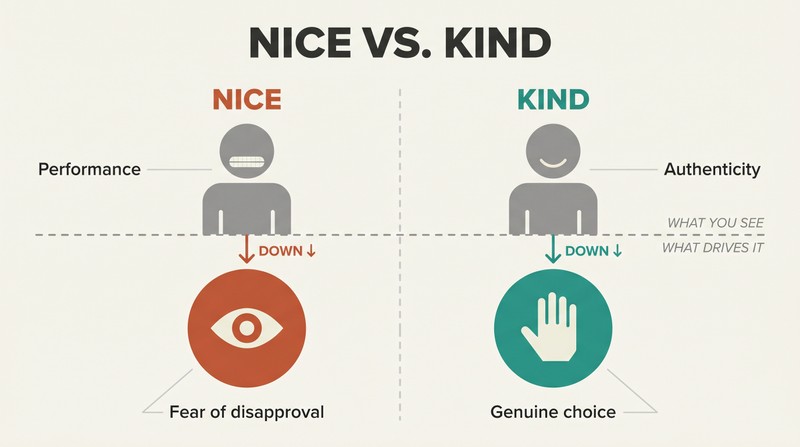
Nice is not the same as kind. Gazipura defines "nice" as constantly monitoring yourself to ensure others are pleased and never uncomfortable — a fear-based performance, not a moral achievement. After fourteen years of clinical work, he noticed his most anxious, guilt-ridden clients were also the nicest. They couldn't say no, hid their opinions, and felt perpetually inadequate.
The author's own awakening came during college, sitting alone with spaghetti and a Warcraft video game, listening to his roommate's girlfriend laughing through the wall. That moment of loneliness cracked open years of people-pleasing and launched a decade-long journey to shed the "nice guy" identity. The opposite of nice isn't cruelty — it's authenticity: being direct, honest, and willing to create temporary friction for deeper connection.
Being too nice costs five things: anxiety, resentment, pain, powerlessness, isolation
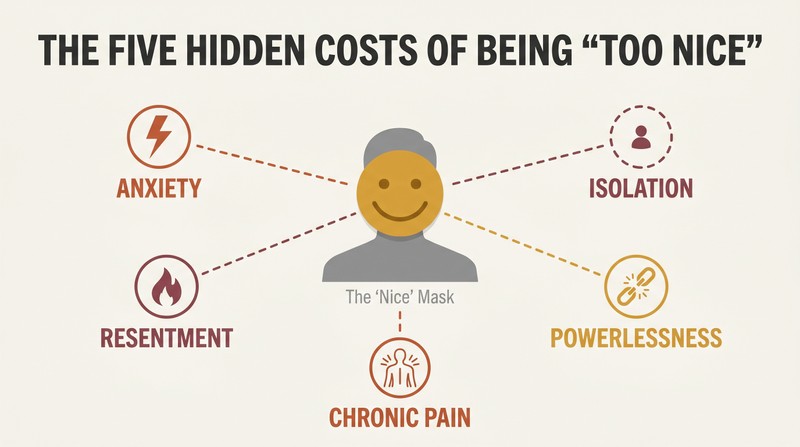
Gazipura identifies five hidden costs — he calls them the "Five Specters of Nice" — that haunt chronically nice people:
1. Anxiety from constant self-monitoring and approval-seeking
2. Resentment from suppressed anger at always putting others first
3. Chronic physical pain — back, neck, stomach — caused by repressed emotions
4. Powerlessness from a passive, avoidant stance toward life
5. Isolation, because hiding your true self prevents genuine connection
The physical pain claim is the most surprising. Drawing on Dr. John Sarno's TMS framework, Gazipura argues chronic pain often originates from emotional repression, not structural problems. He personally eliminated TMJ, wrist pain, plantar fasciitis, and IBS by acknowledging and expressing repressed anger rather than seeking structural treatments.
Let go of over-responsibility — others can handle their own feelings
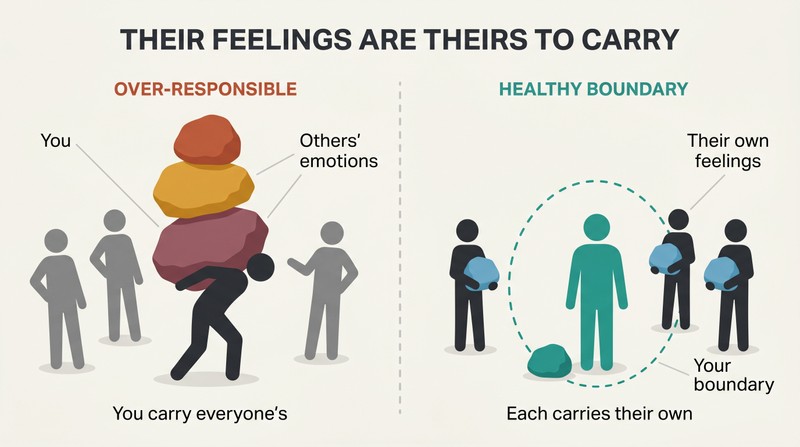
Over-Responsibility is the compulsive belief that you caused another person's upset and must fix it immediately. Gazipura traces it to childhood, when we assumed Mom's anxiety or Dad's anger was our fault. Decades later, we still treat every adult like a fragile child who can't handle disappointment — scanning for distress, anticipating needs, and hastily apologizing for existing.
The liberating reframe: people get upset because their own needs aren't being met — needs they are responsible for meeting, not you. To break the pattern, Gazipura prescribes the Peace Process (locating uncomfortable feelings in your body and meeting them with acceptance instead of panic) and the Energy Bubble (visualizing a protective boundary that lets love in while keeping others' emotional weight out).
Giving without choice breeds resentment, not virtue
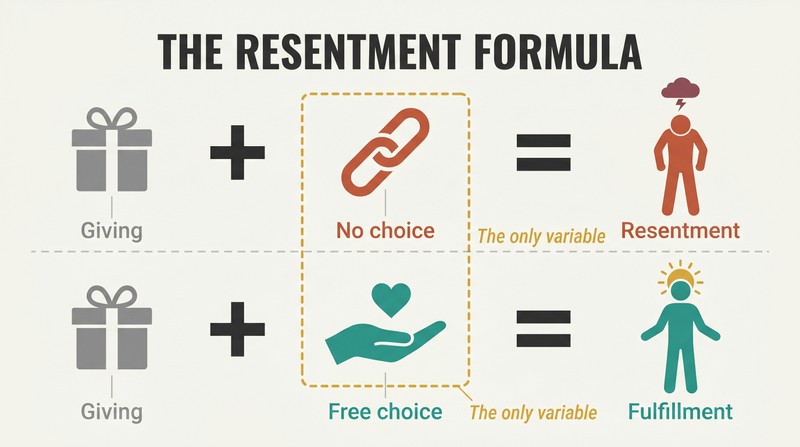
The Resentment Formula is one of the book's most memorable insights: Giving + No Choice About the Matter = Resentment. If you give freely from genuine desire, you feel fulfilled. If internal "should" machinery demands it — and you feel you have no choice — resentment is inevitable, regardless of how noble the giving appears.
Jason's story illustrates this perfectly. He knew for years he wanted to leave his six-year relationship but kept delaying because his partner's struggles made leaving feel cruel. He moved to a new state with her, waited through holidays, and postponed repeatedly — all while both partners suffered in a relationship that had already ended emotionally. His "selfless" delay caused far more pain than an honest, direct conversation would have.
Your repressed anger and desire are your greatest sources of power
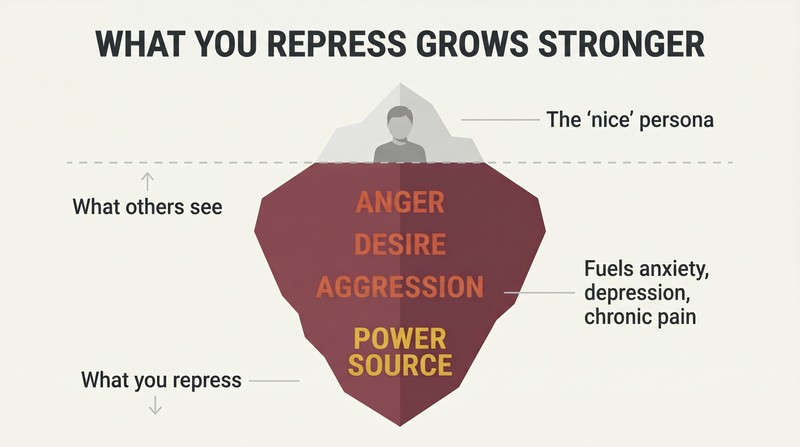
Carl Jung's "shadow" contains everything we learned was unacceptable — anger, aggression, selfish desire, sexual impulse. Nice people over-identify with their Superego (the inner moral police) and repress their Id (the part wanting pleasure, power, and freedom). This repression doesn't eliminate these forces; it drives them underground where they fuel anxiety, depression, and chronic pain.
Two daily practices reconnect you to this power source. The Shadow Journal involves 15 – 20 minutes of completely uncensored private writing — expressing rage, pettiness, and every "unacceptable" thought without editing. The Rage Walk is a distraction-free walk where you feel, mutter, and physically express frustration. Gazipura reports consistently feeling lighter, more patient, and paradoxically more loving with his children after these practices.
Ask 'What do I want?' before every interaction
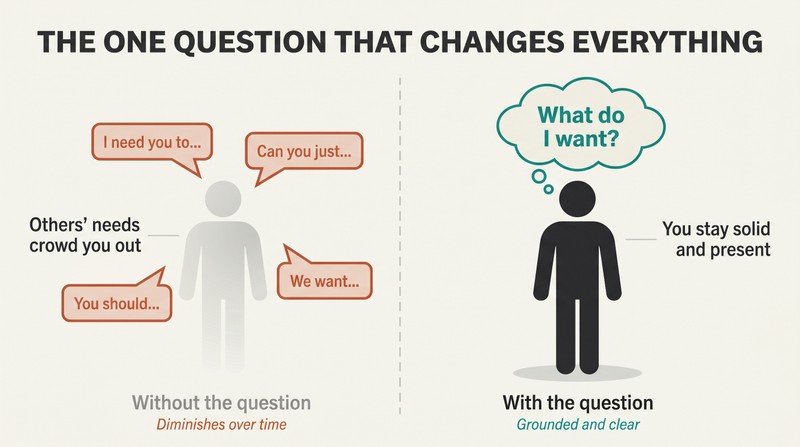
"What do I want?" is the book's MVP question. Without it, you can't set boundaries, say no, or speak up — because you don't even know where you stand. Gazipura discovered his own pattern in a men's group, when a member asked, "Where's Aziz in all this?" during a story about planning a family visit. He realized his entire narrative centered on what his parents and brother wanted, with zero mention of his own preferences.
Start simple. Ask what you want at dinner, in conversation, at work. Don't filter or judge the answer. Even if you can't act on it immediately, recognizing your desire breaks the lifelong habit of outsourcing your preferences. Chronic indecisiveness isn't confusion — it's fear of picking something others won't approve of.
Handle tough conversations with a 7-step 'I noticed' formula
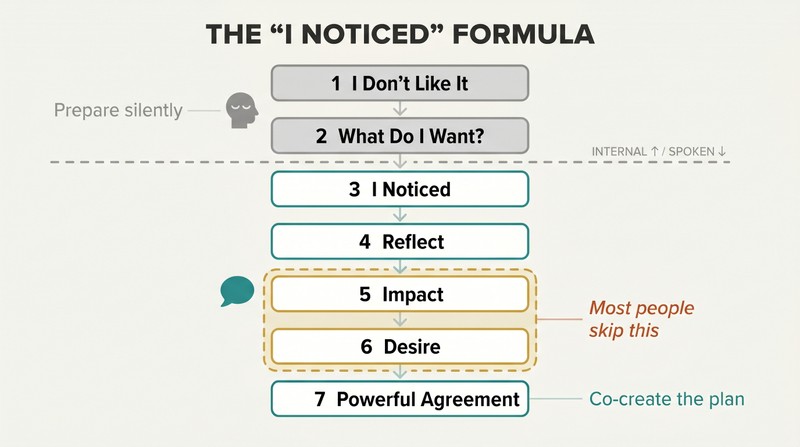
The 7-step assertive conversation formula turns dread into a playbook:
1. I Don't Like It — notice your internal resistance
2. What Do I Want? — clarify your desired outcome
3. I Noticed — state the behavior neutrally ("I noticed emails take four days to get a response")
4. Reflect — paraphrase their perspective
5. Impact — share how it affects you ("I feel uncertain and frustrated")
6. Desire — state what you'd prefer
7. Powerful Agreement — co-create a plan both people own
Steps 1 and 2 are internal preparation. Most nice people skip steps 5 and 6 — the vulnerable part where you reveal your actual feelings and desires — which is exactly why their conversations feel unresolved and nothing changes.
Say no early, briefly, and without apology
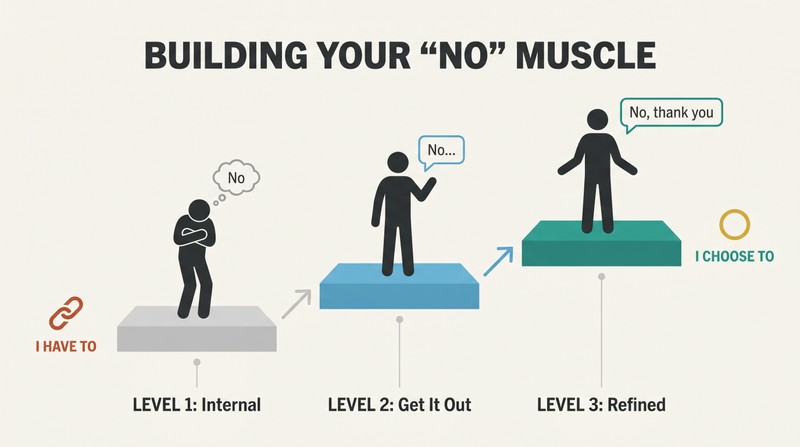
Gazipura identifies three levels of building a "no" muscle: Internal (simply recognizing you're a "no" inside), Get It Out (saying it however you can, even clumsily), and Refined Communication (calm, clear, warm). Five key tips make it smoother:
1. No is a complete sentence — avoid over-explaining
2. Skip the apology — you've done nothing wrong
3. Make it about you, not them
4. Add warmth and genuine appreciation
5. Say it early, not after agonizing for days
His "Hell Yes or Hell No" filter (borrowed from coach Rich Litvin) simplifies decisions: if an invitation doesn't spark genuine enthusiasm, decline it. This preserves energy for what actually matters and, counterintuitively, earns more respect from others than perpetual accommodation does.
Build discomfort tolerance like a muscle — seek it deliberately
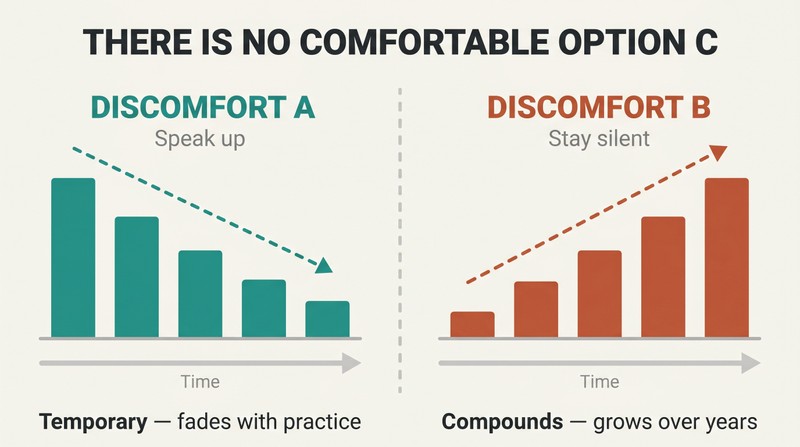
Every pillar of this book — boundaries, speaking up, saying no — requires tolerating discomfort. Gazipura frames the only two options starkly: Discomfort A (expressing the real you and handling the feelings afterward) is temporary and builds strength. Discomfort B (stuffing yourself and living with anxiety, resentment, and pain) compounds indefinitely. There is no comfortable Option C.
To train this muscle, Gazipura takes daily ice-cold showers, practices the Certainty Rant (speaking with total conviction about anything to build vocal authority), and does Embarrassment Inoculation — intentionally doing mildly awkward things in public. Expect the Post Speak-Up Freak-out: your brain replaying bold action and screaming you went too far. It's not conscience — it's your safety system. Dismiss it and keep going.
Write a personal Bill of Rights to replace your inherited shoulds
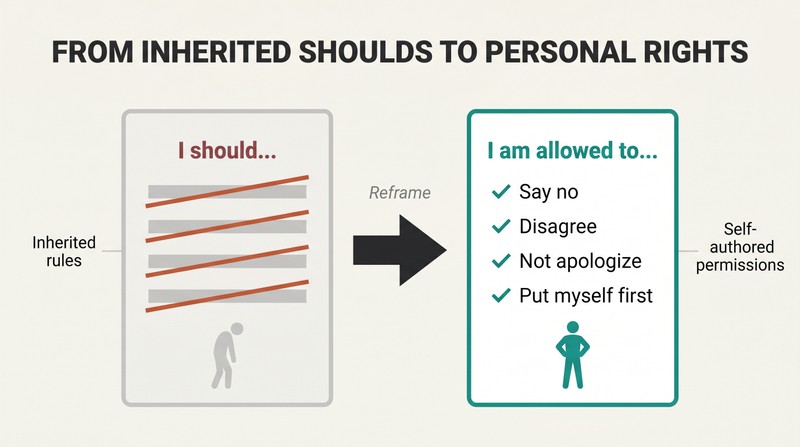
The book's most concrete exercise: create a written list of personal rights replacing inherited shoulds. Examples from Gazipura's own list: "I am allowed to say no without justifying it," "I am allowed to disagree even with experts," and "I am allowed to not be responsible for others' feelings." Read it daily before stressful interactions. To complement this, he prescribes the Apology Fast — ten days of eliminating all unnecessary apologies to rebuild internal authority.
The transformation process: replace "should" with "really want to" for each oppressive rule, then write yourself a compassionate response acknowledging the beautiful value underneath. "I should never hurt anyone" becomes "I really want others to feel accepted and safe" — same aspiration, without the impossible demand.
Analysis
Gazipura's Not Nice occupies a distinctive position in the assertiveness-training canon. Unlike Robert Glover's No More Mr. Nice Guy, which targets men and emphasizes romantic dynamics, Gazipura addresses a universal pattern rooted not in gender roles but in attachment insecurity and childhood conditioning. His clinical background — trained at Stanford and Palo Alto Universities — lends rigor to what could easily become another 'just be confident' pep talk.
The book's most distinctive contribution is its integration of three typically separate frameworks: attachment theory (explaining why saying no feels existentially threatening), Jungian shadow work (connecting repressed anger to both powerlessness and chronic pain), and practical assertiveness training (the 7-step conversation formula, the Selfish Algorithm). Most self-help books pick one lane; Gazipura weaves all three into a coherent model where childhood conditioning creates fear, fear creates niceness, niceness creates suffering, and liberation requires befriending what we were taught to reject.
His most provocative claim — that chronic pain conditions like TMJ, plantar fasciitis, and IBS originate from repressed emotion — will alienate some readers. The framework draws from Dr. John Sarno's TMS theory, which remains controversial in mainstream medicine despite passionate clinical support. Gazipura's dramatic personal recovery is compelling but anecdotal.
The Resentment Formula (Giving + No Choice = Resentment) is the book's most elegant and deployable insight. It explains why the most 'selfless' people often harbor the deepest rage — and why their generosity slowly poisons rather than nourishes relationships. This single formula could transform a marriage or a workplace dynamic overnight.
The book's primary weakness is its length. At nearly 160,000 words, it could deliver the same ideas in a third of the space. The repetition serves an oral coaching style but taxes readers. However, the 30-day Boldness Training Boot Camp action plan is genuinely well-designed — a rarity in a genre that typically stops at insight without engineering behavioral change.
Review Summary
Not Nice received mixed reviews, with many praising its life-changing insights on assertiveness and authenticity. Readers appreciated the practical exercises and relatable examples. However, some criticized its length, repetitiveness, and occasional obnoxious tone. The book resonated strongly with people-pleasers and those struggling with social anxiety, offering tools to overcome these tendencies. While some found the author's approach refreshing, others felt it promoted selfishness. Overall, readers acknowledged the book's potential for personal growth but advised selective application of its principles.
People Also Read









Glossary
Approval Seeker
Internal approval-seeking part of selfThe part of every person that wants to be liked and hates conflict or disconnection. It has a prime directive (avoid all judgment, criticism, and disapproval) and a secondary objective (earn positive feelings and approval from others). When this part 'drives the bus,' it determines everything you say, do, and avoid in social situations.
Five Specters of Nice
Five hidden costs of nicenessThe five major consequences that chronically nice people suffer: (1) Anxiety from constant self-monitoring and fear of disapproval, (2) Resentment and hidden rage from suppressed anger, (3) Chronic physical pain from repressed emotions, (4) Powerlessness from a passive stance toward life, and (5) Isolation from hiding one's true self and preventing genuine connection.
Over-Responsibility
Compulsive responsibility for others' feelingsA pattern learned in childhood where a person feels completely responsible for everyone else's emotional state, with a strong compulsion to ensure everyone feels happy and comfortable at all times. This triggers anxiety when others are upset and guilt when the person can't 'fix' someone's negative feelings, treating adults as if they were helpless children.
Resentment Formula
Why forced giving creates angerGazipura's formula: Giving + No Choice About the Matter = Resentment. When people give generously from genuine desire, they feel fulfilled. But when giving is driven by internal pressure, obligation, or fear of disapproval—eliminating any sense of autonomy or choice—resentment inevitably builds, regardless of how noble the giving appears.
Peace Process
Body-focused meditation for discomfortA specific meditation technique for releasing guilt, anxiety, or other painful feelings associated with over-responsibility. The practitioner brings attention out of thoughts and into the body, locating where the uncomfortable feeling manifests physically (chest, stomach, throat), then breathes into it with an attitude of curiosity, acceptance, and love rather than trying to fix or eliminate it.
Shadow Journal
Uncensored private writing practiceA 15-to-20-minute daily writing exercise where one expresses all repressed feelings—rage, pettiness, jealousy, sexual frustration, resentment—without censorship or editing. Kept in a locked file or private location that no one else will read. The purpose is to acknowledge the shadow (repressed parts of the psyche) rather than suppress it, which reduces anxiety, improves mood, and increases energy.
Post Speak-Up Freak-out (PSF)
Anxiety backlash after being assertiveThe intense discomfort that occurs immediately after speaking up, saying no, or otherwise being more authentic than usual. Manifests as replaying the scene, second-guessing what was said, and catastrophizing about others' reactions. Gazipura identifies it not as the voice of conscience but as the Safety Police trying to push the person back into their nice-person comfort zone.
Boldness Training Boot Camp (BTB)
Framework for shedding nicenessGazipura's overall framework for eliminating excessive niceness, structured as a three-step cycle: (1) Decide to be not nice, (2) Do the uncomfortable not-nice action, (3) Work through the internal backlash of guilt, anxiety, and doubt. Repeated consistently over time, this process reconditions habitual people-pleasing responses and builds authentic confidence.
Complete Self-Interest (CSI)
Thought experiment for desire clarityA technique where you ask yourself what you would do if operating entirely from self-interest, with zero concern for others' reactions. Not meant to be acted upon literally, but used to reconnect with buried desires after years of prioritizing others. Once you know your CSI desire, you work backward to find the most skillful way to honor it while respecting others.
Apology Fast
Ten-day exercise eliminating unnecessary apologiesA practice where for ten consecutive days, you eliminate all habitual, unnecessary apologies—the reflexive 'sorry' for starting to speak at the same time as someone, bumping shoulders, or making simple requests. The only permitted apologies are for genuine wrongdoing after careful reflection. Designed to break the unconscious pattern of apologizing for one's existence and rebuild internal authority.
FAQ
What's Not Nice about?
- Core Concept: Not Nice by Aziz Gazipura challenges the notion that being nice is always beneficial, suggesting that it often stems from fear and leads to negative emotions like anxiety and guilt.
- Personal Journey: The author shares his experiences with people-pleasing, highlighting how it hindered his personal growth and relationships, and emphasizes the importance of authenticity.
- Transformation Focus: The book provides a roadmap for breaking free from the constraints of niceness, encouraging readers to embrace their true selves and express their needs and desires.
Why should I read Not Nice?
- Overcoming People-Pleasing: If you struggle with anxiety about others' opinions or feel guilty for asserting yourself, this book offers practical strategies to reclaim your voice.
- Improving Relationships: The insights in Not Nice can help you build deeper, more authentic connections by encouraging honest communication and boundary-setting.
- Personal Empowerment: Dr. Gazipura provides tools to help you become more confident and assertive, leading to a more fulfilling life.
What are the key takeaways of Not Nice?
- Understanding Niceness: The book distinguishes between being nice and being kind, emphasizing that true kindness comes from authenticity, not fear.
- Five Pillars of Not Nice: Dr. Gazipura outlines five essential practices: Have Boundaries, Own Your Shadow, Speak Up, Be More Selfish, and Say No.
- Action Plan: The book includes a 30-day action plan to help readers implement the concepts and strategies discussed, fostering lasting change.
What are the best quotes from Not Nice and what do they mean?
- "Being nice does not come out of goodness or high morals.": This quote encapsulates the book's central thesis that niceness is often a mask for deeper insecurities.
- "You are not responsible for other people’s feelings.": This statement challenges the reader to let go of the burden of managing others' emotions, promoting personal freedom and authenticity.
- "The opposite of nice is being real.": This highlights the importance of authenticity over superficial niceness, encouraging readers to express their true selves.
What are the five pillars of Not Nice?
- Have Boundaries: Establishing clear boundaries is essential for maintaining personal integrity and ensuring that your needs are met.
- Own Your Shadow: Acknowledging and accepting all parts of yourself, including the less desirable traits, is crucial for personal growth.
- Speak Up: This pillar emphasizes the importance of expressing your thoughts and feelings openly, fostering authentic communication.
- Be More Selfish: Embracing self-interest allows you to prioritize your needs and desires, leading to more effective relationships.
- Say No: Learning to say no is vital for maintaining boundaries and protecting your time and energy.
How can I implement the concepts from Not Nice in my life?
- Start Small: Begin by identifying situations where you feel pressured to be nice and practice asserting yourself in low-stakes scenarios.
- Use the Peace Process: Dr. Gazipura introduces a technique to process feelings of guilt and anxiety when asserting yourself.
- Create Your Bill of Rights: Draft a personal list of rights that affirm your desires and boundaries.
What is the Peace Process mentioned in Not Nice?
- Emotional Awareness: The Peace Process involves tuning into your body to identify where you feel discomfort related to guilt or anxiety.
- Surrendering to Feelings: Instead of resisting uncomfortable feelings, you learn to accept and feel them fully.
- Reclaiming Power: By facing your feelings head-on, you reclaim your emotional power and reduce the anxiety associated with pleasing others.
How does Not Nice address the fear of conflict?
- Conflict as Normal: Dr. Gazipura reframes conflict as a natural part of relationships rather than something to be avoided.
- Tools for Confrontation: The book provides strategies for handling conflict assertively, such as using "I" statements.
- Empowerment through Boundaries: Establishing boundaries allows you to engage in conflict without feeling overwhelmed or guilty.
What is the significance of having boundaries according to Not Nice?
- Self-Identity: Boundaries help you define who you are and what you stand for.
- Healthy Relationships: Establishing boundaries fosters mutual respect and understanding in relationships.
- Personal Empowerment: Having boundaries empowers you to prioritize your needs and desires.
How can I overcome the guilt associated with being less nice?
- Acknowledge the Guilt: Recognize that guilt is a natural response when you start asserting yourself.
- Reframe Your Thoughts: Challenge the belief that being less nice makes you a bad person.
- Practice Self-Compassion: Treat yourself with kindness as you navigate this transition.
What is the "shadow" in Not Nice?
- Definition of Shadow: The shadow represents the parts of ourselves that we deem unacceptable or undesirable.
- Importance of Embracing the Shadow: Acknowledging and integrating your shadow can lead to greater self-acceptance and personal power.
- Practical Exercises: The book includes exercises, such as journaling about your shadow, to help you explore and understand these hidden parts of yourself.
What is the "Hell Yes or Hell No" concept in Not Nice?
- Decision-Making Framework: The concept encourages individuals to only engage in activities or relationships that elicit a strong positive response.
- Empowerment in Choices: This framework empowers readers to prioritize their desires and needs.
- Clarity in Intentions: By adopting this mindset, individuals can make clearer decisions that align with their authentic selves.
About the Author



Download PDF
Download EPUB
.epub digital book format is ideal for reading ebooks on phones, tablets, and e-readers.








































