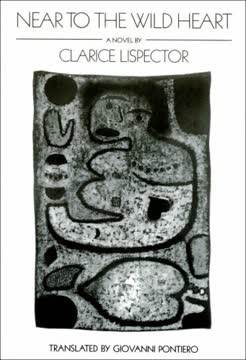
Plot Summary
Wild Heart Awakening
Joana, a precocious and introspective child, is introduced in a world alive with sensory impressions and existential questions. Her mind is restless, always searching for meaning in the mundane, and she is acutely aware of her own difference from others. The narrative plunges us into her consciousness, where the boundaries between reality and imagination blur. Joana's early life is marked by a sense of isolation, a wildness at her core that both frightens and fascinates her. She invents games, poems, and imaginary companions, always probing the limits of her own experience. This wild heart, untamed and questioning, sets the tone for her lifelong journey—a quest for authenticity, for a way of being that is true to her inner self, even as the world tries to shape her into something more conventional.
Childhood's Secret Games
Joana's childhood is a tapestry of secret games and solitary pleasures. She invents stories, plays teacher to paper cut-outs, and creates a miniature man who lives in her pocket. These games are not mere distractions but acts of self-creation, ways to assert control over a world that often feels incomprehensible. Her relationship with her father is affectionate yet distant; he is unable to penetrate the mysteries of her inner life. Joana's sense of difference grows as she realizes that what truly matters to her cannot be shared or explained. The world of adults is opaque, their answers unsatisfying. Even in moments of pain or joy, she is aware of a gap between experience and expression. This early solitude becomes both her shield and her prison, shaping the woman she will become.
Orphaned and Unmoored
The death of Joana's father marks a profound rupture. Orphaned, she is sent to live with her aunt, whose suffocating affection and lack of understanding only deepen Joana's sense of alienation. The narrative lingers on Joana's visceral reactions—the taste of cake, the oppressive embrace, the urge to flee. Her grief is not dramatic but heavy, a dull exhaustion that settles over her like a shroud. The sea becomes a symbol of her mourning: vast, unknowable, and indifferent. Joana's sadness is not just for her father but for the loss of any certainty or belonging. She realizes that she is now truly alone, responsible for inventing herself anew. This loss, paradoxically, is also a liberation, freeing her from the expectations of others and propelling her further into the wild heart of her own existence.
The Aunt's Suffocating Embrace
Joana's aunt offers her a home, but it is a home built on misunderstanding and control. The aunt's love is overwhelming, physical, and intrusive, leaving Joana feeling trapped and nauseated. The house is filled with the smells of food and the weight of unspoken expectations. Joana's rebellion is quiet but fierce—she steals a book, resists affection, and dreams of escape. The aunt and uncle discuss her as a problem to be solved, a viper to be tamed. Boarding school is proposed as a solution, a place to discipline her unruly spirit. Yet even as Joana is sent away, she retains her sense of difference, her refusal to be defined by others. The suffocating embrace of family becomes another lesson in solitude, another impetus to seek freedom on her own terms.
Lessons in Solitude
At boarding school, Joana's solitude deepens. She is an outsider among the other girls, more interested in her own thoughts than in social games. Her relationship with her teacher is complex—a mixture of admiration, longing, and intellectual kinship. The teacher encourages her to seek her own truth, to question the boundaries of good and evil, pleasure and pain. Joana's inner life becomes richer, more tumultuous, as she grapples with the mysteries of existence. She experiences moments of revelation—glimpses of eternity, the beauty of succession, the confusion of all being one. Yet these moments are fleeting, always slipping away before they can be fully grasped. Solitude is both her curse and her gift, the condition of her freedom and the source of her suffering.
The Taste of Freedom
Joana discovers that true freedom is not the absence of constraint but the ability to create meaning from within. She finds pleasure in music, in the movement of her own body, in the act of seeing and naming the world. These moments of self-sufficiency are rare and precious, glimpses of a happiness that is serious, profound, and fresh. Joana learns to value confusion, to embrace the grace that comes from not fully understanding herself or the world. She realizes that her capacity for life is greater than her knowledge of life, that truth is rooted not in certainty but in the ongoing process of becoming. Freedom, for Joana, is the ability to exist on her own terms, to accept the succession of moments without clinging to any fixed identity.
Becoming a Woman
The transition to womanhood is marked by both wonder and pain. Joana becomes acutely aware of her body, of its desires and vulnerabilities. The bath becomes a ritual of self-discovery, a moment of both pleasure and fear. She is fascinated by her own reflection, by the changes that signal her emergence into adulthood. Yet this awakening is also a rupture—a loss of innocence, a confrontation with the limits of self-knowledge. Joana's relationships with others become more fraught, charged with new tensions and possibilities. She is both attracted to and repelled by the roles that society offers her. The journey into womanhood is not a smooth passage but a series of shocks and revelations, each one forcing her to redefine who she is and what she wants.
The Teacher's Influence
Joana's teacher becomes a pivotal figure, challenging her to articulate her own values and desires. Their conversations are probing, sometimes tender, sometimes painful. The teacher urges her to look within, to discover what she truly loves, what she fears, what she seeks. Joana struggles to answer, often finding that words fail her, that her deepest feelings are inexpressible. Yet the very act of questioning becomes transformative, opening new pathways of thought and feeling. The teacher's eventual withdrawal—his illness, his wife's departure—mirrors Joana's own journey toward independence. She learns that guidance can only take her so far; ultimately, she must find her own way, trusting in the wild heart that beats within her.
Marriage and Disillusion
Joana marries Otávio, hoping for connection and renewal. At first, marriage brings a sense of plenitude, a merging of body and soul, a brief respite from solitude. But the reality soon disappoints. Otávio is distant, absorbed in his own struggles, unable to meet Joana on the level she craves. Their intimacy is marked by misunderstanding and unmet needs. Joana feels her freedom slipping away, her time broken into "little ice cubes" she must swallow quickly. The marriage becomes another form of solitude, another circle to be broken. Joana's longing for authenticity clashes with the compromises of domestic life. She realizes that love, as society defines it, cannot contain the fullness of her being. Disillusioned, she begins to seek fulfillment elsewhere.
Otávio's Divided Love
Otávio is a man of contradictions—intellectual, sensitive, yet emotionally evasive. He is drawn to Joana's wildness but also threatened by it. His relationship with Lídia, his former fiancée, offers him comfort and stability, while Joana represents danger and transformation. Otávio's inability to choose, to commit fully to either woman, reflects his own inner division. He seeks absolution, a sense of order, but is haunted by guilt and longing. His affair with Lídia, her pregnancy, and his ongoing attachment to Joana create a triangle of desire and resentment. Otávio's struggle is not just between two women but between two modes of being—one safe and conventional, the other wild and unpredictable. In the end, his indecision leaves all three trapped in a cycle of suffering and unmet desire.
Lídia's Quiet Strength
Lídia, Otávio's lover and the mother of his child, is Joana's opposite in many ways—earthy, maternal, accepting. Her love is rooted in the body, in the rhythms of pregnancy and domestic life. Lídia's strength is quiet but formidable; she endures, she waits, she forgives. Her relationship with Joana is fraught with jealousy and misunderstanding, yet also marked by a strange solidarity. Both women are bound by their connection to Otávio, yet each seeks fulfillment on her own terms. Lídia's acceptance of her fate, her willingness to find happiness in small things, offers a counterpoint to Joana's restless quest. Yet even Lídia is not immune to suffering; her happiness is tinged with resignation, her strength born of necessity rather than choice.
The Other Woman's Voice
Joana's meeting with the woman with the voice—a widow living alone—offers a glimpse of another way of being. This woman is self-sufficient, content to exist without drama or ambition. Her happiness is quiet, almost invisible, rooted in the simple fact of being alive. Joana is both envious and dismissive, unable to decide whether this is wisdom or mere resignation. The encounter forces Joana to confront her own restlessness, her need for meaning and intensity. She realizes that fulfillment can take many forms, that not all lives are measured by passion or achievement. The woman with the voice becomes a symbol of acceptance, of the possibility of peace without understanding. For Joana, this is both a challenge and a consolation.
The Lover's Arrival
Joana's affair with the unnamed man marks a turning point. He is a stranger, a presence both familiar and unknown, who awakens in her a new sense of possibility. Their relationship is intense, physical, and fleeting—a brief escape from the constraints of marriage and identity. With him, Joana experiences moments of pure being, of surrender and renewal. Yet even this passion cannot last; the man eventually departs, leaving Joana once again alone. The affair is less a solution than a catalyst, forcing Joana to confront the limits of love and the inevitability of solitude. The lover's departure is both a loss and a liberation, another circle broken, another step toward self-realization.
The Viper Within
Joana is repeatedly called a viper—by her aunt, by Otávio, by herself. This image becomes a symbol of her difference, her refusal to conform, her capacity for both creation and destruction. The viper is solitary, feared, and misunderstood, yet also powerful and alive. Joana embraces this identity, recognizing that her wild heart is both her curse and her gift. She is capable of wounding others, of breaking the rules, of living outside the boundaries of conventional morality. Yet this same wildness is the source of her vitality, her ability to renew herself, to survive loss and disappointment. The viper within is the emblem of her journey—a journey toward a self that is always in flux, always near to the wild heart of life.
Breaking the Circle
The dissolution of Joana's marriage, the end of her affair, and her growing estrangement from family and friends mark the breaking of old circles. Each ending is also a beginning, a chance to reinvent herself. Joana learns that identity is not fixed but constantly evolving, shaped by experience and choice. She rejects the roles imposed on her—wife, lover, daughter, viper—and seeks a new way of being. This process is painful, marked by loneliness and uncertainty, but also exhilarating. Joana's journey is not toward resolution but toward openness, a willingness to embrace the unknown. In breaking the circles of her past, she moves closer to the wild heart that has always called to her.
The Journey Beyond
Joana's final act is to leave—her marriage, her lover, her old life. She sets out on a journey, both literal and metaphorical, seeking a new beginning. The journey is marked by humility, by a willingness to suffer and to learn. Joana abandons pride and shame, confides in strangers, and embraces the vulnerability of not knowing. She seeks to reunite with the innocence of childhood, to find a way of living that is both simple and true. The journey is not an escape but a return—to the source of her own being, to the wild heart that has always been her guide. In leaving, Joana finds the possibility of renewal, of becoming once again a creature of pure potential.
De Profundis: Descent and Renewal
In the depths of solitude and suffering, Joana confronts the limits of language, the inadequacy of words to capture the fullness of experience. She prays, she despairs, she calls out from the depths—de profundis—for meaning, for connection, for God. Yet even as her prayers go unanswered, a new impulse rises within her—a flame of life, a surge of creative energy. Joana realizes that salvation does not come from outside but from within, from the capacity to create, to transform, to endure. The descent into darkness becomes the prelude to renewal, the necessary passage through which she must go to be reborn. In the end, Joana affirms life, not as certainty or fulfillment, but as the ongoing process of becoming, of living near to the wild heart.
Toward the Infinite Self
Joana's journey ends not with answers but with acceptance. She recognizes that life is a succession of moments, each one complete in itself, each one giving way to the next. Identity is fluid, truth is elusive, and meaning is found not in resolution but in the willingness to live fully, to feel deeply, to remain open to the unknown. Joana's wild heart is not tamed but embraced, its restlessness transformed into a source of strength and creativity. She becomes, finally, a creature of the infinite—a being who lives not for certainty or security but for the joy of existence itself. In this acceptance, Joana finds peace, not as an end but as a way of being, always near to the wild heart of life.
Analysis
A modern existential meditation on female subjectivityNear to the Wild Heart is a pioneering work of introspective fiction, remarkable for its psychological depth and lyrical intensity. Lispector's novel is less a story in the conventional sense than a meditation on the nature of consciousness, identity, and freedom—especially as experienced by a woman in a world that seeks to define and confine her. Joana's journey is emblematic of the existential struggle for authenticity: she refuses to be reduced to roles or labels, insisting on the right to create herself anew in each moment. The novel's stream-of-consciousness style immerses the reader in the flux of thought and sensation, dissolving the boundaries between self and world, past and present. Lispector's use of symbolism and nonlinear structure anticipates later developments in feminist and modernist literature, foregrounding the complexities of female subjectivity and the search for meaning in a world without certainties. Ultimately, Near to the Wild Heart is a celebration of becoming—a recognition that life's value lies not in resolution or fulfillment but in the ongoing process of living, feeling, and transforming. Joana's wild heart, untamed and ever-seeking, becomes a metaphor for the human condition itself: restless, creative, and always on the verge of renewal.
Review Summary
Reviews of Near to the Wild Heart are overwhelmingly positive, with readers praising Lispector's extraordinary prose, poetic language, and deeply introspective exploration of womanhood, identity, and existence. Many describe it as a transformative reading experience, drawing comparisons to Virginia Woolf and James Joyce. Protagonist Joana resonates deeply with readers who identify with her fierce independence, emotional complexity, and struggle against societal constraints. Some readers find the fragmented, stream-of-consciousness style challenging or repetitive, but most consider it a remarkable debut, especially given Lispector wrote it at just 23 years old.
People Also Read





Characters
Joana
Joana is the novel's protagonist, a woman marked from childhood by her acute sensitivity, fierce independence, and relentless self-inquiry. Orphaned early, she is shaped by solitude and a sense of being fundamentally different from those around her. Joana's relationships—with her father, aunt, teacher, husband, and lovers—are all filtered through her restless consciousness, which refuses easy answers or conventional roles. She is both creator and destroyer, capable of tenderness and cruelty, longing for connection yet fiercely protective of her autonomy. Psychologically, Joana embodies the existential struggle for authenticity: she is haunted by the gap between experience and expression, between self and other. Her development is a continual process of breaking and remaking herself, always seeking to live "near to the wild heart" that defines her essence.
Otávio
Otávio is Joana's husband, a man of intellect and sensitivity but also of indecision and weakness. He is drawn to Joana's wildness but ultimately threatened by it, seeking comfort in the more conventional love of Lídia. Otávio's psychoanalytic portrait is one of ambivalence: he desires both freedom and security, passion and order. His inability to choose between Joana and Lídia mirrors his own inner conflict, his fear of commitment and change. Otávio's relationship with Joana is marked by misunderstanding and unmet needs, while his affair with Lídia offers him a refuge from the chaos of his marriage. Ultimately, Otávio is a man adrift, unable to reconcile the competing demands of love, duty, and self-knowledge.
Lídia
Lídia, Otávio's former fiancée and lover, is Joana's foil—a woman grounded in the body, in the rhythms of domestic life and motherhood. She is patient, enduring, and quietly strong, accepting her fate with a kind of stoic grace. Lídia's love for Otávio is unwavering, even as he vacillates between her and Joana. Her pregnancy becomes a symbol of her rootedness, her ability to create and sustain life. Psychologically, Lídia represents the possibility of fulfillment through acceptance, the strength that comes from embracing one's limitations. Her relationship with Joana is complex—marked by jealousy, misunderstanding, but also a strange solidarity. Lídia's presence forces Joana to confront her own restlessness and to question the value of her wild heart.
The Aunt
Joana's aunt takes her in after her father's death, offering her a home but not understanding. Her love is overwhelming, physical, and intrusive, leaving Joana feeling trapped and misunderstood. The aunt's attempts to discipline and control Joana—sending her to boarding school, calling her a viper—reflect her inability to accept difference. Psychologically, the aunt embodies the forces of convention and conformity, the pressure to fit into prescribed roles. Her relationship with Joana is fraught with tension, a battleground between love and autonomy. The aunt's failure to reach Joana becomes a lesson in the limits of familial affection, the dangers of love that seeks to possess rather than to understand.
The Teacher
Joana's teacher is a pivotal figure in her intellectual and emotional development. He encourages her to question, to seek her own truth, to embrace the complexity of existence. Their relationship is marked by mutual respect and a subtle undercurrent of longing. The teacher's eventual withdrawal—his illness, his wife's departure—mirrors Joana's own journey toward independence. Psychologically, he represents the possibility of guidance without domination, the value of mentorship in the search for authenticity. His influence lingers even after their contact ends, shaping Joana's ongoing quest for meaning.
The Lover (Unnamed Man)
The unnamed man with whom Joana has an affair represents a break from the constraints of marriage and identity. He is both familiar and unknown, a presence that awakens in Joana a new sense of possibility. Their relationship is intense, physical, and fleeting—a brief escape from the cycles of suffering and solitude. Psychologically, the lover is less a character than a force, a catalyst for Joana's transformation. His departure is both a loss and a liberation, forcing Joana to confront the limits of love and the inevitability of solitude.
The Woman with the Voice
This widow, encountered by Joana, lives a life of quiet contentment, self-sufficient and untroubled by ambition or drama. Her happiness is rooted in the simple fact of being alive, her fulfillment in acceptance rather than striving. Psychologically, she represents an alternative to Joana's restless quest—a model of peace without understanding, of existence without the need for meaning. Joana is both envious and dismissive, unable to decide whether this is wisdom or resignation. The woman with the voice becomes a mirror in which Joana sees both the possibility and the limits of her own way of being.
Joana's Father
Joana's father is a loving but distant figure, unable to penetrate the mysteries of his daughter's inner life. His death marks a profound rupture, severing Joana's last anchor and propelling her into a deeper solitude. Psychologically, the father represents both the possibility of connection and the inevitability of loss. His absence haunts Joana, shaping her longing for understanding and her fear of abandonment. The memory of his love is both a comfort and a wound, a reminder of what is possible and what is forever out of reach.
The Uncle
Joana's uncle, like her aunt, is a figure of authority and order. He participates in the decision to send Joana to boarding school, viewing her as a problem to be solved. His relationship with Joana is distant, marked by a lack of understanding and empathy. Psychologically, the uncle embodies the forces of tradition and conformity, the pressure to fit into prescribed roles. His failure to reach Joana underscores the limits of authority and the dangers of love that seeks to control rather than to nurture.
The Teacher's Wife
The teacher's wife is a minor but significant figure, representing the conventional ideals of beauty, order, and domesticity. Her presence disrupts the intimacy between Joana and her teacher, reminding Joana of her own difference and her outsider status. Psychologically, the teacher's wife is both a rival and a symbol—a reminder of the roles that Joana refuses to play, the life she cannot or will not lead.
Plot Devices
Stream-of-Consciousness Narrative
Lispector employs a stream-of-consciousness style, plunging the reader directly into Joana's inner world. This narrative device blurs the boundaries between thought, sensation, and action, creating a sense of immediacy and intimacy. The story unfolds not as a linear sequence of events but as a series of impressions, memories, and reflections. This structure mirrors Joana's own experience of time and selfhood—fragmented, recursive, always in flux. The use of interior monologue allows for a deep exploration of psychological and existential themes, making the novel less about external events and more about the evolution of consciousness.
Symbolism and Motif
Throughout the novel, Lispector weaves a tapestry of symbols—water, animals, music, the sea, the viper—that recur and evolve in meaning. These motifs serve as touchstones for Joana's emotional and spiritual journey, linking disparate moments and experiences. The sea, for example, represents both loss and renewal; the viper, both danger and vitality. These symbols are not fixed but fluid, reflecting the novel's emphasis on becoming rather than being. Their recurrence creates a sense of unity amid fragmentation, a pattern that emerges from the chaos of experience.
Nonlinear Structure and Temporal Fluidity
The novel eschews chronological order, moving freely between past and present, memory and anticipation. This nonlinear structure reflects Joana's own experience of time—not as a straight line but as a series of circles, each complete in itself yet connected to the others. The narrative loops back on itself, revisiting key moments from different angles, allowing for a deepening of understanding and a layering of meaning. This temporal fluidity reinforces the novel's central themes of transformation and renewal, suggesting that identity is always in process, never fixed.
Dialogues and Inner Debates
Much of the novel unfolds through dialogues—both real and imagined—between Joana and the other characters, as well as within Joana herself. These conversations are less about exchanging information than about probing the limits of understanding, testing the boundaries of self and other. Joana's inner debates drive the narrative forward, forcing her to confront her own contradictions and to seek new ways of being. The use of dialogue as a plot device underscores the novel's emphasis on self-inquiry and the search for authenticity.
Foreshadowing and Circularity
Lispector employs foreshadowing and circularity to create a sense of inevitability and recurrence. Early events—Joana's childhood games, her father's death, her sense of being a viper—echo throughout the novel, resurfacing in new forms as Joana grows and changes. The narrative circles back on itself, each return deepening the resonance of earlier moments. This circularity reinforces the novel's central insight: that life is a succession of moments, each both an ending and a beginning, each containing the seeds of transformation.








































