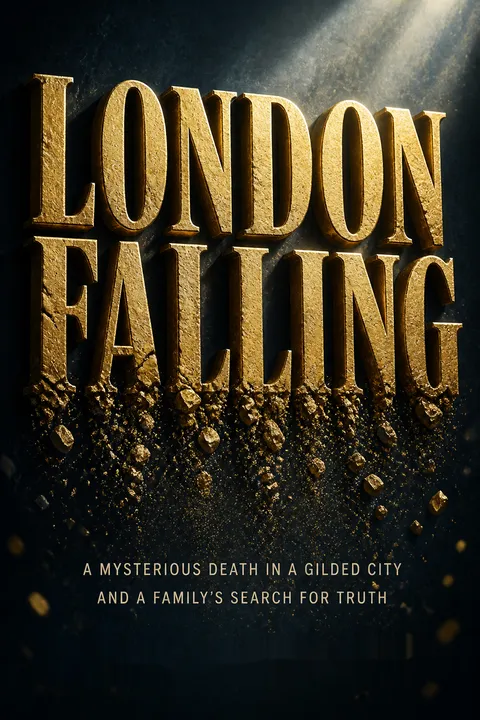

Plot Summary
River of Secrets
London, once the heart of an empire, has always been a city of paradoxes—its glittering facades masking a history of violence, secrets, and reinvention. The Thames, both artery and grave, has witnessed centuries of commerce and crime, its banks now lined with luxury towers and "ghost mansions" owned by the world's wealthy. In this new gilded age, the city's soul is up for sale, and its shadows are deeper than ever. Against this backdrop, a young man's fatal plunge from a balcony across from MI6 headquarters becomes a symbol of the city's seductive promise and lurking peril. The story begins with a fall—a body in the river, a mystery in the heart of London's opulence.
The Boy Who Lied
Born into a family marked by survival—Holocaust refugees and postwar resilience—Zac Brettler grows up in comfort, surrounded by love and expectation. His parents, Matthew and Rachelle, are shaped by their own parents' traumas and triumphs, determined to give their sons stability and opportunity. Zac is precocious, witty, and charismatic, but also restless and competitive, especially with his older brother Joe. Early on, he discovers the power of stories and deception, using humor and invention to navigate the pressures of privilege and the sting of rejection. The seeds of his later double life are sown in these formative years, as he learns both the value and the danger of pretending.
Gilded London, Hollow Dreams
As London transforms into a playground for global wealth, its social fabric frays. The influx of oligarchs and their children into elite schools like Mill Hill exposes Zac to a world of unimaginable riches and moral ambiguity. The city's new elite flaunt their power, and Zac, feeling outclassed and outshone, becomes obsessed with status, money, and the trappings of success. He is drawn to the swagger of his Russian and Kazakh classmates, idolizes cinematic hustlers, and begins to mimic their bravado. London's glittering surfaces conceal a growing emptiness, and Zac's longing to belong—to be someone—intensifies, setting him on a path toward dangerous aspirations.
The Oligarch's Son
Unable to match his brother's academic path, Zac forges a new identity at Mill Hill and later Ashbourne College. He cultivates friendships with the children of the super-rich, adopts their mannerisms, and invents stories about his own wealth and connections. His lies become more elaborate: he claims to be the son of a Russian oligarch, living in luxury apartments, doing deals in real estate and commodities. He charms adults and peers alike, leveraging his quick wit and encyclopedic memory. But as his fabrications grow, so does his isolation. The line between reality and invention blurs, and Zac's need for validation and excitement leads him into the orbit of older, more dangerous men.
Dangerous Friendships
Zac's world expands when he befriends Akbar Shamji, a charismatic entrepreneur with a checkered past, and is introduced to Verinder "Indian Dave" Sharma, a notorious gangster. Both men are drawn to Zac's apparent wealth and connections, seeing in him an opportunity for profit or redemption. Akbar, himself the product of a family of exiles and hustlers, becomes Zac's mentor and business partner, while Verinder offers him shelter and a taste of the criminal underworld. These relationships are transactional and fraught, built on mutual deception and need. As Zac becomes more entangled, the risks escalate, and the boundaries of trust and betrayal are tested.
The Disappearance
In late November 2019, Zac tells his mother he's going to "detox" and disappears. His parents, already uneasy about his secretive lifestyle and new associates, are thrown into panic when strangers come looking for him, claiming his mother is in Dubai. Calls to friends and business partners yield only more confusion. The police, distracted by a terrorist attack elsewhere in the city, are slow to respond. As hours turn to days, the Brettlers' worst fears mount. The mystery deepens when they learn that Zac has been living under a false identity, fooling even his closest friends and mentors. The search for Zac becomes a desperate quest for answers in a city that seems indifferent to his fate.
Into the Thames
A commuter spots a body on the muddy banks of the Thames, beneath the luxury towers of Riverwalk. It is Zac—shirtless, battered, and lifeless. The police initially assume another anonymous suicide, a common fate in the river's long history. But the circumstances are strange: no identification, no clear reason for his presence there, and a broken jaw that raises questions about violence. The family is devastated, and the city's machinery of death and bureaucracy grinds into motion. Zac's funeral draws a crowd, but rumors swirl—was it suicide, murder, or something more complicated? The river, as always, keeps its secrets.
The Web Unravels
As the investigation unfolds, the truth about Zac's double life emerges. He had convinced powerful adults that he was a billionaire's son, orchestrating business deals and living in borrowed luxury. Akbar and Verinder, both with their own histories of deception and criminality, are drawn into the police inquiry. Surveillance footage, text messages, and witness statements reveal a night of drinking, threats, and escalating tension. The police interrogate Akbar and Verinder, but both men are evasive, their stories riddled with inconsistencies. The Brettlers, reeling from grief, begin to realize that their son's death is entangled in a web of greed, violence, and institutional failure.
Ghosts and Gangsters
The story widens to encompass the shadowy world of London's gangsters, fixers, and enablers. Verinder's past as "Indian Dave"—a feared debt collector and suspected murderer—comes to light, as does Akbar's family history of fraud and reinvention. The city's criminal ecosystem, intertwined with its financial elite, is exposed: money laundering, extortion, and violence are the hidden engines of its prosperity. The Brettlers confront the reality that Zac, in his quest for belonging and power, had fallen prey to predators who saw him as a mark. The boundaries between victim and perpetrator, truth and fiction, blur in the city's labyrinthine underbelly.
The Great Pretenders
Zac's story is mirrored by those around him: Akbar, the failed entrepreneur; Verinder, the gangster with a dozen aliases; even Zac's own grandfather, who reinvented his past to survive. The culture of London—its obsession with status, its tolerance for lies—enables and rewards such imposture. The investigation reveals not only Zac's fabrications but also those of his mentors and the institutions that failed him. The city itself is a stage for performance, where everyone is pretending to be something they are not. In the end, the cost of these deceptions is measured in broken lives and unanswered questions.
The Investigation Fails
Despite the family's pleas and mounting evidence of foul play, the police investigation stalls. Key witnesses are not interviewed, crucial evidence is lost or ignored, and the authorities seem more interested in closing the case than finding the truth. The Brettlers' faith in the system is shattered as they encounter bureaucratic stonewalling and a culture of avoidance. The inquest, when it finally comes, is perfunctory and inconclusive. The official verdict is "open"—neither suicide nor murder. The city's machinery of justice, like its river, absorbs the tragedy and moves on, leaving the family to seek answers on their own.
The Family's Hunt
Refusing to accept the official narrative, Matthew and Rachelle become investigators, piecing together timelines, tracking down witnesses, and analyzing digital evidence. They uncover a pattern of lies, threats, and missed opportunities, and begin to suspect that Verinder may have been a police informant, shielded from prosecution. Their quest brings them into contact with journalists, private detectives, and the city's criminal underworld. Along the way, they confront their own guilt, grief, and the limits of parental love. The search for justice becomes a way to keep Zac's memory alive and to resist the city's erasure of his story.
The Black Box Truth
A technical error yields a trove of GPS data from Akbar's car, revealing his movements on the night of Zac's death. The evidence suggests that Akbar was circling Riverwalk, in contact with Verinder, at the critical moment. The family's suspicions are confirmed: Zac was likely threatened, possibly assaulted, and jumped in a desperate bid to escape. Yet the full truth remains elusive—witnesses are silent, evidence is ambiguous, and the key players are dead or uncooperative. The city's culture of secrecy and complicity ensures that some mysteries will never be solved. The Brettlers are left with a partial, painful understanding, and the knowledge that justice may never come.
The Final Reckoning
In the years following Zac's death, the family continues to seek answers and accountability. They confront the police, challenge the official narrative, and share their story with the world. The revelations about London's corruption, the failures of its institutions, and the dangers lurking beneath its glittering surface resonate far beyond their personal tragedy. Yet closure remains out of reach. The city, ever hungry for new fortunes and new victims, moves on. The Brettlers, changed forever, must find a way to live with loss, ambiguity, and the knowledge that some wounds never heal.
Choosing Life
In the end, the story is not only about a mysterious death, but about the enduring power of love and the struggle to choose life in the face of loss. The Brettlers, drawing on the example of their forebears—survivors of war, exile, and trauma—find ways to honor Zac's memory and support each other. Their journey through grief is marked by pain, anger, and moments of grace. The city that took their son is also the city that shaped him, and them. In telling their story, they reclaim agency and bear witness to the costs of a society that values wealth and appearance over truth and humanity. The final lesson is one of resilience: to keep going, to choose life, even when the answers never come.
Analysis
A modern parable of identity, privilege, and the costs of deceptionLondon Falling is more than a true crime story; it is a meditation on the dangers of a society obsessed with wealth, status, and appearance. Through the lens of one family's tragedy, the book exposes the moral vacuum at the heart of contemporary London—a city where money launders not only cash but also conscience, and where institutions are complicit in both grand and petty deceptions. Zac's fate is both singular and emblematic: a young man undone by his own lies, but also by the city's willingness to believe them. The failures of the police, the allure of imposture, and the corrosive effects of secrecy and ambition are all laid bare. Ultimately, the book is a call to empathy and vigilance—a reminder that beneath the glittering surfaces of modern life, the search for truth, connection, and meaning remains as urgent as ever. The Brettlers' journey, marked by pain and resilience, challenges us to confront the costs of indifference and to choose life, even when the answers are out of reach.
Review Summary
Readers overwhelmingly praise London Falling, with most awarding it five stars. Reviewers consistently highlight Patrick Radden Keefe's meticulous research, compelling narrative structure, and deep empathy. Many call it unputdownable, praising its exploration of London's criminal underworld, oligarch culture, and the Brettler family's grief. Some critics note the middle section meanders, and a few felt it didn't quite reach the heights of his earlier works. Nearly all reviewers, even critical ones, acknowledge Keefe's exceptional talent for transforming complex, real-world stories into novelistic, deeply human narratives.
People Also Read



Characters
Zac Brettler
Zac is the heart of the story—a gifted, witty, and deeply insecure young man shaped by privilege and the weight of family history. The grandson of Holocaust survivors, he grows up in comfort but feels the sting of not quite belonging among London's new elite. His psychological complexity is rooted in a need for validation, a hunger for excitement, and a talent for invention. As he matures, Zac's lies become a means of survival and self-definition, allowing him to navigate worlds that both attract and endanger him. His relationships—with family, friends, and dangerous mentors—are marked by longing and deception. In the end, Zac's tragic fall is both literal and symbolic: a desperate leap from a web of lies, seeking escape and perhaps redemption.
Matthew Brettler
Matthew is a product of postwar resilience, the son of a Kindertransport survivor, and a man who values reason, stability, and integrity. His relationship with Zac is fraught—marked by pride, confusion, and a growing sense of helplessness as his son drifts into secrecy and danger. After Zac's death, Matthew channels his grief into investigation, determined to find answers where the authorities have failed. His methodical approach masks deep pain and guilt, as he wrestles with the limits of parental control and the randomness of tragedy. Matthew's journey is one of reckoning—with the city, the system, and himself.
Rachelle Gryn Brettler
Rachelle, daughter of a celebrated rabbi and Holocaust survivor, brings warmth, humor, and artistic sensibility to her family. She is fiercely protective of her sons, yet struggles to understand Zac's transformation and the forces pulling him away. Her own upbringing—marked by both freedom and benign neglect—informs her parenting, for better and worse. In the aftermath of Zac's death, Rachelle becomes both mourner and investigator, seeking meaning in chaos and solace in connection. Her grief is raw and unvarnished, but she draws strength from family, therapy, and the act of bearing witness.
Joe Brettler
Joe, Zac's older brother, is the "good son"—studious, athletic, and steady. The brothers' relationship is defined by rivalry, affection, and growing distance as Zac's behavior becomes more erratic. Joe's own struggles with direction and belonging mirror Zac's in quieter ways. After Zac's death, Joe is left to navigate survivor's guilt, family expectations, and the challenge of forging his own path. His perspective offers a counterpoint to Zac's volatility, highlighting the complexities of sibling bonds and the collateral damage of tragedy.
Akbar Shamji
Akbar is a figure of contradictions: the scion of a wealthy, exiled family, a would-be entrepreneur, and a consummate confidence man. His own life is a tapestry of reinvention, debt, and unfinished schemes. Drawn to Zac's apparent wealth and charisma, Akbar becomes both mentor and exploiter, projecting empathy while pursuing self-interest. His psychological makeup is marked by insecurity, ambition, and a capacity for self-delusion. In the aftermath, Akbar's evasions and rationalizations reveal a man unwilling or unable to confront his own complicity.
Verinder "Indian Dave" Sharma
Verinder is the story's most menacing presence—a career criminal with a reputation for extortion, violence, and survival. His relationships are transactional, his loyalties fluid. To Zac, he offers protection and belonging, but his true motives are always suspect. Verinder's psychological profile is shaped by trauma, cunning, and a need for control. His eventual suicide, after years of evading justice, leaves as many questions as answers, embodying the city's culture of impunity and the dangers of seeking power through fear.
Dominique Sharma Clarke
Dominique, Verinder's daughter, is caught between worlds: the privileged life her father wanted for her and the shadow of his criminality. Her testimony at the inquest is marked by evasions and divided loyalties, reflecting the psychological toll of growing up with a parent who is both protector and predator. Dominique's struggle to reconcile love, fear, and truth mirrors the broader themes of the story—how families cope with secrets, and how children inherit the burdens of their parents' choices.
Nick Gold
Nick Gold is a quintessential London operator—part gambler, part entrepreneur, moving fluidly between the city's legitimate and illicit spheres. His connections to both the criminal underworld and the financial elite make him a symbol of the city's blurred moral boundaries. Gold's relationship to Verinder and the Riverwalk apartment hints at deeper networks of complicity and self-preservation. His psychological makeup is defined by opportunism, charm, and a willingness to look the other way.
Mark Foley
Foley, a property manager with ties to Chelsea Football Club, becomes the unwitting catalyst for Zac's imposture. His willingness to vouch for Zac, based on surface impressions and social trust, reflects the city's culture of credulity and the ease with which appearances can be manipulated. Foley's role is minor but pivotal, illustrating how institutions and individuals can become complicit in deception through inattention and self-interest.
The Brettler and Gryn Families
The extended families—shaped by exile, trauma, and resilience—provide the emotional and historical context for Zac's story. Their experiences of loss, reinvention, and survival echo through generations, informing the psychological landscape of the present. The family's collective response to tragedy—grief, investigation, and the struggle to choose life—anchors the narrative and offers a counterpoint to the city's indifference.
Plot Devices
Duality and Imposture
The narrative is structured around the theme of duality—public versus private, truth versus fiction, victim versus perpetrator. Zac's double life as both a privileged Londoner and a self-invented oligarch's son mirrors the city's own duplicity: a place of dazzling surfaces and hidden rot. The use of imposture as both survival strategy and existential trap is echoed in the stories of Akbar, Verinder, and even Zac's grandfather. This device allows the story to probe questions of authenticity, belonging, and the costs of self-invention.
Interwoven Timelines and Perspectives
The book employs a non-linear structure, moving between past and present, personal and societal, to build suspense and deepen understanding. The family's investigation runs parallel to the official inquiry, with each new revelation reframing earlier events. Multiple perspectives—parents, friends, mentors, investigators—offer a mosaic of motives, emotions, and blind spots. This approach underscores the elusiveness of truth and the ways in which memory, bias, and secrecy shape our understanding of events.
Foreshadowing and Symbolism
The Thames is both literal setting and metaphor—a river of commerce, death, and secrets. The recurring image of falling (from the balcony, into the river, from grace) symbolizes the dangers of ambition and the fragility of identity. The city itself is a character, its architecture and history reflecting the themes of reinvention, corruption, and loss. Foreshadowing is used to build tension, with early hints of danger and duplicity culminating in Zac's fatal leap.
Investigative Structure and Meta-Narrative
The book adopts the conventions of investigative journalism and true crime, with the author and the family acting as detectives in pursuit of answers. The narrative interrogates not only the events of Zac's life and death but also the failures of institutions—police, courts, media—to deliver justice or closure. The meta-narrative, including the author's own journey and the family's evolving understanding, invites readers to question the nature of truth, evidence, and storytelling itself.
Download PDF
Download EPUB
.epub digital book format is ideal for reading ebooks on phones, tablets, and e-readers.








































