

Key Takeaways
Fear, guilt, and shame aren't emotions to manage — they're false identities
“The gates of hell cannot stand against us moving in our true identity. But if we take one step outside of that identity, we're done, we're finished.”
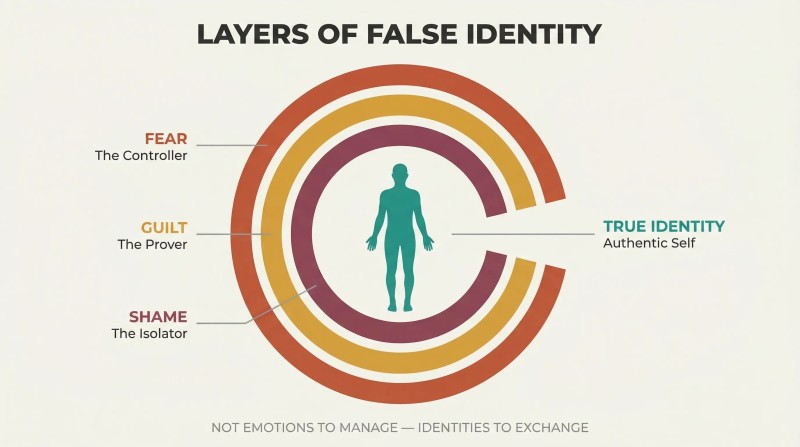
Jamie Winship spent thirty years in the Muslim world as a former police officer, and he opens with a radical reframe: your biggest problem isn't bad behavior — it's false identity. Fear makes you a controlling person. Guilt makes you someone endlessly proving their worth. Shame drives you into isolation. These aren't just feelings to cope with; they're identity states that dictate every decision you make.
A man who feels unworthy will act unworthy regardless of context — at church, at work, in marriage. Winship contrasts these false identities with your "true identity," the one God built into your DNA before birth. The entire book is built on one exchange: surrender false identities rooted in fear, guilt, and shame, and receive the God-given identity that unlocks your actual life.
Don't prepare to pray — just abide, and let learning follow
“A person doesn't learn to abide. A person abides and then learns what happens as a result of abiding.”
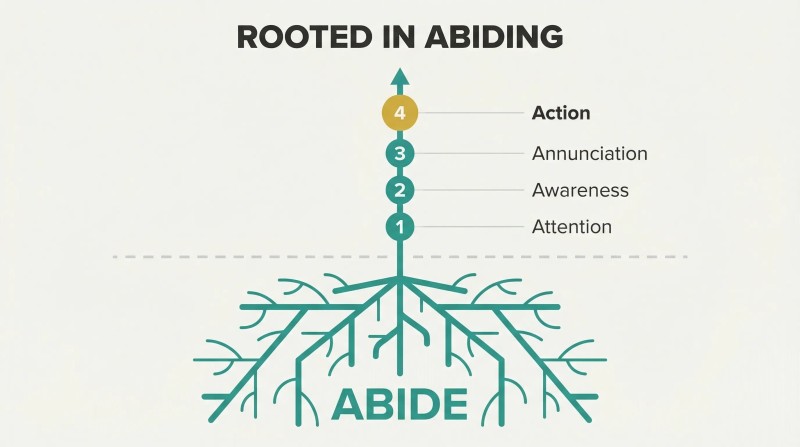
Winship's framework rests on abiding — receiving and trusting all God has for you in Christ (John 15). He learned this from the most unlikely discipler: his feared field training officer, nicknamed the Troll. For fifty weeks of ten-hour shifts, the Troll asked invasive questions about vocation, marriage, fear, and identity — not in a classroom but in real-time crisis on the streets. The Troll's one rule: stop talking and start listening.
This mirrors how Jesus trained disciples. Through abiding, Winship identifies four stages:
1. Attention — pay attention to God speaking
2. Awareness — recognize the real, true, and false selves
3. Annunciation — hear God declare your true identity
4. Action — step into that identity through obedience
Confess what you actually believe, not what you think God wants to hear
“God doesn't want to remove the fear; he wants to transform it.”
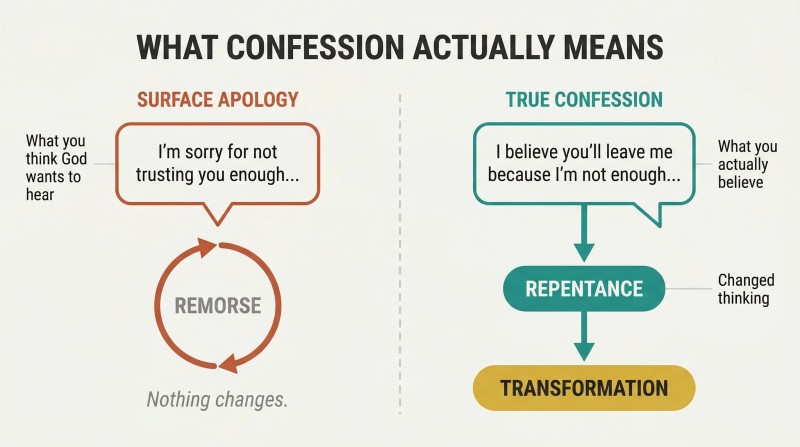
Winship redefines confession entirely. As a cop, he asked suspects for confessions — truth about what happened, not apologies. Saying "I'm sorry" resolves nothing. Biblical confession means telling God what you really believe about him, yourself, and others — especially the uncomfortable parts. "I think you let me down every day" is better confession than "I'm sorry for not trusting you enough."
A husband began frequenting bars after ten years of faithful marriage. His real confession wasn't "I'm sorry for drinking" — it was "I'm afraid my wife will leave me because I'm just a construction worker like my dad, whose wife abandoned the family after she got educated." That truth-telling unlocked repentance — changed thinking — which led to deep reconciliation. Confession activates repentance; remorse alone never does.
Stop chasing sinful behaviors — remove the false identity underneath
“The fingerprint of Satan on your life is secrecy and shame.”
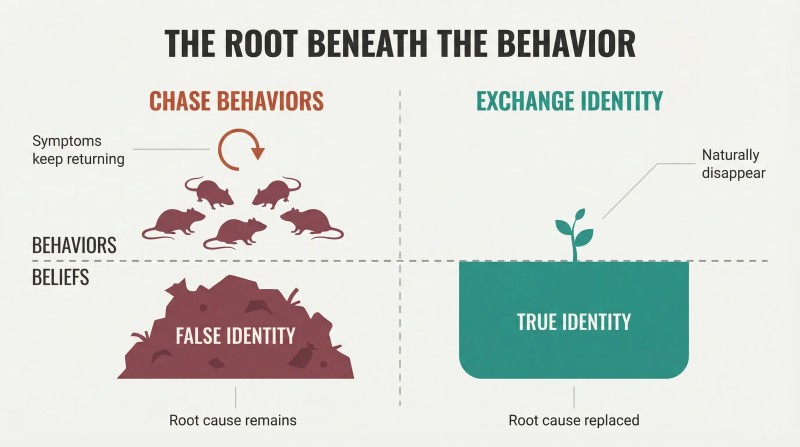
Imagine rats swarming a trash pile. You can spend years shooing individual rats — attending accountability groups, memorizing verses, listening to podcasts — but they keep returning. The solution isn't better rat management; it's removing the trash pile. The trash pile is a belief system rooted in false identity.
Traditional accountability asks, "Did you look at pornography?" and produces only guilt or lies. Winship argues God's version asks, "How do you have time for pornography if you're living in your true identity? You're looking because you feel unworthy." Moral failures are symptoms of wrong belief, not the root problem. Once the false identity is exchanged for the true one, destructive coping mechanisms lose their appeal — not because willpower increases, but because they're simply no longer worth it.
Ask God who you are before asking what to do
“Stop coming to him in a false identity. He's not talking to a false you.”
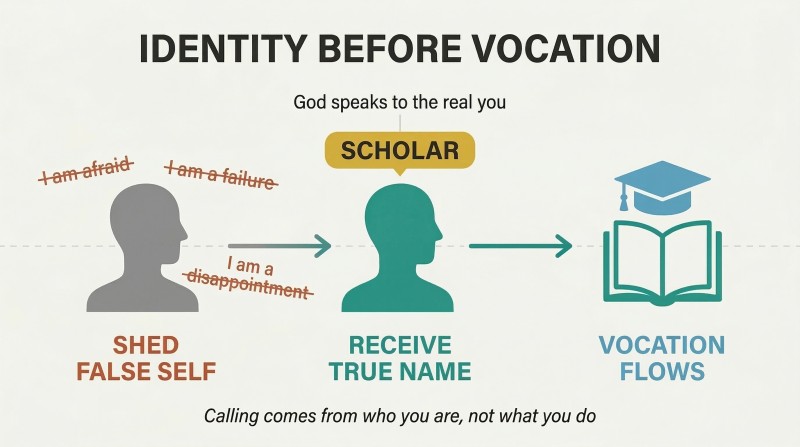
God speaks only to your true identity. Salim, a Muslim immigrant, needed a driver's license but kept failing the exam. When he asked God for help, the first words weren't driving tips — they were: "I am afraid. I am a failure. I am a disappointment." God addressed the false identity blocking everything. After weeks of confession and listening, Salim sensed God call him "intellectual" and "scholar."
Similarly, Jerry, a forty-five-year-old former rugby player consumed by anger, heard God call him "family counselor." The identity seemed absurd given his violent history — but his pain made him uniquely qualified. Jerry's community rallied around him, and he earned a counseling degree with honors. God names you after himself, and vocation flows from identity, not the reverse.
Inquire of the Lord instead of walking side by side with yourself
“It never takes faith to believe what's false. Never. But it does take faith to believe what's true.”
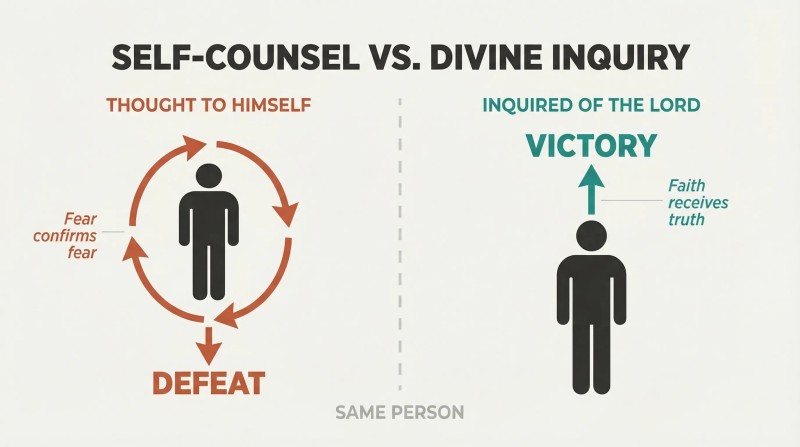
David's life shows the contrast perfectly. When David "inquired of the Lord," he was invincible — killing lions, defeating Goliath, transforming four hundred outcasts into Israel's greatest warriors, the gibborim. But in 1 Samuel 27, David "thought to himself," concluded Saul would catch him, and fled to the Philistines. He became a caravan robber, liar, and murderer. His own men eventually wanted to stone him.
Winship calls walking side by side with yourself an internal loop where fear confirms fear while the enemy eagerly contributes. The antidote: ask God instead of yourself. David's recovery was immediate — he encouraged himself in the Lord and inquired of God, who told him to pursue and promised victory. Same man, same day, opposite strategy, opposite result.
Before acting, ask God three questions: Should I go? Will I win? How?
“God never comes to you in a formula, and he never will.”
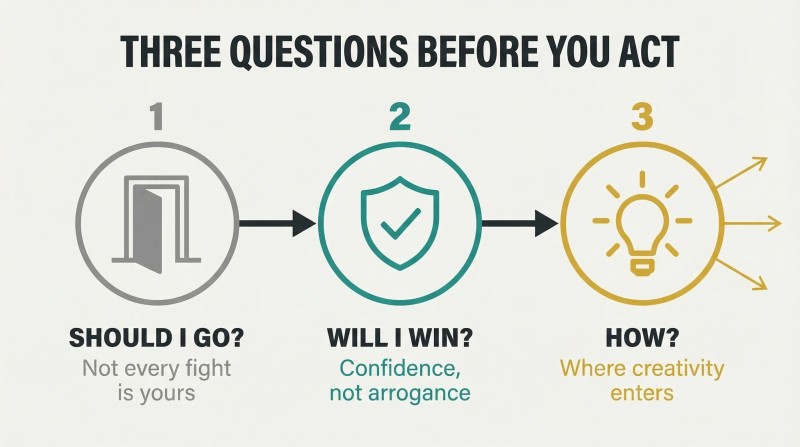
David inquired of the Lord nine times — more than any other biblical figure. From his pattern, Winship extracts three questions for decisions:
1. Should I go? Don't assume God wants you in every fight.
2. Will I win? Not prideful — Jesus came to win, just not Peter's way.
3. How should I go? This is where holy creativity enters.
A friend applied these questions before starting a winery and developed a completely disruptive model that earned industry acclaim. A federal law enforcement team asked, "Is there a new way to run a task force to end human trafficking?" The answer was yes — and God shared it with people whose identity and position equipped them to act on it. These three questions turn rote obedience into generative partnership.
Replace scripted faith with generative, creative conversations
“Formulaic relationships fail, tend to flounder. Formulaic religion dies, tends to fossilize.”
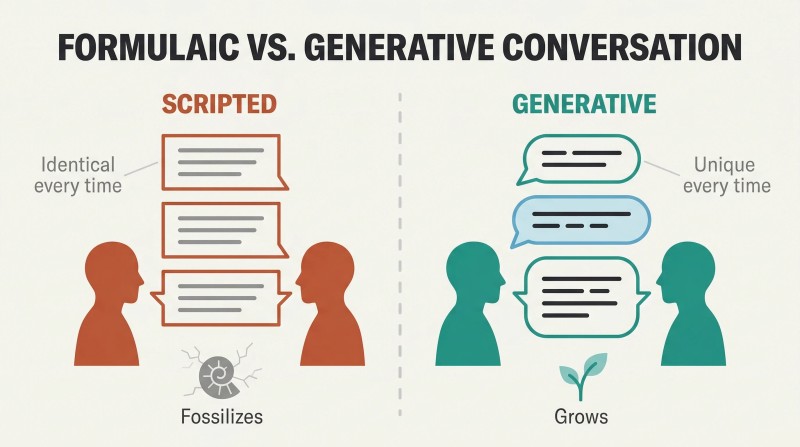
Two language theories shape everything. Formulaic language runs on scripts — "How are you?" / "Fine" — where nobody truly communicates. Generative language creates a fresh conversation every time, requiring presence and creativity. Jesus never used formulas because every person he encountered was a unique identity worthy of unique engagement.
Winship demonstrated this with a ride share driver. Instead of small talk about restaurants, he asked, "What's your identity?" The driver couldn't answer — he'd never considered it. By the end of the ride, the driver wanted to hear God speak his identity. No evangelistic script, no canned gospel — just a generative conversation about who someone truly is. This extends to prayer: if your spiritual life feels dead, you may have turned a living relationship into a recited ritual.
Never make a fear-based decision — fear cascades into a fearful life
“Once you make a fear-based decision, you'll act in fear the rest of your life.”
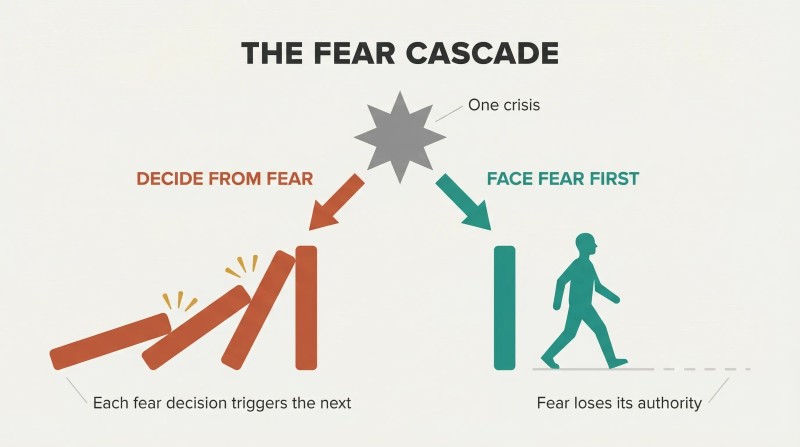
In Baghdad in 2003, Winship's team lost four members to an ambush. He identified the bodies with the FBI, then returned to tell his team — mostly singles fresh from college. Instead of evacuating, he warned them: face the fear first, then ask God what to do. "If you make a fear-based decision now, you'll make them the rest of your life."
Each person asked God about their fear. Most of it predated Iraq — a crisis doesn't create fear, it reveals fear already present. Then they asked, "What should we do?" Every one heard the same answer: Stay. They stayed. They're now in their mid-thirties, several still in the Middle East. Winship calls them fearless — not because danger disappeared, but because fear lost its authority over their choices.
Your destiny hasn't passed you by — kairos moments wait for you to arrive
“You haven't missed anything yet in your life, not one thing.”
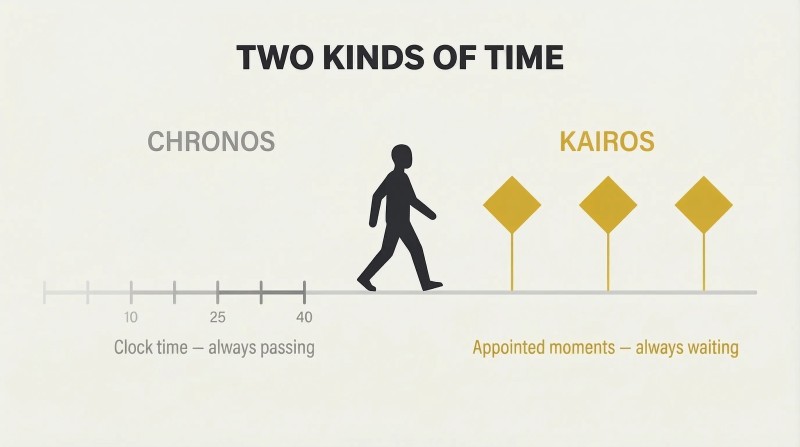
Winship distinguishes two biblical time concepts. Chronos is clock time — minutes, years. Kairos is appointed time — divinely prepared moments. Israel took forty years for an eleven-day journey, but the kairos moment didn't evaporate. The generation that refused to walk forward in their true identity missed it not because time moved on but because they stood still as grasshoppers.
Jerry wandered for forty-five years in a false identity of anger before hearing God call him "family counselor." His kairos moments hadn't disappeared — they never moved. As he stepped forward in true identity, they came into view. Whether you're twenty or sixty-five, whether this is your first day thinking about hearing from God, Winship insists the appointed times are still ahead — waiting for you to walk into them.
Analysis
Winship's Living Fearless occupies a distinctive niche at the intersection of contemplative prayer, identity theology, and cross-cultural conflict resolution — a combination virtually nonexistent in mainstream Christian publishing. While identity-in-Christ theology has a long pedigree (from Luther's simul justus et peccator to Dallas Willard's renovation of the heart), Winship's contribution is intensely experiential rather than doctrinal. He doesn't argue for identity transformation; he narrates it across cultures that most Western Christians never encounter.
The book's most subversive move is its critique of evangelical accountability culture. The trash pile metaphor inverts the standard sin-management paradigm — where churches build elaborate behavioral surveillance systems — by arguing that behavior modification without identity transformation is Sisyphean. This aligns with emerging psychological research on shame resilience (Brené Brown, whom Winship cites) but roots it in a Christological framework rather than a therapeutic one.
Methodologically, Winship's approach resembles Ignatian spiritual exercises more than Reformed systematic theology, though he'd likely resist that categorization. The guided prayer exercises, imaginative visualization of Jesus, and emphasis on hearing God's voice in real time echo the Spiritual Exercises of St. Ignatius of Loyola, while his insistence on community discernment guards against the subjectivism that often plagues charismatic listening-prayer traditions.
What distinguishes this from other identity-in-Christ books is the extreme testing ground. Winship's stories aren't from suburban small groups — they're from Taliban territory, Baghdad during war, and Indonesian riots. This lends credibility but also raises a question the book doesn't fully address: does the framework scale equally in mundane contexts where the stakes feel low? The most honest answer may be Winship's own hotel-room phone call with his wife — a micro-conflict that required the same identity awareness as a Baghdad ambush. That domestic vignette may ultimately be the book's most persuasive argument.
Review Summary
Living Fearless receives overwhelmingly positive reviews, with readers praising its transformative impact on their understanding of identity in Christ. Many describe it as life-changing, offering practical guidance on discovering one's true self through prayer and God's perspective. Readers appreciate Winship's blend of personal stories, scripture references, and actionable steps. The book is lauded for its insights on overcoming fear, shame, and false identities. While a few reviewers express concerns about certain theological interpretations, the majority find it deeply inspiring and recommend it highly for personal growth and spiritual development.
People Also Read




Glossary
Identity exchange
Swapping false identity for trueWinship's core process in which a person surrenders false identities (rooted in fear, guilt, and shame) to Jesus through confession and prayer, and receives in return their God-given true identity through the Holy Spirit. The exchange happens at the cross: shame is traded for honor, guilt for innocence, fear for authority.
Formulaic language formation
Scripted, predictable communication patternsOne of two theories of language Winship uses. Formulaic language relies on learned scripts and predictable exchanges ('How are you?' / 'Fine') that require no thought or genuine engagement. Winship argues that formulaic communication kills relationships, prayer life, and evangelism because it avoids the vulnerability required for real connection.
Generative language formation
Creating fresh conversations each timeThe opposite of formulaic language. Generative language creates a new, unique conversation with every interaction, requiring attention, creativity, and genuine engagement with the other person's identity. Winship argues this is how Jesus always communicated—never using the same approach twice because every person is a unique creation.
Silencing the room
Prayer exercise to quiet enemy voicesA prayer practice Winship developed as a police officer and later taught in ministry contexts. Before listening for God's voice, a person or group prays to silence the negative, accusatory, and deceptive voices of the enemy, the flesh, and the world. Winship reports that this practice visibly calms tense situations and opens the mind to hear God's communication.
Three faces of me
Real self, true self, false selfWinship's framework for understanding identity. The 'real self' honestly acknowledges current feelings and beliefs without pretense. The 'true self' is the God-given identity built into a person's DNA before birth. The 'false self' is an identity based on lies—typically rooted in fear, guilt, or shame—that feels true but is neither real nor true. Growth moves from false → real → true.
Annunciation
God announcing his will personallyWinship's term for God speaking his truth, identity, and direction to a person. Drawn from the word's meaning of 'the act of announcing,' Winship uses it specifically for sacred moments when God declares who a person truly is and what they are called to do. It forms the third stage of his four-A framework (Attention, Awareness, Annunciation, Action).
Kairos versus Chronos
Appointed time versus clock timeTwo biblical concepts of time. Chronos refers to measurable, sequential time—minutes, hours, years. Kairos refers to divinely appointed moments or opportune seasons. Winship argues that kairos moments do not pass people by; rather, people fail to walk into them when they refuse to move forward in their true identity. Walking forward in identity brings kairos events into view.
Trash pile metaphor
False identity attracting sinful behaviorsWinship's central metaphor for identity-based transformation. A false identity (the trash pile) attracts lies and destructive behaviors (the rats). Trying to eliminate individual behaviors without addressing the underlying false identity is futile—the rats keep returning. Remove the trash pile by undergoing an identity exchange, and the rats lose their food source.
Gibborim
David's mightiest warrior eliteHebrew term meaning 'the mightiest,' referring to David's elite warriors. Winship highlights that these legendary fighters began as four hundred men described as 'in distress, in debt, or discontented.' Within about three years under David's identity-based leadership, they became six hundred of Israel's greatest warriors—demonstrating how a leader secure in true identity transforms others.
Walking side by side with myself
Self-counseling that reinforces fearWinship's phrase for the destructive habit of consulting only yourself when making decisions. It produces a closed loop where fear confirms fear, with the enemy contributing accusations. Contrasted with 'inquiring of the Lord,' which opens the conversation to God's truth. David's descent into false identity in 1 Samuel 27 is the primary biblical example of this pattern.
FAQ
What's "Living Fearless" about?
- Author's Journey: "Living Fearless" by Jamie Winship explores the author's journey from a police officer to a global speaker, focusing on exchanging worldly lies for God's truth.
- Identity and Transformation: The book emphasizes discovering one's true identity in God and how this leads to personal transformation and freedom.
- Practical Guidance: It provides practical steps and exercises for readers to hear God's voice and live fearlessly in their true identity.
- Real-Life Stories: Winship shares real-life stories and experiences from his work in the Muslim world to illustrate the principles he teaches.
Why should I read "Living Fearless"?
- Personal Growth: The book offers insights into overcoming fear, guilt, and shame by understanding and embracing one's true identity in God.
- Spiritual Development: It provides a framework for deepening one's relationship with God through listening and responding to His voice.
- Practical Application: Readers receive actionable steps to apply the book's teachings in their daily lives, leading to transformative change.
- Inspiring Stories: The real-life examples and stories shared by Winship serve as powerful testimonies of faith and courage.
What are the key takeaways of "Living Fearless"?
- True Identity: Understanding and living in one's God-given identity is crucial for overcoming fear and living a fulfilled life.
- God's Voice: Learning to hear and respond to God's voice is essential for personal and spiritual growth.
- Confession and Repentance: Truth-telling and repentance are foundational for transformation and freedom from false identities.
- Community and Support: Engaging with a supportive community is vital for reinforcing one's true identity and purpose.
How does Jamie Winship define true identity in "Living Fearless"?
- God-Given Identity: True identity is the essence of who you are, gifted by God, and meant to be discovered in relationship with Him.
- Beyond Actions: It is not defined by actions or achievements but by who God says you are.
- Unique and Purposeful: Each person's true identity is unique and designed to bless the world.
- Identity in Community: True identity is best understood and lived out within a community that supports and affirms it.
What is the "Attention, Awareness, Annunciation, Action" process in "Living Fearless"?
- Attention: Paying attention to God and being open to His presence and guidance in your life.
- Awareness: Becoming aware of God's truth about yourself, others, and the world around you.
- Annunciation: Receiving and understanding God's specific words and guidance for your life.
- Action: Taking steps to live out your true identity and God's guidance in practical ways.
How does "Living Fearless" address fear, guilt, and shame?
- False Identities: Fear, guilt, and shame are seen as false identities that hinder living in one's true identity.
- Confession: The book emphasizes the importance of confessing these false beliefs to God.
- Transformation: Through God's truth, these negative emotions are transformed into love, joy, and peace.
- Empowerment: By overcoming these false identities, individuals are empowered to live fearlessly and purposefully.
What are some practical exercises in "Living Fearless" for hearing God's voice?
- Silencing the Room: A practice of quieting negative voices and focusing on God's presence and voice.
- Asking Questions: Encourages asking God specific questions about one's life and listening for His answers.
- Writing Down Impressions: Writing down thoughts, images, or feelings that come to mind during prayer as potential messages from God.
- Community Sharing: Sharing what you hear with a trusted community for confirmation and support.
What role does community play in "Living Fearless"?
- Supportive Environment: Community provides a supportive environment for exploring and affirming one's true identity.
- Accountability: It offers accountability and encouragement to live out God's truth and guidance.
- Shared Experiences: Sharing experiences and insights with others enhances understanding and growth.
- Collective Wisdom: Community allows for collective wisdom and discernment in interpreting God's messages.
What are the best quotes from "Living Fearless" and what do they mean?
- "Finding faith in a freaked-out world is our only way to be fully alive, fully human, and fully free." This quote emphasizes the importance of faith in overcoming fear and living authentically.
- "God only speaks to you in your true identity." It highlights the idea that God's communication is always aligned with who He created you to be.
- "Confession is telling God the truth about what you really believe about Him, yourself, and others." This underscores the transformative power of truth-telling in one's spiritual journey.
- "The gates of hell cannot prevail against the true you." It conveys the strength and invincibility found in living out one's true identity.
How does Jamie Winship use real-life stories in "Living Fearless"?
- Illustrative Examples: Real-life stories are used to illustrate the principles and teachings of the book.
- Inspiration: They serve as inspiration and encouragement for readers to apply the book's teachings in their own lives.
- Relatability: Stories make the concepts more relatable and understandable by showing them in action.
- Testimonies of Faith: They provide testimonies of faith and courage, demonstrating the power of living in one's true identity.
What is the significance of confession in "Living Fearless"?
- Truth-Telling: Confession is about telling the truth to God about one's beliefs and feelings.
- Beginning of Transformation: It is the starting point for repentance and transformation.
- Freedom from Lies: Confession helps to identify and release false identities and lies.
- God's Response: God responds to confession with grace, mercy, and guidance toward one's true identity.
How does "Living Fearless" redefine success and failure?
- Identity-Based Success: Success is defined by living in one's true identity rather than external achievements.
- Learning from Failure: Failure is seen as an opportunity for growth and learning rather than a negative outcome.
- God's Perspective: Success and failure are redefined from God's perspective, focusing on faithfulness and obedience.
- Eternal Impact: True success is measured by the eternal impact of living out one's God-given purpose.
Download PDF
Download EPUB
.epub digital book format is ideal for reading ebooks on phones, tablets, and e-readers.








































