
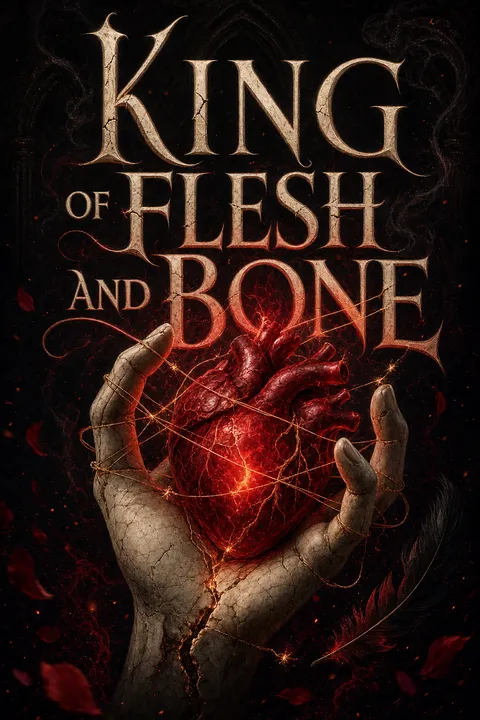


Plot Summary
A Grave Weighted Down
In sodden Hemdale, Ada,1 a widowed midwife whom neighbors cruelly brand an unwoman for her childlessness, delivers a frightened mother's son during a full moon, the night the dead refuse to rest. For twenty-three months she has kept her own late husband John9 pinned in his grave, hauling a heavy oak door and cart atop the soaked soil so his corpse cannot claw free and wander toward the distant Graying Tower.
When her panicked mule Augustine kicks the stable apart and bolts, a torn harness snags Ada's1 ankle. She strikes her head against the ground, and the beast drags her across the flooded cemetery and fields while her ailing father6 screams for help and darkness swallows her whole.
The opening fuses folk horror with a bleak feminist portrait of worth measured by fertility. Ada's obsessive grave-tending encodes her central psychology: duty as penance for a marriage she failed, guilt as identity. Zander establishes a world where death is not release but restless torment, inverting the comfort of burial. The label unwoman functions as social death preceding literal near-death, so that Ada's accidental abduction reads almost as escape from a community that has already discarded her. The full moon birth, uncertain between life and stillness, mirrors Ada herself: technically alive, spiritually stranded in a liminal state between usefulness and oblivion.
Dragged to the Pale Court
The mule hauls Ada's1 broken body over the corpse-choked Blighted Fields and through the Æfen Gate into the Pale Court, a kingdom carved entirely from bone. Choking on her own blood, she encounters Orlaigh,3 a soul-bound corpse who keeps house, and then the King himself: Enosh, the King of Flesh and Bone,2 ageless, colorless-eyed, and coldly beautiful.
Suspecting a mortal trap, he nearly snaps her neck rather than let her die in his realm and make him an oath breaker, since no mortal may find rest under his roof. Instead, startled by the warmth of her skin, he mends her ruined flesh and binds her life to eternal service. She wakes healed, ageless, and caged in a place that smells of ash sprinkled over snow.
The threshold crossing is literalized: a body dragged over the dead into the domain of death's master. Enosh's dilemma, kill her and break his oath or heal her and keep her, reveals a being ruled by rigid vows, a god who is paradoxically bound. His flinch at her warmth signals the story's engine: an immortal starved of touch, mistaking possession for cure. The Pale Court, beautiful and made of corpses, embodies the romance's dark bargain, aestheticizing atrocity. Ada's transition from woman scorned to prize hoarded reframes her worthlessness as sudden, terrifying value, the beginning of the book's interrogation of who gets to assign a woman meaning.
Servant, Plaything, Prisoner
Enosh2 claims Ada1 as his warm companion against two centuries of loneliness, wielding uncanny power over her flesh: he can force her to kneel, silence her voice, and stir arousal against her will with a single command. Humiliated yet unbroken, she refuses to be called his whore, snarling even as her body answers him.
Piece by piece she learns the court's horrors, that her gown is stitched from human skin, her drinking goblet shaped from a rotted corpse, the throne itself braided with two soul-bound men. Orlaigh3 warns that the brittle corpses lining the corridors always drag runaways back to their master. Undeterred, Ada1 scratches notches into the walls and studies the four gates, hoarding her contempt as the one thing he cannot seize.
This section stages the dark romance's most fraught mechanic: bodily coercion as eroticism. Zander frames Ada's involuntary arousal as violation, and Ada's insistence that it is only trickery is a survival fiction protecting her selfhood. The revelation that luxury is literally rendered from human remains collapses the fantasy of pampering into cannibalistic dependence, every comfort a corpse. Her notches on the walls are acts of cartographic defiance, asserting agency through observation. The chapter's psychological core is the split between commandable flesh and uncommandable will, dramatizing the difference between a body owned and a person surrendered, a boundary Ada guards fiercely.
Twisted Legs, Named God
Ada1 barrels through the guardian corpses and sprints for a bridge, but Enosh's power detonates around her: spikes erupt, bone shackles rope her ankles, and at last he warps her legs into a dog's crooked hind-limbs so she cannot flee. Then, almost tenderly, he carries her to a steaming spring and bathes her, promising she will never glimpse the outside world again.
Punishing and seducing at once, he brings her to the brink of release, withholds it, then takes her roughly, insisting her flesh obeys its rightful owner. Afterward he offers his true name, Enosh,2 meaning form or appearance, and declares himself no mere king but a god born from nothing to rot all that lives and rule its remains.
Physical mutilation as anti-escape device makes literal the possessor's logic: if she cannot leave, she cannot betray. The immediate pivot from breaking her legs to bathing her exposes the abuser's oscillation between violence and care, the cycle that manufactures trauma bonding. Naming is the chapter's power exchange; by granting his true name, Enosh trades a fragment of vulnerability for deeper claim, since to name is to be known. His cosmological self-declaration reframes the priests' devil as a genuine deity, destabilizing Ada's inherited theology and forcing her, and the reader, to reassess who the real monster of these lands might be.
The Throne of Whispers
Collared and chained to the throne, Ada1 is taught to read and slowly reconstructs Enosh's2 history: the soul-bound corpses woven into his seat are Lord Tarnem,10 who once burned him at the stake for a fortnight, and Commander Joah Mertok.11 Then Yarin, the God of Whispers,4 materializes, threading poison through Ada's1 thoughts and unveiling the cosmology of three brother-gods who rule flesh and bone, souls, and breath.
Yarin4 demands the corpses Enosh2 owes him and names a coming battle at Airensty as the collection point. He dangles a monstrous temptation, that he could make Ada1 adore Enosh,2 and lets slip the wound beneath everything: Njala,8 Enosh's2 former companion, died with her throat cut.
The introduction of Yarin widens a claustrophobic two-hander into a mythic system, and his thought-intrusions weaponize interiority itself, dramatizing how another can colonize the mind Ada guarded so carefully. The throne of enemies literalizes grudge as furniture, Enosh's inability to forgive rendered as decor. Yarin's offer to manufacture love is the book's sharpest ethical blade: it interrogates whether affection engineered is affection at all, a question that will haunt Enosh. The dangled name Njala seeds the central mystery, positioning Ada as an unwitting successor in a story of loss whose true shape neither she nor the reader yet grasps.
Beyond the Æfen Gate
To pay Yarin's4 debt, Enosh2 twists Ada's1 legs again and carries her into sunlight for the first time in a century. She gulps down sky, birdsong, and open fields, and makes a crucial discovery: beyond his kingdom he holds no power over her flesh at all. At the Airensty battlefield they meet Yarin,4 who harvests fresh corpses by whispering the grieving living into slitting their own throats, a cruelty that makes Ada1 vomit.
Enosh2 warns her that rumor of the woman who rides with the King will race across the realm, transforming her into bait for priests and lords desperate to cage a god. The bitter lesson lands: fleeing now means capture or death, and the only safety left is at his side.
Mobility becomes revelation. Outside the Pale Court, Enosh's dominion over Ada's body evaporates, meaning every response she gives in the open world is unmistakably her own, a fact that reframes their entire dynamic and terrifies them both. Yarin's suicide-harvesting exposes the horror beneath the brothers' bureaucratic debts, and Ada's nausea marks the persistence of her moral core. The cruelest turn is structural: the outside world offers no refuge because Enosh has made her precious, so his obsession becomes a cage more effective than any collar. Freedom and danger fuse, trapping her not by walls but by the value assigned to her.
A Vow for the Children
At a tavern besieged by a torch-bearing mob, Enosh2 proposes a bargain: he will lay a dead pox-stricken girl named Anna to rest if Ada1 becomes his wife and swears the same vow she once gave John.9 Emboldened by proof that she holds true value to him, Ada1 negotiates fiercely, winning freedom from her chain, occasional outings, and his pledge to eventually rot every child in the realm and John's9 bones as well.
In a hidden forest temple she gives her marriage oath before the trembling Father Leofric, whom Enosh2 kills the instant the words are spoken. Enosh2 then digs Anna a grave and rots her, confessing he grasps a parent's grief: his own unborn daughter died inside Njala's8 murdered womb.
Ada's transformation from captive to negotiator marks the book's most empowering reversal: she monetizes her scarcity, converting a god's obsession into mercy for children she never bore. The vow, her lifelong motif of duty, becomes both weapon and trap, a promise she means differently than he receives it. Enosh's confession reframes his tyranny as unmetabolized bereavement; the murdered pregnancy is the trauma organizing two centuries of cruelty. The murdered priest punctuates the exchange with a reminder that tenderness and atrocity coexist in him. The scene tests whether love born of transaction can be real, echoing Yarin's earlier offer and complicating every warmth to come.
The Thaw Between Them
Enosh2 reveals that Ada1 was never cursed at all: her womb is healthy, and John's9 seed was the failing, unraveling years of shame Hemdale piled upon her. Their bargain, his attentiveness, and their shared loneliness begin melting her hatred into something more perilous. Having gone two hundred years without rest, Enosh2 finally sleeps beside her, trusting she will still be there when he wakes.
He speaks openly of wanting a child with sea-blue eyes. Yet one stubborn muscle in Ada's1 neck never loosens beneath his touch, proof her heart remains unconquered. Meanwhile Orlaigh3 mutters dark warnings that time twists stories, hinting at a hidden truth about Njala8 and steering Ada1 away from the throne's whispering, mouth-sealed corpses.
The absolution of Ada's barrenness is a quiet detonation, redistributing decades of blame and exposing patriarchy's reflexive indictment of women. Its emotional consequence is dangerous intimacy: freed from self-loathing, Ada becomes capable of feeling, which threatens her resolve more than any chain. Enosh's first sleep in centuries is the ultimate gesture of vulnerability, trust rendered as unconsciousness in the presence of a proven escape artist. The unyielding neck muscle is a brilliant somatic symbol of withheld consent, the last citadel of self. Orlaigh's cryptic hints keep suspense alive, promising that the sanctioned version of Njala's death conceals something the lovers' fragile peace cannot survive.
Fire in the Forest
Enosh2 at last rides Ada1 toward Hemdale to visit her dying father6 and point out John's9 grave. In a clearing they make love so completely that his control shatters and corpses drag themselves from the earth to defend him. That very eagerness betrays them: a militia armed with torches and arrows ambushes the lovers, exploiting his one weakness, fire.
Pierced by bolts and burning, Enosh2 lashes Ada1 to a dead horse and sends her galloping toward the Pale Court, swearing he will always return to her. She is flung off at the cliffs of Beggar's Bay, wrenching her shoulder. Hours later the corpses that had shielded her collapse across the fields, silent proof that the soldiers have captured the King of Flesh and Bone.2
The lovers' consummation literally raises the dead, an image binding eros and mortality that also strips Enosh of his mask, his control lost precisely when he feels most. Vulnerability and catastrophe arrive together: the moment he surrenders emotionally, the world seizes its opening. Fire, seeded early as his singular agony, becomes the trap's mechanism, converting mythic power into helplessness. His choice to burn rather than risk Ada dramatizes love as self-sacrifice, the inverse of the possessive violence that defined him. The collapsing corpses deliver dread through absence, an army going still, a god gone dark, leaving Ada suddenly, terrifyingly alone in a hostile world.
The Widow Who Vanished
Rather than brave the days-long road to the Pale Court while wounded and hunted, Ada1 slips home to Hemdale, stitches her split cheek, and flees north with her blood-coughing father6 to the fishing village of Elderfalls, dyeing her hair black and taking the name Elisa.1 She hauls fish cages to earn coin for a mule, meaning to return once she has healed and prepared.
Persistent morning sickness and a missed bleeding confirm what Enosh2 could not yet sense: she carries his child, whom she privately names Elric. Far away, in a dungeon carved from graveless mountain rock, High Priest Dekalon7 burns Enosh2 on a slowly turning wheel, carving out his organs and severing his manhood to ensure the devil can never breed.
Ada's flight is not betrayal but triage, the calculus of a pregnant, injured woman choosing survival for her child, yet the narrative withholds this clarity from Enosh, arming a devastating misunderstanding. The alias Elisa and dyed hair externalize a self erased for safety, while the child, longed for across the whole book, arrives as both fulfillment and fresh vulnerability. Dekalon's clinical torture reframes the pious as the truly monstrous, and his mutilation of Enosh's fertility mirrors the very shaming of reproduction Ada suffered, closing a grim thematic loop. Parallel scenes of hidden pregnancy and enforced sterility bind the lovers across distance in mutual, unwitnessed agony.
A God Betrayed
Yarin4 finally frees the mutilated Enosh,2 who casts his senses across the land and finds his wife1 far to the north, calm and even content, her mind circling the name Elric.
Convinced she abandoned him exactly as Njala8 once did, and misreading the unborn child's name as a rival lover, Enosh2 erupts in grief-fueled rage that fractures whole mountains. In Elderfalls, priests post a bounty for Adelaide,1 the devil's wife rumored to carry world-ending spawn.
The villagers Rose12 and Henry recognize her, and when she resists, they stab her pregnant belly again and again. As her father6 collapses and the earth convulses, Eilam, the god of breath,5 appears to reclaim the life Enosh2 once stole back, drawing out her final breath as she silently cries for her Master.2
The tragedy hinges on catastrophic misreading, a lover's trauma pattern overwriting reality, so that Enosh condemns Ada for the very loyalty she was risking her life to keep. The name Elric, meant to signify their child, becomes in his wounded mind a betrayal, dramatizing how the past deforms perception. The mob's assault on her womb is the book's cruelest convergence of religious hysteria and misogyny, punishing a woman for the child she wanted most. Eilam's arrival collapses the three-god system onto Ada's body, the ledger of flesh, breath, and soul come due. The cliffhanger weaponizes dramatic irony, leaving readers holding a truth the grieving god cannot hear.
Analysis
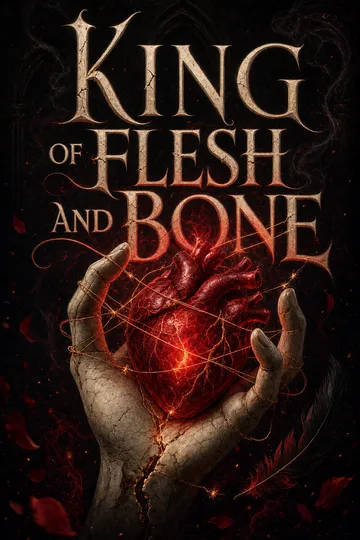
King of Flesh and Bone reworks the captor-captive dark romance into a meditation on worth, duty, and the deforming power of grief. Ada1 begins as a woman the world has priced at nothing, an unwoman blamed for a barrenness that was never hers, and her abduction paradoxically grants her the value her village denied. Zander is shrewd about this irony: value assigned by a possessive god2 is still a cage, and the novel refuses to let readers mistake obsession for love without scrutiny. The recurring symbol of a single unyielding neck muscle, the one part of Ada1 that Enosh2 cannot relax, becomes a quiet manifesto on consent, insisting that a commandable body is not a surrendered self. The alternating points of view generate tragic irony as its engine. We watch Enosh2 interpret Ada1 through the template of Njala's8 betrayal, so that when Ada1 flees to protect their child, his trauma overwrites the truth and manufactures a catastrophe no one intends. The book's cosmology literalizes its psychology: a person split among gods of flesh, soul, and breath dramatizes how a self can be claimed, invaded, and reclaimed by forces beyond consent. Fertility threads through everything, from Ada's1 shaming to Enosh's2 murdered unborn daughter to the mutilation Dekalon7 inflicts and the mob's assault on her womb, indicting a culture that punishes women for the reproduction it demands of them. Religion is exposed as power laundering, the priests burning books to convert a real god into a profitable devil. Ultimately the novel argues that duty and love are both promises made in the dark, valuable precisely because they cannot be forced, and devastating when they are misread. Its cliffhanger weaponizes the gap between what Ada1 risked and what Enosh2 believes, leaving the reader holding a truth the grieving god cannot hear.
Review Summary
King of Flesh and Bone is a divisive dark fantasy romance that has garnered mixed reviews. Readers praise its unique world-building, gothic atmosphere, and complex characters, particularly the morally ambiguous protagonist Enosh. However, many find the explicit content, including non-consensual elements and graphic violence, disturbing. The book's exploration of themes like infertility and undeath is both lauded and criticized. While some readers appreciate the intense romance and steamy scenes, others feel the relationship lacks development. The cliffhanger ending has left many eager for the sequel despite reservations.
People Also Read
Characters
Ada (Adelaide)
Barren widow midwifeA Hemdale midwife shamed as an unwoman for failing to bear children, Ada is defined by an iron sense of duty and the guilt she carries for her husband's death9. She keeps his corpse pinned in its grave out of a vow-keeper's stubbornness, believing a person is only as good as their promise. Practical, blunt, and unafraid of the dead she has handled since childhood, she meets captivity with defiance rather than despair, marking walls and scheming escape. Beneath her sharp tongue lies a woman starved of tenderness and desperate to matter. Her arc traces the perilous discovery that she holds value to someone powerful, and the harder question of what she herself feels, wants, and will risk for the children she was never allowed to have.
Enosh
The King of Flesh and BoneAn ancient god born to rot and rule the remains of all living things, Enosh presents as a coldly beautiful man with colorless eyes and the scent of ash over snow. For two centuries he has sealed himself in the bone-carved Pale Court, denying the dead their rest after a devastating loss soured him against mankind, whom he deems irredeemably wicked. Possessive to the point of cruelty, he commands flesh and bone absolutely, twisting Ada's1 legs and stirring her body against her will, yet he also bathes, feeds, and reads to her. He despises pain, keeps his oaths rigidly, and fears fire above all. Loneliness is his true wound; his hunger for warmth, a family, and to be loved slowly cracks his glacial mask.
Orlaigh
Soul-bound corpse housekeeperA plump, gray-braided woman soul-bound to her own corpse, Orlaigh has served Enosh2 for over fifty living years and centuries in death after stealing something precious from him. Her body moves only at his will, though her mind is her own. Grandmotherly and plainspoken, she becomes Ada's1 closest thing to an ally, tending her wounds and dispensing warnings. She knows the court's buried truths, especially about Njala8, and guards them out of fear of joining the throne. Her weary wisdom that mortals fear what they cannot understand frames the story's sympathy for monsters.
Yarin
The God of WhispersEnosh's2 brother-god, ruler of souls and the Court Between Thoughts, Yarin is a charming, auburn-haired hedonist who slips uninvited into mortal minds and twists thoughts for sport. He harvests corpses by whispering the grieving into suicide, yet delivers cruelty with a jester's grin. He arrives to collect debts, dance with Orlaigh3, and needle his brother2, dangling the terrible offer to manufacture Ada's1 love. Beneath his flippancy lies genuine power over interiority and an eye for the wounds his brothers hide, making him both comic relief and quiet menace.
Eilam
The god of breathThe third brother-god, pale-haired and black-eyed, Eilam governs life breath and death and dwells in the world itself as his court. Unaccustomed to inhabiting a body, he moves with a child's clumsiness yet insists rigidly on balance among the brothers. He resents Enosh2 for stealing back lives that were meant to end, and his quiet threats carry the weight of mortality itself. Detached and unsettling, he embodies death as impartial accounting rather than malice.
Pa
Ada's dying fatherAda's1 gout-gnarled, blood-coughing father, a fisherman who raised her on the creed that a person is worth only their promise. Gruff and devoted, he frets over her stubborn selflessness and her habit of shouldering the world's burdens. Skeptical of her god-husband2 and resigned to reuniting with his late wife in death, he nonetheless helps Ada1 hide and flee, his failing lungs a quiet clock ticking beneath her choices.
High Priest Dekalon
Zealous priestly torturerThe realm's highest servant of the god Helfa, Dekalon is a bald, coldly fascinated inquisitor who inherited generations of preparation for capturing the King of Flesh and Bone2. A former husband who watched childbirth turn his wife into a wandering corpse, he channels grief into ruthless zeal, insisting the world has room for only one god. Clinical and cruel, he studies his immortal captive2 like a specimen, wielding fire and the knife to break a deity.
Njala
The god's lost companionThe noble daughter given to Enosh2 generations ago, whose throat was cut and whose death, along with their unborn child, hollowed him into the recluse he became. Spoken of only in memory and rumor, her true story is shadowed by Orlaigh's3 warning that time twists the tale.
John
Ada's dead husbandAda's1 late husband, a sometimes brutal man who beat her and shamed her barrenness yet never sold her off. Killed by a fall while fetching moss Ada1 sent him for, he is the source of her guilt and the grave she faithfully weighs down.
Lord Tarnem
Vengeful throne corpseNjala's8 father, now a mouth-sealed corpse braided into Enosh's2 throne. He once lured the god2 into a frozen valley and burned him at the stake for a fortnight, earning eternal, agonized imprisonment in the seat of his enemy.
Commander Joah Mertok
Njala's killer, throne corpseThe commander who spirited Njala8 away and ultimately slit her throat, now the second soul-bound face fixed into Enosh's2 throne, punished for the murder that shattered the god.
Rose
Suspicious village neighborA pregnant fishwife in Elderfalls whom Ada1 eases with midwife's skill. Sharp-eyed and self-interested, she notices Ada's1 dyed hair, straightened legs, and morning sickness, and turns on her when a bounty is announced.
Plot Devices
Dominion over flesh and bone
Coercion and captivity engineEnosh's2 absolute command over living and dead bodies drives the central conflict. Within the Pale Court he can force Ada1 to kneel, silence her, twist her legs, halt her heartbeat, and stir arousal against her will, making resistance nearly impossible and consent perpetually ambiguous. The same power raises corpse armies, shapes bone into dresses, tubs, and thrones, and mends mortal wounds. Crucially, the device has a limit: beyond his gates his hold over her flesh vanishes, so her responses outside are genuinely her own. This boundary converts a tool of control into a test of authentic feeling, structuring both the romance's ethics and Ada's1 shifting understanding of what she truly wants.
The vow
Moral and plot linchpinPromises bind everyone in this world. Ada's1 creed that a person is worth only their promise governs her grave-tending and her captivity. Enosh2, unable to compel a mortal to swear willingly, prizes an oath precisely because he cannot force it, making Ada's1 vow the one thing he covets and cannot seize. Their marriage bargain, exchanging her wifely oath for mercy to the dead, turns a lifelong motif into leverage. Vows also constrain the god himself2, whose oath never to receive mankind's bones has starved his kingdom. The device interrogates whether promises made under coercion, or meant differently than received, hold any true value.
The bone Pale Court
Setting as living horrorThe entire kingdom is fashioned from human remains, its walls, bridges, gowns, goblets, and throne all carved or woven from the dead. This setting delivers the book's slow-drip revelations, as Ada1 realizes each comfort is a corpse: she sleeps, bathes, and drinks among people. The court's decay, crumbling bridges and rotting servants, externalizes Enosh's2 self-imposed exile and dwindling power after his oath. Shifting corridors that reorient floor and ceiling trap runaways, while notches Ada1 scratches map her defiance. As setting, symbol, and antagonist at once, the Pale Court makes the romance's dark bargain tangible, aestheticizing atrocity into intimacy.
Fire, the god's weakness
Vulnerability and reversal triggerThough immortal and beyond death, Enosh2 feels excruciating pain, and fire is the one force that can neutralize his power by preventing him from raising bone. Seeded early through Orlaigh's3 account of Lord Tarnem10 burning him at the stake for a fortnight, and reinforced by the ash that clings to his skin, this weakness pays off when a militia ambushes the lovers with torches and later when Dekalon7 tortures him on a burning wheel. Fire converts a near-omnipotent deity into a helpless captive, enabling the plot's brutal third-act reversal and grounding a god in genuine, escalating suffering.
The three brother-gods
Cosmology and tragic mechanismReality is divided among three brothers: Enosh2 rules flesh and bone, Yarin4 claims souls, and Eilam5 governs breath and life. They cannot sense one another and squabble over balance and debts, with Yarin4 able to invade mortal minds and Eilam5 able to reclaim borrowed life. Introduced through Yarin's4 debt-collection visit, the system deepens the myth and supplies both dark comedy and dread. Because a mortal's flesh, soul, and breath fall to different gods, Ada1 becomes a contested ledger among them. The device sets up the finale, when the brother Enosh has crossed2 comes to claim what the King2 once stole back.
The Pale Court Duet Series
About the Author
Other books by Liv Zander
Download PDF
Download EPUB
.epub digital book format is ideal for reading ebooks on phones, tablets, and e-readers.








































