Plot Summary
Dawn of the Retail Dead
Every morning, the Orsk furniture superstore in Ohio comes alive with employees—"partners"—dragging themselves in, exhausted and numb, to face another day of retail monotony. Amy, a disillusioned floor partner, is among them, desperate to avoid her manager Basil and keep her job just long enough to transfer out. The store, a knockoff of IKEA, is a labyrinth of staged rooms and relentless corporate cheer, promising "a better life for the everyone." But beneath the fluorescent lights and piped-in music, something is off: unexplained damages, strange smells, and a sense of unease. The day begins with technical glitches and a crowd of employees, hinting that the store's perfect system is about to break down.
Amy's Invisible Struggles
Amy's life is a constant struggle to stay afloat. She's behind on rent, haunted by failed dreams, and feels targeted by Basil, her overzealous deputy manager. She's determined to keep her head down, avoid confrontation, and survive until her transfer goes through. Amy's internal monologue reveals her cynicism about retail, her resentment toward Basil, and her sense of being trapped in a cycle of low-wage labor. Her only solace is the hope of escape, but even that feels increasingly out of reach as the store's problems mount and her own sense of agency slips away.
Basil's Secret Night Shift
Basil, under pressure from corporate, recruits Amy and Ruth Anne for a secret overnight shift to catch whoever is vandalizing the store after hours. He promises double overtime and a fast-tracked transfer for Amy. The plan is simple: patrol the store in shifts, catch the culprit, and restore order before the morning's consultant team arrives. Amy and Ruth Anne, both desperate for different reasons, agree. But as night falls and the store empties, the familiar space transforms into something menacing, and the boundaries between reality and nightmare begin to blur.
Ghosts, Rats, and Graffiti
As Amy, Basil, and Ruth Anne begin their patrols, they encounter bizarre phenomena: new graffiti referencing "the Beehive," rats emerging from unplumbed sinks, and a pervasive, rotten stench. The store's layout becomes disorienting, and Amy's unease grows. Meanwhile, Matt and Trinity—coworkers with a penchant for the paranormal—reveal they've hidden in the store to conduct a ghost hunt, convinced the building is haunted by the spirits of a long-demolished prison. Their presence, and the strange events, escalate the sense that Orsk is more than just a retail space.
The Midnight Floor Sweep
The group splits up to cover more ground, but the store's architecture seems to shift, trapping Amy and Matt in looping corridors and impossible spaces. Their cameras capture images that don't match reality, and the boundaries between the store and something older, darker, begin to dissolve. The sense of being watched intensifies, and the group's skepticism gives way to fear. The store's history as the site of the Cuyahoga Panopticon—a prison designed for endless surveillance and forced labor—seeps into the present, infecting the night with dread.
Trinity's Paranormal Pursuit
Trinity, determined to capture proof of ghosts, convinces the group to hold a séance. They handcuff themselves together around a table, hoping to summon the spirits of the prison. The ritual quickly spirals out of control as Trinity becomes possessed, and Carl—a homeless man hiding in the store—becomes the vessel for the vengeful spirit of Warden Josiah Worth. The séance unleashes the store's true horrors, as the boundaries between past and present, living and dead, collapse.
The Store's Labyrinth Revealed
The group discovers that the store contains impossible architecture: doors to nowhere open into endless, filthy tunnels, and fake windows pour forth icy water. The Beehive—the prison's nickname—has merged with Orsk, and the group is hunted by the spirits of the penitents, forced to relive their punishments for eternity. Amy, Basil, Matt, Trinity, and Ruth Anne are separated, each facing their own personal nightmare as the store's haunted machinery grinds them down.
Séance and Possession
The séance's aftermath is chaos. Carl, possessed by Worth, delivers a sermon on the redemptive power of work and punishment, targeting each member of the group for a personalized "cure." The group is physically and psychologically assaulted: Amy is strapped into a tranquilizing chair, Ruth Anne is hunted by her childhood fears, Trinity is forced onto a treadmill, and Basil is tortured for his perceived managerial failures. The store's supernatural machinery enacts the warden's twisted vision of rehabilitation.
Warden Worth's Beehive
The Beehive's history is revealed: Worth drowned his prisoners, hiding their bodies in the tunnels beneath the store. Now, their spirits are trapped, endlessly repeating their punishments. The penitents, faceless and broken, swarm the group, enacting rituals of confinement and violence. Amy realizes that the only way to break the cycle is to convince the spirits they are already free, but Worth's hold is strong, and the store's architecture conspires to keep everyone trapped.
Descent into Madness
Trapped in a coffin-like wardrobe, Amy faces her deepest fears of failure and surrender. The store's supernatural forces try to break her will, urging her to accept her fate as a cog in the machine. Memories of her struggles, losses, and disappointments threaten to overwhelm her, but a spark of defiance remains. Using her knowledge of Orsk's shoddy construction, she escapes her prison, determined to save herself and the others.
The Chair and the Choice
Amy's escape is both physical and existential. She rescues Basil, who is broken but alive, and together they navigate the flooded, rat-infested store. The choice is stark: give in to the store's cycle of punishment and despair, or fight for freedom, even if it means facing the unknown. Amy's journey becomes a metaphor for resisting the dehumanizing forces of modern labor and reclaiming agency in a world designed to keep people trapped.
Escape and Betrayal
The store floods, rats swarm, and Amy and Basil barely escape through shattered glass as the police and corporate consultants arrive. The aftermath is a study in denial and blame-shifting: Orsk's management offers hush money and promotions in exchange for silence, erasing the missing employees from the official story. Amy is left to grapple with survivor's guilt, corporate betrayal, and the knowledge that the real horrors are not just supernatural, but systemic.
Flood and Final Stand
Amy risks everything to save her friends, but not all can be rescued. Ruth Anne is lost to the tunnels, Matt and Trinity vanish, and the penitents' cycle continues. The store's destruction is covered up, the bodies never found, and the truth is buried beneath corporate spin. Amy's final act of defiance is to reject Orsk's offer and refuse to let the company erase the victims' humanity.
Corporate Clean-Up
Orsk's response to the disaster is to deny, deflect, and move on. The store is written off, the site sold, and the missing employees are quietly forgotten. Amy receives a severance check and is left to process her trauma alone. The company's indifference is a final insult, highlighting the expendability of workers in the face of profit and reputation.
Grief, Guilt, and Survival
Haunted by guilt and loss, Amy retreats into depression, unable to find meaning or closure. She drifts through months of numbness, unable to connect with her family or former coworkers. The world moves on, but Amy is stuck, reliving the horrors of Orsk and the Beehive. Only the knowledge that some of her friends might still be trapped gives her a sense of unfinished business.
Return to the Beehive
When a new store—Planet Baby—opens on the same site, Amy returns, determined to rescue those still trapped in the Beehive. Armed with tools, flashlights, and a plan, she prepares to face the store's supernatural dangers again. Basil, also changed by the experience, joins her. Together, they vow to keep fighting, refusing to let the cycle of exploitation and erasure continue.
New Store, Old Haunt
Amy and Basil, now employees at Planet Baby, recognize that the Beehive's doors are still open and the cycle of suffering persists. But this time, they are prepared. Their shared trauma has forged a new sense of responsibility and solidarity. They are no longer willing to be passive victims; instead, they become active agents, determined to break the cycle and save those left behind.
Never Stop Fighting
The story ends with Amy and Basil stepping into the darkness together, ready to confront the horrors of the Beehive once more. Their journey is a testament to the power of resistance, the importance of solidarity, and the refusal to accept a world that treats people as disposable. The final message is clear: never stop fighting, no matter how overwhelming the odds.
Analysis
A satirical horror of modern labor and lost agencyHorrorstör is a razor-sharp satire that uses the trappings of a haunted house story to dissect the dehumanizing realities of contemporary work. By merging the aesthetics of a big-box furniture store with the legacy of a nineteenth-century prison, Grady Hendrix exposes the ways in which modern capitalism repackages old forms of control and exploitation. The novel's supernatural horrors—ghosts, possessions, endless punishment—are metaphors for the psychological toll of low-wage labor, the erosion of identity, and the difficulty of escaping systems designed to keep people trapped. Amy's journey from resignation to resistance is both a personal and political awakening, suggesting that solidarity and defiance are the only antidotes to despair. The book's ending, with Amy and Basil returning to the Beehive to rescue the lost, is a call to action: never accept the world as it is, never stop fighting for those left behind, and never let the system convince you that you are powerless. Horrorstör is both a chilling ghost story and a powerful critique of the forces that haunt us all.
Review Summary
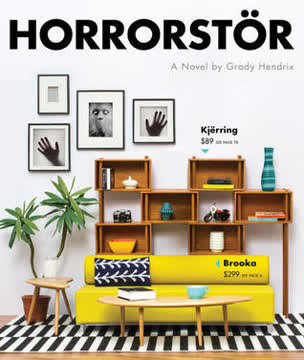
Horrorstör receives generally positive reviews, averaging 3.65/5. Readers widely praise its creative format—designed like an IKEA catalog with increasingly sinister furniture illustrations—and its sharp satire of retail culture. Those with retail experience particularly connect with the relatable characters and workplace humor. Common criticisms include an unsatisfying, open-ended conclusion, a tonal shift from comedy to straight horror midway through, and occasionally flat characters. Most agree the physical book's design enhances the experience significantly, and the horror elements, while not universally frightening, deliver enough tension and gore to satisfy genre fans.
People Also Read
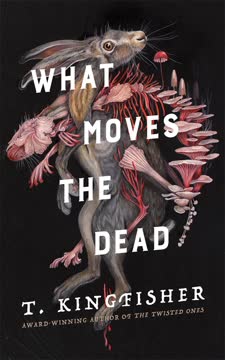
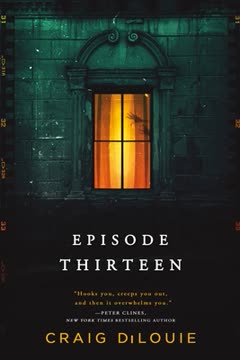
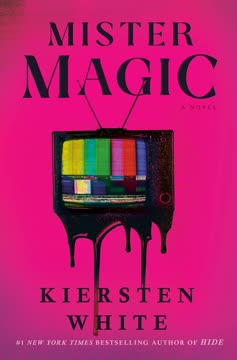
Characters
Amy
Amy is the novel's protagonist, a young woman trapped in the grind of low-wage retail work. Cynical, resourceful, and haunted by past failures, she is desperate to escape Orsk and the cycle of disappointment that defines her life. Amy's psychological journey is central: she oscillates between resignation and rebellion, ultimately choosing to fight for herself and her friends. Her empathy, quick thinking, and refusal to surrender make her both a relatable everywoman and a quietly heroic figure. Amy's relationships—with Basil, Ruth Anne, Matt, and Trinity—reveal her capacity for loyalty and growth, even as she struggles with guilt and survivor's remorse. By the end, Amy's trauma becomes a catalyst for transformation, driving her to confront the system that tried to break her.
Basil
Basil is the deputy store manager, a young Black man who embodies both the ideals and contradictions of corporate culture. Driven by a sense of responsibility and a need to prove himself, Basil is both a stickler for rules and a genuinely caring leader. His relationship with Amy is fraught: he is both her antagonist and, ultimately, her ally. Basil's psychological complexity emerges as he grapples with guilt over Ruth Anne's fate and his own complicity in the system. His backstory—raising his younger sister, striving for upward mobility—adds depth to his motivations. By the novel's end, Basil's sense of duty evolves from corporate loyalty to genuine solidarity with his coworkers.
Ruth Anne
Ruth Anne is an older employee, beloved by all for her warmth, reliability, and motherly presence. She treats Orsk as her family and finds meaning in small acts of kindness. Ruth Anne's psychological vulnerability—her fear of the "Creepy Crawlies" and her need for security—makes her both endearing and fragile. Her fate in the Beehive is a devastating commentary on the expendability of even the most loyal workers. Ruth Anne's loss haunts Amy and Basil, symbolizing the human cost of corporate indifference and the dangers of unchecked systems.
Matt
Matt is a hipster floor partner with a sarcastic wit and a secret crush on Trinity. He is skeptical of the supernatural, viewing ghost hunting as a means to impress Trinity and escape Ohio. Matt's intelligence and technical skills are offset by his emotional immaturity and self-doubt. His journey through the store's labyrinth forces him to confront the limits of rationality and the reality of forces beyond his control. Matt's ambiguous fate—trapped in the Beehive, sending desperate texts—underscores the novel's themes of isolation and the struggle to be seen.
Trinity
Trinity is a flamboyant, high-energy employee obsessed with the paranormal. Her belief in ghosts is both a coping mechanism and a quest for significance in a world that feels empty and scripted. Trinity's enthusiasm masks deeper insecurities and a longing for connection. Her possession during the séance and subsequent torment on the treadmill reflect the dangers of seeking meaning in systems designed to exploit. Trinity's fate is left unresolved, a haunting reminder of those lost to the machinery of work and trauma.
Carl / Warden Josiah Worth
Carl is a homeless man hiding in Orsk, initially suspected of the store's vandalism. His vulnerability and desperation make him sympathetic, but he becomes the vessel for the spirit of Warden Josiah Worth, the sadistic architect of the Beehive. As Worth, Carl delivers sermons on the redemptive power of suffering and enacts brutal punishments on the group. Worth's psychology is rooted in a belief that pain and labor can cure all ills—a twisted reflection of corporate ideology. His possession of Carl blurs the line between victim and perpetrator, embodying the novel's critique of systems that dehumanize both managers and workers.
The Penitents
The penitents are the faceless, broken spirits of the prisoners drowned by Worth. Trapped in endless cycles of punishment, they symbolize the dehumanizing effects of institutions that value order and productivity over humanity. Their actions—enacting rituals of confinement, violence, and erasure—are both terrifying and pitiable. The penitents' inability to break free, even when offered liberation, reflects the psychological power of guilt, habit, and systemic oppression.
Orsk Corporate / Pat
Pat, the store's general manager, and the faceless corporate consultants represent the novel's critique of capitalism's disregard for individual suffering. Their response to the disaster—denial, blame-shifting, and hush money—exposes the emptiness of corporate "family" rhetoric. Pat's attempts to bribe Amy and Basil into silence, and his refusal to acknowledge the missing employees, highlight the expendability of workers and the primacy of reputation over truth.
The Store (Orsk/Planet Baby)
The store itself is a character: a labyrinthine, shifting space that absorbs and reflects the traumas of its inhabitants. Its architecture is designed to disorient, trap, and exploit, merging the logic of retail with the legacy of the prison. The store's supernatural elements—impossible corridors, flooding, and hauntings—are metaphors for the psychological and social forces that keep people trapped in cycles of labor and despair. Even after Orsk is replaced by Planet Baby, the Beehive's doors remain open, suggesting that the system endures, regardless of branding.
The Beehive
The Beehive is both a literal and symbolic space: the prison beneath Orsk, a site of endless surveillance, forced labor, and suffering. It represents the novel's central metaphor for modern work—an environment that promises redemption through toil but delivers only exhaustion and erasure. The Beehive's persistence, even after the store's destruction, underscores the difficulty of escaping systems that are designed to perpetuate themselves.
Plot Devices
Haunted Retail as Modern Prison
The novel's central device is the blending of a big-box retail store with the architecture and ideology of a nineteenth-century prison. Orsk's labyrinthine layout, scripted disorientation, and relentless surveillance mirror the panopticon's design, trapping both customers and employees in cycles of consumption and labor. The supernatural elements—ghosts, possessions, impossible spaces—literalize the psychological toll of modern work, turning the store into a living, malevolent system. The Beehive's legacy infects the present, suggesting that the past's cruelties persist in new forms.
Foreshadowing and Symbolism
From the opening pages, the novel foreshadows the coming horror: technical malfunctions, strange smells, graffiti, and the sense of being watched all hint at the store's true nature. The recurring motifs of rats, water, and hands symbolize contamination, erasure, and the loss of agency. The tranquilizing chair, treadmill, and wardrobe-coffin are not just instruments of torture but metaphors for the ways work immobilizes, exhausts, and buries the self.
Narrative Structure and Perspective
The story unfolds in a tight third-person perspective, primarily through Amy's eyes, but shifts to encompass the experiences of other characters as the group is separated and subjected to individualized torments. The structure mirrors the store's labyrinth, with looping chapters, repeated motifs, and escalating cycles of horror. The use of corporate language, employee manuals, and faux-Scandinavian branding satirizes the emptiness of retail culture while heightening the sense of unreality.
Psychological Horror and Social Critique
The novel's horror is as much psychological as supernatural. The store's hauntings are metaphors for the anxieties, disappointments, and traumas of modern life. The characters' struggles—with failure, guilt, and the desire for escape—are universal, making the supernatural events resonate on a deeper level. The critique of corporate indifference, the expendability of workers, and the persistence of oppressive systems gives the novel its emotional and intellectual weight.








































