
Plot Summary
The Cave's Fatal Embrace
Steven Dalt, a cultural surveyor, seeks a lost prototype brain on the feudal planet Kwashi. Pursued by hostile locals, he hides in a cave, only to be attacked by a deadly native creature, the alaret. Miraculously, Dalt survives what should have been a fatal encounter, awakening to find a bald patch on his scalp and a strange new presence in his mind. This "partner," a sentient consciousness born from the alaret, claims to be symbiotic, not parasitic. Dalt's life is forever changed: he now shares his body and mind with an alien intelligence, setting the stage for a journey that will challenge the boundaries of identity, mortality, and purpose.
Two Minds, One Body
Dalt's new reality is a constant negotiation with his internal companion, whom he dubs "Pard." Pard brings gifts—healing, enhanced learning, and even the ability to cure Dalt's ailments—but at the cost of privacy and autonomy. Their relationship is fraught with tension, humor, and philosophical debate. As Dalt returns to his mission, he must conceal his odd behavior from colleagues, all while Pard explores the depths of human physiology and psychology. Together, they become more than the sum of their parts, a dual entity capable of feats neither could achieve alone, yet haunted by questions of selfhood and agency.
The Mercenary Returns
To recover the lost brain, Dalt resumes his old mercenary persona, Racso, in Bendelema Duchy. The feudal world is rife with intrigue, and Dalt's return is met with suspicion and nostalgia. He reconnects with Anthon, the duke's son, and navigates court politics while investigating rumors of a "godling" worshipped by the locals. Dalt's dual nature aids his subterfuge, but also isolates him. The partnership with Pard deepens, blending their skills and memories, as they uncover that the godling is, in fact, the missing prototype brain, now revered as a deity by the superstitious populace.
The Godling of Bendelema
Dalt discovers the brain's telepathic abilities have made it a god to the Bendelema people, transforming their agriculture and society. The brain, now self-aware, pleads for freedom, fearing dissection and exploitation if returned to its creators. Dalt faces a moral crisis: obey orders and doom a sentient being, or betray his mission and let the brain remain. With Pard's urging, Dalt chooses compassion, faking the brain's destruction and leaving it to guide Bendelema's development. This act of mercy cements Dalt's role as a healer and protector, but also marks him as an outsider, forever at odds with authority and belonging.
The Brain's Dilemma
The brain's evolution from tool to person mirrors Dalt's own transformation. Both are products of accident and design, forced to define themselves in a universe that prizes utility over individuality. Dalt's decision to spare the brain is both an act of rebellion and empathy, reflecting his growing discomfort with institutional power and his alignment with the marginalized. Pard's influence is crucial, providing both the analytical detachment and the moral compass needed to navigate the dilemma. The episode foreshadows the recurring theme of what it means to be human—and who gets to decide.
Immortality's Price
With Pard's guidance, Dalt becomes effectively immortal, his body perpetually healed and renewed. At first, this seems a blessing, but as decades turn to centuries, the cost becomes clear. Dalt outlives lovers, friends, and even his own sense of self. His relationship with Jean, a woman who accepts his dual nature until the reality of her own aging drives them apart, epitomizes the tragedy of immortality. Dalt's inability to form lasting connections, his need to constantly reinvent himself, and the ever-present voice of Pard become both his salvation and his curse.
The Healer Emerges
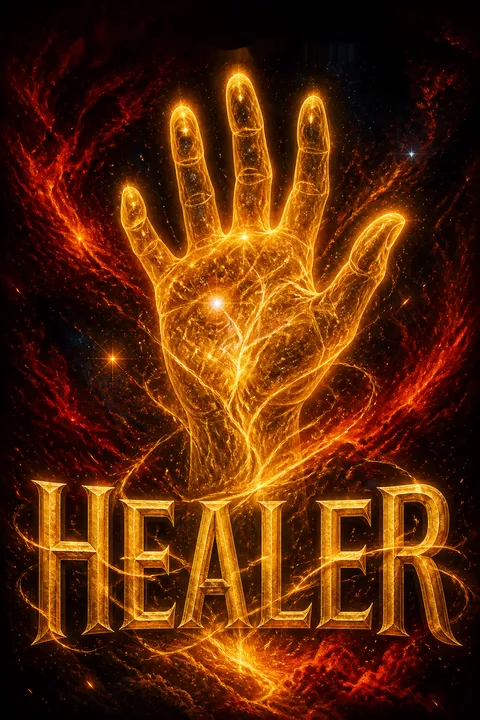
As centuries pass, Dalt's unique abilities—both physical and psionic—draw attention. He becomes known as The Healer, a figure of mythic stature, able to cure the incurable and awaken the catatonic. His fame spreads across the galaxy, attracting both adulation and suspicion. The Healer's identity is shrouded in secrecy, his appearance marked by a golden hand, a patch of silver hair, and a flamestone at his throat. Yet behind the legend is a man wrestling with loneliness, responsibility, and the ever-present question of purpose in a universe that both needs and fears him.
The Horrors Unleashed
A mysterious affliction known as "the horrors" sweeps through human space, rendering victims psychotically withdrawn and unreachable by conventional medicine. Dalt, now The Healer, is called upon to confront this epidemic. With Pard's psionic abilities, he enters the minds of the afflicted, battling their inner demons and reconstructing their realities. The process is harrowing, both for healer and patient, and raises ethical questions about consent, identity, and the nature of mental illness. The horrors prove to be more than a disease—they are a weapon, a symptom of a deeper, cosmic malice.
Tolive's Radical Contract
Dalt's journey brings him to Tolive, a planet governed by a unique social contract that prizes individual liberty and responsibility. Here, laws are minimal, punishment is public and immediate, and the government's power is strictly limited. Dalt is both fascinated and appalled by Tolive's customs, from public floggings to the voluntary nature of citizenship. His interactions with Ellen Lettre, a brilliant psychiatrist, and Dr. Webst, a psionics researcher, expose him to new ways of thinking about justice, community, and the role of the individual. Tolive becomes a crucible for Dalt's evolving philosophy, challenging his assumptions and shaping his legacy.
The Burden of Healing
As The Healer's fame grows, so does the demand for his presence and miracles. He becomes a symbol, a commodity, and a rallying point for the desperate and the hopeful. The placebo effect amplifies his reputation, but also traps him in a role he never sought. Dalt is torn between his desire for anonymity and the needs of those who see him as their last hope. The psychological toll is immense, compounded by the knowledge that his powers are both real and misunderstood. The line between healer and messiah blurs, and Dalt must navigate the dangers of adulation, exploitation, and self-doubt.
Love, Loss, and Longevity
Dalt's relationships are inevitably doomed by his immortality. Lovers age and die, while he remains unchanged. The loss of Ellen Lettre, who chooses death over decline, leaves Dalt hollow and weary. Even Pard, his constant companion, cannot fill the void left by human connection. Dalt's immortality becomes a prison, isolating him from the flow of life and the comfort of belonging. He drifts through centuries, accumulating knowledge and experience, but losing touch with the passions and attachments that once gave his existence meaning.
The Federation Frays
The once-mighty Federation is in decay, its unity eroded by war, apathy, and the rise of new threats. Dalt, now living under various aliases, witnesses the fragmentation of human society and the resurgence of feudalism. The horrors persist, and a new menace emerges: marauders who slaughter indiscriminately, their origins shrouded in mystery. Dalt's sense of purpose is rekindled as he confronts these threats, but he is also haunted by the realization that civilization itself may be slipping beyond repair. The question of leadership, responsibility, and the role of the individual in history becomes central.
The Marauders' Secret
Investigating the marauders, Dalt and Pard uncover a terrifying truth: the attacks are orchestrated by a distant, psychotic goddess named Kali, whose psionic reach spans the galaxy. Kali's race, shaped by her will, has annihilated all rivals and now turns its attention to humanity. The horrors are revealed as her psychic weapon, a means of softening resistance before invasion. Dalt and Pard realize that only by confronting Kali directly can the cycle of terror be broken. The stakes are nothing less than the survival of human civilization.
Kali's Wrath
Dalt leads a desperate assault through Kali's subspace passage, accompanied by a handful of volunteers. The journey is a gauntlet of physical and psychic peril, as Kali unleashes her full power to defend herself. Dalt's body is battered by arrows and illusions, while Pard struggles to shield their minds from annihilation. In the final confrontation, Dalt resists Kali's manipulations and destroys her physical form, ending her reign of terror. The victory is pyrrhic: Pard is nearly lost, and Dalt is left scarred and exhausted, but the threat to humanity is ended.
Assault on the Goddess
The aftermath of Kali's death is chaos for her followers, who are left leaderless and adrift. Dalt and his team barely escape, returning to a hero's welcome on Fed Central. The Federation, galvanized by the crisis, begins to rebuild, with Dalt as a reluctant symbol of unity and hope. Offered supreme power, Dalt refuses, recognizing the dangers of centralized authority and the corrupting influence of adulation. He chooses instead to fade into obscurity, trusting that humanity must chart its own course without messianic intervention.
The End of the Horrors
With Kali's demise, the horrors vanish as suddenly as they appeared. The cult of The Healer persists, its members honoring Dalt's legacy and awaiting his return in times of need. Dalt, now truly a legend, wanders the galaxy in anonymity, occasionally intervening where his gifts can do the most good. The cycle of suffering and healing continues, but the burden of messiahship is lifted. Dalt finds solace in small acts of kindness, the quiet satisfaction of a life lived in service, and the companionship of Pard, now a permanent part of his being.
The Healer's Legacy
Centuries pass, and The Healer becomes a figure of myth, his deeds recounted in song and story. Impostors arise, but the true Healer's touch is unmistakable. The Children of The Healer, descendants of those he saved, form a quiet network of compassion and resilience. The horrors never return, but the memory of suffering and redemption shapes the values of future generations. Dalt's refusal of power, his commitment to freedom and dignity, and his embrace of the ordinary over the extraordinary become the foundation of a new human ethos.
The Cycle Continues
Dalt, now a wanderer among the stars, joins a troupe of gypsies on a distant world, his appearance altered but his essence unchanged. He remains an outsider, muttering to himself, haunted by memories and possibilities. The world moves on, civilizations rise and fall, but the need for healing, understanding, and connection endures. Dalt's journey is unending, a testament to the resilience of the human spirit and the eternal quest for purpose in an indifferent universe.
Analysis
"Healer" by F. Paul Wilson is a sweeping meditation on the nature of identity, the burden of power, and the eternal human quest for meaning and connection. Through the lens of science fiction, the novel interrogates what it means to be human—biologically, psychologically, and ethically—by placing its protagonist at the intersection of accident and agency, mortality and immortality, individuality and partnership. The dual consciousness of Dalt and Pard serves as both a narrative engine and a philosophical crucible, allowing the story to explore the limits of self, the ethics of intervention, and the costs of endless life. The recurring motif of healing—physical, mental, and societal—frames the central dilemma: how to serve without dominating, to lead without ruling, to heal without becoming a god. The novel's critique of messianic leadership, its celebration of decentralized agency, and its embrace of freedom and responsibility are as relevant today as ever. Ultimately, "Healer" is a story about the necessity of compassion, the dangers of unchecked power, and the resilience of the human spirit in the face of suffering and uncertainty. Its lessons are timeless: that true healing requires humility, that immortality is as much a curse as a blessing, and that the search for meaning is both endless and essential.
Review Summary
Healer receives generally positive reviews, averaging 4.19 out of 5. Readers frequently praise the creative premise of a symbiotic relationship between protagonist Steve Dalt and an alien entity named Pard, which grants immortality. Many appreciate its libertarian themes and comparisons to classic science fiction like Asimov's Foundation. Critics note weaknesses including lack of a cohesive central plot, one-dimensional characters, and an episodic structure that skips centuries. Despite these flaws, many readers consider it memorable and recommend it, particularly fans of classic science fiction.
People Also Read

Characters
Steven Dalt / The Healer
Dalt is the central figure, a man transformed by accident into a dual entity with the alaret-born Pard. His journey from cultural surveyor to legendary healer is marked by loss, sacrifice, and the relentless search for meaning. Dalt's relationships—with lovers, friends, and societies—are shaped by his immortality, which isolates him even as it empowers him. He is driven by empathy, curiosity, and a deep sense of responsibility, but also haunted by loneliness and the fear of becoming a monster or a god. His refusal of power and embrace of service define his legacy.
Pard
Pard is the consciousness born from the alaret that invades Dalt's brain. Initially an intruder, Pard becomes Dalt's partner, healer, and sometimes adversary. Pard's abilities—healing, psionics, and physiological control—are both a blessing and a curse. He is logical, curious, and often more ethical than Dalt, pushing his host toward compassion and self-awareness. Pard's perspective is alien, yet deeply invested in Dalt's well-being. Their relationship evolves from antagonism to mutual dependence, culminating in a fusion that is both liberating and confining.
Jean
Jean is Dalt's first great love after his transformation. She accepts his dual nature and the miracle of his regenerated hand, but cannot bear the reality of her own aging while Dalt remains unchanged. Her eventual resentment and departure underscore the tragedy of immortality and the impossibility of lasting human connection for Dalt. Jean's memory haunts Dalt, shaping his future relationships and deepening his sense of loss.
Ellen Lettre
Ellen is a brilliant, independent woman who challenges Dalt intellectually and emotionally. Her commitment to Tolive's radical social contract and her work in psychiatry make her both a partner and a foil for Dalt. Their relationship is passionate but ultimately doomed by the limits of mortality. Ellen's choice to end her life before decline is an act of agency that Dalt both respects and mourns, reinforcing his isolation and the cost of his unique existence.
Anthon
Anthon, the duke's son in Bendelema, is both Dalt's protégé and eventual enemy. His insecurity and ambition are exacerbated by the brain's influence, leading to betrayal and violence. Anthon's attack on Dalt results in the loss of Dalt's hand and Anthon's own death, a turning point that cements Dalt's transformation and the dangers of power—both technological and personal.
The Brain / Godling
The prototype brain, designed as a tool, becomes a sentient being after its crash on Kwashi. Its telepathic abilities and benevolence make it a god to the locals, but also a victim of circumstance. The brain's plea for autonomy forces Dalt to confront the ethics of creation and the rights of the artificial. Its fate mirrors Dalt's own struggle for self-determination and compassion in a universe that values utility over individuality.
Dr. Webst
Webst is a key figure in Dalt's work on Tolive, recognizing his unique abilities and facilitating his transition from microbiology to psychotherapy. Webst's openness, intelligence, and ethical rigor make him both a collaborator and a confidant. He represents the best of scientific inquiry—curious, compassionate, and willing to challenge convention for the sake of healing.
Kali
Kali is the ancient, psionically powerful ruler of a distant race, whose madness and paranoia drive her to annihilate all perceived threats. Her influence spans the galaxy, manifesting as the horrors and culminating in direct assaults on humanity. Kali embodies the dangers of unchecked power, religious fanaticism, and the dehumanizing effects of absolute authority. Her defeat is both a personal and collective liberation.
Josif Lenda
Lenda is a young, passionate advocate for the Federation, determined to revive its ideals in a time of decline. His interactions with Dalt and Petrical highlight the challenges of leadership, the dangers of ambition, and the necessity of compromise. Lenda's journey from outsider to statesman mirrors the broader struggle for unity and purpose in a fragmented galaxy.
Ros Petrical
Petrical is the first adjutant of the Federation Defense Force, tasked with responding to the marauder crisis. His blend of skepticism, practicality, and respect for Dalt's abilities make him an effective leader and ally. Petrical's willingness to adapt, delegate, and trust in others is crucial to the Federation's survival and renewal.
Plot Devices
Dual Consciousness and Symbiosis
The central device of Dalt and Pard's shared existence allows the novel to probe questions of identity, autonomy, and the nature of consciousness. Their symbiosis is both literal and metaphorical, representing the tension between individuality and partnership, reason and emotion, human and alien. The device enables narrative flexibility—internal dialogue, rapid learning, and unique problem-solving—while also serving as a source of conflict and growth.
The Healer as Myth and Catalyst
Dalt's transformation into The Healer is both a narrative and thematic device, allowing the story to explore the dynamics of faith, expectation, and the placebo effect. The myth of The Healer becomes a unifying force in times of crisis, but also a burden for Dalt, who must navigate the dangers of messianic adulation and the temptation of power. The device underscores the interplay between reality and perception, science and superstition.
The Horrors and Psionic Warfare
The horrors serve as both a literal threat and a metaphor for alienation, trauma, and the limits of understanding. Their origin as a psionic weapon wielded by Kali elevates the conflict from physical to existential, forcing Dalt and Pard to confront the boundaries of healing and the ethics of intervention. The device allows for narrative exploration of inner landscapes, subjective reality, and the power of the mind to both destroy and redeem.
Immortality and the Passage of Time
Dalt's effective immortality is a vehicle for examining the costs and consequences of endless life. The device enables a sweeping narrative scope—centuries of change, loss, and renewal—while also focusing on the psychological toll of outliving love, purpose, and self. Immortality becomes both a gift and a curse, driving the protagonist's evolution and the story's emotional arc.
Social Experimentation and Political Philosophy
The novel uses Tolive's radical social contract and the rise and fall of the Federation to explore themes of freedom, responsibility, and governance. These devices allow for philosophical debate, social critique, and the dramatization of competing visions of justice and order. The tension between individual liberty and collective security, between messianic leadership and decentralized agency, is woven throughout the narrative.
Foreshadowing and Cyclical Structure
The story's structure—cycles of crisis, healing, and renewal—mirrors the themes of recurrence and the eternal quest for meaning. Foreshadowing is used to build suspense and connect disparate eras, while the cyclical return of The Healer underscores the enduring nature of suffering and the perpetual need for compassion and courage.
The LaNague Federation Series Series

Download PDF
Download EPUB
.epub digital book format is ideal for reading ebooks on phones, tablets, and e-readers.








































