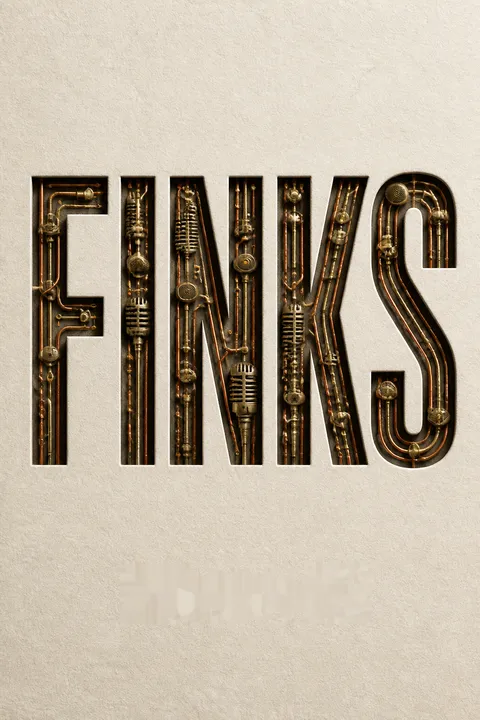

Key Takeaways
1. The CIA's Covert Cultural War: Weaponizing Art and Ideas
The Congress itself dwelt within a slew of propaganda agents who worked in radio, books, film, art, music, labor, student groups, and so on.
A vast propaganda apparatus. The CIA, particularly its Office of Policy Coordination (OPC) and later the Directorate of Plans, orchestrated a massive cultural propaganda campaign during the Cold War. This involved secretly funding and influencing a wide array of cultural institutions, from literary magazines and book publishers to film studios and symphony orchestras, all aimed at countering Soviet influence and promoting "the American way." The goal was to win the "hearts and minds" of intellectuals and the public, especially in Europe and the developing world.
Shaping cultural narratives. The agency actively promoted certain artistic styles and narratives while suppressing others. For instance, abstract expressionism, with its emphasis on individual freedom, was covertly championed over social realism, which was deemed too close to Soviet aesthetics. This manipulation extended to academic programs, such as Yale's American Studies, which explicitly aimed to advocate for the "American alternative" as a weapon in the Cold War, blurring the lines between scholarship and state interests.
"Doing it black" for plausible deniability. To avoid public scrutiny and accusations of propaganda, the CIA channeled funds through numerous front organizations, foundations, and shell companies. This clandestine funding allowed the agency to operate without accountability, bypassing democratic processes and public debate. The secrecy was paramount, ensuring that the cultural products appeared to be independent expressions of artistic freedom, rather than instruments of state policy.
2. The Paris Review's Entangled Origins: A Cover for Covert Operations
Matthiessen had admitted that “The Paris Review was originally set up and used as a cover for [Matthiessen’s] activities as an agent for the Central Intelligence Agency.”
A literary magazine with a secret. The Paris Review, founded by Peter Matthiessen, Harold "Doc" Humes, and George Plimpton, presented itself as an apolitical literary quarterly focused on creative work. However, Matthiessen, an early CIA recruit, used the magazine as a cover for his intelligence activities in Paris. This initial, direct link established a pattern of entanglement with the CIA's cultural apparatus, despite later denials from Plimpton and Matthiessen.
Financial and editorial collaboration. Beyond Matthiessen's direct role, The Paris Review developed a symbiotic relationship with the CIA-funded Congress for Cultural Freedom (CCF). This included:
- Receiving early praise and publicity from CIA circles.
- Granting reprint rights for its famous author interviews to CCF magazines worldwide.
- Sharing editorial costs and vetting candidates for "joint emploi" positions, where editors worked for both The Paris Review and the CCF.
- Receiving government subscriptions and bulk purchases from the US Information Service (USIS), a known propaganda front.
The founders' differing awareness. While Matthiessen eventually confessed his early CIA role (though later tried to suppress the details), Plimpton consistently downplayed or denied any deeper ties, even as evidence mounted. Doc Humes, increasingly paranoid about surveillance, urged his co-founders to come clean, fearing that association with secret institutions would inevitably lead to "rot" and compromise the magazine's integrity. His pleas were dismissed, highlighting the internal conflicts and moral ambiguities among the founders.
3. Pasternak's Doctor Zhivago: A Literary Weapon in the Cold War
Pasternak’s humanistic message—that every person is entitled to a private life and deserves respect as a human being, irrespective of his political loyalty or contribution to state—poses a fundamental challenge to the Soviet ethic of sacrifice of the individual to the Communist system.
A forbidden masterpiece. Boris Pasternak's Doctor Zhivago, a novel critical of the Soviet system, was suppressed by Soviet authorities. This created a prime opportunity for the CIA to weaponize literature, secretly publishing the book in Russian and distributing it at the 1958 World's Fair in Belgium, turning Pasternak into a symbol of Soviet repression and a tool in the Cold War propaganda battle.
CIA's clandestine publishing operation. The agency, through its Free Europe Press and other conduits, "did it black," publishing an unauthorized Russian edition of Doctor Zhivago despite Pasternak's wishes to avoid direct US government involvement. This operation involved:
- Obtaining the manuscript via British intelligence.
- Subcontracting publication to Felix Morrow, who had ties to the American Committee for Cultural Freedom.
- Violating Feltrinelli's copyright and Pasternak's explicit instructions to delay publication.
- Using selective legal reasoning to justify pirating the book for propaganda purposes.
Pasternak's tragic instrumentalization. The controversy surrounding Doctor Zhivago led to Pasternak being forced to decline the Nobel Prize and subjected to intense harassment, which severely impacted his health. He was livid when he saw the error-riddled CIA-published Russian version, feeling his life's work had been compromised and distorted. His mistress, Olga Ivinskaya, suffered imprisonment and psychological torture, bearing the brunt of the regime's wrath, while The Paris Review sought to capitalize on the affair by syndicating its Pasternak interview through CCF channels.
4. Censorship in the Name of Cultural Freedom: Suppressing Dissent
The responsibility of editors was to defend the American point of view on any given “problem,” and eliminate “abusive” passages toward the United States or its policy.
The "responsible" editorial line. Despite claims of promoting "free and open debate," CIA-funded magazines like Encounter actively engaged in censorship. Articles deemed "anti-American" or critical of US foreign policy were routinely suppressed or heavily edited. This was not merely about rejecting articles but about enforcing a predetermined "American point of view" and eliminating "irresponsible" dissent.
Notable cases of suppression:
- Dwight Macdonald's "America! America!": This essay, critical of American culture and its soldiers' conduct in Korea, was accepted by Encounter but then "vetoed" by CCF and CIA officials, who feared it would jeopardize funding.
- Emily Hahn's piece on China: Deemed "utterly shocking" and "offensive" for its critical stance on US China policy, it was also killed by Encounter's overseers.
- John Berger's A Painter of Our Time: This novel, which included a character supporting the Soviet-backed Hungarian leader János Kádár, was "withdrawn" by Encounter's publisher, Secker & Warburg, for seven years.
Beyond print: Hollywood's "militant liberty." Censorship extended to film, with the Pentagon and CIA promoting "militant liberty" – a propaganda campaign to embed pro-American values in movies. This involved:
- Inserting "right ideas with proper subtlety" into scripts.
- Excluding films that "do not support American foreign policy."
- Censoring depictions of American racism, poverty, and "lewdness" to protect the nation's image abroad.
- Even changing the ending of Orwell's Animal Farm to remove the critique of Western powers.
5. James Baldwin's Awakening: From Collaborator to Fierce Critic
I have never been afraid of Russia, China or Cuba but I am terrified of this country.
Early engagement and subtle manipulation. James Baldwin, a rising literary voice, initially found opportunities in magazines secretly entangled in the cultural Cold War. His early essays, like "Everybody's Protest Novel," were published in outlets like Partisan Review, which had ties to the American Committee for Cultural Freedom. His editor, Sol Stein, a known propagandist, subtly tried to steer Baldwin's critiques, framing his work to counter European anti-Americanism and even offering government bulk purchases of his books.
Confronting American hypocrisy. Baldwin's experiences, particularly his observations of American racism and the State Department's denial of W.E.B. Du Bois's passport to a Black Writers' conference, sharpened his critique. He saw the hypocrisy of promoting "cultural freedom" abroad while suppressing civil rights at home. His essay "Princes and Powers" for Encounter was criticized by Stein for its "inaccuracy" in equating US and Soviet global ambitions, a classic "moral equivalency" argument used to silence dissent.
Radicalization and surveillance. As Baldwin became a leading voice in the Civil Rights movement, his focus shifted from abstract literary debates to the brutal realities of American racism. He challenged prominent figures like William Faulkner for their equivocation on race and increasingly denounced the US as "the most unattractive people on earth." This outspokenness led to extensive FBI surveillance, which labeled him a "Communist" despite the absurdity of the charge, demonstrating how the security state targeted even its most eloquent critics.
6. Latin American Blowback: Coups, Propaganda, and Literary Manipulation
If you’re going to speak of human dignity in Russia, why is it so hard to speak of human dignity in the Dominican Republic?
The roots of anti-American sentiment. Costa Rica's former President José Figueres Ferrer, a US ally, bluntly explained to the US Senate why Latin Americans spat on Vice President Nixon: American support for brutal dictators and interventions like the 1954 Guatemala coup. This coup, orchestrated by the CIA to protect United Fruit's interests, replaced a democratically elected leader with a repressive regime, leading to decades of violence and the banning of books, including those by future Nobel laureate Miguel Ángel Asturias.
CIA's Latin American media fronts. To counter this pervasive anti-Americanism, the CIA launched magazines like Combate (co-founded by Figueres and Norman Thomas) and Cuadernos, and later Mundo Nuevo. These publications aimed to promote social democracy and subtly defend US policy, but often faced internal censorship and struggled to gain credibility among Latin American intellectuals who were acutely aware of US interventions.
Manipulating literary figures. The CIA's cultural operations extended to influencing prominent writers:
- Pablo Neruda: The leftist Chilean poet was targeted by a CCF smear campaign to deny him the Nobel Prize, yet his poetry was later solicited by Mundo Nuevo to lend it credibility.
- Gabriel García Márquez: His masterpiece, One Hundred Years of Solitude, was excerpted in Mundo Nuevo without his full awareness of the magazine's CIA ties. García Márquez, radicalized by events like the Guatemala coup and the Cuban Revolution, initially supported Castro but later felt "cuckolded" by the CIA's appropriation of his work.
7. The "Mighty Wurlitzer" and Domestic Media Control
The CIA had moved from forswearing internal security functions to assigning domestic political espionage the highest level of priority.
From foreign propaganda to domestic subversion. The CIA's extensive experience in foreign propaganda, dubbed Frank Wisner's "Mighty Wurlitzer," eventually turned inward. Operation MHCHAOS (or Chaos), launched in 1967, marked a significant shift, targeting the burgeoning anti-war and independent press within the United States. This operation aimed to spy on, destabilize, and destroy media outlets critical of US policy, effectively making war on journalism itself.
Methods of domestic media penetration:
- Infiltration: Agents like Sal Ferrera posed as hipsters or journalists to infiltrate anti-war newspapers like Quicksilver Times, sowing dissension and causing their shutdown.
- Surveillance: The CIA leveraged partnerships with the FBI and Army Intelligence to place anti-war journalists under intense surveillance, violating its own charter against domestic operations.
- Preemptive strikes: When whistleblowers threatened to expose CIA ties to academic institutions (e.g., Michigan State University's Vietnam Project or the National Student Association), the agency orchestrated preemptive press conferences to control the narrative and minimize damage.
Mockingbird and mainstream media. The deeper media penetration plan, "Mockingbird," revealed that the CIA shared editors, reporters, and executives with major news organizations. This network allowed the agency to plant or kill stories, ensuring that the "American point of view" prevailed even in ostensibly independent media. Figures like William F. Buckley, a former deep-cover CIA agent, actively attacked critics of US policy, demonstrating how intelligence operatives could leverage their media platforms for propaganda.
8. Afghanistan: The Culmination of Covert Intervention and Radicalization
The people we’re fighting today we were supporting in the fight against the Soviets.
A new front for rollback. Afghanistan became a critical battleground for the CIA's renewed "rollback" strategy in the late 1970s. The US covertly supported Islamist fighters (mujahideen) against the Soviet-backed regime, even before the Soviet invasion in 1979. This policy, driven by National Security Advisor Zbigniew Brzezinski's "arc of Islam" doctrine, aimed to lure the Soviets into their "Vietnam."
The Paris Review's founder as a "conduit." John Train, a founding managing editor of The Paris Review, became a key figure in this covert operation. Through his Afghanistan Relief Committee (ARC), ostensibly a refugee aid organization, Train acted as a "conduit" for funding and coordinating anti-Soviet propaganda. His efforts included:
- Financing films for public and Christian television targeting colleges.
- Proposing Islamist commander Gulbuddin Hekmatyar (later a designated terrorist) as a fixer for propaganda efforts.
- Collaborating on textbooks filled with anti-infidel propaganda for Afghan refugees.
Instigating violence for propaganda. Train's "Seitz idea" explicitly aimed to "impose on the Soviet Union in Afghanistan the sort of television coverage that proved fatal to the American presence in Vietnam." This involved orchestrating scenarios where Soviet atrocities, including "air assault and destruction of a rural village and mosque" and "reprisal killings," could be filmed and disseminated. This cynical approach prioritized propaganda over human lives, directly contributing to the radicalization of the mujahideen and the rise of figures like Osama bin Laden and Al-Qaeda.
9. The Erosion of Press Freedom: A Legacy of Secrecy and Corruption
What we had really been living through was paranoia that had passed from mind to mind like measles running through a school.
The cost of secrecy. The CIA's pervasive, secret involvement in media and cultural institutions fundamentally undermined the principles of a free press and democratic accountability. The agency's legal mandate to operate "outside this country" was routinely violated, leading to domestic surveillance, subversion, and censorship. This culture of secrecy fostered paranoia, as exemplified by figures like Doc Humes and Ernest Hemingway, whose fears of surveillance were often dismissed as mental illness but later proven true.
A perversion of democratic ideals. In the name of "cultural freedom" and fighting communism, the US government engaged in practices that mirrored the totalitarian regimes it claimed to oppose. It controlled narratives, blacklisted dissenters, and instrumentalized artists and intellectuals, denying them the right to refuse participation in propaganda. This created a system where "innocent publishers" were compelled to aid state propaganda, and critical voices were marginalized or silenced.
A weakened Fourth Estate. The long-term legacy of these covert operations is a weakened media landscape, where the traditional adversarial role of journalism has been compromised. The blurring of lines between intelligence and reporting, the use of journalists as assets, and the systemic suppression of inconvenient truths have left a lasting impact on public trust and the ability of the press to hold power accountable. The reluctance of institutions like The Paris Review to fully disclose their past ties perpetuates this cycle of forgetting, hindering moral clarity and the full understanding of our shared history.
Review Summary
Reviews of Finks are largely positive, averaging 3.96/5, with readers praising Whitney's extensive research into CIA infiltration of literary magazines like The Paris Review. Many found the book eye-opening regarding the CIA's cultural Cold War tactics, including funding publications, suppressing dissenting voices, and manipulating writers. Common criticisms include an overwhelming number of names and organizations, occasionally dry writing, and a sometimes confusing structure. Readers particularly appreciated revelations about George Plimpton, Peter Matthiessen, and the CIA's troubling treatment of writers of color like James Baldwin.
People Also Read
Download PDF
Download EPUB
.epub digital book format is ideal for reading ebooks on phones, tablets, and e-readers.








































