Plot Summary
Arrival at Foundation House
Matt and Claire Kirklin, reality TV's Fade to Black leads, embark with their crew to investigate Foundation House—an infamous, untouched site of vanished 1970s paranormal scientists. With their diverse team—former cop Kevin, ambitious actress Jessica, and steadfast cameraman Jake—they enter a crumbling mansion eager for authentic evidence. The grand house is as eccentric as its history: layers of New Age lore, graffiti, and disturbing remnants of research. Despite nervous energy, skepticism, and excitement thrive. Tensions simmer: Matt's fervor, Claire's rationalist reluctance, Jessica's conflicted ambitions. Yet, together, they hope both for encounters and revelations as they set up gear, review the building's grim origins, and steel themselves for seventy-two immersive hours. The house seems to pulse, watching, waiting.
Scientific Inquiry Versus Belief
The team's first days are defined by the clash between open-minded searching and empirical skepticism. Matt is desperate to bridge belief and knowledge—haunted by a childhood spectral friend—while Claire, trained physicist, analyzes every anomaly, determined not to surrender to superstition. Jessica embraces her performative role, both armoring herself and striving for more, while police-veteran Kevin trusts his gut above gadgets. Old journals and equipment hint at the obsessive rigor—and ultimate folly—of the vanished researchers. Yet, the house remains silent, almost resentful of their intrusion. Frustrations and personal doubts grow; credibility and career pressures circulate. In this crucible, each comes face-to-face with the limits of logic, faith, and the desire to finally glimpse what lies beyond death's veil.
Ghosts in the Machine
As night falls, the house tightens its grip. Baselines are established with sophisticated sensors; the air is tense, the atmosphere electric with expectation and dread. Claire's explanations and Jake's skeptical asides seem to keep unease at bay until real disturbances surface: mysterious sounds, objects moving imperceptibly, and recording anomalies. Jessica's allergies, nerves, and attempts at channeling the unknown climb in direct proportion with rising fear. The session's methods—EVP, trigger objects, and spirit boxes—move from rote ritual to urgent hope. Nevertheless, setbacks—dormant phenomena, technical failures, personal doubts—abound. Only subtle signs—a chill, a shadow, a guttural bang—hint that something ancient, elusive, and observant is shifting behind reality's curtain.
The Haunting Grows
Daylight exposes the mundane; at night, the house displays a warped sentience. Trigger objects set in the Apparition Room are inexplicably disturbed: a ripped Bible, a shifted doll, drained batteries. Cheers and shouts of "bunk!" and "breakthrough!" reveal a desperate yearning for validation. Kevin's triumph sits counter to Claire's wary analysis, while Jessica rides a wild pendulum of excitement and terror. Is it genuine or an elaborate trick? Meanwhile, the team's emotional arcs tangle—doubt, vindication, guilt swirl with the dark. Their yearning for certainty cracks them open to the possibility that the house is less a space than a mirror, amplifying both scientific pursuit and primal fear, demanding personal as well as empirical tribute.
Moved Objects, Unmoved Minds
When revelations of faked evidence emerge, the team's trust implodes. What felt like a turning point—objective proof of a haunting—unravels into confession and accusation among friends, collaborators, and rivals. Betrayal stings especially for Matt, whose identity is wrapped in honest search, and Jessica, whose real-life stakes are outsized by career. Tensions ignite, secrets are dragged into the light, and the show's core—its moral search—fractures. Yet, in the moment of disunity, Foundation House itself erupts in violent phenomena: wild apparitions, spectral music, breaking stairs—witnessed by all, beyond trickery or rationalization. The house has its own agenda, and their experiment has become its experiment.
Darkness in the Bones
Reeling from shared trauma, the team staggers outside for recovery. Nightmares, guilt, and deepening psychological wounds surface. Some—like Claire—pivot from skepticism to obsession, hungry to discover the science or meaning behind their ordeal. Others—like Jessica—find their roles reversed: once a performer, she now flees from the consequences of genuine supernatural terror. The line between the house's manipulations and the team's interpersonal dynamics blurs. Their journals reveal the shifting terrain of their inner lives, as trauma and longing for control war with the certainty that they are being studied as much as they study. Haunted, changed, they weigh pressing on versus abandoning the quest for answers.
Evidence and Betrayals
The fallout of false evidence, confrontation over show ratings, and increasing danger turns each investigator inward. Kevin's guilt and Jessica's fear, Jake's detachment and Claire's fevered determination all intensify. Old wounds resurface, particularly the house's skill at probing their shame: Kevin's brushes with the supernatural, Jake's family trauma, Jessica's anxieties as a mother, Claire's insecurity about love and career, and Matt's desperate need for belief and connection. Foundation House becomes both a laboratory and a confessional, drawing out truths the living would rather hide, and fusing them into the machinery of the haunting itself.
Foundation's Hidden Secrets
Analysis of recovered files, footage, and recorded voices reveals the true scope of the Foundation's experiments: they sought to open a door to "the dark dimension" with occult science—spinning, chanting, electromagnetic vortices, manipulated minds—all under the illusion of control. Yet their methods bear deep ethical rot: subjects chosen for fragility, researchers seduced by forbidden knowledge. Audio logs, journals, and home movies recover the hubristic pursuit that consumed its originators. Their legacy is both an unfinished experiment—awaiting new subjects—and a sentient, evolving haunting that consumes all who come. The Fade to Black team, unwilling or unable to turn back, readies themselves for a re-enactment of the house's greatest mystery.
Spirits Manifest
Night falls and the house unleashes an undeniable, shared spectacle: swirling spirits, blinding light, millions of watts of force, spectral giants, impossible music, and brutal violence. It is a performance so immense and authentic that skepticism finally shatters. The team flees and then regroups. Review of footage and data only deepens the riddle: the event's orchestration reflects intimate knowledge of their own desires and fears. The phenomenon is both a culmination and a provocation, a summons to descend deeper and test the limits of knowledge, sanity, and existence. Their only path is downward, to where reality grows thin.
The Underground Mandala
Following clues from the Foundation's records, the team lowers themselves into a secret, spiraling tunnel: a mandala made real. What begins as a feat of human engineering converts steadily into an impossibility—a self-generating, endless stone geometry, walls adorned with equations, doors inscribed with cryptic commands. A psychedelic rabbit hole, the labyrinth divides and transforms the team, offering not just tests of stamina but of ego, love, regret, and self. Each step is both physical and existential. The door to meaning is promised yet always out of reach, and with every circle, the house winnows its guests toward their truest selves—or their destruction.
The Maze of Self
As exhaustion and fear mount, the team fragments in the depths. Claire departs alone in pursuit of total knowledge, pursued by her own hubris. Jessica, intending to escape, becomes lost in an endless loop—her fears and hopes mocked by the maze. Jake and Kevin, separated, face personal demons made manifest: mirrored corridors and phantom fathers; guilt, violence, and finally blood. Each succumbs or resists in turn, tested by the spirits' genius for using one's deepest wounds as prison and bait. The haunting now operates inside as much as outside, dungeon and stage, drawing out confessions, regrets, and desires to be witnessed and understood—even if understanding remains ever elusive.
Ghosts of the Living
In the heart of the labyrinth, Claire finds what she believes is the ultimate answer: a wall of knowledge, omniscient equations encoding the universe itself. Yet when Matt finally locates her, that knowledge evaporates, exposed as hallucination, symbol, or both. Confronted by both the limits of love and knowledge, Claire and Matt are forced to choose: continue seeking meaning, or accept loss—of each other, of self, of purpose. Around them, Kevin succumbs to violence, his demons exacting a final toll. Jessica, left alone, unravels in solitude and memory, perhaps rescued, perhaps lost forever. The maze's purpose—testing, stripping, selecting—draws to its inhuman conclusion.
Descent and Disintegration
In a final act of surrender, Claire reaches the luminous "spirit door," the monolith at the center of the house's underworld. Battling physics-defying energies and her own dissolution, she sacrifices herself—becoming, in her last cognition, one with the spirits she once studied. Matt, broken and lost, begs not to be left, even as Claire's ghostly consciousness, now aside herself, cannot return. In the maze's pitiless logic, those who cling to love or self are denied transcendence or reunion. Each, in their way, is judged, transformed, or erased—victims of their own intent and need, their journey both cautionary tale and cosmic invitation.
The End or the Beginning
The house, having consumed its latest subjects, is repurposed as a haunted tourist attraction—its history commodified, its reality debated on TV. Footage circulates, theories abound, believers and skeptics clash, but the ultimate fate of the team is unresolved. Jessica staggers out years later, battered and hollow, and her emergence—met with confusion, disbelief, and morbid curiosity—serves both as proof of survival and a warning that some mysteries are never truly resolved. The haunting's cycle persists: the consuming and transformation of those seeking to know too much.
Survivors, Lost and Found
Side narratives show how the world reacts: friends left behind still seeking closure; flashbacks remind us of the vanished's internal needs. Those who escaped or never entered are altered by stories, forever suspecting the real battle was not against ghosts but with the self—and the dangerous hunger to make sense of the impossible. Each character is remembered not as a hero or victim but as a participant in something vast, unfinished, and ultimately as mysterious as before.
Epilogue in Shadow
Years later, the questions and echoes endure. The haunting is repackaged, mythologized, and doubted by new generations—yet Foundation House's secrets, and those of its vanished seekers, remain. The story closes not with answers, but with grief, awe, and the lingering invitation to new explorers: enter the unknown, but beware the cost.
Analysis
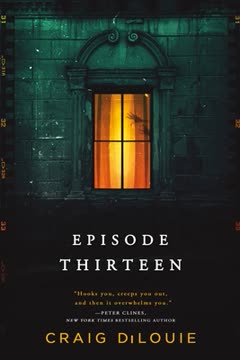
Episode Thirteen both epitomizes and transcends the modern haunted house narrative, doubling as a sophisticated meditation on the hunger for knowledge, the lure of the unknown, and the dangers of existential hubris. By intertwining "found footage" horror realism with psychological dissection, the novel challenges not just the boundaries between believer and skeptic, but between entertainment and revelation, science and magic, self and other. The story methodically peels back each investigator's persona, revealing that the true haunting is personal obsession, unresolved trauma, and the impossibility of truly knowing—oneself, one's loved ones, the world after death, or the meaning behind suffering. In the end, the book is a warning: those who venture deepest for answers risk becoming unrecognizable to themselves, lost in a darkness of their own making or beckoned by forces that care nothing for human comprehension. Yet, there is beauty in the search—however unfinished or tragic. Both celebration and critique of the genre, Episode Thirteen is a haunting reflection on our unending, fragile, sometimes ruinous need to believe, to understand, and to be seen.
Review Summary
Episode Thirteen receives mixed reviews, averaging 3.47/5. Many praise its unique "found footage" epistolary format, combining journal entries, transcripts, and text messages. The first half is frequently commended for its atmospheric dread and genuinely unsettling moments. However, common criticisms include pacing issues, underdeveloped characters, excessive scientific jargon, and a disappointing second half that loses momentum. Some readers loved the immersive experience and found it comparable to House of Leaves, while others felt the format worked better as an audiobook than in print.
People Also Read



Characters
Matt Kirklin
Matt is the beating heart of Fade to Black, a true believer shaped by a childhood encounter with a ghostly friend. His leadership is fueled by passion, optimism, and yearning for proof that can comfort both himself and the world. Matt's marriage to Claire, the rationalist, hinges on chemistry and unresolved difference—he is always searching for what's behind the veil, even when it places his relationships and sanity at risk. Psychologically, Matt is childlike in wonder but deeply vulnerable: beneath his confidence churns an insecurity about his worth and a fear of loneliness. Throughout the investigation, as reality bends, his certainty fractures, and ultimately, it is his love for Claire and desire for connection that become his deepest strengths—and greatest weaknesses.
Claire Kirklin
Claire is Fade to Black's skeptic and its conscience, a physicist determined to ground the supernatural in empirical fact or debunk it outright. Her partnership with Matt is defined by love struggling against difference; she supports him but resents the show's escape from "real" science. Privately, she battles insecurity about impact and a longing for meaning that science alone has not fulfilled. As the haunting intensifies, Claire's analytical mind shifts toward obsession: her need to know overtakes her caution, leading to risk and, ultimately, self-sacrifice. Psychologically, she embodies both the terror of losing control and the allure of forbidden knowledge—her journey a cautionary tale of intellect compelled toward self-destruction and, paradoxically, transcendence.
Jessica Valenza (Rashida Brewer)
Jessica enters as a hired actress, presenting confidence and playful bravado, but beneath is a single mother burdened by insecurity, ambition, and a fierce desire to provide for her son. Her nerves are real—easily spooked, yearning to belong, oscillating between skepticism and belief. Conflicted between familial duty and professional dreams, Jessica's terror is not just the supernatural but being forgotten—abandoning her son, losing her self or purpose. The house's manipulations break her down; she becomes lost in a literal and existential sense. Her final emergence years later serves as both survival and tragedy—a person forever changed, traumatized, surviving but never truly whole.
Kevin Linscott
Kevin is the team's tech manager and former cop, projecting bravado, competence, and street-wise skepticism layered over deep-seated trauma. Haunted by both real and psychological demons, he tries to take charge through rituals and action—clinging to authority and control with increasing desperation. Guilt over past failures and betrayals in the house—faked evidence, the death of Jake—fracture his self-image. Ultimately, Kevin is undone by his inability to save or lead, channeling his pain into futile violence against the supernatural, highlighting the futility of control in a world governed by unknown forces.
Jake Wolfson
Jake, the cameraman, is the watcher: sarcastic, aloof, but deeply shaped by childhood abuse and distance. His role is to document rather than engage—he hides behind his lens, believing himself immune. Yet, as reality unspools, his own ghosts (literal and psychic) pursue him into the maze. His ultimate fate is a collision of unresolved trauma and the supernatural: faced with a specter wearing the shape of his father, Jake is unable to escape, crushed as much by history as by the malice of the house.
Foundation House (The Spirit/Entity)
The house itself operates as both setting and character—a sentient experiment, psychic labyrinth, and interrogator. It mirrors the flaws, hopes, and traumas of its guests, testing their intent and will. Its agenda is not malevolence for its own sake, but curiosity and selection: it feeds on those who hunger for answers, offering transcendence or oblivion. It manipulates reality, time, and perception, ultimately consuming those who cannot let go of the living world or themselves. Its methods—riddles, spectral performances, engineered horrors—expose each character's psychological fracture.
The Paranormal Research Foundation
The original scientists—Roebuck, Chapman, the Flicks, Trantham—are both literal ghosts and templates. Once idealists seeking to unleash humanity's potential through the supernatural, their flawed, reckless research doomed them, turning their vision into haunting. Their psychological profiles echo forward: hubris, obsession, cultic thinking, and disregard for ethical limits, all seeds for tragedy. They become voices in the maze, both warning and luring the new generation toward the same fate.
Tammy
Tammy, or the memory of her, shapes Matt's journey: an echo of childhood innocence, a lost friend whose silence and mystery drive Matt's hunger for connection beyond death. In the maze, "Tammy" returns as both guide and trap—a symbol of what Matt cannot relinquish, suggesting that intimacy with the dead is, in the end, a one-way journey.
Tameeka Brewer
Jessica's sister, Tameeka appears through texts and messages as a grounding, skeptical voice. Her bluntness highlights the boundary between lived reality and dangerous delusion, between ambition and familial care. She is the conscience Jessica risks abandoning, the anchor to home, the possibility of survival and healing.
The Spirits/Voices
Throughout the journey, spectral figures—including the "tall woman," Kevin's Philadelphia demon, and echoes of past traumas—manifest as both supernatural threats and psychological projections. They enforce the maze's logic: each person is tested by facing what haunts them most, suffering or transcending accordingly.
Plot Devices
Found Footage & Epistolary Documentary
The novel employs a mosaic of journals, video transcripts, text threads, and emails to compose a "written documentary," blurring the line between fiction, fact, and media. This collage approach creates immediacy, invites different perspectives, and challenges the reader to be both participant and judge—mirroring the house's own game of observation.
The Labyrinth / Spiral Structure
The structure of Foundation House's underground labyrinth embodies both the journey into the heart of haunting and the deconstruction of identity. Spirals, mandalas, and mazes recur in symbols and architecture, marking a descent not just underground but into each character's core wounds and desires. The journey is both collective and deeply personal—each must choose a path, face inner demons, and either break or transcend.
Parallel Haunting and Psychological Unraveling
The house's haunting is designed like a cosmic experiment, echoing and escalating the Foundation's original research. As events escalate—from subtle object movement to reality-bending manifestations and eventually full psychic disintegration—characters are tested, tempted, and broken according to their intent and need. Personal history, guilt, ambition, and love become engines and traps.
Recurring Motifs: Mirrors, Doors, Songs
Mirrors in the maze reflect—and multiply—each character's greatest fears, while doors mark thresholds of change, sometimes offering escape, more often annihilation. Music and pop culture references are used as lures, cues, and messages: reminders that the supernatural, like entertainment, feeds on ritual, audience, and participation.
Foreshadowing
Early clues—technical failures, haunted interviews, philosophical ruminations—foreshadow both the nature of the haunting and the fates of each team member. The Foundation scientists' undoing prefigures the team's. Dialogue about "what is real," "what do we want," and "the only way is forward" sets up the novel's existential and structural traps.
Unreliable Evidence and Ambiguous Reality
The house's power is in uncertainty: proof always slips away, and even first-person experiences are subject to self-doubt, psychological manipulation, or outright illusion. The "revelations" at the wall, the fate of survivors, and the final public interpretation are always incomplete—leaving invitation and warning entwined.








































