
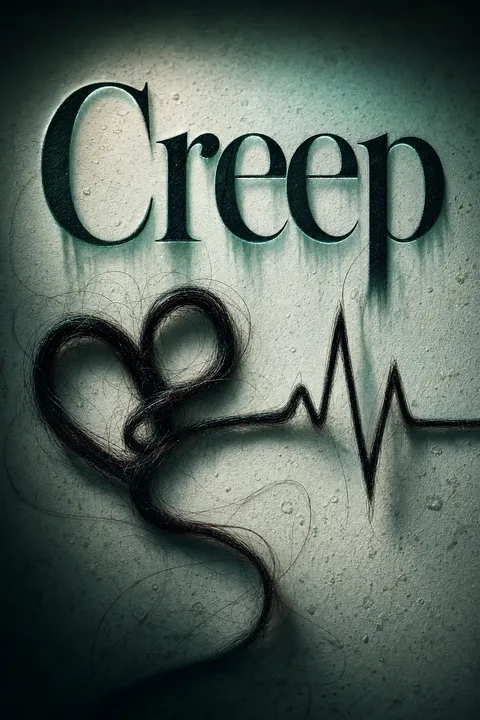


Plot Summary
The Cleaner Who Loves Him
Each Wednesday Alice1 lets herself into a small one-bedroom flat with a key she keeps warm against her skin, and before she cleans she inspects. She checks for a second toothbrush, twin wine glasses, any trace of another woman. Finding Tom2 alone, she exhales relief and something she calls love.
She buries her face in his pillow, sucks his toothbrush, counts his multivitamins, reads his unlocked laptop, and traces her name in the damp on the counter. She has never met him. She knows him only through his rooms, his emails, his photographs, and a handful of curt messages arranged through a cleaning app. Her devotion is not romantic but total and grotesque: she wants to crawl inside his chest and become his marrow.
The opening establishes erotomania as the novel's engine, a delusional conviction of reciprocated love built entirely from proximity to objects rather than a person. Van Straaten weaponizes the cleaner's intimate access to domestic detritus, turning surveillance into a liturgy. The prose deliberately conflates cleaning with communion, devotion with cannibalism, exposing how loneliness metabolizes into consumption. Crucially, the reader is trapped inside an unreliable consciousness that mistakes access for relationship. The absent, silent Tom functions as a screen for projection, a blank on which Alice paints a mutual passion. The horror is intimate and mundane: the violation happens with a dustcloth, and the narrator believes herself the heroine of a love story.
The Message That Rewired Her
Alice1 recounts drifting to London after university, cleaning strangers' homes with contempt, laddering their tights, spitting in their oat milk, stealing underwear, and pocketing loose change. She was ready to quit when a man named Tom2 accepted her services with a cheerful, apologetic note about his mess.
The small kindness struck her like a physical blow, and she felt love take root in her chest. She abandoned every other client, shrugging off one-star reviews, to serve only him.
At her dull paralegal job she lies to colleagues, claiming Wednesday-morning therapy sessions to protect her hours in his flat. Isolated, scornful of her housemates and coworkers, she assembles an entire relationship from receipts, laundry, and the hollow his body leaves in the sofa cushions.
This origin story reframes the inciting spark as absurdly slight, a smiley face and an exclamation mark, underscoring how starvation distorts appetite. Alice's contempt for the carefree young professionals she cleans for masks envy and class wound; her petty sabotage is a powerless person's revenge on lives she cannot enter. The chapter also seeds her elaborate infrastructure of lies, the fabricated therapist a telling choice given her genuine need for one. Van Straaten builds sympathy and revulsion simultaneously, the hallmark of the book's tonal tightrope. Love here is revealed as a survival narrative, a story the self tells to justify its existence when every other source of meaning, career, family, friendship, has curdled into failure.
Infiltrating the Care Home
Having read an email hinting that Tom's2 family might move his grandfather into a home called Roseacres, Alice1 signs up there as a weekend befriender, certain it must be the same place. She locates an elderly resident she nicknames Mr M,5 matching his straight nose and wave of hair to Tom's,2 and imagines Tom2 arriving to discover her tenderly holding the old man's hand.
She trades tall tales with Mr M5 in a private game, reads aloud to a dementia patient called Dorothy8 who mistakes her for someone named Elsie, and pilfers sweets from reception. Her charity is pure strategy, a stage dressed for a chance encounter. Yet something real flickers: Mr M's5 gentle questions and quiet marital wisdom reach a loneliness in her she refuses to name.
The care-home subplot exposes the calculation beneath Alice's every gesture while smuggling in her one authentic human connection. Mr M, who actually listens to her, becomes an accidental father figure and confessor, contrasting sharply with the father who abandoned the family and the mother who cannot reach her. Van Straaten stages a cruel irony: Alice performs kindness as a means to an end, yet the manufactured relationship yields the genuine tenderness she claims to crave with Tom. The elderly become mirrors of mortality and abandonment, their forgotten status echoing Alice's own invisibility. Her willingness to exploit the vulnerable to advance her fantasy marks the escalating moral cost of an obsession that recognizes other people only as instruments.
Charting an Auspicious Meeting
Deciding it is finally time to meet Tom,2 Alice1 drafts elaborate fantasy encounters: a rainy bus stop, a candlelit bar, a staged accident that leaves her bleeding prettily on his kitchen floor. To smooth fate's path she enlists Anna,9 a posh coworker devoted to crystals, and asks for an auspicious date for a date. Anna9 calculates Wednesday the twenty-second.
Though Alice1 insists she believes none of it, she buys rose quartz, a new notebook, and a fresh pen, then begins mapping Tom's2 movements from his calendar, work logins, and wall planner. She resolves to stop eating so she will feel light and frail. The delusion hardens into a project, and she convinces herself a cord strung between their hearts is drawing them together.
Alice's turn to astrology dramatizes the psychology of magical thinking as a bid for control over an intolerably random world. Having no real agency in love, she manufactures cosmic permission, outsourcing certainty to planets and stones she openly disdains. The self-starvation reveals how her body becomes both battlefield and offering, thinness imagined as the price of lovability. Van Straaten links superstition to a lifetime of childish bargains, the reader glimpsing a girl who once scratched herself bloody praying to be different. The chapter also marks the shift from passive worship to active engineering, the point where fantasy begins reaching into the physical world. Destiny, for Alice, is simply obsession wearing the costume of fate.
The Man in the Flesh
Days before her chosen date, reality intrudes: Tom2 steps out of a Tube station with friends and walks straight past her, his gaze sliding over her without a flicker of recognition. She follows him to a pub and watches a honey-haired woman7 greet him with easy warmth.
Devastated, Alice1 waits outside for hours, then trails the woman7 into quiet residential streets, pretends to return a dropped item, and shoves her hard onto the pavement, bruising her tailbone before fleeing and twisting her own ankle.
The encounter proves Tom2 still cannot hear the drumbeat she imagines binds them. Rather than doubt the fantasy, Alice1 decides she was simply underprepared, and retreats to her mother's village to plan, certain the only flaw is her own imperfect readiness.
The first collision with the corporeal Tom detonates the gap between projection and reality, yet Alice's psyche instantly repairs the breach by blaming herself. This is the tragic mechanism of delusion: disconfirming evidence is metabolized into further devotion. The violence against the rival woman externalizes her rage while revealing a capacity for physical harm previously confined to self-injury. Van Straaten stages the shove with chilling casualness, the narrator noting the softness of the victim's expensive jacket even as she attacks. Jealousy here is territorial and displaced, aimed at the woman rather than the man, because the fantasy of Tom must remain unblemished. The scene quietly establishes that Alice's obsession can and will spill onto other bodies.
Homecoming and Buried Shame
At her mother's4 house Alice1 reverts to a sulking teenager, needled by class-obsessed corrections and endless comparisons to her thinner, lawyer sister, Cass.3 Over a strained dinner with neighbours she cruelly mocks a guest's table manners, then binges alone at midnight and scratches her stomach until it stings.
Rifling through Cass's3 old room, she retrieves a childhood friendship bracelet stitched with her own name and claims it as a talisman. Fragments surface of the rupture that severed the once-inseparable sisters at sixteen, and of some fresh humiliation from her university years.
She keeps both wounds veiled, wielding indifference as her only defence. The trip clarifies nothing except her hunger to escape into the shining, borrowed life she believes Tom2 will finally grant her.
The homecoming excavates the etiology of Alice's pathology: a childhood of maternal favoritism, class anxiety, and body shame that fractured a symbiotic sisterhood. Van Straaten renders the mother's cruelty as casual and unconscious, the smaller T-shirt handed to the thinner twin a scalpel disguised as a gift. Food becomes the theatre of self-punishment, bingeing and self-harm two halves of one ritual. The stolen bracelet, bearing Alice's own name, is a poignant emblem of a self she cannot love without borrowing her sister's luck. By withholding the specifics of the sixteen-year-old rupture, the narrative builds dread and signals that the present obsession is a symptom of an older, unhealed catastrophe of belonging and worth.
The Stranger at the Museum
When the twenty-second passes with nothing, Alice1 pivots. Tom's2 calendar reads V&A Late, so she arranges to meet James,6 a friend of Anna's,9 at that very event, hoping the sight of her with another man will awaken Tom's2 jealousy.
James6 turns out warm, handsome, and disarmingly kind. Then Alice1 spots Tom2 across a darkened gallery and abandons her date to approach him. She says hello; his expression travels from puzzlement to wary politeness. He cannot place her and walks away within seconds, glancing at his phone.
All the while her sister Cass3 rings and rings, unanswered. Crushed but undeterred, Alice1 recasts the humiliation as evidence she needs more practice at conversation and desire, and takes James6 home, superimposing Tom's2 face over his throughout.
The museum rejection is the novel's midpoint reckoning, the moment reality speaks plainly and Alice refuses to hear it. Tom's failure to recognize her is not cruelty but simple truth: to him she does not exist. Van Straaten sharpens the pathos by making James genuinely decent, a real possibility of connection that Alice can only treat as rehearsal for a phantom. Her instrumental use of him mirrors her exploitation of Mr M, intimacy conscripted into strategy. The ignored calls from Cass thread a parallel offer of real love Alice keeps declining. The chapter crystallizes the book's central irony: surrounded by people willing to see her, she fixes her hunger on the one man constitutionally incapable of it.
A Rival, A Decoy, A Plan
Alice1 identifies the honey-haired woman7 as Tiggy,7 a gallery assistant now sleeping with Tom,2 confirmed by used condoms in his bathroom bin. She keeps seeing James6 as rehearsal, enduring sex she barely tolerates while imagining Tom,2 and stalks Tiggy's7 workplace and home.
Combing Tom's2 laptop, she discovers his sister Emily13 is planning a surprise Paris day trip for their mother's birthday. Alice1 manipulates his calendar, shifting a conflicting dinner and secretly liking the email to lock the plan into place, engineering a Parisian meeting she deems astrologically flawless.
She breaks the seal on his prized orange wine and drinks. Every intrusion is rebranded as devotion, each theft and trespass a small sacrament laid before the union she is certain the universe has ordained.
Escalation defines this movement, as Alice graduates from surveillance to active sabotage of another person's life. Naming Tiggy converts an abstract threat into a target, and the forensic examination of condoms shows obsession's compulsion to know at the cost of dignity. The calendar manipulation is the first time Alice reaches directly into Tom's real world to bend it, a violation dressed as fate. Van Straaten underscores the dissonance: Alice frames coercion as cosmic alignment, theft as sharing, stalking as courtship. The mechanical, joyless sex with James dramatizes her dissociation from her own body, pleasure sacrificed to a project. The chapter charts obsession's metastasis from private fantasy into deliberate, calculated interference with the lives of strangers who never consented to her story.
Poisoning the Well
Alice's1 care-home scheme unravels when Mr M5 mentions his grandson is named Jamie, not Tom.2 She realizes there are many homes called Roseacres and that she has squandered months on the wrong man.
Compounding the horror, she had deliberately given the frail old man5 her cold, coughing on his pillow to provoke family visits, and soon after he dies. To detonate Tom2 and Tiggy's7 relationship, Alice1 assembles a poisonous parcel for Tiggy:7 cheap lace knickers fouled with condom contents, a note forged in Tom's2 handwriting, and the woman's own stolen trinkets.
She also leaves incriminating searches for STD clinics open on Tom's2 laptop. The couple splits. Alice1 tells herself she has merely cleared the path so Tom2 can at last hear the song of her heart.
This chapter delivers the book's darkest convergence of delusion and consequence. The revelation that Mr M was never connected to Tom exposes the sheer arbitrariness of Alice's certainties, her pattern-matching brain manufacturing meaning from coincidence. That her manipulation may have contributed to a kind man's death is a genuine tragedy she registers only glancingly, guilt deflected by the machinery of denial. The sabotage of Tiggy shows obsession curdling into premeditated cruelty, forgery and contamination deployed with grim craft. Van Straaten refuses to let Alice off the hook while keeping us inside her exculpatory logic. The reader watches a person cause real, irreversible harm while narrating herself as a devoted lover clearing obstacles from the road to a mutual destiny.
Paris Unravels
Alice1 travels to Paris ahead of Tom,2 drinks herself sick, and wrecks her rented flat. She trails Tom,2 his sister, and his mother from the station through the Metro, then taps his shoulder on the street and confesses everything: she is his cleaner, she has imagined their many dates, she has followed him here. His face hardens into disgust.
He demands to know why she left menstrual blood in his toilet, whether she steals his food and drinks his wine, whether she is stalking him. Gripping her wrist hard enough to bruise, he warns he will call the police if she comes near his family again, and calls her a crazy bitch. Alice,1 cherishing even the pain of his grip, tells herself he is simply frightened by the depth of their bond.
The Paris confrontation is the catastrophic collision the whole novel has promised, delusion meeting the immovable fact of another's revulsion. For the first time Tom speaks at length, and his words are entirely negation. Yet Alice's interpretive machinery survives even this, reframing threat as fear of intimacy, cruelty as a lover's terror. Van Straaten stages the scene in the city of romance to maximize the gap between fantasy and reality, the Haussmann balconies bending into a horror set. The wrist grip becomes, in Alice's economy, a cherished touch, evidence of how starvation can reclassify violence as tenderness. This is the tragic core of erotomania: no rejection is legible as rejection, because the story cannot admit an ending it did not write.
Blood in His Bed
Back in London, severed from the cleaning contract after her star rating collapses to a single point, Alice1 bribes Tom's2 new cleaner two hundred pounds and enters the flat one final time. She smashes his glassware, arranges razor shards inside his bed to pierce whoever lies down, cuts open her own palms on the fragments, and smears her blood along the hallway walls.
As she bleeds, Cass3 at last reaches her by phone with the news she has been chasing for weeks: they may have inherited Brugada syndrome, a dangerous heart condition, from their father. The palpitations Alice1 mistook for a mystical cord tethering her to Tom are a fault in her own heart. She passes Tom2 on the stairs, unrecognized once more, and walks home with bandaged hands.
The climax fuses vengeance, self-annihilation, and revelation into a single devastating stroke. The glass laid in Tom's bed transforms Alice from pathetic worshipper into genuine threat, love and murder finally indistinguishable in her logic. The simultaneous phone call reframes the entire novel: the throbbing heartstring she read as destiny was always a physiological arrhythmia, the sacred cord a medical defect. Van Straaten delivers this diagnosis as tragic irony, meaning collapsing into biology. That she passes the real Tom unnoticed on the stairs seals the theme of mutual non-recognition. The scene interrogates how the body's signals are narrativized, how a lonely mind will read pathology as prophecy rather than accept the unbearable ordinariness of an unloved, malfunctioning heart.
The Sisters and the Sirens
Cass3 comes to Alice,1 washes her hair over the bath, and the sisters finally speak the buried truth: at sixteen an explicit photo of Alice1 circulated at school, and Alice1 blamed Cass3 to save herself, shattering their bond. They weep, apologize, and begin to reconnect.
Alice1 attends a gentle hospital appointment, is kindly told she may be perfectly normal, takes elderly Dorothy8 into the garden, and glimpses a softer possible life. Then the police arrive at her door and arrest her for breaking, entering, and intent to cause grievous harm.
Even in custody, still deluded, Alice1 believes Tom2 summoned the police only so he could find her. She feels the imagined cord pull taut, waits for him, and reveals she inseminated herself with a saved condom, hoping to carry his child.
The finale offers redemption and damnation in the same breath. The reconciliation with Cass dramatizes the novel's true love story, sisterhood as the antidote obsession could never provide, and the disclosed origin wound recasts Alice's cruelty as trauma passed forward. For a moment healing seems possible: kindness from a beautician, a doctor, a dementia patient in a garden. Then the law arrives to render moral judgment the narration never will. Van Straaten's masterstroke is the refusal of catharsis: even arrested, Alice cannot exit her story, reinterpreting punishment as pursuit and clinging to a possible pregnancy. The book closes on the terrifying resilience of delusion, a mind that will sooner reframe the universe than surrender the belief that it is loved.
Analysis
Creep reengineers the psychological thriller from the inside of a delusion, refusing the reassurance of an external vantage. By trapping us in the mind of an erotomaniac cleaner, van Straaten forces complicity: Alice's1 wit, literacy, and wounded interiority seduce us into her logic even as her actions curdle from pathetic to predatory. The novel is a study of loneliness as an appetite, love reimagined not as connection but as consumption, absorption, the annihilation of a self the protagonist cannot bear to inhabit. Tom2 functions as an empty vessel, proving the fantasy was never about him; it was about escaping the unlovable body and the shame stitched into it since adolescence. That shame, class anxiety, a favoured sister, an explicit photo, maternal correction disguised as care, is the true origin story, and the book locates monstrousness in social wounds rather than innate evil. The recurring imagery of blood, hunger, and the body under punishment ties female embarrassment about flesh to a wider culture that teaches women to shrink. Formally, the unreliable narration, the reinterpreted heartbeat, and the compulsive death-riffs enact a mind that rewrites reality faster than reality can wound it. The devastating irony, that the mystical cord is a genetic heart defect, reframes destiny as biology and prophecy as malfunction. Yet the novel's quiet counter-argument is sisterhood: Cass's3 persistent, unglamorous love offers the reciprocity Alice1 keeps declining for a phantom. The ending withholds catharsis deliberately. Even arrested, even offered tenderness and a diagnosis and a possible ordinary life, Alice1 cannot exit her story, reframing punishment as pursuit. The final horror is the resilience of self-deception, a consciousness that will sooner rebuild the universe than accept the unbearable ordinariness of not being loved.
People Also Read








Characters
Alice
Obsessive cleaner narratorThe unnamed-for-most narrator, a young cleaner and paralegal whose weekly access to Tom's2 flat has curdled into all-consuming erotomania. Sharp, literary, and mordantly funny, she is also profoundly lonely, self-loathing, and estranged from her body, which she punishes through bingeing, scratching, and starvation. Shaped by a class-anxious mother, an absent father, and an adored lost sister, Alice1 reads meaning into coincidence and mistakes proximity for love. She is a supremely unreliable narrator whose contempt for others masks a desperate hunger to be seen. Her intelligence and wit make her company seductive even as her actions grow monstrous. Beneath the delusion lies a person shaped by shame, seeking absorption into someone else because she cannot bear to be herself.
Tom
Object of her obsessionThe man whose one-bedroom flat Alice1 cleans and whom she loves with cannibal intensity, though the two have never truly met. Reconstructed almost entirely from his possessions, emails, photographs, and terse app messages, Tom2 exists mostly as a projection screen. What surfaces of the real man suggests an ordinary, tidy, security-lax professional with a close sister, a birthday-minded mother, and a girlfriend. Trusting to the point of leaving his laptop unlocked, he is oblivious to the woman who worships and surveils him. When he finally perceives Alice1, he responds with the natural revulsion of any person discovering a stalker. He is less a character than a mirror, revealing everything about the watcher and almost nothing of himself.
Cass (Cassandra)
Estranged successful sisterAlice's1 older sister, once her inseparable near-twin, now a poised, slim, well-spoken lawyer whose apparent ease Alice1 both envies and resents. Their bond ruptured in adolescence over a shame Alice1 has never forgiven herself for, and the two have barely spoken in years. Throughout the story Cass3 calls persistently, refusing to be ignored, driven by something urgent she is determined to deliver in person. Beneath the polished exterior she is loyal, warm, and doggedly loving, the one person who keeps reaching across the chasm. Cass3 represents the real, reciprocal intimacy Alice1 keeps rejecting in favour of a fantasy, and the possibility that some wounds between sisters can still be tended.
Alice's mother
Class-obsessed distant parentA tall, fair, athletic Englishwoman fixated on manners, vocabulary, and appearances, who raised her daughters after their father left. Her love arrives coded in correction and comparison, and she has never grasped the source of Alice's1 pain, favouring, however unconsciously, the thinner, more successful Cass3. Well-meaning but tone-deaf, she offers Pilates tips and church gossip where her daughter needs understanding, embodying the genteel emotional starvation that helped shape Alice1.
Mr M
Kindly care-home residentAn elderly, cultured man at the Roseacres care home whom Alice1 targets, believing him linked to Tom2. Widowed after fifty-seven years of marriage, he trades playful invented adventures with her and offers unassuming wisdom about love and change. Unlike everyone else, he actually listens to Alice1, becoming an accidental confessor who reaches the loneliness she hides. He is the story's quiet moral center and the recipient of her most calculated exploitation.
James
Kind man used as practiceA warm, posh, red-haired man in tech, introduced through coworker Anna9, whom Alice1 dates purely as rehearsal for Tom2. Genuinely attentive, humorous, and patient, he keeps trying to build something real while Alice1 remains cold and dissociated, imagining another man in his place. He represents a decent, available love that Alice1 can only treat as a rung on the ladder to her fantasy.
Tiggy (Antigone)
Tom's girlfriend and rivalA poised, pale, upper-class art-gallery assistant who becomes involved with Tom2, and thus the focus of Alice's1 jealousy. Composed and professional, she is glimpsed mostly through stalking and surveillance rather than genuine acquaintance. To Alice1 she is both enemy and object of envious fascination, an emblem of the effortless belonging Alice1 believes she can never possess.
Dorothy (Dot)
Gentle dementia patientAn elderly Roseacres resident who mistakes Alice1 for a woman named Elsie and watches birds from her window. Sweet and drifting, she offers Alice1 unexpected moments of comfort and unfiltered kindness, becoming a small, tender fixture of the care-home visits.
Anna
Astrology-loving coworkerA posh, friendly, slightly vacant colleague obsessed with crystals and star signs, engaged to a man Alice1 can barely be bothered to remember. She calculates Alice's1 auspicious date and later plays matchmaker with James6, cheerfully oblivious to the darker uses Alice1 makes of her help.
Nina
Kind desk neighbourThe coworker who sits beside Alice1 by the window, recognizable by her frizzy ponytail and cans of Red Bull. Persistently kind despite Alice's1 disdain, she notices Alice's1 distress and offers small gestures of friendship that Alice1 cannot quite accept.
Sasha
Warm housemateAlice's1 round-cheeked charity-worker housemate, generous with home-cooked meals and unforced friendliness. She embodies the ordinary, offered companionship Alice1 keeps at arm's length, and later hosts a dinner where Alice's1 fragility shows.
Yassmina
Beautician who reassures herA beautician Alice1 encounters at a waxing salon who, with a simple reassurance and a kind touch, tells Alice1 she is perfectly normal. The brief exchange briefly pierces Alice's1 conviction of her own monstrousness.
Emily
Tom's organizing sisterTom's2 chatty, practical sister, glimpsed only through emails, who plans the surprise Paris trip for their mother's birthday. Her messages become the mechanism Alice1 exploits to engineer the fateful journey.
Plot Devices
The key and cleaning app
Enables intimate surveillanceAlice's1 copied key and the gig-economy cleaning app that assigns her Tom's2 flat are the twin engines of the whole obsession. Weekly, sanctioned access lets her handle his possessions, read his unlocked laptop, catalogue his habits, and construct a relationship from domestic evidence. The app's professional veneer disguises a profound violation, turning paid labour into stalking. It also frames her as replaceable and invisible, a servant whose presence leaves no trace, which both wounds and enables her. The app becomes the sole channel of actual contact with Tom2, its thanks and small tips misread as intimacy. When access is finally withdrawn, the severance is catastrophic, exposing how thoroughly her identity depended on that borrowed key.
The star rating
Proxy for the relationshipTom2 communicates with Alice1 almost entirely through the cleaning app's star rating and brief thank-you notes, and she scrutinizes each one like scripture. A steady five stars sustains her fantasy of mutual regard; a drop to four sends her weeping to the office toilets. The ratings become a barometer of an imagined romance, every fluctuation interpreted through her delusion rather than as ordinary customer feedback. The device brilliantly literalizes how the powerless read meaning into scraps of attention. Its eventual collapse to a single star, followed by the contract's termination, functions as the rejection Alice1 cannot accept, forcing her fantasy toward its violent endgame while she reframes even this severance as a lover's coded invitation.
Astrology and crystals
Manufactures cosmic permissionRose quartz, tarot cards, and auspicious dates calculated by a coworker give Alice1 a borrowed language of destiny. Though she claims disbelief, she leans on these systems to sanction her plans and to convert obsession into fate. Superstition provides the illusion of agency and the comfort that the universe endorses her love, echoing the desperate childhood bargains she once made with silent gods. The device externalizes her need for certainty in a world that offers her none, and repeatedly sets her up for disappointment when the chosen dates yield nothing. It reveals how magical thinking rationalizes fixation, dressing a lonely compulsion in the reassuring costume of prophecy and alignment.
The heartstring cord
Central symbol and revealThroughout, Alice1 describes a physical cord or string tautening between her heart and Tom's2, a felt sensation she reads as proof of a mystical bond drawing them together. This throbbing in her chest is the emotional spine of her certainty, cited whenever doubt threatens. Late in the novel the sensation is reinterpreted through her sister's3 warning about an inherited heart condition, recasting the sacred cord as a physiological arrhythmia. The device delivers the book's most devastating irony, meaning collapsing into biology, prophecy into pathology. It interrogates how a starving mind narrativizes the body's raw signals, transforming a dangerous medical defect into the language of destined love rather than accepting an ordinary, unloved heart.
The Mr M death riffs
Signals unreliable narrationAfter the elderly care-home resident's5 fate is revealed, the narration compulsively replays an imagined exchange with a receptionist, each time supplying a different, escalating, sometimes absurd cause of death. These intrusive, contradictory riffs interrupt the linear story and expose the narrator's slippery relationship with truth, guilt, and memory. The device makes the reader's ground constantly unstable, a formal enactment of Alice's1 mind rewriting reality to manage what she cannot face. It also quietly encodes her responsibility and denial around the harm she caused. As a recurring textual tic, it trains the reader to distrust every confident claim in the narration, reinforcing that we are trapped inside a consciousness that edits its own history.
Download PDF
Download EPUB
.epub digital book format is ideal for reading ebooks on phones, tablets, and e-readers.








































