


Plot Summary
Prologue
Sloane Sutherland,1 a twenty-three-year-old serial killer who hunts other serial killers, sits trapped in a cage in a sweltering Louisiana shed. Beside her rots the corpse of Albert Briscoe, the Beast of the Bayou, whom she stabbed through the bars before he kicked her into captivity.
Three days without food, water dwindling, maggots advancing, she hums a childhood lullaby about a blackbird and renounces her wicked ways. Then a stranger with a faint Irish accent strolls in, admiring her handmade blade and her infamous nickname, the Orb Weaver.1 He introduces himself as Rowan Kane,2 the Boston Butcher, a fellow predator of predators. He frees her, and proposes barbecue instead of a slow death.
The opening inverts every captivity trope: our heroine is not the victim of a monster but a monster momentarily outmatched by bad timing. Weaver establishes the book's central conceit, that morality can be genre-bent into comedy, by letting Sloane maintain fastidious standards (she prefers fresh corpses) even at death's door. The blackbird lullaby seeds her hidden tenderness and trauma. Rowan's arrival reframes rescue as flirtation, and recognition as intimacy: he knows her work, admires her artistry, and treats her infamy as accomplishment rather than horror. The scene's genius is making mutual recognition between two killers feel like the safest thing either has known.
Ribs, Beer, and a Wager
Freed and cleaned up, Sloane1 shares a diner meal with Rowan,2 both circling their shared secret with sharp banter. He admits he came to torture Briscoe for pleasure; she reveals her eyeball trophies are actually clues in an elaborate map. Rowan2 dangles a lure: a phantom killer stalking hikers in Oregon and Washington parks, anointing corpses and facing them east.
He proposes a competition, first to kill the target wins, sealed over ice cream. Sloane,1 addicted to the itch that only killing scratches, cannot resist the novelty of someone who understands her. She agrees, half-terrified, half-thrilled, launching a yearly ritual that will bind two solitary predators together across states and seasons.
The wager transforms compulsion into courtship. For two people whose need to kill is framed almost as addiction, the game offers what neither has: a witness. Weaver uses competition as a socially legible substitute for intimacy, letting the pair pursue closeness under the alibi of rivalry. The diner's ordinariness (ribs, beer, a friendly waitress) against their monstrousness generates the dark comedy engine of the book. Sloane's flightiness, choosing a booth equidistant from three exits, marks her hypervigilance and attachment wounds. Rowan's persistence reads as fandom but functions as devotion. The bet is really a promise to see each other again.
The Peeping Man in the Wall
One year later, Rowan2's brother Lachlan3 draws Ivydale, West Virginia from a hat, and the pair reunite at the shabby Cunningham Inn, trading wine and monster-romance jokes. Rowan2 stews with jealousy when Sloane1 leaves on what she teases is a date.
Later, ear pressed to the paper-thin wall, he discovers a man watching Sloane1 through a fake painting, then realizes the killer they hunt is Francis,10 the inn's mild proprietor with the clip-on pink tie. Francis10 has quietly murdered guests who made wrong turns. Sloane1 had already suspected him, using her fake date to gather intel. Both bolt into the night after him, the competition suddenly lethal and personal.
The reunion proves the game is now pretext for reunion itself; a year apart, they slip instantly into rhythm. Rowan's spiraling jealousy over an imagined date exposes how far his feelings have outrun the friendship's stated terms. The voyeur in the wall literalizes the book's preoccupation with watching and being seen: Sloane, who armors herself in surveillance, becomes the surveilled, and Rowan's rage at that violation reveals possessiveness curdling into protectiveness. Weaver stages the reveal as farce (a lamp, a broken painting) then pivots hard to menace, the tonal whiplash that defines the novel's dark-comedy contract with readers.
Mine, He Growls
Rowan2 tackles Sloane1 to steal the kill, leaps onto Francis10's fleeing car, smashes the windshield, and rides it into a tree. Then he beats Francis10 to death with his bare fists, unrestrained and animal, whispering that Sloane1 belongs to him. When it ends he calls her name into the dark, certain she has fled from his brutality.
But she stays. She cleans the scene beside him and bandages his bloodied knuckles, and he confides that he and Lachlan3 killed their abusive father the night he earned the scar on his lip, and that their mother died birthing Fionn.4 Sloane,1 who has never seen her own control abandoned so completely, chooses to remain rather than run.
This is the relationship's first true threshold. Rowan's messy, ecstatic violence contrasts Sloane's surgical artistry, and Weaver frames the difference as vulnerability rather than threat: he fears his own nature will repel her. The declaration of possession, terrifying in isolation, becomes the exact opposite of abandonment, the thing Sloane most fears. Her decision to stay and tend his wounds enacts reciprocity that neither has known. The childhood confession (patricide, maternal loss) supplies the origin of his killing as a search for peace and armor. Care, not carnage, becomes the scene's real climax, love disguised as first aid.
The Grocery Boy Cure
Six months of daily texts later, Sloane1 secretly flies to Boston and haunts Rowan2's restaurant, 3 In Coach, leaving a raven sketch on her table before fleeing when his tattooed brother Lachlan3 and a glamorous friend named Anna11 appear. Humiliated and convinced she is unwanted, she retreats to Raleigh. Rowan2 refuses to let her slip away.
He hires a neighborhood kid to deliver mystery grocery bags to her door, then phones and teaches her to cook, ingredient by ingredient, standing hidden behind a tree across her street. Over roasted feta shrimp and Wagyu steak, they trade childhood wounds. He insists she is his friend, maybe his best friend, coaxing the wary bird back toward him.
Weaver locates romance in domesticity, not danger. The cooking sessions weaponize nurture: Rowan literally feeds Sloane while hiding, a metaphor for love offered without demand for exposure. Her restaurant pilgrimage and panicked flight dramatize attachment terror, the belief that she is fundamentally unkeepable, rooted in absent parents. The abandoned raven drawing is a piece of self left behind, testing whether it will be treasured or discarded. His patient, playful persistence models the earned safety she has never had. The tree he hides behind recurs as his post of devoted, unthreatening vigilance, courtship as steady presence rather than pursuit.
Dinner With a Cannibal
The next game targets Thorsten Harris,8 a refined cannibal in Calabasas. Rowan2 muscles into Sloane1's careful setup, and Thorsten8 invites both to an elaborate dinner served by David,7 a mute, hollow-eyed servant he lobotomized. Sloane,1 who identified Thorsten8 immediately, only pretends to drink the drugged wine; Rowan2 does not, and passes out mid-meal after devouring a course of thinly sliced human.
Sloane1 straps the cannibal8 to his chair, plucks his eyes, and weaves them into a fishing-line web that maps his victims. She reveals her origin: a boarding-school predator who abused her only friend, Lark,5 igniting her vow to erase such men. She spares the broken servant David7 and makes Rowan2 employ him.
The set piece fuses horror and slapstick (accidental cannibalism, cookies-and-cream ice cream) while delivering the book's emotional keystone: Sloane's motive. Her vengeance is revealed as displaced protection, a promise to shield the loved from predators she failed to stop once. The web-map recasts her killing as authorship, meaning imposed on chaos. Rowan's helplessness inverts their dynamic, letting her be caretaker. Rescuing David, a decision that will detonate later, showcases her buried mercy and Rowan's willingness to be bent by her wishes. Weaver plants the loaded gun in plain sight, disguised as a moment of tenderness.
Romance or Murder
Rowan2 brings Sloane1 as his date to the Best of Boston gala, showering her with hand-holding, a kiss to her pulse, and a devotion she dares to read as love. On the dance floor, breathless and hoping he will finally close the gap, she asks him to dance. Instead he whispers that a bald guest, Dr. Stephan Rostis, is a serial killer they can take out together tonight.
The crushing misunderstanding lands: his idea of real fun means murder, not romance. As the near-kiss finally trembles into reach, his phone shrieks with news that a stove at his restaurant has exploded, and he must flee, leaving them suspended once again.
The chapter turns on catastrophic misalignment of vocabularies, the same words meaning tenderness to one and bloodshed to the other. Weaver mines genuine pathos from the mismatch: Sloane's rare act of courage (asking to dance, wanting more) collides with Rowan's assumption that shared killing is their love language. It exposes how their monstrousness both bonds and isolates them, and how each still cannot voice plain desire. The interrupting explosion externalizes his mounting inability to hold career, self, and love at once, seeding the pressure that will later fracture him. Longing deferred sharpens into ache.
The Chainsaw House
Four months on, they hunt Harvey Mead,9 a hulking chainsaw killer, at a rotting Texas farmhouse. Splitting up, Sloane1 spots Harvey9 stalking Rowan2 on a hidden monitor, cries out, and runs straight into the giant's boot. He dislocates her shoulder, stamps a Carhartt bootprint into her face, and throws her into a cellar with a naked, grieving captive named Autumn.
Rowan2 axes through the doors to free her, then ambushes Harvey9 in the barn, shattering his knee and pinning his hands with spikes. In the shadowed barn, terrified of losing her, Rowan2 finally kisses Sloane.1 She then finishes Harvey9 by dragging his mummified mother's corpse across him until he dies of fright.
Peril becomes the crucible that burns away denial. Sloane's injury originates in selflessness, running toward danger to warn Rowan, proof her love now overrides her survival instincts. Rowan's rescue and the barn kiss convert years of suspended want into contact, love confessed through action before words. The macabre coup de grace (death by mummified mother) keeps the tonal bargain intact, comedy braided into brutality. Harvey, a killer defined by a domineering mother, becomes a grotesque mirror of arrested men, and Sloane's weaponizing of that corpse is psychologically pointed: she turns a predator's origin wound against him.
Four Years of Wanting
Rowan2 drives the battered Sloane1 to Nebraska, to his doctor brother Fionn,4 who resets her shoulder. There they meet Rose,6 a knife-wielding circus runaway whose tarot cards ominously turn up The Tower. Bathing and tending her bruises, Rowan2 reveals he had her abandoned raven sketch tattooed across his back, and confesses he has wanted her for four years, since the bayou cage.
That night they finally sleep together, and Rowan2 says plainly that he does not merely like her, he loves her, having framed her drawing and played the game yearly just to keep her near. Sloane,1 terrified but brave, admits she loves him too, agreeing to build something real.
The consummation is less about sex than surrender of armor, staged through her literal, piercing-laden vulnerability and his tattooed proof of years of quiet devotion. Weaver frames Rowan's confession as the reveal that the entire competition was a devotion strategy, recontextualizing the whole novel as one long courtship. Rose's Tower card plants dread of coming collapse, a structuralist wink at the reader. Fionn's presence humanizes the brothers as chosen family forged in shared trauma. Sloane's mantra, just try, marks her therapeutic arc from armored solitude toward risked intimacy, love as the bravest act available to a woman built for vengeance.
Butcher and Blackbird
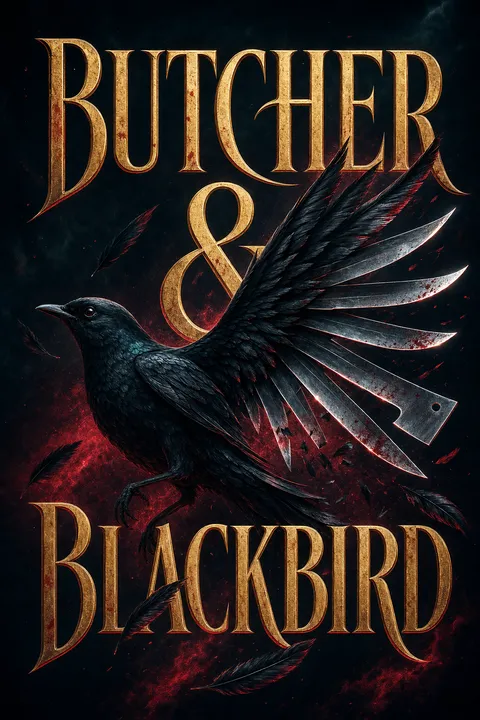
Sloane1 rents out her Raleigh house, packs her cat Winston,12 and relocates to Boston, finally introducing Rowan2 to her sunny best friend Lark.5 At 3 In Coach she learns of a permanently reserved booth held under her name, and Rowan2 unveils his new venture: a restaurant called Butcher & Blackbird, its decor threaded with ravens, cleavers, and a booth branded just for her.
In the empty kitchen he cooks with her, then makes love to her over the counter and on the table, and she blurts that she loves him. For the first time she imagines a shared future instead of solitary revenge, believing the mountains between them can be climbed together.
The restaurant literalizes commitment: Rowan has built a monument to their union before she could name it, converting private obsession into public architecture. The reserved booth answers Sloane's deepest fear, that she is disposable, with permanence. Weaver uses food and shared creativity as the couple's healthy displacement of their darker appetites, intimacy without bloodshed. Yet the very completeness of this happiness signals narrative danger; contentment in a thriller is a fuse. Sloane's move dismantles her isolation, but relocation also strips her defenses, setting up the vulnerability the coming crisis will exploit. Love here is both fulfillment and exposure.
You Are Unlovable
Amid opening-night stress, Rowan2 snaps that worrying about Sloane1 is too much, wounding her. Days later he summons her to the restaurant kitchen and coldly dismantles her, ordering her back to Raleigh, calling her a psycho who can neither love nor be loved. Devastated, she flees to pack.
But replaying his words, she catches impossible details: wrong dates, invented past conversations, a reference to April tenth through thirteenth, the semen-milking dates from Thorsten8's ice-cream jar. The cruelty was a coded distress signal. She opens her hidden kitchen camera feed and sees the truth: David,7 no longer vacant, holding Rowan2 at gunpoint. She grabs her scalpel and phones Lachlan3 for everything on David Miller.7
This is the Tower's lightning strike, the destruction Rose foretold. Weaver executes a brilliant reversal: the reader feels the breakup as authentic betrayal because it weaponizes Sloane's exact insecurities, making the eventual decode doubly moving. Rowan's cruelty is revealed as sacrificial love, wounding her to save her, the ultimate proof that he knows her wounds intimately enough to fake them. The payoff of the seemingly tender David rescue lands as horror: mercy misfired. Sloane's forensic close-reading of his lies dramatizes how deeply the two now know each other, intimacy itself becoming the cipher that saves his life.
The Servant's Revenge
David,7 actually the South Bay Slasher who befriended Thorsten8 as insurance, has been flaying Rowan,2 sampling his skin, and threatening to hunt Sloane.1 She strides in wielding David7's own gun, then stuns everyone by seeming to side with him, mocking Rowan,2 praising David7's work, proposing they leave together and tear up the town.
Enraptured, David7 reaches for the gun she offers, and in that instant she slashes both his wrists, drives him to his knees, opens his throat, and buries the scalpel in his eye. She frees a shattered, weeping Rowan,2 and he begs forgiveness, swearing the cruel words were only meant to save her. She forgives him.
The rescue mirrors and completes the opening: the caged one is now the savior, and the game's rules (deception, patience, the con) become salvation. Sloane's performance, feigning betrayal to disarm a predator, showcases her mastery and reverses the breakup's power dynamic; she out-lies the liar. Weaver closes the loop on David, punishing the couple's earlier mercy while affirming that mercy is what made them human enough to be worth saving. The reconciliation reframes cruelty as devotion's darkest dialect. Their wounds, his flayed arm, her flayed heart, become matching scars, the novel's thesis that love and damage are inseparable for monsters.
A Ring in the Socket
Rowan2 has Sloane1 design a colorful raven tattoo to cover the scars David7 carved, a sign she has reclaimed color and art after years in monochrome. The couple stop reluctant Lachlan3 into agreeing to help Lark5 move to Boston. Then, hunting Dr. Stephan Rostis together at last, Sloane1 builds her most vivid stained-glass web yet.
Rowan2 teases her about a gouge-y eye socket, prompting her to pluck out a taped package he has hidden inside it. Wrapped in the original ice-cream-napkin rules of their game, now amended to read that he should marry her forever, sits a sapphire ring. He kneels in the blood and asks. She says yes.
The finale fuses the couple's two languages, murder and love, into a single gesture: a proposal literally embedded in a victim's eye, the Orb Weaver's signature made romantic. Weaver rewards long-planted motifs, the napkin rules, rock-paper-scissors, plucked eyes, cooperation replacing competition, signaling their evolution from rivals to partners. The return of color to Sloane's art externalizes psychological healing: vengeance's grayscale giving way to a wider emotional palette. The choice to hunt together rather than against each other resolves the book's structuring tension. Their happily-ever-after refuses to launder their monstrousness; instead it insists two monsters can build a genuine home in the dark.
Epilogue
On a Boston cafe patio, a devout, disgusted watcher keeps vigil across from Kane Atelier, muttering hymns and scripture about smiting the wicked. He observes Rowan2 and Sloane1 leave hand in hand, and studies the tattooed, coiled figure of Lachlan3 lingering in the doorway.
This man, the elusive park killer who anoints victims and faces them east, was David Miller7's brother. He has traced the disappearance of his sibling to the Kanes, and now he makes a vow of his own: Rowan2 took his brother, so he will take Rowan's. His shadow settles over Lachlan.3
The coda converts the couple's triumph into a new debt, revealing that violence, in this world, is a chain of reciprocal vengeance rather than a closed circuit. The Phantom is a chilling structural double of Sloane herself, a righteous killer avenging a loved one, forcing readers to recognize that her own logic of retribution can be turned against those she loves. His religiosity contrasts the couple's amoral playfulness, introducing a zealot's certainty as a fresh threat. By targeting Lachlan, Weaver pivots the series toward its next installment while underlining the novel's darkest truth: no monster hunts without eventually becoming prey.
Analysis
Butcher and Blackbird performs a daring generic alchemy, splicing splatter horror to screwball romance so that torture and tenderness share the same breath. Its governing joke, serial killers who only kill serial killers, licenses readers to root for monsters by outsourcing morality to the victims' guilt, but Weaver is doing something subtler than shock. The novel is a study in attachment for the profoundly unattached. Both protagonists are survivors of childhood neglect and abuse whose violence functions as regulation of unbearable inner states, an itch, a need, framed almost clinically as addiction. What heals them is not the killing but the witnessing: each is the first person to see the other's monstrousness and choose to stay. Love, here, is defined as being fully known and not abandoned, which is why Sloane1's core wound, the conviction that she is unlovable and disposable, structures every beat, and why the false breakup that weaponizes exactly that wound is the book's emotional and architectural climax. Weaver domesticates the gothic through food, cooking as the couple's healthy sublimation of appetite, and through art, Sloane1's shift from monochrome webs to vivid color externalizing psychological thaw. The recurring imagery of watching, cages, and birds encodes the central tension between surveillance-as-defense and intimacy-as-surrender. Structurally, the annual game converts the slow-burn into ritual, each reunion a controlled test of trust. The epilogue's vow of vengeance reframes the entire enterprise: retribution is a chain, and Sloane1's own righteous logic can be turned against her family, complicating any clean reading of vigilante justice. The lasting takeaway is disarmingly humane beneath the gore: healing is not becoming normal but finding someone who makes the abnormal feel safe, and choosing, against terror, to simply try.
Review Summary
Butcher & Blackbird received mostly positive reviews, with readers praising its dark humor, steamy romance, and compelling characters. Many enjoyed the unique premise of two serial killers falling in love while competing to eliminate other killers. The book's witty banter, slow-burn romance, and explicit scenes were highlights for fans. However, some readers found the plot underdeveloped or rushed in parts, and a few were put off by the graphic violence and gore. Overall, the book was widely recommended for those who enjoy dark romance with a comedic twist.
People Also Read

Characters
Sloane Sutherland
Vigilante serial killerKnown to the FBI as the Orb Weaver, Sloane is a twenty-something data scientist by day and a meticulous killer of predators by night, harvesting eyeballs and weaving them into fishing-line maps of her victims. Raven-haired, freckled, quick with acid wit and quicker to flee, she is hypervigilant, choosing seats near exits, trusting almost no one. Beneath the armor lies a woman shaped by absent parents and a boarding-school trauma that forged her vow to erase men who prey on the vulnerable. Her killing is displaced protection, her artistry a bid for meaning. Drawn to Rowan2 against her instincts, she must decide whether a heart built for vengeance can risk being loved and kept.
Rowan Kane
Charming chef and killerThe Boston Butcher, a restaurateur with a faint Irish accent, a scar through his lip, and a smile that disarms everyone he meets. Where Sloane1 is surgical, Rowan is feral, killing with his bare hands and enjoying every second, a nature born from murdering his abusive father alongside his brother3. Reckless, playful, and relentlessly devoted, he masks bottomless want behind jokes and flirtation. Cooking is his refuge and armor, an art that survived a brutal childhood. From the moment he freed Sloane1 from a cage, he has orchestrated an elaborate courtship disguised as competition, patient enough to wait years. His deepest fear is not being caught but losing the one person who sees his monster and stays.
Lachlan Kane
Ruthless eldest brotherRowan2's older brother, a leatherworker who by night is a contract killer for shadowy powers. Tattooed, sardonic, and perpetually sharpening a blade on a stropping belt, he needles his brothers mercilessly while guarding them fiercely. He supplies the game's targets through illicit intelligence and pretends to want Rowan2 to lose. Emotionally armored and detached, he seems to enjoy little beyond carving hide and teasing family, though his loyalty runs bone-deep.
Fionn Kane
Doctor youngest brotherThe youngest Kane, a small-town doctor in Nebraska, a fitness-obsessed nerd who assigns statistical values to feelings and worries visibly about his brothers. Having chosen healing over their darker path, he nonetheless accepts what Rowan2 and Lachlan3 are, and patches them up without judgment. Gentle, anxious, and secretly craving the family gossip he pretends to disdain, he provides refuge when Sloane1 is injured.
Lark Montague
Sloane's sunny best friendA traveling indie musician and music therapist whose relentless warmth is the counterweight to Sloane1's darkness. Lark took Sloane1 in during boarding school and remains her anchor, offering movie quotes, gold-star stickers, and steady encouragement to risk love. Bubbly and generous on the surface, she carries her own hidden history connected to the trauma that made Sloane1 a killer, and her cheer conceals surprising steel.
Rose
Circus runaway houseguestA fierce, knife-wielding young woman staying with Fionn4, raised in a circus and unafraid to swing a crutch at intruders. Sharp-tongued and quick to threaten, she reads tarot with unsettling accuracy, drawing The Tower for Rowan2 as a warning of coming upheaval. Her brash humor lightens the household while her cards plant dread.
David Miller
Cannibal's mute servantA hollow-eyed, seemingly lobotomized man serving the cannibal Thorsten8, whom Sloane1 pities and insists Rowan2 employ as a dishwasher. Silent and vacant, he rocks when agitated and appears harmless, a broken victim rescued from horror. His stillness invites the couple's rare mercy, and his true depths remain a quiet, ominous question mark.
Thorsten Harris
Refined cannibal killerAn elegant, pretentious older man in Calabasas, real name Jeremy Carmichael, who lures victims with fine art, wine, and gourmet dinners of human flesh. Fussy about manners and expensive things, he serves the couple a lethal meal that goes badly awry for him.
Harvey Mead
Chainsaw farmhouse butcherAn enormous, brutish killer haunting a decaying Texas farmhouse strewn with corpses and bones, fixated on his dead, mummified mother. He dismembers victims with a chainsaw and nearly kills Sloane1, embodying the arrested, mother-dominated monster.
Francis Ross
Mild-mannered inn killerThe soft-spoken proprietor of the Cunningham Inn in West Virginia, with a swoop of dark hair and a clip-on pink tie. He watches guests through hidden peepholes and murders those who wander in, a voyeur predator trapped in his family's old house.
Anna
Rowan's socialite friendA glamorous, tanned regular in Rowan2's social circle whose casual affection briefly sparks Sloane1's jealousy and insecurity. Warm and oblivious, she later becomes a genuine friend to Sloane1 in Boston.
Winston
Perpetually grumpy catA disgruntled gray cat, named for the undead feline of a horror story, who glares and growls his way through the narrative. He becomes an unlikely comfort to Sloane1 in her lowest moment and relocates with her to Boston.
Plot Devices
The Annual Killing Game
Courtship disguised as rivalryProposed over diner ribs, the yearly competition sends Rowan2 and Sloane1 after a shared target, first to kill wins, drawn by Lachlan3 from a hat to prevent cheating, with rock-paper-scissors as tie-breaker. Ostensibly a contest, it is really the scaffolding that lets two isolated killers reunite once a year without admitting attachment. Each round (Francis10, Thorsten8, Harvey9, Rostis) escalates intimacy and danger, structuring the novel like a serialized ritual of return. The game's rules, scrawled on an ice-cream napkin, recur as a talisman, and its eventual evolution from competing to hunting together marks the couple's transformation from rivals into partners, weaponized affection maturing into cooperation.
The Coded Breakup
Cruelty as hidden signalWhen Rowan2 violently rejects Sloane1 and calls her unlovable, the scene reads as devastating betrayal until she decodes it. He salts his tirade with impossible errors, wrong dates, invented conversations, and a pointed reference to April tenth through thirteenth (the semen-milking dates from Thorsten8's ice-cream label). These deliberate falsehoods are a distress signal, warning her that he is being held at gunpoint and must drive her to safety. The device works because it exploits her deepest insecurities to feel authentic, then rewards attentive readers and Sloane1's forensic mind. It proves the couple's intimacy is a shared language private enough to save a life.
The Eyeball Webs
Signature masking secret mapsSloane1's calling card: victims' plucked eyes and strips of skin woven into intricate fishing-line installations. To the baffled FBI they are grotesque decoration, but each layer is a topographic map, streets, wetlands, soils, plotting the locations of a killer's victims, with initials of the dead marked in flesh. The webs externalize Sloane1's need to impose meaning and justice on chaos, transforming murder into authorship and cartography. Their gradual shift from monochrome to vivid dyed color tracks her emotional healing under Rowan2's love. In the finale the web becomes the setting for a proposal, her signature art repurposed as a vessel for romance.
The Raven Sketch
Token of claimed devotionOn her mortifying first restaurant visit, Sloane1 tears a raven drawing from her notebook and leaves it behind, a fragment of self offered as a test. Rather than discard it, Rowan2 frames it in his kitchen and, unbeknownst to her, has it tattooed across his back, a secret proof of years of devotion revealed during a healing bath. The motif culminates when Sloane1 designs a color raven tattoo to cover the scars a captor7 carved into his arm, and when the restaurant Butcher and Blackbird is built around raven imagery. The sketch charts her journey from feeling disposable to knowing she is treasured.
The Hidden Kitchen Camera
Surveillance that savesEarly on, half stalker and half self-protective, Sloane1 secretly installs a security camera in Rowan2's restaurant kitchen. Played for a joke about her obsessive nature, the camera pays off catastrophically later: after decoding his coded breakup, she opens the feed and sees the truth of his captivity, and during the rescue she reveals that her feed kept recording even after the captor7 disabled the others. The device embodies the novel's recurring theme of watching and being watched, first a symptom of Sloane1's distrust, then the very thing that lets her mount a rescue. Vigilance, her defining wound, becomes the instrument of salvation.
FAQ
Synopsis & Basic Details
What is Butcher & Blackbird about?
- Dark Romantic Comedy: The story follows Sloane, a serial killer who targets other serial killers, and Rowan, a charming Irish serial killer, as they form an unlikely alliance and engage in a deadly competition.
- Unconventional Relationship: The narrative explores their complex relationship, blending dark humor with intense moments of connection and vulnerability.
- Hunt for Justice: Both characters are driven by a desire to rid the world of evil, but their methods and motivations are often morally ambiguous, leading to a thrilling and thought-provoking journey.
Why should I read Butcher & Blackbird?
- Unique Blend of Genres: The book masterfully combines dark humor, romance, and thriller elements, creating a reading experience that is both entertaining and unsettling.
- Complex Characters: Sloane and Rowan are deeply flawed and morally ambiguous, making them fascinating and compelling protagonists.
- Intriguing Plot: The story is full of twists and turns, keeping readers engaged and invested in the outcome of the deadly competition and the characters' relationship.
What is the background of Butcher & Blackbird?
- Modern Setting: The story is set in contemporary times, with references to modern technology and culture, creating a relatable yet unsettling atmosphere.
- Urban and Rural Landscapes: The settings range from bustling cityscapes to remote, decaying locations, reflecting the characters' contrasting personalities and the duality of their lives.
- Psychological Depth: The narrative delves into the characters' past traumas and motivations, exploring the psychological complexities that drive their actions and shape their identities.
What are the most memorable quotes in Butcher & Blackbird?
- "You'll love me one day.": This recurring line, often said by Rowan to Sloane, encapsulates his persistent and confident nature, hinting at the deeper connection he believes they share.
- "I'm a serial killer you know, I could break into your room while you sleep and suck your eyeballs right out of your head.": This quote from Sloane highlights her dark humor and the underlying threat she carries, showcasing her complex personality.
- "It's all fun and games until someone loses an eye, and that's when the real fun begins.": This line, spoken by Rowan, perfectly captures the dark and twisted nature of their relationship and the dangerous game they play.
What writing style, narrative choices, and literary techniques does Brynne Weaver use?
- Dual POV: The story is told from both Sloane and Rowan's perspectives, allowing readers to understand their individual motivations and the evolution of their relationship.
- Dark Humor: Weaver uses dark humor to balance the intense and violent themes, creating a unique tone that is both engaging and unsettling.
- Foreshadowing and Symbolism: The author employs subtle foreshadowing and recurring symbols to add depth and complexity to the narrative, enhancing the reader's experience.
Hidden Details & Subtle Connections
What are some minor details that add significant meaning?
- Sloane's Freckles: Rowan often mentions Sloane's freckles, which she believes are from stealing souls, adding a touch of dark humor and highlighting his fascination with her.
- Rowan's Scar: The scar on Rowan's lip, given to him by his father, is a recurring detail that symbolizes his troubled past and the violence he has endured.
- The "Orzo Pastas": The maggots in the cage are referred to as "orzo pastas," a seemingly throwaway line that adds a touch of dark humor and highlights Sloane's detached perspective on death.
What are some subtle foreshadowing and callbacks?
- The Blackbird Song: Sloane's childhood song, "Blackbird," is a recurring motif that foreshadows her connection to Rowan and her own dark nature.
- The Two-Dick Dragonman: The mention of the "two-dick dragonman" in Sloane's e-reader is a humorous callback that highlights Rowan's playful teasing and their shared sense of humor.
- The Fig Phyllo Napoleon: The fig phyllo Napoleon from 3 In Coach becomes a symbol of their connection, with Rowan using it to tease Sloane and later as a reminder of their shared experience.
What are some unexpected character connections?
- Lachlan and Leander Mayes: Lachlan's connection to Leander Mayes, a ruthless figure, reveals a darker side to his character and his involvement in the criminal underworld.
- Fionn's Medical Expertise: Fionn's medical background provides a practical element to the story, highlighting the contrast between his life and his brothers' violent tendencies.
- David and Thorsten: The connection between David and Thorsten, revealed later in the story, adds a layer of complexity to the plot and highlights the interconnectedness of the characters' lives.
Who are the most significant supporting characters?
- Lark Montague: Sloane's best friend, Lark, provides a source of light and support, offering a contrast to the darkness of Sloane's life and serving as a voice of reason.
- Lachlan Kane: Rowan's older brother, Lachlan, is a complex character with his own dark secrets, adding depth to Rowan's backstory and the world they inhabit.
- Fionn Kane: Rowan's younger brother, Fionn, is a doctor who provides a moral compass and a contrasting perspective to the violent lives of his brothers.
Psychological, Emotional, & Relational Analysis
What are some unspoken motivations of the characters?
- Sloane's Need for Control: Sloane's meticulous planning and artistic crime scenes stem from a deep-seated need for control, a response to her past traumas and a way to exert power over her environment.
- Rowan's Desire for Connection: Rowan's playful teasing and flirtatious banter mask a deep desire for genuine connection, a need to find someone who understands his dark nature and accepts him for who he is.
- David's Yearning for Recognition: David's manipulations and desire to be seen as a worthy adversary reveal a deep-seated need for recognition and validation, a twisted desire to be acknowledged for his cunning and brutality.
What psychological complexities do the characters exhibit?
- Sloane's Detachment: Sloane's detached demeanor and clinical approach to killing are a defense mechanism, a way to cope with the trauma she has endured and the darkness she carries within.
- Rowan's Internal Conflict: Rowan's internal conflict between his desire for connection and his violent tendencies highlights the struggle to reconcile his dark nature with his need for love and acceptance.
- David's Narcissism: David's narcissistic tendencies and need for control reveal a deep-seated insecurity and a desire to be seen as superior, driving his manipulative and violent actions.
What are the major emotional turning points?
- Sloane's Vulnerability: Sloane's vulnerability in the face of Rowan's genuine care and concern marks a turning point in her emotional journey, allowing her to open up and trust.
- Rowan's Fear of Loss: Rowan's fear of losing Sloane, particularly after her capture, reveals the depth of his feelings and his willingness to confront his own vulnerabilities.
- The Confession of Love: The confession of love between Sloane and Rowan is a major emotional turning point, solidifying their bond and setting the stage for a deeper commitment.
How do relationship dynamics evolve?
- From Competition to Partnership: The relationship between Sloane and Rowan evolves from a competitive game to a genuine partnership, with each recognizing the other's strengths and weaknesses.
- From Unease to Trust: Their initial unease and suspicion gradually transform into trust and understanding, as they share their vulnerabilities and accept each other for who they are.
- From Flirtation to Love: The playful banter and flirtatious interactions between Sloane and Rowan evolve into a deep and meaningful love, highlighting the power of connection to overcome darkness.
Interpretation & Debate
Which parts of the story remain ambiguous or open-ended?
- The Nature of Their Future: The story leaves the future of Sloane and Rowan's relationship open-ended, with the reader left to wonder how their love will evolve and whether they can truly find happiness together.
- The Extent of Their Darkness: The story does not fully resolve the moral ambiguity of Sloane and Rowan's actions, leaving the reader to question the nature of their justice and the extent of their darkness.
- The Impact of Their Past: The story hints at the lasting impact of their past traumas, leaving the reader to wonder how these experiences will continue to shape their lives and their relationship.
What are some debatable, controversial scenes or moments in Butcher & Blackbird?
- The Graphic Violence: The graphic violence and gore in the story may be disturbing to some readers, raising questions about the glorification of violence and the moral implications of the characters' actions.
- The Morality of Vigilantism: The story's exploration of vigilante justice raises questions about the boundaries between right and wrong, challenging readers to consider the ethical implications of taking the law into one's own hands.
- The Romanticization of Serial Killers: The romantic relationship between Sloane and Rowan may be controversial to some readers, raising questions about the romanticization of serial killers and the potential for glamorizing violence.
Butcher & Blackbird Ending Explained: How It Ends & What It Means
- A Promise of Togetherness: The ending of "Butcher & Blackbird" sees Sloane and Rowan finally acknowledging their love for each other and committing to a future together, despite the darkness that surrounds them.
- A Shared Path: The final scene, with Sloane and Rowan planning their next hunt together, highlights their shared path and their acceptance of their dark natures, suggesting that they have found a way to navigate their lives together.
- A Glimmer of Hope: Despite the violence and darkness, the ending offers a glimmer of hope, suggesting that love and connection can thrive even in the most ruinous of environments, and that they have found a way to be together.
The Ruinous Love Trilogy Series
About the Author

Download PDF
Download EPUB
.epub digital book format is ideal for reading ebooks on phones, tablets, and e-readers.








































