
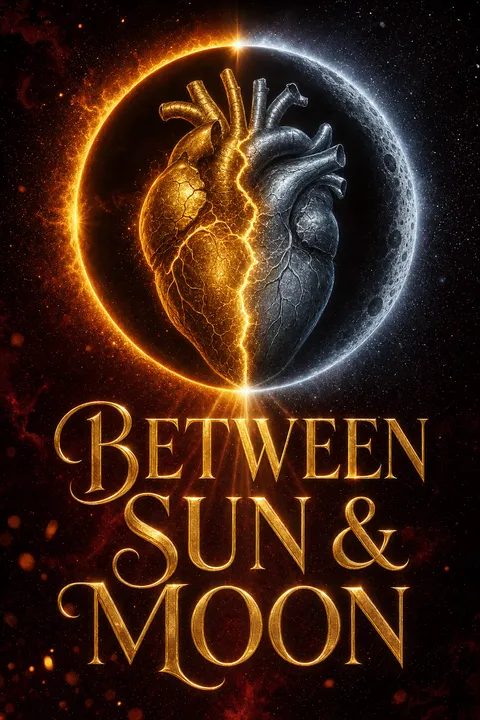


Plot Summary
Prologue
At sixteen, Sage1 whittles a red cedar fox as a birthday gift for her closest friend, Adelina.13 Both girls are Cursed, hiding magic in a kingdom that burns such people. When Adelina13 confesses she wants to reveal her Earth Curse to the man courting her, Sage1 begs her not to, and they part on a quarrel.
The next morning Sage1 arrives with her carving and an apology, only to face Adelina13's landlord, who smugly admits she reported the girl for growing magical plants. Soldiers already dragged Adelina13 to the pyre. Sage1 sprints to the square and finds nothing but the king's blood-red banners and a small mound of smoldering ash.
The opening weaponizes the ordinary: a hand-carved gift, a childish argument, a promise unkept. Kot establishes the novel's engine (state-sanctioned genocide dressed up as religious Cleansing) through intimate loss rather than spectacle. Adelina's fatal desire to be seen honestly frames the book's central tension between authenticity and survival, a tension Sage will spend the entire narrative renegotiating. The fox, an animal of cunning and hiddenness, becomes an emblem of the concealment the Cursed must practice. Crucially, the scene plants Sage's foundational wound and her hatred of the crown, converting grief into the moral fuel that later justifies her vow to topple a king.
Von Breathes, So Sage Schemes
Locked in Clearwell Castle behind an iron collar that severs her from her magic, Sage1 is gutted by grief until her brother Kaleb,4 now a raven-shaped reaper, delivers impossible news: Von, the God of Death,2 did not truly die. He hangs in a self-preserving coma, his wound refusing to heal because his life was the price of a tattooed bargain that saved hers.
Deals cannot simply be torn up. Rather than flee, Sage1 resolves to stay among her enemies and pursue two aims: force the betrayer Soren11 to restore her stolen memories, and end the king whose laws murdered people like Adelina.13 Kaleb,4 told Ezra5 once prophesied this, extracts one promise: she will not do it alone.
Grief converts into agency. Sage refuses the passive mourning expected of women in her world, choosing instead to remain inside the enemy's architecture, a decision that reframes captivity as infiltration. The chapter foregrounds the book's obsession with bargains as binding, quasi-legal magic, establishing scarcity of options as the true antagonist. Notably, Sage's willingness to trust Soren, the very man who broke her mind, signals her pragmatic ruthlessness. Kaleb's revelation that Ezra foresaw regicide seeds a destiny motif, while his insistence on partnership humanizes a heroine prone to martyrdom. The collar becomes a literalized metaphor: a woman silenced, powered down, yet plotting.
The Bathing Pool Bite
Slipping out for a wash, Sage1 clashes with a lecherous guard, then meets a breathtaking white-haired man with molten gold eyes3 who commands the guard away. He invites her into the steaming pool, claims they are the same, and kisses her. She bites him hard, and instead of copper she tastes sweet honey: he bleeds gold ichor, the blood of a god.
Claiming an eye for an eye, he sinks his teeth into her neck and drinks, an act that detonates agonizing pain rather than pleasure. Across realms, the comatose Von2 jolts awake internally, feeling teeth in his mate1's throat. Sage1 passes out, waking to realize the stranger light walks, mirrors her rare hair color, and is somehow tied to her.
The scene stages seduction as predation, immediately troubling the romance genre's charm scripts. His entitlement (permitting and forbidding her movements) reads as divine-right patriarchy made flesh, while the ichor bite inverts the earlier, tender feeding associated with Von: identical acts, opposite sensations. Kot uses taste as moral epistemology, honey versus honey-turned-torture, teaching Sage's body to distinguish tenderness from possession before her mind can. Von's remote agony introduces the mate bond as involuntary somatic tether. The bathing pool, a space of vulnerability and nakedness, dramatizes how little safety Sage's captivity affords, and how her own drawn-to-divinity instinct becomes a liability she cannot yet name.
The Husband She Forgot
Compelled to attend morning worship, Sage1 watches the fabled Golden Prince3 ascend the dais between an aging king and pox-ridden queen he resembles not at all. When the priestess names him Prince Aurelius,3 the pieces detonate: his birthday shares the sun god's, his first name mirrors her own goddess-name Aurelia,1 and his crown is too perfect for human hands.
He is the Lord of Light, God of Life, King of the New Gods,3 and, once, her husband. Recalling his bathing-pool questions about whether she is married, Sage1 panics, bolts from the temple, and is publicly recoiled from as filthy Cursed. Aurelius3 catches her wrist; the gold wedding band on his finger confirms everything her buried memory refuses to surrender.
Recognition here is dramatic irony collapsing inward: the reader and Sage arrive at the truth together, yet Sage lacks the memories to feel its weight, producing a uniquely dislocating horror. Kot literalizes identity fragmentation, Sage versus Aurelia, mortal versus goddess, making the self a contested territory. The temple setting is pointed satire: a fire-wielding priestess leads worship of gods who burn fire-wielders, exposing religion as the crown's propaganda arm. Aurelius's wedding ring functions as a claim-marker, foreshadowing ownership disguised as devotion. Sage's panic attack, physiological and involuntary, insists that trauma lives in the body regardless of what the conscious mind can retrieve.
Courtship and a Colder Deal
Aurelius3 plays the gracious suitor, apologizing for the bite, walking Sage1 through frosted gardens, gifting her a private library. He explains he masquerades as prince to inherit Edenvale, trapped like her by the Endless Mist, and vows to end the Cleansings when crowned. Sage,1 charmed but guarded, quietly hunts for anything that could break Von's deal.
When Arkyn,6 the silver-tongued royal advisor who cannot speak a lie, finally returns, Sage1 bargains: she will resume temple attendance if he permits Soren,11 the mind-walker who once shattered her sanity, to excavate her lost memories under Arkyn6's supervision. She wants her past not for love of Aurelius3 but as ammunition to save Von2 and topple the throne.
This section weaponizes courtship as reconnaissance, with Sage performing docility while cataloguing exits, guards, and secrets. Kot complicates the enemies-to-lovers architecture by making the seemingly gentle suitor genuinely persuasive, testing whether kindness can be trusted or is merely strategy. Arkyn, the God of Truth who nonetheless serves an engine of lies, embodies the novel's interest in complicity: truth-telling and moral good are not the same. The bargain itself mirrors the tattooed-deal motif on a human scale, foreshadowing costs. Sage's instrumentalization of both Soren and her own memories reveals a heroine willing to reopen her deepest wounds for tactical advantage, a self-surgery that will nearly break her.
Born of the Moon, Cursed Barren
Aurelius3 recounts, and then Sage1 relives, her making: he cut out his own heart so the Creator could forge her from the Selenian Sea and buried moonlight. Newborn and adoring, she was carried toward home, until the God of Death2 appeared to spite the man who had taken his realms.
Von2 wrenched her into shadow, dragged her to his mansion, and pressed his hand to her belly, cursing the Goddess of Life1 to never create anything, plant, animal, or child, unless the seed was his own. Sage1 wakes sobbing in Aurelius3's arms, believing Von2 robbed her of her core divinity purely to torment his enemy through her body. The revelation curdles her tentative feelings into revulsion.
The recovered origin scene is structured as manipulation-through-selection: Aurelius controls which truth surfaces first, priming Sage to hate Von before context can complicate the picture. Kot exploits reincarnation to make memory itself an unreliable narrator, since fragments arrive stripped of their surrounding causality. The barrenness curse is deliberately grotesque, reducing a fertility goddess to sterility, yet its true function (protection versus punishment) is withheld, weaponizing the reader's assumptions. The heart-gift establishes the novel's central biological metaphor: Sage literally carries a borrowed heart, raising the question of whether her love is authored by her or beats on another's behalf.
Seeds, Soldiers, and Missing Women
Session after session, Soren11 surfaces near-identical memories: Sage1 sick with fever, Von2 arriving to hand her a single apple seed, ordering her to plant it outside her husband3's window, then abandoning her to crawl home alone. The repetition buries her under decades of engineered hatred. Meanwhile the present darkens.
Ryker,7 Harper8's fire-twin brother, reveals himself disguised as a castle guard, having forged papers to reach her. He reports the king is hoarding new recruits, conscripting healers and young women who vanish, and shipping seasoned soldiers away. Riding back one night, Sage1 finds her old lecherous guard's severed head mounted on a pike, eyes gouged out, the castle's cruelty made literal.
Kot dramatizes how repetition manufactures conviction: the same scene, replayed, hardens into unquestionable narrative, mimicking how trauma and propaganda both operate through iteration. Sage's growing hatred is thus shown as partly constructed, priming a later reversal. The undercover Ryker reintroduces the resistance and loyalty networks, grounding the cosmic drama in a human insurgency. The disappearing women and hoarded healers plant the mystery whose monstrous answer arrives later, a slow-burn horror seeded with procedural clues. The gouged-out eyes on the pike foreshadow the price of gazing where one should not, and mark the castle as an abattoir wearing gold.
Anger in the God's Bed
Hollowed by Von2's apparent betrayal and craving sensation over thought, Sage1 tells Aurelius3 she no longer wants only friendship. He beds her on the balcony, feeding her his ichor, which acts as an addictive aphrodisiac that dulls pain and inflames desire. She wakes ashamed, not of the act but of its motive: revenge against Von.2
Von2's phantom, conjured from his dwindling power, arrives snarling, having felt every second. He claims her ferociously as his fated mate, insists no one shares what is his, and issues an urgent warning against trusting Aurelius3 or drinking his ichor. He hints, cryptically, that the barrenness curse actually benefited her, then dissolves before he can explain.
Sage's choice literalizes the novel's thesis that coercion corrupts consent: her yes is authored by grief, rage, and eventually a chemical intoxicant, complicating the erotic with the involuntary. Kot draws a sharp ethical line between Von's jealous claiming (possessive but never chemically coercive) and Aurelius's ichor, whose pharmacological control the reader now suspects. The phantom's dying-battery power reinforces Von's genuine sacrifice, love that costs him rather than serves him. The withheld explanation of the curse's benefit is a deliberate suspense engine, inviting the reader to reread cruelty as camouflaged protection, a hermeneutic Sage herself will soon be forced to adopt.
The Monster Was Always Golden
New memories detonate the story Sage1 told herself. After Von2's public humiliation of Aurelius,3 the God of Life3 turned vicious: hurling Sage1 across a chamber and snapping her neck, branding her Death's Whore before his court, and, most damning, decreeing the extermination of every descendant of the Old Gods.
He ordered her beloved apple orchard felled to build the pyres, then broke her finger to force the wedding ring back on, vowing she would never leave him. Each time her bones shattered, it was Von2 who spirited her to a tiny cottage and painstakingly reset them, sickened by her pain. The villain of her story and the man who nursed her wounds swap faces entirely.
This is the novel's great moral inversion, executed through the same memory mechanism that earlier condemned Von. Kot demonstrates how abusers weaponize narrative control: Aurelius curated Sage's early recovered memories to cast his rival as monster while erasing his own atrocities. The orchard's destruction is devastating symbolism: the one creation the barren goddess could tend, repurposed as fuel for genocide. The forced ring welds ownership to intimacy, exposing marriage-as-cage. Von's tender bone-setting, an intimacy of repair rather than possession, reframes the God of Death as the story's reluctant caretaker. Truth here is not discovered but re-sequenced, indicting the reader's own earlier credulity.
The Wound That Named a Mate
Von2's own recollections fill the gaps. He did not lose the Immortal War; he won it and chose to end it. On a battlefield cliff, the battered Goddess of Life1 drove a water blade through his stomach, and for the first time in existence the God of Death2 bled, red, warm, mortal.
The Three Spinners had warned him: he would know his mate1 because she would be the one to make him bleed, and her life would be linked to the very male she was destined to kill. Recognizing Aurelius3's wife1 as his fated other half, Von2 called off the war, released the New Gods, and imprisoned only Aurelius,3 unable to reconcile loving the weapon built to end him.
The reversal deepens into tragic irony: the most powerful being in creation is undone not by defeat but by recognition. Kot renders the mate bond as fate's cruelest joke, love and annihilation issued in the same breath. Von's bleeding, an event that shatters his self-conception as untouchable Death, dramatizes how intimacy makes gods vulnerable, literalizing the idiom that love wounds. The Spinners' prophecy introduces the linked-lives mechanism that will govern the climax, its ambiguity (which male she is destined to kill) functioning as a suspended blade over the narrative. Von's mercy toward his conquered enemies complicates his villain reputation, revealing restraint beneath the monstrous.
A Bargain to Save Thousands
The final memories reveal Sage1's own past courage. When Aurelius3 ordered the Cleansing of the Old Gods' descendants, Sage1 tore off her wedding ring and fled to Von2's obsidian castle to bargain for their lives. Von2 refused payment. Instead he gifted her the power to raise the Endless Mist around Edenvale, a barrier no god or king could breach, so the Cursed could shelter there.
He healed her broken finger with a single kiss, discovering he alone can mend her. He confessed that to the world he would remain the villain, but to her, and her alone, he no longer wished to be. Understanding blooms in the present: the man she was taught to hate2 repeatedly chose her.
Kot completes the ethical rehabilitation by revealing Sage's past self as a rescuer of the persecuted, retroactively dignifying the mortal Sage who freed prisoners. The refused payment inverts the transactional logic that governs Von's every other relationship, marking Sage as the one exception to a life of leverage. His healing kiss establishes the reciprocal biology (she can kill him, he can heal her) that renders them functional halves. The line between public villainy and private tenderness articulates the novel's mature thesis: reputation is performance, and love is what one does when no audience is watching. Sage's earlier defiance also recasts the barrier and the Cursed Lands as her own legacy.
Framed Over a Corpse
Aurelius3's discarded former lover, the royal dressmaker, lures Sage1 into her workshop and attacks her. When Sage1 escapes her blade, the dressmaker impales herself deliberately, engineering a murder scene. Her grieving sister, the king's mistress, and the king himself burst in to find Sage1 crouched over the body.
At a public trial engineered by a hostile alderman, the queen denies Sage1 ever dined at the royal table, the crowd bays for dismemberment, and only a toothless healer defends her. The king pronounces her guilty: her hands will be cut off, then she will burn at the pyre. The lone sympathetic healer is condemned to share her fate as Sage1 is dragged, screaming, toward the Well.
The frame-up exposes how a persecuted class can never win a hearing: Sage's testimony is voided not by evidence but by the label around her neck. Kot stages a show trial as theater of dehumanization, the crowd's bloodlust echoing the Cleansings that opened the book, closing a thematic circle. The dressmaker's self-destruction is a chilling act of devotion-as-vengeance, another woman ruined by proximity to Aurelius. The queen's public lie, delivered to protect the crown's image, reprises Arkyn's earlier truth-versus-power problem. Sage's collar, refastened, strips her divinity precisely when she needs it most, dramatizing how systems disarm before they destroy.
Rebellion Rises From the Well
Cast into the Well, a cavernous dungeon beneath the castle, Sage1 befriends a resilient boy12 and discovers hundreds of collared Cursed, plus the horror above: prisoners dragged upstairs, then blood raining warm through the ceiling. Refusing to abandon them, Sage1 rallies the prisoners, arms them with sharpened bucket slats and thrown stones, and leads a revolt when the guards descend, overwhelming them by sheer numbers.
The boy12 guides everyone into hidden passages he once played in as a castle child, funneling the crowd toward escape. Reuniting with the undercover Ryker,7 Sage1 confronts the exit hall, where a vast, motionless army of soldiers who never breathe stands frozen, each uncannily resembling Aurelius.3
The Well is Kot's descent into the machine's guts, where the disappeared women and blood-rain converge into dawning atrocity. Sage's leadership recovers the mortal identity she doubted: a fighter trained by Ezra, a protector who counts no life expendable. The improvised weapons and human-numbers strategy valorize collective resistance over individual heroism, insisting solidarity, not divinity, breaks cages. The hidden passages, mapped earlier, pay off structurally. The breathing-less lookalike army is body horror as political metaphor: an autocrat literally mass-producing loyal copies of himself, a chilling image of power reproduced without conscience, whose origin the next revelation makes unbearable.
Wings of the New King
Fleeing across frozen wilds, Sage1 and twenty-three Water Cursed dam a violent river so the refugees can cross while Ryker7's Fire Cursed hold off pursuing soldiers. Sage1 holds the river alone as the last escape. Then Aurelius3 descends on golden wings.
He confirms the nightmare: he murdered the old king, crowned himself, and has been using conscripted women as breeding stock, feeding the infant Demi Gods marrow torn from living Cursed to grow his army in a year. He chains Sage,1 dislocating her arm, and force-feeds his ichor to reduce her to a drugged, compliant doll. At his coronation she slumps at the foot of his single throne, intoxicated, while Arkyn6 watches with unbearable sorrow.
The river crossing crystallizes Sage as sacrificial keeper, holding back destruction so others may live, a rehearsal for the climax's self-immolation. Aurelius's confession completes the mystery's grim arithmetic: missing women plus screaming Cursed equals an army bred from atrocity, eugenics rendered literal. The ichor-as-control reveal retroactively poisons every prior tender moment between them, exposing romance as chemical captivity. The single throne, no seat ever granted his queen, distills centuries of erasure into furniture. Arkyn's silent grief foreshadows fracture in the loyal servant, while Sage's drugged compliance stages the terrifying erosion of will that autocratic love demands.
Ezra's Impossible Confession
Kaleb4 and Von2's chaotic brother Folkoln9 extract Sage1 from her drugged captivity after Arkyn,6 defying his father, reveals her hidden cell. Folkoln9 shadow walks her to the Cursed Lands, where she vomits out the ichor and slowly recovers under Ezra5's care, reunited with Harper,8 Ryker,7 Lyra, and the boy, now named Graiyson,12 whose sister Lyra she also saved.
The rescued families honor her as their savior. At a war council, Ezra5 drops her lifelong disguise: she is the Goddess of Free Will,5 one of the Three Spinners, and Sage1 is the reincarnated Lady Light1 who once saved the Old Gods' children. To break Von's deal, Sage1 must retrieve the lost Blade of Moram, now held by Von2's exiled sister, Saphira.10
The rescue restores Sage's chosen family and reframes her arc: the mortal girl who freed prisoners is the goddess who once shielded a civilization. Kot lets identity converge rather than compete, Sage and Aurelia becoming complementary rather than rival selves. Ezra's revelation recontextualizes the entire series' mentor figure, suggesting free will has been quietly shepherding a predetermined heroine, a delicious paradox given her title. Arkyn's betrayal of his father marks conscience overriding divine command, the truth-god finally serving truth. The Blade of Moram introduces the climactic instrument, and Saphira's ownership guarantees the reckoning must pass through Von's bitterest family wound.
The Price of Feathers
Folkoln9 escorts Sage1 to the bathhouse and explains the bond: immortal souls are split stars, hammered in two by the Creator, whole again only when the halves reunite through joining. Sage1 realizes her past self chose to bond with Von,2 proof he never merely used her. Saphira,10 the vengeful Goddess of War10 who had her wings torn away by Von,2 refuses to free him for anything, until Folkoln9 offers Sage1's hoard of Von2's black feathers.
Saphira10 agrees, handing over the shapeshifting obsidian Blade of Moram. But when Folkoln9 returns Sage1 to the Cursed Lands, they find Valenthia in flames: Aurelius3's Demi God army is marching east, slaughtering everyone. War erupts, and Harper8 falls, gravely wounded.
The star-splitting cosmology gives the mate bond metaphysical weight, reframing romance as reunification of a sundered self, and retroactively absolving Von by proving Sage once freely chose him. Saphira embodies grievance calcified into cruelty, a mirror warning of what unhealed betrayal breeds. The mysterious feather bargain plants a deliberately unexplained cost, honoring the series-long logic that every deal exacts more than it reveals. The pivot to burning Valenthia collapses cosmic bargaining into immediate carnage, and Harper's wounding raises the personal stakes, ensuring the climax is fought not for abstractions but for named, bleeding loved ones Sage refuses to lose.
One Blade, One Shared Heart
On the battlefield Folkoln9 uses the recovered blade to sever Von2's tattoo and Aurelius3's matching one, shattering the deal and waking Von2 at last. The blade then vanishes to Sage,1 arriving as she duels Aurelius,3 moon-flame against sun-flame. He overpowers her, seizes her throat, and flies skyward to snap her neck and murder everyone she loves.
Understanding that her life is linked to the man she is destined to kill,3 Sage1 plunges the Blade of Moram into her own heart, the shared heart Aurelius3 gave her. The blade lengthens through his body, killing him, then splinters, freeing them both. Sage1 falls. Von,2 finally awake and whole, catches her broken, silver-bleeding body from the air.
The climax fuses sacrifice and regicide into a single unbearable act: to kill the tyrant, Sage must stab the borrowed heart that was never fully her own. Kot resolves the linked-lives prophecy with tragic elegance, the male she was destined to kill is Aurelius, but only by turning the blade inward. Her silver blood confirms her full divinity in the instant of apparent death, identity realized at the threshold of loss. That Von wakes only in time to catch her, not save her, weaponizes the mate bond's cruelty from the prophecy's opening. The shattered blade freeing them both suggests liberation purchased through mutual destruction.
Epilogue
Von2 refuses to accept Sage1's death. He carries her ruined body to Mount Kilangor, home of the Three Spinners, and demands they weave her a new fate. They refuse: the heart required for her creation is destroyed, so she cannot reincarnate.
When they will not bend, Von2 unleashes the caged monster within him, Nockrythiam, the Ender of Realms, growing horns and black eyes, and rips the Wall of Weavings from its foundations, dangling every soul's thread over molten lava. He will end all of existence unless they save his mate.1 As the Spinners scream, a cane strikes the stone, and the Goddess of Free Will, Ezra,5 arrives, urging her sisters to hear Death's bargain: one life in exchange for all the living.
The coda escalates grief into cosmic hostage-taking, literalizing the mate bond's most terrifying clause: a god willing to unmake creation rather than survive loss. Von's transformation into Nockrythiam externalizes the beast he has spent millennia caging, suggesting love, not rage, finally releases it, a provocative reversal of the redemptive-love trope. Kot leaves the ledger open: a life for all the living, the ultimate tattooed bargain, unresolved. Ezra's arrival fuses the mentor and the metaphysical, hinting that free will, not fate, may yet author an exception. The cliffhanger withholds resolution deliberately, insisting that a love this destructive cannot be tidily redeemed within a single volume.
Analysis
Kot's sequel is, beneath its steam and shadow-daddy trappings, a sustained meditation on narrative control and consent. Its cleverest structural move is the recovered-memory engine, which first indicts Von2 as a monster, then systematically dismantles that judgment, implicating the reader's own credulity. The book argues that reputation is authored, often by abusers, and that truth depends on who controls sequence and context. Aurelius,3 the radiant, worshipped king, embodies charismatic authoritarianism: his charm is propaganda, his marriage a cage, his ichor a chemical leash, and his eugenic Demi God army the logical endpoint of a power that treats persons as extensions of itself. Against him, the God of Death2 is redefined not as the absence of cruelty but as cruelty performed publicly while tenderness is practiced in private, a distinction the novel insists matters morally.
The central metaphor is the borrowed heart. Sage1 literally carries the organ Aurelius3 sacrificed to create her, which raises the book's guiding question: is her love her own, or does it beat on another's behalf? Her arc, culminating in a self-directed blade to that very heart, is a violent reclamation of autonomy, answering finally with her own will rather than the inherited one. The reincarnation frame lets Kot explore identity as contested territory, Sage1 versus Aurelia,1 mortal freedom versus divine obligation, resolving not in erasure but synthesis.
Politically, the Cleansings and the Well function as unmistakable genocide allegory, with religion weaponized to sanctify slaughter and the persecuted denied any fair hearing. Sage1's prison rebellion valorizes collective, improvised resistance over solitary heroism. The cliffhanger, love escalated into cosmic hostage-taking, refuses tidy redemption, suggesting that a bond this consuming cannot be safely disarmed, only survived.
Review Summary
Between Sun and Moon received mostly positive reviews, with readers praising its character development, world-building, and intense plot. Many found it an improvement over the first book, enjoying the expansion of lore and Sage's growth. Criticisms included pacing issues, overuse of analogies, and some frustration with character decisions. The spicy content and morally gray characters were highlights for many. Readers expressed excitement for the next installment, especially after the cliffhanger ending. Overall, fans of dark romantic fantasy seemed to enjoy the book's unique elements and emotional depth.
People Also Read



Characters
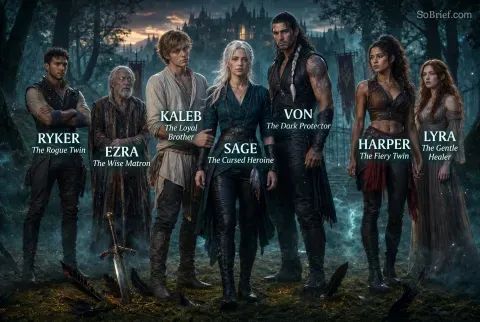
Sage
Cursed goddess reborn mortalRaised in the woods by the enigmatic Ezra5, Sage is a fiercely loyal, sharp-tongued young woman trained to fight and to hide her Water, Fire, and Dream Curses. Beneath her defiance lies profound abandonment fear and a savior complex forged by loss: she blames herself for those she could not protect. She is secretly the reincarnated Goddess of Life, Lady Light, and much of the book tracks her wrenching negotiation between mortal Sage and immortal Aurelia, two selves competing for one body. Driven by protectiveness rather than glory, she consistently sacrifices her own safety for the persecuted and the people she loves. Her arc is one of reclaiming autonomy: learning to answer with her own heart rather than the borrowed one beating in her chest.
Von
The God of DeathAlso called Draevon, the Blood King is the eldest and most powerful of the Old Gods, a shadow-walking creature of wind and night who invented tattooed bargains and rules the Spirit Realm. Ruthless, arrogant, and unashamed of his darkness, he openly calls himself a villain, yet governs by a rigid code and a will of iron. Centuries of solitude left him certain the Creator withheld a mate from him. His defining conflict is the beast he cages within, an entity of pure destruction, and his terror of the vulnerability love imposes. Toward Sage1 he is possessive, obsessive, and startlingly tender, willing to sacrifice his throne, his power, and his existence for her. He performs cruelty publicly while practicing devotion privately.
Aurelius
Radiant god-king suitorThe Golden Prince of Edenvale, secretly the Lord of Light, God of Life, and King of the New Gods, forged from the sun and worshipped as a living deity. Ethereally beautiful and preternaturally charming, he wields commands that bend gods and Demi Gods to his will. Sage1's husband from a past life, he presents as a gracious, wounded lover eager to rekindle their bond. Yet beneath the charm churns a narcissist consumed by legacy, control, and the certainty of his own supremacy. He cannot conceive of his queen1 as a person rather than an extension of himself, having named her after his own name. His obsession with heirs and purity drives the novel's darkest machinery.
Kaleb
Sage's brother, now reaperSage1's beloved adoptive brother, once conscripted into the king's war, now a raven-shaped reaper serving the Spirit Realm. Warm, steadying, and quick with humor, he is Sage1's emotional anchor and conscience, insisting she never fight alone and reminding her that grief and self-blame are human, not weakness. His transition to the afterlife strains the ordinary intimacy the siblings once shared, and he navigates his own tender new romance15 while worrying constantly over his headstrong sister1.
Ezra
Blind herbwoman mentorThe eccentric, rock-collecting old woman who raised Sage1 and Kaleb4, blind yet uncannily knowing, forever speaking in riddles and lessons about self-discipline. She trained Sage1 to fight and heal for a war she never named. Far older and stranger than she appears, Ezra hoards secrets as fondly as she hoards stones, dispensing exactly enough guidance to nudge fate without revealing her hand. Her patience, warmth, and cryptic foresight make her the story's quiet architect.
Arkyn
Truth-bound royal advisorA Demi God and the God of Truth, physically incapable of lying and able to detect any falsehood. Impeccably dressed and coolly charming, he serves as the crown's advisor and once counted Sage1 his closest friend, harboring quiet unspoken feelings for her. His arc pivots on the agony of complicity: loyalty and command bind him to atrocities his conscience rejects, forcing an eventual reckoning between the master he serves and the truth he embodies.
Ryker
Fire-wielding rebel warriorA towering, cocky Fire Cursed rebel and Harper8's twin, who infiltrates the castle disguised as a guard to reach Sage1. Brave, blunt, and fiercely protective, he carries the old grief of a lost love and the guilt of believing himself responsible for her fate. He fights beside Sage1 as tactician and shield, and his loyalty to Von2, forged in boyhood, complicates his politics.
Harper
Sage's fierce best friendA statuesque, red-lipped Fire Cursed warrior and Ryker7's twin, Sage1's closest friend from her bathhouse days. Bold, sensual, and combat-hardened, she blends loyalty with sharp humor. Raised alongside Ryker7 by Ezra5 after their parents died, she is family to Sage1 in every way that matters, and her fate on the battlefield raises the war's personal stakes.
Folkoln
The God of ChaosVon2's brother, a tavern-owning God of Chaos who feeds on strong emotion and radiates scentless smoke rather than shadow. Insolent, hedonistic, and gleefully provocative, he resembles Von2 closely enough to be mistaken for him, yet runs on mischief and appetite. Beneath the swagger he is genuinely loyal to his comatose brother2, willing to risk betrayal to save him, and quietly wounded by his own matelessness.
Saphira
Von's exiled warmonger sisterThe Goddess of War, Von2's venomous sister whose wings he tore away for staging a coup, now exiled among the mortals she despises. Serpentine and vengeful, she hungers ceaselessly for renewed war against the New Gods and nurses a grievance against Von2 deep enough to relish his suffering. Her calcified rage and hidden grief make her a dangerous, transactional player.
Soren
Mind-walking betrayerThe young man who once infiltrated Sage1's unconscious mind and betrayed her to the crown, trading her freedom for his own. Now serving the enemy, he reluctantly helps excavate her lost memories under duress, his guilt evident but his trustworthiness gone.
Graiyson
Resilient dungeon boyAn Earth Cursed boy imprisoned for years in the Well, hardened into a savvy survivor who traps rats and knows the castle's hidden passages. His guidance enables the mass escape, and reclaiming his name marks his return to personhood. He is Lyra's younger brother.
Adelina
Sage's doomed childhood friendSage1's warm, book-loving best friend in girlhood, secretly Earth Cursed and fascinated by the gods. Her yearning to be honestly seen sets the novel's opening tragedy and forges Sage1's hatred of the crown.
Brunhilde
Officious loyal lady's maidSage1's plump, punctual, rule-obsessed head lady's maid, who fusses over corsets and table manners while showing unexpected kindness, unbothered by Sage1's Cursed status.
Fallon
Reaper, Ryker's lost loveA reaper and Kaleb4's new love, revealed to be the woman Ryker7 once loved and believed missing. Her reappearance forces a painful reckoning among old lovers and new bonds.
Plot Devices
Tattooed bargains
Binding magic sealed in skinVon2 invented these unbreakable deals in the early days of the realms, inking terms directly into flesh because paper did not yet exist. A bargain ends only three ways: completion, mutual agreement, or one party's natural death. Von2's self-sacrificing deal with Arkyn6, his life traded for Sage1's, is precisely what traps him in an unhealing coma throughout the book, since the wound is the bargain made manifest. The device drives the central quest: because deals cannot simply be voided, Sage1 must hunt an object capable of breaking the unbreakable. Bargains recur at every scale, from cosmic pacts to Sage1's small agreement with Arkyn6, framing the entire narrative around cost, consent, and the impossibility of getting something for nothing.
Recovered memories
Truth revealed in fragmentsHaving died and reincarnated as mortal Sage1, the heroine has lost her past life as the goddess Aurelia1. Soren11's mind-walking and spontaneous fainting spells surface these memories piecemeal, and crucially out of context. The device is Kot's engine of moral misdirection: early fragments, curated to villainize Von2, are later overturned by fragments exposing Aurelius3's cruelty. Because memory arrives stripped of causality, both Sage1 and the reader repeatedly misjudge who wronged whom. The gradual reassembly mirrors trauma recovery and propaganda alike, showing how sequence and selection manufacture belief. Ultimately the memories reconcile Sage1's two selves, letting the mortal and the goddess become complementary rather than rival identities.
Aurelius's ichor
Sweet poison of controlThe golden blood of the God of Life3 tastes like honey and functions as a potent aphrodisiac, dulling pain and inflaming desire far beyond ordinary intoxicants. Initially it appears merely sensual, a divine indulgence during intimacy. Its darker purpose surfaces later: because Aurelius3's spoken commands over gods fade with time, his ichor extends and deepens his control, reducing Sage1 to a compliant, drugged instrument of his will. The device literalizes coercion within romance, weaponizing pleasure itself, and stands in deliberate contrast to Von2, who never chemically manipulates Sage1. Von2's early cryptic warning against drinking it becomes retroactively chilling once its true function is exposed.
The mate bond
Split-star souls reunitedImmortal souls are forged from the brightest stars, hammered in two by the Creator and buried in separate beings; the halves shine whole again only when reunited through joining, welding an unbreakable bond of shared sensation and a private mental channel. The bond lets mates feel each other's pain across realms and drives them to obsessive protectiveness. It is revealed that the God of Death2 bleeds only for his fated mate1, and a prophecy warns that mate's life is linked to the male she is destined to kill. The device supplies both the romance's metaphysical core and the tragic mechanism that governs the climax, love and destruction issued in a single breath.
The Blade of Moram
Weapon that breaks the unbreakableAn obsidian blade forged by the Three Spinners from threads of Fate, Destiny, and Free Will, capable of shifting between dagger and sword at its wielder's whim and possessed of a will of its own, appearing at convenient or inconvenient moments. It is the one object able to sever a tattooed bargain, making it the story's grail: retrieving it from Von2's vengeful sister Saphira10 is the quest that could free Von2 from his coma. Long lost, and long preferred lost by Von2 himself, the blade is both salvation and threat, because its power in the wrong hands could doom Sage1. Its shattering climax fuses liberation with catastrophe.
FAQ
Synopsis & Basic Details
What is Between Sun and Moon about?
- A Hunted Protagonist's Journey: Between Sun and Moon follows Sage, a young woman with a hidden magical Curse, living in a world where Cursed individuals are persecuted and executed by the ruling Crown of Edenvale. Her life is upended by personal tragedy, setting her on a path of vengeance against the tyrannical king.
- Entangled Divine Destinies: Sage's quest for justice leads her into the complex world of Old and New Gods, where she discovers her own forgotten past as the Goddess of Life, Aurelia. She becomes entangled in a cosmic rivalry between Von, the morally grey God of Death and her fated mate, and Aurelius, the charismatic but manipulative God of Life and her former husband.
- Struggle for Freedom: The narrative explores Sage's fight for personal agency and the liberation of her people, the Cursed, from systemic oppression. It delves into themes of love, betrayal, sacrifice, and the profound choices that shape destiny, culminating in a war that threatens to reshape the very fabric of the realms.
Why should I read Between Sun and Moon?
- Emotionally Charged Narrative: Readers are drawn into an intense emotional rollercoaster, experiencing devastating heartache, fierce loyalty, and passionate romance. The story's raw portrayal of trauma and resilience offers a deeply human core within its fantastical setting.
- Complex Moral Landscape: The book excels in its morally grey characters, particularly Von, the God of Death, who challenges traditional hero archetypes. This complexity invites readers to question motivations and allegiances, adding layers to the "good versus evil" dynamic.
- Unique World-Building & Magic: Jaclyn Kot crafts a rich, immersive world with a distinct magic system, including elemental Curses, divine powers, and intricate "tattooed bargains." The interplay between the Living, Immortal, and Spirit Realms, along with the unique origins of gods and their powers, provides a fresh take on fantasy lore.
What is the background of Between Sun and Moon?
- A World Divided by Magic: The story is set in a realm where magic, known as "Curses," is feared and suppressed by the human monarchy of Edenvale. This creates a stark societal divide between the "Cursed" and "mortals," leading to systematic persecution and "Cleansings" (executions).
- Ancient Divine Conflict: The underlying conflict stems from an ancient war between the Old Gods (led by Von, God of Death) and the New Gods (led by Aurelius, God of Life). This historical divine struggle directly impacts the current mortal world, as the Cursed are descendants of the Old Gods, making them targets of the New God-worshipping Crown.
- Interconnected Realms: The narrative spans three interconnected realms: the Living Realm (where mortals and Cursed reside), the Immortal Realm (home to the New Gods and their creations), and the Spirit Realm (ruled by the Old Gods and where souls go after death). Travel between these realms, though difficult, is central to the plot and character journeys.
What are the most memorable quotes in Between Sun and Moon?
- "To those considering taking a bite of an apple, be wary of those little, black seeds, won't you?": This opening dedication subtly foreshadows the pivotal role of apples and seeds in the story, particularly in the context of Von's curse on Sage and the deals made, hinting at hidden dangers and consequences. It links to the biblical allusion of forbidden fruit and knowledge.
- "You are mine, Kitten. And I do not share what is mine.": Spoken by Von, this quote encapsulates his possessive and territorial love for Sage, a core aspect of his morally grey character. It highlights the intense, primal bond between them, contrasting sharply with Aurelius's more manipulative claims of ownership.
- "My name is Sage!": This powerful declaration by Sage, as she breaks free from Aurelius's control and embraces her true identity, marks a critical turning point in her journey. It signifies her rejection of the name Aurelius gave her and her assertion of self-determination, embodying the novel's central theme of agency.
What writing style, narrative choices, and literary techniques does Jaclyn Kot use?
- First-Person, Emotion-Driven Narrative: The story is primarily told from Sage's first-person perspective, immersing the reader deeply in her emotional and psychological journey. Kot's prose is highly sensory and visceral, focusing on Sage's internal turmoil, physical sensations, and raw emotional responses, making her experiences intensely felt.
- Fragmented Memory & Non-Linear Revelation: A key narrative choice is the gradual, often painful, return of Sage's lost memories. These memories are presented as vivid, disorienting flashes, creating a non-linear revelation of her past life. This technique mirrors Sage's internal struggle with identity and keeps the reader actively piecing together the larger narrative puzzle.
- Symbolic Imagery & Sensory Detail: Kot frequently employs rich symbolic imagery, such as the sun and moon, specific colors (gold, black, red), and recurring objects (collars, feathers, apples, the Blade of Moram). These are often paired with strong sensory details—smells (saffron, bourbon, rotting corpses), tastes (honey, copper, bitter herbs), and tactile sensations (cold stone, burning heat, biting metal)—to deepen thematic resonance and immerse the reader in the world.
Hidden Details & Subtle Connections
What are some minor details that add significant meaning in Between Sun and Moon?
- Ezra's Whittling Lesson: Early in the book, Ezra teaches Sage about self-discipline through whittling, stating, "There is a thin line between success and failure. Do you know what determines either outcome? Not giving up on something?" This seemingly simple lesson foreshadows Sage's relentless perseverance through immense suffering and betrayal, ultimately leading to her success in saving the Cursed and herself.
- The Black Feather Motif: Throughout the narrative, black feathers appear, often signaling Von's presence or influence, even when he is physically absent or in raven form. Later, it's revealed that Sage has a chest full of these feathers, which Saphira desires. These feathers symbolize Von's essence, his connection to Sage, and become a literal bargaining chip, highlighting the deep, often unseen, ties between them.
- The Orchard's Symbolic Destruction: Aurelius's act of cutting down Sage's apple orchard, the only thing she felt was "hers," is a profound symbolic act. The orchard, grown from seeds Von gave her, represents Sage's life-giving power and her connection to the Old Gods. Its destruction by Aurelius underscores his controlling nature, his hatred for Von, and his desire to sever Sage's ties to her past and her true self.
What are some subtle foreshadowing and callbacks in Between Sun and Moon?
- Adelina's Fox Carving: Early on, Sage struggles to carve a fox for Adelina, creating "two blobs with lopsided ears." This seemingly minor detail subtly foreshadows Sage's initial struggle to fully embody her true self and powers, which are initially "lopsided" or incomplete. Ezra's help in shaping the fox mirrors her later guidance in Sage's self-discovery.
- Von's "Parasite" Comment: When Von observes Sage's connection to Aurelius, he wonders if the "parasite I planted within their lives turned around and burrowed into mine?" This foreshadows the revelation that Sage is literally Von's heart, a "parasite" in his body that he cannot live without, and hints at the depth of his unexpected emotional entanglement with her.
- The "Black Snow" in the Spirit Realm: Upon arriving in the Spirit Realm, Sage observes "black, glittering cinders" falling like "black snow." This unique environmental detail subtly foreshadows the destructive power of the God of Death and the grim reality of his realm, contrasting with the vibrant, life-filled imagery of Aurelius's domain.
What are some unexpected character connections in Between Sun and Moon?
- Ezra's True Identity as Goddess of Free Will: Ezra is initially presented as Sage's wise, eccentric mortal mentor. The revelation that she is an ancient immortal, the Goddess of Free Will, who chooses to live as a mortal and experience life fully, is a profound and unexpected twist. This connection recontextualizes her teachings and deepens the theme of choice versus fate.
- Lyra and Graiyson as Siblings: The quiet, seemingly unrelated characters of Lyra (Harper's friend) and Graiyson (the boy from the Well) are unexpectedly revealed to be siblings. This connection highlights the widespread impact of the king's cruelty on families and underscores Sage's role in reuniting them, emphasizing the theme of chosen family and collective hope.
- The Dressmaker as Aurelius's Former Lover: The dressmaker's intense animosity towards Sage is initially attributed to her being Cursed. The unexpected reveal that she was Aurelius's former lover, discarded when Sage appeared, adds a layer of personal betrayal and jealousy to the political conflict. It also subtly exposes Aurelius's casual cruelty and objectification of women.
Psychological, Emotional, & Relational Analysis
What are some unspoken motivations of the characters in Between Sun and Moon?
- Aurelius's Need for Absolute Control: Beyond his stated desire for power and heirs, Aurelius's deepest unspoken motivation is an insatiable need for absolute control, stemming from his past as the "King of Kings" and his literal creation of Sage. His actions, from forcing his ichor on Sage to creating Demi-Gods, are driven by a desire to dominate and possess, rather than genuinely love or lead.
- Von's Hidden Self-Sacrifice: While Von often acts with a "bastard" persona and claims revenge as his motive, his unspoken motivation is a profound, self-sacrificing love for Sage. His initial curse on her (barrenness) was a twisted form of protection, and his refusal to re-forge their bond early on was to give her choice, something Aurelius never offered. This reveals a deeper, tormented compassion beneath his dark exterior.
- Sage's Subconscious Yearning for Freedom: Even before regaining her memories, Sage's actions, such as her defiance against the king and her discomfort with societal expectations, are driven by a subconscious yearning for the freedom she lacked in her past life as Aurelia. Her "mortal" choices are often a manifestation of her true self rebelling against the constraints of her divine past.
What psychological complexities do the characters exhibit in Between Sun and Moon?
- Sage's Identity Dissociation and Integration: Sage grapples with a profound psychological complexity: the dissociation between her current "mortal" self and her past "goddess" identity (Aurelia). Her journey is a painful process of integrating these two selves, reconciling the trauma of her past with her present experiences, and ultimately choosing who she wants to be, rather than who she was created or forced to be.
- Von's Internalized "Beast" and Loneliness: Von, as the God of Death and "Ender of Realms," constantly battles an internal "beast" (Nockrythiam) that urges him to destroy. His psychological complexity lies in his struggle to control this destructive impulse, often manifesting as self-isolation and a deep-seated loneliness. His actions, though seemingly cruel, are often a desperate attempt to protect Sage while keeping his darker nature in check.
- Aurelius's Narcissistic Entitlement: Aurelius exhibits classic narcissistic traits, believing himself inherently superior and entitled to control others, especially Sage, whom he literally created from his own heart. His inability to accept rejection, his gaslighting, and his casual cruelty (e.g., harvesting Cursed marrow, destroying the orchard) stem from a deep-seated belief that his desires supersede all others, revealing a profound lack of empathy.
What are the major emotional turning points in Between Sun and Moon?
- Adelina's Pyre and Sage's Vow: Adelina's public execution at the pyre is Sage's first major emotional turning point. It shatters her innocence, instills a deep-seated hatred for the king, and solidifies her vow to kill him, transforming her from a passive victim into an active agent of rebellion. This moment fuels her initial motivations for the entire story.
- Sage's First Full Memory of Aurelius's Betrayal: The memory of Aurelius taking her ability to create life and his subsequent manipulation marks a devastating emotional turning point for Sage. This revelation shatters her perception of Aurelius as a benevolent figure and forces her to confront the true nature of his control, leading to a profound sense of betrayal and anger.
- Von's "Heart" Revelation and Sage's Epiphany: The moment the Three Spinners reveal that Sage is literally Von's heart, and that he cannot bleed without her, is a pivotal emotional climax. This truth recontextualizes all of Von's past actions, shifting Sage's perception of him from tormentor to deeply wounded protector, and allows her to finally understand the true nature of their bond and her own feelings.
How do relationship dynamics evolve in Between Sun and Moon?
- Sage and Aurelius: From Allure to Abhorrence: Their dynamic begins with an intoxicating, magnetic pull, rooted in their past marriage and Aurelius's literal connection to Sage's heart. Sage is initially drawn to his charm and perceived kindness. However, as her memories return and Aurelius's true, controlling, and monstrous nature is revealed, their relationship devolves into one of abhorrence and active opposition, culminating in a deadly confrontation.
- Sage and Von: From Enemy to Fated, Chosen Mate: Their relationship is a complex dance of attraction, repulsion, and misunderstanding. Initially, Sage views Von as a dangerous enemy due to his role as God of Death and the pain he caused her in the past. As she uncovers the truth behind his actions—his sacrifices, his hidden protectiveness, and the revelation that she is his heart—their dynamic shifts to one of deep, fated love, ultimately chosen by Sage despite their tumultuous history.
- Sage and Her Chosen Family: From Dependence to Mutual Strength: Sage's relationships with Kaleb, Harper, Ryker, and Ezra evolve from her initial dependence on them for survival and guidance to a dynamic of mutual support and shared leadership. They become her unwavering anchors, providing emotional solace, strategic aid, and a sense of belonging that transcends blood ties, embodying the power of chosen family in the face of adversity.
Interpretation & Debate
Which parts of the story remain ambiguous or open-ended?
- Ezra's Ultimate Fate and Power: While Ezra is revealed as the Goddess of Free Will, her ultimate fate after the final confrontation and the full extent of her ancient, pre-divine powers remain somewhat ambiguous. Her ability to "choose" mortality and her unique connection to the Three Spinners suggest a power beyond even the Old Gods, leaving room for further exploration of her role in the cosmic balance.
- The Creator's True Intentions: The motivations of "the Creator" remain largely undefined. While they are responsible for forging gods and setting certain rules (like the bond, or Von's lack of a heart), their ultimate plan for the realms and their involvement in the conflict between Old and New Gods is open to interpretation. Are they truly benevolent, or are the gods merely pawns in a larger, inscrutable game?
- The Future of the Realms and the New Balance: The ending establishes a new balance between Life and Death, with Sage and Von together. However, the long-term implications for the Living, Immortal, and Spirit Realms, and how the new leadership will govern, are left open. Will the cycle of conflict truly end, or will new challenges arise from this altered cosmic order?
What are some debatable, controversial scenes or moments in Between Sun and Moon?
- Von's Curse on Sage's Fertility: One of the most controversial moments is Von's curse on Sage in their past life, rendering her barren unless she conceives with him. While later revealed as a twisted act of protection to save her from Aurelius's forced breeding, this act of stripping her agency and bodily autonomy is highly debatable, forcing readers to confront the line between love and control, even with good intentions.
Between Life and Death Series
About the Author
Download PDF
Download EPUB
.epub digital book format is ideal for reading ebooks on phones, tablets, and e-readers.








































