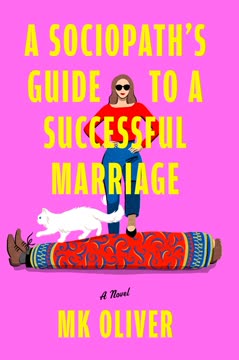
Plot Summary
Blood on the Persian Rug
Lalla Rook, the razor-sharp, emotionally detached narrator, opens her story with a dead man bleeding out on her Persian rug. She's just stabbed an intruder seven times with a vegetable knife, all while prepping for her son Nathan's fourth birthday party. The juxtaposition of domestic perfection and sudden violence is both comic and chilling. Lalla's mind is already racing through logistics: should she cancel the party, or simply close the living room door and deal with the corpse later? Her husband Stephen is oblivious, her children are asleep, and her main concern is not the murder, but the bloodstains on her Oscar de la Renta dress and the rug. This is a woman for whom murder is just another item on the to-do list, and her lack of remorse is both unsettling and darkly funny.
Monsters in Muswell Hill
As guests arrive for the party, Lalla's sociopathic tendencies are masked by her flawless social performance. She navigates the demands of motherhood and friendship with calculated charm, even as she hides a corpse in the next room. Her friends—Sophie, Aisha, and Cait—each bring their own baggage, from marital woes to true crime obsessions. Lalla's inability to feel genuine affection for her children is a recurring theme, but she mimics maternal warmth convincingly. When Cait receives a threatening message from her abusive ex, Owen, the group's attention shifts to real-life monsters. Lalla's empathy is performative, but her advice is practical and ruthless. The chapter explores the masks women wear and the monsters—literal and figurative—that lurk behind closed doors.
The Art of Disguise
The party continues, with Lalla expertly juggling small talk, wine, and the maintenance of her domestic façade. She takes pride in her ability to pass off a store-bought cake as homemade, seeing social deception as an art form. The conversation among the mothers is laced with competition and subtle cruelty, as they compare cakes, marriages, and children's achievements. Lalla's observations are biting and often hilarious, exposing the performative nature of middle-class motherhood. Beneath the surface, however, tension simmers: Cait's fear of Owen, Sophie's insecurity about her relationship, and Lalla's own dissatisfaction with Stephen. The chapter is a masterclass in social camouflage, with Lalla as both predator and prey.
Cait's Confession
Cait's revelation about Owen's abuse brings the group together in a moment of raw honesty. Lalla, who has always suspected something was wrong, offers practical (if extreme) solutions, while the others provide comfort. The scene is a rare glimpse of vulnerability, both for Cait and for Lalla, who recognizes a kindred spirit in someone accustomed to hiding pain. The women's solidarity is genuine, but Lalla's support is tinged with self-interest—she sees herself as a protector, but also as someone who cannot be outmaneuvered. The chapter explores the complexities of female friendship, the limits of empathy, and the ways in which trauma binds and isolates.
Dead Rabbit, Living Lies
When Cait nearly discovers the corpse, Lalla's quick thinking saves the day: she claims the blood is from a disemboweled rabbit, not a man. The lie is accepted, but the tension escalates. Lalla's ability to improvise under pressure is both impressive and chilling. She manipulates Cait's trauma to ensure her silence, framing the murder as an act of self-defense. The chapter highlights the cost of secrets—how one lie begets another, and how the truth becomes increasingly difficult to discern. Lalla's moral flexibility is on full display, as is her willingness to implicate others to protect herself.
Domestic Chores and Corpses
Lalla's day continues with school pickups, teacher confrontations, and the mundane chaos of family life—all while a corpse waits in the living room. Her daughter Nelly's lack of empathy (she drowns the class hamster) is both a source of concern and a point of pride for Lalla, who sees herself reflected in her child. The chapter is a darkly comic meditation on the absurdity of modern motherhood, where the demands of domesticity coexist with the logistics of disposing of a body. Lalla's detachment allows her to compartmentalize, but cracks begin to show as the pressure mounts.
The Wheelbarrow Solution
Faced with the problem of moving the corpse, Lalla turns to practical solutions: plastic wrap, a wheelbarrow, and a trip to the garage. Her approach is methodical, almost cheerful, as she applies the same skills she uses for party planning to body disposal. The process is described in meticulous detail, with an undercurrent of dark humor. Lalla's pride in her efficiency is palpable, but the absurdity of the situation is never lost on her. The chapter underscores the theme of domesticity as performance, and the thin line between order and chaos.
Marriages and Manipulations
Stephen's depression and lack of ambition frustrate Lalla, who sees marriage as a transactional partnership. Her own childhood trauma is hinted at, providing context for her emotional detachment. The couple's interactions are a study in passive aggression, with Lalla pushing Stephen to achieve for the sake of their family's social ascent. The chapter explores the power dynamics of marriage, the influence of in-laws (especially the formidable Madeleine), and the ways in which love is commodified and weaponized. Lalla's longing for control is both her strength and her undoing.
Hampstead Dreams, Hampstead Schemes
Lalla's obsession with moving to Hampstead—a symbol of ultimate success—drives much of her behavior. She tours a dream house, schemes to secure the deposit, and measures herself against her wealthier friends. The pursuit of status is relentless, and every relationship is viewed through the lens of utility. Lalla's envy of Tor, her manipulation of Stephen, and her willingness to sacrifice friendships for social mobility are laid bare. The chapter is a satire of aspirational culture, exposing the emptiness at its core.
Accomplices and Accusations
As the investigation into the missing man intensifies, Lalla's paranoia grows. She manipulates Cait into complicity, planting evidence and threatening to implicate her if she goes to the police. The dynamic between the two women becomes increasingly fraught, with trust eroding and self-preservation taking precedence. The chapter explores the psychology of guilt, the fragility of alliances, and the ease with which victims can become perpetrators. Lalla's sociopathy is both her shield and her Achilles' heel.
Concrete Secrets
The corpse is finally disposed of—buried in concrete at a friend's construction site. The act is both literal and symbolic: secrets are entombed, but the past refuses to stay buried. Cait's involvement deepens her sense of guilt, while Lalla feels a fleeting sense of triumph. The chapter is a meditation on the weight of secrets, the lengths people will go to protect themselves, and the inevitability of consequences. The concrete becomes a metaphor for the hardening of hearts and the inescapability of one's actions.
The Past Returns
Lalla's carefully constructed life begins to unravel when her presumed-dead first husband, Hollis, reappears—alive, wheelchair-bound, and wealthy. The revelation that she is a bigamist threatens everything: her marriage to Stephen, her claim to wealth, and her social standing. Hollis's return forces Lalla to confront her past, her capacity for violence, and the lies she has told herself and others. The chapter is a turning point, as the past collides with the present and the illusion of control shatters.
Blackmail and Betrayal
As Lalla navigates the fallout from her bigamy, her friends face their own crises. Tor is blackmailed over a sex tape, and Lalla intervenes—both to help and to gain leverage. The web of secrets, betrayals, and shifting loyalties grows ever more tangled. Lalla's willingness to exploit others' vulnerabilities is matched only by her fear of exposure. The chapter explores the corrosive effects of blackmail, the transactional nature of relationships, and the ways in which power is wielded and lost.
Schoolyard Wars
The competition to secure a place at the elite Adams Prep school becomes a battleground for the mothers. Lalla resorts to bribery, blackmail, and outright fraud to ensure Nelly's admission, swapping candidate numbers and forging letters. The process is cutthroat, with friendships sacrificed and reputations destroyed. The chapter is a biting satire of parental ambition, exposing the lengths to which people will go for their children—and for their own egos. The school becomes a microcosm of the larger social wars being waged.
The Bigamist's Dilemma
With her marriage to Stephen voided by bigamy, Lalla faces financial ruin. Hollis's unexpected wealth offers a lifeline, but their reunion is fraught with suspicion and unresolved trauma. The question of inheritance looms large, as does the specter of violence. Lalla's relationships—with Stephen, Hollis, and her children—are revealed as transactional, shaped by need and opportunity rather than affection. The chapter interrogates the meaning of marriage, the nature of love, and the cost of survival.
The Final Push
The climax arrives as Lalla and Hollis confront each other by the Thames. Accusations fly, old wounds are reopened, and violence erupts. Hollis, seeking revenge for his own attempted murder, tries to kill Lalla, only to be thwarted by Cait, who pushes him into the river. The scene is both cathartic and tragic, a culmination of the novel's themes of betrayal, survival, and the inescapability of the past. The cycle of violence is complete, but the consequences are far from over.
Gloating and Goodbyes
With Hollis dead and his will (conveniently) destroyed, Lalla inherits his fortune and secures her place in Hampstead. Madeleine, Stephen's mother, is outmaneuvered; Georgie, the rival, is dispatched; and Tor's scandal is exposed. Lalla's sociopathic cunning has triumphed, but the cost is high: friendships are shattered, and the line between justice and vengeance is blurred. The chapter is a meditation on the nature of victory, the emptiness of revenge, and the fleeting satisfaction of getting what one wants.
Acceptance and Aftermath
In the aftermath, Lalla reflects on her journey: marriages ended, friends lost and found, fortunes made and squandered. She reconciles (of sorts) with Stephen, secures Nelly's place at Adams through fraud, and prepares for a new life as a wealthy widow and CEO. The final scenes are both triumphant and hollow, as Lalla acknowledges the cost of her actions and the limits of her own capacity for change. The novel ends with a sense of uneasy peace—a sociopath's version of a happy ending, where survival is the ultimate success.
Analysis
A Sociopath's Guide to a Successful Marriage is a razor-sharp, darkly comic exploration of modern domestic life, told through the eyes of a protagonist who is both monstrous and deeply human. The novel satirizes the pressures of marriage, motherhood, and social aspiration, exposing the transactional nature of relationships and the performative demands of contemporary womanhood. Through Lalla's unreliable narration, the book interrogates the boundaries of empathy, morality, and survival, asking whether it is possible to thrive—or even to love—without feeling. The story's relentless pace, shifting alliances, and escalating absurdities mirror the chaos of real life, while its humor provides both relief and critique. Ultimately, the novel suggests that success—whether in marriage, motherhood, or society—may depend less on virtue than on adaptability, cunning, and the willingness to do whatever it takes. Yet, beneath the satire and sociopathy, there is a poignant meditation on the longing for connection, the scars of trauma, and the possibility of redemption, however fleeting or flawed.
Review Summary
A Sociopath's Guide to a Successful Marriage holds an overall rating of 3.84/5 across 3,732 reviews. Most readers praise the dark humor, fast-paced short chapters, and compelling anti-heroine Lalla Rook, frequently comparing her to Finlay Donovan. Fans enjoy her ruthless scheming and deadpan wit. Critics cite a lack of emotional depth, slow pacing in sections, and some discomfort with a male author writing a female voice. Several reviewers note the book has been optioned for screen adaptation, and many express interest in a sequel.
People Also Read








Characters
Lalla Rook
Lalla is the darkly comic antiheroine at the heart of the novel—a woman whose lack of empathy is matched only by her intelligence and resourcefulness. Raised in trauma, she has learned to mimic social norms, using charm, wit, and manipulation to navigate the demands of marriage, motherhood, and social ambition. Her relationships are transactional, her affections performative, and her moral compass almost nonexistent. Yet, beneath the sociopathic exterior, there are flashes of vulnerability and longing—a desire for control, safety, and recognition. Lalla's journey is one of survival at all costs, but also of self-discovery, as she confronts the ghosts of her past and the consequences of her actions. Her voice is sharp, funny, and chillingly honest, inviting both empathy and revulsion.
Stephen Rook
Stephen is Lalla's husband—a man struggling under the weight of parental expectations, marital dissatisfaction, and his own lack of ambition. He is both victim and enabler, allowing Lalla to dominate their relationship while resenting her control. His affair with Georgie is less about passion than about escape, a bid for the uncomplicated love he feels he deserves. Stephen's passivity masks a deep well of insecurity and a longing for validation, first from his father, then from his mother, and finally from his lovers. His journey is one of gradual awakening, as he confronts the reality of his marriage, his own failings, and the manipulations of those around him.
Cait O'Donnell
Cait is Lalla's friend and eventual accomplice—a woman scarred by years of domestic abuse and struggling to reclaim her agency. Her vulnerability makes her both a target and a survivor, and her journey is one of painful self-discovery. Cait's loyalty to Lalla is both a strength and a weakness, drawing her into a web of crime and complicity. Her transformation from victim to (accidental) killer is both tragic and empowering, as she learns to fight back against those who would harm her. Cait's story is a meditation on trauma, resilience, and the blurred lines between justice and revenge.
Hollis
Hollis is Lalla's first husband, presumed dead but very much alive—and rich. His return upends Lalla's carefully constructed life, forcing her to confront her own capacity for violence and the lies she has told. Hollis is both victim and avenger, seeking closure and retribution for the betrayal that left him crippled. His obsession with Lalla is both romantic and pathological, and his final confrontation with her is a reckoning for them both. Hollis embodies the inescapability of the past and the dangers of unfinished business.
Madeleine Rook
Madeleine is Stephen's mother—a formidable presence whose influence shapes much of the novel's action. She is the archetypal mother-in-law: judgmental, class-conscious, and ruthlessly protective of her son. Madeleine's machinations are both overt and covert, from orchestrating Stephen's affairs to investigating Lalla's past. Her psychological warfare is relentless, and her ultimate goal is to secure her family's status at any cost. Madeleine is both antagonist and mirror, reflecting Lalla's own capacity for manipulation and survival.
Tor
Tor is one of Lalla's friends and rivals—a woman whose wealth and status are both a shield and a source of anxiety. Her affair with a younger man and subsequent blackmail expose the vulnerabilities beneath her polished exterior. Tor's willingness to compromise her own child's future for the sake of reputation is both pitiable and damning. She is a symbol of the emptiness of social aspiration and the fragility of privilege.
Sophie
Sophie is the most emotionally open of Lalla's friends—a woman whose search for love is both endearing and self-destructive. Her struggles with alcohol, blended families, and self-worth provide comic relief and moments of genuine pathos. Sophie's loyalty is unwavering, but her naivety makes her vulnerable to disappointment. She is a foil to Lalla's detachment, embodying the messiness and unpredictability of real emotion.
Aisha
Aisha is the group's voice of reason—a successful businesswoman, mother, and moral anchor. Her marriage is tested by her husband's ambitions and her own desire for stability. Aisha's calm exterior masks a fierce determination to protect her family and friends. She is both confidante and challenger, pushing Lalla and the others to confront uncomfortable truths.
Nelly
Nelly is Lalla's daughter—a child whose lack of empathy and social awkwardness mirror her mother's own struggles. Her misadventures (drowning the class hamster, sabotaging school events) are both comic and unsettling. Nelly's relationship with Lalla is fraught but ultimately redemptive, as both mother and daughter learn to navigate a world that doesn't quite fit them.
Jason Mercer
Mercer is the missing man whose death sets the plot in motion—a disgraced police officer turned stalker and blackmailer. His presence haunts the narrative, driving the investigation and exposing the secrets of those around him. Mercer is both threat and victim, a symbol of the dangers lurking beneath the surface of respectability.
Plot Devices
Unreliable Narration
The novel is told entirely from Lalla's point of view, a voice that is by turns charming, chilling, and deeply unreliable. Her lack of empathy and moral ambiguity color every event, forcing the reader to question what is true and what is performance. This device creates both suspense and dark humor, as Lalla's justifications and rationalizations reveal more about her character than about the world she describes.
Satire and Social Commentary
The book is a biting satire of contemporary domestic life, skewering everything from school admissions to marital therapy. The competitive, performative nature of modern motherhood is lampooned, as is the transactional nature of marriage. The novel uses humor and exaggeration to expose the absurdities and cruelties of social aspiration, gender roles, and class anxiety.
Crime as Domestic Chore
The logistics of murder—body disposal, evidence tampering, alibi construction—are treated with the same attention as meal planning and school runs. This device blurs the line between the extraordinary and the mundane, highlighting the protagonist's detachment and the porous boundaries between order and chaos.
Foreshadowing and Circularity
The narrative is structured around the return of the past—trauma, old lovers, buried secrets. Early hints (Lalla's childhood, her first marriage) foreshadow later revelations, creating a sense of inevitability and fatalism. The cycle of violence and betrayal repeats, with each character forced to confront the consequences of their actions.
Dark Humor and Irony
The novel's tone is relentlessly ironic, finding humor in the darkest situations. Lalla's deadpan observations, the absurdity of her predicaments, and the grotesque escalation of events create a comic energy that undercuts the horror. The humor is both a coping mechanism and a weapon, allowing the characters (and the reader) to survive the unbearable.
Shifting Alliances and Moral Ambiguity
No relationship in the novel is stable; alliances shift with circumstance, and loyalty is always conditional. Characters betray each other for survival, love, or ambition, and the line between victim and perpetrator is constantly blurred. This device keeps the reader off-balance and underscores the novel's central question: what does it mean to be "good" in a world where everyone is out for themselves?








































