

Key Takeaways
Your posture signals a 350-million-year-old dominance calculator
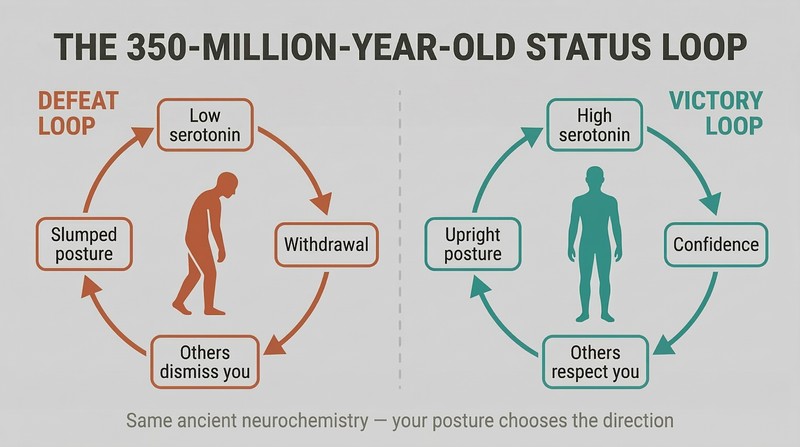
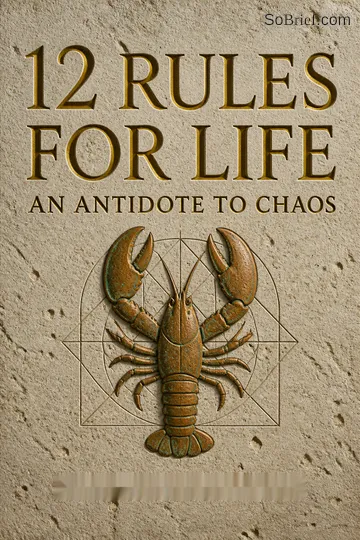
Lobsters reveal our wiring. Lobsters have existed for 350+ million years and share our serotonin-based status system. A winning lobster stands tall and confident; a defeated one literally dissolves its brain and regrows a subordinate version. Prozac even cheers them up. This same ancient neurochemistry operates in humans — low status triggers low serotonin, chronic stress, impulsive behavior, and shorter lifespan.
Stand up deliberately. The dominance hierarchy isn't capitalism or patriarchy — it predates dinosaurs by hundreds of millions of years. Stand up straight with your shoulders back, not as mere posture advice, but as a voluntary act of accepting life's demands. Your nervous system responds entirely differently when you face challenges voluntarily rather than bracing for catastrophe. Others treat you differently in response, creating an upward spiral of confidence and opportunity.
Prescribe yourself the care you'd insist on for someone you love
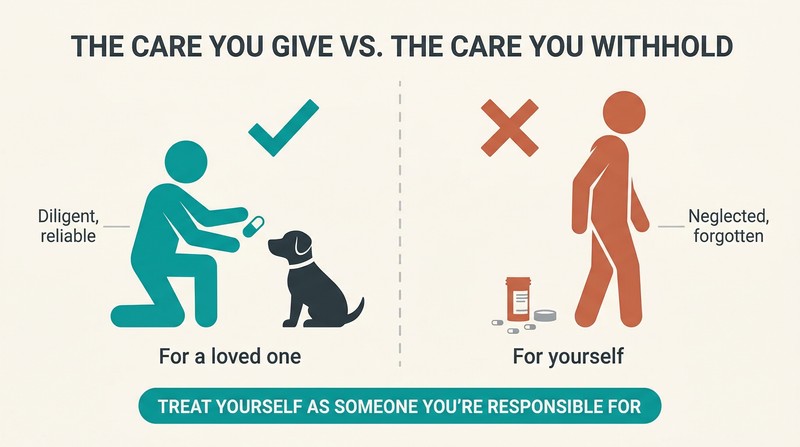
Self-knowledge breeds self-neglect. One-third of people won't fill their prescriptions; half of the remainder won't take them correctly. Yet those same people reliably medicate their pets. Peterson traces this to a peculiar shame: through the Biblical lens of the Fall, we know ourselves too intimately — our secret transgressions, our cowardice, our inadequacy. A harmless dog seems more deserving of care than a flawed human being.
The antidote is obligation, not indulgence. Treating yourself well doesn't mean giving yourself what you want — candy makes children happy but doesn't make them healthy. Instead, ask: What career would challenge me? What should I do to improve my health? You must determine where you're going so you can bargain with yourself effectively, keep your own promises, and build the self-trust that makes everything else possible.
Choose friends who challenge you upward, not ones who need rescuing
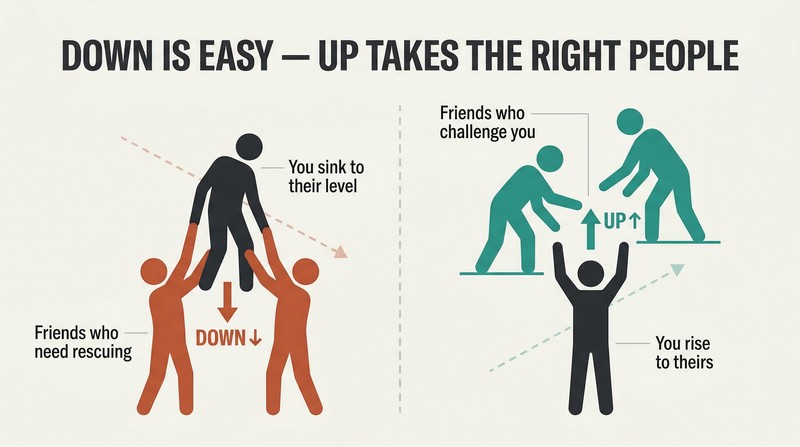
Rescuing often masks narcissism. In Dostoevsky's Notes from Underground, the protagonist offers to save a desperate woman — only to viciously humiliate her when she arrives, revealing his "help" as ego gratification. Peterson warns this pattern is common. Research confirms it from the other direction: placing a delinquent teen among well-behaved peers spreads the delinquency, not the stability. Down is always easier than up.
Apply the sister test. If you wouldn't recommend a friend's friendship to your sister or your son, why keep it for yourself? Surround yourself with people who support your upward aim. They'll challenge your cynicism, celebrate genuine progress, and refuse to tolerate your destructiveness — because your improvement exposes their own complacency, and real friends welcome that exposure.
A harmless person isn't virtuous — just unable to be dangerous
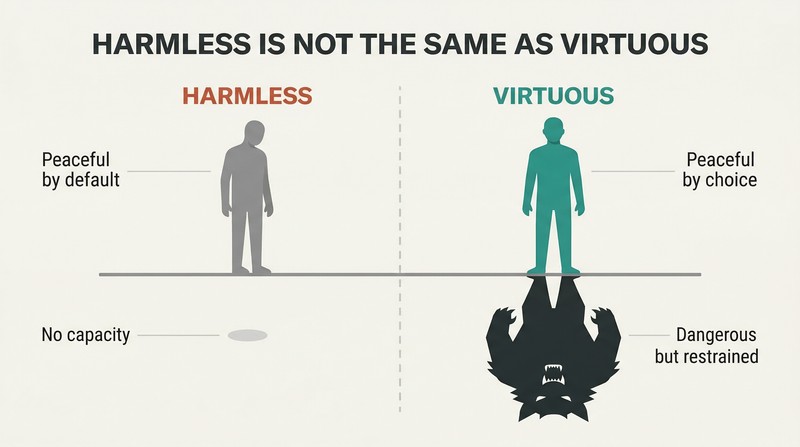
Naivety invites predators. People who suppress all aggression — often because they witnessed destructive anger in a parent — become exploitable. Their simple axioms ("people are basically good; force is always wrong") collapse against genuine malevolence. Peterson argues that a truly dangerous person who has chosen peace is far more formidable and virtuous than someone who is peaceful merely because they are incapable of anything else.
Integrate your darkness. When naïve people discover their capacity for aggression, their fear decreases and self-respect grows. The willingness to stand firm, say no early in the cycle of oppression, and push back is what holds tyranny at bay — both personally and socially. Many people put up with mistreatment for too long, then nurse secret revenge fantasies. Better to recognize resentment as a signal that something needs to be said or done.
Retarget your aim — you're blind to everything you're not looking for
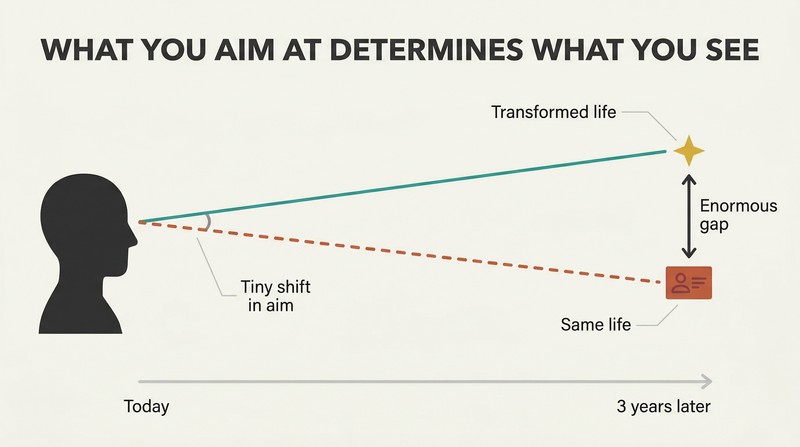
You missed the gorilla. Psychologist Daniel Simons showed subjects a video of people passing a basketball and asked them to count passes. Fifty percent failed to notice a person in a gorilla suit walking through the frame and beating its chest. We are blind to almost everything we're not focused on — and this blindness extends to our entire lives, careers, and relationships.
Small recalibrations compound. If your life isn't working, perhaps your aim is wrong — not life itself. Stop comparing yourself to others and instead ask: "What one thing could I fix today that I would fix?" Do it, reward yourself honestly, and repeat. Your baseline rises daily. After three years of this, Peterson argues, your life will be entirely different. That's compound interest applied to the soul.
Discipline your children — or outsource it to a merciless world

Two-year-olds are the most violent humans. Statistically, toddlers kick, bite, hit, and steal more than any other age group — not because they learned it, but because aggression is innate. Most are socialized out of it by age four. Those who aren't face peer rejection, spiraling into antisocial behavior through adolescence. The window is narrow and critical: children unsocialized by four will struggle to make friends for life.
Minimum necessary force. Peterson advocates limiting rules but enforcing them consistently. Parents should come in pairs to check each other's frustration. Time out works when the child is welcomed back once calm. The broader principle: refusing to discipline isn't love — it's cowardice. The social world's judgment is far harsher than any parent's corrective hand, and the motivation to avoid conflict should never be confused with compassion.
Fix what you know is wrong before blaming the system
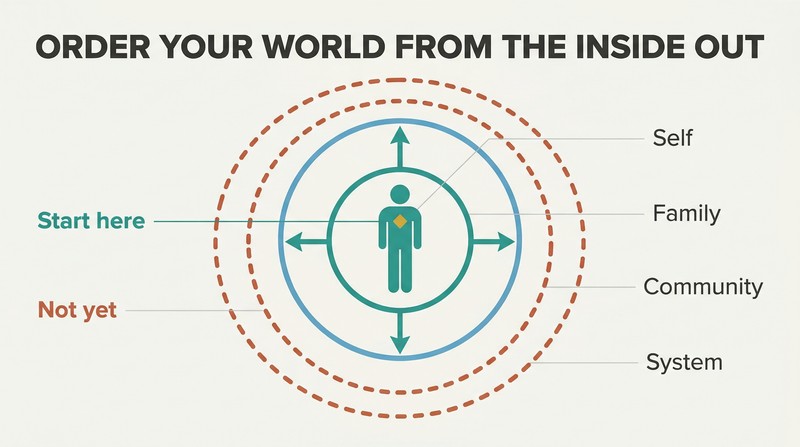
Solzhenitsyn chose self-examination in the gulag. Imprisoned and cancer-stricken under Stalin, Aleksandr Solzhenitsyn had every reason to curse existence. Instead, he asked how he'd personally contributed to the catastrophe — including his early support of communism. He rebuilt himself from within, then wrote The Gulag Archipelago, which demolished communism's intellectual credibility worldwide. One man's refusal to blame fate shook an entire tyrannical system.
Start with what you control. Are you working hard or letting bitterness hold you back? Have you made peace with your family? Stop doing what you know to be wrong — today. Your head will clear, your experience will improve, and you'll discover subtler errors to correct. The compounding honesty of this approach transforms not just your life, but your capacity to genuinely influence the broader world.
Meaning — not happiness — is the true antidote to suffering
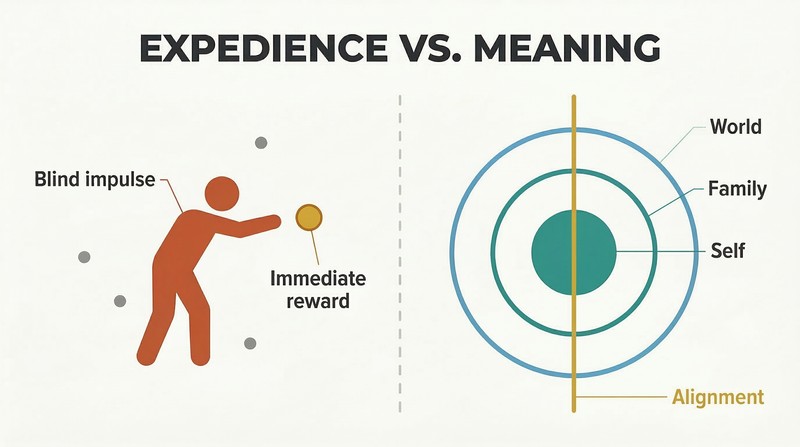
Life is suffering — now what? Peterson draws on Buddhism, Christianity, and Dostoevsky to establish this as bedrock truth. The simplest response is expedience: pursue pleasure, grab what you can. But our ancestors discovered through millennia of sacrifice that forgoing present pleasure for future good actually works — and this discovery of delay of gratification is the foundation of civilization itself, from sharing mammoth meat to the social contract.
Meaning stacks everything up. Meaning emerges when your actions align at every level — benefiting yourself today, your family tomorrow, and the broader world across time. It's not bliss or happiness. It's what you experience when past, present, and future are reconciled through voluntary sacrifice. Pursue what is meaningful, not what is expedient, and you'll find it gratifies all impulses simultaneously — the deepest antidote to chaos.
Every lie you tell warps the structure of your reality
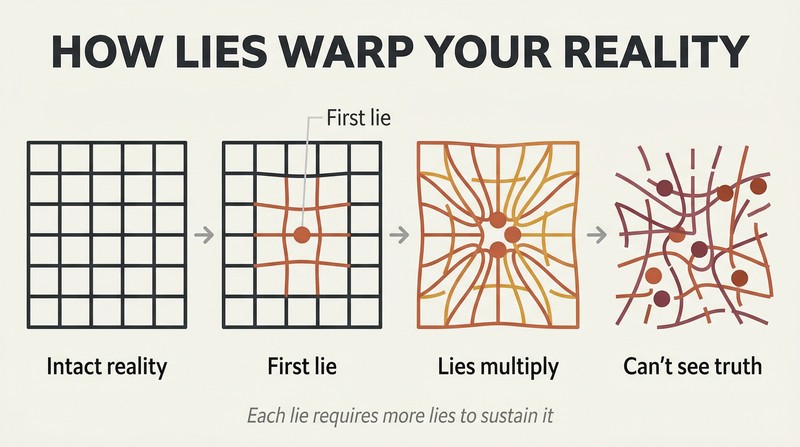
Lies are alive and growing. Alfred Adler identified "life-lies" — self-deceptions people construct to manipulate reality into delivering a narrow outcome. Peterson traces the progression: first a small lie, then several to prop it up, then distorted thinking to avoid the shame, then the lies become automatic and neurologically embedded. Eventually you can't distinguish your fabrications from truth, and reality stops cooperating.
Personal deceit enables totalitarianism. Solzhenitsyn argued that the Soviet system survived because ordinary citizens falsified their daily experience. Peterson insists the connection between personal untruth and political horror is direct: if you betray yourself by saying untrue things, you weaken your character until adversity destroys you. The Gulag was built not only by Stalin's malevolence but by millions of small, daily capitulations to falsehood.
Name the problem precisely or it will grow into a dragon
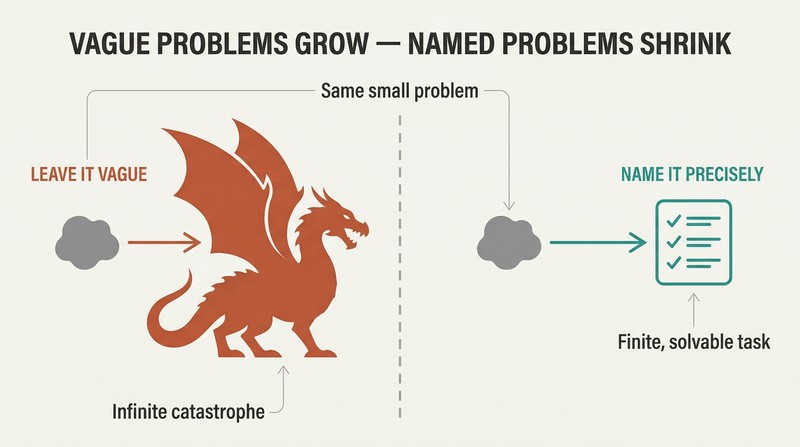
Vagueness feeds the beast. In Jack Kent's children's story There's No Such Thing as a Dragon, a boy finds a small dragon. His mother insists it doesn't exist — so it grows until it carries their entire house away. When the boy finally says "There IS a dragon," it shrinks instantly. Peterson argues this is exactly how marriages fail and crises explode: through willful blindness and the refusal to name what's wrong.
Precision slays chaos. If you refuse to define failure, you can't define success either. Every argument that degenerates into "everything" reflects a failure to be specific. Specify what's wrong. Articulate what you want instead. Say to your partner: "This exact thing is making me unhappy. This is what I'd prefer." Precisely naming a problem reduces infinite possible catastrophes to a finite, manageable reality — and a manageable problem is one you can actually solve.
Analysis
Peterson's 12 Rules for Life synthesizes evolutionary biology, depth psychology, Biblical exegesis, and existential philosophy into an argument that individual moral responsibility is the only viable response to both nihilism and ideological possession. It is not a conventional self-help manual — it's a clinical psychologist's attempt to rebuild the case for Western moral tradition from neuroscience and mythology upward.
The book's signature move is grounding abstract moral claims in biology. The lobster-serotonin argument isn't a fun fact — it's Peterson's proof that hierarchy is not a social construct to be dismantled but a feature of nervous systems older than trees. This anchors his broader claim: meaning comes not from eliminating hierarchies but from climbing them voluntarily and responsibly. It's a direct challenge to the postmodern assertion that all hierarchies are oppressive power structures.
What distinguishes Peterson from typical self-help authors is his clinical sensibility. His rules emerge from thousands of hours with patients whose lives illustrate what happens when meaning collapses, truth is abandoned, or responsibility is refused. His descriptions of the positive feedback loops that drag people into depression and addiction are genuinely clinical, and his prescriptions — truth-telling, precise speech, voluntary burden-bearing — are grounded in therapeutic outcomes rather than platitudes.
The book's limitations mirror its strengths. Peterson's tendency to equate symbolic and literal truth can make arguments slippery. His readings of Biblical narratives are compelling but necessarily selective. His critique of postmodern neo-Marxism sometimes oversimplifies complex philosophical positions. And his emphasis on individual responsibility, while necessary, occasionally undersells structural factors.
Still, the book's phenomenal reach — over five million copies — reflects a genuine cultural vacuum. By insisting that life is tragic, that suffering demands meaning rather than pleasure, and that the individual bears irreducible responsibility for the state of the world, Peterson addressed a hunger that neither religious institutions nor relativistic academia had adequately fed.
Review Summary
Peterson's "12 Rules for Life" has polarized readers, with many praising its profound insights and practical advice for navigating life's challenges. Supporters appreciate Peterson's blend of psychology, philosophy, and personal anecdotes, finding his approach refreshingly honest and intellectually stimulating. Critics, however, argue that the book is verbose and occasionally contradictory. Despite mixed reviews, many readers report finding value in Peterson's perspectives on personal responsibility and meaning-making in a complex world.
People Also Read





Glossary
Order and Chaos
The two fundamental elements of BeingPeterson's core framework, drawn from Taoist yin-yang symbolism. Order is explored territory—social norms, predictability, structure, the known. Chaos is unexplored territory—the unknown, the unexpected, what emerges when plans fail. Meaning is found on the border between them: enough stability to be secure, enough chaos to grow. Too much order becomes tyranny; too much chaos becomes dissolution.
Being
Totality of subjective human experienceDrawing on philosopher Martin Heidegger, Peterson capitalizes 'Being' to distinguish the totality of lived human experience from mere objective physical reality. Being includes emotions, dreams, pain, consciousness, and the moral dimension of existence. It encompasses not just what is, but what could be—and is partly shaped by our choices. Peterson treats Being as something brought into existence by action and speech.
Life-lies
Self-deceptions that manipulate realityA term from Austrian psychologist Alfred Adler describing the self-serving narratives people construct to force reality into delivering a narrow, pre-defined outcome. A life-lie assumes current knowledge is sufficient to dictate the future and that reality must be distorted to be tolerable. Peterson extends the concept to include ideological possession, career plans never revisited, and conflict avoidance disguised as virtue.
Price's Law
Few producers create most outputNamed after Derek J. de Solla Price, who discovered in 1963 that a small number of scientists produce the majority of publications. Peterson applies it broadly: in any creative domain, a tiny fraction of participants generates most of the output. Related to the Pareto distribution. Peterson uses it to argue that inequality of outcome is a mathematical inevitability, not merely a political choice, appearing across wealth, music, book sales, and even city populations.
The Terrible Mother
Archetype of devouring overprotectionA Jungian archetype representing the dark, smothering aspect of the maternal principle. In mythology, she appears as the witch in Hansel and Gretel, Maleficent in Sleeping Beauty, and Tiamat in the Mesopotamian Enuma Elish. Psychologically, she manifests as the overprotective parent who prefers a child remain dependent rather than face the dangers of autonomous existence—the spirit that says 'I only live for you' while devouring the child's developing soul.
Logos
Truthful speech creating habitable orderIn Peterson's usage, the divine creative Word that speaks order into being from chaos. Drawing on the Gospel of John ('In the beginning was the Word') and Egyptian mythology (Marduk, Horus), Peterson equates the Logos with consciousness, truthful articulation, and the human capacity to confront the unknown and transform it into habitable reality. It represents the active, mediating principle between order and chaos that gives life its meaning.
FAQ
What's "12 Rules for Life: An Antidote to Chaos" about?
- Self-help and philosophy: "12 Rules for Life" by Jordan B. Peterson is a self-help guide that blends philosophy, psychology, and practical advice to help individuals navigate life's complexities.
- Order and chaos: The book explores the balance between order and chaos, suggesting that meaning in life is found at their intersection.
- Twelve rules: It presents twelve rules that serve as guidelines for living a meaningful and fulfilling life, each rule addressing different aspects of personal development.
Why should I read "12 Rules for Life" by Jordan B. Peterson?
- Practical advice: The book offers actionable advice on living a more meaningful and structured life, beneficial for personal development.
- Philosophical insights: It provides deep insights into human nature, morality, and the challenges of modern life, drawing from a wide range of philosophical and psychological theories.
- Cultural relevance: Peterson's work has sparked widespread discussion and debate, making it a culturally relevant read for understanding contemporary issues.
What are the key takeaways of "12 Rules for Life"?
- Personal responsibility: Taking responsibility for one's actions and life circumstances is crucial for personal growth and fulfillment.
- Balance of order and chaos: Life requires a balance between stability and change, and navigating this balance is essential for well-being.
- Pursuit of meaning: Finding meaning in life, rather than seeking happiness, leads to a more profound and lasting sense of fulfillment.
What is the significance of the lobster analogy in Rule 1 of "12 Rules for Life"?
- Dominance hierarchies: Peterson uses lobsters to illustrate the biological basis of dominance hierarchies, which have existed for millions of years.
- Serotonin and posture: The analogy explains how serotonin levels affect posture and confidence, drawing parallels between lobsters and humans.
- Social implications: It suggests that standing up straight with your shoulders back can positively influence your social status and mental health.
How does Jordan B. Peterson define chaos and order in "12 Rules for Life"?
- Chaos: Chaos is described as the unknown, unpredictable, and potentially dangerous aspects of life that can lead to growth and transformation.
- Order: Order represents the known, structured, and predictable elements of life that provide stability and security.
- Balance: The book emphasizes the need to balance chaos and order to live a meaningful and fulfilling life.
What does Rule 2, "Treat yourself like someone you are responsible for helping," mean in "12 Rules for Life"?
- Self-care: The rule highlights the importance of self-care and treating oneself with the same compassion and responsibility as one would treat others.
- Self-respect: It encourages individuals to respect themselves and their needs, countering tendencies of self-neglect and self-criticism.
- Moral obligation: Peterson argues that individuals have a moral obligation to care for themselves, as neglecting oneself can have negative consequences for others.
What does "Compare yourself to who you were yesterday, not to who someone else is today" mean in "12 Rules for Life"?
- Personal growth focus: This rule emphasizes focusing on personal growth and self-improvement rather than comparing oneself to others.
- Avoiding envy: By comparing yourself to your past self, you avoid the pitfalls of envy and unrealistic expectations.
- Incremental progress: It encourages incremental progress and self-reflection, which are more sustainable and rewarding in the long run.
How does "12 Rules for Life" suggest dealing with suffering and adversity?
- Acceptance: The book advocates for accepting the suffering and challenges of life as inherent aspects of existence.
- Responsibility: It encourages taking responsibility for one's actions and choices, even in the face of adversity.
- Meaning: By finding meaning and purpose in life, individuals can better cope with suffering and work towards personal growth and improvement.
What is Rule 10: "Be Precise in Your Speech" about in "12 Rules for Life"?
- Clarity in communication: The rule emphasizes the importance of clear and precise communication to avoid misunderstandings and conflicts.
- Impact of language: Language shapes our perception of reality, and being precise helps in accurately defining problems and finding solutions.
- Avoiding chaos: By being precise, individuals can prevent the chaos that arises from vague or ambiguous communication, leading to more harmonious relationships.
What is Rule 11: "Do Not Bother Children When They Are Skateboarding" about in "12 Rules for Life"?
- Encouraging risk-taking: The rule suggests allowing children to take risks and face challenges, as this is essential for developing competence and resilience.
- Learning through experience: Children learn important life skills through unstructured play and exploration, which should not be overly restricted by adults.
- Balancing safety and growth: While safety is important, overprotection can hinder a child's ability to grow and adapt to the complexities of life.
What is Rule 12: "Pet a Cat When You Encounter One on the Street" about in "12 Rules for Life"?
- Finding joy in small moments: This rule encourages appreciating small, everyday pleasures as a way to cope with life's challenges and suffering.
- Mindfulness and presence: Engaging with simple joys, like petting a cat, can ground individuals in the present moment and provide a sense of peace.
- Perspective on suffering: Recognizing and embracing small positive experiences can help balance the inevitable suffering that comes with existence.
What are the best quotes from "12 Rules for Life" and what do they mean?
- "Stand up straight with your shoulders back": This quote emphasizes the importance of confidence and posture in influencing one's mental state and social interactions.
- "Pursue what is meaningful, not what is expedient": It highlights the value of long-term fulfillment and purpose over short-term gains and convenience.
- "Compare yourself to who you were yesterday, not to who someone else is today": This quote encourages personal growth and self-improvement by focusing on one's own progress rather than comparing oneself to others.
Rules for Life Series

About the Author
Other books by Jordan B. Peterson


Download PDF
Download EPUB
.epub digital book format is ideal for reading ebooks on phones, tablets, and e-readers.








































