Résumé de l'intrigue
Tourments familiaux et attentes sociales
Le foyer des Oblonsky est en pleine tourmente depuis que Dolly a découvert l’infidélité de son mari Stepan. Ce bouleversement domestique reflète un thème plus large : le conflit entre les attentes sociales et les désirs personnels. Stepan, homme charmant mais imparfait, peine à concilier ses actes avec les normes sociales de fidélité et de devoir familial. Ce contexte prépare le terrain à l’exploration des complexités du mariage et des pressions sociales qui façonnent les relations personnelles.
L’arrivée d’Anna et les dynamiques sociales
Anna Karenina débarque à Moscou pour jouer les médiatrices entre son frère Stepan et sa belle-sœur Dolly. Sa beauté et son charme captivent son entourage, notamment le comte Vronsky, qu’elle rencontre à la gare. L’arrivée d’Anna introduit une nouvelle dynamique, ses échanges avec Vronsky annonçant des complications à venir. Ce chapitre met en lumière l’entrelacs social complexe et l’impact du charme personnel sur les relations, annonçant les conflits centraux du roman.
La poursuite de Vronsky et le dilemme d’Anna
Le comte Vronsky tombe éperdument amoureux d’Anna et la poursuit avec ardeur. Déchirée entre ses devoirs d’épouse et de mère et son attirance grandissante pour Vronsky, Anna fait face à un combat intérieur intense. Ce chapitre explore les thèmes de la passion, de la tentation et des contraintes sociales, préparant la crise morale et émotionnelle d’Anna. La tension entre désirs personnels et obligations sociales devient un enjeu majeur.
La vie rurale de Levin et ses luttes intérieures
Konstantin Levin, propriétaire terrien, est partagé entre ses sentiments pour Kitty et son aspiration à une vie pleine de sens. Désabusé par la vie citadine et les attentes sociales, il trouve refuge dans la simplicité de la vie rurale. Ses combats intérieurs reflètent des thèmes plus vastes d’identité, de but et de recherche d’authenticité dans un monde en mutation rapide. Le parcours de Levin contraste avec les complexités urbaines des autres personnages, offrant un contrepoint à l’exploration des passions et des contraintes sociales.
Le chagrin de Kitty et les pressions familiales
Kitty Shtcherbatsky, blessée par l’indifférence de Vronsky et la proposition de Levin, subit la pression familiale pour un mariage avantageux. Sa maladie et son tourment émotionnel soulignent les attentes sociales pesant sur les femmes et le coût personnel de leur respect. Ce chapitre aborde les thèmes de l’amour, du rejet et des pressions sociales, illustrant le paysage émotionnel des jeunes femmes de l’époque et l’impact des normes sociales sur leurs choix personnels.
Le conflit intérieur d’Anna et sa façade sociale
Anna lutte pour maintenir son apparence sociale tout en affrontant ses sentiments pour Vronsky. Son conflit intérieur est aggravé par les attentes sociales et son rôle d’épouse et de mère. Ce chapitre met en lumière la tension entre désirs personnels et obligations sociales, soulignant le sentiment croissant d’enfermement d’Anna et les conséquences imminentes de ses choix. Son histoire reflète le combat de l’individu face aux normes sociales.
La fauche de Levin et la paix intérieure
Levin s’immerge dans le travail physique de la fauche avec les paysans, éprouvant un profond sentiment de paix et de connexion à la terre. Cette expérience contraste avec ses précédentes difficultés à gérer son domaine par des méthodes agricoles modernes. La simplicité et le rythme du travail lui offrent une clarté d’esprit et une échappatoire temporaire à ses dilemmes personnels, notamment ses sentiments non résolus pour Kitty.
Le tourment et la décision d’Anna
Après avoir avoué sa liaison à son mari Alexey Alexandrovitch, Anna est submergée par un tourbillon d’émotions. Elle se sent prise au piège entre son amour pour Vronsky et ses responsabilités maternelles. La réponse froide et calculée de son mari la laisse isolée et désespérée. Anna envisage de tout quitter pour rejoindre Vronsky, mais l’idée d’abandonner son fils la torture, la plongeant dans une indécision paralysante.
La résolution et le contrôle de Karenin
Alexey Alexandrovitch, mari d’Anna, est d’abord dévasté par sa confession, mais décide rapidement de maintenir sa position sociale et de garder le contrôle. Il refuse le divorce, préférant préserver la façade du mariage pour sa réputation et celle de leur fils. Sa décision est motivée par le désir d’éviter le scandale public et de punir Anna en lui refusant la liberté qu’elle cherche auprès de Vronsky.
Les ambitions de Vronsky et l’influence d’Anna
Le comte Vronsky est déchiré entre son amour pour Anna et sa carrière militaire. Sa liaison avec Anna lui vaut une certaine notoriété, mais menace aussi ses ambitions. Son conflit intérieur est accentué par le succès de ses pairs, soulignant ses aspirations freinées. Ce chapitre explore l’impact de l’influence d’Anna sur la vie de Vronsky, alors qu’il lutte pour concilier désirs personnels, attentes sociales et ambitions professionnelles.
Les luttes domestiques et prises de conscience de Levin
Levin se débat avec les exigences de la vie conjugale, se sentant insatisfait et reprochant à sa femme Kitty son éducation superficielle et son manque d’intérêts sérieux. Malgré son amour, il est frustré par la routine domestique et son incapacité à préserver son indépendance. Ce conflit intérieur met en lumière la tension entre désirs personnels et rôles sociaux, alors que Levin navigue dans les complexités du mariage et de l’identité.
Le désir d’Anna et les contraintes sociales
Anna est tourmentée par la séparation d’avec son fils Seryozha et les contraintes sociales qui l’en empêchent. Ses tentatives de renouer sont contrecarrées par la froideur de la comtesse Lidia Ivanovna et les structures sociales rigides. Son combat intérieur reflète son désir de bonheur personnel face au jugement social, illustrant la tragédie de sa situation.
Le départ de Vronsky et son tourment intérieur
Après la mort tragique d’Anna, Vronsky est consumé par la culpabilité et le désespoir. Il décide de rejoindre la guerre de Serbie, espérant y trouver une forme de rédemption. Sa mère, la comtesse Vronsky, s’inquiète profondément pour son état d’esprit, tant il semble indifférent à la vie. Sa décision n’est pas motivée par le patriotisme, mais par le désir d’échapper à son tourment intérieur. Sa rencontre avec Sergey Ivanovitch à la gare révèle son vide émotionnel après la perte d’Anna.
L’éveil spirituel de Levin
Levin se débat avec des questions existentielles et le sens de la vie. Malgré ses recherches intellectuelles, il ne trouve pas de réponses dans la philosophie ou la science. C’est à travers une simple conversation avec un paysan qu’il vit un éveil spirituel. Il comprend que vivre pour Dieu et le bien donne un sens à la vie. Cette révélation lui apporte paix et but, transformant sa vision du monde et ses relations.
Le désespoir et la décision finale d’Anna
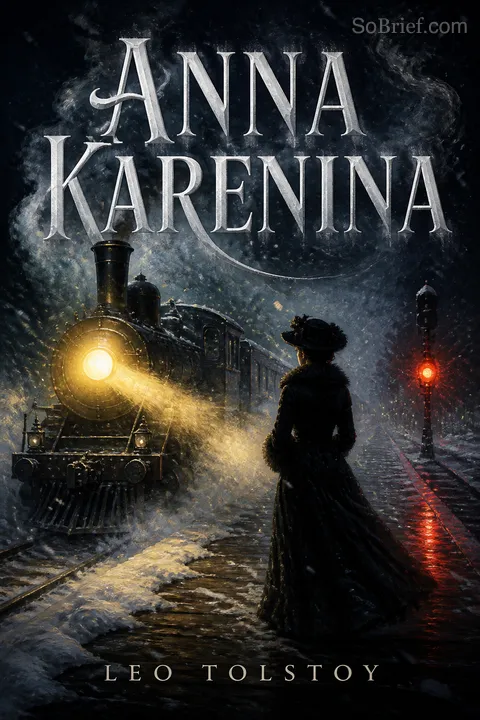
Anna est rongée par la jalousie et la conviction que Vronsky ne l’aime plus. Son état mental se dégrade, elle se sent de plus en plus isolée et incomprise. Dans un moment de désespoir, elle choisit de mettre fin à ses jours en se jetant sous un train. Sa mort est l’aboutissement de ses luttes intérieures et des pressions sociales qu’elle subissait, laissant Vronsky et son entourage dans une profonde douleur et un grand regret.
Vie familiale et luttes personnelles
Levin affronte les complexités de la vie familiale, conciliant ses responsabilités d’époux et de père avec sa quête personnelle de sens. Sa relation avec Kitty et leur enfant lui apporte joie et défis, alors qu’il apprend à concilier ses aspirations intellectuelles avec les exigences familiales. L’évolution de Levin souligne l’importance de l’amour, de la famille et de l’épanouissement personnel face aux incertitudes de la vie.
Personnages
Stepan Arkadyevitch Oblonsky
Stepan, surnommé Stiva, est un fonctionnaire apprécié dont le charme masque ses failles personnelles. Sa liaison avec la gouvernante perturbe sa famille, illustrant son incapacité à concilier attentes sociales et désirs personnels. Son personnage incarne les ambiguïtés morales et les pressions sociales de l’époque, servant de déclencheur à l’exploration du roman sur la fidélité et la dynamique familiale.
Anna Arkadyevna Karenina
Anna est une femme captivante, déchirée entre son amour pour Vronsky et ses devoirs d’épouse et de mère. Son combat intérieur reflète la tension entre désirs personnels et contraintes sociales. Son personnage incarne les thèmes centraux du roman : passion, tentation et conséquences du défi aux normes sociales, soulignant la complexité de sa situation et la tragédie de ses choix.
Alexey Alexandrovitch Karenin
Karenin, mari d’Anna, est un haut fonctionnaire qui privilégie son rang social et sa réputation. Après la confession d’Anna, il choisit de maintenir la façade du mariage, animé par le désir d’éviter le scandale et de punir sa femme. Son personnage incarne les attentes sociales et la rigidité morale contre lesquelles Anna lutte, faisant contraste avec sa nature passionnée.
Comte Alexey Vronsky
Vronsky est un officier charismatique, partagé entre son amour pour Anna et ses ambitions militaires. Sa liaison lui vaut notoriété mais menace son avenir. Son combat intérieur reflète le thème plus large de la passion face au devoir, alors qu’il navigue entre attirance personnelle, attentes sociales et ambitions, illustrant l’impact du charme personnel sur les relations.
Konstantin Dmitrievitch Levin
Levin est un propriétaire terrien en proie à des questions existentielles et au sens de la vie. Par un éveil spirituel, il trouve paix et but dans la foi. Son parcours reflète la quête universelle de sens et la difficulté de concilier raison intellectuelle et croyance spirituelle. Son personnage souligne l’importance de l’amour, de la famille et de l’épanouissement personnel.
Ekaterina Alexandrovna Shtcherbatskaya (Kitty)
Kitty est l’épouse de Levin, source de joie et de défis dans sa vie. Leur relation et leur enfant illustrent l’importance de l’amour, de la famille et de l’épanouissement personnel. Son personnage incarne les thèmes de la vie domestique et les complexités du mariage et de la parentalité.
Darya Alexandrovna Oblonskaya (Dolly)
Dolly, belle-sœur d’Anna, gère son foyer et ses enfants avec force malgré l’infidélité de son mari. Ses interactions avec Levin et ses enfants révèlent les complexités de la vie familiale et les sacrifices personnels qu’elle consent pour le bien-être de sa famille. Son histoire souligne le devoir familial et la lutte personnelle, offrant une perspective ancrée sur l’amour et la fidélité.
Sergey Ivanovitch Koznishev
Sergey Ivanovitch s’implique profondément dans le mouvement politique en soutien aux peuples slaves. Il trouve sens et épanouissement dans son engagement, reflétant l’intérêt social pour la guerre de Serbie. Son personnage met en lumière les dynamiques politiques et sociales de l’époque et le rôle des intellectuels dans la formation de l’opinion publique.
Mécanismes narratifs
Attentes sociales et désirs personnels
Le roman explore la tension entre attentes sociales et désirs personnels, notamment dans le cadre du mariage et des relations. Des personnages comme Anna et Levin luttent contre les contraintes imposées par la société, illustrant la difficulté de concilier bonheur personnel et obligations sociales. Ce thème constitue un moteur central de l’intrigue, guidant les actions des personnages et l’exploration des notions d’amour, fidélité et identité.
Conflit intérieur et tourments émotionnels
Le roman s’attarde sur les conflits intérieurs et les tourments émotionnels vécus par Anna et Levin. Ces combats intérieurs influencent leurs décisions et leurs relations. L’exploration du conflit intérieur sert de mécanisme narratif pour illustrer la complexité des émotions humaines et l’impact des pressions sociales sur les choix personnels, enrichissant la profondeur des personnages et de leurs histoires.
Quête de sens et rédemption
Le roman met en scène la quête de sens et de rédemption face aux incertitudes de la vie. L’éveil spirituel de Levin et la décision de Vronsky de partir à la guerre incarnent cette recherche universelle de but et la difficulté de concilier raison et foi. Ce thème est un moteur narratif central, orientant les actions des personnages et l’exploration des thèmes de l’amour, de la perte et de la croissance personnelle.
Analyse
"Anna Karénine" de Léon Tolstoï est une profonde méditation sur la condition humaine, sondant les complexités de l’amour, de la fidélité et des attentes sociales. À travers les vies entremêlées de ses personnages, le roman examine la tension entre désirs personnels et obligations sociales, soulignant les conséquences tragiques du défi aux normes. L’histoire d’Anna sert d’avertissement sur les dangers d’une passion débridée, tandis que le parcours de Levin offre un contrepoint, mettant en avant la quête de sens et d’authenticité. La maîtrise de Tolstoï dans la représentation du conflit intérieur et du tourment émotionnel touche profondément le lecteur, offrant des réflexions intemporelles sur l’expérience humaine et la quête universelle d’épanouissement et de compréhension.
Les lecteurs ont aussi lu







FAQ
Synopsis & Basic Details
What is Anna Karenina about?
- Tragic love and societal pressures: Anna Karenina explores the destructive power of passionate love when it clashes with the rigid social conventions of 19th-century Russia. It follows the story of Anna, a married woman, who embarks on an affair with a dashing officer, Count Vronsky, and the devastating consequences that follow.
- Parallel stories of love and life: The novel also intertwines the story of Konstantin Levin, a landowner searching for meaning in life, love, and family. His journey contrasts with Anna's, highlighting different paths to happiness and fulfillment.
- Exploration of Russian society: Through these characters, Tolstoy provides a panoramic view of Russian society, examining themes of family, marriage, adultery, social class, and the search for personal and spiritual truth.
Why should I read Anna Karenina?
- Complex characters and relationships: Tolstoy masterfully crafts characters with deep psychological complexity, whose motivations and actions are both compelling and relatable. The novel explores the nuances of human relationships, from passionate love to familial duty.
- Profound themes and insights: The novel delves into timeless themes of love, morality, social expectations, and the search for meaning, offering profound insights into the human condition. It raises questions about the nature of happiness, the consequences of choices, and the individual's place in society.
- Rich historical and cultural context: Set in 19th-century Russia, the novel provides a vivid portrayal of the social, political, and cultural landscape of the time. It offers a glimpse into the lives of the Russian aristocracy and peasantry, and the societal pressures that shaped their experiences.
What is the background of Anna Karenina?
- 19th-century Russia: The novel is set against the backdrop of 19th-century Russia, a time of social and political change. The aristocracy, with its rigid social codes and expectations, is a central focus, as are the lives of the peasantry and the emerging middle class.
- Social and political context: The novel reflects the social and political issues of the time, including the debate over serfdom, the role of women in society, and the influence of Western ideas on Russian culture. These issues provide a rich context for the characters' personal struggles and choices.
- Cultural and intellectual influences: Tolstoy's work is influenced by the intellectual and philosophical currents of his time, including realism, existentialism, and the search for spiritual truth. These influences are reflected in the novel's exploration of human nature and the meaning of life.
What are the most memorable quotes in Anna Karenina?
- "Happy families are all alike; every unhappy family is unhappy in its own way.": This opening line encapsulates the novel's exploration of the complexities of family life and the unique nature of individual suffering. It sets the stage for the contrasting stories of the Oblonskys and the Karenins.
- "If you love me, as you say, do so that I may be at peace.": This quote reveals Anna's desperate desire for stability and acceptance in her relationship with Vronsky. It highlights her internal conflict and her yearning for a love that can provide her with peace.
- "It's not love. I've been in love, but it's not that. It's not my feeling, but a sort of force outside me has taken possession of me.": This quote captures Levin's intense and overwhelming feelings for Kitty, highlighting the powerful and often irrational nature of love. It also reflects his struggle to understand his own emotions and their impact on his life.
What writing style, narrative choices, and literary techniques does Leo Tolstoy use?
- Realism and psychological depth: Tolstoy's writing is characterized by its realism and its deep exploration of the characters' inner lives. He uses detailed descriptions and interior monologues to reveal their thoughts, feelings, and motivations, creating a sense of psychological depth and complexity.
- Multiple perspectives and narrative shifts: The novel employs multiple points of view, shifting between the perspectives of Anna, Levin, and other characters. This technique allows Tolstoy to explore different facets of the story and to provide a more comprehensive view of the social and emotional landscape.
- Symbolism and motifs: Tolstoy uses recurring symbols and motifs, such as trains, horses, and the color red, to enhance the novel's themes and to foreshadow future events. These elements add layers of meaning to the narrative and contribute to its overall richness and complexity.
Hidden Details & Subtle Connections
What are some minor details that add significant meaning?
- The broken paper-knife: Early in the novel, Anna plays with a paper-knife, a seemingly insignificant detail. Later, this same paper-knife is clutched in her hands as she grapples with her emotions, symbolizing her internal turmoil and the sharp edges of her situation.
- The red bag: Anna's red bag, which she carries with her, becomes a recurring symbol of her passionate nature and her desire for freedom. It is present at key moments in her story, such as her first meeting with Vronsky and her final moments at the train station.
- The music of the decanter-women: Stepan Arkadyevitch's dream of decanter-women singing "Il mio tesoro" foreshadows the seductive and ultimately destructive nature of his desires. The music, initially delightful, becomes a symbol of his inability to find true happiness.
What are some subtle foreshadowing and callbacks?
- The crushed railway worker: The accidental death of a railway worker at the beginning of the novel foreshadows Anna's tragic end. The incident, initially presented as a minor event, becomes a chilling reminder of the destructive forces at play in the story.
- Levin's dream of a peasant: Levin's dream of a peasant who is both repulsive and familiar foreshadows his later spiritual awakening. The dream, initially unsettling, becomes a symbol of his connection to the land and the simple truths he seeks.
- The mention of "come round": Matvey's phrase "she will come round" when referring to Dolly's anger becomes a recurring motif, highlighting the cyclical nature of relationships and the possibility of reconciliation, even in the face of conflict.
What are some unexpected character connections?
- Levin and Vronsky: Despite their vastly different backgrounds and values, Levin and Vronsky share a common thread of passion and a desire for authenticity. Their brief encounter at the skating rink reveals a mutual respect and a sense of shared humanity, despite their rivalry for Kitty's affection.
- Anna and Dolly: Though their lives take different paths, Anna and Dolly share a deep bond as sisters-in-law. Their conversations reveal a mutual understanding of the challenges and complexities of marriage and motherhood, highlighting the shared experiences of women in 19th-century Russia.
- Stepan Arkadyevitch and Levin: Despite their contrasting personalities and lifestyles, Stepan and Levin share a genuine friendship. Their conversations reveal a mutual respect and a sense of shared humanity, despite their differing views on life and society.
Who are the most significant supporting characters?
- Darya Alexandrovna (Dolly) Oblonskaya: As Stepan's wife, Dolly provides a counterpoint to Anna's passionate nature. Her struggles with infidelity and family life highlight the challenges faced by women in 19th-century Russia. She serves as a voice of reason and compassion, offering a grounded perspective on the novel's exploration of love and marriage.
- Sergey Ivanovitch Koznishev: Levin's intellectual half-brother, Sergey, represents the world of ideas and public service. His conversations with Levin highlight the tension between intellectual pursuits and practical concerns, and his involvement in the Slavonic movement reflects the political and social issues of the time.
- Princess Betsy Tverskoy: A fashionable socialite and Anna's cousin, Betsy embodies the superficiality and hypocrisy of Petersburg society. Her interactions with Anna reveal the social pressures and expectations that contribute to Anna's tragic fate.
Psychological, Emotional, & Relational Analysis
What are some unspoken motivations of the characters?
- Anna's desire for freedom: Beneath her passionate love for Vronsky, Anna yearns for freedom from the constraints of her marriage and societal expectations. Her actions are driven by a desire to live authentically and to experience love without the limitations imposed on her.
- Levin's search for meaning: Levin's immersion in rural life and his intellectual pursuits are driven by a deep-seated desire to find meaning and purpose in a world that often seems chaotic and meaningless. His actions are motivated by a longing for authenticity and a connection to something larger than himself.
- Karenin's need for control: Karenin's rigid adherence to social norms and his desire to maintain control over his life and his family stem from a deep-seated fear of vulnerability and a need to preserve his public image. His actions are driven by a desire to maintain order and to avoid any hint of scandal.
What psychological complexities do the characters exhibit?
- Anna's self-destructive tendencies: Anna's passionate nature and her inability to reconcile her desires with societal expectations lead her down a path of self-destruction. Her internal conflict and her growing sense of despair contribute to her tragic fate.
- Levin's intellectual and emotional struggles: Levin's intellectual curiosity and his deep-seated emotional needs often clash, leading to internal conflict and a sense of dissatisfaction. His journey is marked by a constant struggle to reconcile his reason with his emotions and his spiritual beliefs.
- Vronsky's internal conflict: Vronsky's desire for love and his ambition for social success create an internal conflict that he struggles to resolve. His actions are often driven by a need to maintain his social standing and to avoid any hint of weakness or vulnerability.
What are the major emotional turning points?
- Anna's confession to Karenin: Anna's confession to her husband marks a turning point in her life, as it forces her to confront the consequences of her actions and to acknowledge the impossibility of her situation. This moment sets the stage for her descent into despair and her eventual tragic end.
- Levin's experience mowing with the peasants: Levin's experience mowing with the peasants marks a turning point in his spiritual journey, as he finds a sense of peace and connection to the land. This experience leads him to question his previous assumptions about life and to seek a more authentic path.
- Vronsky's realization of Anna's despair: Vronsky's realization of Anna's despair and her fear of death marks a turning point in his understanding of their relationship. He is forced to confront the consequences of his actions and to acknowledge the depth of her suffering.
How do relationship dynamics evolve?
- Anna and Vronsky's relationship: Their relationship evolves from passionate love to a complex web of dependence, jealousy, and resentment. The initial intensity of their feelings is gradually replaced by a sense of entrapment and a growing awareness of the impossibility of their situation.
- Levin and Kitty's relationship: Their relationship evolves from a tentative courtship to a deep and enduring love. They learn to navigate the challenges of marriage and parenthood, finding strength and solace in their shared experiences and mutual understanding.
- Stepan and Dolly's relationship: Their relationship evolves from a state of turmoil and infidelity to a fragile reconciliation. They learn to coexist, but their relationship is marked by a sense of resignation and a lack of genuine intimacy.
Interpretation & Debate
Which parts of the story remain ambiguous or open-ended?
- Anna's motivations: While the novel provides insight into Anna's thoughts and feelings, her motivations remain complex and open to interpretation. Her actions are driven by a combination of passion, despair, and a desire for freedom, but the precise nature of her inner turmoil remains ambiguous.
- Levin's spiritual journey: Levin's spiritual awakening is presented as a personal and subjective experience, leaving the reader to question the nature of his faith and its implications for his life. The novel does not offer a definitive answer to his existential questions, but rather presents a complex and nuanced exploration of his search for meaning.
- The ending: The novel's ending, with Anna's tragic death and Levin's newfound peace, leaves the reader to ponder the ultimate meaning of their lives and the consequences of their choices. The open-ended nature of the conclusion invites multiple interpretations and encourages reflection on the novel's central themes.
What are some debatable, controversial scenes or moments in Anna Karenina?
- Anna's adultery: Anna's affair with Vronsky is a central point of controversy, raising questions about morality, fidelity, and the nature of love. Readers often debate whether Anna is a victim of societal constraints or a flawed individual who makes destructive choices.
- Karenin's forgiveness: Karenin's decision to forgive Anna is a complex and controversial moment, raising questions about the nature of forgiveness, religious piety, and the limits of human compassion. Some readers see his actions as a sign of genuine magnanimity, while others view them as a form of self-serving control.
- Levin's views on society and progress: Levin's criticisms of modern society and his embrace of traditional values are often debated, raising questions about the nature of progress, the role of the individual in society, and the value of tradition. His views are often seen as a reflection of Tolstoy's own conservative beliefs.
Anna Karenina Ending Explained: How It Ends & What It Means
- Anna's suicide: Anna's suicide is a tragic culmination of her internal struggles and the societal pressures she faced. It is an act of despair and a final attempt to escape the impossible situation in which she finds herself. Her death serves as a powerful commentary on the destructive nature of passion and the limitations imposed on women in 19th-century Russia.
- Levin's spiritual awakening: In contrast to Anna's tragic end, Levin's spiritual awakening offers a glimmer of hope and a path towards personal fulfillment. His newfound faith and his commitment to family and rural life suggest that meaning and purpose can be found in simple, authentic experiences.
- The contrast between Anna and Levin: The contrasting fates of Anna and Levin highlight the different paths available to individuals in the face of life's challenges. Anna's story serves as a cautionary tale about the dangers of defying societal norms, while Levin's journey offers a more optimistic vision of personal growth and spiritual fulfillment.