Ideas clave
1. Reconoce a las personas tóxicas y su impacto en tu vida y misión
Las personas tóxicas matan. Matan relaciones, enfrentando a unos con otros. Matan iglesias, convirtiendo los tiempos de reunión en peleas gigantescas en lugar de en adoración y servicio.
Características de las personas tóxicas: Suelen mostrar un espíritu destructivo, conductas controladoras y un amor por el odio. Agotan la energía, generan caos y obstaculizan el crecimiento personal y el ministerio.
Impacto en la misión: Los individuos tóxicos pueden descarrilar la obra de Dios al:
- Distraer a los creyentes de su llamado
- Sembrar discordia en iglesias y organizaciones
- Dañar reputaciones y relaciones
- Aplastar el espíritu de quienes intentan servir a Dios
Reconocer la toxicidad es fundamental para protegerse a uno mismo y a la misión. No se trata de juzgar a los demás, sino de discernir cuándo involucrarse y cuándo alejarse por el bien de la salud espiritual y la efectividad en el ministerio.
2. Aprende del ejemplo de Jesús al alejarse de situaciones tóxicas
Jesús se alejaba o dejaba que otros se alejaran... muchas veces.
El enfoque de Jesús: Los evangelios registran más de 40 ocasiones en que Jesús se apartó deliberadamente de otros o permitió que se fueran. Esto demuestra que:
- Alejarse puede ser una respuesta piadosa ante la toxicidad
- No todos aceptarán la verdad, ni siquiera de Jesús
- Enfocarse en quienes están receptivos es más productivo
Aplicación práctica: Seguir el ejemplo de Jesús implica:
- Discernir cuándo involucrarse y cuándo alejarse
- No perseguir a quienes rechazan la verdad
- Invertir tiempo y energía en quienes están abiertos y receptivos
- Confiar en Dios respecto a los resultados de interacciones difíciles
3. Prioriza invertir en personas confiables en lugar de intentar arreglar a las tóxicas
"Lo que has oído de mí ante muchos testigos, encomiéndalo a personas fieles que sean capaces de enseñar también a otros."
El principio de 2 Timoteo 2:2: La instrucción de Pablo a Timoteo subraya la importancia de invertir en personas confiables que puedan multiplicar el impacto del ministerio.
Pasos prácticos:
- Identifica personas confiables en tu entorno
- Invierte intencionalmente tiempo, energía y recursos en su crecimiento
- Equípalas para que enseñen e influyan en otros
- Resiste la tentación de gastar energía sin fin en personas tóxicas que no muestran señales de cambio
Al enfocarte en personas confiables, multiplicas tu impacto y te proteges de los efectos agotadores de las relaciones tóxicas. Esto no significa abandonar por completo a quienes son difíciles, sino ser estratégico con tu tiempo y recursos emocionales.
4. Comprende la perspectiva bíblica sobre la creación, la caída y la redención
El mal exige su parte.
Marco de Creación, Caída y Redención:
- Creación: El diseño original de Dios es bueno
- Caída: El pecado ha corrompido todos los aspectos de la vida, incluidas las relaciones
- Redención: Dios está obrando para restaurar y sanar, pero el proceso continúa
Este marco ayuda a los creyentes a:
- Reconocer la realidad del mal y el comportamiento tóxico
- Evitar la ingenuidad sobre la naturaleza humana
- Mantener la esperanza en la transformación y la sanidad
- Entender que confrontar el mal a menudo tiene un costo
Aplicar esta perspectiva permite a los cristianos manejar situaciones tóxicas con sabiduría, sin ignorar la realidad del mal ni perder la esperanza en el poder redentor de Dios.
5. Mantén tu identidad y misión cristiana frente a la toxicidad
"Acuérdate de mí con favor, oh Dios mío"
Priorizar la aprobación de Dios: Como Nehemías, enfócate en agradar a Dios en lugar de complacer a personas tóxicas. Esto implica:
- Permanecer comprometido con la misión que Dios te ha dado
- Resistir la manipulación y las tácticas de control
- Mantener la integridad ante la oposición
Estrategias prácticas:
- Ora por fortaleza y sabiduría cuando enfrentes ataques tóxicos
- Mantén la mirada en Jesús y en el ejemplo de creyentes fieles
- Recuerda que sufrir por Cristo puede ser un honor
- Ejercita discernimiento para saber cuándo confrontar y cuándo alejarte
Al mantener tu identidad y misión cristiana, podrás navegar situaciones tóxicas sin volverte tóxico tú mismo.
6. Maneja relaciones tóxicas en matrimonios y familias
A Dios no le importan las cáscaras; le importan las personas dentro de ellas.
Equilibrio entre compasión y límites: En situaciones familiares tóxicas, es vital:
- Reconocer la diferencia entre relaciones difíciles y verdaderamente tóxicas
- Establecer límites adecuados para protegerte a ti y a tu misión
- Mantener la compasión sin permitir conductas destructivas
Contextos específicos:
- Matrimonios tóxicos: La seguridad es lo primero, seguido de abordar las causas profundas y considerar la separación si es necesario
- Padres tóxicos: Los hijos adultos pueden necesitar limitar el contacto para preservar su bienestar y ministerio
- Hijos tóxicos: Los padres deben equilibrar el amor con permitir consecuencias naturales por decisiones destructivas
Recuerda que a Dios le importan más las personas involucradas que preservar a toda costa una "cáscara" tóxica de relación.
7. Transforma tus propios comportamientos tóxicos mediante el amor y la gracia de Dios
"Por tanto, como escogidos de Dios, santos y amados, revístanse de compasión, bondad, humildad, mansedumbre y paciencia."
Transformación personal: Reconocer y enfrentar nuestras propias tendencias tóxicas es fundamental. Esto implica:
- Admitir áreas donde hemos sido hirientes o controladores
- Abrazar el amor y perdón de Dios como base para el cambio
- Practicar activamente cualidades semejantes a Cristo
Pasos prácticos:
- Examina regularmente tus actitudes y comportamientos
- Busca rendición de cuentas con creyentes de confianza
- Practica disciplinas espirituales que refuercen tu identidad en Cristo
- Responde a los demás con compasión, recordando que todos tienen una historia
Al abordar nuestras propias conductas tóxicas, nos volvemos testigos más efectivos de Cristo y creamos relaciones más saludables en todas las áreas de la vida.
Resumen de reseñas
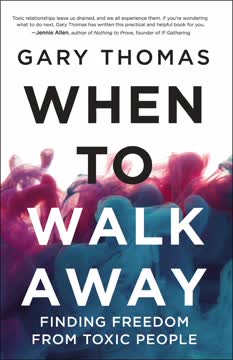
Cuándo alejarse, de Gary Thomas, aborda el desafío de tratar con personas tóxicas desde una perspectiva cristiana. Los lectores valoraron su enfoque equilibrado, que define claramente la toxicidad y ofrece orientación sobre cuándo es necesario distanciarse, todo ello fundamentado en las Escrituras. Muchos expresaron el deseo de haberlo leído antes en su vida. Aunque algunos críticos señalaron que la redacción a veces resultaba desordenada o repetitiva, y unos pocos discreparon con ciertas interpretaciones bíblicas, la mayoría recomendó encarecidamente el libro, considerándolo liberador y útil para manejar relaciones difíciles.
También leyeron



Preguntas frecuentes
1. What is When to Walk Away: Finding Freedom from Toxic People by Gary L. Thomas about?
- Core focus on toxicity: The book explores how Christians can identify, confront, and find freedom from toxic people while remaining faithful to biblical truth and love.
- Biblical foundation: Gary L. Thomas uses Scripture, especially Jesus’ own actions, to show that walking away from toxic situations is sometimes the most loving and mission-focused response.
- Mission-centered approach: The book frames dealing with toxic people as essential to protecting one’s mission to serve God, not just about personal peace.
- Practical and spiritual guidance: Real-life stories and biblical examples help readers discern toxic behavior, set boundaries, and know when to walk away for spiritual health.
2. Why should I read When to Walk Away by Gary L. Thomas?
- Unique Christian perspective: The book addresses toxicity through a biblical lens, helping believers respond in ways that honor God and protect their souls.
- Balanced approach to love: It teaches that loving well sometimes means setting boundaries or walking away, not just enduring or enabling toxic behavior.
- Practical tools and stories: Readers gain actionable advice and encouragement through real-life examples and spiritual wisdom.
- Clarity for confusion: Many Christians struggle with handling toxic people, especially in family or ministry; this book provides clarity and a path forward.
3. What are the key takeaways from When to Walk Away by Gary L. Thomas?
- Walking away is biblical: Jesus himself walked away from toxic people and situations, modeling that it’s sometimes the wisest and most loving choice.
- Mission over reputation: Protecting God’s mission and investing in reliable people is more important than defending personal reputation or engaging with toxic individuals.
- Healthy boundaries are essential: Setting limits and refusing to be manipulated or controlled is a vital part of spiritual health.
- Self-care and transformation: The book encourages readers to address their own toxic self-talk and to seek God’s grace for personal and relational transformation.
4. How does Gary L. Thomas define “toxic people” in When to Walk Away?
- Not just difficult people: Toxic people are those who actively seek to drain your joy, disrupt your mission, and cause long-term emotional or spiritual harm.
- Three main toxic traits: They often exhibit a murderous spirit (seeking to destroy), controlling behavior (manipulation), and a heart that loves hate (thriving on anger and malice).
- Toxicity is a spectrum: Not every toxic person has all traits; toxicity can manifest in different combinations and intensities.
- Hidden behind religious language: Toxicity is sometimes cloaked in Christian language or seemingly loving acts, making discernment essential.
5. What are the main biblical principles and examples used in When to Walk Away by Gary L. Thomas?
- Jesus’ example: The book highlights over 40 instances where Jesus walked away from toxic crowds or individuals, showing strategic disengagement.
- Nehemiah’s focus: Nehemiah’s refusal to be distracted by threats or false friendship demonstrates staying mission-focused amid opposition.
- Paul’s wisdom: Paul’s advice to be “as shrewd as snakes and as innocent as doves” encourages wise, discerning engagement with toxic people.
- Scripture’s skeleton: The framework of creation, fall, and redemption is used to understand the reality of evil and the Christian response to toxicity.
6. What specific methods and advice does Gary L. Thomas offer for dealing with toxic people in When to Walk Away?
- Set clear boundaries: Learn to say no, limit exposure, and refuse to be controlled or manipulated by toxic individuals.
- Invest in reliable people: Focus your time and energy on those who are trustworthy, teachable, and kingdom-minded, as Jesus did with his disciples.
- Pray and guard your heart: Use prayer to maintain peace and avoid becoming toxic yourself in response to attacks.
- Walk away when necessary: Recognize when engagement is fruitless and have the courage to disengage without guilt or retaliation.
7. How does When to Walk Away by Gary L. Thomas distinguish between “playing offense” and “playing defense” in relationships?
- Playing offense: Actively loving, serving, teaching, and spreading God’s kingdom, focusing on reliable people who will bear fruit.
- Playing defense: Protecting oneself and one’s mission from toxic attacks by setting boundaries and walking away when necessary.
- Balance is essential: Thomas admits he spent decades focusing only on offense, which left him vulnerable; learning to play defense enhances ministry effectiveness.
- Biblical mandate: Both offense and defense are necessary for faithful service, as modeled by Jesus and supported by Scripture.
8. How does When to Walk Away by Gary L. Thomas address toxic family relationships?
- Allegiance to Christ first: Jesus calls believers to place allegiance to Him above family ties, even when family members are toxic or oppose faith.
- Treat toxic relatives as healthy: Make decisions as if toxic family members were healthy, explain consequences calmly, and let their response be their responsibility.
- Grieve, don’t fix: The book encourages grieving fractured family relationships rather than trying to fix unfixable toxicity.
- God as defender: Believers are reminded that God is their ultimate defender and comforter when family relationships are painful or broken.
9. What does When to Walk Away by Gary L. Thomas say about toxic marriages and divorce?
- Distinguishing difficult from toxic: The book differentiates between difficult marriages (which can foster growth) and toxic marriages marked by unrepentant, controlling, or abusive behavior.
- Divorce as a last resort: In cases of unrelenting toxicity, divorce may be the only option to preserve life and ministry, described as a “gift of grace.”
- People over institution: God values the people in a marriage more than the institution itself; protecting individuals from harm is paramount.
- Safety first: The first concern in toxic marriages is safety and recovery; decisions about divorce come after ensuring protection and calling for repentance.
10. How does When to Walk Away by Gary L. Thomas help couples address mutual toxicity in marriage?
- Own your toxicity: Both spouses often contribute to toxicity; change begins when each owns their part and seeks God’s grace.
- Grace-based transformation: Understanding God’s love and forgiveness enables spouses to treat each other with compassion, patience, and humility.
- Patience in change: One spouse may need to lead change and wait patiently for the other to follow, recognizing that transformation is a process.
- Seek God’s heart: The key to overcoming toxicity is receiving God’s love personally and then extending that love to one’s spouse.
11. What guidance does When to Walk Away by Gary L. Thomas offer for dealing with toxic self-talk and personal toxicity?
- Toxic self-talk is harmful: Harsh, unkind words toward oneself are as damaging as external toxicity and must be addressed.
- Jesus as the hero: Toxic self-talk begins to die when we make Jesus the hero of our lives, focusing on His grace and sufficiency.
- Put on compassion: Paul’s instruction to “clothe yourselves with compassion, kindness, humility, gentleness and patience” applies inwardly as well.
- Meditate on Christ: Focusing on the beauty, love, and power of Christ is the best antidote to toxic thoughts about oneself.
12. What are the best quotes from When to Walk Away by Gary L. Thomas and what do they mean?
- “Sometimes to follow in the footsteps of Jesus is to walk away from others or to let them walk away from us.” This quote encapsulates the book’s core message that walking away can be a Christlike act.
- “You can’t be on mission if you’re always on defense.” This highlights the importance of balancing boundaries with proactive ministry.
- “God cares more about the people in a marriage than the institution of marriage itself.” This quote underscores the priority of individual well-being over maintaining appearances.
- “Invest in reliable people.” This simple directive encourages readers to focus their energy on those who are open, teachable, and supportive, rather than being drained by toxicity.