Ideas clave
1. La vida no examinada no merece ser vivida
"La vida no examinada no merece ser vivida."
Reflexión filosófica sobre uno mismo. Sócrates sostenía que el propósito fundamental de la existencia humana es examinar críticamente nuestras creencias, acciones y comprensión del mundo. Esta profunda afirmación sugiere que simplemente existir sin una introspección profunda equivale a una forma de muerte intelectual y moral.
Métodos de examen. Sócrates desarrolló un enfoque sistemático para el autoexamen mediante el diálogo y el cuestionamiento. Entablaba conversaciones que ponían al descubierto las inconsistencias en las creencias de las personas, impulsándolas a pensar más profundamente sobre sus suposiciones. Este método, conocido como el método socrático, consiste en:
- Formular preguntas incisivas
- Desafiar creencias establecidas
- Revelar inconsistencias lógicas
- Fomentar la humildad intelectual
Crecimiento personal a través del cuestionamiento. La búsqueda de la sabiduría requiere una autocrítica constante y la disposición a reconocer la propia ignorancia. Al desafiar continuamente nuestra comprensión, nos abrimos a percepciones más profundas y a una transformación personal.
2. La honestidad intelectual exige cuestionar las creencias
"No creo saber lo que no sé."
Humildad intelectual. Sócrates defendía la idea radical de que la verdadera sabiduría comienza reconociendo los límites del propio conocimiento. A diferencia de muchos de sus contemporáneos que afirmaban tener expertise, él estaba dispuesto a admitir su ignorancia y a buscar continuamente la comprensión.
Cuestionar las suposiciones sociales y personales:
- Interrogar creencias religiosas
- Examinar estructuras políticas
- Desafiar opiniones populares
- Rechazar tradiciones no examinadas
El peligro de la falsa certeza. Muchas personas confunden la confianza con el conocimiento, creando puntos ciegos peligrosos en su entendimiento. Manteniendo una postura de apertura intelectual, nos protegemos del dogmatismo y permanecemos receptivos a nuevas ideas.
3. La verdadera sabiduría reside en reconocer la propia ignorancia
"Soy más sabio que este hombre, porque ninguno de los dos parece saber algo valioso, pero él cree saber algo cuando no es así, mientras que yo, cuando no sé, tampoco creo saber."
Paradoja del conocimiento. Sócrates descubrió en sus interacciones que quienes afirmaban ser sabios a menudo sabían menos. Su forma única de sabiduría surgió de entender que el verdadero conocimiento comienza reconociendo lo poco que realmente se sabe.
Implicaciones de la honestidad intelectual:
- Aceptar la incertidumbre
- Aprendizaje continuo
- Rechazo de la falsa erudición
- Valorar la comprensión genuina sobre el conocimiento superficial
Paradoja socrática. Al admitir su propia ignorancia, Sócrates se posicionó como un estudiante perpetuo de la vida, siempre abierto al aprendizaje y al crecimiento. Este enfoque fue revolucionario en una sociedad que a menudo valoraba la habilidad retórica por encima de la comprensión auténtica.
4. La integridad moral importa más que la seguridad personal
"Sería terrible si abandonara mi puesto por miedo a la muerte o a cualquier otra cosa."
Existencia con principios. Sócrates creía que vivir conforme a los propios principios morales era más importante que la autopreservación. Ante la disyuntiva de comprometer sus creencias o arriesgar la muerte, siempre eligió la integridad.
Valor de la convicción:
- Negarse a comprometer estándares éticos
- Aceptar las consecuencias de acciones con principios
- Priorizar la verdad moral sobre la comodidad personal
- Mantener coherencia filosófica y personal
Postura moral transformadora. Al negarse a traicionar su misión filosófica, incluso frente a la ejecución, Sócrates demostró que la verdadera libertad proviene de adherirse a las creencias más profundas, sin importar las presiones externas.
5. La indagación filosófica es un deber cívico
"No hago más que persuadir a jóvenes y mayores para que no valoren su cuerpo ni su riqueza por encima, ni tanto como, el mejor estado posible de su alma."
Activismo filosófico. Sócrates veía la indagación filosófica no como un ejercicio académico, sino como una responsabilidad cívica crucial. Su papel era desafiar a los ciudadanos a pensar más profundamente sobre la virtud, la justicia y el crecimiento personal.
Métodos de compromiso cívico:
- Cuestionar creencias establecidas
- Fomentar el pensamiento crítico
- Promover el autoexamen ético
- Desafiar la complacencia social
Educación transformadora. Al involucrar a los ciudadanos en el diálogo, Sócrates buscaba crear una sociedad más reflexiva y éticamente consciente, convencido de que el crecimiento moral individual es esencial para el progreso colectivo.
6. El coraje significa defender los principios
"Temer a la muerte, señores, no es más que creerse sabio cuando no se es."
Valentía filosófica. Sócrates demostró que el verdadero coraje no reside en la fuerza física, sino en mantener los principios frente a la oposición abrumadora. Su juicio y posterior negativa a ceder ejemplificaron este ideal.
Dimensiones del coraje moral:
- Enfrentar persecución injusta
- Mantener la integridad filosófica
- Rechazar presiones sociales
- Aceptar las consecuencias personales
Trascender el miedo. Al considerar la muerte no como una amenaza definitiva sino como una posible transición, Sócrates transformó la comprensión tradicional del coraje, enfatizando la convicción moral sobre la supervivencia física.
7. La justicia trasciende la conveniencia personal
"Nunca se debe hacer mal en respuesta, ni dañar a nadie, sin importar lo que te haya hecho."
Absolutismo ético. Sócrates creía en principios morales universales que superaban la conveniencia personal o el interés inmediato. Su compromiso con la justicia se basaba en la creencia en estándares éticos absolutos.
Principios de justicia universal:
- Rechazar la venganza
- Mantener la coherencia ética
- Priorizar la integridad moral
- Trascender las emociones personales
Rectitud filosófica. Al negarse a escapar de la prisión o a comprometer sus principios, Sócrates demostró que la verdadera justicia exige un compromiso inquebrantable con los ideales éticos, incluso cuando resulta incómodo.
8. La muerte no debe ser temida
"Nadie sabe si la muerte no es la mayor de las bendiciones para un hombre, sin embargo, los hombres la temen como si supieran que es el mayor de los males."
Perspectiva filosófica sobre la mortalidad. Sócrates desafió el miedo convencional a la muerte argumentando que nuestra comprensión limitada nos impide captar su verdadera naturaleza. Veía la muerte como una posible transición o liberación.
Perspectivas sobre la mortalidad:
- Aceptar la incertidumbre
- Rechazar miedos irracionales
- Ver la muerte como una oportunidad potencial
- Mantener la compostura filosófica
Trascender la ansiedad existencial. Al replantear la muerte como una experiencia desconocida en lugar de un fin definitivo, Sócrates ofreció un enfoque revolucionario para comprender la mortalidad humana.
9. La virtud del alma importa más que la vida física
"La riqueza no produce la excelencia, sino que la excelencia produce la riqueza y todo lo demás bueno para los hombres."
Prioridad espiritual. Sócrates enfatizaba la primacía del desarrollo espiritual e intelectual sobre las búsquedas materiales. Creía que cultivar la virtud interior era mucho más importante que acumular recompensas externas.
Estrategias para el desarrollo espiritual:
- Priorizar el crecimiento ético
- Autoexamen continuo
- Rechazar valores materialistas
- Buscar la sabiduría por encima de la riqueza
Autocomprensión transformadora. Al centrarse en el desarrollo del alma, Sócrates propuso un enfoque integral de la existencia humana que valoraba el crecimiento interno sobre los logros externos.
10. Desafiar las normas sociales es esencial para el progreso
"La vida no examinada no merece ser vivida."
Rebelión filosófica. Sócrates demostró que el progreso social surge de cuestionar constantemente las normas, creencias y suposiciones establecidas. Su método de cuestionamiento fue una herramienta poderosa para la transformación intelectual y social.
Estrategias para el desafío constructivo:
- Exponer inconsistencias lógicas
- Fomentar el pensamiento crítico
- Promover la humildad intelectual
- Resistir creencias dogmáticas
Pensamiento evolutivo. Al cuestionar continuamente las estructuras sociales, Sócrates ofreció un modelo para el progreso intelectual y social que valora el diálogo constante y el examen crítico.
Resumen de reseñas
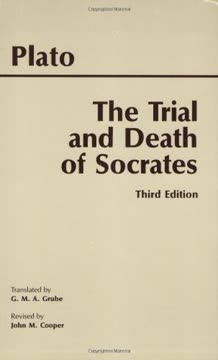
El juicio y la muerte de Sócrates es muy valorado por los lectores debido a su profundidad filosófica y su importancia histórica. Muchos encuentran la defensa de Sócrates en la Apología poderosa y conmovedora. Los lectores aprecian la representación que hace Platón de los principios inquebrantables y la honestidad intelectual de Sócrates, aunque algunos lo consideran frustrante en ciertos momentos. Los diálogos se perciben como estimulantes y fundamentales para la filosofía occidental, recibiendo especial reconocimiento la Apología y el Fedón. Algunos lectores señalan la dificultad de distinguir las ideas de Platón de las palabras y acciones reales de Sócrates.
También leyeron



Preguntas frecuentes
What's "The Trial and Death of Socrates" by Plato about?
- Overview: The book is a collection of dialogues by Plato that detail the trial, imprisonment, and execution of Socrates in 399 B.C. It includes four main dialogues: Euthyphro, Apology, Crito, and Phaedo.
- Socrates' Philosophy: It explores Socrates' philosophical ideas, particularly his views on ethics, virtue, and the immortality of the soul.
- Historical Context: The dialogues provide insight into the political and social climate of Athens during Socrates' time, including the tension between democracy and philosophical inquiry.
- Socratic Method: The book showcases Socrates' method of questioning to expose ignorance and stimulate critical thinking.
Why should I read "The Trial and Death of Socrates" by Plato?
- Philosophical Insight: It offers profound insights into fundamental philosophical questions about ethics, justice, and the nature of the soul.
- Historical Significance: The dialogues are crucial for understanding the historical context of ancient Athens and the philosophical landscape of the time.
- Socratic Method: Readers can learn about the Socratic method of inquiry, which is foundational to Western philosophy and critical thinking.
- Literary Value: Plato's dialogues are not only philosophical texts but also literary masterpieces that have influenced countless thinkers and writers.
What are the key takeaways of "The Trial and Death of Socrates" by Plato?
- Virtue is Knowledge: Socrates argues that true knowledge leads to virtuous behavior and that wrongdoing is a result of ignorance.
- The Unexamined Life: Socrates famously claims that "the unexamined life is not worth living," emphasizing the importance of self-reflection and philosophical inquiry.
- Justice and Duty: The dialogues explore the tension between individual conscience and societal laws, as seen in Socrates' refusal to escape from prison.
- Immortality of the Soul: In Phaedo, Socrates discusses the immortality of the soul, suggesting that death is not to be feared by those who have lived a virtuous life.
What is the Socratic Method as presented in "The Trial and Death of Socrates"?
- Questioning Technique: The Socratic method involves asking a series of questions to stimulate critical thinking and illuminate ideas.
- Exposing Ignorance: Socrates uses this method to reveal the ignorance of those who claim to have knowledge, encouraging them to seek true understanding.
- Dialogue Form: The method is presented through dialogues, where Socrates engages with various interlocutors to explore philosophical concepts.
- Philosophical Inquiry: It emphasizes the importance of questioning and dialogue in the pursuit of truth and wisdom.
What are the main themes in "The Trial and Death of Socrates" by Plato?
- Justice and Injustice: The dialogues examine the nature of justice, both in the context of Socrates' trial and in broader philosophical terms.
- The Role of the Philosopher: Socrates' life and death raise questions about the role of the philosopher in society and the value of philosophical inquiry.
- Mortality and the Soul: The theme of death and the immortality of the soul is central, particularly in the Phaedo dialogue.
- Ethics and Virtue: The book explores the relationship between knowledge, ethics, and virtuous living, a core aspect of Socratic philosophy.
How does "The Trial and Death of Socrates" by Plato depict Socrates' trial?
- Accusations: Socrates is accused of corrupting the youth and not believing in the gods of Athens, charges brought by Meletus and others.
- Defense Speech: In the Apology, Socrates delivers a defense that is more a justification of his life and philosophy than a plea for acquittal.
- Philosophical Stance: Socrates maintains his commitment to truth and virtue, refusing to compromise his principles even in the face of death.
- Outcome: Despite his defense, Socrates is found guilty and sentenced to death, a verdict he accepts with composure and dignity.
What is the significance of the dialogue "Euthyphro" in "The Trial and Death of Socrates"?
- Definition of Piety: The dialogue centers on Socrates' discussion with Euthyphro about the nature of piety and impiety.
- Philosophical Inquiry: It exemplifies the Socratic method of questioning to explore complex ethical concepts.
- Religious Beliefs: The dialogue highlights the tension between traditional religious beliefs and philosophical reasoning.
- Introduction to Trial: It sets the stage for Socrates' trial by introducing themes of justice and moral responsibility.
What are the best quotes from "The Trial and Death of Socrates" by Plato and what do they mean?
- "The unexamined life is not worth living." This quote from the Apology emphasizes the importance of self-reflection and philosophical inquiry for a meaningful life.
- "Virtue is knowledge." Socrates' belief that true knowledge leads to virtuous behavior, suggesting that moral failings are due to ignorance.
- "I know that I know nothing." A statement of Socratic humility, acknowledging the limits of one's knowledge and the importance of continuous learning.
- "No evil can happen to a good man, either in life or after death." Socrates' belief in the protection of the virtuous soul, regardless of earthly circumstances.
How does "The Trial and Death of Socrates" by Plato address the concept of justice?
- Socrates' Trial: The dialogues explore the concept of justice through the legal proceedings against Socrates and his defense.
- Moral vs. Legal Justice: Socrates distinguishes between legal justice and moral justice, often challenging the former with philosophical reasoning.
- Obedience to Law: In Crito, Socrates discusses the importance of obeying the laws of the state, even when they result in personal harm.
- Philosophical Justice: The dialogues suggest that true justice involves living a virtuous life in accordance with reason and truth.
What is the role of Crito in "The Trial and Death of Socrates" by Plato?
- Friendship and Loyalty: Crito represents the loyalty and concern of Socrates' friends, urging him to escape from prison.
- Moral Dilemma: The dialogue between Crito and Socrates explores the moral implications of escaping versus accepting the legal verdict.
- Philosophical Discussion: Crito serves as a foil to Socrates, allowing for a deeper exploration of justice, duty, and the individual's relationship to the state.
- Resolution: Ultimately, Crito's arguments are unable to sway Socrates, who remains committed to his principles and accepts his fate.
How does "The Trial and Death of Socrates" by Plato explore the theme of the soul's immortality?
- Phaedo Dialogue: The Phaedo focuses on Socrates' arguments for the immortality of the soul, presented on the day of his execution.
- Philosophical Arguments: Socrates offers several arguments, including the Theory of Recollection and the Argument from Opposites, to support the soul's eternal nature.
- Mythical Imagery: Socrates uses mythological imagery to describe the soul's journey after death and its dwelling places.
- Consolation in Death: The belief in the soul's immortality provides comfort to Socrates and his followers, reinforcing the idea that death is not to be feared.
What is the significance of Socrates' final moments in "The Trial and Death of Socrates" by Plato?
- Calm Acceptance: Socrates faces his death with calmness and composure, reflecting his philosophical beliefs and acceptance of fate.
- Final Instructions: He gives instructions to his friends, emphasizing the importance of caring for their souls and living virtuously.
- Symbolic Gesture: Socrates' last words about offering a cock to Asclepius suggest that death is a cure for the ills of life.
- Legacy: His final moments underscore the enduring impact of his teachings and the philosophical life he championed.