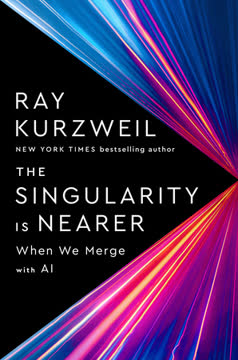
Ideas clave
1. La inteligencia artificial y las tecnologías exponenciales transformarán radicalmente la civilización humana
"La marcha milenaria de la humanidad hacia la Singularidad se ha convertido en una carrera acelerada."
Transformación tecnológica exponencial. Este libro sostiene que estamos entrando en una era de cambios tecnológicos sin precedentes impulsados por las tecnologías de la información. La ley de los retornos acelerados nos muestra que el progreso tecnológico no es lineal, sino exponencial, donde cada avance facilita y acelera las innovaciones siguientes.
Áreas clave de convergencia tecnológica:
- Inteligencia artificial
- Biotecnología
- Nanotecnología
- Potencia informática
- Interfaces cerebro-computadora
Impacto social. Estas tecnologías convergentes remodelarán de forma fundamental la existencia humana, con el potencial de resolver desafíos históricos como la pobreza, las enfermedades y las limitaciones del potencial humano. Los cambios serán tan profundos que darán lugar a una nueva forma de experiencia humana.
2. La inteligencia artificial evoluciona rápidamente más allá de las capacidades humanas
"En un área tras otra, serán mejores que todos los humanos para 2029."
Progreso exponencial de la IA. La inteligencia artificial avanza a un ritmo sin precedentes, con sistemas capaces de dominar tareas complejas en múltiples ámbitos. Desde juegos hasta diagnósticos médicos, la IA supera constantemente a los expertos humanos.
Áreas clave de avances en IA:
- Procesamiento del lenguaje natural
- Diagnóstico médico
- Investigación científica
- Resolución creativa de problemas
- Velocidad computacional
Potencial transformador. La IA no solo mejora de forma incremental, sino que replantea radicalmente cómo puede operar la inteligencia, creando capacidades cognitivas que superan las limitaciones biológicas humanas.
3. La fusión de la inteligencia humana con la inteligencia artificial
"Nos fusionaremos con la IA y nos aumentaremos con millones de veces la potencia computacional que nos dio nuestra biología."
Revolución de las interfaces cerebro-computadora. El libro imagina un futuro donde la inteligencia humana se extienda directamente mediante conexiones neuronales a sistemas computacionales, ampliando dramáticamente las capacidades cognitivas.
Estrategias de integración:
- Nanobots que conectan el cerebro con la computación en la nube
- Interfaces neuronales directas
- Procesamiento cognitivo aumentado
- Memoria y aprendizaje ampliados
Implicaciones filosóficas. Esta fusión desafía los conceptos tradicionales de identidad humana, sugiriendo un futuro donde la conciencia y la inteligencia sean conceptos fluidos y expansibles, no limitados por la biología.
4. El progreso tecnológico está resolviendo desafíos humanos fundamentales
"La tecnología de la información trata sobre ideas, y mejorar exponencialmente nuestra capacidad para compartir y crear ideas nos da a cada uno un mayor poder para cumplir nuestro potencial humano."
Resolviendo problemas globales. Las tecnologías emergentes abordan sistemáticamente desafíos humanos fundamentales en múltiples ámbitos, desde la salud hasta la sostenibilidad ambiental.
Áreas de transformación:
- Reducción de la pobreza global
- Mejora del acceso a la educación
- Avances en tratamientos médicos
- Creación de soluciones energéticas sostenibles
- Mejora de la comunicación global
Ciclos de retroalimentación positiva. Los avances tecnológicos generan ciclos virtuosos donde cada innovación facilita las siguientes, acelerando el progreso humano.
5. El camino hacia la longevidad y el potencial humano mejorado
"El objetivo final es poner nuestro destino en nuestras propias manos, no en las manos metafóricas del destino—vivir tanto como deseemos."
Extensión radical de la vida. Las biotecnologías avanzadas y la IA desarrollan estrategias para extender dramáticamente la esperanza de vida humana, permitiendo vivir mucho más allá de las limitaciones biológicas actuales.
Estrategias para la longevidad:
- Nanotecnología médica avanzada
- Mecanismos de reparación genética
- Atención médica personalizada impulsada por IA
- Técnicas de regeneración celular
- Tecnologías de transferencia de mente
Potencial transformador. Estas tecnologías prometen no solo una vida más larga, sino una calidad de vida mejorada, permitiendo a los humanos trascender sus limitaciones físicas y cognitivas actuales.
6. La nanotecnología revolucionará la medicina y la manufactura
"En última instancia, los nanobots podrán reemplazar órganos biológicos por completo, si es necesario o deseado."
Ingeniería a escala molecular. La nanotecnología representa una revolución fundamental en nuestra capacidad para manipular la materia a nivel atómico y molecular.
Aplicaciones revolucionarias:
- Intervenciones médicas dirigidas
- Manufactura a nivel molecular
- Reemplazo de órganos
- Ingeniería precisa de materiales
- Restauración ambiental
Implicaciones económicas y sociales. La nanotecnología podría crear abundancia al hacer que los costos de producción sean insignificantes, rediseñando potencialmente las estructuras económicas y sociales.
7. Abordar los riesgos existenciales de las tecnologías emergentes
"Tenemos un imperativo moral de realizar esta promesa de nuevas tecnologías mientras mitigamos el peligro."
Gestión de riesgos tecnológicos. A medida que las tecnologías se vuelven más poderosas, presentan simultáneamente oportunidades sin precedentes y riesgos existenciales potenciales.
Estrategias para mitigar riesgos:
- Desarrollo ético de la IA
- Cooperación internacional
- Protocolos de seguridad robustos
- Acceso tecnológico distribuido
- Evaluación proactiva de riesgos
Enfoque equilibrado. El libro aboga por un enfoque matizado que abrace el progreso tecnológico manteniendo rigurosas salvaguardas y consideraciones éticas.
Resumen de reseñas
La Singularidad Está Más Cerca ha recibido críticas encontradas, pues algunos elogian su visión optimista del futuro y su exhaustivo repaso de la inteligencia artificial y los avances tecnológicos. Sin embargo, los detractores señalan que carece de ideas novedosas y minimiza los riesgos potenciales. Muchos lectores encuentran fascinantes las predicciones de Kurzweil, aunque advierten que el libro se centra en reiterar trabajos anteriores. Algunos valoran las explicaciones accesibles de temas complejos, mientras que otros consideran que falta profundidad al abordar las implicaciones sociales y las cuestiones éticas. En conjunto, las opiniones están divididas respecto al valor y la relevancia de esta obra.
También leyeron




Preguntas frecuentes
What's The Singularity Is Nearer about?
- Exploration of Singularity: The book delves into the concept of the Singularity, where human intelligence merges with AI, leading to transformative changes in human consciousness and capabilities.
- Technological Growth: It emphasizes the exponential growth of technology, particularly in AI, biotechnology, and nanotechnology, and how these advancements will reshape human life.
- Future Predictions: Ray Kurzweil predicts significant changes by the 2030s and 2040s, including radical life extension and the potential for humans to digitally back up their minds.
Why should I read The Singularity Is Nearer?
- Insight into Future Trends: The book offers a comprehensive overview of emerging technologies that will shape the future, essential for anyone interested in technology and its societal impacts.
- Philosophical and Ethical Exploration: It raises important questions about identity, consciousness, and the ethical implications of merging with AI, prompting critical thinking.
- Authoritative Perspective: As a leading futurist, Kurzweil provides unique insights based on decades of research, making it a valuable resource for understanding technology's trajectory.
What are the key takeaways of The Singularity Is Nearer?
- Merging with AI: Humanity is on a path to merge with AI, enhancing cognitive abilities and potentially redefining what it means to be human.
- Exponential Progress: Technological advancements are accelerating, particularly in computing, genetics, and nanotechnology, leading to unprecedented improvements in quality of life.
- Opportunities and Risks: The book discusses both the opportunities presented by these advancements and the potential risks, emphasizing the need for careful management.
What are the best quotes from The Singularity Is Nearer and what do they mean?
- "The sands of time will start running in rather than out.": This quote encapsulates the idea of longevity escape velocity, suggesting that medical advancements will allow people to add more years to their lives than they lose.
- "The future is not something we enter. The future is something we create.": Emphasizes the proactive role humans play in shaping the future through innovation and technology.
- "We are the creators of our own destiny.": Highlights the importance of ethical considerations in the development of AI and other technologies.
How does Ray Kurzweil define the Singularity in The Singularity Is Nearer?
- Metaphorical Definition: Kurzweil uses "Singularity" as a metaphor from mathematics and physics, where traditional laws break down due to rapid change.
- Integration of AI and Humanity: He predicts the Singularity will occur when humans augment their biological intelligence with AI, transforming consciousness and capabilities.
- Timeline for Singularity: Kurzweil estimates it will occur around 2045, based on current trends in technology and AI development.
What is the law of accelerating returns in The Singularity Is Nearer?
- Exponential Growth Principle: This law states that technological progress is accelerating, meaning each new advancement makes future advancements easier and faster.
- Feedback Loops: Innovations in information technology create feedback loops that drive further innovation, leading to exponential improvements.
- Historical Context: Kurzweil provides historical examples to illustrate how this law has operated in the past, suggesting it will continue to shape the future.
How does The Singularity Is Nearer address the concept of radical life extension?
- Biotechnology and Nanotechnology: Kurzweil discusses how advancements in these fields will enable significant increases in human lifespan.
- Longevity Escape Velocity: Introduces the concept where medical advancements allow individuals to live longer than the rate at which they age.
- Ethical Considerations: Addresses ethical implications, including resource allocation and societal impacts, encouraging readers to consider these factors.
What role does AI play in healthcare according to The Singularity Is Nearer?
- AI in Drug Discovery: AI is revolutionizing drug discovery, allowing for faster identification of effective treatments and reducing time and cost.
- Simulated Trials: Predicts AI-driven simulations will replace traditional human trials, providing more accurate and efficient results.
- Personalized Medicine: AI will enable a more personalized approach to healthcare, tailoring treatments to individual genetic profiles and health conditions.
What are the potential risks of AI discussed in The Singularity Is Nearer?
- Existential Threats: Kurzweil acknowledges potential existential risks if AI is not properly managed, emphasizing alignment with human values.
- Misuse of Technology: Discusses potential misuse in warfare and surveillance, advocating for responsible development and regulation.
- Societal Disruption: Warns of societal disruptions, including job displacement and economic inequality, stressing proactive measures.
How does The Singularity Is Nearer define consciousness?
- Complexity of Consciousness: Suggests consciousness arises from intricate interactions of neurons and brain structures, key to replicating it in machines.
- Philosophical Perspectives: Delves into philosophical perspectives, including the hard problem of consciousness and subjective experience.
- AI and Consciousness: Argues advanced AI may achieve forms of consciousness, raising ethical considerations regarding intelligent machines.
What advancements in biotechnology are predicted in The Singularity Is Nearer?
- Gene Editing: Discusses the potential of CRISPR and other technologies to eliminate genetic diseases and enhance human capabilities.
- Nanotechnology in Medicine: Predicts nanobots will play a crucial role in repairing and augmenting human organs, improving health and longevity.
- AI-Driven Health Solutions: Integration of AI with biotechnology will accelerate personalized treatments and preventive measures, transforming healthcare.
How does The Singularity Is Nearer envision the future of work?
- Job Transformation: Predicts AI and automation will transform work, creating new jobs while displacing some existing ones.
- Collaboration with AI: Future work will involve collaboration between humans and AI, enhancing productivity and creativity.
- Economic Implications: Discusses potential shifts in income distribution and the need for social safety nets, advocating for proactive policies.
Sobre el autor
Otros libros de Ray Kurzweil