Ideas clave
1. Tu cerebro es único, moldeado por la genética y la experiencia
"Tu cerebro te hace ser así."
Interacción entre naturaleza y crianza. Las características únicas de tu cerebro son el resultado tanto de la predisposición genética como de las experiencias de vida. Esta interacción da forma a tus pensamientos, sentimientos y comportamientos, haciéndote ser quien eres. El cerebro humano, con sus 86 mil millones de neuronas, es increíblemente complejo y adaptable.
Las diferencias individuales importan. Aunque todos los cerebros humanos comparten características comunes, las variaciones entre individuos pueden ser significativas. Estas diferencias se manifiestan de diversas maneras:
- Tamaño y estructura del cerebro
- Niveles de neurotransmisores
- Patrones de conectividad neuronal
- Velocidades de procesamiento de información
- Fortalezas y debilidades cognitivas
Comprender estas diferencias individuales es crucial para apreciar la diversidad humana y desarrollar enfoques personalizados en educación, salud mental y desarrollo personal.
2. Los dos hemisferios de tu cerebro trabajan de manera diferente pero colaborativa
"Aunque pueda parecer difícil de creer, tu cerebro funciona de esta manera: en su versión de Teléfono, el susurro entre neuronas se logra mediante la liberación de neurotransmisores."
Especialización hemisférica. Los hemisferios izquierdo y derecho del cerebro tienen diferentes estilos y fortalezas de procesamiento:
- Hemisferio izquierdo: Más enfocado en los detalles, el procesamiento del lenguaje y el razonamiento lógico
- Hemisferio derecho: Mejor en el pensamiento holístico, la conciencia espacial y el procesamiento emocional
La colaboración es clave. A pesar de estas diferencias, los dos hemisferios trabajan juntos para crear una experiencia unificada del mundo. El cuerpo calloso, un haz de fibras nerviosas que conecta los hemisferios, permite un intercambio e integración rápida de información.
El grado de lateralización (qué tan fuertemente se dividen las funciones entre los hemisferios) varía entre individuos y puede influir en las fortalezas y debilidades cognitivas. Comprender tu propio equilibrio hemisférico puede ayudarte a aprovechar las tendencias naturales de tu cerebro y compensar posibles debilidades.
3. El equilibrio químico de tu cerebro influye en tu personalidad y comportamiento
"Al final del día, si intentas explicar por qué las personas rinden de manera diferente en las pruebas de inteligencia, saber cuán grandes son sus cerebros te llevará casi un 11 por ciento del camino."
Cóctel de neurotransmisores. La mezcla única de neurotransmisores en tu cerebro, incluyendo dopamina, serotonina y oxitocina, juega un papel crucial en la formación de tu personalidad y comportamiento. Este equilibrio químico influye en:
- Estado de ánimo y regulación emocional
- Motivación y comportamiento de búsqueda de recompensas
- Vínculo social y empatía
- Respuestas de ansiedad y estrés
Sistema dinámico. El equilibrio químico de tu cerebro no es estático; puede ser influenciado por:
- Genética
- Dieta y ejercicio
- Patrones de sueño
- Niveles de estrés
- Interacciones sociales
- Factores ambientales
Comprender las tendencias químicas de tu cerebro puede ayudarte a tomar decisiones informadas sobre elecciones de estilo de vida y posibles intervenciones para optimizar tu bienestar mental y rendimiento.
4. La sincronización neuronal afecta cómo procesas la información
"Para entender mejor la relación entre el enfoque y el control mental, necesitaremos profundizar en más detalles de esta característica de diseño."
Los ritmos cerebrales importan. La sincronización de la actividad neuronal a diferentes frecuencias influye en cómo tu cerebro procesa la información. Puntos clave:
- Ondas alfa (8-12 Hz): Asociadas con la alerta relajada y la creatividad
- Ondas beta (13-30 Hz): Relacionadas con la atención enfocada y la resolución de problemas
- Ondas theta (4-7 Hz): Importantes para la consolidación de la memoria y el aprendizaje
- Ondas gamma (30-100 Hz): Involucradas en funciones cognitivas de orden superior
Diferencias individuales en la sincronización. Las personas varían en sus frecuencias neuronales dominantes y en su capacidad para cambiar entre diferentes estados cerebrales. Estas diferencias pueden afectar:
- Capacidad de atención y enfoque
- Capacidad de aprendizaje y memoria
- Flexibilidad cognitiva
- Habilidades de pensamiento creativo
Comprender las tendencias rítmicas de tu cerebro puede ayudarte a optimizar tu entorno y actividades para un mejor rendimiento cognitivo y bienestar.
5. Tu cerebro se adapta a tu entorno, creando tu realidad personal
"No eres ni un actor en ni un observador pasivo de tu realidad. Eres el creador de la misma."
Neuroplasticidad en acción. Tu cerebro se reconfigura constantemente en función de tus experiencias, un proceso conocido como neuroplasticidad. Esta adaptación da forma a tu percepción de la realidad e influye en tus pensamientos, emociones y comportamientos.
Construcción de la realidad personal. Factores clave en cómo tu cerebro crea tu experiencia subjetiva:
- Atención selectiva: Tu cerebro filtra la información entrante según su relevancia y experiencias pasadas
- Reconocimiento de patrones: Tu cerebro busca encontrar patrones familiares en nuevas situaciones
- Integración de la memoria: Las nuevas experiencias se interpretan a la luz de recuerdos pasados
- Coloración emocional: Tu estado emocional influye en cómo percibes y recuerdas eventos
Comprender que tu realidad es una construcción de tu cerebro puede ayudarte a:
- Ser más receptivo a diferentes perspectivas
- Examinar críticamente tus propios prejuicios y suposiciones
- Modelar activamente tus experiencias para promover cambios positivos en el cerebro
6. La curiosidad y la exploración moldean el conocimiento y la toma de decisiones de tu cerebro
"La curiosidad a menudo se presenta como una característica deseable. Sin embargo, la curiosidad puede tener un costo que a veces pone a las personas en situaciones perjudiciales."
La curiosidad como fuerza motriz. La curiosidad motiva la exploración y el aprendizaje, llevando a la expansión de la base de conocimientos de tu cerebro. Los beneficios de la curiosidad incluyen:
- Mejora de la memoria para nueva información
- Aumento de la liberación de dopamina, promoviendo sentimientos positivos y motivación
- Mejora de las habilidades de resolución de problemas
- Mayor adaptabilidad a nuevas situaciones
Equilibrando curiosidad y precaución. Aunque la curiosidad es generalmente beneficiosa, es esencial equilibrarla con:
- Evaluación de riesgos: Evaluar los peligros potenciales de la exploración
- Control de impulsos: Manejar el impulso de buscar gratificación inmediata
- Asignación de recursos: Decidir dónde enfocar tu atención y energía
Cultivar una curiosidad saludable mientras mantienes la precaución adecuada puede llevar a una experiencia de vida más rica y satisfactoria y a una mejor toma de decisiones.
7. Entender a los demás requiere modelado mental flexible y conexión
"Las personas son difíciles de odiar de cerca. Acércate."
Teoría de la mente. La capacidad de entender y predecir los estados mentales de los demás, conocida como teoría de la mente, es crucial para la interacción social y la empatía. Esta habilidad implica:
- Toma de perspectiva: Imaginarte en la posición de otro
- Reconocimiento emocional: Interpretar expresiones faciales y lenguaje corporal
- Comprensión contextual: Considerar factores situacionales que influyen en el comportamiento
Modelado mental flexible. La interacción social efectiva requiere adaptar tus modelos mentales de los demás en función de nueva información y experiencias. Esta flexibilidad permite:
- Mejor comunicación y resolución de conflictos
- Aumento de la empatía y compasión
- Mejora del trabajo en equipo y la colaboración
- Reducción de prejuicios y estereotipos
Desarrollar tus habilidades de modelado mental puede llevar a relaciones más ricas y significativas y a un mejor funcionamiento social en diversos contextos.
Resumen de reseñas
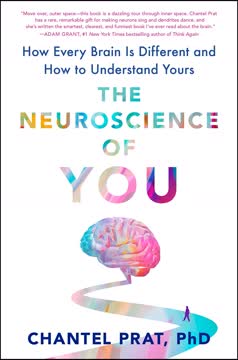
La Neurociencia de Ti explora cómo las diferencias individuales en el cerebro moldean nuestros pensamientos, comportamientos y personalidades. Los lectores elogiaron su estilo de escritura accesible, sus anécdotas cautivadoras y las pruebas prácticas que incluye. Muchos lo encontraron informativo y perspicaz, valorando la atención del autor a la singularidad cerebral y las diferencias individuales. Algunos criticaron la cantidad excesiva de notas al pie y las digresiones. En general, el libro fue bien recibido por su perspectiva renovadora sobre la neurociencia, centrándose en las variaciones cerebrales individuales en lugar de promedios, y ofreciendo a los lectores una comprensión más profunda de sí mismos y de los demás.
También leyeron






Preguntas frecuentes
1. What is The Neuroscience of You by Chantel Prat about?
- Exploring brain individuality: The book explains how every brain is uniquely shaped by biology and life experiences, influencing how we think, feel, and behave.
- Beyond one-size-fits-all neuroscience: Prat delves into individual differences in brain structure, chemistry, and function, challenging common myths about the brain.
- Personal and scientific blend: The author combines neuroscience research with personal stories to make complex concepts relatable and practical for everyday life.
2. Why should I read The Neuroscience of You by Chantel Prat?
- Gain self-understanding: The book helps readers understand their own brain’s unique design, strengths, and challenges, fostering greater self-awareness.
- Practical insights for life: It offers assessments and explanations that empower readers to apply neuroscience to personal growth, relationships, and decision-making.
- Empathy and connection: By highlighting how brains differ, Prat provides tools for better communication and empathy in social and professional settings.
3. What are the key takeaways from The Neuroscience of You by Chantel Prat?
- Every brain is different: Individual differences in brain structure, chemistry, and rhythms shape our thoughts, behaviors, and personalities.
- Nature and nurture interplay: Genetics and life experiences both play crucial roles in shaping the brain, making it a dynamic, ever-changing organ.
- Understanding leads to empowerment: Awareness of your brain’s unique wiring can help you leverage your strengths and navigate challenges more effectively.
4. What are the best quotes from The Neuroscience of You by Chantel Prat and what do they mean?
- “Your brain is a moving target.” This highlights the brain’s constant adaptation to new experiences and environments.
- “There is no such thing as a ‘normal’ brain.” Prat emphasizes that brain diversity is the norm, not the exception.
- “The horse and rider must learn to work together.” This metaphor illustrates the partnership between intuitive and controlled brain systems in guiding behavior.
5. How does The Neuroscience of You by Chantel Prat explain brain lateralization and handedness?
- Lopsided brains explained: Human brains are structurally asymmetrical, with hemispheres specializing in different types of processing.
- Handedness as a marker: Hand preference reflects underlying brain lateralization, with most people being right-handed and left-hemisphere dominant for language.
- Costs and benefits: Highly lateralized brains may excel in specific tasks but are more vulnerable to injury, while balanced brains are more resilient and integrate information more globally.
6. What is the “horse and rider” metaphor in The Neuroscience of You by Chantel Prat?
- Horse as intuition: The horse represents the brain’s intuitive, automatic, and reward-driven systems, learning from experience without conscious awareness.
- Rider as conscious control: The rider symbolizes the prefrontal cortex, using language and explicit goals to guide behavior, but can tire quickly.
- Interaction and learning: With practice, the rider can train the horse, making controlled behaviors more automatic over time.
7. How does The Neuroscience of You by Chantel Prat describe the role of neurotransmitters in personality and behavior?
- Dopamine and extraversion: Dopamine drives reward-seeking and motivation, with extraverts showing stronger responses to unexpected rewards.
- Serotonin and emotional balance: Serotonin helps regulate mood and inhibits excessive dopamine-driven wanting, influencing anxiety and stability.
- Stress and neurochemistry: Stress hormones interact with neurotransmitter systems, affecting creativity, motivation, and mental health.
8. What does The Neuroscience of You by Chantel Prat say about neural rhythms and brain synchronization?
- Brain as a rhythm generator: Neurons communicate in rhythmic cycles, coordinating information flow and enabling flexible task management.
- Alpha frequency and cognition: Preferred alpha rhythms correlate with working memory and processing speed, with faster rhythms supporting multitasking and slower ones linked to creativity.
- Trade-offs in synchronization: High-frequency rhythms aid real-time processing but limit integration, while low-frequency rhythms support integration but can cause attentional lapses.
9. How does The Neuroscience of You by Chantel Prat explain attention, focus, and the basal ganglia’s role?
- Hierarchy of focus: Attention ranges from automatic noticing to controlled, goal-directed focus and self-monitoring.
- Basal ganglia as conductor: These brain nuclei route relevant signals based on context and goals, collaborating with the prefrontal cortex for decision-making.
- Learning through dopamine: The basal ganglia use dopamine feedback to prioritize signals, shaping flexible, goal-directed behavior.
10. How does The Neuroscience of You by Chantel Prat describe reinforcement learning and the “carrot and stick” method?
- Four-step process: The brain builds environmental models, considers actions, selects those with the highest expected reward, and updates based on outcomes.
- Dopamine’s dual role: Dopamine surges signal positive outcomes (“carrot”), while dips signal negative outcomes (“stick”), shaping learning.
- Individual differences: People vary in their sensitivity to reward versus punishment, influencing their learning and decision-making styles.
11. What does The Neuroscience of You by Chantel Prat reveal about memory, meaning maps, and knowledge representation?
- Declarative and procedural memory: The rider uses declarative memory for facts and experiences, while the horse relies on procedural, intuitive memory.
- Meaning maps in the brain: Semantic knowledge is distributed in patterns of brain activation, organized by themes like function or use.
- Individual differences: Personal experience and attentional focus shape how concepts are represented and retrieved in the brain.
12. How does The Neuroscience of You by Chantel Prat connect curiosity, social connection, and understanding others’ minds?
- Curiosity as a motivator: Curiosity activates dopamine circuits, enhancing learning and memory by signaling anticipated knowledge rewards.
- Oxytocin and bonding: Oxytocin boosts social pleasure and reduces stress, motivating connection and influencing bonding behaviors.
- Mind modeling and teamwork: Skills like reading emotions and theory of mind improve empathy, communication, and collective intelligence in groups.








































