Ideas clave
1. Reconoce las señales de padres emocionalmente inmaduros (PEI)
Los padres emocionalmente inmaduros son, en esencia, temerosos e inseguros.
Características de los PEI: Suelen mostrar egocentrismo, poca empatía y una necesidad constante de ser la persona más importante en las relaciones. Los PEI tienden a:
- Dominar y controlar a los demás
- Comunicar a través del contagio emocional
- Ignorar los límites y la individualidad
- Culpar a otros y justificarse a sí mismos
- Reaccionar impulsivamente y tolerar mal el estrés
Tipos de padres emocionalmente inmaduros:
- Padres emocionales: altamente reactivos y volátiles
- Padres obsesionados con metas: orientados a objetivos y siempre ocupados
- Padres pasivos: evitan conflictos y son complacientes
- Padres rechazantes: desinteresados en las relaciones y egocéntricos
Comprender estas características te ayudará a identificar a los PEI en tu vida y a reconocer cómo afectan tu bienestar emocional.
2. Entiende cómo los PEI afectan tu autoconcepto y tus relaciones
Los padres emocionalmente inmaduros ven en sus hijos cualidades que satisfacen sus propias necesidades.
Impacto en el autoconcepto: Crecer con PEI puede generar:
- Sentimientos de soledad emocional e insuficiencia
- Dificultades para formar relaciones íntimas
- Tendencia a dudar de tus propios pensamientos y emociones
- Problemas para establecer límites y afirmarte
Patrones en las relaciones: Los PEI suelen crear vínculos caracterizados por:
- Interacciones unilaterales centradas en las necesidades del padre
- Uso de la culpa y la vergüenza como herramientas de control
- Invalidación de las experiencias internas del hijo
- Expectativa de apoyo emocional constante por parte del hijo
Reconocer estos patrones es fundamental para entender cómo los PEI han moldeado tu percepción de ti mismo y la dinámica de tus relaciones, y así avanzar hacia interacciones más saludables y una mejor autoimagen.
3. Protégete de las tomas emocionales y la coerción
La coerción emocional ocurre cuando un PEI te controla induciendo miedo, culpa, vergüenza y dudas sobre ti mismo.
Estrategias para protegerte:
- Reconoce y cuestiona las suposiciones distorsionadas
- Pon en duda la urgencia de las demandas de los PEI
- Evalúa las situaciones objetivamente antes de responder
- Establece límites claros sobre lo que estás dispuesto a hacer
Mantén tu autonomía:
- Practica mantenerte conectado con tus propios sentimientos y pensamientos
- Usa el diálogo interno para reforzar tu derecho a decidir
- Resiste la tentación de desconectarte de ti mismo en situaciones difíciles
Al aplicar estas estrategias, conservarás tu autonomía emocional y resistirás los intentos de manipulación de los PEI, fortaleciendo tu sentido del yo y equilibrando tus relaciones.
4. Desarrolla estrategias efectivas de comunicación con los PEI
No tienes que dejar que ninguno de sus halagos te influya.
Técnicas de comunicación:
- Usa respuestas “resbaladizas” para esquivar presiones
- Dirige las conversaciones introduciendo nuevos temas o perspectivas
- Crea espacio para ti mismo mediante el distanciamiento o la desconexión
- Establece límites sobre los temas y la duración de las charlas
Respuestas asertivas:
- “Necesito un tiempo para pensar en eso.”
- “Te escucho, pero ya he tomado mi decisión.”
- “No me siento cómodo con ese tema. Hablemos de otra cosa.”
Implementar estas estrategias te ayudará a mantener el control en las conversaciones con PEI, permitiendo interacciones más equilibradas y menos agotadoras emocionalmente.
5. Cultiva tu mundo interior y fortalece la confianza en ti mismo
Tu mundo interior determina tus creencias y decisiones más importantes: quién crees que eres, en qué confías y el futuro que deseas.
Cultivando la conexión interna:
- Presta atención a las sensaciones físicas y emociones
- Practica la atención plena y la meditación
- Escribe en un diario para explorar tus pensamientos y sentimientos
Construyendo la confianza en ti mismo:
- Valida tus propias experiencias y emociones
- Resiste la autocrítica y el juicio
- Identifica y honra tus necesidades y valores
Al nutrir tu mundo interior, desarrollarás un sentido más fuerte de ti mismo y serás menos vulnerable a la manipulación externa, lo que conducirá a relaciones más auténticas y a un crecimiento personal genuino.
6. Libera tu mente de patrones de pensamiento heredados
El desorden mental son pensamientos que originalmente no te pertenecían.
Identificando pensamientos heredados:
- Observa frases como “debería” y “tengo que”
- Reconoce pensamientos excesivamente críticos o pesimistas
- Sé consciente de patrones de pensamiento impulsados por la ansiedad
Técnicas para despejar la mente:
- Cuestiona el origen y la validez de esos pensamientos
- Sustituye el diálogo interno negativo por afirmaciones de apoyo
- Practica el replanteamiento cognitivo para desafiar pensamientos distorsionados
Liberar tu mente de patrones heredados permite una expresión y toma de decisiones más auténticas, liberándote de las limitaciones impuestas por la influencia de los PEI.
7. Actualiza tu autoconcepto para una identidad más saludable
Tu autoconcepto es la base de todo lo que crees sobre ti mismo y lo que te permites llegar a ser.
Pasos para actualizar tu autoconcepto:
- Establece tu valor independientemente de la opinión de otros
- Identifica tus valores y filosofía de vida
- Completa los vacíos en tu autoimagen
- Define tus propias características y fortalezas
Desafiando autoconceptos distorsionados:
- Reconoce y rechaza sentimientos de inferioridad
- Cuestiona creencias basadas en la vergüenza sobre ti mismo
- Afirma tu capacidad para amar y conectar
Actualizar tu autoconcepto te permitirá tener una visión más precisa y positiva de ti mismo, aumentando tu confianza y favoreciendo relaciones más satisfactorias.
8. Crea relaciones más saludables enfocándote en interacciones individuales
El tiempo que pases con tu padre emocionalmente inmaduro será más provechoso si concentras tu mente en la interacción inmediata en lugar de en toda la relación de una vez.
Estrategias para interacciones más saludables:
- Reconócete como igual en importancia frente al PEI
- Mantén una conexión consciente contigo mismo durante las interacciones
- Interrumpe patrones antiguos antes de que se apoderen de la situación
- Conviértete en el líder de la relación modelando un comportamiento respetuoso
Enfoque consciente:
- Entra en cada interacción con una perspectiva renovada
- Concéntrate en una interacción a la vez, no en toda la relación
- Usa técnicas de atención plena para mantenerte presente y autoconsciente
Al centrarte en interacciones individuales y conservar tu conexión interna, podrás construir relaciones más equilibradas y satisfactorias con los PEI, incluso si la dinámica general sigue siendo desafiante.
Resumen de reseñas
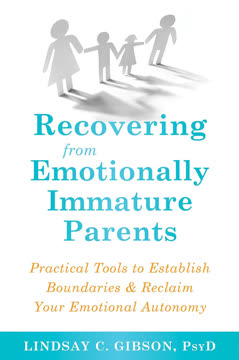
Recuperarse de padres emocionalmente inmaduros ha recibido elogios por parte de los lectores gracias a sus consejos prácticos para tratar con personas emocionalmente inmaduras, especialmente los padres. Muchos consideran que este libro puede cambiar la vida, ya que ofrece herramientas para establecer límites y comprender las complejas dinámicas familiares. Los lectores valoran el enfoque empático del autor y sus explicaciones claras sobre la inmadurez emocional. Algunos destacan que es especialmente útil para quienes desean mantener una relación con padres emocionalmente inmaduros, mientras que otros hubieran querido encontrar más orientación para distanciarse. En conjunto, el libro es ampliamente recomendado por sus valiosas ideas y estrategias para el crecimiento personal y relaciones más saludables.
También leyeron

Preguntas frecuentes
What's "Recovering from Emotionally Immature Parents" about?
- Overview: The book by Lindsay C. Gibson provides practical tools and insights for individuals who grew up with emotionally immature parents. It aims to help readers establish boundaries and reclaim their emotional autonomy.
- Impact of EI Parents: It explores how emotionally immature (EI) parents affect their children's feelings, thoughts, and behaviors, often leading to emotional wounds that persist into adulthood.
- Healing and Growth: The book offers exercises and case studies to help readers understand their experiences, heal from past wounds, and develop healthier relationships with themselves and others.
- Target Audience: It is a valuable resource for both individuals dealing with EI parents and mental health professionals seeking to support their clients.
Why should I read "Recovering from Emotionally Immature Parents"?
- Understanding EI Dynamics: The book provides a clear understanding of the dynamics between emotionally immature parents and their children, which can be enlightening for those struggling with these relationships.
- Practical Tools: It offers practical exercises and strategies to help readers set boundaries and reclaim their emotional autonomy, making it a useful guide for personal growth.
- Emotional Healing: By addressing the emotional wounds caused by EI parents, the book helps readers work towards healing and developing a healthier self-concept.
- Professional Insight: For mental health professionals, the book offers insights and tools that can be applied in therapy to support clients dealing with similar issues.
What are the key takeaways of "Recovering from Emotionally Immature Parents"?
- Emotional Autonomy: The importance of reclaiming one's emotional autonomy and setting boundaries with EI parents is emphasized throughout the book.
- Understanding EI Traits: Recognizing the traits and behaviors of emotionally immature parents helps in understanding their impact on one's life.
- Healing Process: The book outlines a healing process that involves understanding past experiences, grieving losses, and developing a stronger relationship with oneself.
- Practical Exercises: It includes exercises to help readers reflect on their experiences, identify their needs, and build a healthier self-concept.
What are the best quotes from "Recovering from Emotionally Immature Parents" and what do they mean?
- "Your life will be your own again": This quote emphasizes the book's goal of helping readers reclaim control over their lives by understanding and overcoming the influence of EI parents.
- "You can’t change them, and you can’t make them happy": It highlights the futility of trying to change EI parents and the importance of focusing on one's own growth and happiness.
- "Your ultimate recovery goal is to build a loyal, committed relationship to your own inner self and well-being": This quote underscores the book's focus on self-connection and self-care as the foundation for healing.
- "You are just as important as they are": A reminder of the equal importance of one's own needs and feelings in relationships, challenging the dominance often exerted by EI parents.
How do emotionally immature parents affect their children, according to Lindsay C. Gibson?
- Emotional Loneliness: Children of EI parents often feel emotionally lonely, as these parents are unable to provide genuine emotional connection and support.
- Self-Doubt and Guilt: EI parents can instill self-doubt and guilt in their children by invalidating their feelings and making them responsible for the parents' emotions.
- Inhibited Development: The lack of emotional support and validation can inhibit a child's development of a healthy self-concept and emotional autonomy.
- Relationship Patterns: These children may carry patterns of seeking approval and fearing rejection into their adult relationships, often choosing partners who mirror their parents' behaviors.
What practical tools does "Recovering from Emotionally Immature Parents" offer?
- Boundary Setting: The book provides strategies for setting and maintaining healthy boundaries with EI parents to protect one's emotional well-being.
- Self-Reflection Exercises: It includes exercises to help readers reflect on their experiences, identify their needs, and understand their emotional responses.
- Communication Skills: Readers learn how to communicate their needs and feelings effectively, even in challenging interactions with EI parents.
- Self-Care Practices: The book emphasizes the importance of self-care and offers guidance on nurturing a positive relationship with oneself.
What is the "emotionally immature relationship system" (EIRS) described in the book?
- Definition: The EIRS is a dynamic where emotionally immature individuals make others feel responsible for their emotional stability and self-esteem.
- Emotional Takeovers: EI parents use emotional coercion to induce fear, guilt, and self-doubt in their children, making them prioritize the parents' needs.
- Impact on Children: This system can lead to children feeling trapped in roles that serve the parents' emotional needs, often at the expense of their own well-being.
- Breaking Free: The book provides strategies for recognizing and resisting these emotional takeovers to reclaim one's autonomy.
How can someone reclaim their emotional autonomy, according to the book?
- Recognize EI Traits: Understanding the traits and behaviors of EI parents is the first step in reclaiming emotional autonomy.
- Set Boundaries: Establishing and maintaining clear boundaries helps protect one's emotional space and well-being.
- Self-Connection: Developing a strong relationship with oneself, including self-awareness and self-acceptance, is crucial for emotional autonomy.
- Focus on Growth: Prioritizing personal growth and healing over trying to change EI parents allows for a more fulfilling and autonomous life.
What role does self-concept play in healing from emotionally immature parents?
- Foundation of Identity: Self-concept is the basis of how individuals see themselves and their worth, heavily influenced by parental feedback during childhood.
- Correcting Distortions: The book emphasizes the importance of correcting distorted self-concepts that may have been shaped by EI parents' negative feedback.
- Building Confidence: A healthy self-concept allows individuals to pursue their potential, build confidence, and engage in meaningful relationships.
- Self-Discovery: Updating one's self-concept involves exploring personal values, strengths, and aspirations, independent of parental influence.
How does the book suggest dealing with feelings of shame and guilt?
- Recognize Origins: Understanding that shame and guilt often stem from EI parents' emotional coercions helps in addressing these feelings.
- Reframe Emotions: The book encourages reframing shame and guilt as emotions rather than truths about oneself, reducing their power.
- Self-Compassion: Practicing self-compassion and self-acceptance is key to overcoming feelings of shame and guilt.
- Assert Boundaries: Setting boundaries and asserting one's right to emotional autonomy helps in managing these emotions effectively.
What is the significance of the "Bill of Rights for Adult Children of Emotionally Immature Parents"?
- Empowerment: The Bill of Rights empowers individuals to assert their needs, set boundaries, and prioritize their well-being in relationships with EI parents.
- Emotional Autonomy: It reinforces the right to emotional autonomy, mental freedom, and self-expression without fear of ridicule or coercion.
- Self-Protection: The rights emphasize the importance of self-protection and self-care, encouraging individuals to prioritize their health and happiness.
- Guidance: Serving as a reminder of the key principles discussed in the book, the Bill of Rights offers guidance for navigating interactions with EI parents.
How can mental clearing help in dealing with the influence of emotionally immature parents?
- Identify Thought Patterns: Mental clearing involves identifying and challenging thought patterns inherited from EI parents that may not serve one's best interests.
- Separate Influences: It helps in separating one's own thoughts and beliefs from those imposed by EI parents, allowing for independent thinking.
- Reduce Anxiety: By clearing mental clutter, individuals can reduce anxiety and depressive thinking often instilled by EI parents.
- Enhance Clarity: Mental clearing enhances clarity of thought, enabling individuals to make decisions based on their true desires and values.
Sobre el autor
Otros libros de Lindsay C. Gibson