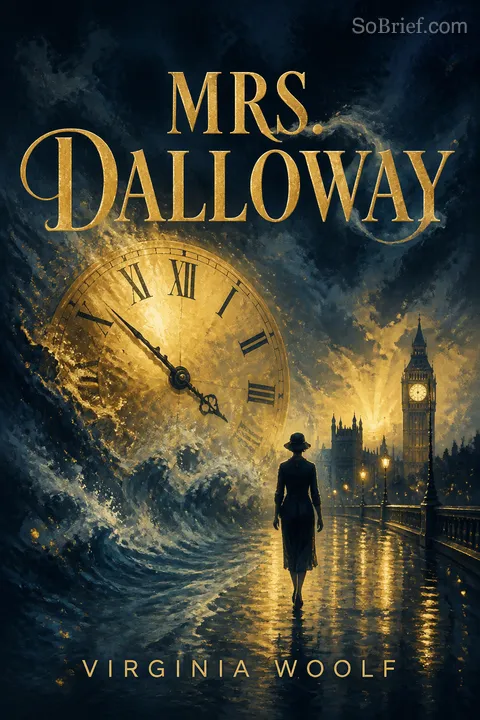
Resumen de la trama
Reflexiones matutinas de Clarissa
Clarissa Dalloway sale a una vibrante mañana londinense, con la tarea de comprar flores para la fiesta que dará esa noche. Mientras camina, los recuerdos de su juventud en Bourton y de su viejo amigo Peter Walsh la invaden. Reflexiona sobre las decisiones de su vida, su matrimonio con Richard y el paso del tiempo. La ciudad que la rodea está viva, un tapiz de sonidos y vistas que ama profundamente, a pesar de la corriente subyacente de pérdida y cambio.
La mente atormentada de Septimus
Septimus, veterano de guerra, lucha contra alucinaciones y el trauma de su pasado. Su esposa, Rezia, desesperada por ayudarlo, se siente impotente ante su desconexión con la realidad. Mientras recorren las bulliciosas calles, Septimus es perseguido por el recuerdo de su camarada caído, Evans, y se siente desconectado del mundo que lo rodea. Su condición empeora, conduciendo a un trágico desenlace.
El regreso de Peter a Londres
Peter Walsh, recién llegado de la India, deambula por las calles de Londres, reflexionando sobre su pasado con Clarissa. La visita despierta viejas emociones y arrepentimientos. Peter es un hombre atrapado entre la nostalgia y el presente, luchando con sus sentimientos hacia Clarissa y la vida que ha llevado. Su encuentro en casa de Clarissa está cargado de tensión y palabras no dichas, evidenciando la complejidad de su relación.
Preparativos para la fiesta de Clarissa
A medida que avanza el día, Clarissa se consume en los preparativos para su fiesta nocturna. Reflexiona sobre el significado de estas reuniones, que le sirven para conectar con otros y afirmar su lugar en la sociedad. A pesar de su compostura exterior, Clarissa está plagada de dudas e inseguridades, cuestionando el valor de su vida y las decisiones tomadas.
Encuentros y recuerdos
A lo largo del día, Clarissa y Peter se cruzan con diversas personas de su pasado, cada encuentro aviva recuerdos y emociones. Las interacciones de Clarissa con su hija Elizabeth y su amiga Sally Seton revelan las capas de su carácter y la complejidad de sus relaciones. Estos encuentros sirven como telón de fondo para los grandes temas de tiempo, memoria e identidad.
El clímax de la fiesta
La fiesta de Clarissa está en pleno apogeo, un microcosmos de la sociedad londinense. Invitados de diversos ámbitos se mezclan, cada uno con sus propias historias e historias. La fiesta es un éxito, pero Clarissa siente un vacío y desconexión. La noticia del suicidio de Septimus la alcanza, ensombreciendo la velada y provocando una profunda reflexión sobre la vida y la muerte.
Reflexiones sobre la vida y la muerte
Tras la fiesta, Clarissa se retira a una habitación tranquila, meditando sobre la noticia de la muerte de Septimus. Se siente impactada por la fragilidad de la vida y la inevitabilidad de la muerte, pero encuentra paz en la continuidad de la existencia. La novela concluye con la renovada apreciación de Clarissa por la belleza y complejidad de la vida, a pesar de sus desafíos inherentes.
Personajes
Clarissa Dalloway
Clarissa es una mujer de contrastes, profundamente reflexiva pero exteriormente serena. Su vida es un tapiz de recuerdos, relaciones y expectativas sociales. Es producto de su época y, a la vez, una rebelde contra ella, usando sus fiestas como medio de conexión y expresión personal. Su introspección revela una profunda conciencia de la naturaleza efímera de la vida.
Septimus Warren Smith
Septimus es una figura trágica, torturada por los horrores de la guerra y la pérdida de su amigo Evans. Su enfermedad mental lo aísla del mundo, y su lucha por encontrar sentido a la vida termina en suicidio. La historia de Septimus es un conmovedor comentario sobre el impacto de la guerra y las deficiencias de la sociedad para abordar la salud mental.
Peter Walsh
Peter es un hombre dividido entre el pasado y el presente, cuyo regreso a Londres despierta recuerdos de su amor no correspondido por Clarissa. Es introspectivo y crítico, tanto consigo mismo como con el mundo que lo rodea. Su viaje es uno de autodescubrimiento, enfrentando sus sentimientos y las decisiones tomadas.
Rezia Warren Smith
Rezia es la esposa entregada de Septimus, que lucha por apoyarlo en su enfermedad mental. Su amor es inquebrantable, pero se siente impotente ante su desconexión. La historia de Rezia pone de relieve los desafíos de quienes cuidan a seres queridos con problemas de salud mental.
Richard Dalloway
Richard es el esposo de Clarissa, un político que brinda estabilidad y apoyo. Hombre de deber y responsabilidad, su relación con Clarissa carece de una conexión emocional profunda. Su personaje representa las normas y expectativas sociales de la época.
Sally Seton
Sally simboliza la rebeldía juvenil y la pasión, en marcado contraste con la naturaleza más reservada de Clarissa. Su presencia evoca recuerdos de tiempos más despreocupados, y su reencuentro con Clarissa en la fiesta es un momento para reflexionar sobre los caminos que han tomado sus vidas.
Elizabeth Dalloway
Elizabeth es la hija de Clarissa, una joven al borde de la adultez. Pensativa y observadora, desea forjar su propio camino. Su personaje representa a la nueva generación, con su potencial de cambio y crecimiento.
Hugh Whitbread
Hugh es amigo de los Dalloway, encarnando los valores tradicionales y normas sociales de la alta sociedad. Cortés y encantador, carece de profundidad e introspección. Su personaje sirve como contraste a los más complejos e introspectivos de la novela.
Lady Bruton
Lady Bruton es una figura formidable en la sociedad londinense, conocida por su influencia política y opiniones firmes. Mujer de acción y convicción, sus interacciones con Clarissa revelan las limitaciones de su comprensión de las relaciones personales.
Dr. Holmes
Dr. Holmes es el médico que atiende a Septimus, representando el fracaso del sistema médico para comprender y tratar los problemas de salud mental. Su actitud desdeñosa y falta de empatía evidencian las deficiencias sociales ante el trauma y la enfermedad mental.
Recursos narrativos
Flujo de conciencia
Woolf emplea un estilo narrativo de flujo de conciencia para adentrarse en la vida interior de sus personajes. Esta técnica permite al lector experimentar en tiempo real sus pensamientos y emociones, ofreciendo una comprensión profunda e íntima de sus motivaciones y conflictos.
Tiempo y memoria
La estructura de la novela refleja la naturaleza fluida del tiempo, entrelazando pasado y presente a través de los recuerdos y reflexiones de los personajes. Esta exploración de tiempo y memoria subraya los temas de identidad, cambio y el transcurso de la vida.
Comentario social
A través de sus personajes e interacciones, Woolf ofrece una crítica a las normas y expectativas sociales de la Inglaterra de posguerra. La novela aborda cuestiones de clase, género y salud mental, desafiando el statu quo y abogando por mayor empatía y comprensión.
Análisis
"Mrs. Dalloway" es una magistral indagación en las complejidades de la vida, la identidad y la experiencia humana. El uso del flujo de conciencia y el enfoque en la vida interior de los personajes crean un rico tapiz de emociones y reflexiones. Los temas de tiempo, memoria y expectativas sociales resuenan con el lector moderno, ofreciendo perspectivas sobre los desafíos y la belleza de la existencia. A través de las historias de Clarissa, Septimus y los demás personajes, Woolf invita a contemplar la naturaleza de la vida, el impacto del trauma y la importancia de la conexión y la empatía.
También leyeron





Preguntas frecuentes
Synopsis & Basic Details
What is Mrs. Dalloway about?
- A Day in London: The novel follows Clarissa Dalloway through a single day in London as she prepares for and hosts a party, interweaving her thoughts and memories with the lives of other characters.
- Inner Lives Explored: It delves into the inner lives of its characters, exploring their thoughts, memories, and emotions through stream-of-consciousness narration.
- Themes of Connection: The story examines themes of connection, isolation, the passage of time, and the impact of war on individuals and society.
Why should I read Mrs. Dalloway?
- Innovative Narrative Style: Experience Virginia Woolf's groundbreaking stream-of-consciousness technique, offering a unique and intimate perspective on characters' inner worlds.
- Profound Psychological Depth: Explore complex characters grappling with identity, trauma, and the search for meaning, providing a rich and thought-provoking reading experience.
- Timeless Themes Explored: Engage with universal themes of time, memory, connection, and the impact of societal pressures, making the novel relevant to contemporary readers.
What is the background of Mrs. Dalloway?
- Post-World War I London: The novel is set in post-World War I London, reflecting the social and psychological impact of the war on individuals and society.
- Modernist Literary Movement: It is a key work of the modernist literary movement, experimenting with narrative structure, perspective, and psychological realism.
- Social Class and Gender: The novel explores the social class and gender dynamics of early 20th-century England, highlighting the constraints and expectations placed on women.
What are the most memorable quotes in Mrs. Dalloway?
- "Fear no more the heat o' the sun": This quote, recurring throughout the novel, encapsulates the theme of mortality and the acceptance of death as a release from life's struggles.
- "She felt very young; at the same time unspeakably aged": This quote captures Clarissa's complex feelings about time and aging, highlighting the duality of her experience.
- "The world wavered and quivered and threatened to burst into flames": This quote reflects Septimus's fragile mental state and his distorted perception of reality, emphasizing the psychological impact of war.
What writing style, narrative choices, and literary techniques does Virginia Woolf use?
- Stream of Consciousness: Woolf employs a stream-of-consciousness narrative, allowing readers direct access to the characters' thoughts, feelings, and memories, creating a sense of immediacy and intimacy.
- Shifting Perspectives: The narrative shifts between different characters' points of view, providing a multifaceted understanding of the events and themes of the novel.
- Symbolism and Imagery: Woolf uses rich symbolism and imagery, such as flowers, birds, and the city of London, to convey deeper meanings and enhance the emotional impact of the story.
Hidden Details & Subtle Connections
What are some minor details that add significant meaning?
- The Sound of Big Ben: The recurring sound of Big Ben acts as a constant reminder of the passage of time and the inevitability of death, influencing the characters' thoughts and actions.
- The Green Dress: Clarissa's green dress, which she mends, symbolizes her efforts to maintain order and beauty in her life, despite the underlying anxieties and insecurities.
- The Motor Car: The mysterious motor car that causes a stir in Bond Street represents the intrusion of the outside world and the power of societal forces on individual lives.
What are some subtle foreshadowing and callbacks?
- Septimus's Suicide Threat: Septimus's early mention of suicide foreshadows his tragic end, creating a sense of impending doom throughout the novel.
- Peter's Knife: Peter's habit of playing with his pocketknife foreshadows his emotional volatility and his potential for violence, reflecting his inner turmoil.
- Bourton Memories: Recurring memories of Bourton, the Dalloways' country home, serve as callbacks to a simpler, more innocent time, contrasting with the complexities of their present lives.
What are some unexpected character connections?
- Clarissa and Septimus: Despite never meeting, Clarissa and Septimus are connected through their shared experiences of isolation, mental distress, and a profound awareness of mortality.
- Peter and Septimus: Peter and Septimus are connected through their shared experiences of war and their struggles with mental health, though they never directly interact.
- Lady Bruton and Septimus: Lady Bruton's focus on duty and societal expectations contrasts with Septimus's rejection of those values, highlighting the different ways people respond to trauma.
Who are the most significant supporting characters?
- Sally Seton: Sally represents a past version of Clarissa, embodying youthful passion and rebellion, and her reappearance forces Clarissa to confront her own choices.
- Lady Bruton: Lady Bruton embodies the traditional values and power structures of English society, providing a foil to Clarissa's more introspective and unconventional nature.
- Miss Kilman: Miss Kilman represents the societal forces of religion and social justice, and her complex relationship with Elizabeth highlights the tensions between different worldviews.
Psychological, Emotional, & Relational Analysis
What are some unspoken motivations of the characters?
- Clarissa's Need for Connection: Clarissa's parties are driven by an unspoken need for connection and validation, masking her underlying insecurities and fears of isolation.
- Septimus's Desire for Meaning: Septimus's mental breakdown is fueled by an unspoken desire to find meaning and purpose in a world that seems chaotic and meaningless after the war.
- Peter's Yearning for the Past: Peter's return to London is driven by an unspoken yearning for the past and a desire to recapture his lost love with Clarissa, revealing his inability to move on.
What psychological complexities do the characters exhibit?
- Clarissa's Duality: Clarissa exhibits a duality between her public persona as a gracious hostess and her private struggles with aging, mortality, and the limitations of her life.
- Septimus's Trauma: Septimus's psychological state is marked by the trauma of war, leading to hallucinations, paranoia, and a profound sense of alienation from reality.
- Peter's Insecurities: Peter's character is marked by his insecurities and his inability to reconcile his past with his present, leading to emotional outbursts and a sense of restlessness.
What are the major emotional turning points?
- Peter's Visit: Peter's unexpected visit to Clarissa stirs up old emotions and regrets, forcing her to confront her past choices and the complexities of her relationships.
- Septimus's Breakdown: Septimus's mental breakdown and his inability to connect with reality mark a turning point in his story, leading to his tragic suicide.
- The News of Septimus's Death: The news of Septimus's suicide at Clarissa's party forces her to confront the fragility of life and the inevitability of death, prompting a deep reflection on her own existence.
How do relationship dynamics evolve?
- Clarissa and Richard: The relationship between Clarissa and Richard evolves from a practical partnership to a deeper understanding of each other's needs and limitations, highlighting the complexities of marriage.
- Clarissa and Peter: The relationship between Clarissa and Peter remains fraught with unresolved feelings and unspoken desires, reflecting the enduring power of their past connection.
- Septimus and Rezia: The relationship between Septimus and Rezia deteriorates as Septimus's mental state worsens, highlighting the challenges of caring for a loved one with mental illness.
Interpretation & Debate
Which parts of the story remain ambiguous or open-ended?
- Clarissa's True Feelings: Clarissa's true feelings for Peter and Richard remain ambiguous, leaving readers to interpret the nature of her relationships and her own desires.
- Septimus's Motivations: Septimus's motivations for suicide are complex and open to interpretation, raising questions about the impact of war and the nature of mental illness.
- The Meaning of the Party: The meaning of Clarissa's party is open to interpretation, with some seeing it as a celebration of life and others as a symbol of societal emptiness.
What are some debatable, controversial scenes or moments in Mrs. Dalloway?
- Clarissa's "Snobbery": Clarissa's social climbing and her focus on appearances are often debated, with some seeing her as a shallow character and others as a complex woman navigating societal expectations.
- Septimus's Suicide: Septimus's suicide is a controversial moment, raising questions about the role of mental illness and the responsibility of society in addressing it.
- The Nature of Love: The novel's portrayal of love, particularly the relationships between Clarissa and Peter and Clarissa and Richard, is often debated, with readers questioning the nature of true connection and fulfillment.
Mrs. Dalloway Ending Explained: How It Ends & What It Means
- Clarissa's Epiphany: The ending sees Clarissa experiencing an epiphany after learning of Septimus's suicide, recognizing the fragility of life and the importance of embracing the present moment.
- Acceptance of Mortality: Clarissa's contemplation of death leads to a sense of acceptance and a renewed appreciation for the beauty and complexity of life, despite its inherent challenges.
- Connection Through Shared Experience: The ending suggests that even in isolation, individuals are connected through their shared experiences of life and death, highlighting the importance of empathy and understanding.