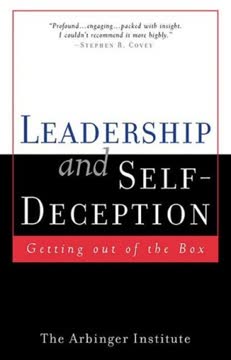
Ideas clave
1. El autoengaño nos ciega ante nuestro papel en los problemas
"El autoengaño es así. Nos ciega ante las verdaderas causas de los problemas, y una vez que estamos ciegos, todas las 'soluciones' que se nos ocurran en realidad empeorarán las cosas."
El autoengaño distorsiona la realidad. Cuando nos autoengañamos, no podemos ver cómo contribuimos a nuestros propios problemas. Echamos la culpa a otros y a las circunstancias, sin reconocer nuestro papel en crear o agravar las dificultades. Esta ceguera nos lleva a buscar soluciones ineficaces que a menudo empeoran la situación.
Impacto en las relaciones y el desempeño. El autoengaño afecta todos los ámbitos de nuestra vida, desde las relaciones personales hasta la dinámica laboral. Esto:
- Corrompe nuestra visión de los demás y de las circunstancias
- Inhibe nuestra capacidad para tomar decisiones sabias
- Socava nuestra felicidad y efectividad como líderes
- Genera un ciclo de culpa y justificación
La historia de Semmelweis. El libro utiliza el ejemplo histórico del doctor Ignaz Semmelweis, quien descubrió que los médicos propagaban sin saberlo infecciones mortales en los hospitales. Esto ilustra cómo el autoengaño puede causar daño incluso con buenas intenciones, y lo difícil que es reconocer nuestro propio papel en los problemas.
2. La metáfora de la "caja": Cómo resistimos la humanidad de los demás
"La caja es una metáfora de cómo estoy resistiéndome a los demás. Por 'resistirme' quiero decir que mi auto-traición no es pasiva. En la caja, resisto activamente lo que la humanidad de los otros me llama a hacer por ellos."
La "caja" representa el autoengaño. Cuando estamos "en la caja", vemos a los demás como objetos y no como personas con necesidades, esperanzas y miedos tan legítimos como los nuestros. Esta perspectiva distorsiona nuestra realidad y justifica nuestro comportamiento egocéntrico.
Características de estar "en la caja":
- Culpar a otros por nuestros problemas
- Verse a uno mismo como víctima
- Exagerar las faltas ajenas y nuestras virtudes
- Sentirse justificado en nuestro comportamiento negativo
- Resistir la humanidad y las necesidades de los demás
Impacto en las relaciones y el liderazgo. Estar en la caja:
- Provoca que otros resistan y nos culpen a su vez
- Crea un ciclo de justificación mutua y maltrato
- Socava la confianza, la cooperación y el liderazgo efectivo
- Nos impide ver y resolver los problemas reales
3. La auto-traición: La raíz del autoengaño
"La auto-traición es cómo entramos en la caja."
Definición de auto-traición. La auto-traición ocurre cuando actuamos en contra de lo que sentimos que deberíamos hacer por otra persona. Es el momento en que elegimos ignorar nuestro mejor instinto y resistir tratar a los demás como personas.
El proceso de la auto-traición:
- Sentimos lo que deberíamos hacer por alguien
- Elegimos no actuar según ese sentir
- Comenzamos a ver el mundo de una manera que justifica nuestra inacción
- Nuestra visión de la realidad se distorsiona
- Entramos en la "caja" del autoengaño
Ejemplo: La historia del bebé llorando. El libro ilustra la auto-traición con la historia de un hombre que ignora su impulso de atender a su bebé llorando, dejando que su esposa se encargue. Luego comienza a ver a su esposa como perezosa e inconsiderada, exagerando sus defectos para justificar su propia inacción.
4. La colusión: Cómo invitamos al maltrato mutuo
"Al estar en la caja, provoco que otros también estén en la caja."
Definición de colusión. La colusión ocurre cuando dos o más personas están mutuamente "en la caja" una hacia la otra, creando un ciclo de culpa, justificación y maltrato.
El ciclo de la colusión:
- La persona A está en la caja hacia la persona B
- El comportamiento de A invita a B a estar en la caja hacia A
- El comportamiento resultante de B justifica aún más la caja de A
- El ciclo continúa, escalando el conflicto y la desconfianza
Impacto organizacional. La colusión en el trabajo conduce a:
- Disminución de la productividad y el compromiso
- Mal trabajo en equipo y comunicación deficiente
- Resistencia al cambio y a la mejora
- Una cultura de culpa y defensividad
Romper el ciclo. Reconocer la colusión es el primer paso para liberarse de ella. Al asumir la responsabilidad de nuestra propia "caja", podemos comenzar a cambiar la dinámica e invitar a otros a hacer lo mismo.
5. La efectividad del liderazgo depende de estar "fuera de la caja"
"Los líderes que la gente elige seguir son los líderes que están fuera de la caja."
Liderazgo verdadero vs. coerción. El liderazgo efectivo surge de estar "fuera de la caja": ver a los demás como personas y enfocarse en sus necesidades y potencial. En cambio, liderar desde dentro de la caja se basa en la fuerza o la amenaza, que no es más que coerción.
Características del liderazgo fuera de la caja:
- Ver y valorar a los demás como personas
- Enfocarse en resultados en lugar de justificarse
- Asumir responsabilidad en lugar de culpar
- Invitar al crecimiento y la colaboración
- Construir confianza y compromiso
Impacto en la cultura organizacional. Los líderes que operan consistentemente fuera de la caja:
- Inspiran a otros a hacer lo mismo
- Crean una cultura de responsabilidad y respeto mutuo
- Fomentan la innovación y la resolución de problemas
- Logran mejores resultados a largo plazo y satisfacción laboral
6. Salir de la caja requiere ver a los demás como personas
"En el momento en que dejamos de resistirnos a los demás, estamos fuera de la caja—liberados de pensamientos y sentimientos autojustificativos."
La clave para la liberación. Salir de la caja no se trata de cambiar nuestro comportamiento, sino de cambiar nuestra forma de ser. Requiere un cambio en cómo vemos a los demás: de objetos a personas con necesidades y deseos legítimos.
Pasos para salir de la caja:
- Reconocer cuándo estamos en la caja
- Cuestionar nuestra propia virtud y justificaciones
- Considerar la humanidad de quienes resistimos
- Recordar momentos en que estuvimos fuera de la caja
- Elegir honrar nuestro impulso inicial de ayudar o conectar
El poder de la empatía. Ver a los demás como personas con sus propios retos y esperanzas nos ayuda a:
- Soltar la culpa y la justificación
- Responder mejor a situaciones difíciles
- Construir relaciones más fuertes y auténticas
- Encontrar soluciones creativas a los conflictos
7. Mantenerse fuera de la caja: Enfocarse en resultados y necesidades ajenas
"Fuera de la caja no saco ningún provecho de dejar que me pasen por encima. No lo necesito. Y además, por lo general no le hago ningún favor a nadie permitiéndolo."
Mantener una perspectiva fuera de la caja. Estar fuera de la caja no significa ser débil o estar siempre de acuerdo con los demás. Significa mantener el enfoque en los resultados y en las necesidades legítimas de otros, incluso en situaciones difíciles.
Estrategias para mantenerse fuera de la caja:
- Cuestionar regularmente nuestros propios motivos y percepciones
- Enfocarse en lograr resultados en lugar de tener la razón
- Buscar maneras de ayudar a otros a tener éxito
- Asumir responsabilidad por nuestra parte en los problemas
- Intentar comprender las perspectivas y necesidades ajenas
Equilibrar el cuidado propio y las necesidades ajenas. Estar fuera de la caja no significa ignorar nuestras propias necesidades. Significa:
- Abordar conflictos y problemas de manera directa y respetuosa
- Establecer límites saludables sin dejar de ver a los demás como personas
- Encontrar soluciones ganar-ganar que satisfagan múltiples necesidades
- Cuidarnos para ser más efectivos ayudando a otros
8. La responsabilidad impulsa el éxito organizacional y personal
"Los líderes más efectivos lideran de esta única manera: asumiendo más responsabilidad que nadie."
La responsabilidad como principio de liderazgo. La verdadera responsabilidad va más allá de asignar culpas o reclamar méritos. Se trata de asumir plena responsabilidad por los resultados y el impacto de nuestras acciones en los demás.
Crear una cultura de responsabilidad:
- Los líderes modelan la responsabilidad admitiendo errores y enfocándose en soluciones
- Se anima a los empleados a asumir la propiedad de problemas y resultados
- La organización se centra en lograr resultados en lugar de buscar culpables
- Los sistemas y procesos refuerzan la responsabilidad en todos los niveles
Crecimiento personal a través de la responsabilidad. Abrazar la responsabilidad conduce a:
- Mayor autoconciencia e inteligencia emocional
- Mejores habilidades para resolver problemas y creatividad
- Relaciones más fuertes basadas en confianza y respeto mutuo
- Mayor resiliencia y capacidad para enfrentar desafíos
Beneficios organizacionales. Una cultura de responsabilidad resulta en:
- Mejor desempeño y eficiencia
- Mayor compromiso y satisfacción de los empleados
- Incremento en innovación y adaptabilidad
- Mejor satisfacción del cliente y resultados empresariales
Resumen de reseñas
Liderazgo y Autoengaño genera opiniones encontradas. Muchos valoran su forma accesible de presentar ideas complejas sobre la autoconciencia y las relaciones interpersonales, considerándolo transformador. Aprecian su estilo narrativo y las aplicaciones prácticas tanto en el ámbito profesional como personal. Sin embargo, algunos critican su narrativa simplista, la repetición de conceptos y el uso excesivo de términos como "la caja". Los detractores sostienen que simplifica en exceso las dinámicas laborales y recicla principios éticos básicos. A pesar de las opiniones divididas, numerosos lectores encuentran valor en su mensaje central: tratar a los demás como personas y no como objetos.
También leyeron




 Inmersivo


Preguntas frecuentes
What's "Leadership and Self-Deception" about?
- Core Concept: "Leadership and Self-Deception" by The Arbinger Institute explores how self-deception, or the inability to see that we have a problem, affects our personal and professional lives.
- The Box Metaphor: The book uses the metaphor of being "in the box" to describe a state of self-deception where we see others as objects rather than people.
- Impact on Relationships: It discusses how being in the box leads to blame, conflict, and ineffective leadership, impacting both personal relationships and organizational performance.
- Storytelling Approach: The book is presented as a narrative, making complex psychological concepts accessible and relatable through storytelling.
Why should I read "Leadership and Self-Deception"?
- Personal Growth: The book offers insights into how self-deception affects personal happiness and relationships, providing tools for personal growth.
- Professional Development: It is particularly useful for leaders and managers, as it addresses how self-deception can undermine leadership effectiveness and organizational success.
- Practical Solutions: The book provides practical advice on how to get out of the box and improve interactions with others, leading to better teamwork and collaboration.
- Broad Applicability: Its principles are applicable in various contexts, from family life to business environments, making it a versatile resource for anyone looking to improve their interpersonal skills.
What are the key takeaways of "Leadership and Self-Deception"?
- Self-Deception is Common: Self-deception is a pervasive issue that affects every aspect of life, from personal relationships to professional environments.
- The Box Concept: Being "in the box" means seeing others as objects, which leads to blame and conflict, while being "out of the box" involves seeing others as people.
- Impact on Leadership: Effective leadership requires being out of the box, as it fosters genuine relationships and collaboration, leading to better organizational results.
- Path to Change: The book outlines how to recognize self-deception and provides strategies to get out of the box, emphasizing the importance of seeing others as people.
How does "Leadership and Self-Deception" define self-betrayal?
- Act Contrary to Feelings: Self-betrayal occurs when we act contrary to what we feel we should do for another person.
- Justification Mechanism: It leads to a distorted view of reality, where we justify our actions and see others' faults as greater than they are.
- Entry into the Box: Self-betrayal is the mechanism that puts us in the box, causing us to see others as objects and ourselves as victims.
- Cycle of Blame: This state perpetuates a cycle of blame and conflict, as we provoke others to be in the box as well.
What is the "box" in "Leadership and Self-Deception"?
- Metaphor for Self-Deception: The "box" is a metaphor for the state of self-deception where we see others as objects rather than people.
- Distorted Reality: In the box, our view of reality is distorted, leading us to justify our actions and blame others for problems.
- Impact on Relationships: Being in the box negatively affects our relationships, as it leads to conflict and ineffective communication.
- Getting Out of the Box: The book provides strategies for getting out of the box, which involves seeing others as people and ceasing to resist their humanity.
How can one get out of the box according to "Leadership and Self-Deception"?
- Recognize Self-Deception: The first step is to recognize when you are in the box and how it affects your perception of others.
- Cease Resistance: Getting out of the box involves ceasing to resist others and seeing them as people with legitimate needs and desires.
- Question Your Virtue: It requires questioning your own virtue and being open to the possibility that you have a problem.
- Act on New Insights: Once out of the box, act on the insights gained by treating others as people and focusing on helping them.
What role does leadership play in "Leadership and Self-Deception"?
- Influence and Success: Leadership effectiveness is tied to being out of the box, as it allows leaders to genuinely connect with and inspire others.
- Self-Betrayal in Leadership: Leaders often betray themselves by focusing on their own justification rather than on achieving results.
- Creating Leaders: Out-of-the-box leaders create environments where others can also be out of the box, fostering a culture of accountability and collaboration.
- Example of Positive Leadership: The book provides examples of leaders who have successfully applied these principles to transform their organizations.
What are the best quotes from "Leadership and Self-Deception" and what do they mean?
- "Self-deception actually determines one’s experience in every aspect of life." This quote highlights the pervasive impact of self-deception on our perceptions and interactions.
- "In the box, we invite mutual mistreatment and obtain mutual justification." It explains how being in the box leads to a cycle of blame and conflict, as we provoke others to justify our own behavior.
- "The way out of the box is always right before our eyes." This emphasizes that the solution to self-deception lies in how we choose to see and treat others.
- "We won’t know who we work and live with until we leave the box and join them." It underscores the importance of seeing others as people to truly understand and connect with them.
How does "Leadership and Self-Deception" suggest handling conflict?
- Focus on Yourself: The book suggests focusing on your own role in the conflict rather than blaming others, as self-deception often blinds us to our own contributions.
- See Others as People: By seeing others as people rather than objects, you can reduce blame and open the door to genuine communication and resolution.
- Build Relationships: Emphasize building relationships and understanding others' perspectives to prevent conflicts from arising in the first place.
- Use the Change Pyramid: The book introduces the Change Pyramid, which prioritizes helping things go right over dealing with things that are going wrong.
What is the Change Pyramid in "Leadership and Self-Deception"?
- Structure of the Pyramid: The Change Pyramid is a diagram that illustrates the importance of focusing more on helping things go right than on dealing with things that are going wrong.
- Bottom-Up Approach: It suggests that the foundation of effective change is building relationships and understanding, rather than simply correcting problems.
- Deeper Matters: The pyramid emphasizes addressing deeper issues and fostering an environment where positive change is more likely to occur.
- Application in Life: This approach can be applied in various contexts, from family dynamics to workplace interactions, to create lasting change.
How does "Leadership and Self-Deception" relate to personal growth?
- Self-Awareness: The book encourages self-awareness by helping readers recognize their own self-deception and its impact on their lives.
- Improved Relationships: By getting out of the box, individuals can improve their relationships with others, leading to greater personal fulfillment.
- Focus on Others: It teaches the importance of focusing on others and their needs, which can lead to more meaningful connections and personal growth.
- Practical Application: The principles in the book can be applied to various aspects of life, from personal development to professional success.
How is "Leadership and Self-Deception" used in organizations?
- Hiring and Screening: Some organizations use the book as part of their hiring process to assess candidates' willingness to consider their own contributions to problems.
- Leadership Development: It is used to improve leadership and team-building skills by fostering a culture of accountability and collaboration.
- Conflict Resolution: The book's principles are applied to resolve conflicts by encouraging individuals to see their own roles in the issues.
- Accountability Transformation: Organizations use the book to create systems that focus on results and reduce self-deception, leading to improved performance and success.








































