Resumen de la trama
Revelaciones Fantasmales
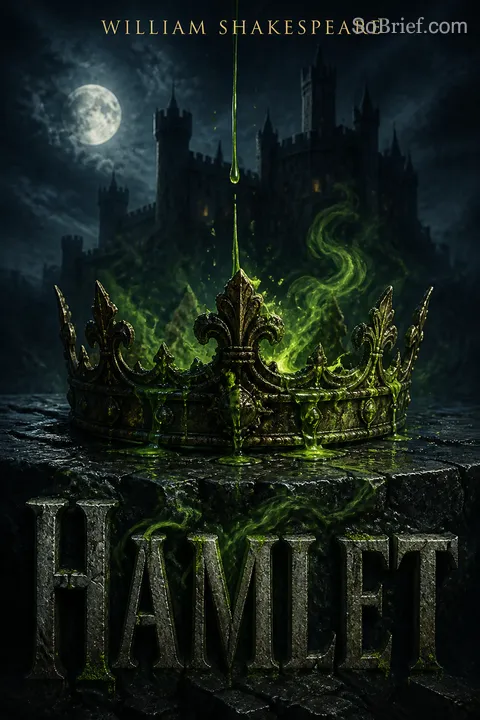
En una fría noche en el Castillo de Elsinor, los guardias son testigos del fantasma del difunto rey Hamlet. El príncipe Hamlet, impulsado por su amigo Horacio, se enfrenta a la aparición, que le revela una oscura verdad: el rey Hamlet fue asesinado por su hermano Claudio, quien ahora lleva la corona y ha contraído matrimonio con la reina Gertrudis. El fantasma exige venganza, encendiendo la búsqueda de justicia de Hamlet.
Locura y Engaño
Consumido por la revelación del fantasma, Hamlet decide simular la locura para descubrir la verdad. Su comportamiento errático desconcierta a la corte, especialmente a Ofelia, su amor, y a su padre Polonio. Mientras tanto, Claudio, sospechando de las intenciones de Hamlet, recluta a Rosencrantz y Guildenstern para espiarlo, tejiendo una red de engaños e intrigas.
La Obra es la Clave
Hamlet monta una obra dentro de la obra que refleja el asesinato de su padre para observar la reacción de Claudio. A medida que se desarrolla la escena, la culpa de Claudio se hace evidente, confirmando la historia del fantasma. Las sospechas de Hamlet se validan, pero su vacilación para actuar crece, dividido entre el deber y la duda.
Desesperación en Espiral
Hamlet confronta a su madre, Gertrudis, en un intercambio acalorado, matando accidentalmente a Polonio, quien estaba escuchando. Este acto de violencia sume a la corte en el caos. Claudio, temiendo por su vida, trama enviar a Hamlet a Inglaterra, planeando en secreto su ejecución.
La Caída de Ofelia
Afligida por la muerte de su padre y el rechazo de Hamlet, Ofelia cae en la locura. Su trágico final llega cuando se ahoga, dejando a su hermano Laertes devastado y sediento de venganza. Claudio manipula la ira de Laertes, dirigiéndola contra Hamlet.
Duelo de Destinos
Claudio y Laertes conspiran para matar a Hamlet en un duelo amañado. La espada de Laertes está envenenada, y un plan alternativo incluye una bebida envenenada. Comienza el duelo y el caos estalla cuando tanto Hamlet como Laertes resultan heridos por la hoja envenenada. La reina bebe accidentalmente el veneno destinado a Hamlet.
Consecuencias Trágicas
A medida que el veneno hace efecto, Laertes confiesa la conspiración, y Hamlet, en sus últimos momentos, mata a Claudio. Con su último aliento, Hamlet nombra a Fortimbrás como el legítimo heredero al trono. El escenario queda cubierto de caídos, testimonio de las trágicas consecuencias de la venganza y la traición.
Personajes
Hamlet
Hamlet, príncipe de Dinamarca, es un personaje complejo impulsado por la necesidad de vengar el asesinato de su padre. Su locura fingida y profunda introspección filosófica revelan una lucha interna entre la acción y la inacción, la moralidad y la venganza.
Claudio
Claudio, tío de Hamlet, es un gobernante astuto y manipulador que asesinó a su hermano para tomar el trono. Su culpa y ambición impulsan el conflicto central de la obra, mientras trama mantener el poder y eliminar amenazas.
Gertrudis
Gertrudis, madre de Hamlet, se encuentra atrapada entre su hijo y su nuevo esposo, Claudio. Sus motivaciones son ambiguas, pues busca estabilidad en una corte turbulenta, aunque sus acciones contribuyen a la tragedia que se despliega.
Ofelia
Ofelia, hija de Polonio y amor de Hamlet, simboliza la inocencia destruida por la corrupción que la rodea. Su descenso a la locura y su muerte final evidencian el daño colateral de las intrigas cortesanas.
Polonio
Polonio, asesor del rey, es un personaje verboso e intrusivo cuyas maquinaciones y espionaje conducen a su muerte prematura. Sus acciones desencadenan una cadena de eventos que contribuyen al desenlace trágico.
Laertes
Laertes, hermano de Ofelia, regresa a Dinamarca para vengar la muerte de su padre. Su ira y manipulación por parte de Claudio lo convierten en una pieza en el juego mortal, que finalmente conduce a su propia caída.
Horacio
Horacio es el confidente de Hamlet y la voz de la razón a lo largo de la obra. Su lealtad firme y perspectiva racional ofrecen un contrapunto al tormento emocional de Hamlet.
El Fantasma
El fantasma del rey Hamlet pone en marcha la trama al revelar la verdad sobre su asesinato. Su presencia atormenta a Hamlet, impulsando la búsqueda de venganza y justicia del príncipe.
Rosencrantz y Guildenstern
Estos amigos de la infancia de Hamlet son reclutados por Claudio para espiar al príncipe. Su traición y destino final subrayan el tema de la lealtad y las consecuencias de las maquinaciones políticas.
Fortimbrás
Fortimbrás, príncipe de Noruega, sirve como contrapunto a Hamlet. Su acción decidida y eventual reclamación del trono danés contrastan con la indecisión de Hamlet, aportando un sentido de orden al caos.
Recursos Narrativos
Aparición Fantasmal
El fantasma del rey Hamlet actúa como el incidente incitador, revelando la verdad de su asesinato y encaminando a Hamlet hacia la venganza. Este elemento sobrenatural subraya los temas de incertidumbre y vida después de la muerte.
Locura Fingida
La decisión de Hamlet de fingir locura le permite navegar la traicionera corte y descubrir la verdad. Este recurso difumina la línea entre realidad y apariencia, destacando los temas de lo que parece y lo que es.
La Obra Dentro de la Obra
Hamlet monta una obra que recrea el asesinato de su padre para medir la reacción de Claudio. Este recurso metateatral marca un punto de inflexión, confirmando la culpa de Claudio y empujando la narrativa hacia su trágico desenlace.
Veneno
El veneno es un motivo recurrente que representa la decadencia moral en la corte danesa. Es el medio del asesinato del rey Hamlet, la herramienta de las maquinaciones de Claudio y, en última instancia, causa la caída de varios personajes.
Análisis
"Hamlet" profundiza en las complejidades de la emoción humana, las consecuencias de la venganza y la lucha entre la acción y la inacción. La exploración shakesperiana de la locura, tanto real como fingida, cuestiona la naturaleza de la realidad y la percepción. El trágico final de la obra funciona como una advertencia sobre el poder destructivo de la venganza y la inevitable caída de quienes se consumen en ella. En un contexto moderno, "Hamlet" sigue siendo relevante al examinar la condición humana, la búsqueda de la verdad y los dilemas morales que continúan resonando en el público actual.
También leyeron

Preguntas frecuentes
Synopsis & Basic Details
What is Hamlet about?
- Revenge and Moral Decay: Hamlet is a tragedy centered on Prince Hamlet's quest to avenge his father's murder, revealing the corruption and moral decay within the Danish court.
- Internal Conflict and Deception: The play explores Hamlet's internal struggle with grief, morality, and the burden of revenge, as well as the web of deceit and manipulation that surrounds him.
- Tragic Downfall: The story follows the tragic consequences of Hamlet's actions and inactions, leading to the downfall of multiple characters and a kingdom in turmoil.
Why should I read Hamlet?
- Complex Character Study: Hamlet offers a deep dive into a complex protagonist grappling with profound philosophical and emotional questions, making him one of literature's most compelling characters.
- Timeless Themes: The play explores universal themes of revenge, morality, madness, and the nature of truth, which continue to resonate with readers across centuries.
- Rich Language and Drama: Shakespeare's masterful use of language, combined with the play's dramatic tension and tragic events, provides a powerful and unforgettable reading experience.
What is the background of Hamlet?
- Setting in Elsinore, Denmark: The play is set in the royal court of Elsinore, Denmark, a location that becomes a microcosm of political intrigue and moral corruption.
- Political Instability: The backdrop of the play includes a recent change in power, with Claudius usurping the throne, creating an atmosphere of unease and suspicion.
- Renaissance Era Influences: The play reflects the intellectual and philosophical currents of the Renaissance, including a focus on humanism, skepticism, and the nature of existence.
What are the most memorable quotes in Hamlet?
- "To be, or not to be...": This iconic soliloquy explores the fundamental questions of life, death, and the nature of existence, revealing Hamlet's deep contemplation of suicide and the human condition.
- "Something is rotten in the state of Denmark.": This line encapsulates the pervasive corruption and moral decay that plague the kingdom, foreshadowing the tragic events to come.
- "The rest is silence.": Hamlet's final words, spoken as he dies, emphasize the ultimate unknowability of death and the futility of human endeavors in the face of mortality.
What writing style, narrative choices, and literary techniques does William Shakespeare use?
- Blank Verse and Soliloquies: Shakespeare employs blank verse (unrhymed iambic pentameter) for most of the dialogue, creating a natural yet elevated tone, and uses soliloquies to reveal characters' inner thoughts and motivations.
- Dramatic Irony and Foreshadowing: The play is rich in dramatic irony, where the audience knows more than the characters, and foreshadowing, hinting at future events and creating suspense.
- Metaphorical Language and Symbolism: Shakespeare uses vivid metaphors, similes, and symbolism to enrich the text, with recurring motifs like poison, disease, and decay representing the moral corruption of the court.
Hidden Details & Subtle Connections
What are some minor details that add significant meaning?
- The Ghost's Armor: The Ghost appears in the same armor King Hamlet wore when he fought the ambitious Norway, linking the past conflict to the present turmoil and emphasizing the theme of revenge.
- Hamlet's "antic disposition": Hamlet's feigned madness is not just a performance; it allows him to speak truths and criticisms that would otherwise be dangerous, revealing his intelligence and strategic mind.
- Ophelia's Flowers: The specific flowers Ophelia distributes in her madness each carry symbolic meanings, reflecting her grief, lost love, and the corruption of the court.
What are some subtle foreshadowing and callbacks?
- "A little more than kin, and less than kind": Hamlet's aside about his relationship with Claudius foreshadows the deep-seated animosity and unnatural bond between them.
- Polonius's advice to Laertes: Polonius's long-winded advice to Laertes, though seemingly mundane, foreshadows his own meddling and eventual death due to eavesdropping.
- The Player King's speech: The Player King's speech about the fickleness of love and fortune mirrors the events of the play, foreshadowing the tragic outcomes and the characters' shifting fates.
What are some unexpected character connections?
- Fortinbras and Hamlet: Both are princes who have lost their fathers and are driven by a sense of duty and honor, yet their approaches to action and revenge are starkly different, highlighting the theme of contrasting leadership styles.
- Ophelia and Gertrude: Both women are caught in the crossfire of the male power struggles, and their tragic fates reveal the limited agency women have in the patriarchal society of the play.
- Polonius and Claudius: Both are manipulative and willing to use others for their own gain, highlighting the pervasive corruption within the court and the dangers of unchecked ambition.
Who are the most significant supporting characters?
- Horatio: As Hamlet's loyal friend and confidant, Horatio provides a rational perspective and serves as the play's moral compass, witnessing and narrating the tragic events.
- Laertes: Driven by grief and revenge, Laertes acts as a foil to Hamlet, highlighting the destructive nature of unchecked passion and the consequences of manipulation.
- Rosencrantz and Guildenstern: These characters represent the dangers of political maneuvering and the loss of personal integrity, serving as pawns in Claudius's schemes and ultimately meeting a tragic end.
Psychological, Emotional, & Relational Analysis
What are some unspoken motivations of the characters?
- Claudius's Guilt and Fear: Beyond his ambition, Claudius is driven by a deep-seated guilt and fear of exposure, which fuels his manipulative actions and paranoia.
- Gertrude's Desire for Stability: Gertrude's hasty marriage to Claudius may stem from a desire for stability and security rather than genuine love, revealing her vulnerability and need for protection.
- Hamlet's Fear of Action: Hamlet's procrastination is not just indecision; it's also rooted in a fear of the consequences of his actions and a deep-seated moral conflict about taking revenge.
What psychological complexities do the characters exhibit?
- Hamlet's Melancholy and Existentialism: Hamlet's deep melancholy and philosophical musings reveal a complex inner world, grappling with questions of life, death, and the meaning of existence.
- Ophelia's Fragility and Madness: Ophelia's descent into madness highlights the psychological toll of grief, betrayal, and the oppressive expectations placed upon women in the play.
- Claudius's Internal Conflict: Despite his villainous actions, Claudius's soliloquies reveal a man tormented by guilt and a desire for redemption, adding a layer of complexity to his character.
What are the major emotional turning points?
- Hamlet's encounter with the Ghost: This revelation ignites Hamlet's quest for revenge and sets the stage for his emotional turmoil and internal conflict.
- The "Mousetrap" play: Claudius's reaction to the play confirms his guilt, intensifying Hamlet's desire for revenge and leading to a spiral of violence and despair.
- Ophelia's death: This event triggers Laertes's rage and grief, setting the stage for the final tragic confrontation and highlighting the devastating consequences of the court's actions.
How do relationship dynamics evolve?
- Hamlet and Gertrude: Their relationship shifts from one of affection to one of conflict and disillusionment as Hamlet confronts his mother's hasty marriage and perceived betrayal.
- Hamlet and Ophelia: Their love is destroyed by the political machinations of the court, leading to Ophelia's madness and death and highlighting the tragic consequences of manipulation.
- Hamlet and Horatio: Their bond remains a constant source of loyalty and reason amidst the chaos, emphasizing the importance of true friendship and trust.
Interpretation & Debate
Which parts of the story remain ambiguous or open-ended?
- Hamlet's True Madness: The extent to which Hamlet's madness is feigned or real remains open to interpretation, blurring the lines between sanity and insanity and raising questions about his true motivations.
- Gertrude's Motivations: Gertrude's true feelings for Claudius and her level of awareness of his crimes are never fully clarified, leaving her character open to various interpretations.
- The Ghost's Nature: The nature of the Ghost, whether it is a benevolent spirit or a demonic entity, is left ambiguous, raising questions about the reliability of its message and the nature of the supernatural.
What are some debatable, controversial scenes or moments in Hamlet?
- Hamlet's treatment of Ophelia: Hamlet's harsh words and rejection of Ophelia are often debated, with some seeing it as a necessary act of self-preservation and others as a cruel betrayal.
- Hamlet's delay in revenge: Hamlet's procrastination and philosophical musings are often debated, with some seeing it as a sign of his intellectual depth and others as a flaw in his character.
- The morality of revenge: The play raises complex questions about the morality of revenge, with no clear answers, leaving the audience to grapple with the ethical implications of Hamlet's actions.
Hamlet Ending Explained: How It Ends & What It Means
- Tragic Deaths: The play concludes with the deaths of nearly all the main characters, including Hamlet, Claudius, Gertrude, Laertes, and Ophelia, highlighting the destructive nature of revenge and the inevitability of death.
- Fortinbras's Ascension: Fortinbras's arrival and claim to the Danish throne represent a return to order and stability, but also a sense of loss and the futility of the previous conflicts.
- Horatio's Role as Narrator: Horatio's survival and his promise to tell Hamlet's story ensure that the truth of the events will be known, but also emphasize the limitations of human understanding and the enduring power of tragedy.