Key Takeaways
1. The Three Essentials: Something to Say, Ability, Courage
There are only three things you need in order to write. First, you need something to say. Second, you need the ability to say it. Finally, you need the courage to say it at all.
Distilling the craft. Maya Angelou's profound declaration simplifies the often-overwhelming journey of writing into three core components. While having something genuine to say requires deep introspection, the ability to articulate it can be learned and honed through consistent practice. The most challenging, she noted, is finding the courage to share your voice with the world.
Personal journey. The author's own career began with a devastating rejection ("THIS IS USELESS!"), leading to self-doubt and a temporary abandonment of her writing aspirations. However, Angelou's words provided reassurance, transforming the bewildering path into a doable endeavor. This foundational understanding became a guiding principle throughout her four decades of writing.
Inner reservoir. Having something to say stems from an inner reservoir of unique experiences, images, dreams, and longings. External inspirations, like a casual comment about a "mermaid chair," resonate because they "ping off of soulful or psychic content inside you." This internal wellspring, referred to as the "inscrutable old country" by C. G. Jung, is where the soul lives and plays, bringing depth and authenticity to one's work.
2. Unearth Your Unique Voice from the Soul's Depths
The writer’s transaction with soul is what brings depth, authenticity, originality, imagination, and emotional reverberation to what we have to say.
Soulful sourcing. Writing that truly resonates, that acts as an "axe for the frozen sea inside us," is sourced from the rich interior life where the soul presides. This inner realm, largely unconscious, is a hidden place teeming with images, dreams, feelings, and intuitive flashes. Thomas Merton and C. G. Jung, the author's "writing teachers," emphasized this deep inner world as the wellspring of "wisdom literature" or "visionary literary creations."
Creative matrix. This deep creative realm is sometimes called the Dark Feminine archetype, dark because it's hidden, and feminine because it holds the mysteries of conception and birth. Ray Bradbury referred to it as the Muse or the Subconscious. The author uses a Black Madonna painting as her muse, personalizing this unreachable entity to access inspiration.
Going within. Poet Rainer Maria Rilke advised, "Go into yourself and test the deeps in which your life takes rise." This inward journey is crucial for capturing truly original images, ideas, and stories. Writing from the "inside out" allows the unconscious, the "root of genius," to provide creative pearls that conscious effort alone cannot manufacture.
3. Conceive Stories through Intuitive Play and Images
You know which images are important,” novelist Gloria Naylor said, “because they hit you so powerfully.”
The throb of an image. Story ideas often begin with a powerful image, accompanied by a strong emotional "throb." For the author, the image of a girl in bed with bees flying through her wall, inspired by a childhood memory, sparked the genesis of The Secret Life of Bees. These "annunciation images" carry a potency that fascinates and sparks the imagination.
Playful exploration. Conceiving a story involves "playing with what we love," asking questions, imagining scenarios, and following curiosity. Alison Gopnik's "lantern consciousness" describes this childlike state of aimless, unpressured exploration, where one is open to everything. This contrasts with "spotlight consciousness," which is focused and goal-directed. Writers need to start with the lantern, allowing the unconscious to incubate ideas.
Gestation and transformation. Creative images require a period of gestation, where the conscious mind lets go, allowing the unconscious to deepen and develop ideas. The author uses collages to illuminate fictional stories, intuitively selecting images that resonate. This process transforms raw material into a concrete story concept, moving from the wide-open space of possibilities to a focused, articulate narrative.
4. Cultivate Your Sacred Creative Space and Rituals
The essential question is, “Have you found a space, that empty space, which should surround you when you write?”
The "empty space." Doris Lessing describes this as the core of the writing life—an internal refuge, a state of concentration emptied of noise and disruptions. It's a form of listening and attention where the writer's genuine, intuitive voice can be heard. Losing access to this space, as Anne Lamott puts it, is like "losing access to our broccoli," the inner wisdom that guides the work.
Protecting the space. The author learned to protect her "empty space" from both external distractions (like social media, which she curbed with an internet-disabling app) and internal conflicts (like balancing mothering and writing). Her solution was "when you're mothering, mother; when you're writing, write," giving full presence to each. Later, she renovated her "house of belonging" by drastically curtailing external demands to preserve her creative sanctuary.
Personal rituals. Writing rituals, like the author's "little boxes" filled with symbolic objects for each book, help forge a deeper connection to the material and sustain long-term commitment. Ann Kidd Taylor's act of leaving a shark tooth at Jane Austen's house symbolized her kinship and self-reclamation as a writer. These highly individual acts of mystery thrive on the unconscious and provide a personal way to access and relate to interior content.
5. Embrace Chaos and Just Begin, Imperfectly
In writing, as in life, perfectionism is not so much the quest for excellence as a response to fear.
Diving into chaos. The initial phase of writing involves diving into a "sea of chaos," gathering uncensored thoughts, images, and ideas. This "maddening, overwhelming, nuts" clutter is essential, as Nietzsche noted, "One must have chaos in oneself to give birth to a dancing star." The challenge is to impose form and order on this raw material.
Anxiety of beginning. The author experienced "the anxiety of beginning" when starting her first novel, paralyzed by the search for the "ideal" first sentence. This perfectionism, she realized, was a response to fear—fear of limitations, failure, or not being good enough. The allure of endless possibilities can prevent commitment to a single, imperfect choice.
Just begin. The cure for this paralysis is to embrace limitation and reduce expectations. Twyla Tharp's "Begin!" stomp and the author's decision to write an "imperfect first line" for The Secret Life of Bees illustrate this. Beginning poorly or small is the prelude to finding one's "largeness," shrinking expectations to fit through the "tiny opening into an exquisite, hidden garden."
6. Master Character Motivation and Story Structure
The human heart in conflict with itself…alone can make good writing because only that is worth writing about, worth the agony and the sweat.
Four crucial questions. Developing compelling characters begins with four questions:
- Who is my character? An archeological dig into their history, wounds, personality, and gifts.
- What does my character want? This "lodestar" drives the plot, sparking action, conflict, and emotion. It must be profound, specific, and sympathetic.
- Who and what thwarts my character? Antagonistic forces, both external (other characters, society) and internal (self-conflict), create essential tension.
- How will my protagonist change? The inner shift and transformation that evolves naturally from their experiences.
Aristotle's Incline. A classical story structure, the Incline emphasizes rising dramatic tension, curiosity, and catharsis. It divides a story into three acts with six major scenes:
- Opening Hook: Lures the reader, introduces the problem.
- Plot Point One: Flings the plot in a new direction, often a "stranger comes to town" or "someone goes on a trip."
- Midpoint: Appears halfway, injects energy, worsens the situation.
- Plot Point Two: The darkest moment, the final crisis where the character must rise.
- Catharsis: Resolution of conflict, emotional release, often an epiphany.
- Wrap-Up: Unties loose ends, portrays character changes, highlights meaning.
Narrative chain. A plot moves from "inevitability to inevitability" when events have a cause-and-effect relationship. One event causes the next, creating a self-propelling quality. While not every detail needs to be causally linked, a strong narrative chain makes the plot believable and compelling, like falling dominoes.
7. Balance Narrative Pace: The Art of "Hurry Slowly"
Try to leave out the part that readers tend to skip.
Avoiding reader fatigue. Elmore Leonard's advice to "leave out the part that readers tend to skip" highlights the importance of maintaining pace. Unnecessary verbiage, lengthy descriptions, or pointless flashbacks can weigh down prose, break the story's spell, and lead to reader disengagement. The author moves her "darlings" to a "Possible Content" file, a purgatory from which they rarely return.
The seesaw of action. "Hurry slowly" means ensuring the story clips along at a good pace while also taking time to explore characters, render vivid worlds, and mine meaning. This balance is achieved through:
- Rising action: Showing the story through escalating actions, dialogue, and conflict.
- Falling action: Slowing the tempo with quiet scenes, narration, reflection, and description, allowing the reader to process and gain insight.
Strategic pacing. Falling action is best inserted after intense scenes or between dramatic episodes, carefully avoiding interruptions to the action's velocity. This dynamic interplay of rising and falling action prevents the story from becoming either sluggish or a "Mr. Toad's Wild Ride" where the reader loses context and depth.
8. Discover and Leverage Your Personal Writing Strengths
I’m just going to write because I cannot help it.
Repertoire of favorites. Most writers gravitate towards specific approaches and aspects of writing that resonate deeply, forming a personal "repertoire of favorite things." These are the practices they return to, find delight in, and feel a magnetic pull to include in their work. Charlotte Brontë's declaration, "I'm just going to write because I cannot help it," encapsulates this intrinsic drive.
Examples of favorite things:
- Sense of Place: Creating a real, affecting world that reflects the story's themes and characters, like the healing refuge of the bee-filled house in The Secret Life of Bees or the metaphorical island in The Mermaid Chair.
- Core Image: A central image that acts as a container and symbol for the story's meaning, such as the beehive, the mermaid-saint, or Ana's incantation bowl.
- Thinking the Opposite: A mind game to disrupt clichés and find fresh perspectives, like transforming a stereotypical monk into a complex character or a hidden escape into a daring, visible one.
- First-Person Voice: An irresistible affinity for narrating through the protagonist's eyes, offering deep intimacy and a custom-made voice that characterizes the narrator as much as it tells the story.
- An Exodus: The recurring pattern of protagonists departing their ordinary lives to find belonging, freedom, or selfhood, mirroring the ancient archetype of Aletis, the wanderer.
- Artful Prose: A love for beautiful, nuanced sentences that nourish the soul, refusing to conform to minimalist trends, and blending long, lavish phrases with shorter, pared-down ones for maximum impact.
Intrinsic drive. These "favorite things" are not mandates but organic preferences that empower the writer. They represent the areas where one naturally excels or finds the most joy in the creative struggle, fueling the "infernal fire" that compels one to write.
9. Memoir: A Journey to Self-Understanding and Universal Connection
In our creating, we are created,” wrote author and Jungian psychoanalyst Marion Woodman.
Glorious self-indulgence. Writing memoir, often perceived as self-indulgent, is a profound act of self-discovery and transformation. It's a quest to answer "Who am I?" and make meaning of one's life, resolving inner conflicts, healing wounds, and giving voice to silenced truths. The process itself alters the author, as Marion Woodman suggests, "In our creating, we are created."
Beyond the self. The paradox of memoir is its "glorious other-indulgence." By delving deeply into a personal story, the writer often taps into universal truths, allowing readers to find their own experiences reflected and validated. This shared meaning fosters a deep connection between author and reader, making the personal profoundly resonant.
Crafting a true story. Memoir, like fiction, benefits from structure, though life's messiness means it won't perfectly fit a classical plot. Key elements include:
- What happened: Selecting relevant events from memory, journals, and research.
- The world in which it happened: Anchoring events in vivid, tangible scenes with sensory details.
- Who the narrator becomes: Portraying the inner transformation and meaning derived from the events.
Truth and vulnerability. Memoir demands vulnerability and truth-telling. While the primary responsibility is to voice one's truth, ethical considerations regarding the impact on others are crucial. The author emphasizes that stories must be told to prevent them from dying, for "when they die, we can’t remember who we are or why we’re here."
10. Discern Doubt: Trust Intuition, Banish Fear
The challenge is to differentiate between our doubts, between the ones that come to enhance our work and those that undermine it.
Not all doubts are equal. Every writer experiences doubt, stemming from inner critics or external voices. However, not all doubts are destructive; some are valid intuitions signaling a need for improvement. The challenge lies in discerning which doubts serve the work and which merely undermine confidence.
Valid intuition. The author's vague feeling that the first hundred pages of The Book of Longings were lacking led her to discover the need for a new character, Tabitha, who added a crucial dimension to the story. This doubt, though initially undefined, originated from a valid instinct that something was "off."
Fear-based apprehension. Conversely, doubts can arise from timidity and apprehension, hindering risk-taking. When the author conceived the idea of Lily breaking Rosaleen out of jail in The Secret Life of Bees, she anticipated self-doubt. A Post-it note reminding her of the initial "feeling of rightness" helped her banish the fear-based doubt and pursue the "outlandish" but compelling plot point.
Paradoxical creatures. Writers are "fabulously paradoxical creatures," capable of simultaneously believing in and doubting their work. The key is to listen to doubts, understand their origin, and then either act on them to enhance the work or consciously banish them when they stem from insecurity or fear.
11. Achieve Flow through Work, Relaxation, and "Don't Think"
The experience itself is so enjoyable that people will do it…for the sheer sake of doing it.
The meaning of flow. The creative act of writing brings meaning through the experience of "flow," a state of optimal experience where one is so involved in an activity that nothing else seems to matter. This immersion unifies thoughts, feelings, and intentions, leading to deep pleasure and fulfillment, as described by Mihaly Csikszentmihalyi.
Bradbury's prescription. Ray Bradbury's approach to meaningful writing involves three overlapping processes:
- Work: Flow requires challenging, diligent labor that stretches one's limits. The depth of meaning often correlates with the effort exerted. Each book the author writes pushes her boundaries, demanding constant striving.
- Relaxation: Hard work builds the experience and confidence needed to be at ease. Overcoming performance anxiety, as the author did with her second novel, allows one to relax into the work, trusting imagination and subconscious.
- Don't Think: This means avoiding being overly cerebral and instead listening to deeper, innate voices from the heart, soul, and body. This allows contact with the "truly original" and enables words to "leak out slowly" or "slip into my fingers, raw and unkempt, but alive."
Levitation of creation. The culmination of this immersive, soulful endeavor often brings a profound sense of joy and release. Gabriel García Márquez described this high state of flow as "the human condition that most resembles levitation." For the author, typing the last sentence of a book consistently brings tears of blissful, floating fulfillment, a testament to the meaning found in creation.
12. Writing as a Profound Curative and Transformative Force
All sorrows can be borne if you put them into a story or tell a story about them.
Healing through narrative. Writing possesses a powerful curative ability, offering release and solace in times of suffering. Isak Dinesen's wisdom, "All sorrows can be borne if you put them into a story," highlights how translating pain into language can offload heaviness, lighten the mind, and lead to understanding and acceptance. The author's journal writing during her husband's cancer diagnosis provided clarity, resilience, and peace.
Transformative process. Giving shape and expression to unfolding narratives allows one to grapple with emotions, find new perspectives, and return altered. As Louise DeSalvo notes, writing about traumas provides access to a "self-righting mechanism"—the creative imagination—that re-presents experience symbolically, turning fear or grief into insight and futility into a radiant way forward.
Images of healing. The unconscious often presents healing images during writing. For the author, the archetype of the Old Woman surfaced during menopause, transforming her grief into new insight and acceptance of a "third act" and "new kind of fertility." This process, as Meister Eckhart suggested, involves the soul throwing out an image and then stepping into it, allowing for profound internal shifts.
Review Summary
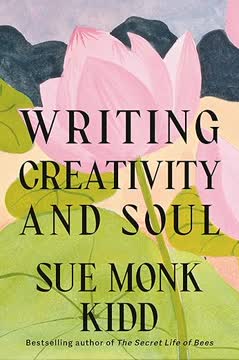
Writing Creativity and Soul receives an overall rating of 4.31/5, with most readers finding it an inspiring blend of memoir and writing guidance. Many aspiring writers describe it as a compassionate companion through creative doubt, praising Kidd's warm, generous wisdom and insights into her writing process. Readers particularly appreciate her tributes to literary icons and her reflections on storytelling's power to heal and build empathy. A minority found it disappointing, citing its spiritual philosophy as unhelpful. Nearly all recommend it for writers, readers, and fans of the author.