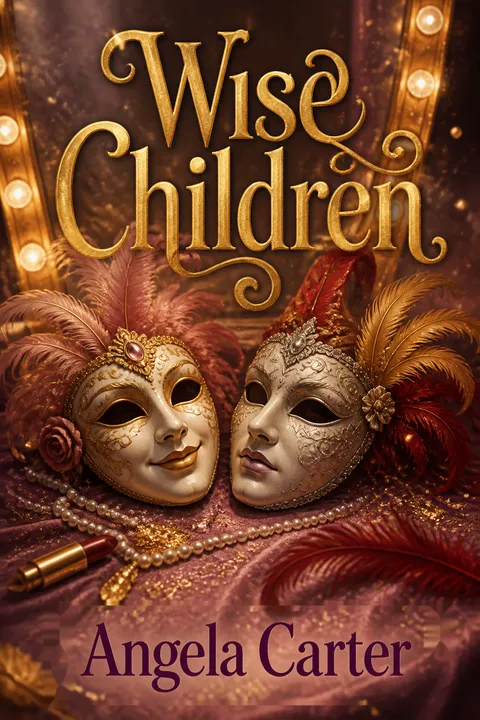

Plot Summary
Topsy-Turvy Birthdays Begin
From their house in Brixton, Dora and Nora Chance wake up on their shared seventy-fifth birthday, surrounded by memories and cats. Their home is filled with echoes of song, dance, and theatrical memorabilia—a refuge saved from poverty by their grandma's inheritance. The world outside has changed, leaving the aging twins to their rituals of makeup, reminiscing, and anticipating surprises. The day feels charged: there's a sense that something momentous awaits. An invitation arrives to celebrate their father Melchior's 100th birthday, and soon, Tristram—half-brother, half-nephew, and television game show host—arrives in a panic, setting the stage for revelations and chaos to unfold over the course of one pivotal day.
Family Pasts Unraveled
As Dora reflects, she delves into her family's labyrinthine history, where twins, mistaken identities, and the intertwining of "legitimate" Hazards and "illegitimate" Chances haunt every generation. The legendary actor Melchior Hazard, their father, never claimed them. Their father's twin Peregrine—adventurer, magician, and beloved uncle—became an unofficial guardian, sending gifts and support, while their practical "Grandma" Chance pieced together a family from foundlings, orphans, and wayward souls. Births, deaths, and adoptions blur the line between true and invented kin, illustrating that family is as much chosen as it is inherited.
Song-and-Dance Beginnings
The twins' earliest memories center on dance classes, pantomimes, and first stages, always side by side. Proud but often poor, Grandma Chance nurtures their talent for chorus lines and vaudeville, saving every programme. Their first taste of the West End dazzles them, planting a lifelong thirst for applause and spectacle while the sight of Melchior, their father, watching from afar, leaves a bittersweet ache. The cruelties and joys of showbiz define their adolescence, from shared hopes to the bodily sacrifices required of song-and-dance girls.
Fathers Who Won't Acknowledge
The twins' longing for a father's recognition is met with public rejection. When at last they are ushered into Melchior's dressing room, they are heartbreakingly mistaken for someone else's children. Peregrine steps in with warmth, highlighting the familial theme of longing for acknowledgment from men haunted by legacy and ego. Meanwhile, the Hazards' respectable heirs and legitimate twins—Saskia and Imogen—grow up pampered but estranged, setting two familial lines on divergent but interlocking courses of rivalry, envy, and overlapping inheritance.
Raised by Invented Love
Lacking blood ties to almost anyone, Grandma Chance crafts a domestic world from scraps of compassion and coincidence. Her love is impartial, embracing strangers and strays, and her wisdom, though often wrapped in earthy language, provides an anchor against the shifting luck—"Chance"—that marks her wards' lives. She raises Dora and Nora as her own, teaching them resilience, performance, and a stubborn optimism even as the world outside reels from war, gossip, and economic hardship.
Making It on Stage
Adolescence and early adulthood propel the Chance twins into the demanding world of theatre. They earn their own keep, endure touring hardships, and learn who they are under makeup and costumes. Encounters with men are often disillusioning: for Nora, sex combines vulnerability and disappointment; for Dora, the confusion of swapped lovers and first passions complicates identity. Their careers peak as featured performers in a Shakespearean revue engineered by both Melchior and Peregrine, blurring the boundaries between "high" art and low comedy.
Shakespearean Shadows
Shakespearean motifs of twins, lost children, paternal blindness, and carnivalesque farce suffuse every episode in the sisters' story. Melchior, idolizing the Bard, channels him on stage but fails in real-life roles of father and lover. Throughout, the collision of "legitimate" theatre with the rawness of music halls, and high culture with burlesque, parodies England's own class and cultural divisions. The twins' own trajectories satirize and celebrate the endless possibilities—in art, in families, in gender roles—that Shakespeare's world evokes.
Illegitimate and Legitimate Lines
Dora and Nora's struggle for identity is mirrored in the existence of their half-sisters Saskia and Imogen, born into ease but plagued by inner venom, entitlement, and rivalry. The Hazards' official progeny treat the Chance sisters as pariahs; even in adulthood, achievements and happiness are tinged with the knowledge that legitimacy is a game of performance. Throughout, the boundaries between "bastard" and "heir," and between theater's "legitimate" and "illegitimate" forms, are subverted and continually redrawn.
America and Hollywood Dreams
Showbiz success takes Nora and Dora on a whirlwind journey to America, where family and career intermingle in Hollywood's dream factory. Melchior seizes on the chance to bring Shakespeare to film, orchestrating a disastrous production involving nearly all branches of the extended family. Old wounds and new desires play out backstage, while expatriate Englishness is both ridiculed and longed for. Hollywood's artificiality contrasts sharply with the Chances' hard-won authenticity; here, illusions both enable and destroy.
Chance Encounters and Losses
The twins endure heartbreak: failed loves, miscarriages, betrayals by men and by fate. Their beloved Grandma dies in a wartime bombing, leaving them anchorless. Friends vanish, careers wane. Through hardship, their pragmatic wit and bond as twins are tested but endure. As they care for family hangers-on—the abandoned first Lady Hazard, the gifted but unrecognized, the new generation of foundlings—Dora and Nora become maternal figures in their own right, embodying the power of chosen kinship.
Missteps, Reunions, and Rivalries
As the story hurtles toward Melchior's 100th birthday party, secrets accumulate. Reunions are explosive: Saskia and Imogen's bitter adulthood; Tristram's tumultuous romance with Tiffany, the next generation's dazzling "Chance." Amid feuds, mistaken paternity, and old-age reflections, the boundaries between foe and family waver. The party becomes a microcosm: performance, confession, and chaos swirl as old scars are reopened, but forgiveness and farce finally eclipse tragedy. Long-missing Peregrine emerges for one dazzling, redemptive encore.
Parties, Revelations, and Regrets
Melchior's centenary is a carnival of reconciliations and reversals. Disguises are dropped, masks exchanged, and old lovers, siblings, and rivals all reunite on the ballroom floor. Long-denied paternity, secret affairs, and generational betrayals are confessed. Magical appearances—Peregrine's dramatic entrance, the miraculous return of lost children—restore wholeness, if only for the night. The "legitimacy" of family, art, and self dissolves in laughter, tears, music, and the passing of crowns and babies.
The Magic of Survival
Dora and Nora, aged and weathered, find themselves newly mothers to a pair of abandoned twins. Father-figures are crowned, uncrowned, and recrowned as family legacies are reinvented in chaos and celebration. The aged matriarch, Wheelchair (Lady A.), is at last recognized for the love and losses she carried. The carnival ends not with tragedy but with new hope: second chances, found families, and the possibility for reinvention granted to all who survive life's upheavals.
The Past's Unfinished Business
After the spectacle, the sisters return home in the London night, family expanded and remade, history aired and yet unresolved. As they push prams, they reflect on the illusions of memory, the malleability of identity, and the persistence of desire. The narrative's tender, comic wisdom pulses: happiness is fleeting but possible; endings are never quite endings. Love—messy, imperfect, dogged—remains the legacy they will pass on.
All the World's a Stage
From start to finish, Dora repeatedly invokes the language of theater—masks, scripts, applause, and improvisation—as both shield and liberation. The act of storytelling, like the act of surviving, is itself a performance. On stage and off, tragedy and farce are interwoven; history is recounted and invented at once. The self is both role and truth, memory both fixed and flowing. The Chance sisters' story is revealed as a glorious, unending show.
Recapturing Lost Families
In the end, through forgiveness and luck (and a touch of magic), scattered families are pieced together: children reclaimed, mothers found in unlikely places, the power of invention blessed over claims of blood. The boundaries between high and low, family and stranger, past and present are joyfully transgressed. The act of naming, loving, and protecting—no matter how belated—becomes the highest wisdom.
Dancing Toward Forgiveness
On their birthday night, Dora and Nora push newborns through Brixton, singing, dancing, and laughing through grief, memory, and age. Their story, full of loss, is also full of hope—a stubborn insistence that life is to be celebrated, no matter how battered, and that forgiveness is always possible. Songs from the past become lullabies for the future, as the twins, once "wise children" themselves, now nurture a new generation.
Wise Children's New Beginnings
At journey's end, the separated and traumatized have found improbable connection. The "wise children" are those able to accept, improvise, and rejoice in the muddle of their origins. Performance, hope, and humor rescue them from the ruins of legitimacy and expectation. The legacy of song and dance—of choosing joy, no matter what—remains the ultimate triumph. Topsy-turvy or not, the show goes on.
Analysis
Angela Carter's Wise Children is a dazzling affirmation of invention, survival, and joy in the face of life's injustices, shames, and losses. Recasting Shakespearean tropes of twins, mistaken identity, and the cyclical restoration of family, Carter mischievously dissolves the boundaries of legitimacy: social, familial, and artistic. Through Dora's raucous, resilient voice, the narrative subverts tragic convention—refusing "to play in tragedy"—and celebrates farce, performance, and the enduring power of chosen love. The novel interrogates the ways in which social, gender, and class hierarchies are constructed and how women in particular are forced to invent families and selves out of exclusion and desire. At its heart, Wise Children is about accepting the accident ("Chance") and artistry of existence—how the act of storytelling, like dancing and singing, enables survival. The past is mutable, endings are always new beginnings, and legitimacy lies in the capacity to choose hope—and laughter—over despair. Carter's parting wisdom is fierce, generous, and full of possibility: daughters, mothers, fathers, family, and selves are what we perform, what we forgive, and what we love.
Review Summary
Wise Children is Angela Carter's final novel, earning an overall rating of 3.89/5. Reviewers consistently praise narrator Dora Chance's bawdy, witty voice and Carter's masterful incorporation of Shakespearean themes, twins, mistaken identity, and theatrical history. Many highlight the novel's joyous celebration of life, particularly poignant given Carter wrote it while terminally ill. Critics note its ribald humor, complex family dynamics, and rich intertextual layers. Some readers found the dense cast of characters and meandering plot challenging, while others wished it were longer.
People Also Read
Characters
Dora Chance
Dora is one half of the famous "Lucky Chances," the narrator and heart of the novel. Her role is both actress and unofficial historian of her muddled family, using humor and resolve to process rejection and disappointment—especially the lifelong disavowal by father Melchior Hazard. Dora looks out for her more impulsive twin Nora and feels both rivalry and inseparability toward her. A sharp observer, she often sacrifices her own desires out of loyalty or practicality, finding meaning and solace in performance, laughter, and the community of constructed kin. Dora's psychological arc evolves from seeking legitimacy and love to embracing the chaos of chance, ultimately finding value in invented family and the ongoing theatricality of life.
Nora Chance
Nora is Dora's identical twin and emotional counterpart—bolder, more sensual, and driven by her heart's needs. Where Dora navigates with wit, Nora plunges into love and sorrow, suffering miscarriages and heartbreaks with a grand carelessness. She yearns intensely for connection, especially maternal fulfillment denied her by circumstance and fate. Throughout life, Nora is more "Yes!" to Dora's "Maybe…"; she takes risks in love and art, often at her own expense. By novel's end, she is finally able to mother a pair of twins, affirming the cyclical hopes of rebirth and survival.
Grandma Chance
Not a relation by blood but by rescue and grit, Grandma Chance anchors the girls' lives with a combination of brash wisdom, invention, and unconditional love. Her home, 49 Bard Road, is sanctuary and crucible. She cobbles together family from the neglected and abandoned, teaching the values of independence, song, and communal survival. Her psychoanalytic function is as a nurturing superego; her death signifies the uncertain entry into adulthood, but her lessons endure in the twins' stubborn optimism and irreverence.
Melchior Hazard
Melchior, the girls' biological father, functions as the unattainable ideal. Celebrated as the leading Shakespearean of his era, he continually fails in personal roles—denying his illegitimate daughters, pursuing new wives, and idolizing the stage over intimacy. Driven by legacy and ego, he repeats family sins and entanglements, haunted by rivals and overshadowed by the demands of "legitimacy." Psychologically, he reflects patriarchal authority's shortcomings and the damage wrought by the pursuit of recognition at the cost of love.
Peregrine Hazard
Melchior's younger twin, Peregrine (Uncle Perry), is the twins' affectionate supporter and provider. A "lucky" man, Peregrine slips between roles—globetrotting conjurer, prodigal uncle, occasional father to more than one branch of the family. Gifted at improvising happiness and survival, he represents the redemptive power of play, forgiveness, and imagination. As a trickster figure, Perry is psychologically the oppositional force to Melchior's rigidity—his return at the novel's climax undoes old wounds and remakes the family.
Lady Atalanta Hazard ("Wheelchair")
Originally Melchior's first wife and mother of Saskia and Imogen, Lady A. ends up impoverished, physically disabled, and finally housed in Dora and Nora's basement. Her bitterness is tempered by empathy; she is both a casualty of patriarchal succession and a participant in the cyclical replication of family drama. Wheelchair's presence crystallizes the novel's sympathy for cast-offs and questions who truly belongs in a "family."
Saskia & Imogen Hazard
The official (but not quite biological) daughters of Melchior and Lady A., Saskia and Imogen mirror the Chance girls with privilege and venom. Saskia's calculated ambition and Imogen's passivity emerge from their own sense of betrayal, entitlement, and confused parentage. They enact the rivalry, duplicity, and fragile love that haunts all daughters—legitimate or not—of flawed patriarchs and absent mothers.
Tristram Hazard
The youngest "son" of Melchior (and possibly Peregrine), Tristram is a game show host riddled with charm, instability, and arrested development. His relationships with women, especially the much-abused Tiffany and his own half-sister Saskia, reflect the family's cycles of taboo and misrecognition. Tristram embodies the male legacy's degeneration and the repeated disappointment of sons "not ready to be fathers."
Tiffany
The twins' Black goddaughter and the product of the extended family's plural origins, Tiffany is both muse and victim. She pursues showbiz like her "aunties," falling for Tristram and suffering betrayal and trauma, including an out-of-wedlock pregnancy. Her resilience and renewal at the novel's end—refusing reconciliation under false terms—mark her as a harbinger of possibility and survival, linking "wise children" across generations.
Daisy Duck / Delia Delaney
Daisy (Melchior's second wife) is both a comic send-up of Hollywood "class" and a tenacious survivor. Shrewd, amusing, and wild, she traverses the novel's most farcical episodes, including disastrous marriages, showbiz heights and humiliations, and personal re-inventions. Daisy's boldness, sexuality, and refusal to be shamed make her a model of endurance—and parody—within the carnivalesque universe Carter constructs.
Plot Devices
Shakespearean Parallelism and Doubling
Carter structures the novel as an explicit homage and parody to Shakespeare's late romances, referencing twins, mistaken identities, and familial reconciliation. Doubling pervades not only casting (twins upon twins) but themes: birth and rebirth, legitimacy and bastardy, high and low art. The characters' lives echo Shakespearean archetypes, yet are subverted, dirtied, and made farcical. Recurring motifs—crowns, lost children, birthday feasts, and storms (of wind, emotion, or misfortune)—are used for structural foreshadowing and as symbols of disruption and hope.
Nonlinear, Memoir-Within-a-Day Structure
The narrative unfolds over the course of one day—the twins' and Melchior's birthday—but continually loops back into past decades through Dora's reminiscences. Carter uses Dora's first-person voice as an unreliable but captivating storyteller, blending fact, embellishment, fantasy, and confession. Performance metaphors—curtains rising, scenes shifting, masks dropping—frame both time and revelation.
Carnival and Farce
The novel uses the carnivalesque—inversions of social order, role-reversals, slapstick disasters, broad humor—as a plot engine. Birthday parties and theatrical events become stages for chaos, reversal, and revelation. Public humiliations, mistaken identities, and sexual farce undercut potential melodrama. The farcical tone provides emotional resilience and prevents the descent into pure tragedy; foreshadowing is frequently deployed only to be subverted by comic outcomes.
Meta-Narration and Intertextuality
Dora's narration is self-aware, often breaking the fourth wall, commenting on storytelling itself, and referencing her own inventedness ("drunk in charge of a narrative"). Literary and pop-cultural allusions abound: Shakespeare, show tunes, film history, and Carter's own oeuvre become layers in the self-constructed myth. This device allows Carter to fuse high and low culture and to comment on history's (and family's) artificiality.
Maternal Void and Invention
The plot is repeatedly driven by the absence, replacement, or surrogacy of mothers—Kitty, Grandma Chance, Lady A.—and the improvisational invention of family structures. This device enacts both the pain and creative potential of "illegitimacy": those deprived of inheritance are freed to imagine kinship anew, expanding the boundaries of love and resilience.
Download PDF
Download EPUB
.epub digital book format is ideal for reading ebooks on phones, tablets, and e-readers.








































